
STEADI: Intervene
A Room-by-Room Heat Safety Checklist for Seniors at Home
A room-by-room guide to preparing an older adult's home for extreme heat, with specific temperature thresholds, hydration targets, and medication storage rules that go beyond general advice to create a verifiable safety plan.
A useful heat safety checklist for seniors at home starts with numbers someone can actually check. Before walking room to room, put a thermometer in the main living area, one near the bed, and one where medications are stored. Then write these thresholds on the same page as the emergency contacts: aim to keep the main cooled space around 68–76°F; take immediate action if indoor temperature rises above 80°F for an older adult with a chronic condition; plan for 6–8 cups of fluid a day unless a clinician has given a fluid limit; do not rely on a fan alone when the ambient temperature is above 95°F; and keep most medications below 77°F unless the label says otherwise.[1][2][3]
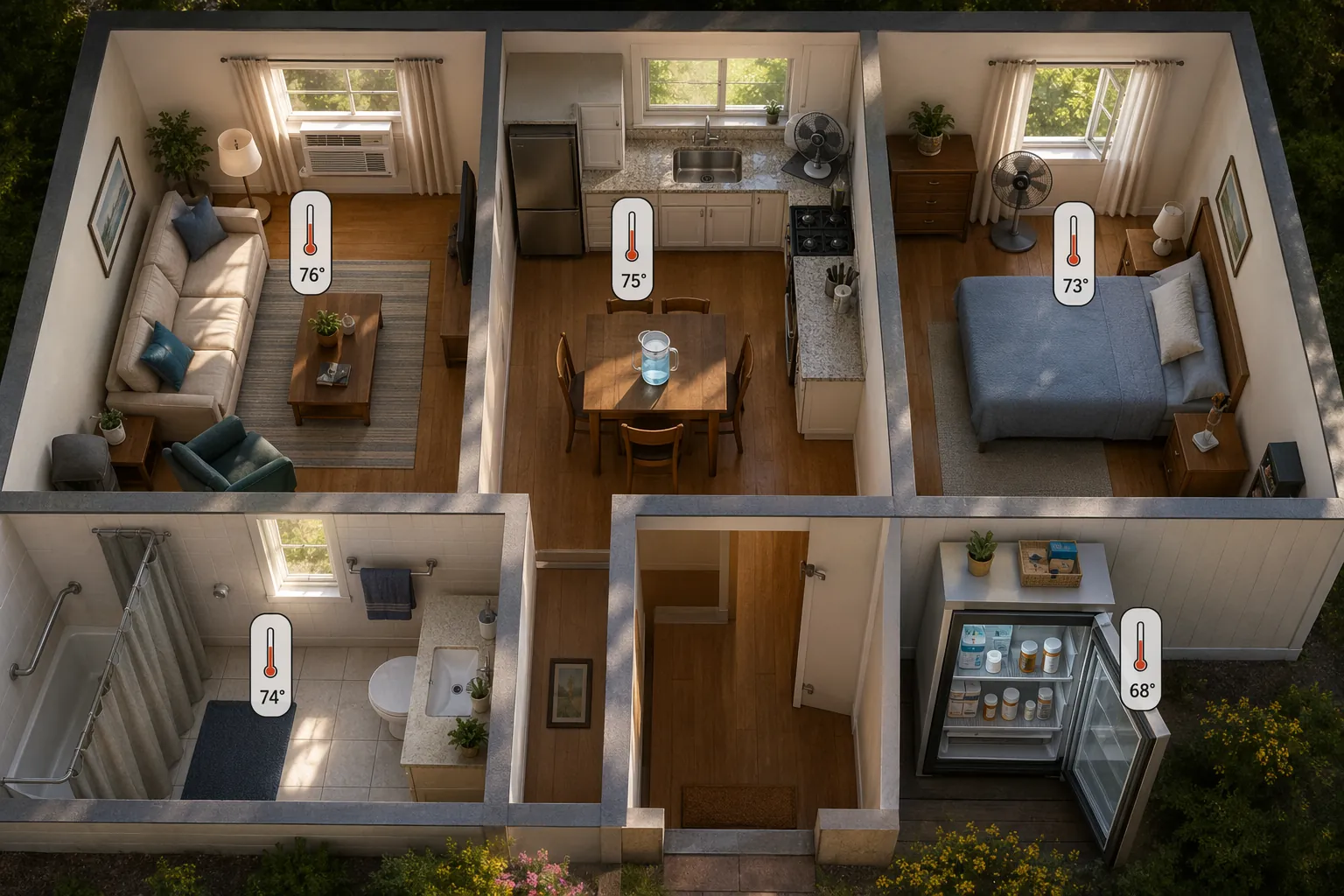
Those numbers matter because heat trouble in an older adult’s home often looks ordinary at first: a nap that runs long, a dizzy spell after a shower, a skipped glass of water, a bedroom that stays warm after sunset, or an electric bill that makes the air conditioner feel negotiable. Adults 65 and older account for 80% of heat-related deaths in the United States, and age-related changes such as reduced sweating, diminished thirst, and decreased skin blood flow make heat harder to shed even before illness or medications are added.[1]
| Home check | Use this threshold | Action if it fails |
|---|---|---|
| Main cooled room | 68–76°F target; above 80°F needs immediate action for someone with a chronic condition | Increase cooling, move to the coolest room, call the clinician if symptoms appear, or relocate to a cooling site |
| Hydration | 6–8 cups per day unless medically restricted | Set visible water stations and check urine color, intake, dizziness, and confusion |
| Fans | Do not use a fan as the only cooling method above 95°F | Use air conditioning, a cooling center, or another cooled location |
| Medication storage | Below 77°F for most prescriptions unless the label says otherwise | Move bottles away from bathrooms, windows, cars, and warm rooms |
| Bathroom and bedroom | Cool enough to prevent post-shower dizziness and overnight overheating | Add nonslip protection, reduce hot water exposure, and check the room temperature before sleep |
Start With the Main Cool Zone
The first stop is not the thermostat in the hallway. It is the room where the person will actually spend the hottest hours. In a house with central air, that may be the living room. In an apartment or older home, it may be one bedroom with a window unit, a portable AC, closed curtains, and a chair that is safe to get out of.
- Put a readable thermometer in the cool zone, not just near the thermostat.
- Set the thermostat or room unit to keep the space in the 68–76°F range when possible.[2]
- If the person has heart disease, lung disease, diabetes, kidney disease, dementia, or another chronic condition, treat an indoor reading above 80°F as a decision point, not a preference.[2]
- Close blinds or curtains before direct sun hits the room, especially on west- and south-facing windows.
- Check that cords, fan bases, portable AC hoses, and extension cords do not create a walking path hazard.
If whole-home cooling is not realistic, make the plan smaller instead of pretending the cost problem is not there. Nearly 1 in 3 older adults, about 14.8 million people, were energy insecure in 2023, which includes households that reduce or forgo cooling because of cost.[4] A one-room cooling plan is not second-best if it is the only plan the person will actually use.
For a one-room plan, choose a room with the fewest heat gains: less afternoon sun, a door that closes, a reachable bathroom path, and enough outlets for cooling equipment without daisy-chained cords. Put the usual chair, phone charger, water, glasses, hearing aids, walker, and medication schedule inside that zone. The room should feel like a normal place to spend time, not like a quarantine corner.
Air conditioning deserves priority because the evidence behind it is stronger than the evidence behind fans alone. A well-cited review reported that air conditioning was associated with about an 80% reduction in heat-related illness risk, compared with about 30% for fans.[5] That does not mean every home can afford constant AC. It does mean that during dangerous heat, a working cooled room, a public cooling center, a relative’s cooled home, or another air-conditioned place is not a luxury detail in the checklist.
Fans need a hard rule taped into the plan: above 95°F, a fan should not be the only cooling method. Public health guidance warns that fans may not prevent heat illness at high temperatures and can worsen heat stress when they blow very hot air across the body.[3] A fan can still help move cooler air from an AC unit, pull cooler evening air through a window when outdoor air is cooler than indoor air, or make a mildly warm room more comfortable. It should not be treated as a rescue device in a room that is already dangerously hot.
A practical cool-zone setup
- Thermometer visible from the usual chair.
- AC filter clean, vents unblocked, and window unit sealed around the sides.
- Curtains closed before peak sun, not after the room has already heated up.
- Water bottle or cup within reach, plus a refill plan.
- Phone, charger, emergency contacts, and transportation options in the same room.
- Clear route to the bathroom, with no cords crossing the walkway.
Kitchen: Reduce Heat Before It Builds
The kitchen check is short because the decision is usually simple: during the hottest part of the day, the oven and stovetop work against the cooling plan. They add heat exactly when the house is trying to lose it.
- Plan no-cook or low-cook meals before the heat wave starts: sandwiches, salads, yogurt, fruit, cold grains, or microwave meals.
- Move meal prep to morning if cooking is necessary.
- Keep a pitcher of water or preferred nonalcoholic drink visible in the refrigerator.
- Check whether the person avoids drinking because they do not want extra bathroom trips; that is a fall-prevention problem as much as a hydration problem.
- Watch for indoor temperature spikes after cooking and record the room temperature, not just the outdoor forecast.
The hydration target is 6–8 cups per day for many adults, unless a clinician has prescribed fluid restriction for heart failure, kidney disease, or another condition.[3] The target is useful only if it becomes visible. A filled bottle in the refrigerator does not help if it stays there all day. Put one drink in the cool zone, one near the usual meal spot, and one by the bed if nighttime bathroom safety has been addressed.
Bedroom: Check the Overnight Temperature, Not Just Bedtime Comfort
Bedrooms can look fine at 9 p.m. and still hold heat for hours. That matters because poor sleep, sweating, dehydration, and nighttime bathroom trips can stack into a fall risk before anyone calls it heat illness.
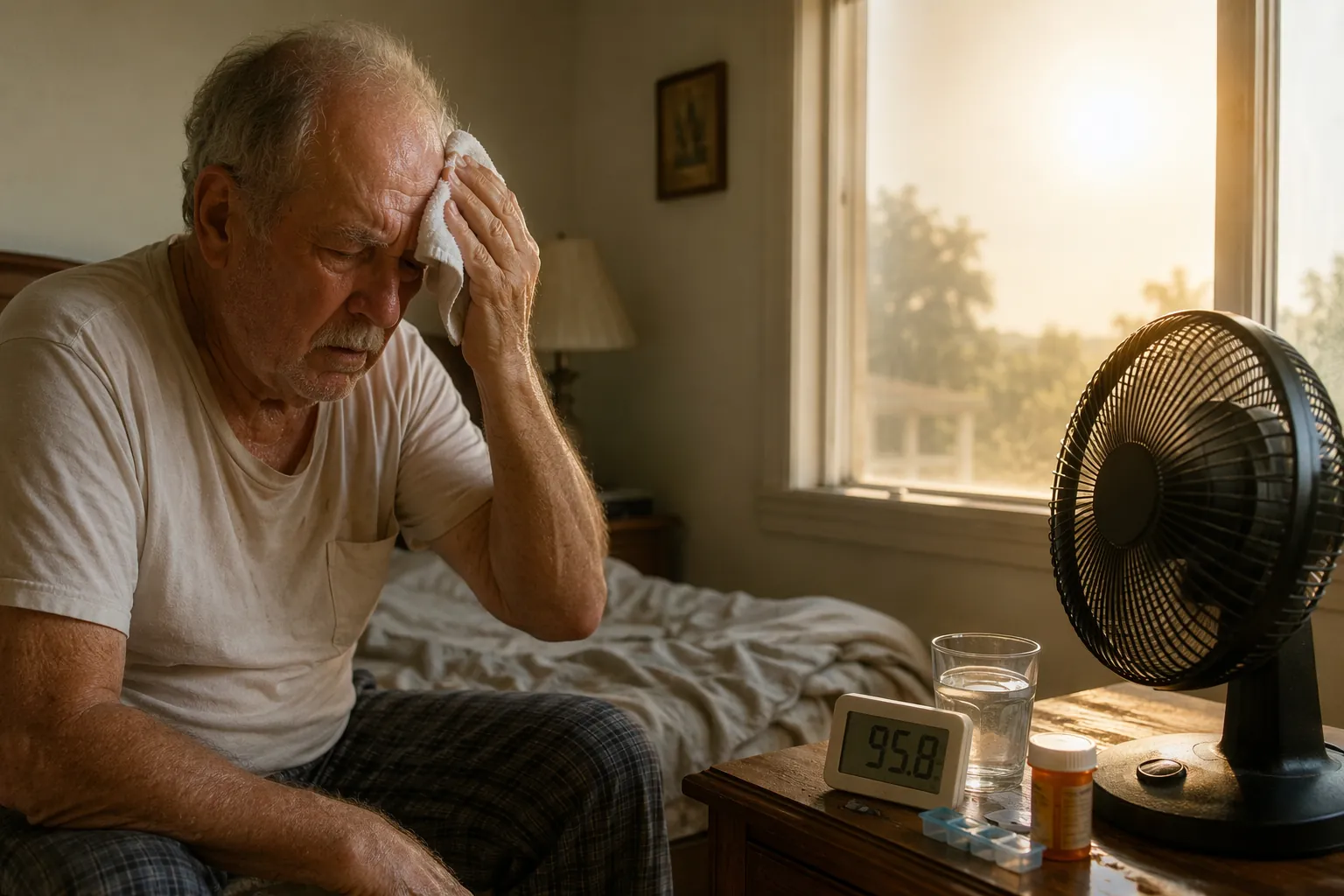
- Place a thermometer near the bed at sleeping height.
- Use breathable bedding and remove heavy blankets that stay on the bed out of habit.
- Open windows for cross-ventilation only when outdoor air is cooler than indoor air and the windows can be used safely.
- Do not place a fan where the cord crosses the path to the bathroom.
- If the bedroom stays above the safe range, move sleep temporarily to the cool zone rather than hoping the room will cool later.
The awkward part is that many older adults will reject a visible rearrangement of the bedroom long before they reject the idea of safety. A temporary summer setup can be framed as seasonal housekeeping: lighter bedding, a clearer path, a safer fan location, and a thermometer that makes the room easier to manage. It does not need to look medical to be protective.
Bathroom: Treat Heat as a Fall Trigger
The bathroom is where heat safety and fall prevention meet most directly. A hot shower, warm room, fluid loss, and a quick stand from a shower chair or toilet can all push an older adult toward dizziness. Heat can also contribute to orthostatic stress, especially in people whose blood pressure regulation is already affected by age, illness, or medication.[5]
- Shift bathing to the cooler part of the day.
- Use warm or cool water rather than a hot shower during a heat wave.
- Run ventilation if it removes steam without pulling hotter air into the home.
- Place a nonslip mat where wet feet actually land, not only inside the tub.
- Keep a stable seat available if the person has had dizziness, weakness, or near-falls after bathing.
- Build in a pause after bathing: sit, drink, dry off, then stand.
This is also the wrong place for medication storage. Bathrooms are warm, humid, and often exposed to steam. Even if the medicine cabinet looks tidy, it is usually a poor heat-safety location.
Medication Storage and Medication Risk
Medication checks need two separate questions. First, is the medicine being stored at the right temperature? Second, does any medication make heat illness more likely?
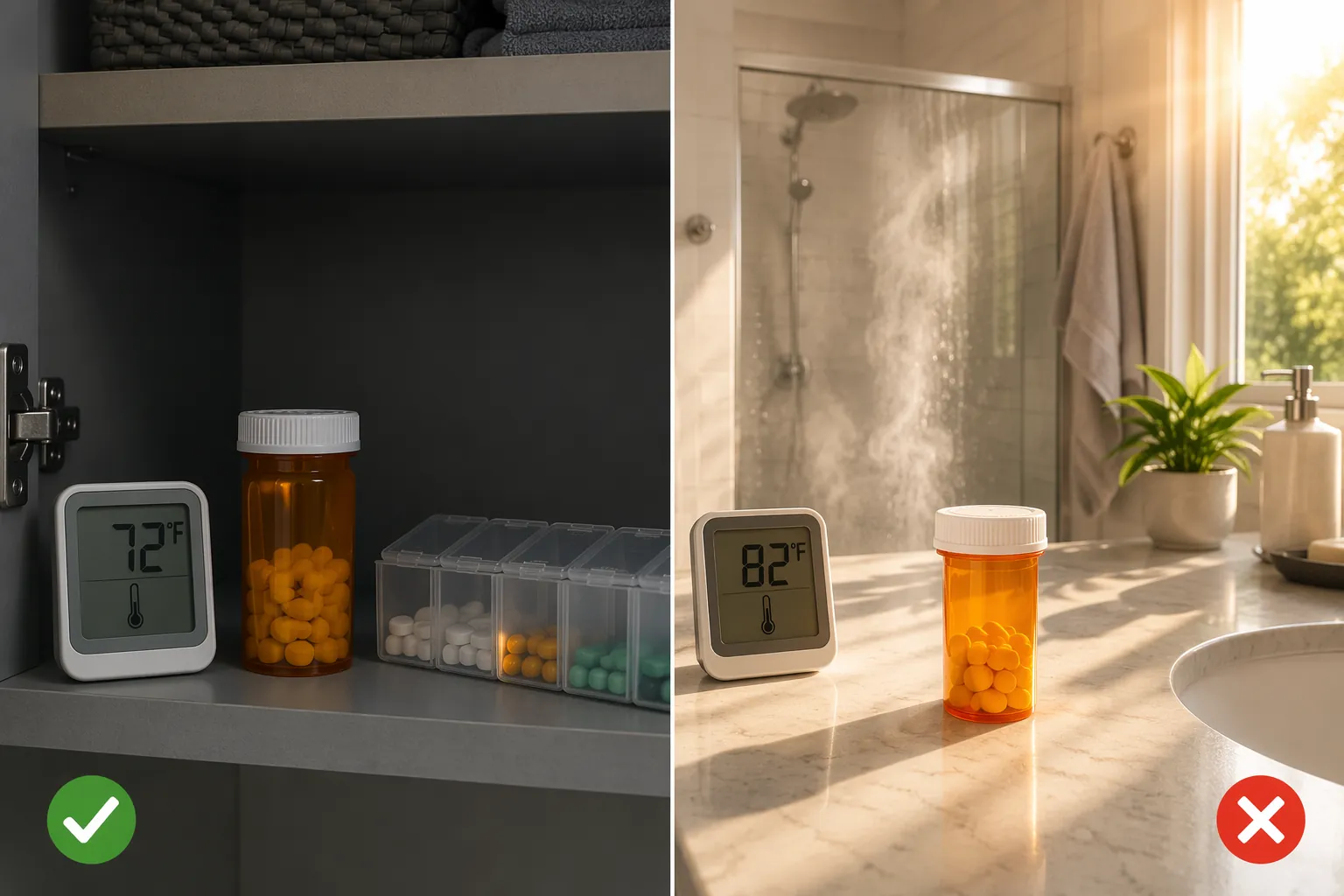
Most prescriptions should be kept below 77°F unless the label gives a different instruction, and some products, including certain insulin and eye drops, may require refrigeration.[2] The storage spot should be shaded, dry, and away from windows, bathrooms, cars, and appliances that give off heat. A small thermometer in the cabinet is a better safeguard than guessing from how the room feels.
- Move daily pill organizers out of bathrooms and sunlit kitchens.
- Check mail-order medications quickly during heat waves so packages do not sit outside.
- Ask the pharmacist what to do if a medication may have been exposed to heat.
- Keep a current medication list in the cool zone and in the evacuation bag.
The second question belongs on the clinician or pharmacist call list before summer peaks. Diuretics, beta-blockers, anticholinergics, antihistamines, and some antidepressants can interfere with sweating, thirst, fluid balance, or thermoregulation.[2][5] The checklist should not tell someone to stop a prescribed medication. It should flag which medicines require a heat-wave plan, especially if the person has heart, kidney, neurologic, or cognitive conditions.
Special Risk Checks Before the Heat Wave
Some homes need a stricter version of the checklist. The same indoor temperature may be more dangerous for someone with chronic disease, limited mobility, dementia, social isolation, or medications that reduce heat tolerance. The point is not to make the plan longer. It is to lower the threshold for action.
| Risk factor | What to verify at home | Action trigger |
|---|---|---|
| Chronic heart, lung, kidney, or metabolic disease | Thermometer in main room and bedroom; clinician guidance on fluids and medications | Indoor temperature above 80°F or new dizziness, weakness, confusion, or shortness of breath |
| Dementia or memory loss | AC controls protected from accidental shutoff; drinks visible; check-in person assigned | Missed drinking, inappropriate clothing, wandering outside, or inability to report symptoms |
| Diuretics or heat-sensitive medications | Medication list reviewed by pharmacist or clinician | Heat wave forecast, reduced urination, lightheadedness, or medication exposed above storage limits |
| Energy insecurity | One-room cooling plan, cooling center route, utility assistance contact, backup transportation | AC not used because of cost, indoor temperature rising, or bill anxiety overriding the safety plan |
| Limited mobility | Clear path to cool zone, bathroom, phone, and exit | Person cannot relocate independently when the room is too hot |
Dementia deserves particular caution because heat protection depends on noticing discomfort and taking corrective action. The Center for American Progress cites evidence that Alzheimer’s-related mortality is 6% higher on hot days, a narrow finding that should be treated as a warning sign for planning rather than a prediction for any one household.[4]
Power Outage and Relocation Readiness
A heat plan that depends on electricity needs a failure plan. Write it before the outage, when no one is trying to find a flashlight in a warm room.
- Charge phones, backup batteries, hearing aids, and medical devices before forecast extreme heat.
- Keep a paper list of medications, diagnoses, allergies, emergency contacts, utility company number, and preferred hospital.
- Identify at least two cooled backup locations: a family member, neighbor, library, community center, or official cooling center.
- Confirm transportation before it is needed, including who can lift or fold a walker if one is used.
- Pack a small heat bag with medications, water, glasses, hearing aid supplies, phone charger, ID, insurance card, and a light sweater for overcooled public spaces.
- Call local emergency management, 211, the utility company, or public health department ahead of time for cooling center and assistance information; the Red Cross also directs people to use local cooling centers during extreme heat.[3]
If the person is reluctant to leave, decide in advance which condition ends the debate: indoor temperature above the safe threshold, power out with no cooling, symptoms of heat illness, or no way to keep medications safe. A written trigger is easier to honor than a tense conversation in a hot room.
When the Checklist Fails
The home plan has done its job when it makes escalation obvious. Do not wait for every symptom to appear. Act when one of these conditions shows up:
- The main room or bedroom cannot be kept cool enough, especially if the person has a chronic condition and indoor temperature is above 80°F.[2]
- A fan is the only cooling method and the temperature is above 95°F.[3]
- The person is dizzy, weak, confused, nauseated, faint, unusually tired, or has a headache, heavy sweating, hot skin, or worsening shortness of breath; CDC heat guidance treats these symptoms as reasons to cool the person and seek help depending on severity.[6]
- Fluid intake has dropped, urine is very dark, or bathroom trips have become unsafe.
- Medications have been stored above their recommended temperature or left in a hot delivery box, car, bathroom, or sunlit room.
- The power is out and there is no reliable way to cool the person within the home.
For possible heat stroke — confusion, loss of consciousness, very high body temperature, or a person who cannot be cooled quickly — call 911. Move the person to a cooler place, remove excess clothing, and use cool cloths or other safe cooling measures while waiting for help.[6]
A good heat safety checklist for seniors at home is not a reminder to drink water and hope the AC holds. It is a walkable system: check the room temperature, make one room reliably cool, keep fluids visible, prevent bathroom and bedroom falls, store medications below their limit, and know exactly when the house is no longer safe enough.
References
- Heat and Older Adults (Aged 65+), CDC.
- How Extreme Heat Affects the Body After 50, AARP.
- Extreme Heat Safety, American Red Cross.
- Protecting Older Adults From the Growing Threats of Extreme Heat, Center for American Progress.
- Heat stress in older individuals and patients with common chronic diseases, CMAJ, 2010.
- Protect Yourself From the Dangers of Extreme Heat, CDC.
Related reading
Noticed something outdated or inaccurate on this page? Flag a correction. We review every report against CDC, NIA, and AARP HomeFit guidance before updating a page.
Part of the Fall Prevention section.