
STEADI: intervene
Tornado Watch Safety Checklist for Seniors
Seniors need concrete steps for the tornado watch window that reduce fall hazards while preparing for shelter. This checklist covers fall prevention, mobility prep, and medical readiness to help seniors shelter safely and calmly.
When a tornado watch appears on the phone or comes across the local broadcast, the first job is not to rush into the closet or bathroom. A watch means tornadoes are possible in and near the watch area, usually across multiple counties, with several hours of lead time before storms may arrive or intensify.[1] For an older adult at home, that lead time is the safest time to make the shelter route usable, place medication and mobility aids where they will actually be needed, and reduce the chances of a fall when everyone gets tense.
That distinction matters. A warning is the point when sheltering takes over. A watch is the window for slow, deliberate preparation. If the alert language itself is confusing, use this senior guide to tornado watch vs. warning as the explainer, then come back to the checklist work. The practical question during a watch is simpler: what needs to be moved, cleared, charged, checked, or placed within reach before the weather gets worse?
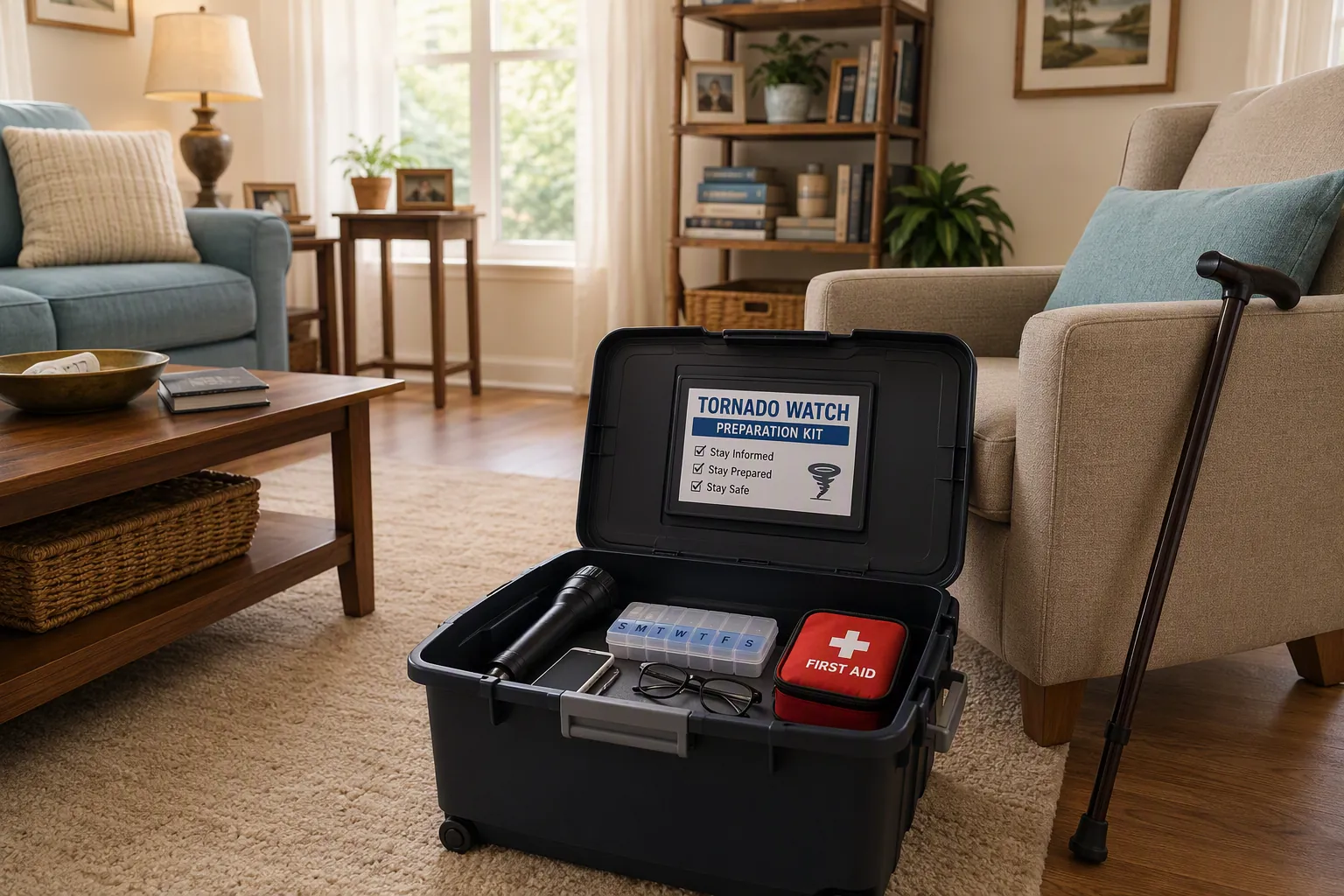
The Watch-Window Checklist
Work through the checklist in this order. It starts with information, then the walking path, then the body and medical needs of the person who may have to shelter quickly later.
| During The Watch | What To Do Now | Why It Matters For Fall Safety |
|---|---|---|
| Confirm the alert | Use a reliable weather source and keep monitoring for a warning. | Prevents unnecessary rushing while keeping the household ready to act. |
| Choose or re-check the shelter place | Use the planned lowest-level, interior shelter area and make sure the route is open. | Turns the shelter plan into a path the senior can actually walk. |
| Clear trip hazards | Remove shoes, loose rugs, cords, pet bowls, oxygen tubing loops, laundry baskets, and small furniture from the route. | Reduces the hazards most likely to matter when lighting is poor or movement speeds up. |
| Stage mobility aids | Place the walker, cane, rollator, wheelchair, transfer belt, or sturdy shoes where they can be reached before moving. | Keeps the senior from crossing the room unsupported. |
| Move essentials into a reachable container | Use a small bag, basket, or wheeled tote for flashlight, phone, charger, glasses, hearing aids, batteries, water, and a medication list. | Keeps supplies from becoming another load to carry. |
| Prepare medications and medical information | Put current doses, medication list, allergy information, and emergency contacts with the shelter items. | Avoids a last-minute trip back to the bedroom or kitchen. |
| Contact the support network | Let the agreed helper know the watch is active and confirm how they will check in. | Gives the senior backup without waiting until conditions are dangerous. |
| Keep monitoring | Leave shoes on or nearby, keep lights available, and stop preparation when a warning is issued or conditions become threatening. | Marks the handoff from preparation to sheltering. |
First, Make The Alert Useful
Confirm the watch from a source that will also tell you if it becomes a warning: local TV or radio, a weather radio, a trusted weather app, or official National Weather Service information. The point is not to keep checking five different screens. The point is to make sure someone in the home will hear the change in time.
For a senior with hearing loss, this step may need more than volume. Flashing alerts, vibration, captioned weather coverage, or a caregiver check-in may be part of the plan. If alert access is the weak spot, use the tornado preparedness guide for seniors with hearing loss before storm season, and during the watch use whatever alert channel is already set up and dependable.
Walk The Route Before The Storm Makes You Hurry
The shelter place may already be decided: an interior room, hallway, bathroom, closet, or basement area, depending on the home. During the watch, do not admire the plan from the kitchen table. Walk the actual route at the senior’s normal pace and look at it like nighttime, rain, stress, and a possible power outage are coming.
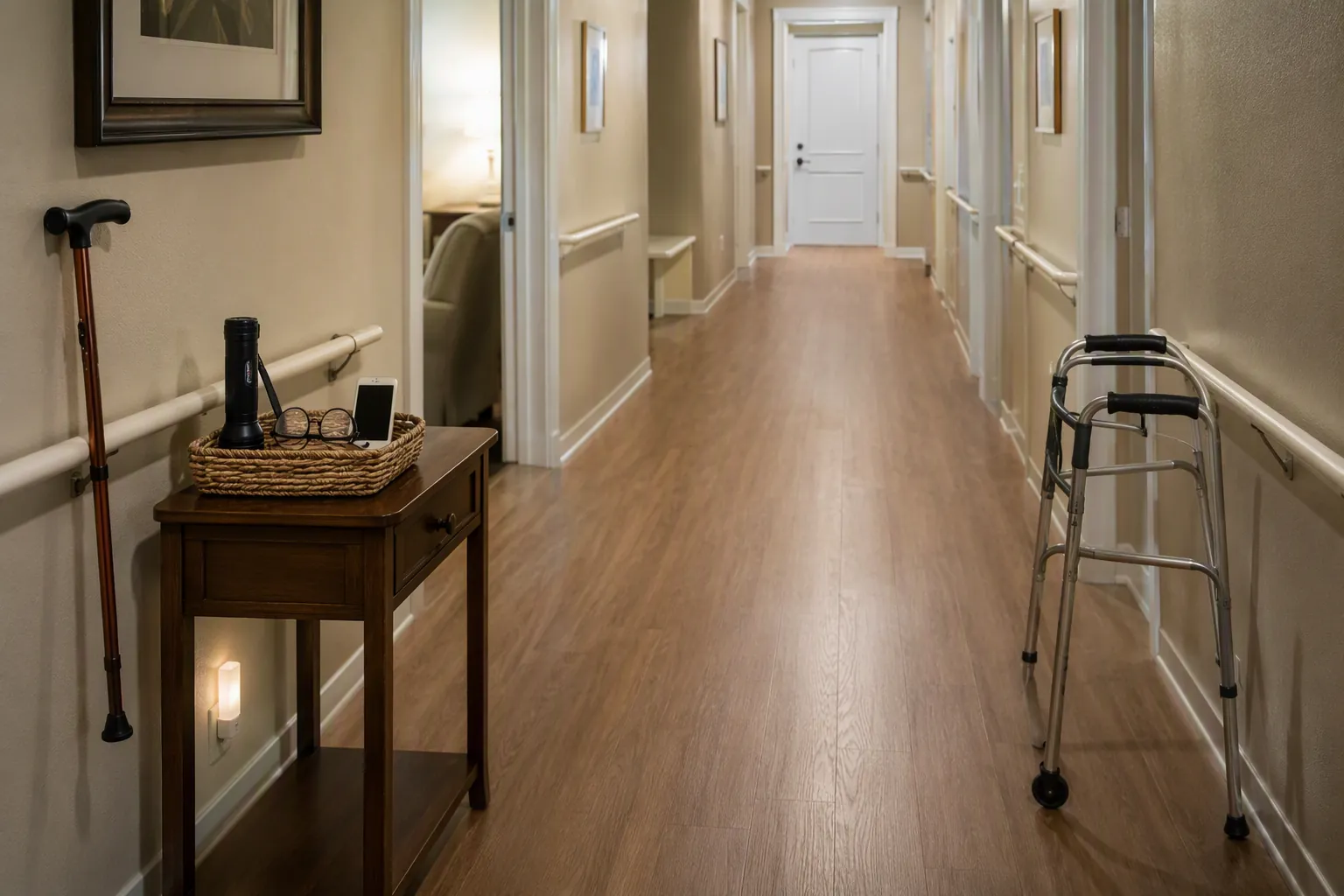
Start at the chair, bed, or room where the older adult is most likely to be when a warning arrives. Then move toward the shelter area and clear the things that make feet hesitate: shoes near the door, throw rugs, electrical cords, oxygen tubing stretched across a walkway, stacks of newspapers, laundry baskets, pet toys, and small tables that narrow the turn. A cane leaning in the corner of the shelter room does not help if the senior needs it to get there.
The Centers for Disease Control and Prevention advises checking the home before severe weather for hazards that could cause injury, including heavy objects on shelves more than 30 inches high and furniture that is not secured.[2] In the watch window, translate that into practical choices. Do not stand on a chair to rearrange a high shelf. Do move the things already at hand that could fall, block the route, or force a rushed reach: a heavy lamp on a wobbly table, a glass vase near the hallway edge, a basket stored on top of the shelter-room shelf.
Lighting deserves its own pass. Turn on a hall light if storms are nearby. Put a working flashlight where the senior’s hand will go naturally: beside the chair, in the walker basket, on the nightstand closest to the bed, or inside the shelter container. Check it now, not after the power flickers. If the home already uses nightlights, make sure the one along the shelter route is not blocked by furniture.
For a more detailed route-by-route setup before storm season, see the fall-proof tornado safety plan for elderly adults. During an active watch, keep the work smaller: clear the path, improve the light, and remove the object most likely to trip or block the person who will be moving.
Stage Mobility Aids Where The Senior Starts, Not Where The Plan Ends
A walker parked neatly in the hallway can still be wrong if the senior is sitting in the recliner across the room. During the watch, place the cane, walker, rollator, wheelchair, transfer belt, brace, or sturdy shoes at the point where movement will begin. If the person usually gets up from the bed, the aid belongs within reach of the bed. If the person spends the evening in a lift chair, the aid belongs beside that chair, not behind it.
Check the small things that become big under stress. Are walker brakes working? Is the rollator basket overloaded? Are rubber cane tips worn slick? Are slippers loose enough to slide? Is the oxygen tubing routed along the wall instead of across the direct walking line? If the senior uses a wheelchair, make sure the route is wide enough after moving the laundry basket, trash can, or extra dining chair that always seems harmless until there is no time.
This is also the moment for the caregiver tone that keeps dignity intact. “Let’s put your walker here so it’s ready if the warning comes” usually lands better than “You can’t walk without that.” The task is not to take over the home. It is to reduce the number of decisions and steps required later.
Use Containers That Do Not Create Another Fall Risk
Emergency supplies are only useful if the older adult can move with them safely. Oklahoma State University Extension recommends that older adults prepare two supply kits and notes that a kit on wheels, such as a wheeled suitcase or plastic container, can be easier to move.[3] That is a sensible correction to a common problem: a heavy emergency bag can turn into one more fall hazard.
During the watch, do not try to build the perfect emergency kit from scratch. Use a container that matches the senior’s mobility. A wheeled tote may work for a person using a walker only if it does not pull them off balance. A small basket on the walker may be safer than a shoulder bag. A zip pouch inside the shelter area may be enough if the route is short and the caregiver can bring the larger supplies.
- Place the container at waist height if possible, not on the floor where bending or reaching could cause a loss of balance.
- Keep it light enough that the senior can move without changing posture or grip.
- Put the most urgent items on top: flashlight, phone, charger, glasses, hearing aids or batteries, medication list, and emergency contacts.
- Do not hang a heavy bag from a walker handle if it could tip the walker or pull it sideways.
- If a caregiver is present, decide now who carries what, so no one negotiates it in the hallway after a warning.
The best container is the one that removes trips, reaches, and extra crossings through the house. A neat kit in the bedroom closet is not ready if the shelter place is across the hall and the warning comes after dark.
Put Medical Readiness Within Arm’s Reach
The Red Cross recommends that older adults keep at least a 30-day supply of prescription medicines, over-the-counter medicines, and medical supplies, as well as copies of prescriptions and dosage information.[4] That is the long-term standard. During a tornado watch, the smaller job is to make sure today’s medical needs and information do not stay scattered across the bedroom, bathroom, purse, and kitchen counter.
- Move the current medication organizer or needed doses near the shelter items.
- Add a written medication list with doses, allergies, pharmacy, doctors, and emergency contacts.
- Place glasses, hearing aids, hearing aid batteries, dentures, and any necessary medical device supplies where they can move with the person.
- Charge the phone, medical alert device, and backup battery if there is still time.
- If oxygen or another powered device is used, keep tubing routed safely and follow the equipment provider’s emergency instructions.
There is no virtue in leaving a medication list in the bedroom because that is where it usually belongs. If a warning comes, the safer place is with the person or already inside the shelter area. The same goes for reading glasses. A senior who cannot read a phone alert, medication label, or contact number in the shelter has lost a piece of independence at the exact wrong time.
Make The Support Network Specific
Ready.gov’s older adult preparedness guidance centers on assessing personal needs, making a plan, and building a support network before emergencies happen.[5] During a watch, use that framework in a direct way: contact the person who is supposed to check in, and confirm what each person will do if the watch becomes a warning.
A useful check-in is concrete. “The watch is active. Your walker is by the recliner, your medication pouch is in the bathroom shelter, and I’ll call again if the warning comes” is better than “Be careful.” If the caregiver lives nearby, decide whether they are coming now or staying off the roads. If the caregiver is farther away, decide who can call, who can text, and who knows the neighbor or building manager.
For seniors who do not want to feel managed, this can be framed as a shared weather routine rather than a permission system. The older adult remains part of the decision: where the walker goes, which phone number is best, whether shoes stay on, which neighbor is acceptable to call. Good preparation should reduce arguing later, not create it earlier.
Keep Monitoring, But Stop Rearranging When The Warning Comes
Once the route is clear, mobility aids are staged, and medical items are reachable, the watch window becomes a monitoring period. Keep shoes on or next to the chair. Keep the phone and flashlight close. Leave the shelter path alone; do not set the laundry basket back in the hallway or move the walker because it is in the way of normal life for a little while.
If storms knock out power before a warning, shift attention to lighting and walking safety. A companion senior fall prevention checklist for power outages can help with that escalation. If you need a broader before, during, and after plan for tornado season, use the three-phase tornado safety checklist for older adults outside the active watch window.
When a tornado warning is issued, or when conditions outside become threatening, the preparation phase is over. Do not go back for another bottle, another blanket, or one more item from the bedroom. Move to the shelter place using the cleared route, the staged mobility aid, and the essentials already within reach.
References
- Tornado Watch vs. Warning, National Weather Service, https://www.weather.gov/safety/tornado-ww
- Staying Safe in a Tornado, Centers for Disease Control and Prevention, https://www.cdc.gov/tornadoes/safety/index.html
- Older Adults and Planning Ahead for Severe Weather, Oklahoma State University Extension, https://extension.okstate.edu/programs/emergency-and-disaster-preparedness/tornado-preparedness/older-adults-and-planning-ahead-for-severe-weather
- Older Adults, American Red Cross, https://www.redcross.org/get-help/how-to-prepare-for-emergencies/older-adults.html
- Older Adults, Ready.gov, https://www.ready.gov/older-adults
Related reading
Noticed something outdated or inaccurate on this page? Flag a correction. We review every report against CDC, NIA, and AARP HomeFit guidance before updating a page.
Part of the Fall Prevention section.