
STEADI: Intervene
Keep Seniors with COPD Safe During Air Quality Warnings
An air quality warning is more than a 'stay inside' notice for a senior with COPD or asthma — it requires specific steps. Get the act-now checklist (AQI thresholds, indoor filtration, medication supply, N95 masks), know when red-flag symptoms mean a provider call versus 9-1-1, and follow the pre-season plan for wildfire and ozone season.
When an air quality warning lands, the useful question is not “Should Dad stay inside?” It is what to do in the next ten minutes: confirm the AQI, make the indoor air cleaner, check the COPD or asthma plan and medication supply, decide whether any errand is truly unavoidable, and separate symptoms that can be watched from symptoms that need a provider call or 9-1-1. National Weather Service alert-day guidance tells people to reduce time outdoors, avoid strenuous outdoor activity, and follow local instructions during an air quality alert; for a senior with COPD, asthma, or another chronic respiratory condition, that is the starting line, not the whole plan. [1]
CareWise Guide note: This article is educational and is not medical advice. Use the senior’s clinician-approved asthma or COPD action plan as the anchor, especially for oxygen, rescue medications, and when to seek urgent care. If the action plan and this checklist differ, follow the medical plan and call the clinician.
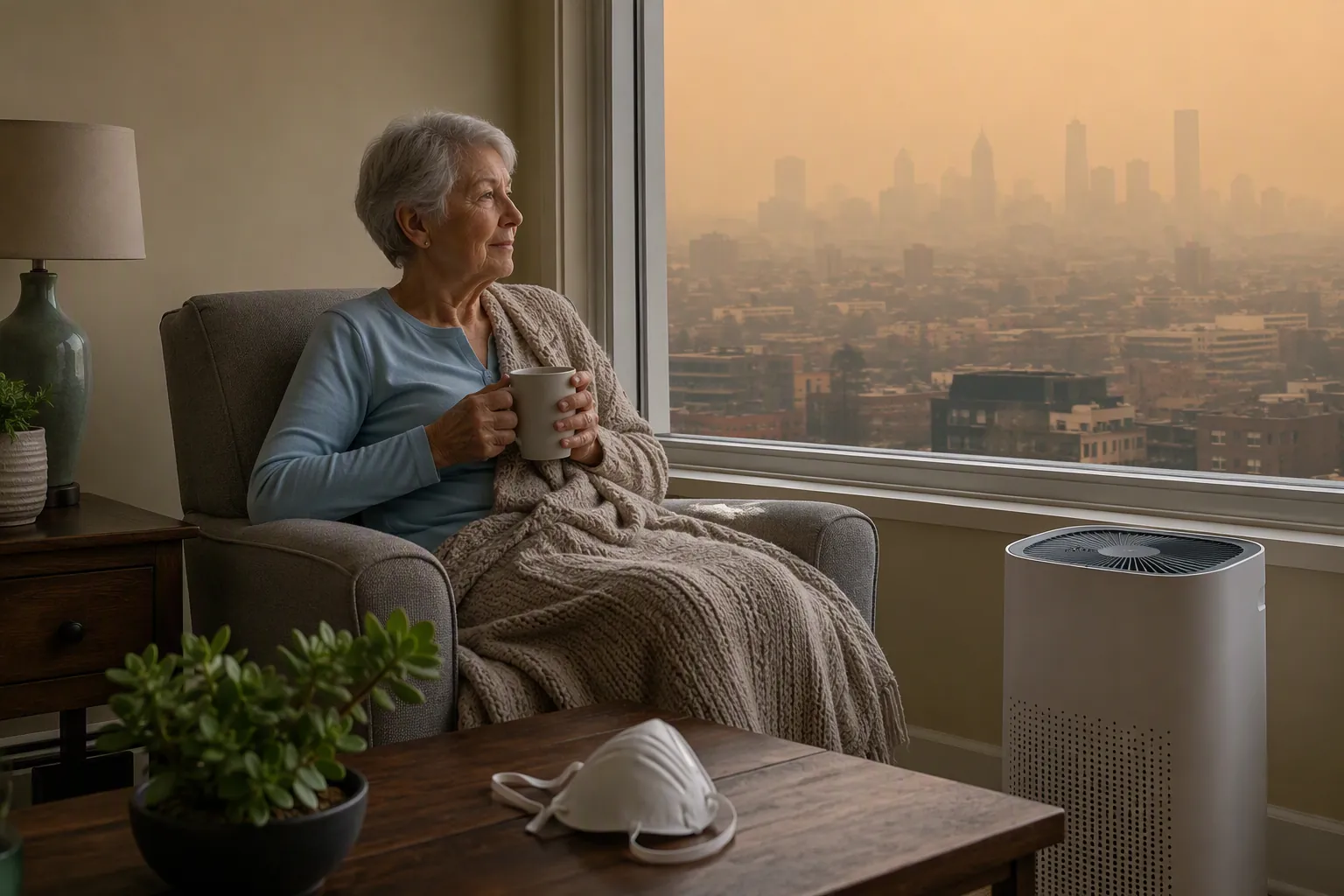
The act-now workflow
| What to do | What the caregiver is deciding |
|---|---|
| Confirm the AQI and alert type. | Is the air already in the sensitive-group range, or higher, for someone with lung disease? |
| Close up and filter the home. | Which room can become the cleanest room, and what equipment should run there? |
| Check medications and the written action plan. | Are controller medicines being taken as prescribed, and is there a 7–10 day supply on hand? [2] |
| If going out cannot be avoided, make it short and low-effort. | Can the trip be delayed, delivered, delegated, or done with a NIOSH-approved N95 for particle pollution? |
| Sort symptoms into watch, call, or emergency. | Is this familiar and improving, or is there coughing, shortness of breath, extreme fatigue, headache, dizziness, severe breathing trouble, or chest pain? |
That order matters. If the AQI is already high, the pharmacy trip, laundry room visit, dog walk, and dinner plan all get judged against the same question: will this add exposure or exertion to someone whose lungs already have less room for error?
Use the AQI as the first threshold, not background noise
The Air Quality Index runs from 0 to 500 and uses six color bands. The point that usually changes the day for a senior with COPD or asthma is orange: AQI 101–150, “Unhealthy for Sensitive Groups.” AirNow includes older adults and people with heart or lung disease among groups at higher risk from air pollution. [3]

| AQI range | Color | How to treat it for a senior with COPD or asthma |
|---|---|---|
| 0–50 | Green | Good. Keep normal routines unless the person’s action plan or symptoms say otherwise. [3] |
| 51–100 | Yellow | Moderate. Start paying attention if the person is unusually sensitive or symptoms are already present. [3] |
| 101–150 | Orange | Unhealthy for Sensitive Groups. This is the practical threshold for reducing outdoor exposure and exertion for many seniors with lung disease. [3] |
| 151–200 | Red | Unhealthy. Keep activity indoors in cleaner air as much as possible and avoid outdoor exertion. [3] |
| 201–300 | Purple | Very Unhealthy. Treat outdoor activity as something to avoid unless it is necessary and medically safe. [3] |
| 301–500 | Maroon | Hazardous. Stay in the cleanest indoor air available and follow local emergency guidance. [3] |
Age cutoffs are not written exactly the same everywhere, even when the advice is built from EPA-style AQI categories. The American Lung Association describes people 65 and older as a sensitive group in its AQI guidance; Michigan DHHS says adults 60 and older may be more likely to be affected by wildfire smoke. [4][5] For a caregiver, the safest way to use that difference is not to argue over the birthday. If the person is older and has COPD, asthma, heart disease, or frailty, orange is already a reason to tighten the day.
Make one room cleaner before negotiating the rest of the day
“Stay indoors” only helps if indoor air is actually being protected. During wildfire smoke, CDC guidance for people with chronic conditions includes staying indoors with filtered air when possible, using a portable air cleaner or HVAC filtration, and having enough medication for 7–10 days. [2]
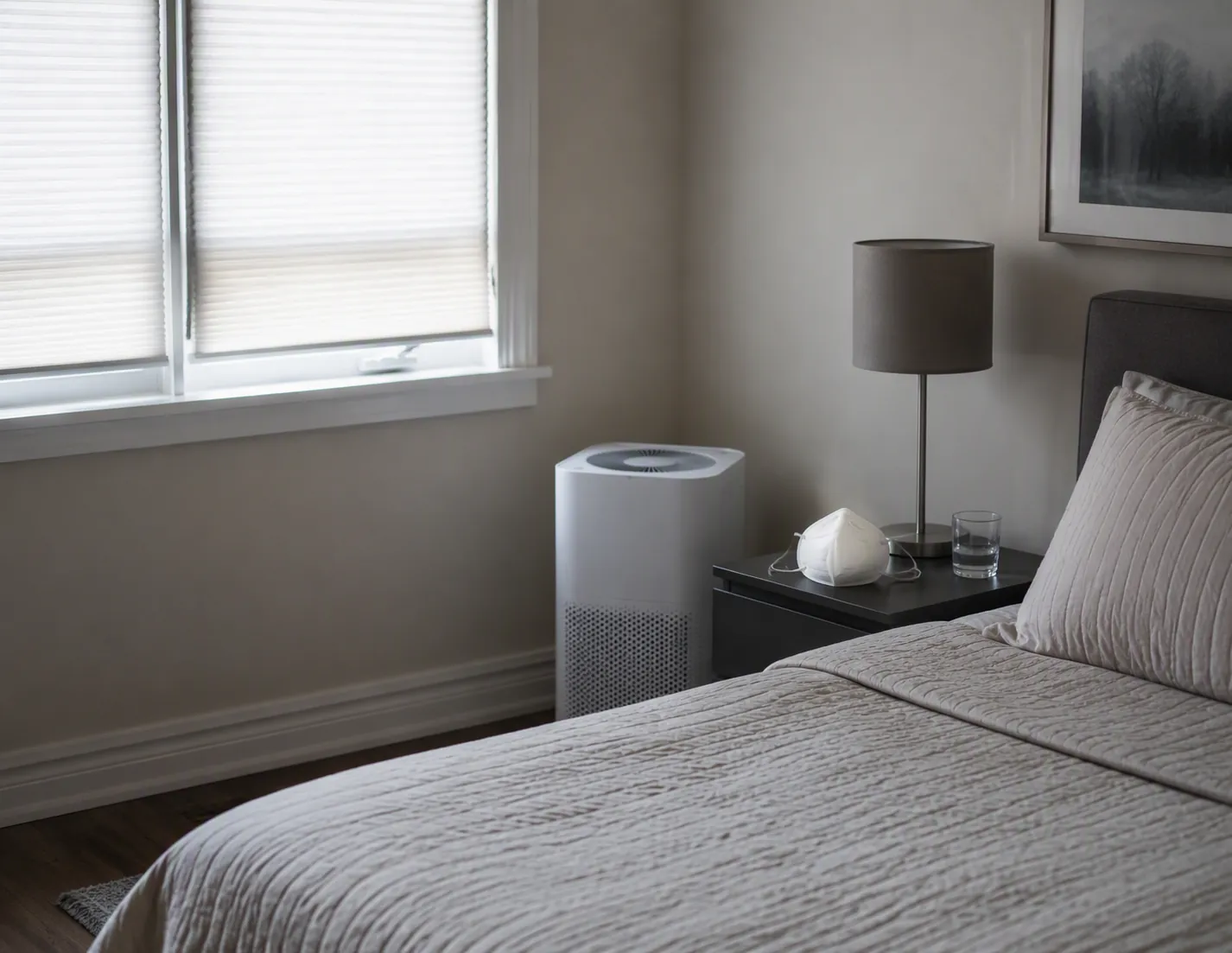
Start with the room where the senior can sit or sleep for several hours. Close the windows and doors. If the HVAC system has an outdoor-air intake, close it or set the system to recirculate if the system allows that. Run the HVAC fan with the best compatible filter installed; CDC guidance points to high-efficiency filtration, including MERV-13 or higher when the system can handle it. If there is no central system that can do that safely, use a portable air cleaner in the room. [2]
A clean room does not have to be perfect to be useful. It needs a closed door, the best filtration available, and fewer reasons to open the door repeatedly. Bring in water, the phone, charger, medication list, inhalers or nebulizer supplies if prescribed, glasses, hearing aids, and the written action plan. If the person uses electric medical equipment, do not wait until bedtime to check whether cords, batteries, and outlets are ready.
Then stop making particles indoors. On a warning day, skip frying, broiling, candles, incense, smoking, wood fires, and vacuuming unless the vacuum has high-efficiency filtration and the task cannot wait. The uncomfortable part is that a kitchen fan or bathroom fan may pull outdoor air into a leaky home, so use exhaust fans only when they are needed for immediate safety, such as clearing moisture or fumes, and keep the clean-room door closed while they run.
Medication check: do not improvise the medical plan
The medication check is not the time to decide that a senior should use more oxygen, skip a controller inhaler, or stretch doses because a refill is inconvenient. CDC recommends that people with chronic conditions keep a 7–10 day supply of medication during wildfire smoke events. [2] The American Thoracic Society tells people with lung disease to keep taking controller medications and says not to adjust oxygen flow rates without talking with a physician. [6]
The practical check is simple: Are the daily controller medicines being taken as prescribed? Is the rescue medication available, unexpired, and where the senior can reach it? Is the oxygen equipment, if prescribed, set exactly as ordered? Is there enough medication for the next week if travel, smoke, pharmacy closures, or caregiver availability become a problem?
A website checklist can reduce panic, but the provider-specific asthma or COPD action plan is the document that should decide medication changes, rescue steps, oxygen instructions, and when to call. If there is no written action plan, that becomes a pre-season task, not something to invent during a bad-air afternoon.
If leaving home cannot be avoided
Some trips can wait. Some cannot. If the senior must leave during a particle-pollution event such as wildfire smoke, keep the outing short, low-intensity, and direct: door to car, car to entrance, no extra stops, no carrying heavy bags, no “while we’re out” errands. National Weather Service guidance during air quality alerts includes reducing time outdoors and avoiding strenuous outdoor activity. [1]

For particle pollution, use a NIOSH-approved N95 respirator if the senior can wear one safely and get a decent fit. The American Lung Association distinguishes N95 respirators from cloth, paper, or surgical masks, which should not be treated as equivalent protection from particle pollution. [7] A mask is not a permission slip for exertion; it is a backup for a trip that could not be delayed or delegated.
If the senior cannot tolerate an N95 because of breathing discomfort, confusion, skin breakdown, or another medical issue, do not force the trip into the same plan. Call the provider’s office, pharmacy, home health agency, or family backup and look for delivery, curbside pickup, telehealth, or rescheduling.
Symptoms: watch, call the provider, or call 9-1-1
The highest-stakes part of an air quality warning is not the color on the map. It is deciding what a new symptom means at 11 p.m., when the senior says they are “just tired” and no one wants to overreact.
| Situation | What to do |
|---|---|
| Mild, familiar symptoms that improve after moving to cleaner indoor air, resting, and following the written action plan | Keep the person in cleaner air, reduce activity, and continue watching closely. Use the action plan rather than guessing. |
| Coughing, shortness of breath, extreme fatigue, headache, dizziness, or symptoms that are new, worse than usual, or not improving | Call the provider or the number listed in the action plan. Michigan DHHS includes symptoms such as coughing, shortness of breath, headache, dizziness, and fatigue in wildfire-smoke health guidance. [5] |
| Severe trouble breathing, chest pain that does not improve, or the action plan says emergency | Call 9-1-1. Do not wait for the air to improve or for morning. |
Dizziness and extreme fatigue also matter for fall prevention, but the evidence should be kept in its lane. The symptom guidance above supports taking dizziness seriously during smoke exposure, and a 2024 systematic review and meta-analysis found dizziness associated with fall risk in older adults. [5][8] That does not prove that air quality alert days directly cause falls. It does mean a dizzy senior should not be sent alone to the bathroom, stairs, porch, mailbox, or parking lot while everyone “keeps an eye on it” from another room.
If you are unsure which box the symptom belongs in, use the more cautious path. A provider call is not a failure of the home plan; it is part of the plan.
Before wildfire or ozone season, write the plan while nobody is rushed
The best alert-day plan is partly built before the alert. That is when the senior can be part of the decisions, the provider can clarify gray areas, and no one is trying to read inhaler labels in a smoky parking lot.
- Ask the clinician to review or create a written asthma or COPD action plan. Confirm what symptoms require a call, what symptoms require 9-1-1, and what the oxygen instructions are.
- Sign up for AirNow or EnviroFlash-style alerts and decide who checks them in the morning, who checks again later, and who calls the senior if the AQI rises. [3]
- Stock NIOSH-approved N95 respirators in sizes the senior can actually wear, and do a calm fit-and-comfort check before smoke season. [7]
- Buy the right HVAC filters before stores run low, and confirm whether the system can handle MERV-13 or better filtration. If not, choose a portable air cleaner for the clean room. [2]
- Choose the clean room. Put the portable air cleaner there, identify which windows and doors stay closed, and keep the medication list, charger, water, and action plan nearby.
- Prepare backup power for electric medical equipment. The American Lung Association’s natural-disaster guidance for people with lung disease includes planning for power outages and equipment needs. [9]
- Verify a 7–10 day medication supply before the season starts, not after the first smoke plume or ozone warning. [2]
- Post the plan where it will be used: refrigerator, medication area, clean room, and caregiver group chat. Include the provider number, pharmacy number, equipment supplier, emergency contacts, and the senior’s preferred hospital if applicable.
The written version does not have to be elegant. It has to answer the questions that otherwise get argued about under pressure: what AQI changes the day, which room becomes the clean room, who handles errands, where the N95s and filters are, how much medicine is on hand, and which symptoms mean call the provider versus call 9-1-1.
References
- During an Air Quality Alert, National Weather Service.
- Wildfire Smoke and People with Chronic Conditions, Centers for Disease Control and Prevention.
- Older Adults and Air Quality, AirNow.
- Air Quality Index, American Lung Association.
- Your Health and Wildfire Smoke, Michigan Department of Health and Human Services.
- Wildfires Disaster Guidance: Tips for Staying Healthy During Wildfires, American Thoracic Society.
- Protecting Yourself from Poor Air Quality, American Lung Association.
- Dizziness and the Risk of Falls in Older Adults: A Systematic Review and Meta-Analysis, 2024.
- Preparing for a Natural Disaster, American Lung Association.
Related reading
Noticed something outdated or inaccurate on this page? Flag a correction. We review every report against CDC, NIA, and AARP HomeFit guidance before updating a page.
Part of the Fall Prevention section.