
STEADI: assess
Keep Seniors Safe in a Heat Wave by Preventing Falls
A heat wave is also a fall-risk event for older adults: dehydration and heat-sensitive medications can trigger dizziness and blood-pressure drops that make falls more likely, sometimes a day or two after the hottest hours. Caregivers learn why that chain happens, which medication classes amplify it, and how to plan ahead and spot the warning signs that call for emergency care.
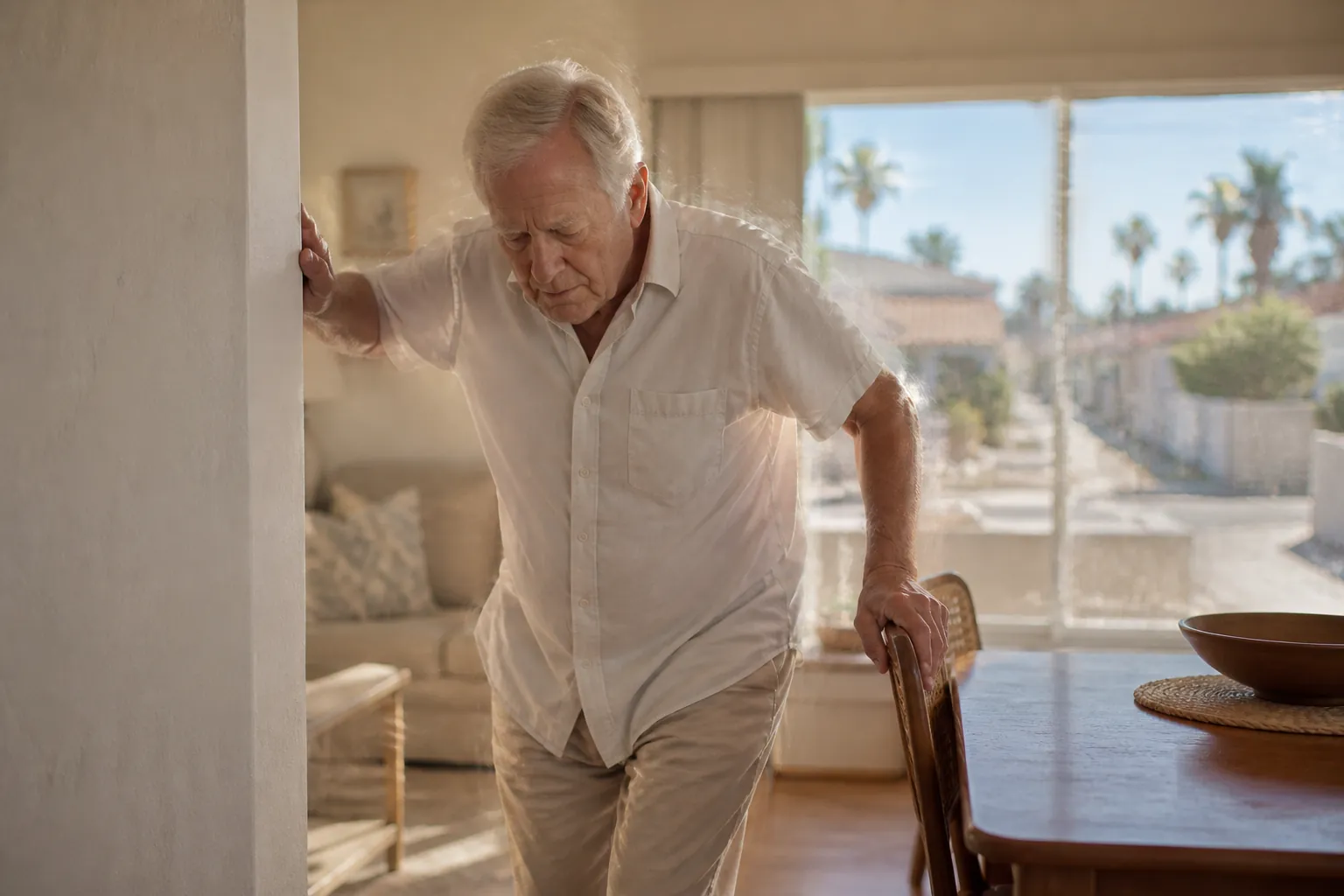
During a heat wave, the fall risk for an older adult can rise before anyone in the room thinks, “This is heat illness.” The first visible problem may be that Mom stands up from the sofa, gets lightheaded, reaches for the wall, and goes down. For caregiving purposes, treat the hottest day and the day or two around it as a watch window, not just the worst afternoon. The point is not that every fall during those roughly 72 hours is heat-related. The point is that dehydration, medication effects, and blood-pressure drops can be working quietly before the family sees a classic emergency.
If there are signs of heat stroke, stop reading and call 911. The CDC lists warning signs including confusion, fainting, not sweating, and a body temperature above 103°F; these are emergency signs, not home-monitoring problems.[1] If a fall has already happened, move into the site’s act-now post-fall crisis path first: check for injury, avoid rushing the person up, and get urgent help when there is head injury, severe pain, new weakness, chest pain, trouble breathing, or confusion.
This article is for prevention and recognition, not a substitute for medical care. It should help a caregiver ask better questions before a heat advisory and notice the right clues during one.
The fall risk starts with fluid, not the thermometer
The usual advice about how to keep seniors safe during a heat wave often begins with water, shade, and air conditioning. Those still matter. But for fall prevention, the more useful question is narrower: what happens when an older adult becomes even mildly dehydrated and then stands up?
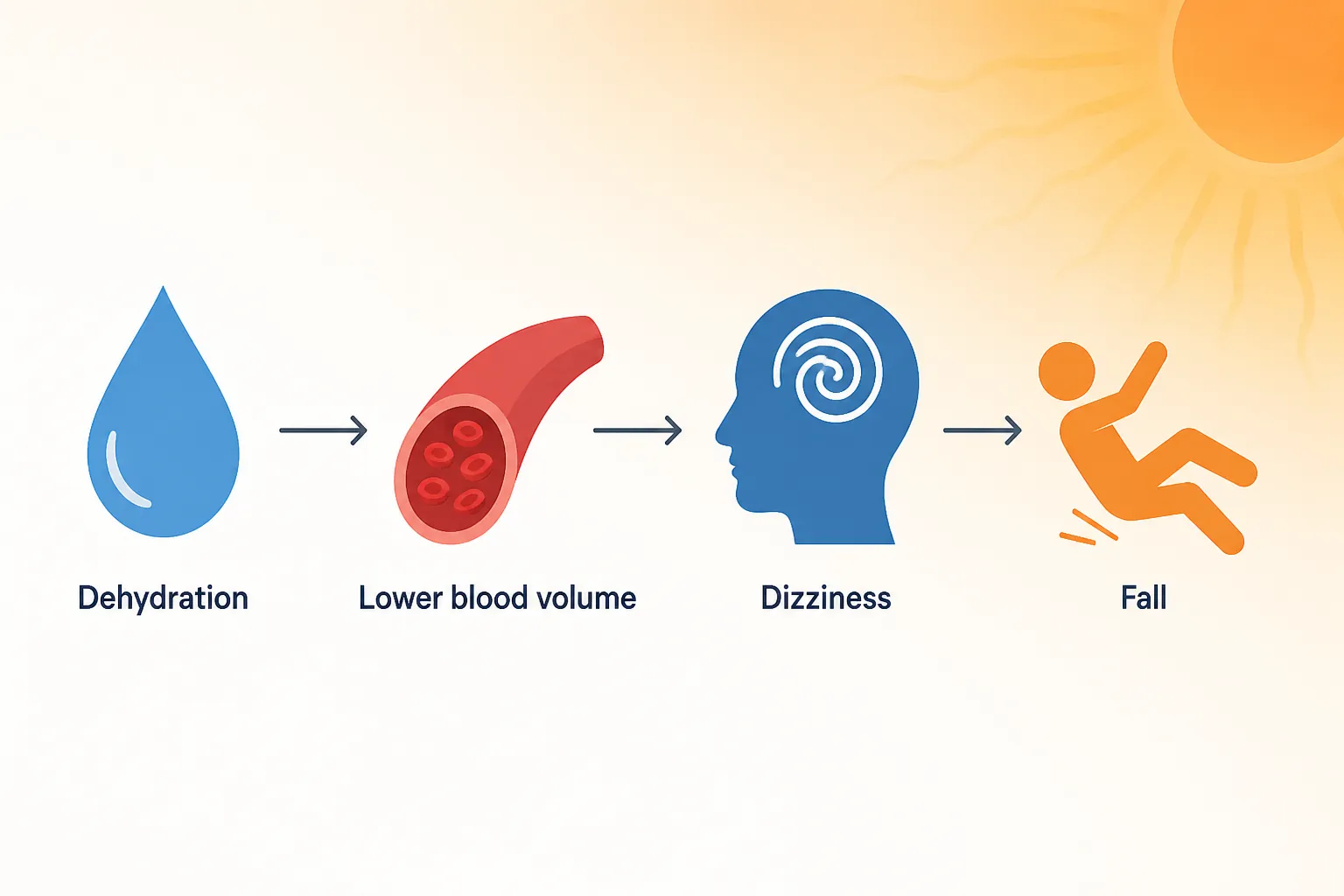
Dehydration reduces the amount of fluid circulating in the body. With less circulating volume, the body has less margin when blood needs to move quickly to the brain. Hamrick and colleagues describe dehydration as a contributor to impaired brain perfusion, followed by dizziness and orthostasis; they also note that orthostatic hypotension has been associated with falls.[2]
That chain matters because the risky moment is often ordinary. An older adult rises from a dining chair. They get up from bed to use the bathroom. They stand after sitting in a warm room for an hour. Blood pressure that was adequate while seated may drop during the position change. For a few seconds, the brain does not get the flow it needs. The person feels woozy, their vision may dim, their knees soften, and the nearest grab point may be too far away.
Families often look backward and miss the pattern because the older adult may not have seemed dangerously hot. That is not reassuring enough. Older adults can be more vulnerable in heat because the body may not adjust as well, and the CDC notes that people aged 65 and older are at higher risk during hot weather.[1] The National Institute on Aging also warns that older adults may not notice when they are overheated and may have health conditions or take medicines that affect heat response.[3]
So a fall during a heat wave deserves two lines of thinking at once. Yes, treat it as a fall: injury, head strike, pain, mobility change, fear of getting up again. Also treat it as a possible dehydration warning sign, especially if there has been poor intake, sweating, diarrhea, fever, unusual sleepiness, new confusion, or repeated dizziness when standing.
The stand-up test caregivers can actually observe
Caregivers cannot measure blood volume at the kitchen table. They can watch the transfer from sitting to standing, which is where the mechanism often shows itself.
- Does the person pause, sway, or grab furniture after standing?
- Do they say they feel “off,” “weak,” “floaty,” or “a little dizzy” rather than “hot”?
- Are bathroom trips more unsteady than usual, especially at night or early morning?
- Has the person been eating or drinking less because heat blunted appetite or thirst?
- Is there new confusion, unusual fatigue, or a change in walking speed?
The answer is not to hover or yank independence away. It is to slow the risky transition. During the heat window, build in a seated pause before standing, a standing pause before walking, and a clear path to the bathroom. If the person uses a cane or walker, it should be within reach before they rise, not across the room where they will try to get to it while dizzy.
This is also when family language matters. “You don’t look hot” can shut down the clue. “Did the room spin when you stood up?” gets closer to the risk.
Medication review belongs in the heat-wave plan
The medication list is where heat safety and fall prevention meet. CDC STEADI places medication review, orthostatic blood pressure, gait, balance, and fall history inside the same fall-risk conversation.[4] A heat wave gives that conversation more urgency, because several medication classes can affect heat tolerance, hydration, blood pressure, alertness, or balance.
CDC clinician guidance on heat and medications highlights several groups that can increase heat-related risk, including diuretics, anticholinergics, antipsychotics, beta blockers, and stimulants.[5] These are not obscure drugs to many families. They may be sitting in the weekly pill organizer already.

| Medication class | Why it matters during heat | Caregiver action |
|---|---|---|
| Diuretics | Can affect fluid balance, which matters when dehydration and standing blood-pressure drops are already concerns. | Ask before the heat season what dehydration signs should trigger a call and whether any monitoring plan is needed. |
| Beta blockers | Can affect the body’s response to heat and exertion. | Ask what symptoms to watch for during heat advisories, especially dizziness, weakness, or unusual fatigue. |
| Anticholinergics | Can interfere with sweating and heat regulation and may also contribute to confusion or unsteadiness in some older adults. | Bring the full medication list, including sleep aids, bladder medicines, allergy medicines, and over-the-counter products. |
| Antipsychotics | Can affect thermoregulation, alertness, and movement safety. | Ask the prescriber what heat-related changes would be urgent and who to call after hours. |
| Stimulants | CDC includes stimulants among medication groups relevant to heat risk. | Do not adjust timing or dose without clinician direction; ask whether heat advisories require extra monitoring. |
The boundary is firm: do not stop, skip, split, or “hold” these medicines on your own. A diuretic may be essential for heart failure or blood-pressure control. A psychiatric medication may be preventing a crisis. A beta blocker may be protecting the heart. The useful action is not improvising with the pill bottles during an advisory; it is arranging a pharmacist or clinician review before the next stretch of dangerous heat.
A practical review does not need to be dramatic. Bring a current medication list, including prescriptions, over-the-counter drugs, supplements, patches, eye drops, and “only sometimes” medicines. Ask three plain questions: Which of these could worsen dehydration, dizziness, confusion, sweating problems, or low blood pressure in heat? What symptoms should make us call you? If a heat advisory lasts several days, what should we monitor at home?
Tie the review to fall history, not just weather
The best heat-season medication review includes the details families tend to treat as separate: “She fell in the bathroom last summer,” “He gets dizzy when he stands,” “Her walking is worse after lunch,” “He drinks less when it’s hot because he doesn’t feel thirsty.” Those are fall-prevention facts. They help the clinician decide whether the heat plan needs standing blood-pressure checks, lab monitoring, medication timing review, mobility support, or a more specific hydration plan.
Hydration advice has to respect the person’s medical limits
“Drink more water” is simple advice until the person has heart failure, kidney disease, low sodium, swallowing trouble, urinary urgency, or a medication plan built around fluid balance. The NIA recommends drinking plenty of liquids in hot weather but also notes that some health conditions and medicines require medical guidance.[3] That is the right level of caution.
Instead of chasing one universal cup count, ask the clinician what “enough” means for this person during a heat advisory. For some older adults, that may mean scheduled small drinks, water-rich foods, electrolyte guidance, or checking weight or blood pressure. For others, especially those with heart or kidney limits, the plan may be more restricted and more closely monitored.
The fall-prevention reason to make the plan specific is straightforward: if the older adult avoids drinking because they fear urinary accidents, they may become more dehydrated; if they rush to the bathroom after finally drinking a lot, they may fall on the way. Bathroom safety is part of hydration planning. Clear the route, use night lighting, keep mobility aids nearby, and consider whether urgency, continence supplies, or toileting schedules need attention before the weather turns dangerous.
Cooling matters, but do not let the fan become the plan
A cooler environment lowers strain on the body, and indoor temperature matters. Air conditioning, cooling centers, shaded rooms, cool showers, light clothing, and reduced activity can all be part of the plan. Fans deserve a more careful note: the CDC advises that electric fans may provide comfort, but when temperatures are very high they may not prevent heat-related illness; fan use should not replace getting to a cooler place.[1]
For fall prevention, also look at what cooling equipment does to movement. Extension cords across a walking path, a fan placed where a walker needs to turn, or a dark room kept closed against the sun can create a second hazard. A cooler room that is harder to walk through is not a safe room yet.
What to watch during the heat window
Before the heat arrives, decide who is checking what. The adult child who lives across town can review the medication list and confirm the clinician contact. The spouse can watch standing and walking. The older adult can be treated as the lead witness to symptoms, not as a passive project.
| Timing | Fall-prevention focus | Escalate when |
|---|---|---|
| Before a heat advisory | Review medications with a pharmacist or clinician; ask about dizziness, fluid limits, and standing blood pressure. | There is a recent fall, repeated near-falls, worsening dizziness, or confusion. |
| During the hottest stretch | Slow position changes; keep fluids within the medical plan; keep paths clear; monitor bathroom trips and standing dizziness. | There is fainting, confusion, not sweating, very high body temperature, chest pain, severe weakness, or a fall with injury. |
| The day or two after | Keep watching for delayed dehydration clues, new unsteadiness, unusual fatigue, or fear of walking. | Dizziness persists, the person falls, mental status changes, or intake remains poor. |
Do not wait for the older adult to use the word “dehydrated.” Many will not. Some will say they are tired, weak, not hungry, or “fine if everyone would stop fussing.” The observation that matters is functional: they are slower to rise, less steady in the bathroom, more confused than usual, or suddenly unwilling to walk across a room they handled yesterday.
When a fall happens during or soon after extreme heat, document more than the landing. Write down the room temperature if known, recent fluid intake, sweating or lack of sweating, medication timing, diarrhea or fever, dizziness on standing, and any confusion before or after the fall. That information helps the next clinician see the heat-and-fall pattern instead of treating the event as an isolated trip.
The useful heat-wave plan is not a long seasonal checklist. It is a fall-prevention plan with heat added where it belongs: medication review before the advisory, hydration and cooling inside medical limits, slower standing and safer bathroom routes during the hottest days, and a lower threshold to treat dizziness, confusion, or a fall as a possible dehydration warning sign.
References
- Heat and Older Adults (Aged 65+), CDC.
- Association Between Dehydration and Falls, PMC, 2020.
- Hot Weather Safety for Older Adults, National Institute on Aging.
- STEADI - Older Adult Fall Prevention, CDC.
- Heat and Medications – Guidance for Clinicians, CDC.
Related reading
Noticed something outdated or inaccurate on this page? Flag a correction. We review every report against CDC, NIA, and AARP HomeFit guidance before updating a page.
Part of the Fall Prevention section.