
Bathroom Remodel for Elderly: A Phased Safety Upgrade Guide (What to Do Now, Next, and Later)
Learn how to make your parent's bathroom safer without breaking the bank. This guide breaks down a three-phase approach — immediate fixes under $500, key upgrades under $3,000, and full renovation — so you can address the highest fall risks first while planning for the future.
Your mother just fell in the bathroom. She's sore but not injured. You're relieved, but you also know it will happen again. You start searching for "bathroom remodel for elderly" and immediately see quotes like $6,600 to $28,000. Your stomach drops. You think: we cannot afford that now, so we wait. That waiting is exactly what the data says kills people.
Here is the number that stopped me: among adults 85 and older, 51.7% of bathroom injuries happen on or near the toilet. Not the shower, not the tub. The toilet. In 2008, an estimated 234,094 nonfatal bathroom injuries among people 15 and older were treated in U.S. emergency departments. Falls caused 81.1% of them. For adults 85 and older, the injury rate was 515 per 100,000 — and more than half of those injuries were centered on a spot you probably thought was harmless.
The $500 fix that cuts the biggest risk
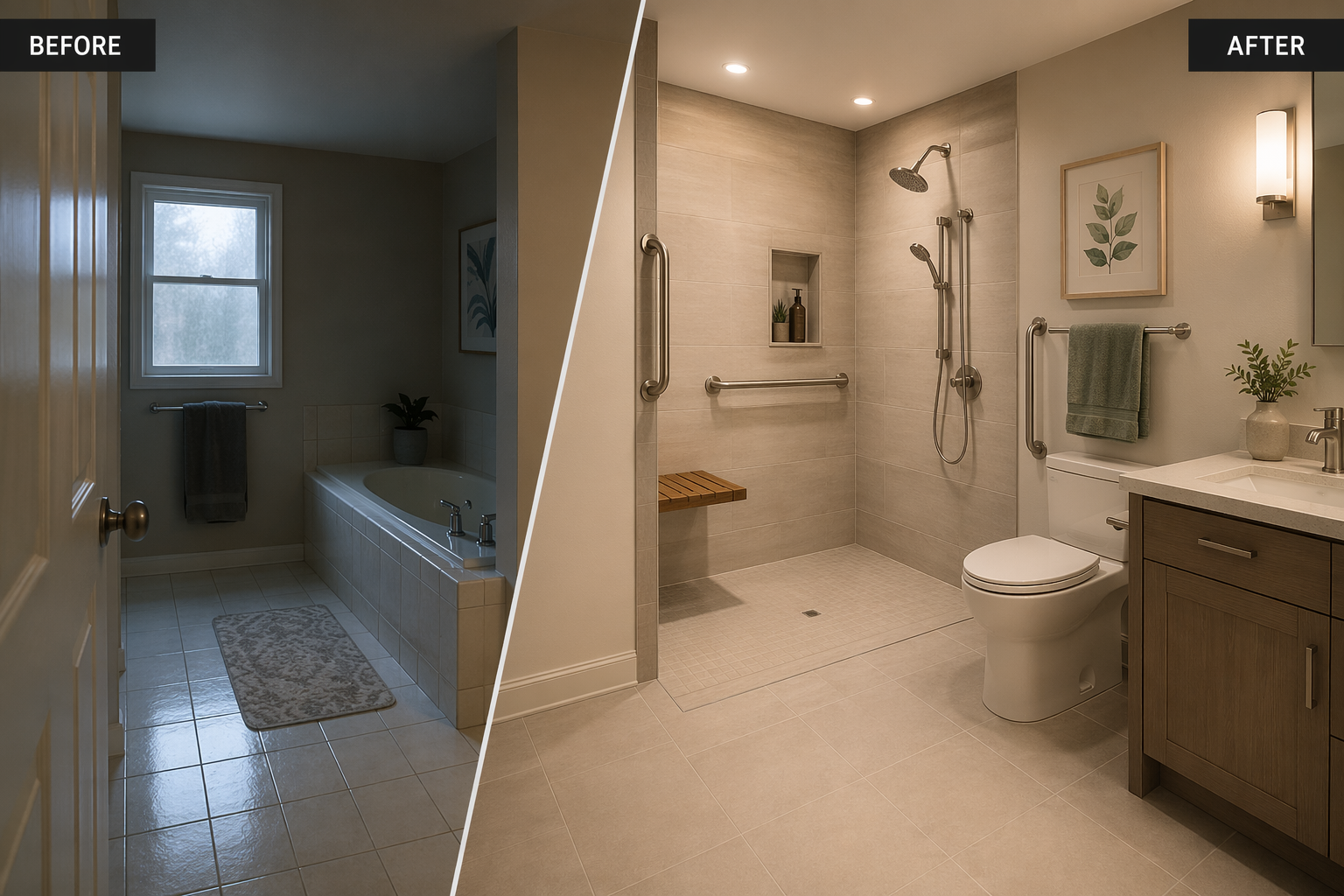
You do not need a full remodel to address the toilet. Phase 1 targets it directly. For less than $500 you can eliminate the most common fall scenario in the bathroom. Here is what to buy and where to put it:
- Grab bars at the toilet and shower — $250 to $500 installed for five locations. These are the single most effective safety device. Do not use suction-cup bars; they fail. Install with blocking into the studs or use a professional handyman.
- Raised toilet seat with handles — $30 to $60. Raises the seat height by 3–5 inches, reducing bending and standing effort. Combined with a grab bar beside the toilet, this directly addresses the 51.7% stat.
- Lever faucet handles — $20 to $50 each. Replace round knobs that require grip strength. A simple switch, but essential for someone with arthritis or hand weakness.
- Non-slip bath mats and adhesive treads — $15 to $40. Put them inside and immediately outside the shower, and beside the toilet. Skip the decorative rug that shifts underfoot.
- Motion-activated night light — $10 to $25. A trip to the bathroom in the dark is a fall waiting to happen. Plug one in near the bathroom door or inside the room.
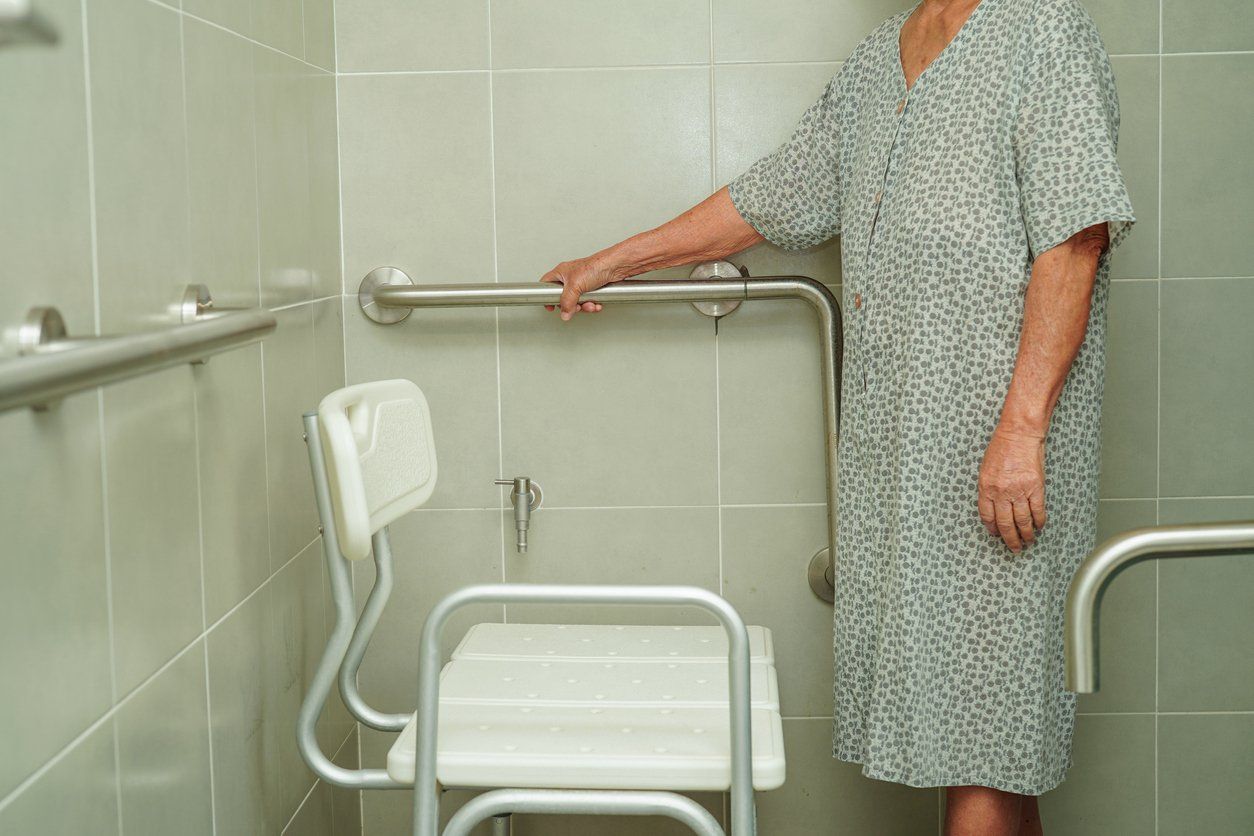
A study in the Journal of the American Geriatrics Society found that home modifications reduced falls by 26% and fall-related injuries by 33%. I treat those numbers as directional — the study had limitations — but the direction is consistent: making changes reduces harm. And Phase 1 alone, even without the bigger upgrades, chips away at that 51.7% risk.
A cross-sectional study of Medicare beneficiaries who fell found that only 55.5% had made any bathroom modifications. Among those who had multiple falls, 40.2% had zero modifications. The people who need safety changes most are the ones who have made none. I do not think those families chose poorly. I think they were told they needed a complete remodel, got overwhelmed by the price tag, and did nothing. The default advice — "renovate the whole bathroom" — actually increases risk because inaction becomes the only affordable option.
The PMC study also showed that non-Hispanic Black and Hispanic older adults had significantly lower odds of having bathroom modifications compared with non-Hispanic whites (odds ratios 0.38 and 0.64). If that describes your family, know that the cost and access barriers are real — but Phase 1 items are often covered by Medicaid waivers or local community programs. Do not assume you cannot afford safety.
Save $400 per grab bar with a $6 board
Even if you install Phase 1 items now, you will likely want more grab bars or a full shower bench in a few years. The problem: adding bars to finished drywall requires cutting holes, reinforcing between studs, and patching — adding $200 to $400 per bar in labor and materials.
There is a nearly free fix: during any wall work — even patching a small hole — install 2x6 wood blocking between the studs at the locations where grab bars might go. A $6 board and 10 minutes now saves hundreds later. This is the single most cost-effective foresight move in the entire bathroom remodeling playbook, and almost no one does it because no one tells them.
When to move to Phase 2 or Phase 3
Phase 2 ($1,000–$3,000) adds: a comfort-height toilet (17–19 inch seat height, $200–$400), a handheld shower with slide bar for seated bathing ($150–$300), a fold-down shower bench ($150–$400), non-slip flooring rated with a coefficient of friction of at least 0.42 when wet, and anti-scald mixing valves to prevent burn injuries ($100–$200 plus installation). These are the upgrades that make the bathroom feel senior-friendly without a full gut.
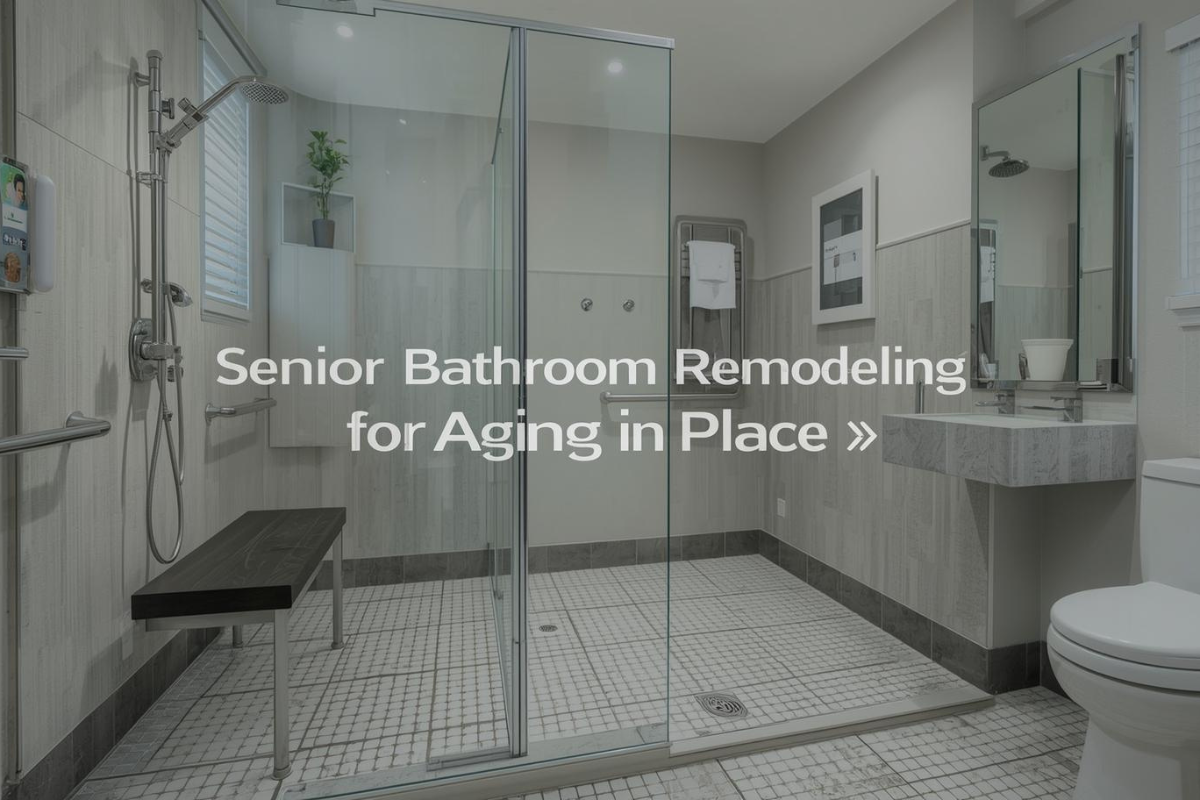
Phase 3 ($5,000–$25,000) is the full renovation: a curbless walk-in shower that eliminates the step-over hazard, a wider doorway (32–36 inches) to accommodate a walker or wheelchair, continuous non-slip flooring throughout, and upgraded lighting. A curbless shower alone runs $6,000 to $10,000. Doing the full Phase 3 when your parent is already in a wheelchair or uses a walker full-time can be the difference between staying at home and moving to assisted living, which costs $5,419 per month nationally — over $65,000 a year. A $25,000 renovation that delays or avoids facility care pays for itself in less than five months.
But do not hear me saying every family needs Phase 3. If your parent is still mobile and had a trip-and-fall, Phase 1 plus blocking is likely enough for now. The decision depends on mobility decline, not fear.
| Phase | Cost Range | Key Upgrades | Best For |
|---|---|---|---|
| Phase 1 | Under $500 | Grab bars, raised toilet seat, non-slip mats, lever handles, motion light | Immediate risk reduction after a fall, regardless of mobility level |
| Phase 2 | $1,000 – $3,000 | Comfort-height toilet, handheld shower, fold-down bench, non-slip flooring, anti-scald valves | Declining balance or reduced strength, but can still shower safely |
| Phase 3 | $5,000 – $25,000 | Curbless shower, wider doorway, full non-slip flooring, lighting upgrade | Use of walker or wheelchair, significant mobility decline |
| Ongoing | Nearly $0 now | Install blocking for future grab bars | Any phase — do it during any wall work |
Here is a framework you can use tomorrow:
- If your parent is still mobile and had a single trip-fall: Phase 1 now, plus install blocking during any current wall work. Schedule Phase 2 within six months if balance continues to decline.
- If your parent uses a walker or has been diagnosed with a balance disorder: Phase 1 now, Phase 2 within three months, and start evaluating Phase 3. The curbless shower becomes a necessity, not a luxury.
- If your parent has had multiple falls and no modifications yet (remember that 40.2% statistic): act immediately on Phase 1 and consult an occupational therapist for a full home assessment. Phase 3 may be justified sooner rather than later.
- If your parent's dementia is progressing and bathroom safety is a concern: Phase 1 now, and consider adding a for emergency response. Phase 3 depends on whether they can still safely use the bathroom with cues.
Start with the toilet, today
A full bathroom renovation is a worthy goal, but it should never be a prerequisite for safety. The data is clear: the highest-risk spot in the bathroom — the toilet area — can be secured for under $500 this week. Do not wait until you can afford the perfect renovation. Your mother's next fall does not wait.
Buy the raised toilet seat. Order the grab bars. Call the handyman. Install the blocking. Then, if her mobility declines further, you will have a foundation to build on — not a bathroom that stayed dangerous while you saved.
Related reading
Noticed something outdated or inaccurate on this page? Flag a correction. We review every report against CDC, NIA, and AARP HomeFit guidance before updating a page.
Part of the Fall Prevention section.