
STEADI: intervene
What to do if a boil water advisory hits your elderly parent
A boil water advisory is riskier for an elderly parent than the standard boil-for-one-minute guidance suggests — burns and falls from lifting hot pots, quiet dehydration, and bathing choices all need different handling. Get the first-hours caregiver steps: low-effort safe water, hydration monitoring, hygiene adjustments, and when to call a doctor.
Before the stove goes on, make the safety call
If you just learned a boil water advisory applies to your elderly parent’s home, the first question is not how long the water should boil. It is whether your parent can safely carry out the instruction at all. A boil water notice matters because the water may carry germs that can make people sick, and New York State Department of Health says that illness is “not usually serious or life threatening except in the elderly, the very young or those who are immune compromised.” [1]
So the answer to what to do if a boil water advisory applies to an elderly parent starts with a quick triage pass. Is your parent alone? Can they fill a pot without straining, move it to the stove, recognize a full rolling boil, wait, turn the burner off, leave the water untouched while it cools, pour it into a clean container, label it, and remember which water is safe? If any part of that chain is shaky, do not leave the plan as “just boil it.”
This is also not a moment to argue about independence in the abstract. The dangerous part may be the choreography: a wet floor near the sink, a heavy stockpot, steam in the face, a rushed transfer from burner to counter, or a parent who insists they are fine and then quietly drinks less because the kitchen routine has become confusing.
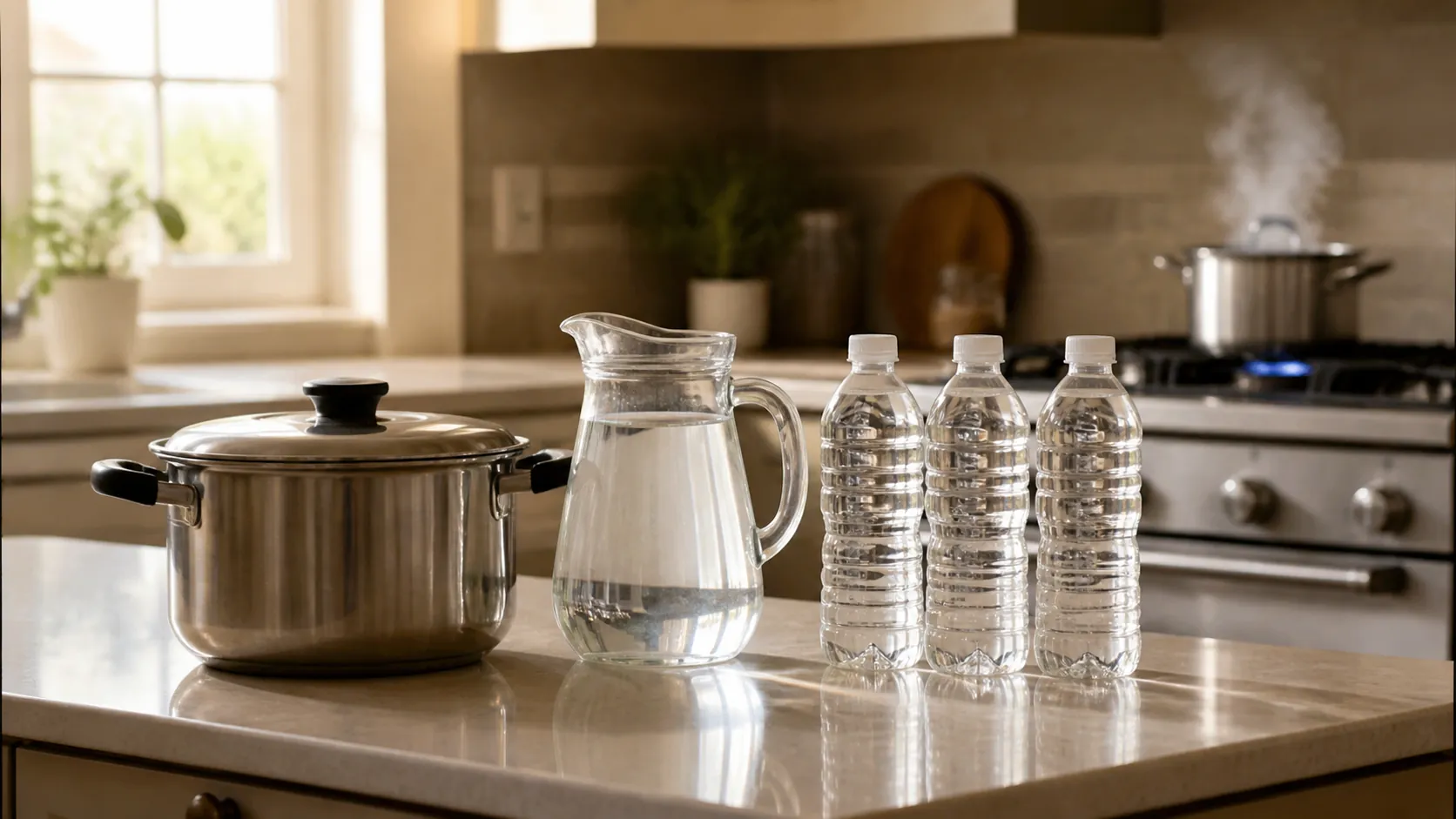
In the first hour, aim for the lowest-lift safe-water plan available:
- Use sealed bottled water if it is already in the house or can be delivered quickly.
- If water must be boiled, have a capable person make a cooled batch in advance rather than asking your parent to boil water cup by cup whenever they need it.
- Do not ask an older adult to carry hot water across the kitchen.
- Put safe water where it will actually be used: beside medications, near the favorite chair, by the bathroom sink for toothbrushing, and next to the coffee or tea supplies if those are part of the day.
- Keep unsafe tap water visually separate. A note on the faucet or a covered pitcher marked “boiled and cooled” is not fussy; it prevents autopilot mistakes.
This article is general safety information, not medical advice. Follow the local advisory and your state or local health department’s instructions. If your parent is ill, medically fragile, immunocompromised, unusually confused, dizzy, or unable to keep fluids down, contact a health professional or emergency services based on severity.
Set up safe water without creating a burn or fall emergency
The CDC and NYSDOH baseline is to bring water to a full rolling boil for 1 minute, or 3 minutes at elevations above 6,500 feet, then cool it before use. Local instructions still control: some advisories may give different directions, and boiling does not remove chemicals from water. If the notice involves chemical contamination or tells residents not to use the water, bottled water or another official alternative is the safer route. [1][2]
For an older parent, the cooling step deserves as much respect as the boil time. NYSDOH warns that boiled water may take about 30 minutes to cool and advises making a batch in advance “so you will not be tempted to use it hot and risk scalds or burns.” [1] That sentence should change how the kitchen is managed. Hot water should stay on the stove or a stable counter until cool; it should not travel in a full pot through a narrow kitchen while someone is tired, distracted, or using a walker.
Water for drinking, cooking, brushing teeth, and rinsing uncooked foods should be bottled or boiled and cooled during the advisory. [1][2] The point is not to turn every sip into a production. It is to make safe water the easy default before your parent gets thirsty, reaches for the tap, or gives up.
| Need | Lowest-risk setup for many elderly parents |
|---|---|
| Drinking and medications | Sealed bottled water, or cooled boiled water poured into a lightweight cup or small pitcher |
| Cooking | Bottled or cooled boiled water staged before the meal starts |
| Brushing teeth | A labeled cup or bottle by the sink; a faucet note if your parent uses tap water automatically |
| Rinsing uncooked foods | Bottled or cooled boiled water, or choose foods that do not require rinsing until the advisory ends |
| Coffee, tea, or mixed drinks | Use safe water from the prepared batch; do not rely on habit or assume an appliance makes unsafe water safe unless the local advisory says so |
If you or another capable person is boiling water for the household, make the batch boring and repeatable. Use a smaller pot if that is what can be lifted safely. If the sink-to-stove move is the risky part, transfer water with a cup or lightweight pitcher instead of filling one large pot at the sink. After boiling and cooling, store the water in clean, covered containers and label the container with the boiling date. [3]
A label does two jobs. It tells your parent which container is safe, and it keeps a rotating cast of adult children, neighbors, aides, and grandchildren from inventing different systems. During a short advisory, confusion can become the hazard almost as quickly as the water itself.
If your parent lives alone
Do not solve this only by phone if the boiling task is beyond them. Arrange a delivery of bottled water, ask a nearby person to place safe water on the counter, or go over yourself if you can. If your parent already has home health, an aide, or a regular check-in person, tell them there is an active advisory and exactly where safe water is stored. The instruction has to survive after the call ends.
Protect hydration before your parent starts rationing drinks
A boil water advisory disrupts the tiny routines that keep an older adult drinking: the glass by the sink, the water with pills, the cup of tea, the refill during a TV show. That matters because older adults may not feel thirst early. Cleveland Clinic quotes geriatric clinical nurse specialist Anne Vanderbilt: “By the time an older adult feels thirsty, that’s already an indication of early dehydration.” Cleveland Clinic also describes dehydration as a common cause of hospitalization among people 65 and older. [4]
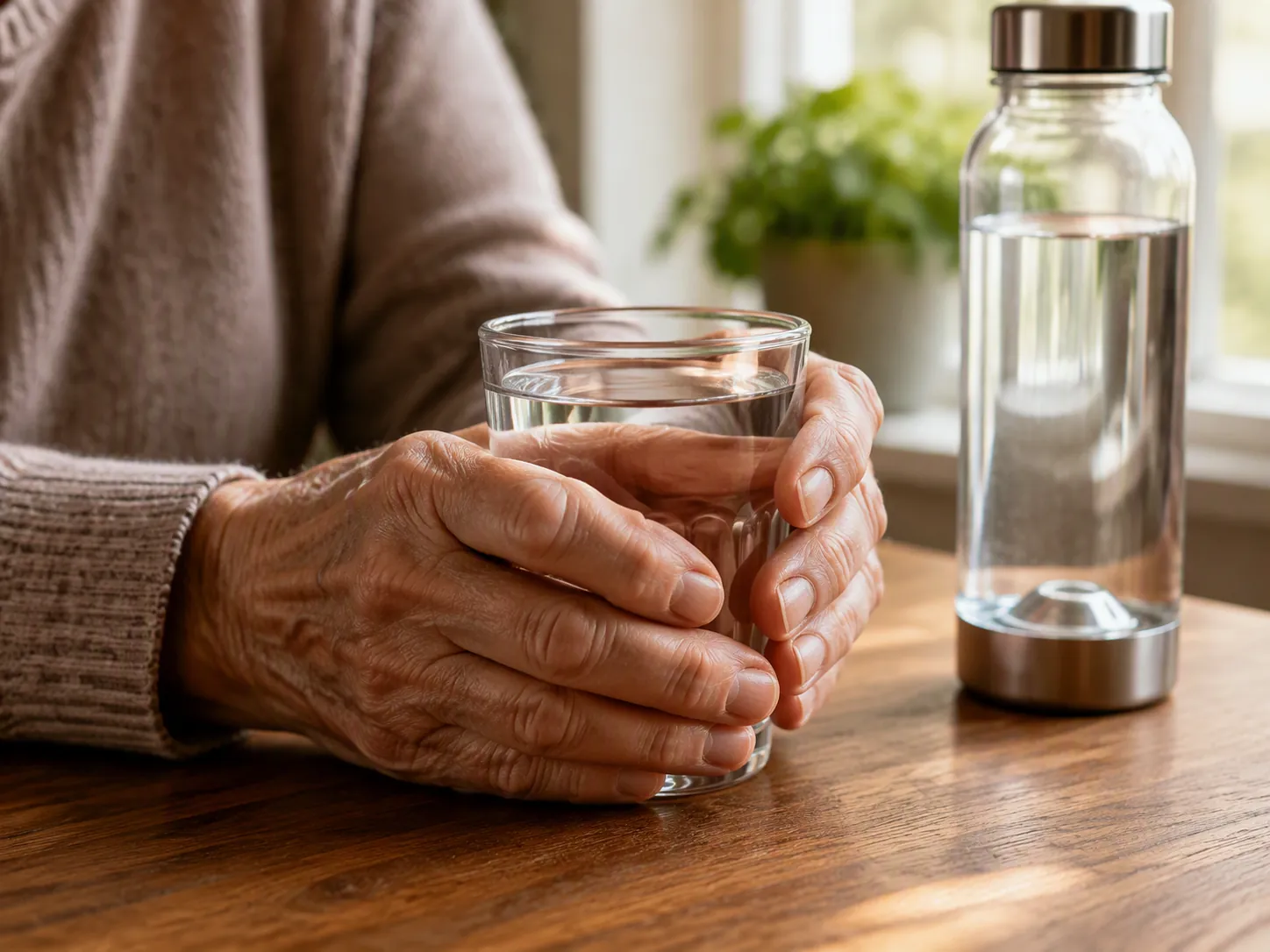
Do not wait for your parent to ask for water. Put safe water in the places where drinking already happens. If they take morning and evening medication, place a small bottle or covered cup beside the pill organizer. If they sit in one chair most of the day, put a lightweight bottle within arm’s reach. If they dislike plain bottled water, use safe water to prepare the drink they are most likely to accept, unless a clinician has restricted fluids or certain beverages.
Watch for changes that could make the advisory a fall-safety problem. Healthline lists dehydration symptoms in older adults that include dizziness, loss of coordination, and confusion. [5] Those symptoms do not prove dehydration, and this is not a diagnosis. But they are not “just aging,” either, especially when safe water has suddenly become harder to get.
- Call or visit at the times your parent usually drinks, not only at mealtimes.
- Ask what they have actually had to drink, rather than asking whether they are “drinking enough.”
- Make each serving light enough to lift one-handed if grip strength is limited.
- If they sound newly confused, dizzy, weak, or unsteady, involve a clinician or urgent help rather than trying to manage the advisory as a kitchen errand.
Bathing and handwashing need their own plan
Bathing guidance is one place where older adults may need a stricter rule than the rest of the household. Connecticut Department of Public Health says infants, toddlers, the elderly, and severely immunocompromised people should be bathed using boiled or bottled water during boil water notices and advisories. [6] NYSDOH also notes that sponge bathing can help minimize the chance of swallowing water. [1]
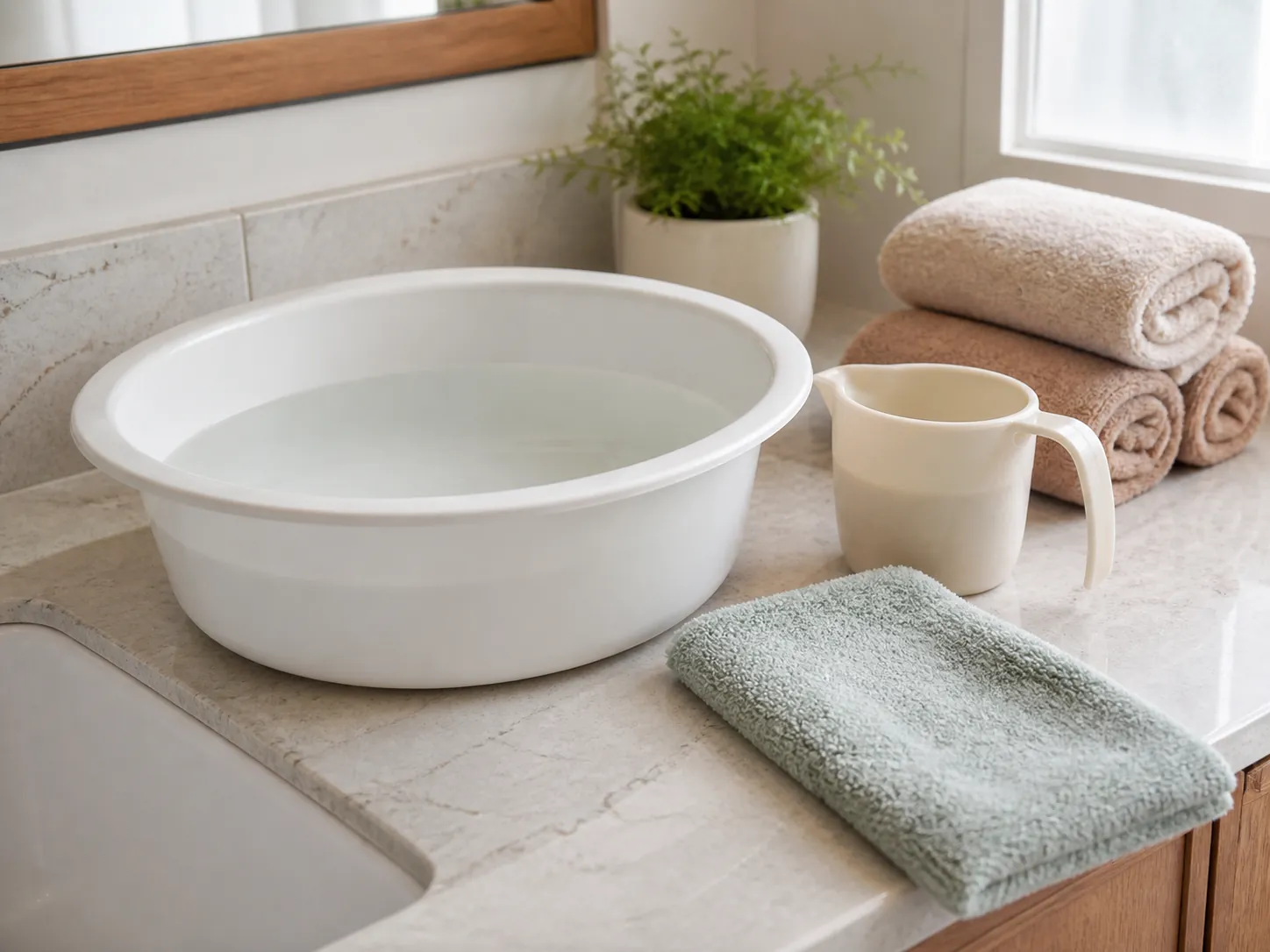
That does not mean filling a tub with hot boiled water. For many older adults, the safer setup is a basin of boiled-and-cooled or bottled water, a washcloth, towels within reach, and a stable seated position. If the advisory lasts more than a day, a sponge bath may be less risky than climbing into a shower while tired, dehydrated, or worried about what water is safe.
Handwashing is more conditional because local notices can differ. Follow the local advisory. If your parent has fragile skin, open cuts, severe immune compromise, or a habit of touching their mouth while washing, use the stricter safe-water setup and ask the local health department or clinician for guidance. Keep hand sanitizer nearby if it is appropriate for your parent and the situation, but do not let it replace clear local instructions when hands are visibly dirty or caregiving tasks require washing.
Know when the problem is no longer just water
A short advisory can still expose a weak point in the home. If your parent cannot safely lift containers, cannot remember which water is safe, refuses fluids, becomes newly confused, or is already at high fall risk, bring in another person. That may be a family member, neighbor, aide, building staff, home health contact, clinician, or emergency service depending on urgency.
If a fall, near fall, or sudden mobility change has already happened, treat it as a separate safety event, not merely as a side effect of the advisory. The next steps may look more like a fall-response plan than a water plan; our guide to activating senior health services after a fall can help you think through who needs to assess the home and the person afterward.
The advisory ends only when the issuing authority says it ends. Until then, the safest caregiver move is to remove lifting, heat, confusion, and skipped drinks from the process. For an elderly parent, “boil and use” is not one instruction; it is a temporary home-safety problem, and the kitchen should be arranged so safe water is easier than improvising.
References
- Boil Water Notices — FAQ for Residents and Homeowners — New York State Department of Health
- Drinking Water Advisories: An Overview — CDC
- Seniors & Water Boil Orders — Golden Bridges
- Drink Up: The Connection Between Age and Dehydration — Cleveland Clinic
- Dehydration in Older Adults — Healthline
- Boil Water Notices and Advisories — Connecticut Department of Public Health
Related reading
Noticed something outdated or inaccurate on this page? Flag a correction. We review every report against CDC, NIA, and AARP HomeFit guidance before updating a page.
Part of the Fall Prevention section.