
STEADI: intervene
Who Can File a Wrongful Death Claim for an Elderly Parent?
If your elderly parent died from a fall caused by negligence, this guide explains which family members can file a wrongful death claim – including state-specific rules on adult children's standing and dependency requirements.
After an elderly parent dies from a fall, the person who can file a wrongful death claim is not always the child who made the appointments, managed the medication list, or argued with the facility about bed alarms. The right to file depends on the wrongful death law in the state where the death occurred, who survived the parent, and whether that state treats adult children as automatic beneficiaries or requires proof of financial loss.
That distinction matters because falls are not rare, private accidents at the margins of elder care. The CDC reports that falls are the leading cause of injury death among adults 65 and older in the United States, causing more than 38,000 deaths each year.[1] Some of those deaths are unavoidable. Some happen after a known fall risk was ignored, a facility failed to follow its own care plan, a dangerous condition went unfixed, or supervision broke down. Whether a family has a wrongful death claim is a legal question; whether the right person preserves the records in time is often a practical one.
This article is educational information for families trying to understand the issue after a fatal fall. It is not legal advice. Deadlines, standing rules, damages, and notice requirements must be verified with a licensed wrongful death attorney in the state where the death occurred.

The first question is not whether you were the caregiver
Families often start with the fairest-sounding version of the question: “I was the one taking care of Mom. Can I sue?” Wrongful death statutes usually ask a narrower question: who is legally authorized to bring the claim?
In many states, a wrongful death case is filed by the personal representative of the deceased person’s estate, even though any recovery is pursued for the benefit of surviving family members. In other states, certain statutory survivors, such as a spouse, children, or parents, may be allowed to file directly. Legal information sources describe these as two common frameworks, but the details vary by statute.[2][3][4]
The usual family hierarchy starts with a surviving spouse, then children, then parents, and sometimes siblings or more distant relatives. But that hierarchy is only a starting pattern. A state may require one lawsuit through the estate. It may give priority to a spouse. It may allow all children to participate. It may treat minor children differently from adult children. It may allow an adult child to recover only if that child can prove financial loss.
That is why “who can file wrongful death claim for elderly parent” is not answered well by a national yes-or-no rule. The real question is: under this state’s wrongful death statute, with this surviving family structure, who has standing and who must act through the estate?
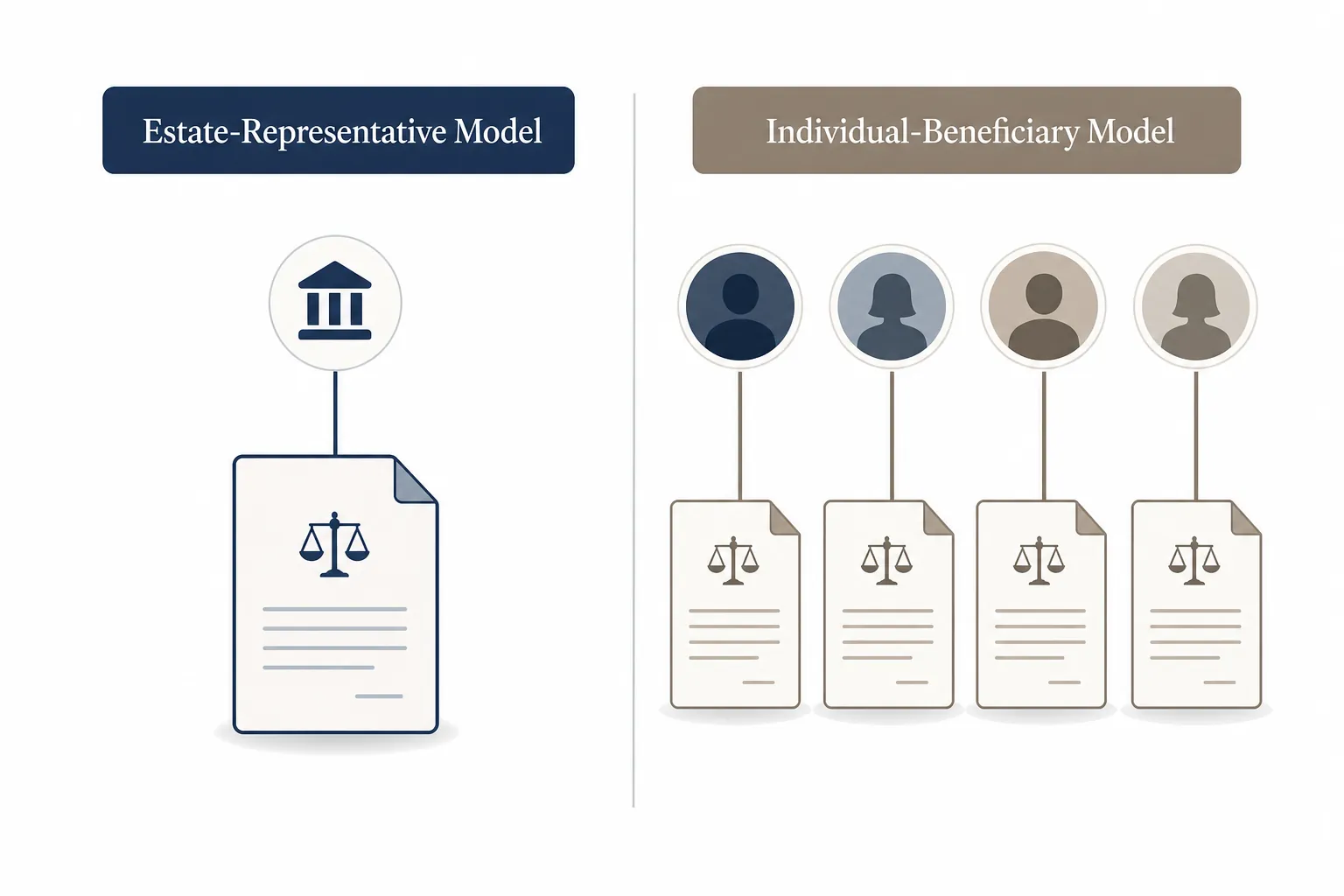
Two filing models change who signs the lawsuit
The estate-representative model can surprise adult children because it separates grief, caregiving, and legal authority. A daughter may have been the emergency contact, the one listed on the care conference notes, and the person who took the call from the hospital. But if the state requires the personal representative to file, she may not be the named plaintiff unless she has been appointed to that role or is otherwise authorized under state procedure.
That does not necessarily mean adult children are excluded. It may mean the case must be brought by the estate representative for the benefit of eligible survivors. The person who files and the people who may benefit from the claim are related questions, but they are not always the same question.
The individual-beneficiary model feels more direct because the statute may allow certain survivors to bring the action themselves. Even then, the statute controls which survivors qualify. A surviving spouse may have priority. Children may be included, limited, or required to show a particular kind of loss. If more than one person has rights, the family may need to coordinate so the claim is not duplicated or mishandled.
| Question to ask locally | Why it matters |
|---|---|
| Does the state require the personal representative to file? | The adult child who handled care may need estate authority before filing. |
| Does the state let statutory survivors file directly? | A spouse, child, parent, or other listed survivor may have a direct right. |
| Is there a surviving spouse? | A spouse can change an adult child’s rights or damages in some states. |
| Does an adult child need to prove financial loss or dependency? | Some states do not presume that an adult child was financially dependent on an elderly parent. |
| Is a government facility involved? | A short notice-of-claim deadline may apply before the ordinary lawsuit deadline. |
Where adult children fit depends heavily on the state
Adult children are where the legal rules become especially unforgiving. Many adult children are deeply involved in an elderly parent’s care. They may manage transportation, home modifications, facility placement, medication lists, insurance calls, and discharge instructions. None of that automatically proves standing or damages.
California is one example of a broader rule for children. California Code of Civil Procedure section 377.60 lists children among the primary beneficiaries who may bring a wrongful death action, and the available source describes children of any age as included without a dependency requirement.[5] That does not decide negligence or case value. It only answers one gatekeeping question: adult children are legally visible as children under that statute.
Florida shows a different kind of limit. A Florida source explains that an adult child age 25 or older can sue for mental pain and suffering over a parent’s wrongful death only if the deceased parent had no surviving spouse.[6] For an adult daughter whose father remarried late in life, that rule can feel abrupt. It does not erase the child’s relationship with the parent; it means the statute may limit what that adult child can recover when a surviving spouse exists.
New York and New Jersey add another problem: proof of actual financial loss. A source discussing adult-child recovery in those states states that adult children must prove financial loss because dependency is not presumed.[7] In plain terms, a grown child cannot assume that love, grief, or years of unpaid caregiving will be treated as a compensable financial loss. The proof may need to focus on measurable support, services, or economic benefit that the parent provided.
| State example | Adult-child standing or recovery issue |
|---|---|
| California | Children of any age are described as primary wrongful death beneficiaries under CCP section 377.60, without a dependency requirement.[5] |
| Florida | An adult child age 25 or older is limited in recovering mental pain and suffering if the deceased parent left a surviving spouse.[6] |
| New York | Adult children must prove actual financial loss; dependency is not presumed.[7] |
| New Jersey | Adult children must prove actual financial loss; dependency is not presumed.[7] |
These four states do not represent the whole country. They are useful because they show the range of questions families need to ask. One state may list adult children broadly. Another may narrow damages when a spouse survives. Another may require proof of money, services, or support actually lost. The dangerous assumption is that being “the child” means the same thing everywhere.
A surviving spouse can change the adult child’s position
When an elderly parent leaves a surviving spouse, adult children should not assume they can proceed independently. In some families, the spouse is the other parent. In others, the spouse is a stepparent, a late-life partner, or someone the adult children barely know. The statute usually does not pause for family discomfort.
The spouse may have priority, may be a primary beneficiary, or may affect what children can recover. If the estate-representative model applies, the question may become who has authority to act for the estate. If direct survivor filing applies, the question may become whether the spouse, children, or both are included and how damages are divided.
This is one of the first facts an attorney will need: Was there a surviving spouse on the date of death? The answer can matter even if the adult child did most of the caregiving.
The fall still has to connect to negligence
Standing only answers who may bring the claim. It does not prove that the fall was wrongful. A fatal fall may support a wrongful death case when evidence shows that another person or institution failed to use reasonable care and that failure caused or contributed to the death. In a nursing home or assisted living setting, the question often turns on known fall risk, supervision, care planning, staffing, call-light response, transfers, toileting, footwear, medication effects, or environmental hazards.
Nursing home fall data are one reason records matter. One legal source states that up to 75% of nursing home residents fall at some point, about one-third fall repeatedly, and monthly fall rates may drop as low as 3.4% when proper fall prevention is implemented.[8] Those figures do not prove negligence in any one case. They do show why the care plan, fall-risk assessment, and facility response deserve careful attention after a fatal fall.
Families who were already trying to reduce risk may have useful context in their own records: prior fall warnings, therapy notes, requests for supervision, emails about bed rails or grab bars, or notes from care conferences. For prevention context before a crisis, resources on how to understand fall risk assessment standards can help families recognize the kinds of risks that should have been reviewed. After a death, though, the question becomes evidentiary: what did the responsible people know, what did they do, and what did the records show before the fall?
What to preserve before records disappear
The first few days after a fatal fall are full of calls that sound urgent but do not preserve evidence. Someone is asking about funeral arrangements. Someone is looking for insurance cards. Someone at the facility may say an internal review is underway. Meanwhile, documents can be revised, memories can fade, and the room or hallway where the fall happened can be cleaned, repaired, or reassigned.
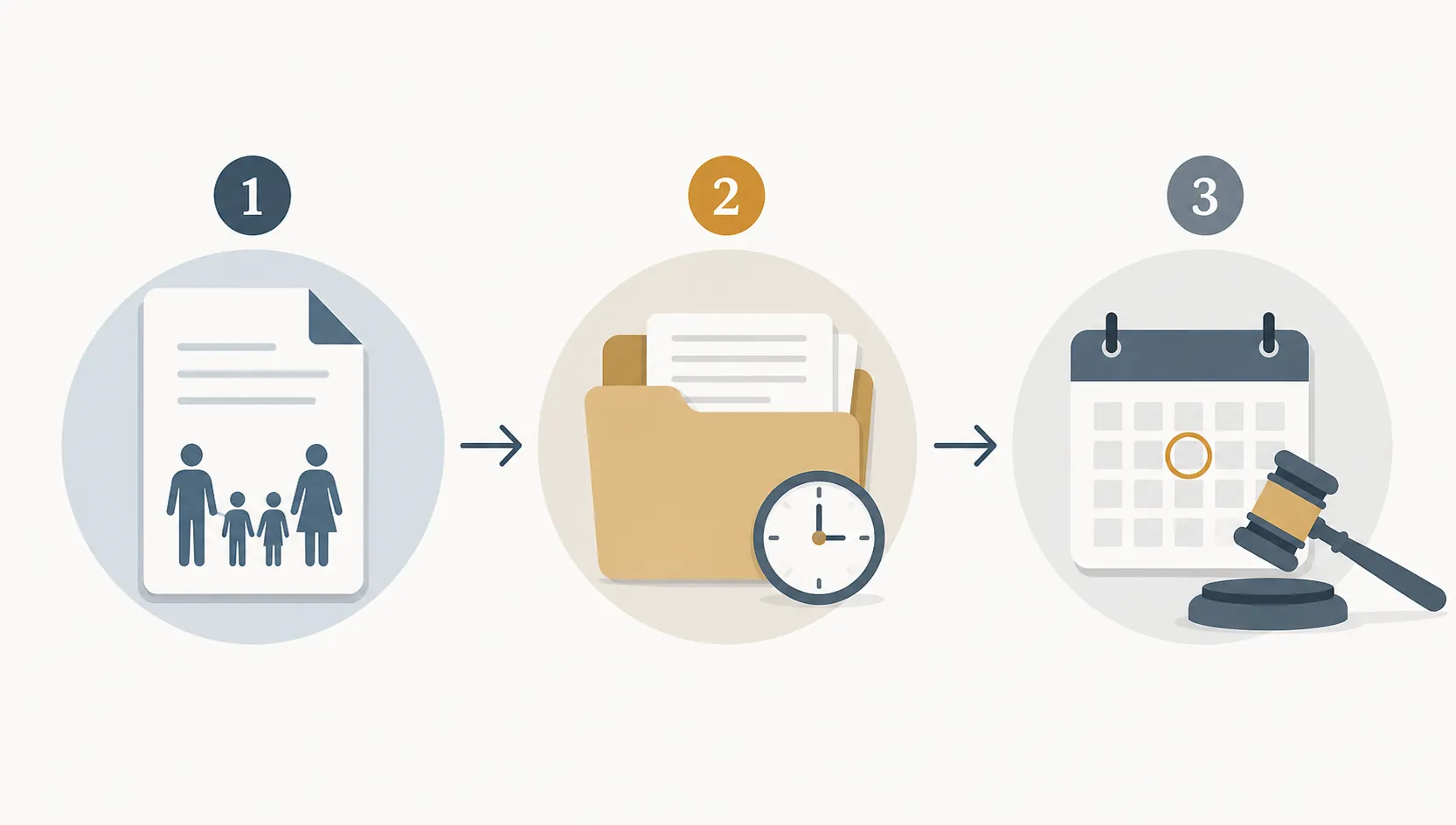
Before the family debates every legal theory, someone should start a file. The person doing this does not have to decide the case value. The job is to keep the paper trail from scattering.
- Medical records from the nursing home, assisted living facility, hospital, rehabilitation facility, or treating doctors
- EMS run sheets and emergency transport records
- Hospital admission records, imaging results, operative notes, discharge summaries, and death records
- Facility incident reports, witness notes, internal fall-review documents, and any written explanation given to the family
- Fall risk assessments, care plans, MDS records, therapy notes, medication administration records, toileting plans, and transfer instructions
- Staffing logs, assignment sheets, call-light records, monitoring records, and video-preservation requests if cameras may exist
- Photographs of the scene, footwear, walker, wheelchair, bed height, bathroom layout, floor condition, lighting, alarms, mats, rails, and clutter
- Texts, emails, portal messages, voicemail notes, and names of staff members who spoke with the family before or after the fall
If the fall happened at home, the list changes but the principle does not. Preserve photographs of stairs, rugs, thresholds, bathroom surfaces, lighting, missing handrails, broken equipment, and any prior repair requests. If a home health agency, hospice provider, landlord, contractor, or medical equipment supplier may be involved, keep contracts, visit notes, invoices, and communication logs.
Avoid relying only on what someone says over the phone. Write down the date, time, name, title, and substance of each conversation. If a facility says the fall was “unwitnessed,” note who said that and when. If staff members give different versions of the timeline, keep both versions. Contradictions can matter later, but only if someone wrote them down while they were fresh.
Deadlines are not all the same
Wrongful death deadlines are a separate danger from standing. General wrongful death statutes of limitations are commonly in the range of 1 to 3 years from the date of death, according to legal information sources.[4][2] That range is not a safe deadline for any particular family. It is only a warning that these cases are time-limited.
The deadline can be shorter when a government-operated facility is involved. Public nursing homes, county hospitals, state-run facilities, or other government defendants may require a notice of claim within about 6 months.[4][2] Missing that notice deadline can damage or end the claim before the ordinary lawsuit deadline ever arrives.
This is why waiting for the family to agree on blame can be risky. The first call to an attorney does not have to mean a lawsuit will be filed. It can simply identify the correct state, the proper filer, the applicable deadline, and whether an immediate records-preservation letter or notice of claim is needed.
Settlement numbers are not a shortcut
Families searching online will find settlement ranges and verdict headlines. One nursing-home wrongful-death source gives a typical settlement range from $100,000 to $750,000 for fall-related nursing home wrongful death cases, depending on the facts.[9] Related source pages also discuss very large California verdict figures, but those are individual outcomes, not predictions.[9]
Case value depends on liability proof, medical causation, the parent’s conscious pain and suffering where allowed, economic loss, statutory beneficiaries, insurance or assets, venue, defenses, and state damages law. For an elderly parent, some states may focus heavily on pecuniary loss. Others may allow broader categories of damages for certain survivors. A headline number tells a grieving family almost nothing about who has standing or whether the records prove negligence.
A practical order for the first calls
When several relatives are involved, the cleanest first step is to separate tasks. One person can gather records. One person can identify the estate documents. One person can write a timeline. One person can schedule a consultation. The family does not need to settle every emotional disagreement before finding out who is legally allowed to act.
- Identify the state where the death occurred and where the negligent conduct likely happened.
- List surviving family members: spouse, children, parents, siblings, and anyone financially dependent on the parent.
- Find out whether an estate has been opened and who is or may be appointed personal representative.
- Preserve medical, facility, EMS, hospital, staffing, and scene evidence before routine systems overwrite or remove it.
- Ask a licensed attorney in the relevant state about standing, damages, statute of limitations, and any notice-of-claim deadline.
For adult children, the consultation should include direct questions: Do I have standing in this state? Does the claim have to be filed by the estate? Does the surviving spouse have priority? Do adult children need to prove financial dependency or actual financial loss? Are caregiving services relevant to damages here, or only to the factual timeline? Is there a government defendant with a shorter notice period?
Those questions are less dramatic than asking what the case is worth, but they are the questions that keep a family from losing time on the wrong doorway. After a fatal fall, standing is not a reward for being the most involved child. It is a state-statute question. The safest next step is to preserve the records, identify the proper filer, and verify the deadline before the window closes.
References
- Facts About Falls, CDC
- Who Is Eligible to File, LawInfo
- Family's Guide to Senior Wrongful Death, Nolo
- Wrongful Death Cases: Children and Elderly, FindLaw
- Wrongful Death for Elderly, The Berberian Firm
- Can Children Sue for Wrongful Death, Kanner & Pintaluga
- Adult Children Recovery, Maggiano, DiGirolamo & Lizzi
- Nursing Home Falls, Senior Justice Law Firm
- Nursing Home Wrongful Death, Senior Justice Law Firm
Related reading
Noticed something outdated or inaccurate on this page? Flag a correction. We review every report against CDC, NIA, and AARP HomeFit guidance before updating a page.
Part of the Fall Prevention section.