
STEADI: Intervene
Why brown recluse bites can be a fall risk for older adults
A suspected brown recluse bite can temporarily raise an older adult's fall risk during the first week, when dizziness and weakness may appear alongside other systemic symptoms. Recognizing which symptoms call for 911 versus same-day care — and reducing fall hazards at home during the 72-hour watch window — is what caregivers need most.
A suspected brown recluse bite in an older adult is not only a skin problem. For the first week, and especially during the 24-to-72-hour window, it can become a fall-risk problem: dizziness, light-headedness, weakness, pain, feverish illness, or a sore on the lower leg can all change how safely someone gets from the bed to the bathroom.
This article is not medical advice and should not be used to diagnose a spider bite. If the person has passed out or has severe trouble breathing, call 911. If they are dizzy, light-headed, feeling faint, developing an open sore, or the skin around the bite is turning black, seek medical care right away; MyHealth Alberta’s Healthwise care instructions list those as urgent warning signs after a brown recluse bite.[1] In the U.S., you can also call Poison Help at 1-800-222-1222 for poison-center guidance.
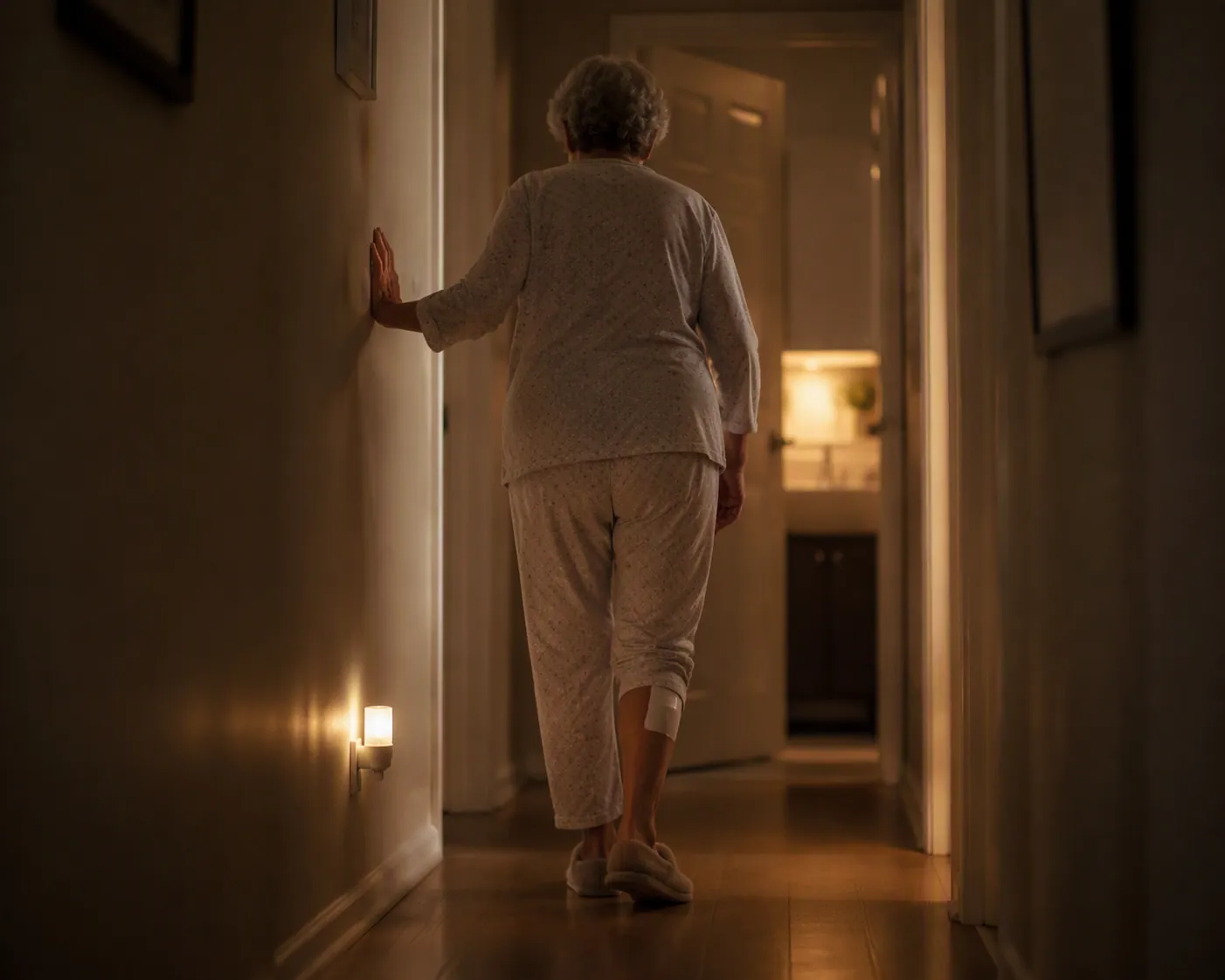
The bite watch is also a fall-prevention watch
The most useful question in the first hours is not, “Was it definitely a brown recluse?” It is, “Can this person stand, walk, and make it to the bathroom safely right now?”
Systemic loxoscelism — the body-wide reaction that can follow some brown recluse bites — may begin 24 to 72 hours after the bite and can be delayed up to 7 days. Missouri Poison Center lists possible systemic features including fever, low blood pressure, hemolysis, rhabdomyolysis, acute kidney injury, and possible disseminated intravascular coagulation.[2] A person does not need all of those problems for the situation to become unsafe at home. One spell of light-headedness at the wrong time can be enough to turn a bite watch into a hallway accident.
The fall connection is not based on a study measuring falls after brown recluse bites in older adults. That study does not appear to exist. The stronger evidence comes from general geriatrics: a 2024 systematic review and meta-analysis in Age and Ageing found that dizziness independently predicted any-type future falls in older adults, with an odds ratio of 1.63, and recurrent falls, with an odds ratio of 1.98.[3] That does not mean a bite causes a fall. It does mean that when a bite-related illness includes dizziness or weakness, a caregiver should treat those symptoms as safety signals, not background complaints.
The baseline risk is already high. CDC reports that more than 1 in 4 older people falls each year, and falling once doubles the chance of falling again.[4] A temporary illness that adds dizziness, leg pain, disturbed sleep, or rushed bathroom trips is not a small detail in that setting.
What to do first: triage the person, not just the wound
A caregiver’s first job is to decide whether this is an emergency, a same-day medical problem, or a closely watched home situation. The wound matters, but the person’s breathing, alertness, color, balance, and ability to walk matter just as much.
| What is happening | Action | Fall-prevention move while waiting |
|---|---|---|
| Passed out, severe trouble breathing, or cannot be safely awakened | Call 911 | Do not try to walk them to the car or bathroom |
| Dizzy, light-headed, feeling faint, newly weak, or unsteady | Seek medical care right away; call a clinician, urgent care, or poison center for direction | Have them sit or lie down; do not let them walk alone |
| Open sore, spreading dark or black skin around the bite, worsening wound, feverish illness, or concerning pain | Seek same-day medical care | Pair every wound check with a quick steadiness check |
| Mild local irritation only, and the person is otherwise well | Follow clinician or poison-center advice and keep watching | Clear the walking route before the next nighttime trip |
If you are deciding whether to drive to care, pause before moving the person. A light-headed older adult who “just needs help to the car” may be at the most dangerous point of the evening. If they cannot stand steadily, if they feel faint, or if you cannot support them without risking a fall for both of you, call for emergency help rather than improvising a transfer.
Why days 1 through 3 deserve extra attention
Brown recluse bite articles often spend a long time on spider identification. At home, the more protective move is to watch time, symptoms, and walking ability. The 24-to-72-hour period matters because systemic symptoms may not arrive right away.[2] A person who seemed fine after dinner may be weak, sweaty, dizzy, or feverish the next day.
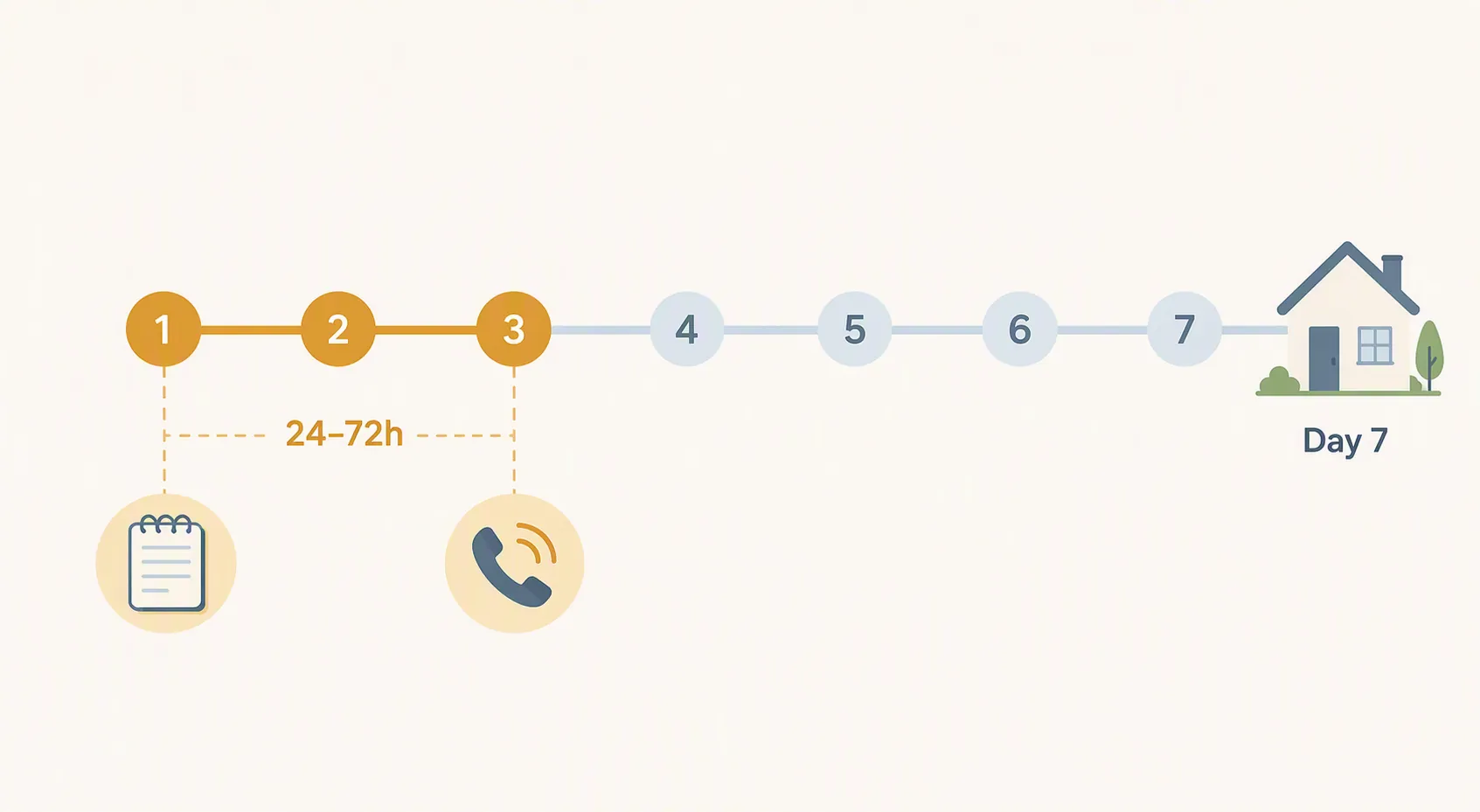
StatPearls also notes that hemolysis can occur up to 7 days after a bite.[5] That is why the watch period should not end just because the first night was quiet. For an older adult, the first week is the safer frame: more intense watching during days 1 to 3, with continued attention through day 7 for worsening illness, dark urine, unusual fatigue, yellowing skin or eyes, faintness, or any clinician-specified warning signs.
The log does not need to be elaborate. It needs to be usable when someone on the phone asks, “When did this start?” Write down the time of the suspected bite or first noticed wound, the size and appearance of the area, pain level, temperature if you have one, dizziness or weakness, walking changes, medicines taken, and every call or visit. If the person lives alone, the log should sit somewhere visible, not buried in a phone only one family member can unlock.
How dizziness, weakness, and a leg wound can lead to a fall
There are several ordinary ways a bite-related illness can destabilize an older adult without looking dramatic at first.
- Dizziness or light-headedness can make standing from bed or a chair unsafe, especially during a nighttime bathroom trip.
- Weakness can shorten steps, slow reactions, and make a person reach for furniture instead of using a cane or walker.
- Pain or swelling on the leg or foot can change gait, making stairs, thresholds, and rugs more hazardous.
- Feverish illness or poor sleep can make a person less attentive to hazards they normally avoid.
- Urgency — getting up quickly to check the wound, find medicine, or use the bathroom — can erase the slow, careful habits that usually keep someone safe.
Lower-extremity wounds deserve a little extra respect here. In a PLOS ONE cohort of 57 moderate-to-severe loxoscelism cases, 10 cases, or 18%, involved lower-extremity bites.[6] That does not tell us how often older adults fall after such bites. It does tell us that leg and foot involvement is real enough to plan around: bathroom trips, stairs, shower transfers, and the walk from bed to kitchen should be treated as supervised tasks if pain, dizziness, or weakness appears.
A simple gait check can be attached to each wound check. Before looking only at the skin, ask: Can you sit up without feeling faint? Can you stand for a few seconds without swaying? Are you limping more than earlier? Are you grabbing walls or furniture? Did you nearly trip on the way here? Those answers may change the safety plan even if the wound looks unchanged.
Make the home safer before the second night
Do not wait for a fall to “fall-proof” the next few days. CDC lists throw rugs and clutter as modifiable home hazards.[4] In this situation, the highest-value work is usually not a whole-house project. It is the route the person will use while half-awake: bed to bathroom, recliner to bathroom, bed to kitchen, bedroom to phone.
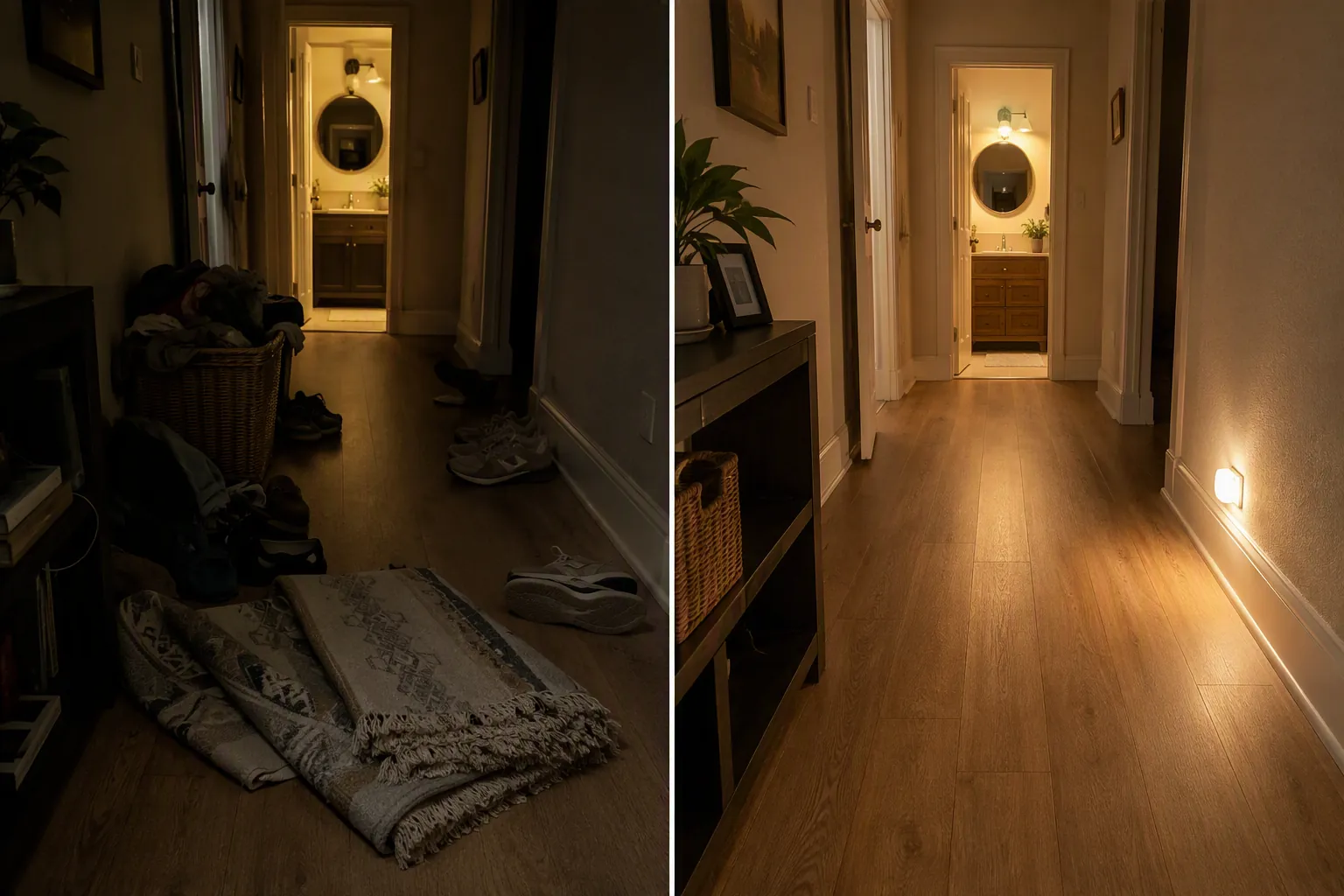
- Remove throw rugs from the bedroom, hallway, and bathroom path, even if they are usually “not a problem.”
- Move shoes, baskets, laundry, pet bowls, cords, and small tables out of the walking route.
- Turn on hallway and bathroom night lights before bedtime.
- Place the phone, water, glasses, walker or cane, and symptom log within easy reach.
- Ask the person to sit at the edge of the bed before standing, then pause again after standing before taking the first step.
- If dizziness or weakness is present, do not let them walk alone “just for a minute.” Use a bedside commode, call for help, or seek medical guidance.
This is also where dignity matters. An older adult may not want hovering over a spider bite. A practical compromise is to frame the extra help as temporary: “For the next few nights, let’s treat this like being light-headed after an illness. I’m going to clear the path and walk with you if you feel weak.” That keeps the focus on a short safety window rather than on taking over.
Be careful with certainty: many suspected bites are never proven
A suspicious wound is not proof that a brown recluse bit someone. In the same PLOS ONE cohort, only 33% of patients recalled a documented bite, and the cohort skewed young, with a median age of 14.[6] That matters for two reasons. First, caregivers should avoid false certainty and let clinicians consider other causes of a wound or systemic illness. Second, the study should not be used to claim elderly-specific complication rates, because it was not designed to isolate them.
Several institutions do warn that severe reactions are more likely in older people, children, or people with certain health vulnerabilities. Cleveland Clinic says children, older adults, and people with weakened immune systems are most likely to have severe reactions.[7] Defense Centers for Public Health, University of Kentucky, and Alabama Cooperative Extension also describe severe reactions as more common in children, the elderly, and people who are chronically ill.[8][9][10] That is useful clinical caution, not a precise rate for a particular older adult.
The same restraint applies to dramatic wound expectations. Some brown recluse bites stay local; some wounds become more serious. StatPearls describes most bites as healing in about 3 weeks, while more severe ulcers may take longer, including up to 3 months.[5] A slow-healing wound can keep affecting walking after the first-week systemic watch is over, especially if it is on the foot, ankle, or lower leg.
A first-week plan caregivers can actually use
The plan below is not a substitute for medical instructions. It is a way to keep the medical watch and the fall-prevention watch connected, so the person checking the bite does not miss the person swaying beside the sink.
Right now
- Check for emergency signs: passed out, severe trouble breathing, severe confusion, or inability to stay safely upright. Call 911 if present.
- If dizzy, light-headed, feeling faint, newly weak, or unsteady, have the person sit or lie down and seek care right away.
- Call Poison Help at 1-800-222-1222 if you need bite-specific guidance in the U.S.
- Start the log: time noticed, wound appearance, symptoms, walking changes, calls made, and instructions received.
Tonight and tomorrow
- Clear the bathroom route before bedtime, not after the person is already up.
- Keep lights on low or use night lights.
- Tie every wound check to a balance check: sitting, standing, walking, and any near-falls.
- Do not encourage walking to “see if it passes” when the person feels faint. Sitting is the safer test.
Days 1 to 3
This is the period when systemic symptoms may begin or peak, based on the 24-to-72-hour timing described by Missouri Poison Center.[2] Keep the phone number, transportation plan, medication list, and symptom log ready. If dizziness, weakness, feverish illness, worsening wound changes, or faintness appears, treat that as both a medical trigger and a fall-prevention trigger.
Days 4 to 7
Do not drop the watch completely after the third day. Delayed systemic illness can occur up to 7 days, and hemolysis has also been described up to 7 days after a bite.[2][5] Keep watching for new weakness, faintness, dark urine, yellowing skin or eyes, worsening fatigue, fever, worsening pain, spreading wound changes, or any instruction-specific warning signs from the clinician or poison center.
After the first week
If the wound is still painful, open, or on the lower leg or foot, keep asking how it changes walking. A healing wound can still make someone avoid putting weight on one side, rush less steadily, or skip the walker because they are focused on the sore. Wound care and fall prevention should stay paired until the person is walking normally again or a clinician gives more specific guidance.
For the first week after a suspected brown recluse bite, especially days 1 to 3, dizziness or weakness should change the whole household plan. It means calling for medical guidance. It means sitting before standing. It means the bathroom path gets cleared, the lights go on, the log stays open, and nobody who feels light-headed is allowed to “just get up for a minute” alone.
References
- Brown Recluse Spider Bite: Care Instructions, MyHealth Alberta
- Systemic Loxoscelism, Missouri Poison Center
- Association between dizziness and future falls and fall-related injuries in older adults: a systematic review and meta-analysis, Age and Ageing, 2024
- Facts About Falls, CDC
- Brown Recluse Spider Toxicity, StatPearls
- Defining the complex phenotype of severe systemic loxoscelism using a large electronic health record cohort, PLOS ONE, 2017
- Brown Recluse Spider Bite, Cleveland Clinic
- Brown Recluse, Defense Centers for Public Health
- Brown Recluse Spider, University of Kentucky ENTFACT-631
- The Brown Recluse Spider: Facts & Control, Alabama Cooperative Extension
Related reading
Noticed something outdated or inaccurate on this page? Flag a correction. We review every report against CDC, NIA, and AARP HomeFit guidance before updating a page.
Part of the Fall Prevention section.