
STEADI: Screen, Assess, Intervene
Why Falls Are the Biggest Hiking Risk for Older Adults
Falls account for nearly half of mountain-hiking emergency calls among people 50 to 70, and the risk factors—vision, strength, balance—are the same ones that cause falls at home. This article explains the surprising epidemiology and shows how to apply CDC-based fall prevention to the trail.
Falls are not a side note in hiking safety for older adults. In a Swiss mountain-hiking rescue analysis covering 11,220 emergency calls from 2009 through 2018, falls were the largest cause of rescue calls, accounting for roughly 44% to 45% of incidents. The average fall victim was 58.8 years old, with a median age of 62.15, and fall-related calls rose by about 14% per year across the decade.[1]
That does not make the Swiss Alps a perfect stand-in for a local U.S. state park. The best hiking-specific injury data here comes from European Alpine settings, not from a national U.S. hiking registry. Still, the pattern is too specific to wave away: when hikers in the 50-to-70 range need rescue, a fall is often the event that turns a good day into a serious problem.
A second study from the Austrian Tyrol helps explain what those falls look like. Among 405 fall victims during mountain hiking, the average age was 56 years, compared with about 42 years for hikers generally in that setting. Seventy percent reported defective vision, 36% were below the World Health Organization’s 150-minutes-per-week physical activity threshold, and lower-extremity injuries dominated: ankle injuries were the most common at 42.4%, followed by head injuries at 13.4% and lower-leg injuries at 10.6%.[2]
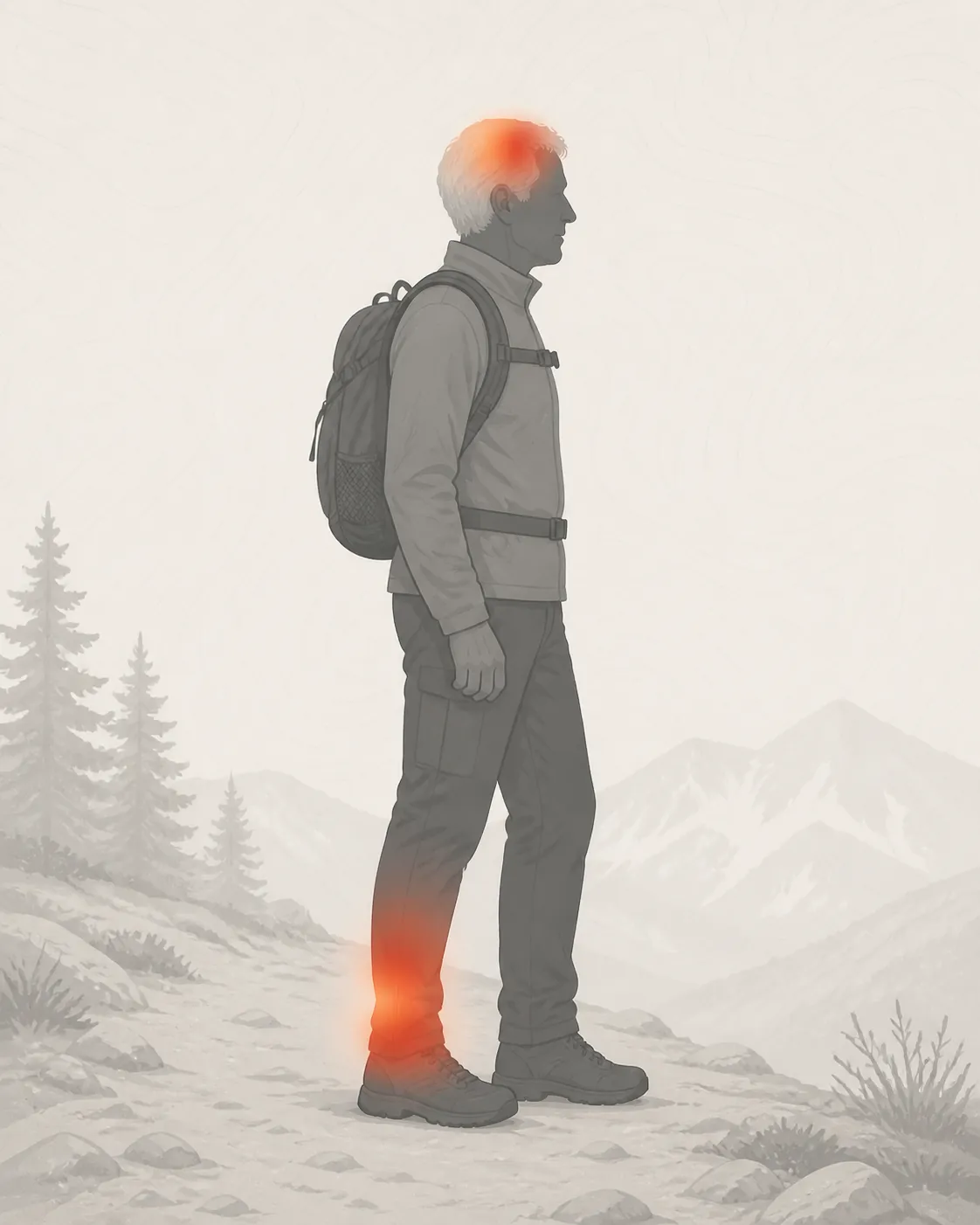
The awkward detail is that footwear did not vanish as the obvious villain. In the Austrian Tyrol study, most fall victims—61%—were wearing appropriate ankle-height hiking shoes.[2] Good shoes still matter. So does tread. But the study is a useful warning against the easy answer: buy better boots, grab poles, and assume the fall problem has been handled.
The trail amplifies the same fall risks that show up at home
A rocky trail is not a separate universe from a hallway, staircase, curb, or wet bathroom floor. It simply removes forgiveness. A home fall may start with a missed edge, a dizzy turn, a weak recovery step, or poor contrast in low light. On the trail, the same small failures meet loose stones, roots, grade changes, fatigue, and a slower rescue path.
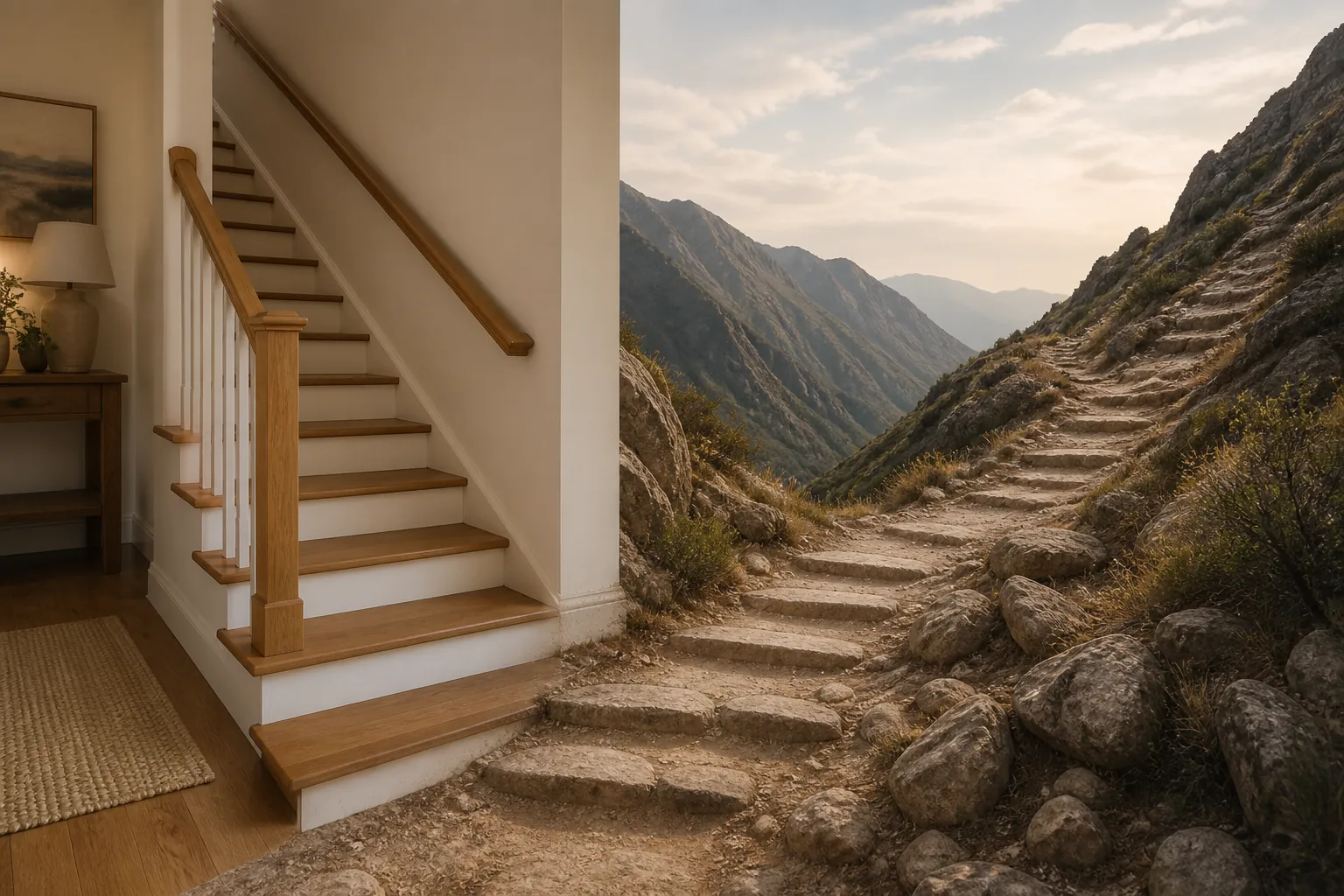
The CDC’s fall data gives the bridge. More than one in four adults age 65 and older falls each year, fewer than half tell their doctor, and falling once doubles the chance of falling again.[3] Those are home-and-community fall facts, not hiking statistics. But they are exactly the facts worth carrying to the trailhead, because a hiker who has quietly fallen in the garage, stumbled at night, or started feeling lightheaded after a medication change is bringing that risk into rougher terrain.
This is where “senior” can become an unhelpful label. A 62-year-old who hikes every weekend may not be frail, and may be right to reject advice that treats hiking as suddenly off-limits. The better question is not whether someone is old enough to be warned. It is whether the body systems that prevent a fall—vision, balance, lower-body strength, reaction time, alertness, and foot placement—are ready for the route being chosen.
| Risk factor to check | Why it matters more on a hike | Practical question before choosing the route |
|---|---|---|
| Vision | Uneven surfaces require seeing depth, contrast, loose stones, roots, and trail edges. | Has the hiker had a recent eye check, and can they see well in shade, glare, and changing light? |
| Balance | A small slip on a flat floor may be recoverable; the same slip on a slope may not be. | Can the hiker manage turns, uneven footing, and brief single-leg moments without grabbing for support? |
| Lower-body strength | Downhill walking, step-downs, and fatigue demand hip, thigh, calf, and ankle control. | Has the hiker trained legs and hips recently, or are they relying on old fitness? |
| Medications and alertness | Dizziness, slowed reaction, or sleepiness can turn minor terrain changes into a fall. | Has a clinician reviewed medications that could affect balance, blood pressure, or alertness? |
| Recent falls | A prior fall is a warning sign, especially if no one adjusted the plan afterward. | Has there been a fall, near-fall, or unexplained stumble that the doctor has not heard about? |
| Route demands | Distance, loose footing, exposure, descent, and remoteness raise the consequence of a mistake. | Is the chosen trail matched to today’s strength, vision, balance, weather, and rescue reality? |
A STEADI-style hiking screen before the trailhead
The CDC’s STEADI approach to fall prevention is built around screening, assessment, and intervention. On the trail, that mindset is more useful than a generic packing list. It asks what could make this hiker fall, on this route, on this day—and what can be changed before the first mile.
A pre-hike screen does not need to feel clinical. It can be a plain conversation between hiking partners, spouses, or an adult child and a parent who still wants the independence of the trail.
- Recent falls or near-falls: Has there been a fall in the past year, a stumble that required grabbing furniture, or a “nothing happened” slip that no one mentioned to a doctor?
- Vision: Are glasses current? Does the hiker struggle with glare, shade, bifocals on steps, or judging uneven ground?
- Medication effects: Have any prescriptions, sleep aids, blood pressure medicines, pain medicines, or over-the-counter products changed recently? Has a clinician discussed dizziness, drowsiness, or balance?
- Strength and balance: Can the hiker climb, step down, turn, and recover from a small misstep without relying entirely on poles or a companion’s arm?
- Current activity level: Has the hiker been walking and training consistently, or is this hike the first hard outing after weeks of sitting?
- Terrain match: Does the route include loose rock, roots, long descents, stream crossings, narrow footing, or a long walk out after fatigue sets in?
The point is not to fail the hiker. It is to change the hike. A recent medication change might mean choosing a shorter loop close to the trailhead. New trouble seeing depth in shade might mean avoiding a rocky route under tree cover. A fall that has not been discussed with a doctor should pause the plan until the fall risk is reviewed, because fewer than half of older adults who fall tell their doctor, even though one fall doubles future fall risk.[3]
For families, this screen can be the difference between respect and nagging. “You’re too old for that trail” usually lands badly. “Let’s pick the route after we check the descent, your new medication, and how your knee handles step-downs” is more concrete—and more fair.
If a parent has already fallen and is frightened, the next useful step may not be another trail discussion at all. A quieter starting point is helping them feel safe enough to talk about what happened; this guide to comforting an elderly parent after a fall may be more appropriate before planning the next outing.
The countermeasure that deserves the most attention: training
The CDC’s physical activity guidance for older adults gives a practical training frame: at least 150 minutes a week of moderate-intensity aerobic activity, muscle-strengthening activity on two or more days a week, and balance activities.[4] For hiking, the strength and balance pieces are not decorative. They are the work that helps a hiker control a step-down, recover from a slip, and keep walking safely after fatigue begins.
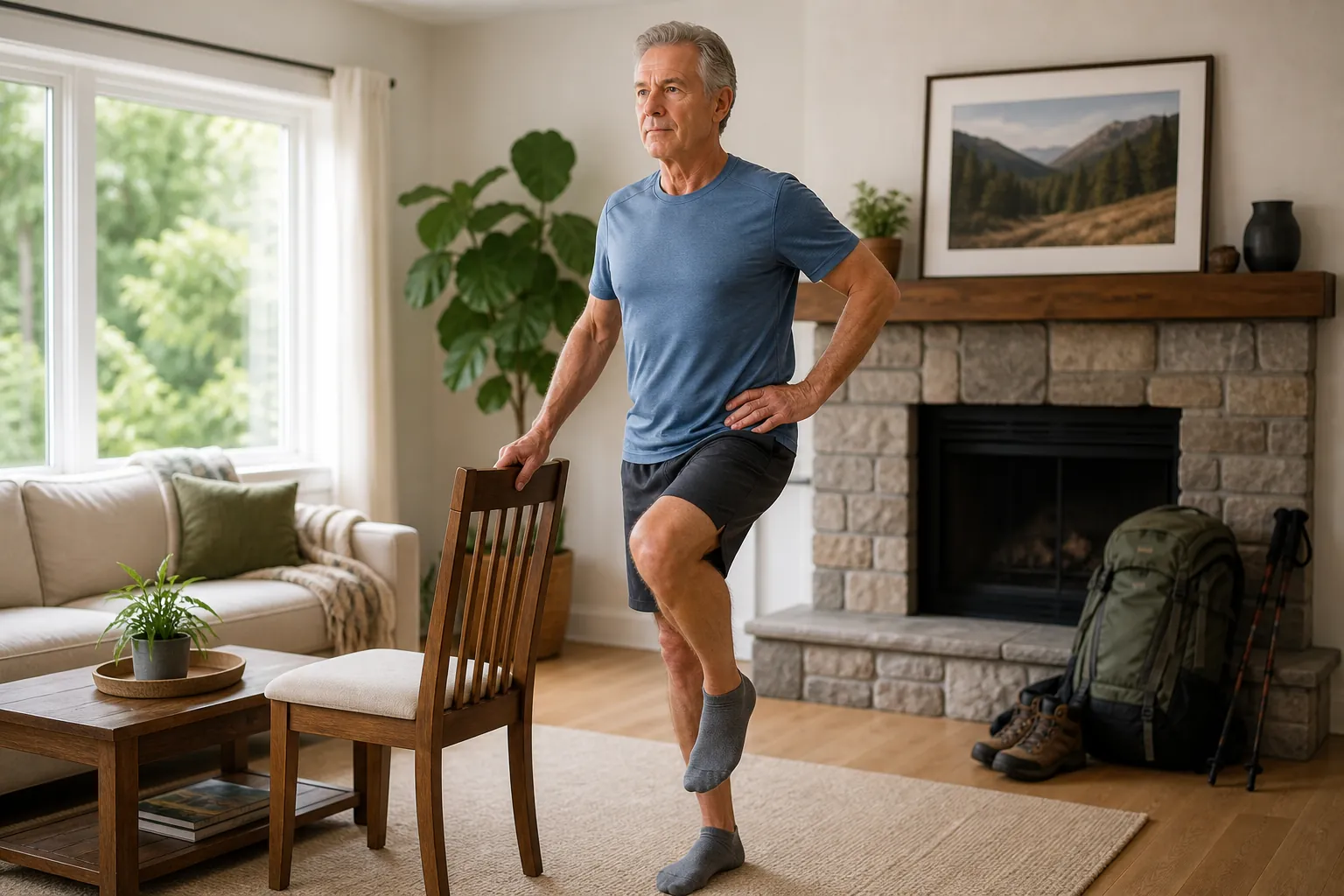
The Austrian Tyrol researchers made a similar recommendation from the hiking side: hikers should perform strength and balance training to improve postural stability before difficult hikes, and hikers with defective vision should take special care during downhill walking.[2] That is a more useful message than “be careful.” It tells the older hiker what to build before the harder trail: legs, hips, ankles, balance reactions, and the habit of moving deliberately when the ground tilts away.
A hiker who has not trained recently should not try to solve the problem with one heroic weekend. Better preparation looks ordinary: regular walks, sit-to-stands, calf raises, step-ups, supported balance practice, and gradual hill exposure. The safest version is progressive enough to matter and modest enough not to cause a new injury.
For guided options, Carewise’s senior strength and balance workout video guide can help turn balance practice into a routine. If the concern is starting safely at home, the companion guide on strength training for seniors at home is the better first stop.
Gear helps, but it should not be asked to do the whole job
Footwear still belongs on the checklist. Shoes should fit well, have tread appropriate for the surface, and be familiar enough that the hiker knows how they behave on rock, gravel, mud, and descent. But the Austrian Tyrol data makes the limit plain: a majority of fall victims were already wearing appropriate ankle-height hiking shoes.[2] Footwear is a support, not a shield.

Trekking poles can also be useful, especially for rhythm, confidence, and extra contact points on uneven ground. They do not cancel out poor vision, weak legs, dizziness, fatigue, or a route that is too rough for the day. If poles are new, practice with them before the hike; learning pole placement while tired on loose rock is poor timing.
Pack weight deserves more respect than it often gets. A heavy or badly adjusted day pack changes balance and can make a stumble harder to recover from. Carry what safety requires, but remove the unnecessary weight, keep heavier items close to the body, and make sure the pack does not swing or pull the hiker backward on steps and slopes.
Route choice is a fall-prevention decision
The route should be chosen after the screen, not before it. A hiker with strong legs but current vision trouble may need a smoother trail with better contrast. A hiker who is rebuilding strength may do better with a shorter route that allows a clean turnaround. A hiker trying a new medication should avoid making the first test a remote, rocky hike.
Downhill walking deserves particular caution, especially for hikers with defective vision, because the Austrian Tyrol authors specifically called out special care on descents for that group.[2] The evidence does not require a precise percentage for downhill falls. The practical point is simpler: descent magnifies the need for controlled step-downs, clear vision, and patience.
Weather planning belongs here too, because rushing, poor visibility, wet footing, and sudden route changes can all increase fall exposure. For thunderstorm-specific planning, see Carewise’s related guide on lightning safety for senior hikers without increasing fall risk.
On the trail, protect the margin
Once the hike begins, the goal is to preserve recovery capacity. Many falls are not dramatic at the start. They begin as a tired foot that does not clear a rock, a glance away at the wrong moment, a rushed downhill section, or a choice to keep going after the body has already given notice.
- Shorten the stride on rough or downhill sections, and place the whole foot deliberately.
- Pause before looking at views, phones, maps, or wildlife. Look first, then move.
- Use poles as aids, not as permission to hurry.
- Turn around before fatigue changes foot clearance, posture, or judgment.
- Give the slower hiker the pace-setting role, especially on the return.
- If dizziness, unusual weakness, blurred vision, or confusion appears, stop and reassess rather than pushing to the planned finish.
A better standard for older hikers
The older hiker does not need to be scared off the trail. But the plan should be honest about what the data shows: falls are a dominant hiking emergency in the available Alpine rescue research, and the injury pattern points toward ankles, lower legs, and the head—not just blisters or sore knees.[1][2]
The safest hike begins before the trailhead. Screen for recent falls, vision problems, medication effects, strength, balance, activity level, and route demands. Assess anything that raises concern. Intervene with training, medical review when needed, a better-matched route, lighter pack, appropriate footwear, and poles used as support rather than as the whole plan.
This article is for education and fall-prevention planning, not medical diagnosis or individualized medical advice. Older adults with recent falls, dizziness, medication changes, new vision problems, chest symptoms, neurological symptoms, or major changes in walking should consult a qualified clinician before taking on a harder hike.
References
- Half of Emergency Calls in Hikers are Injuries from Falls in 50-70 Year-Olds, German Journal of Sports Medicine, 2019.
- Characteristics of Victims of Fall-Related Accidents during Mountain Hiking, International Journal of Environmental Research and Public Health, 2020.
- Facts About Falls, Centers for Disease Control and Prevention, updated Jan 2026.
- Older Adult Activity Guidance, Centers for Disease Control and Prevention.
Related reading
Noticed something outdated or inaccurate on this page? Flag a correction. We review every report against CDC, NIA, and AARP HomeFit guidance before updating a page.
Part of the Fall Prevention section.