
STEADI: Intervene
Why the Frozen Berry E. coli Recall Is a Fall Risk for Seniors
The frozen berry E. coli recall is more than a stomach bug for older adults: diarrhea-driven dehydration can cause dizziness when standing and raise fall risk through the illness and recovery days. Caregivers get the evidence linking dehydration to falls in seniors, plus concrete safeguards to use at home until the older adult is safely rehydrated.
Last verified: August 5, 2026, against FDA and CDC outbreak pages carrying July 30, 2026 updates. Because the outbreak investigation is ongoing, product lists and case counts may change.
For seniors, the frozen berry E. coli recall is not only a food-poisoning question. As of the July 30, 2026 updates, CDC and FDA were investigating an E. coli O145:H28 outbreak linked to GreenWise frozen organic blueberries, with 12 reported illnesses, 4 hospitalizations, and no reported deaths; illnesses were reported in Florida and Georgia, with FDA listing affected GreenWise Organic Whole Blueberries and Whole Mixed Berries sold through Publix in several Southeastern states [1][2].
Those recall details matter, but they are not the part to memorize from a fall-prevention standpoint. Use the live CDC outbreak page and FDA outbreak investigation for current UPCs, lots, and disposal instructions. For the freezer-check side, use the site’s Blueberry Recall Safety Checklist for Seniors. Here, the more urgent home-safety question is what happens if an older adult has already eaten the berries and develops diarrhea.
The warning sign that turns a stomach illness into a fall problem
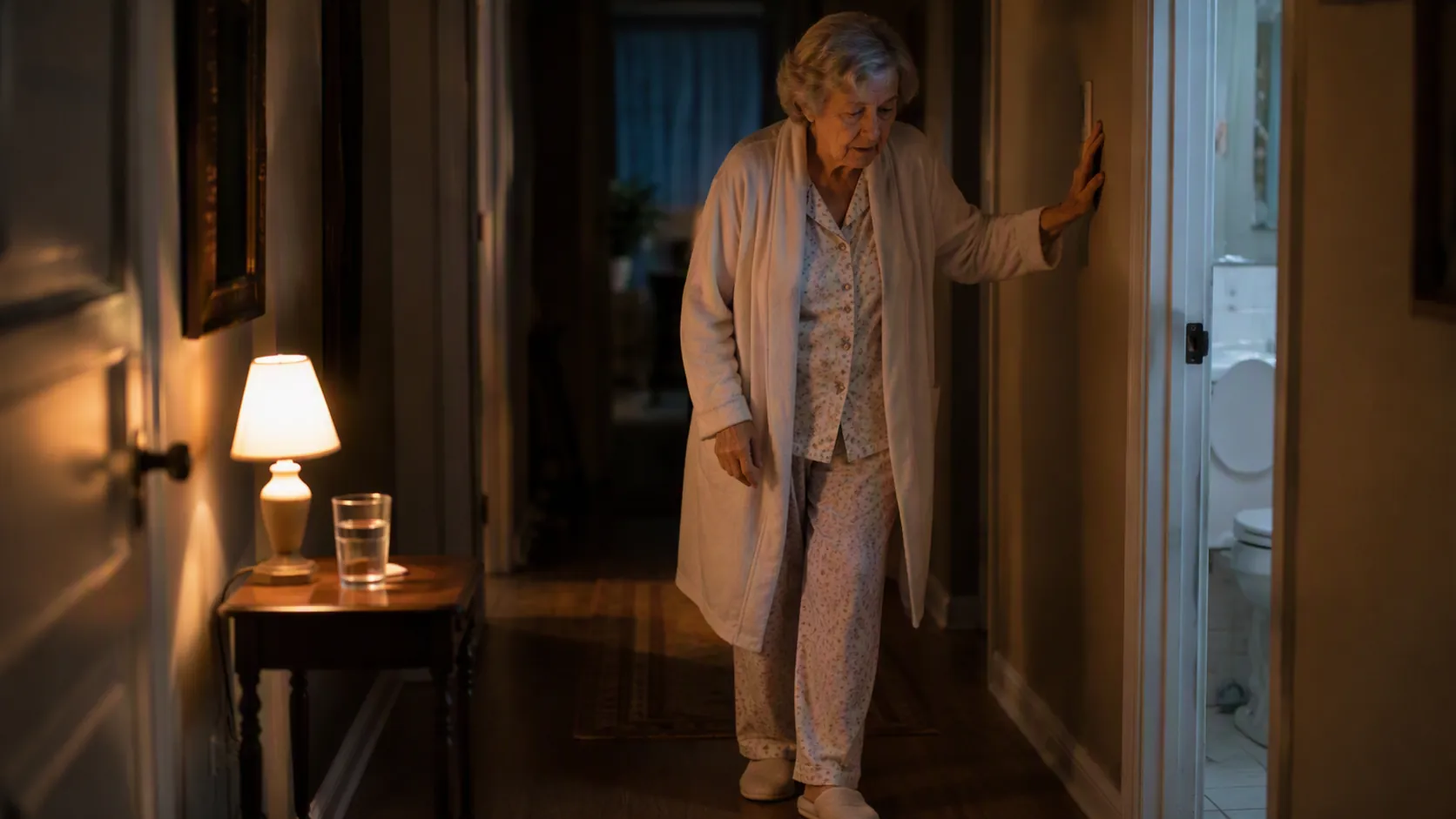
CDC’s plain dehydration warning is the hinge: feeling dizzy when standing up. In an older adult with diarrheal illness, that is not a vague symptom to “keep an eye on.” It is a bathroom-transfer warning, a hallway warning, and a “do not rush to stand” warning [1].
The chain is simple enough to miss because each link looks ordinary. E. coli can cause diarrhea. Diarrhea pulls fluid out of the body. Older adults often have less reserve to lose and may not feel thirst as strongly. When fluid volume drops, blood pressure can dip when the person stands. The person may feel lightheaded, weak, or unsteady before the legs, walker, slippers, and bathroom floor have caught up.
That is the point where the illness window becomes a fall window. The riskiest moment may not be the hour when someone first complains of cramps. It may be the second or third trip to the bathroom, especially at night, when they stand too fast because diarrhea feels urgent.
Why older adults have less room for “just diarrhea”
CDC identifies adults 65 and older as a group at increased risk for E. coli infection, and it notes that adults 60 and older are more likely to develop hemolytic uremic syndrome, or HUS, a serious kidney-related complication [3]. HUS belongs on the medical boundary line: it is one reason to take symptoms seriously, but it is not the only reason caregivers should change what they do at home.
The everyday danger is more physical and more immediate. A dehydrated older adult does not have to faint to fall. A short spell of dizziness while rising from bed, turning toward the bathroom, or reaching for a towel can be enough.
A large cohort study in Mayo Clinic Proceedings: Innovation, Quality & Outcomes gives weight to what many caregivers already suspect. In 30,634 patients age 65 and older, 37.9% were dehydrated at baseline. Falls occurred in 13.3% of dehydrated patients compared with 10.2% of non-dehydrated patients. After adjustment, dehydration remained significantly associated with falls, with an odds ratio of 1.13, 95% CI 1.05–1.22, P=.002 [4].
That study does not prove that every diarrheal illness causes a fall, and it was not a frozen-berry outbreak study. Its usefulness is narrower and stronger: dehydration in older adults was not merely a comfort issue. It tracked with real fall outcomes in a large older population.
The same paper explains why older bodies are more vulnerable to the fluid-loss part of the chain. It notes that total body water falls from about 70% at birth to roughly 40%–45% in older adults, and that thirst sensation is reduced with aging. It also links dehydration to impaired brain perfusion and orthostasis, the standing-related blood pressure problem that shows up at home as lightheadedness or dizziness [4].
The bathroom trip is the moment to slow down
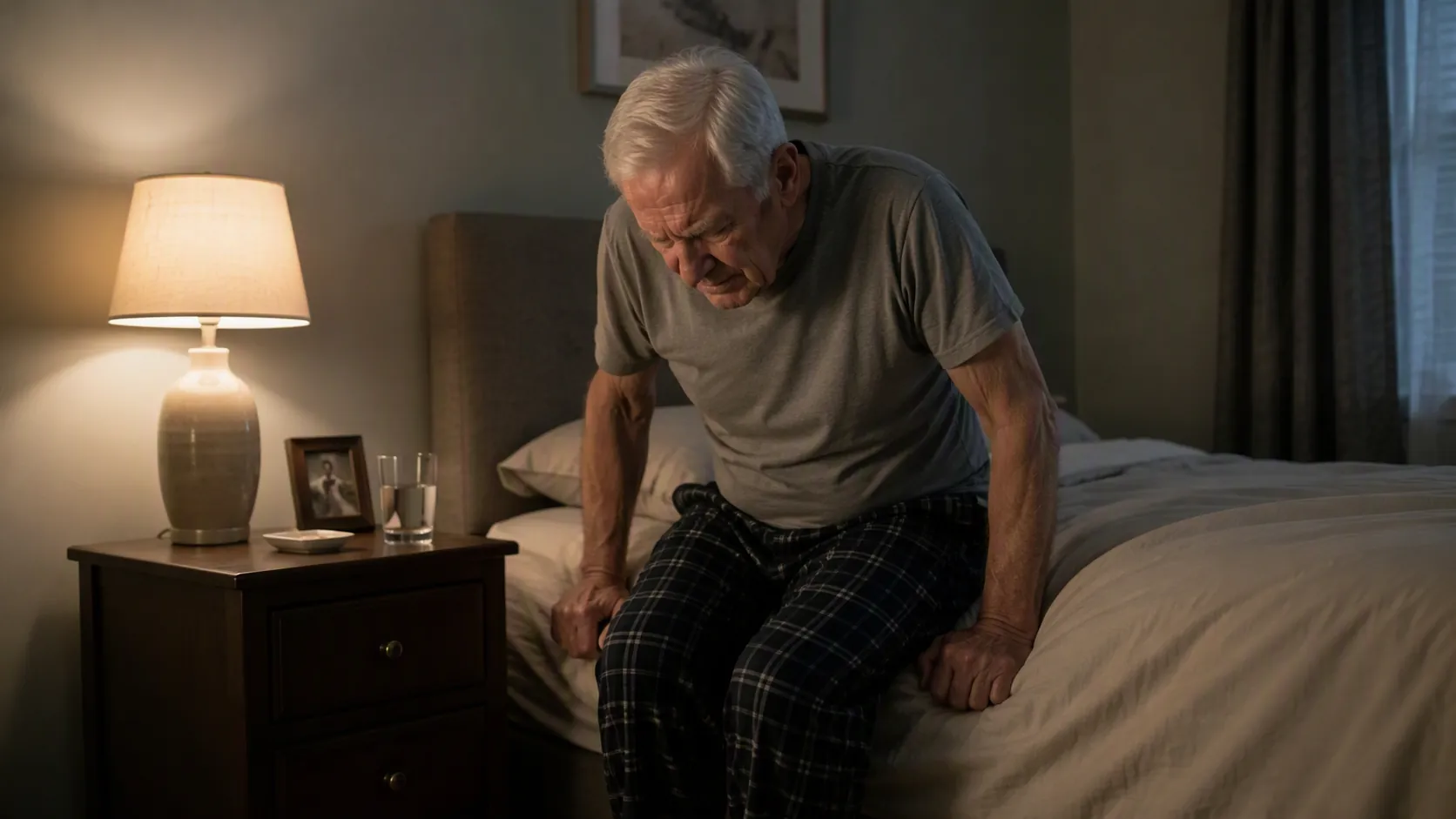
A caregiver does not need to diagnose orthostasis to act on the risk. If an older adult has diarrhea after a possible recalled-food exposure, treat each stand as a small test: sit up, pause, ask about dizziness, then stand with support. The goal is not to make the person feel fragile. The goal is to keep urgency from making the rules.
This matters most at night. Darkness, slippers, a rushed bladder or bowel urge, and a tired caregiver make a poor safety team. A clear path and a steady arm are more useful than a lecture about being careful.
| Moment | What to do | Why it matters |
|---|---|---|
| Getting out of bed | Have the older adult sit at the edge of the bed first, feet on the floor, and pause before standing. | Dizziness may appear only after position changes. |
| First steps to the bathroom | Use a walker, cane, grab bar, or caregiver arm if that is already part of the person’s safe routine. | The urgent trip is when people skip the support they normally use. |
| Nighttime path | Turn on lights, remove rugs or clutter, and keep the route dry. | Diarrhea creates repeated trips, often when attention is low. |
| After each episode | Encourage fluids if appropriate for that person’s medical plan, and watch whether standing steadiness improves or worsens. | The fall risk can continue after the worst cramps pass. |
If the person has heart failure, kidney disease, fluid restrictions, or takes medications such as diuretics, do not improvise a high-fluid plan without medical guidance. The Mayo cohort also found that loop-diuretic use was associated with a falls-or-death composite outcome, with an odds ratio of 1.26, which is a reminder that hydration advice has to fit the person, not just the illness [4].
When to watch, and when home monitoring is not enough
The timing is not identical across public-health pages, so keep the source attached to the number. CDC says symptoms of this E. coli infection usually begin 3 to 4 days after swallowing the bacteria. FDA notes that people usually develop symptoms 3 to 4 days after exposure, but illness can start up to 9 days later [1][2].
That means a caregiver may be watching for more than one evening. If an older adult ate a recalled product and then develops diarrhea in the following days, the practical home question becomes: are they hydrated enough and steady enough to stand, walk, and toilet safely?
CDC says to call a healthcare provider for diarrhea and fever higher than 102°F, diarrhea lasting more than 3 days without improving, bloody diarrhea, vomiting so much that fluids cannot be kept down, or signs of dehydration such as not urinating much, dry mouth and throat, or feeling dizzy when standing up [1].
- Do not wait for a fall before treating dizziness on standing as important.
- Do not treat “no deaths reported” in an outbreak update as proof that a frail older adult is safe at home.
- Do not assume the risk is over as soon as the recalled berries are thrown away; symptoms and recovery can lag behind the freezer cleanup.
Use a temporary fall-prevention window
For a few days, the home may need to run differently. Not forever, and not dramatically. Just enough to respect the fluid-loss period and the first recovery days, when the person may say they feel better but still get lightheaded after standing.
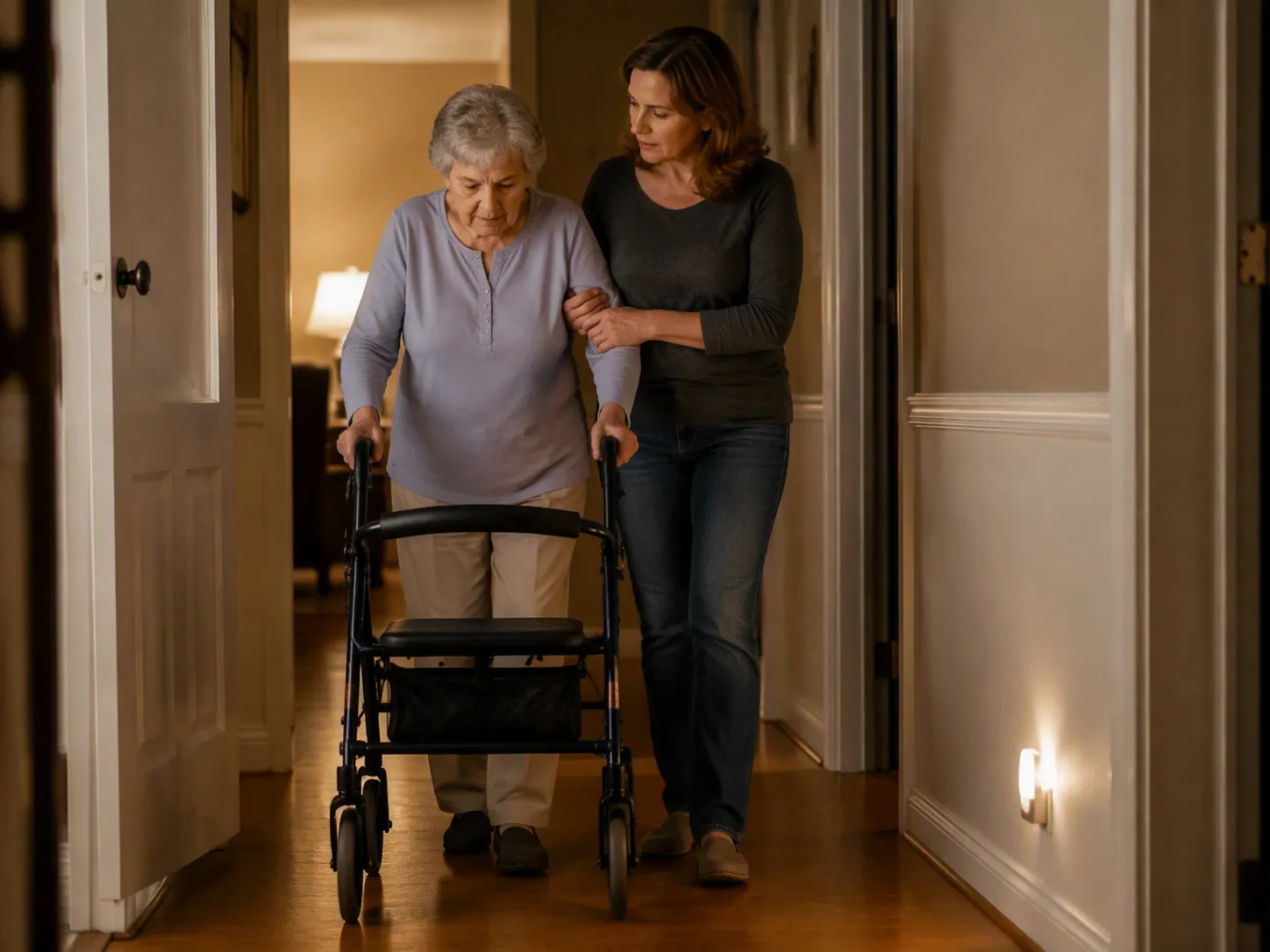
Start with the first stand of the morning and the first stand after a long rest. Those are the moments when a caregiver can learn the most. If the older adult needs to grip the bed, sway, blink hard, or sit back down, that is useful information. Slow the next trip before it becomes a crisis.
Keep the bathroom route boring: light on, floor dry, no laundry basket in the hallway, no loose rug at the threshold, no walker parked across the room. If urgency is severe, ask the clinician whether a temporary bedside commode or other toileting plan makes sense for that person. The right answer depends on mobility, continence, infection-control needs, and whether the caregiver can safely assist.
Fluids need the same practical treatment. Offer what the person is allowed to drink, in amounts their medical conditions permit, and make it visible and reachable. If they are too nauseated to keep fluids down, or if dehydration signs appear, that has crossed into CDC’s call-your-provider territory [1].
For a broader first-72-hour household response to recalled food, use Why Food Recall Safety Is Fall Prevention for Seniors. If the situation is mainly dehydration-related, the same family of problems appears in Why a Water Crisis Is a Fall Emergency for Older Adults, because the body does not care whether fluid loss started with diarrhea, heat, or a disrupted water supply.
How long to keep the extra safeguards
Keep the extra fall precautions until the older adult is no longer having active diarrhea, is able to take fluids as appropriate, is urinating in a more normal pattern for them, and can sit, stand, and walk without dizziness. The last part matters. A person can look improved while still being unsafe on the first few steps.
If they normally use a mobility aid, this is not the week to leave it in another room. If they normally resist help, frame it as temporary: “Until the dizziness is gone, I’m walking with you.” The safer plan is the one they will actually follow at 2 a.m.
If a fall happens anyway, or if the illness exposes a larger home-safety problem, the next step is not to blame the missed UPC or the late-night decision. After the acute illness is handled, a more complete home review such as the CDC STEADI home fall-prevention checklist path can help turn a temporary fix into a safer routine.
The practical handoff
Verify the recall on the live FDA and CDC pages. Use the Blueberry Recall Safety Checklist for Seniors for product handling, freezer checks, and cleanup. Call a healthcare provider at CDC’s warning thresholds, especially bloody diarrhea, persistent diarrhea, vomiting that prevents fluids, high fever, or dehydration signs. And while an older adult is sick or recovering, manage the home as if fall risk has risen until hydration and upright steadiness are reliable again.
Medical disclaimer: This article is for general education and fall-prevention planning. It is not a diagnosis or a substitute for medical care. For symptoms after recalled food exposure, follow CDC/FDA guidance and contact a qualified healthcare professional.
References
- E. coli Outbreak Linked to Frozen Blueberries — CDC, July 30, 2026.
- Outbreak Investigation of E. coli O145:H28: Frozen Blueberries (July 2026) — FDA, July 30, 2026.
- Risk and E. coli Infection — CDC.
- Association Between Dehydration and Falls — Mayo Clinic Proceedings: Innovation, Quality & Outcomes.
Related reading
Noticed something outdated or inaccurate on this page? Flag a correction. We review every report against CDC, NIA, and AARP HomeFit guidance before updating a page.
Part of the Fall Prevention section.