
STEADI: Intervene
Cancer vaccine side effects raise fall risk in older adults
Symptoms like dizziness, weakness, fatigue, and fever can make the first 24–72 hours after a cancer vaccine a real fall-risk window for older adults. Knowing which side effects are normal, how to plan safer post-treatment days at home, and when to call the oncology team versus 911 can reduce the risk of a fall.
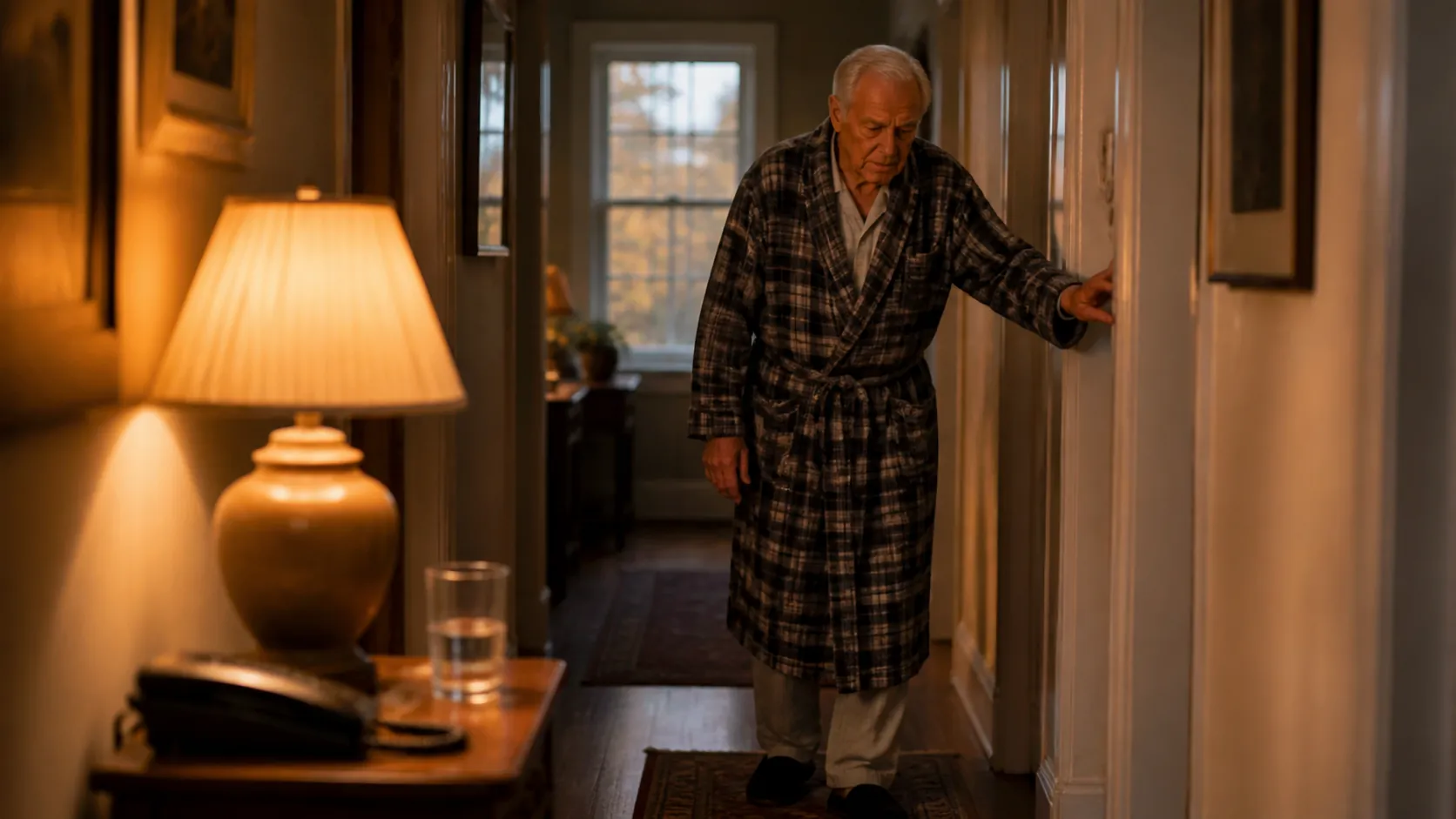
The risky moment after a cancer vaccine is often not the infusion chair. It is the ride home, the first stand from the sofa, the walk to the bathroom after dark, or the decision to “just manage” a fever because the clinic said flu-like symptoms can happen.
For older adults, cancer vaccine side effects can create a real fall-risk window during the first 24–72 hours at home. That does not mean there is a cited clinical study proving a certain fall rate after cancer vaccines. The safer and more honest way to say it is this: several documented side effects of cancer vaccine treatment—fatigue, dizziness, weakness, fever, chills, fainting, and blood pressure changes—are exactly the symptoms that make an older person less steady on their feet.
That distinction matters. A predictable side effect is not harmless just because it is expected. If an older adult feels weak, cold, feverish, lightheaded, or rushed to the toilet, home safety has to start before treatment day.
Two cancer vaccine situations, two different home timelines
The home plan depends on which treatment is being given. The two common situations families ask about are sipuleucel-T, sold as Provenge, for prostate cancer, and BCG placed into the bladder for bladder cancer.
With Provenge, the safety issue starts on treatment day itself. In the phase 3 safety population of 601 men, the most commonly reported adverse reactions included chills in 53.1%, fatigue in 41.1%, fever in 31.3%, back pain in 29.6%, nausea in 21.5%, joint ache in 19.6%, and headache in 18.1%.[1] The FDA notes that a majority of men in the controlled Provenge trials were 65 or older, so these safety data are not just a younger-adult story.[2]
With BCG bladder treatment, the first few hours can be deceptively quiet. Bladder irritation commonly starts 4–6 hours after the medicine is put into the bladder and may last 24–72 hours.[3] Macmillan also describes BCG side effects such as needing to pass urine often, pain or burning when passing urine, flu-like symptoms, tiredness, weakness, and fever.[4]
| Treatment | When fall-relevant symptoms may matter most at home | Home detail caregivers should not miss |
|---|---|---|
| Provenge infusion | During treatment day and the first 1–2 days after, especially if chills, fever, fatigue, dizziness, fainting, or blood pressure changes occur | Arrange a ride; do not plan on the older adult driving themselves home after an infusion day |
| BCG bladder instillation | Often beginning 4–6 hours later and continuing through the next 24–72 hours if urinary symptoms, fever, tiredness, or weakness develop | Plan bathroom safety and follow toilet precautions during the first 6 hours |
Why “normal side effects” can still cause an unsafe night
General cancer vaccine information from the National Cancer Institute lists possible side effects such as fever, chills, fatigue, dizziness, nausea, headache, and muscle or joint aches.[5] The American Cancer Society also describes cancer vaccine side effects that may include fever, chills, weakness, dizziness, fatigue, headache, nausea, vomiting, and muscle or joint pain.[6]
On a discharge sheet, those words can look routine. At home, each one changes how a person moves.
- Fatigue makes the older adult less likely to pick up their feet, use a walker correctly, turn on lights, or wait before standing.
- Dizziness or lightheadedness makes the first few steps after standing more dangerous, especially from a bed, recliner, toilet, or car seat.
- Weakness makes bathroom trips harder and can turn a small stumble into a fall because the person cannot recover their balance quickly.
- Fever and chills can lead to shivering, poor sleep, dehydration, and rushing to find blankets, medicine, or the bathroom.
- Nausea can reduce fluid intake, and poor intake can worsen lightheadedness when standing.
- Urinary urgency after BCG can make a person hurry to the toilet, which is one of the worst combinations: dim light, speed, weakness, and a hard bathroom floor.
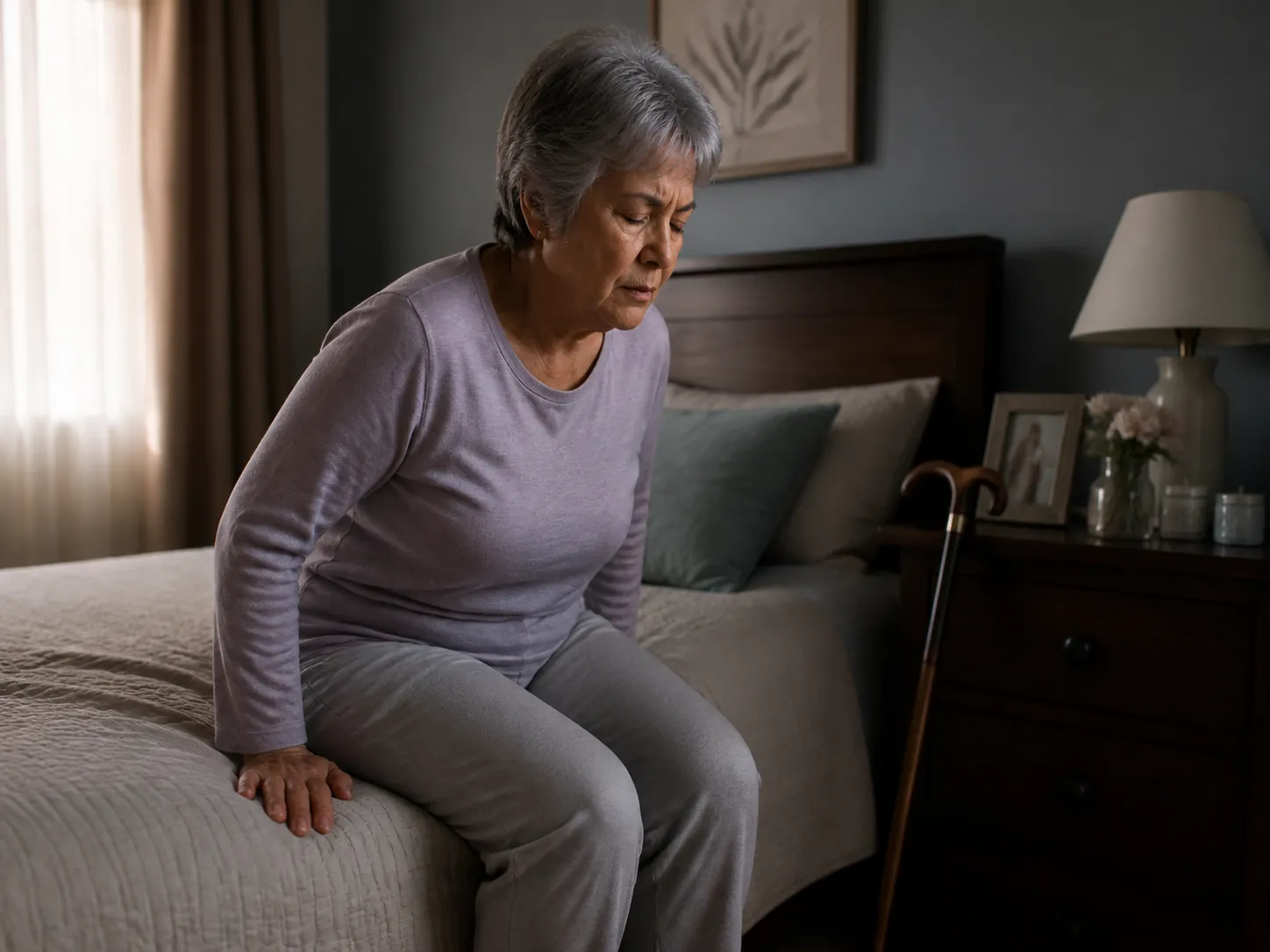
This is why a family should not wait until symptoms are severe before making the home safer. A person does not have to be in medical danger to be in fall danger. A mildly feverish, tired 78-year-old walking to the toilet at 2 a.m. is already in a different safety situation than the same person on a normal morning.
Provenge: watch the infusion day closely
Provenge has a particularly clear reason for a treatment-day fall plan: acute infusion reactions are common. In the phase 3 safety data, 71.2% of patients had an acute infusion reaction, and 95.1% of those reactions were mild or moderate.[1]
Mild or moderate does not mean “drive yourself home and climb the stairs with grocery bags.” Provenge materials list acute infusion reaction symptoms that can include chills, fever, fatigue, weakness, nausea, vomiting, headache, dizziness, fainting, and low or high blood pressure.[1] The FDA’s Provenge Q&A also notes that acute infusion reactions may include syncope, meaning fainting, as well as hypotension and hypertension.[2]
The reassuring part is that many symptoms are short-lived. In the Provenge safety information, fevers resolved within 2 days in 71.9% of cases and chills resolved within 2 days in 89% of cases.[1] But those first 2 days are exactly when the home should be set up for lower activity, more supervision, and fewer chances to stand suddenly.
Before a Provenge appointment
- Arrange a ride both ways. Do not make self-driving the backup plan after an infusion treatment where dizziness, fainting, fever, chills, weakness, or blood pressure changes are possible.
- Clear the path from the entry door to the chair, bedroom, and bathroom before leaving for the clinic.
- Put water, a phone, the oncology team’s number, a thermometer, glasses, and any usual walking aid within reach of the resting spot.
- Plan a low-activity evening. No errands, yard work, alcohol, showering alone if lightheaded, or stair trips that can wait.
- Ask the clinic what symptoms should trigger a call the same day, especially if the older adult has a history of fainting, low blood pressure, dehydration, falls, or living alone.
If the older adult lives alone, the ride home is not enough. Someone should check in later that day, and preferably again the next morning, because fatigue and fever often matter most after the clinic visit is over.
BCG: the bathroom plan is part of fall prevention
BCG treatment creates a different kind of home problem. The patient may feel well leaving the appointment, then develop urinary symptoms, tiredness, weakness, chills, or fever later. MSKCC’s patient education says bladder irritation usually starts 4–6 hours after treatment and lasts 24–72 hours.[3]
The first 6 hours after BCG also come with toilet precautions. MSKCC instructs patients to sit down when urinating and to put bleach in the toilet after urinating during that first 6-hour period.[3] Macmillan similarly advises sitting down to pass urine for 6 hours after treatment and using bleach in the toilet after each time urine is passed during that period.[4]
That sitting instruction deserves attention from a fall-prevention point of view. Sitting to urinate reduces splashing and supports treatment safety precautions, but it also removes one common fall setup: a weak or dizzy person standing in front of a toilet, turning, reaching, and trying to steady themselves in a small space.
Set up the bathroom before leaving for BCG
- Make sure the path to the toilet is lit, dry, and free of rugs, laundry, shoes, and low stools.
- Place bleach and disposable gloves where the caregiver can reach them safely, if the care team has instructed their use.
- Remind the patient to sit down to urinate during the first 6 hours after BCG.
- Keep a clean change of clothes and absorbent pads available if urgency or leakage is expected.
- Use a night-light or motion light from the bed to the bathroom for the first few nights after treatment.
- If the older adult uses a cane or walker, park it within arm’s reach before resting, not across the room.
Bathroom urgency makes people hurry. Hurrying is exactly what the home plan is trying to prevent.
A 72-hour home plan that fits both treatments
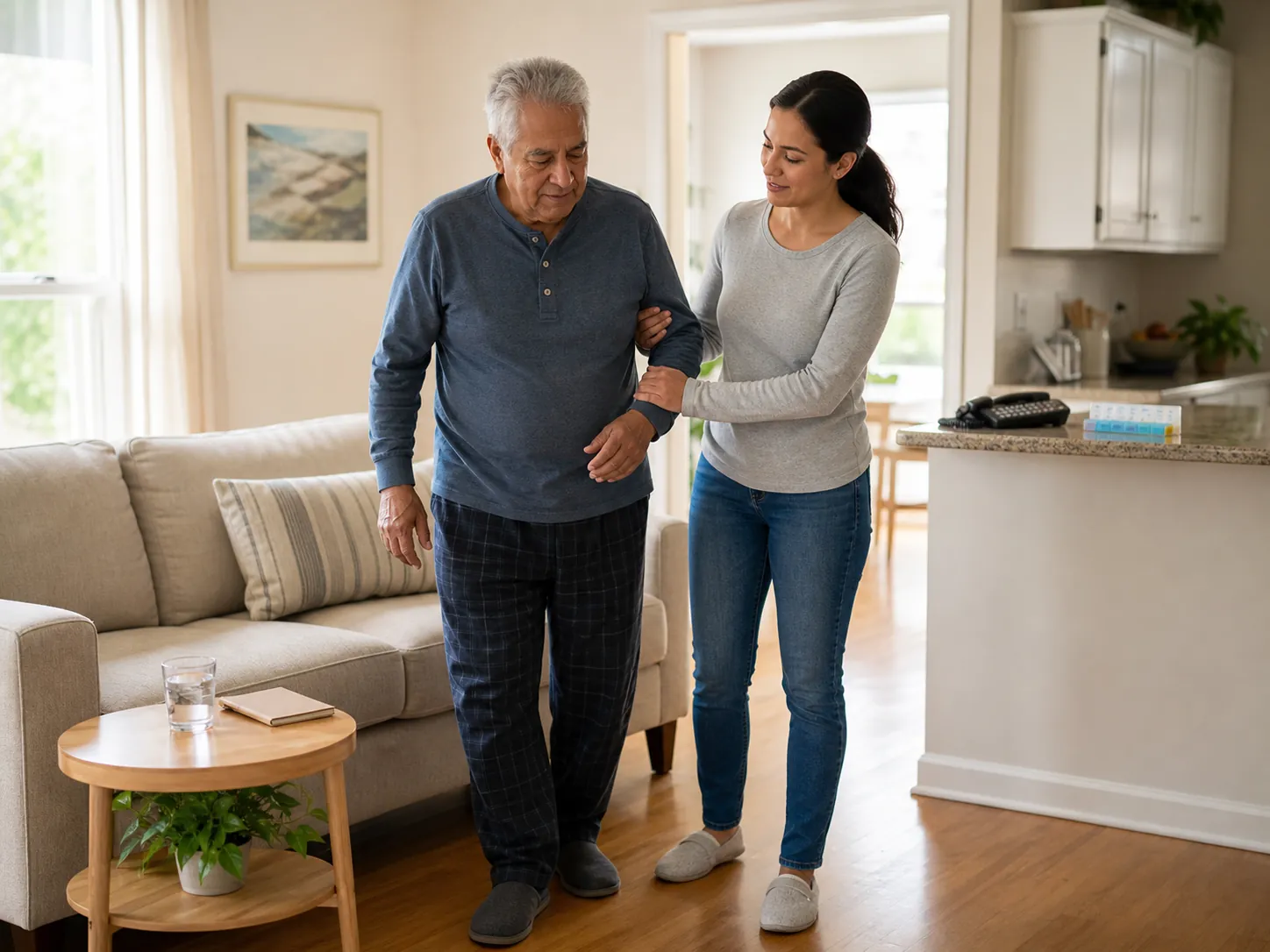
The safest plan is made before anyone is tired, chilled, embarrassed about urinary symptoms, or trying to remember clinic instructions. Keep it plain and visible.
| Time period | What to do at home | What to write down |
|---|---|---|
| Before treatment | Arrange transportation; clear walking paths; set out thermometer, water, phone, walking aid, and clinic number | Baseline temperature, usual walking status, who is driving, who is checking in |
| First evening | Keep activity low; stand slowly; use lights; avoid showering alone if dizzy or weak; sit for bathroom trips when needed | Temperature, chills, dizziness, weakness, fatigue, nausea, urinary urgency or burning |
| Overnight | Use night-lights; keep phone nearby; do not rush to the bathroom; use cane or walker every time | Any near-fall, actual fall, confusion, fainting, trouble breathing, or worsening weakness |
| Next 1–2 days | Continue hydration, rest periods, short supervised walks if safe, and bathroom precautions as instructed | Whether symptoms are improving, stable, lasting longer than expected, or getting worse |
A notebook on the side table is often better than relying on memory. Write down the time symptoms start, temperature readings, fluid intake if poor, and any unsafe walking moments. “Almost fell getting off toilet” is useful information for the oncology team. So is “too weak to get from bed to bathroom without help.”
Small home changes that matter more than they look
- Put the recovery chair close to a bathroom, but not so close that the patient has to navigate a tight turn.
- Use shoes or nonskid slippers, not socks on smooth floors.
- Keep a full glass of water nearby if fluids are allowed, and refill it before the caregiver leaves the room.
- Move cords, pet bowls, throw rugs, and clutter before treatment day.
- Have the older adult pause after sitting up and again after standing. The first few seconds are when lightheadedness often shows itself.
- Do not let pride decide whether to use the walker. Treatment days are walker days if balance is even slightly off.
- For a person who lives alone, schedule check-ins rather than saying, “Call me if you need anything.” A weak or dizzy person may not call soon enough.
When home care stops being enough
Cancer vaccine teams expect some side effects, but they also give limits. Those limits should be written down before the patient leaves treatment.
For BCG, MSKCC advises calling the doctor if bladder irritation signs last more than 2 days or get worse, or if the patient has flu-like symptoms or a fever of 101.3°F (38.5°C) or higher.[3] Macmillan advises contacting the hospital immediately for a high temperature over 103°F (39.4°C), a mild fever over 101.3°F (38.5°C) that lasts more than 48 hours, or flu-like symptoms with a fever lasting more than 72 hours.[4]
For Provenge, the care team’s same-day instructions matter because acute infusion reactions may include fainting and blood pressure changes.[1][2] Do not treat fainting, severe lightheadedness, or unusual weakness as ordinary tiredness just because fatigue is on the side-effect list.
Call the oncology team promptly for
- Fever that meets the treatment team’s threshold or the BCG thresholds above
- Symptoms that are lasting longer than the care team said they should
- Symptoms that are getting worse instead of improving
- Dizziness, weakness, or fatigue that changes the person’s ability to walk safely
- Poor fluid intake, repeated vomiting, or signs the person may be getting dehydrated
- New or worsening urinary symptoms after BCG, especially if paired with fever or weakness
- Any near-fall or fall, even if there is no obvious injury, because it may signal that symptoms are affecting balance
Call 911 for urgent danger signs
- Fainting or loss of consciousness
- Trouble breathing
- Confusion, sudden severe weakness, or inability to stand or walk safely
- Chest pain or symptoms that feel immediately dangerous
- A fall with head injury, suspected broken bone, heavy bleeding, severe pain, or inability to get up safely
The useful boundary is simple: expected symptoms can be watched at home only while the person is safe, improving, and within the care team’s limits. Once fever crosses a stated threshold, symptoms persist or worsen, walking becomes unsafe, or there is fainting, confusion, breathing trouble, or a serious fall, the plan changes from home monitoring to medical help.
References
- Side Effects | PROVENGE® (sipuleucel-T), PROVENGE
- Questions and Answers - Provenge, U.S. Food and Drug Administration
- BCG (Intravesical), Memorial Sloan Kettering Cancer Center
- BCG treatment for bladder cancer, Macmillan Cancer Support
- Cancer Treatment Vaccines, National Cancer Institute
- Cancer Vaccines, American Cancer Society
Related reading
Noticed something outdated or inaccurate on this page? Flag a correction. We review every report against CDC, NIA, and AARP HomeFit guidance before updating a page.
Part of the Fall Prevention section.