
STEADI: intervene
Why Severe Storms Raise Fall Risk for Older Adults
The hours around a severe storm — not the storm itself — pose the greatest fall risk for older adults. This guide walks through what to do in each room before, during, and after a storm, from clearing and lighting paths to choosing a safe room that doesn't add stair hazards.
Severe storm safety tips for older adults should start before the rain, wind, snow, or sirens arrive, because the fall risk often shows up in the ordinary movements around the storm: getting out of bed in a dark room, hurrying to an interior space, crossing a wet entryway, stepping over a branch at the door, or trying to use a walker that was left on the wrong side of a threshold.
The stakes are not small. AARP’s disaster resilience materials note that people age 75 and older were about 6% of New Orleans’ population but roughly half of Hurricane Katrina’s deaths, and that 61 of 87 Hurricane Ian fatalities with known ages were age 60 or older.[1] Those figures do not mean every older adult is helpless in a storm. They do mean that a storm plan that ignores mobility, lighting, transfers, temperature, and cleanup is not much of a plan.
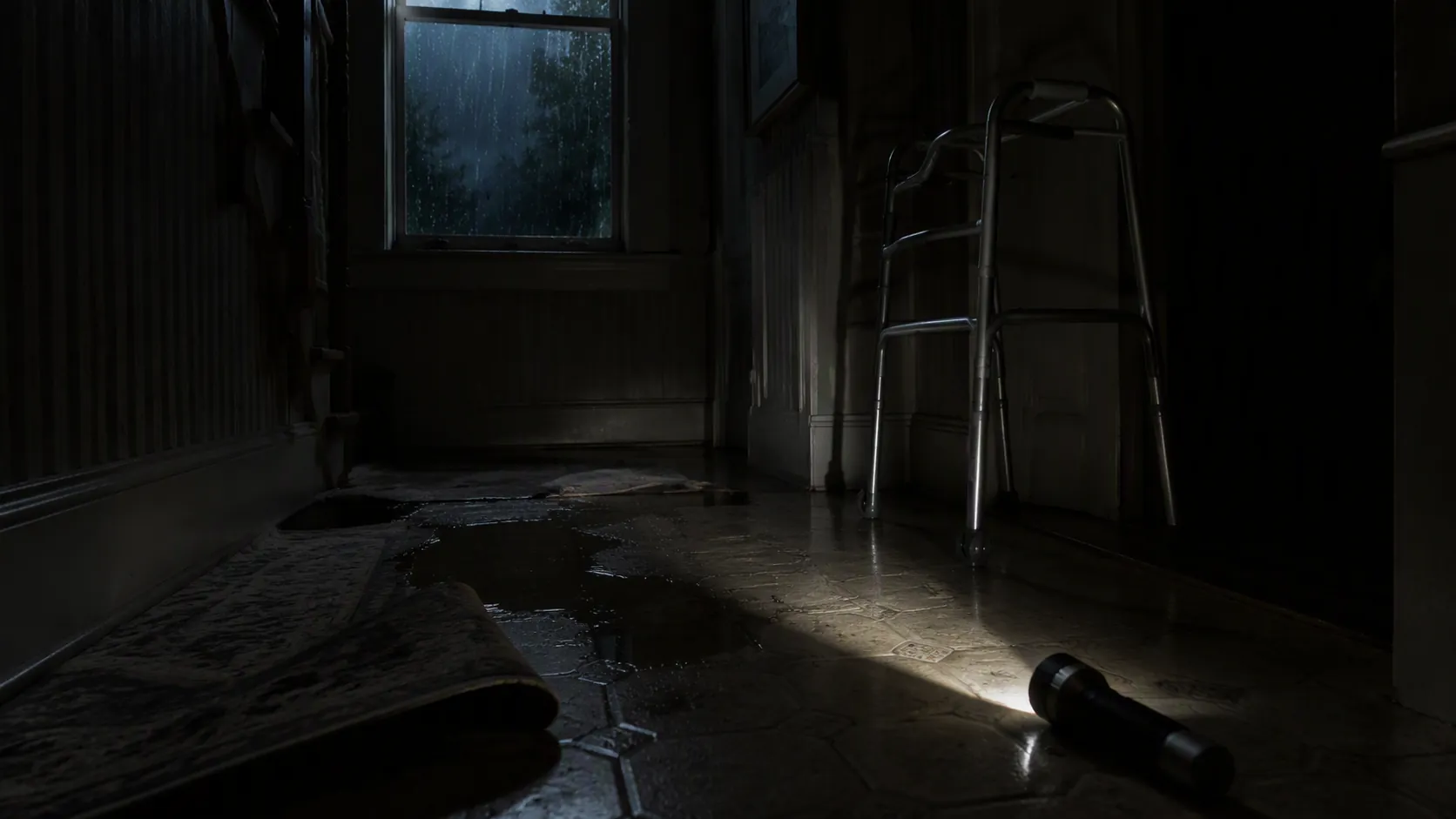
The home does not stay the same during severe weather. A hallway that is easy at noon can become risky after power loss. A front step that is manageable when dry can become slick when shoes track in water. A basement that sounds safer for wind may be the wrong destination for someone who cannot descend stairs steadily, especially under pressure.
The storm plan starts on the walking route
The quickest way to see the risk is to follow the route of the whole event. The goal is not to make the house perfect. It is to keep the next necessary movement from becoming a fall.
| Storm phase | What changes for fall risk | What to set up before it becomes urgent |
|---|---|---|
| Before the storm | People rush, daylight fades, floors and porches may get wet, and supplies are often still scattered. | Clear room-to-room paths, place lighting within reach, position walkers and canes where they will be used, secure rugs, prepare entryways, and choose the shelter room. |
| During the storm | Power may fail, the safest weather location may not be the easiest mobility location, and bathroom or medication trips still happen. | Use the preselected route, keep assistive devices on the correct side of the door, avoid unnecessary trips, and shelter where storm protection and transfer safety are both acceptable. |
| After the storm | The wind may stop while wet floors, ice, debris, downed lines, and cleanup tasks remain. | Reopen movement slowly: light the path, dry floors, keep people away from electrical hazards, clear only what can be cleared safely, and postpone risky cleanup. |
If evacuation becomes necessary, follow official instructions and use a prepared evacuation checklist rather than improvising while conditions worsen. For that part of the decision, use an emergency evacuation plan checklist for elderly parents. For the home check, focus on the part families can inspect inside the home before, during, and after the storm.
Before the storm: make the house usable in the dark
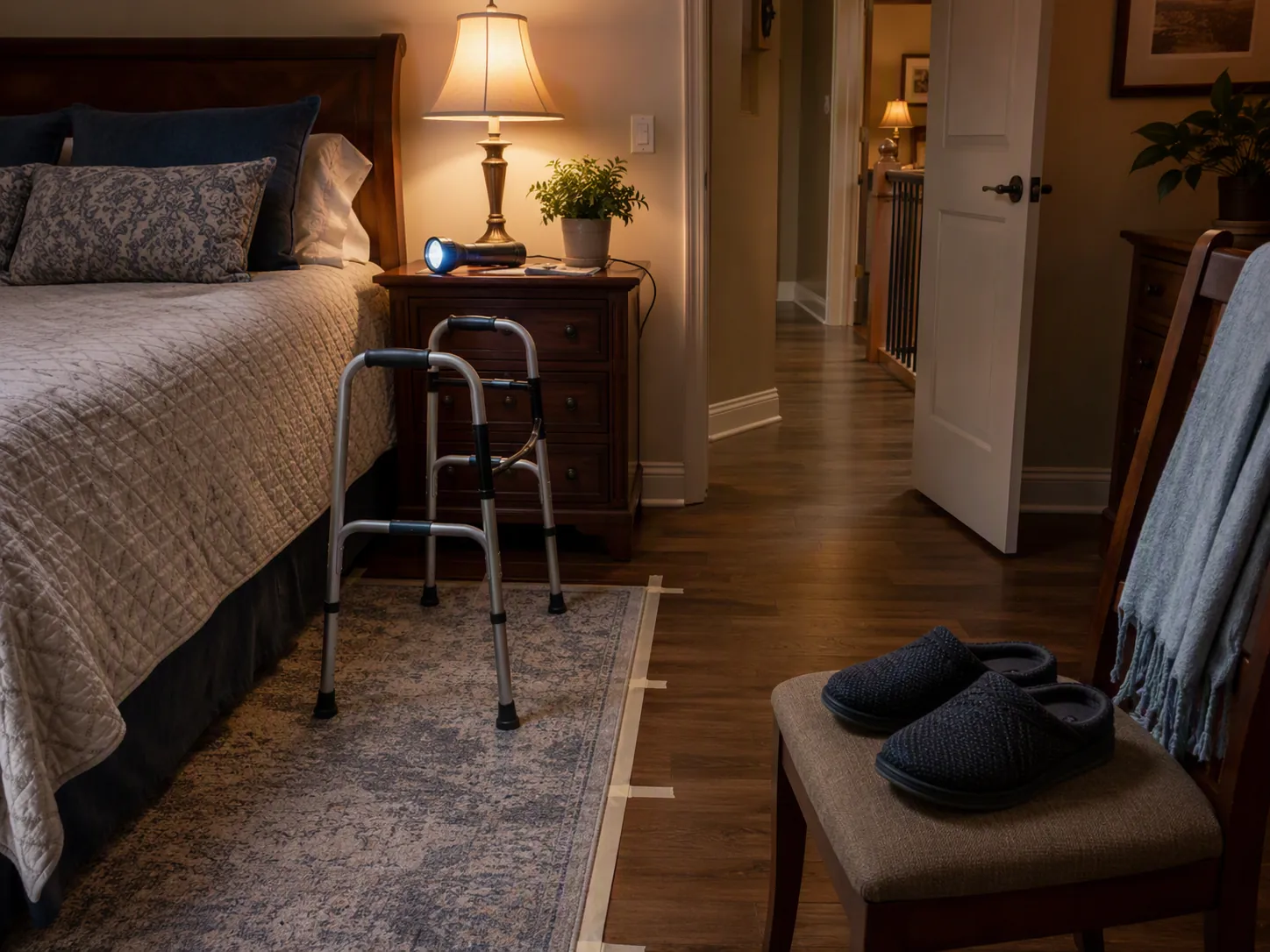
The best time to prevent a storm-related fall is while the lights still work and no one is moving quickly. That is when a caregiver or older adult can notice the small things: a rug edge that catches a toe, a cane tip worn smooth, a walker parked across the room, a flashlight in a drawer instead of on the nightstand.
Put light where the hand will go first
Power loss turns familiar rooms into different rooms. The CDC’s winter-weather guidance includes staying indoors when conditions are dangerous, but it also names indoor hazards that matter during outages, including darkness from power loss and wet floors from tracked-in water.[2] “Stay indoors” is not the same as “the house is safe.”
Place a charged flashlight or battery lantern where the person can reach it before standing: beside the bed, at the preferred chair, near the bathroom route, and near the shelter location. A flashlight across the room may be useful to someone else, but it does not help the person who has to cross the dark room to reach it.
If the older adult uses a phone for alerts, do not make the phone the only light. It may be charging in another room, low on battery, or needed for communication. A small light that stays in one reachable place is less impressive than a storm app, but it solves a more immediate problem: the first step out of the chair or bed.
Prepare the mobility aid as part of the room, not as an accessory
A walker or cane has to be where the next movement begins. Before the storm, check the bed, favorite chair, bathroom doorway, kitchen path, and shelter route. If a walker is usually left in the hall but the person will shelter in an interior room, move it before the weather arrives. If a cane is used at night, it should not be leaning by the front door because someone last used it to get the mail.
Winter storms add one more simple inspection: the cane tip. HealthInAging’s winter safety tips advise replacing a cane’s rubber tip before it wears smooth, along with clearing and salting walkways and wearing non-skid boots.[3] A worn cane tip is easy to overlook because the cane still looks familiar. On a wet entryway or icy walk, that familiar cane may not grip the way the person expects.
The Red Cross also advises older adults to plan for assistive items and related extras, and to check whether local emergency managers keep registries for people who may need help during a disaster.[4] In the home, that translates into a plain task: keep the needed device charged, assembled, reachable, and on the right side of any door that may close.
Clear the path people will actually use
A storm path is not the same as a tour of the whole house. It is the route from bed to bathroom, chair to bathroom, chair to shelter room, shelter room to medication or water if those must be accessed, and the route to an exit if officials instruct evacuation. Clear those routes first.
- Remove loose cords, baskets, small tables, pet toys, and decorative items from the walking line.
- Tape down or remove rugs that curl, slide, or bunch under a walker.
- Move shoes, umbrellas, and bags away from the entryway before wet weather begins.
- Keep the bathroom route open even if supplies are being staged elsewhere.
- Put a stable chair only where sitting is intentional, not where it narrows the route.
For a broader room-by-room order of what to fix first, use an aging-in-place priority guide. If the bathroom route is the weak point, pair this storm walk-through with a bathroom safety priority guide. Severe weather does not create every hazard; it exposes the ones that were tolerable only when the house was bright, dry, and calm.
Treat the entryway as a fall zone
The entryway is where weather gets carried indoors. Wet shoes, soaked mats, leaves, ice melt, and small branches turn the first few steps into a mixed surface. Before the storm, put an absorbent mat where it will not slide, keep a towel nearby for puddles, and decide where wet shoes or boots will go so they do not sit in the walking path.
For winter weather, HealthInAging advises clearing and salting walkways and wearing non-skid boots.[3] That advice belongs on the inside of the door as well as outside it. Non-skid soles help only if the person is wearing them before stepping onto the wet or icy surface, and a cleared walkway helps only if the person is not then stepping onto a slick puddle just inside the threshold.
Keep warmth in the plan when the storm is cold
In a winter storm or cold outage, fall prevention and temperature safety overlap. HealthInAging recommends keeping the indoor temperature at 65°F or warmer.[3] If a room is warmer but requires stairs, or a safer shelter room is colder, that tradeoff should be noticed before the lights go out. Blankets, layered clothing, charged lights, and the mobility aid should be staged together, not scattered through the house.
The safe room has to be safe to reach
Shelter advice is often given as if everyone can move quickly to the “best” structural location. In real homes, the safest weather location may introduce a different danger: stairs, a tight turn, a low couch that is hard to rise from, or a bathroom trip that becomes impossible without help.
National Weather Service severe-weather guidance emphasizes getting low, putting as many walls as possible between you and the outside, and protecting yourself from flying debris by covering up.[5] For an older adult with mobility limits, those principles still matter. They just have to be applied to the person’s actual body and house.
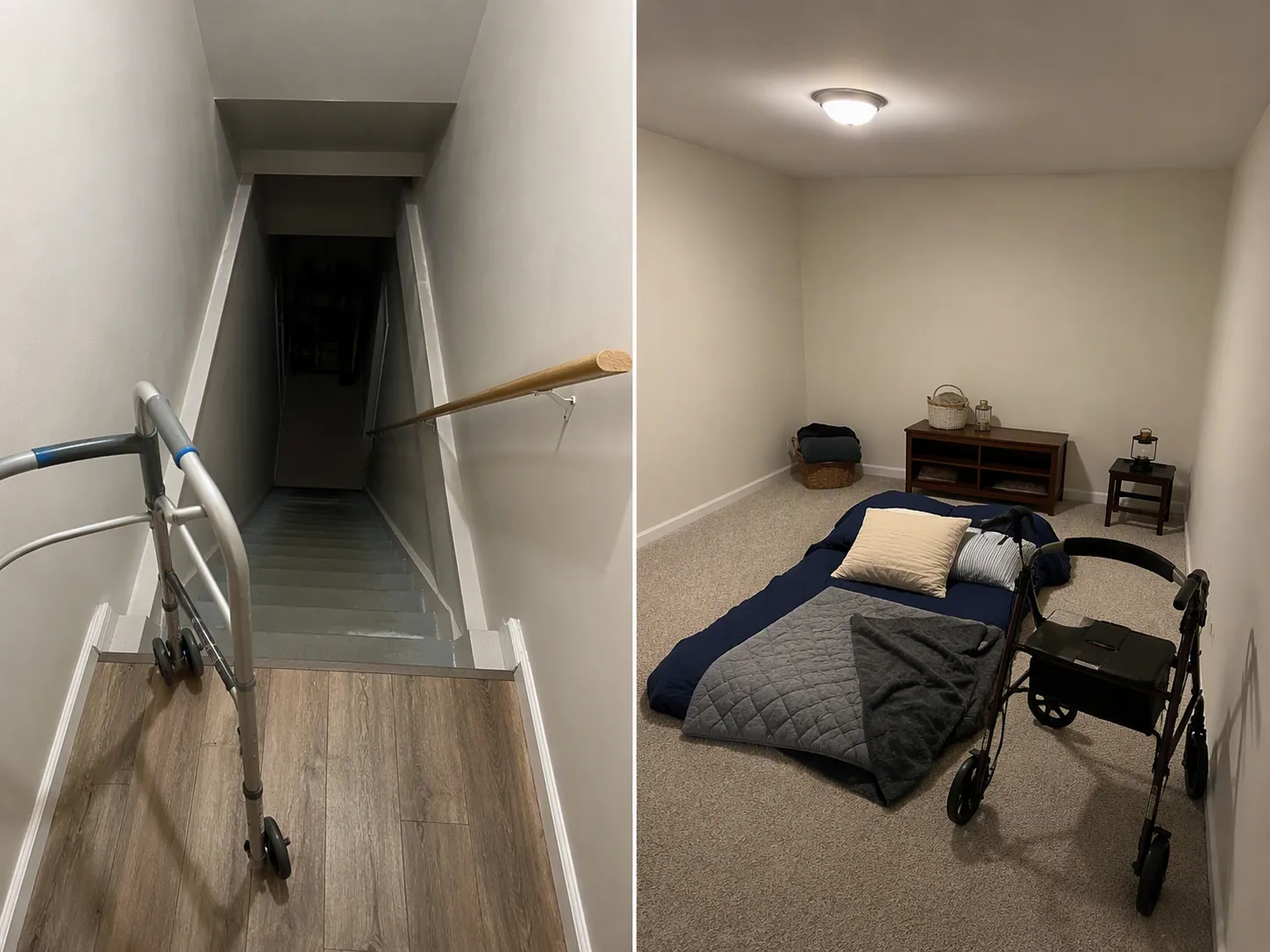
A basement may be the preferred severe-weather shelter in many homes. But if reaching it means descending steep stairs with a walker left behind, in dim light, while the person is frightened or hurried, the stairway itself becomes part of the emergency. An interior, windowless room on the same floor may offer a better balance when it keeps the person away from glass and exterior walls without forcing a hazardous descent.
This choice should be made before the warning, not debated at the top of the stairs. Walk the route in ordinary conditions. Can the person turn with the walker? Is there room for the device inside the shelter area? Can the door close without trapping the walker outside? Is there a place to sit that the person can rise from? If the answer depends on one strong helper being present, write that into the plan rather than pretending the room works independently.
What belongs in the shelter space
The shelter space does not need to become a storage closet. It needs the items that prevent a fall or a stranded transfer while the person waits.
- A charged flashlight or lantern that can be reached from the seated position.
- The walker, cane, wheelchair, or other mobility aid positioned inside the room, not outside the closed door.
- A stable chair or seating surface that is not too low for the person to stand from safely.
- Shoes or slippers with non-skid soles if the person may need to get up.
- Blankets or pillows that can help protect from debris without creating floor clutter.
- Essential items that would otherwise require a trip through the house during the storm.
The exact list depends on the person. Someone who transfers from wheelchair to chair needs space and a surface that works for that transfer. Someone who walks with a cane needs the cane within reach after sitting down. Someone who cannot safely rise from the floor should not have a plan that assumes they will sit on the floor unless help is present.
If the household is also considering construction changes, window protection, or larger hurricane-resistant modifications, keep that work in a separate planning lane. A structural companion such as home modifications that withstand hurricanes and prevent falls can help with that broader question. For the storm night itself, the immediate test is simpler: can this person reach and use the chosen room without creating a stair, transfer, or darkness hazard?
During the storm, reduce trips instead of relying on caution
Once the storm is underway, the plan should shrink the number of decisions. This is not the time to rearrange supplies, search for batteries, test whether the back steps are slick, or decide that the basement might be better after all.
Use the prepared route. Keep the mobility aid with the person. If a bathroom trip is necessary, turn on the flashlight before standing and give the person time to move at their usual pace. Hurry is one of the quiet hazards of severe weather: people move faster because the weather feels urgent, then make a transfer or turn as if the floor, light, and balance were normal.
Monitoring weather updates should not require repeated trips through the house. If the alert device, charger, hearing aids, glasses, and light are staged together, the older adult is less likely to cross dark rooms just to check what is happening. For a focused setup, use a guide to monitor hurricane updates safely without turning every alert into a walking trip.
After the storm, the fall risk is still open
The end of wind or thunder is not the end of the fall-prevention job. The house and the path outside may be more dangerous afterward than they were during the warning: floors are wet, mats are soaked, branches have blown against doors, ice-melting products have been scattered unevenly, and people are tired.
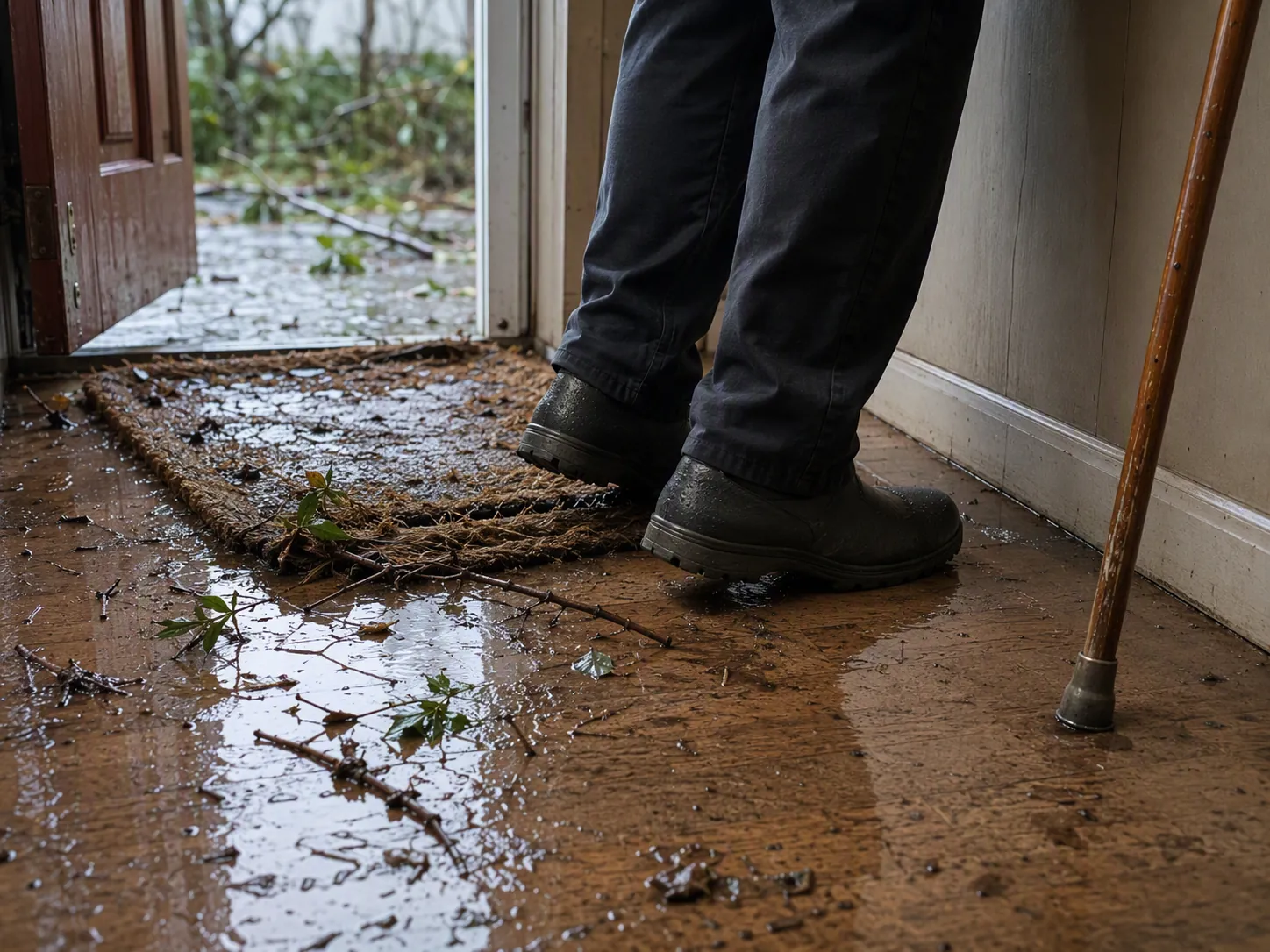
Reopen movement in layers. First, light the route. Then check the floor directly underfoot. Dry puddles before anyone crosses them. Move soaked mats if they slide. Keep branches, packaging, shoes, and cleanup supplies out of the walking path. If outdoor walkways are icy, clear and salt them before use, and use non-skid boots rather than smooth-soled shoes.[3]
Downed lines and electrical hazards are not obstacles to step around while holding a cane or walker. Keep the older adult away from that route and wait for the appropriate utility or emergency response. The same caution applies to debris that requires bending, pulling, climbing, or carrying. A small branch in the wrong place can cause a fall; a heavy cleanup task can cause one as well.
Cleanup deserves a slower standard than most families give it. The first goal is access to the bathroom, medication, water, phone, bed, and a safe chair. The yard, porch, and garage can wait if clearing them requires the older adult to cross wet surfaces, lift debris, or stand on uneven ground.
If someone falls, has a head injury, new confusion, severe pain, trouble breathing, chest pain, or cannot get up, seek emergency help. This is general safety education, not medical advice or a diagnosis. When in doubt, treat a possible serious injury as more important than finishing storm cleanup.
A practical standard for severe storm safety
A workable storm plan for an older adult is not measured by how dramatic it sounds. It is measured by whether the person can still move through the home when the routine breaks: a lit path from bed to bathroom, a walker or cane where the next step begins, rugs and entryways controlled before they become slick, supplies staged before dark, and a shelter choice that does not trade flying debris for a stair fall.
That is the part families can inspect before the forecast becomes urgent. Walk the route. Sit in the shelter chair. Reach for the flashlight from the bed. Look at the cane tip. Open the door and imagine wet shoes, branches, and no overhead light. The safest severe storm plan is the one that still works after the weather has changed the house.
References
- The Impact of Disasters on Older Adults — AARP
- About Winter Weather — CDC
- Tip Sheet: Winter Safety for Older Adults — HealthInAging
- Older Adults — Red Cross
- Severe Weather Safety Tips — National Weather Service
Related reading
Noticed something outdated or inaccurate on this page? Flag a correction. We review every report against CDC, NIA, and AARP HomeFit guidance before updating a page.
Part of the Fall Prevention section.