
STEADI: Intervene
Agent Orange Health Effects and Fall Risk in Aging Veterans
VA-recognized Agent Orange conditions that surface decades after Vietnam-era service — peripheral neuropathy, type 2 diabetes, parkinsonism, heart disease, and cognitive decline — often show up first as balance problems and falls in aging veterans. Families can act on the fall-risk connection through the free Agent Orange Registry exam and a room-by-room home safety review.
Agent Orange health effects in aging Vietnam veterans rarely arrive at the front door wearing one clean label. A spouse may first notice that the veteran is touching the hallway wall more often. An adult child may hear that his feet burn at night, or that he “just missed” the last stair again. The family may not be talking about a fall yet. They are talking about drifting toward furniture, standing up more slowly, misjudging the bathroom threshold, or seeming less aware of clutter that used to be stepped around without thought.
That timing matters now. DAV reports that fewer than 850,000 of the roughly 2.7 million Americans who served in Vietnam are still alive, while about 8.7 million served during the Vietnam era overall.[1] For many families, decades-later health effects are meeting ordinary age-related fall vulnerability in the same hallway, bedroom, and bathroom.
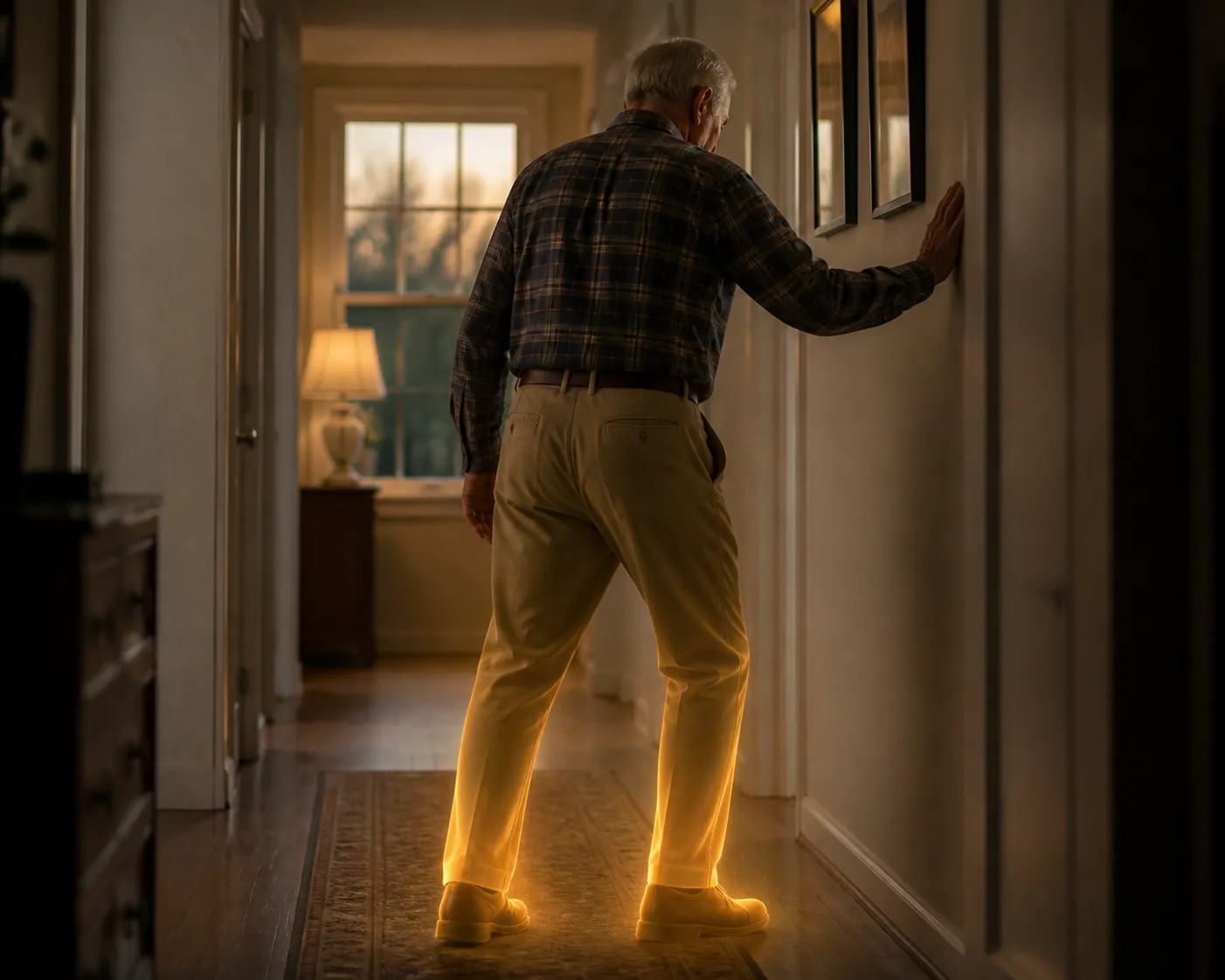
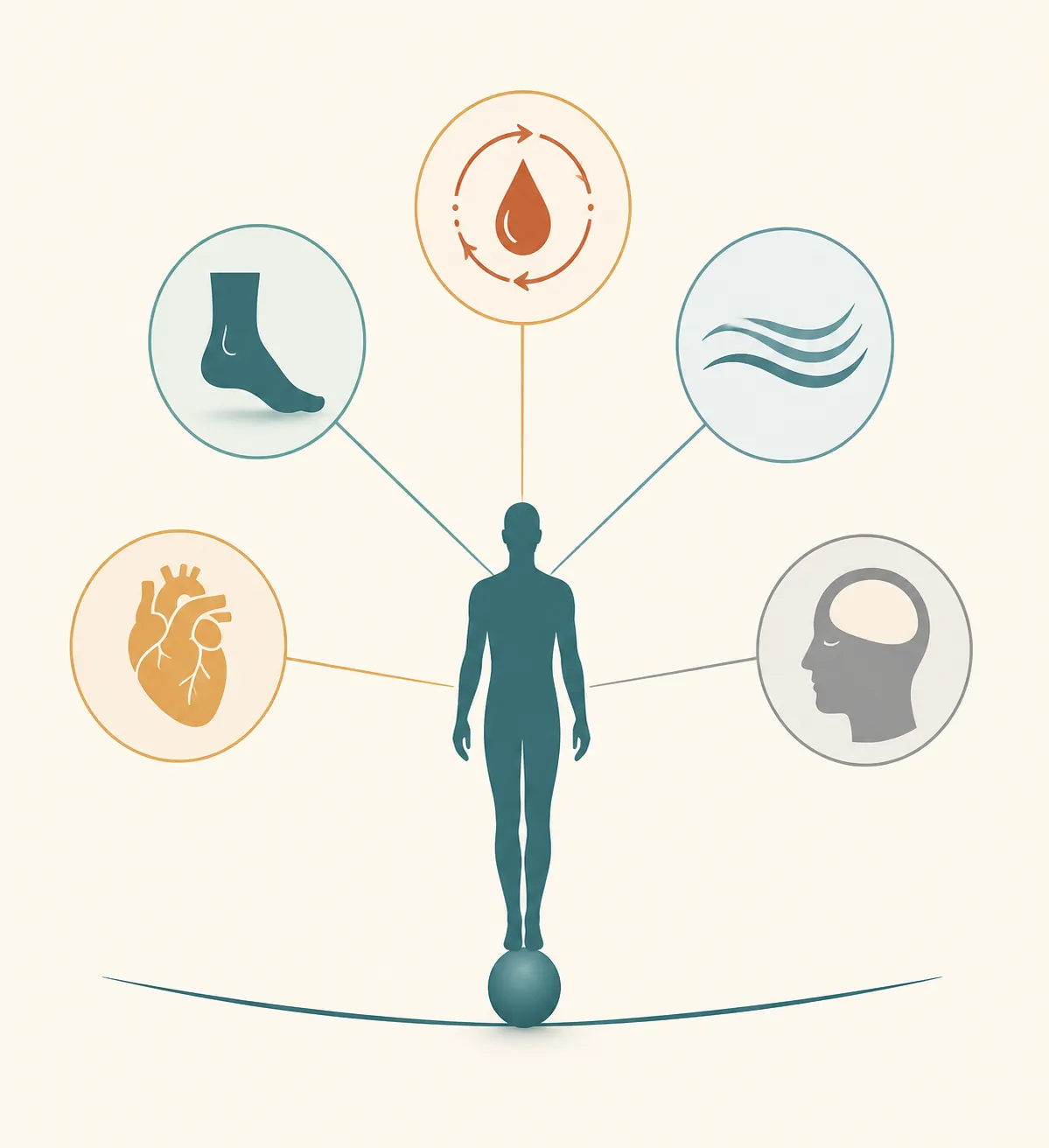
This is not a claim that one study proves Agent Orange causes falls. The better, more useful conclusion is narrower: several conditions connected to Agent Orange exposure can weaken the same systems an older person needs to stay upright. Foot sensation, glucose control, circulation, movement control, stamina, and attention all help a person cross a room safely. When more than one of those systems is strained, “he hasn’t fallen yet” is not a reason to wait.
Why the fall-risk connection shows up before the family has a name for it
A fall is often treated as an accident: a wet floor, a loose rug, a bad step. Those hazards matter. But the veteran’s body decides whether a small hazard stays small. Feet have to feel the floor. Muscles have to respond quickly enough. Blood pressure and heart function have to support standing and walking. The brain has to notice the dog bowl, the dark threshold, and the towel on the floor.
That is where Agent Orange-related conditions become a practical fall-prevention issue. The concern is not just one diagnosis on a VA page. It is the way several diagnoses can converge on the same daily outcome: slower corrections, poorer sensation, less reliable movement, and missed hazards.
| System that keeps a person upright | Agent Orange-related condition or evidence to discuss | What the family may notice at home |
|---|---|---|
| Foot sensation and coordination | Peripheral neuropathy; VA lists numbness, tingling, weakness, and loss of balance or coordination among symptoms | Wide stance, furniture-walking, missed steps, trouble feeling slippers or the floor |
| Glucose control and circulation | Type 2 diabetes and vascular disease can complicate strength, sensation, endurance, and wound risk | Slower walking, fatigue, foot problems, less confidence on stairs or uneven ground |
| Movement control | Parkinson’s disease and parkinsonism are VA-recognized presumptive conditions tied to Agent Orange exposure | Shuffling, freezing, smaller steps, difficulty turning, delayed reactions |
| Heart and blood-pressure resilience | Ischemic heart disease and hypertension are on VA presumptive-condition lists | Lightheadedness, stopping sooner, avoiding exertion, needing more rest between rooms |
| Attention and hazard awareness | A large Vietnam-era veteran cohort found higher diagnosed dementia among exposed veterans | New confusion, poor judgment around obstacles, forgetting a walker, nighttime wandering |
Peripheral neuropathy is the clearest bridge from exposure history to the bathroom floor
If one symptom cluster deserves special attention in a fall-risk conversation, it is neuropathy. VA’s public health page on peripheral neuropathy lists numbness, tingling, prickling, muscle weakness, and “loss of balance or coordination” among symptoms. VA’s presumptive rule is specific: early-onset peripheral neuropathy must appear within one year of herbicide exposure and be at least 10% disabling.[3]
That presumptive rule is a benefits rule, not a hallway-safety rule. A veteran in his 70s or 80s who has numb, burning, or unreliable feet still needs a fall-risk screen even if his current neuropathy does not fit the early-onset presumptive category. The family does not need to settle the compensation question before asking whether he can feel the floor well enough to walk to the bathroom at 2 a.m.
The research record is not uniform enough to turn one cohort into a universal rate for all Vietnam veterans, but it is strong enough to justify clinical attention. A review by de la Monte and Goel summarizes a Korean Vietnam veteran cohort of 1,224 people in which peripheral neuropathy appeared in 12.3% of veterans versus 3.3% of controls, with an odds ratio of 2.39. The same review notes a separate Korean cohort in which perceived high exposure was associated with up to 3.9 times higher odds of peripheral neuropathy.[4] Those are cohort-specific findings, not a prediction for any one household.
The Ranch Hand data also stay in their lane: these were Air Force personnel involved in herbicide spraying, not the whole Vietnam veteran population. In those data, higher dioxin levels were linked with dose-dependent increases in probable peripheral neuropathy. The same review reports that high-exposure veterans had higher rates of diabetes, with a relative risk around 1.5, and blood-glucose abnormalities, with a relative risk around 1.4. By the last time point described, 87.5% of the highest-exposure veterans diagnosed with peripheral neuropathy also had diabetes.[4]
That last overlap is the part families can use. Neuropathy and diabetes should not be treated as separate paperwork categories when the veteran is stepping into a tub or crossing from carpet to tile. Diabetes can bring foot problems, sensation changes, fatigue, medication considerations, and wound consequences into the same practical conversation. If the feet are numb and glucose control is part of the medical picture, every rug, threshold, and poorly lit hallway deserves a second look.
Movement, circulation, and cognition can each remove a different safety margin
Peripheral neuropathy is the easiest condition for families to connect to falls because the symptoms are underfoot. Parkinson’s disease and parkinsonism change the problem from another direction. VA recognizes Parkinson’s disease and parkinsonism as presumptive conditions for eligible Agent Orange exposure; bladder cancer, hypothyroidism, and parkinsonism were added to VA’s presumptive list in 2021, and hypertension and monoclonal gammopathy of undetermined significance, or MGUS, were added in 2022 under the PACT Act.[5][2]
At home, parkinsonism does not have to be fully named before it becomes fall-relevant. A shorter stride, slower turning, hesitation at doorways, or a new shuffle can make a previously safe layout unsafe. The same hallway may now require a handhold. The same bathroom threshold may now be the spot where the foot does not clear.
Heart and blood-pressure conditions deserve a different kind of attention. Ischemic heart disease and hypertension appear on VA’s Agent Orange presumptive-condition list for eligible veterans.[2] The home-safety point is not that a diagnosis alone tells you exactly how the veteran will fall. It is that dizziness, weakness after standing, chest symptoms, shortness of breath, or a sudden reduction in walking tolerance should be brought to a clinician promptly, especially when the veteran is already compensating with furniture or avoiding stairs.
Cognition is often the quietest fall-risk contributor because families explain it away until the consequences are visible. A veteran who forgets the walker, leaves the light off, misses a wet patch, or becomes disoriented at night may be showing a safety problem before anyone is ready to use the word dementia.
A 2021 JAMA Neurology cohort study of 316,351 Vietnam-era veterans found dementia was diagnosed in 5.0% of exposed veterans versus 2.5% of unexposed veterans over a mean follow-up of 5.5 years. The adjusted hazard ratio was 1.68, with a 95% confidence interval of 1.59 to 1.77; mean ages were 67.5 in the exposed group and 68.8 in the unexposed group.[6] That study does not tell a family that a particular missed step is caused by Agent Orange. It does say that cognition belongs in the fall-risk conversation for exposed Vietnam-era veterans, not somewhere far downstream after an injury.
Verify exposure and presumptive conditions, but do not let the list become the whole project
VA’s Agent Orange exposure rules are broader than many families realize. VA presumes exposure for veterans who served for any length of time in the Republic of Vietnam between January 9, 1962, and May 7, 1975. VA also describes eligibility rules for Blue Water Navy vessels within 12 nautical miles, certain service in Thailand, Laos, Cambodia, Guam or American Samoa, Johnston Atoll, the Korean DMZ, and certain C-123 aircraft crew or maintenance roles.[2]
Last verified for this article on August 25, 2026: VA’s official disability page lists presumptive Agent Orange conditions including AL amyloidosis, bladder cancer, chronic B-cell leukemias, chloracne, type 2 diabetes, Hodgkin’s disease, hypertension, hypothyroidism, ischemic heart disease, MGUS, multiple myeloma, non-Hodgkin’s lymphoma, Parkinson’s disease, parkinsonism, early-onset peripheral neuropathy, porphyria cutanea tarda, prostate cancer, respiratory cancers, and certain soft tissue sarcomas.[2]
That verification step matters for benefits and medical history. It is still not the same as preventing a fall. A veteran with type 2 diabetes, parkinsonism, ischemic heart disease, hypertension, neuropathy symptoms, or new cognitive changes needs a fall-risk conversation even while the family is still gathering service records or sorting out which condition is presumptive.
The free Agent Orange Registry exam is a practical entry point
The lowest-friction first step is often the Agent Orange Registry health exam. VA states that the exam is free, has no copay, and does not require enrollment in VA health care. VA also makes clear that it is not a disability-compensation exam, does not confirm exposure, and is not available to family members.[7]
That distinction is useful. The registry exam is not where the family has to prove a claim. It is a place to put exposure history, symptoms, and safety changes on the clinical record and ask what should happen next.
- Bring a short symptom timeline: when numbness, burning feet, weakness, shuffling, dizziness, confusion, or near-falls began.
- Name near-falls plainly. “He catches himself on the dresser twice a week” is more useful than “he is a little unsteady.”
- List current diagnoses, especially type 2 diabetes, neuropathy, Parkinson’s disease or parkinsonism, ischemic heart disease, hypertension, and memory concerns.
- Bring medications and note any dizziness after standing, nighttime bathroom trips, or recent changes in alertness.
- Ask directly for a fall-risk screen, gait and balance assessment, foot exam when relevant, and referral guidance for physical therapy, occupational therapy, neurology, cardiology, or primary care follow-up.
This article is educational and is not medical, legal, or financial advice. A clinician should evaluate new weakness, dizziness, confusion, chest symptoms, fainting, sudden gait changes, or any fall with injury. Benefits questions belong with VA, an accredited representative, or another qualified benefits professional.
The home walkthrough should begin before the first serious fall
A home review is not an admission that the veteran is helpless. It is a way to stop asking numb feet, slower turns, or poorer hazard awareness to perform perfectly in a house designed for a younger body.
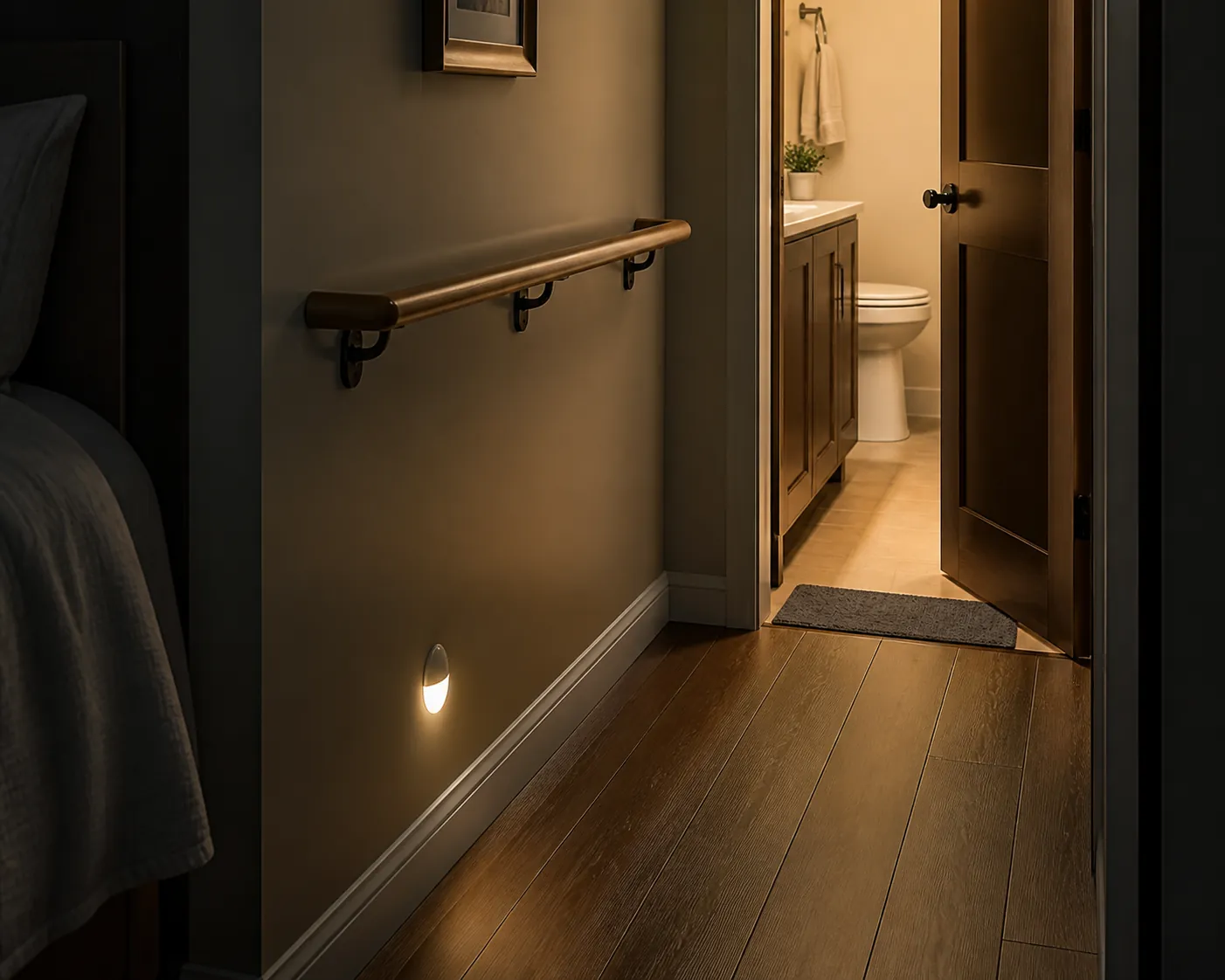
Start with the route that gets used when the veteran is tired, half-awake, or in a hurry: bed to bathroom. Clear the path wide enough that a cane, walker, or steadying hand does not catch. Remove loose rugs. Add low night lighting. Make the bathroom threshold visible and non-slip. Put the most reliable handhold where the veteran actually reaches, not where it looks tidy.
Then walk the house in the order the veteran uses it, not in the order a checklist happens to be printed. Bedroom, bathroom, hallway, kitchen, living room, entry steps, garage, and laundry area each ask for a different answer.
- Bedroom: Can he stand from the bed without reaching for a rolling nightstand? Are slippers stable and easy to feel? Is there a light reachable before the first step?
- Bathroom: Are there grab bars at the toilet and shower, a non-slip surface, and a plan for bathing on weak or dizzy days?
- Hallway: Is the route clear of cords, shoes, oxygen tubing, pet bowls, and decorative rugs? Is the light switch reachable from both ends?
- Kitchen: Are frequently used items between shoulder and knee height so he is not climbing, bending deeply, or carrying hot liquids across the room?
- Stairs and entry: Is there a solid rail on the side he naturally uses? Are step edges visible? Does rain or dim light change the risk?
- Living area: Does the chair support an easy stand? Are pathways wide enough for the mobility device he uses now, not the one the family hopes he will keep using?
For a broader room-by-room hazard walk, use CareWise’s rainy-day home safety checklist and adapt it to the veteran’s symptoms. If numb feet are the issue, flooring transitions and shoe fit deserve more attention. If parkinsonism is part of the picture, turning spaces and chair height may matter more. If memory or nighttime confusion is emerging, lighting, labels, routine, and blocked-off hazards become more important.
A fall plan also needs practice. The family should know what to do after a fall, when to call emergency services, and how to avoid injuring both the veteran and caregiver during an attempted lift. CareWise’s fall-prevention FAQ and caregiver fall-prevention handout can help turn the conversation into a shared routine instead of a lecture after someone gets hurt.
Mobility devices should match the veteran’s real day, not his pride on a good morning
A cane, walker, grab bar, shower chair, or wheelchair is not a moral category. It is a tool. The wrong tool can create risk: a cane used by someone who needs two-handed support, a walker that does not fit through the bathroom doorway, a shower chair that slides, or a wheelchair used without a transfer plan.
This is where occupational therapy, physical therapy, and primary care can spare the family a great deal of guessing. Ask which device fits the veteran’s strength, sensation, vision, cognition, and home layout. If wheelchair use becomes part of daily life, review transfer surfaces, brakes, footrests, thresholds, and caregiver body mechanics; CareWise’s wheelchair safety checklist for seniors is a practical place to start.
Strength and nutrition also belong in the conversation, especially when a veteran is walking less because of neuropathy, heart symptoms, or fear of falling. A clinician can advise on safe activity, protein needs, diabetes management, and whether physical therapy is appropriate. For the nutrition side of fall resilience, see CareWise’s guide to senior protein needs and fall risk.
VA in-home supports may become part of the safety plan
Some families can manage with outpatient follow-up and home modifications. Others need services inside the home, especially when the veteran has multiple conditions, caregiver strain, or trouble getting to appointments. VA’s 2025 Agent Orange Newsletter names several in-home and community-based supports, including Home Based Primary Care, Homemaker/Home Health Aide services, and Veteran Directed Care.[8]
Those programs have eligibility rules and availability limits, so they should not be treated as automatic. They are still worth asking about when the veteran’s fall risk is no longer just a loose-rug problem. A primary care team, VA social worker, or care coordinator can help identify whether medical care at home, help with personal care, respite, or self-directed support fits the situation.
The threshold for action is lower than a fall
Families often wait for a clean event: a fall, a diagnosis, a VA decision letter, a specialist visit. Fall prevention works better when the threshold is smaller. New numbness. Burning feet. Furniture-walking. Shuffling. Lightheadedness. Stopping halfway down the hall. Forgetting the walker. Turning the bathroom light off at night because it “doesn’t matter.”
For an aging Vietnam-era veteran with one or more Agent Orange-related conditions, those are enough to justify a structured fall-risk screen, a free Agent Orange Registry exam when eligible, and a room-by-room home walkthrough. The point is not panic, self-diagnosis, or turning service history into an argument at the kitchen table. The point is to make the path from bed to bathroom safer before the first serious fall makes the decision for everyone.
References
- Vietnam War veterans health concerns and benefits — DAV.
- Agent Orange Exposure — VA.gov.
- Peripheral Neuropathy and Agent Orange — VA Public Health.
- Agent Orange Reviewed: Potential Role in Peripheral Neuropathy and Neurodegeneration — PMC, 2022.
- U.S. Department of Veterans Affairs Expands Benefits for People with Parkinsonism Associated with Agent Orange — Michael J. Fox Foundation.
- Association of Agent Orange Exposure With Dementia Diagnosis in US Veterans of the Vietnam Era — JAMA Neurology, 2021.
- Agent Orange Registry Health Exam for Veterans — VA Public Health.
- Agent Orange Newsletter - 2025 — VA Public Health, 2025.
Related reading
Noticed something outdated or inaccurate on this page? Flag a correction. We review every report against CDC, NIA, and AARP HomeFit guidance before updating a page.
Part of the Fall Prevention section.