
STEADI: Assess
Cyclospora Dehydration Raises Fall Risk for Older Adults
Cyclospora's watery diarrhea can dehydrate an older adult into dizziness, weakness, and a fall before the infection is even diagnosed. Knowing the dehydration warning signs, call-the-doctor thresholds, and urgent-care cues helps caregivers treat the infection early — and early treatment is the real fall-prevention move.
By the third day of watery diarrhea, the problem in the house has usually changed. It is no longer only the stomach illness. It is the older parent standing up from the toilet too quickly, reaching for the towel bar, saying, “I’m fine,” while looking a little grey around the mouth. Yesterday may have seemed better. Today there are more bathroom trips again, and the caregiver is left deciding whether waiting is still reasonable.

Most cyclospora prevention tips for older adults begin with produce. That matters, but once diarrhea has started, the safer question is more immediate: is this illness now creating a dehydration problem that could turn into dizziness, weakness, confusion, or a fall?
Why watery diarrhea can become a fall problem
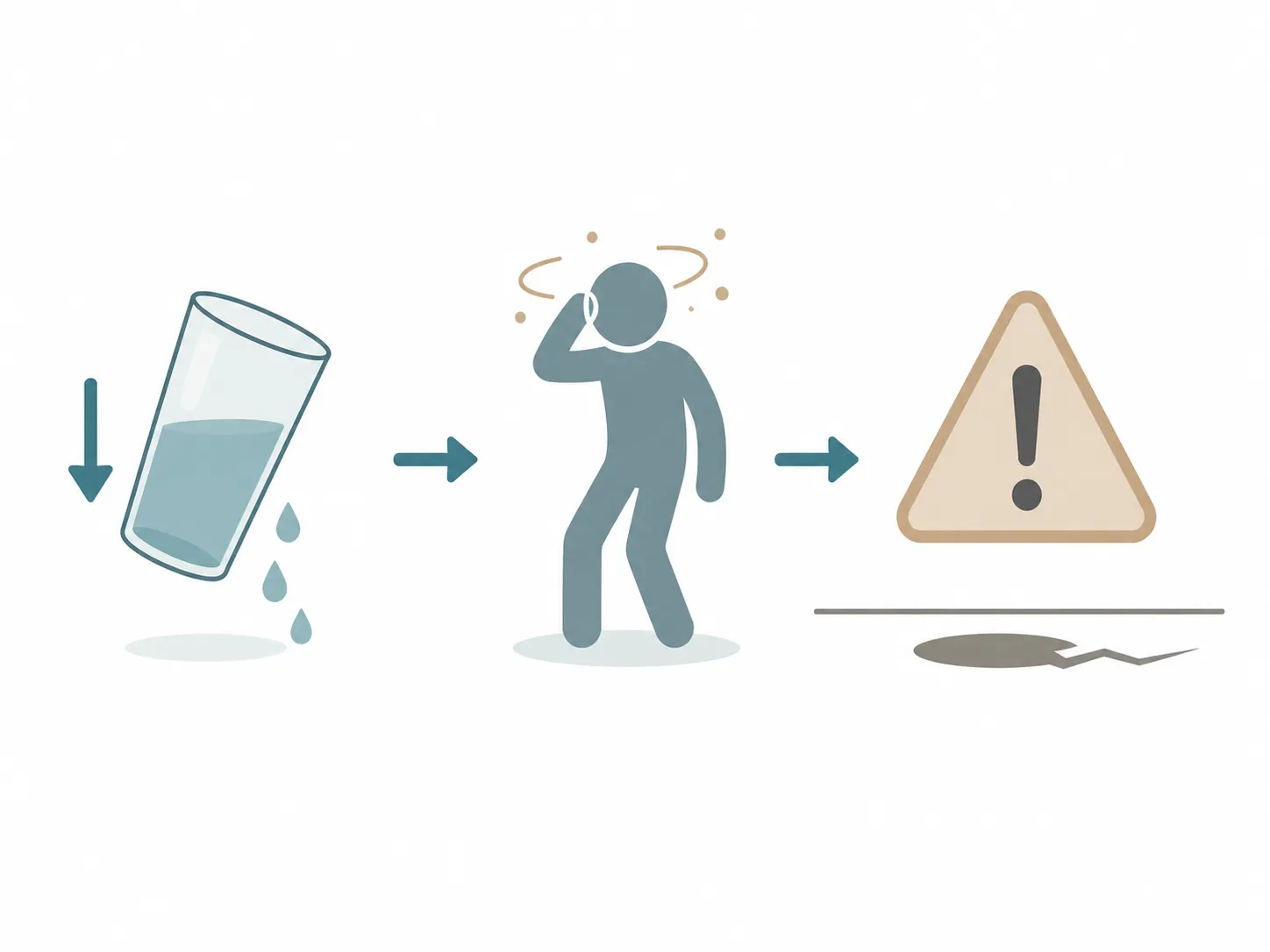
Cyclospora is a foodborne parasite, but for an older adult its practical danger may show up in the bathroom, hallway, or bedroom long before a lab result comes back. AARP’s senior-focused reporting quotes infectious-disease physician Dr. Luis Marcos explaining that older adults are more vulnerable to dehydration complications because underlying conditions and medications can affect fluid balance. The complications described include electrolyte problems, acute kidney injury, weakness, dizziness, falls, and worsening chronic conditions; the Alabama Department of Public Health makes the same senior-specific connection between dehydration from cyclosporiasis and weakness, dizziness, falls, acute kidney injury, and worsening chronic illness.[1][2]
That chain is the part worth taking seriously. Diarrhea drains fluid. Fluid loss can disturb electrolytes and blood pressure. An older adult may become lightheaded when standing, weak while walking, or confused enough to misjudge a transfer. Add repeated urgent trips to the bathroom, sometimes at night, and the infection has become a fall-risk trigger.
CDC lists watery diarrhea as the most common symptom of cyclosporiasis. Other symptoms can include loss of appetite, weight loss, stomach cramps or pain, bloating, increased gas, nausea, fatigue, and sometimes low-grade fever.[3] None of those symptoms by itself tells a caregiver that the illness is definitely cyclospora. The useful home observation is the pattern: watery diarrhea that continues, returns, or comes with signs the person is not keeping up with fluid loss.
What to count before deciding to wait
Caregivers are often told to “watch for dehydration,” which is too vague when someone is already tired, embarrassed, and insisting they are improving. Counting and noticing make the call clearer.
| What to watch | What it may mean for fall risk | When to escalate |
|---|---|---|
| Number of watery diarrhea episodes | More episodes mean more fluid loss and more urgent bathroom trips. | Call the doctor if diarrhea exceeds 6 to 8 episodes in a day.[1] |
| How many days it has continued | A longer illness gives dehydration, weakness, and medication problems more time to build. | Call the doctor if diarrhea lasts more than 2 to 3 days without improvement.[1] |
| Urination | Decreased urination can be a dehydration sign. | Call sooner if urination is reduced.[1] |
| Dizziness or lightheadedness | Standing, turning, and walking to the bathroom become less safe. | Call sooner if dizziness appears, especially when standing or walking.[1] |
| Confusion or unusual behavior | The person may misjudge steps, transfers, or how weak they are. | Call sooner for confusion.[1] |
| Dry mouth or rapid heartbeat | These can point to dehydration or strain on the body. | Call sooner if either is present.[1] |
| Vomiting, fever, blood, or inability to drink | The person may not be able to replace fluid losses safely at home. | Seek prompt care for persistent vomiting, high fever with chills, blood in the stool, or inability to keep fluids down.[1] |
The threshold is not “wait until a fall happens.” If an older adult has had watery diarrhea for several days, is weaker than usual, and is hurrying to the bathroom, that is already enough reason to tighten supervision around standing and walking while you call for medical advice.
A useful call is specific
When you call the clinician, avoid a general report like “she has a stomach bug.” Say what you have counted and what has changed:
- How many days watery diarrhea has been going on.
- About how many episodes happened in the last 24 hours.
- Whether symptoms seemed to improve and then returned.
- Whether urination is less frequent than usual.
- Whether there is dizziness, confusion, dry mouth, rapid heartbeat, vomiting, fever with chills, or blood in the stool.
- Which chronic conditions and daily medications the person has, especially if they affect fluids, kidneys, blood pressure, potassium, blood thinning, or diabetes management.
- Whether the person has a sulfa allergy.
That information helps the clinician decide whether the person needs testing, treatment, medication adjustment, hydration support, or prompt in-person evaluation. It also helps the caregiver decide whether the older adult should be walking to the bathroom alone.
A “better day” can be the misleading day
Cyclospora has a symptom pattern that can trick a careful family. CDC describes cyclosporiasis symptoms as remitting-relapsing, meaning they can seem to get better and then return.[3] CDC also says untreated illness can last from a few days to a month or longer.[4]
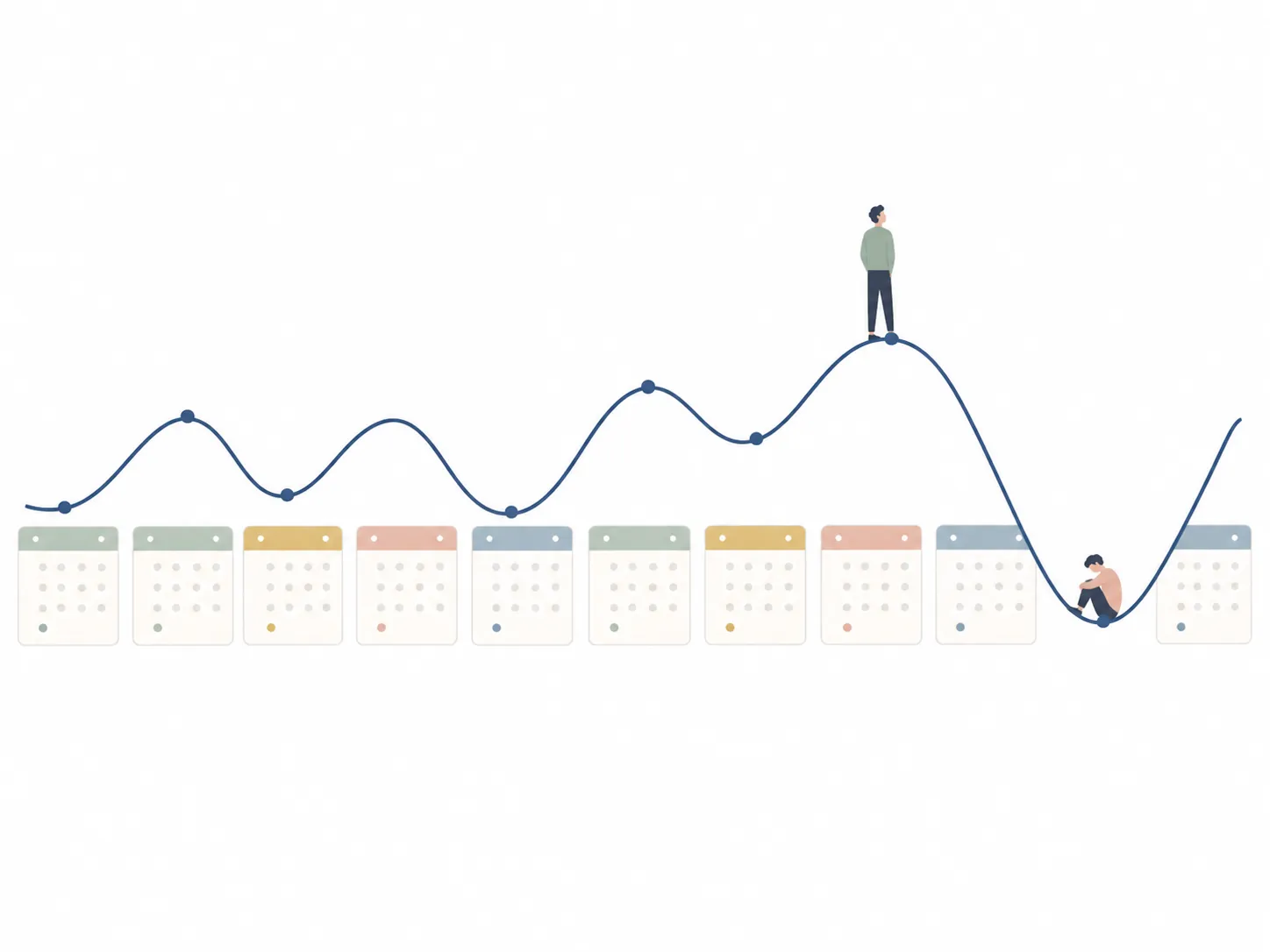
That matters because caregivers often reset the clock after one easier morning. Fewer bathroom trips before lunch may be real improvement, or it may be a temporary dip in a longer illness. If watery diarrhea returns that evening, the fall-risk math has not gone back to zero. The body has still lost fluid over several days, the person may still be eating and drinking less, and the next trip to the bathroom may happen when they are tired.
A better day should change how you observe, not end the observation. Keep counting episodes. Keep watching urination, steadiness, alertness, and ability to drink. If the illness crosses the 2-to-3-day threshold without improvement, or if dizziness, confusion, decreased urination, dry mouth, or rapid heartbeat appears, the safer move is to call sooner rather than waiting for the next “good” stretch.[1]
Testing: why the words you use matter
The caregiver’s job is not to diagnose cyclospora at home. It is to describe the illness clearly enough that the right question gets asked.
CDC’s clinical guidance says routine ova-and-parasite stool exams can miss Cyclospora, so clinicians should specifically request Cyclospora testing when it is suspected.[5] That is why “watery diarrhea for several days, improved and returned, now with dizziness” is more useful than “upset stomach.” The pattern may lead the clinician to ask about produce exposure, other sick contacts, travel, immune status, local outbreak information, and whether a Cyclospora-specific stool test is needed.
If you are calling on behalf of a parent, ask plainly: “Given the watery diarrhea pattern, should we test specifically for Cyclospora?” That question does not assume the answer. It helps avoid a missed test when the illness does not behave like a short stomach bug.
Treatment is a clinician decision, especially with older medications
CDC identifies trimethoprim-sulfamethoxazole, often abbreviated TMP-SMX, as the standard treatment for cyclosporiasis, given for 7 to 10 days.[5] That fact belongs in a clinician conversation, not in a home dosing plan.
Older adults are more likely to have kidney-function concerns, chronic conditions, and medication lists that matter. Tell the clinician about sulfa allergy, blood thinners, diabetes medications, potassium-affecting drugs, kidney disease, heart disease, and any recent medication changes. AARP’s senior-focused reporting emphasizes that underlying conditions and medications that affect fluid balance are part of why dehydration complications are more dangerous in this age group.[1]
This article is for caregiver education and fall-prevention decision support. It is not medical advice, and it should not be used to start, stop, substitute, or dose antibiotics or hydration treatment without a licensed clinician.
Produce prevention still matters, just not as the main fall-prevention action
Food safety can reduce the chance of cyclospora exposure, and it deserves its own checklist. CDC recommends washing hands, utensils, and food-preparation surfaces and rinsing fruits and vegetables under running water before eating, cutting, or cooking.[6] FDA notes that cooking or heating foods to at least 158°F, or 70°C, kills Cyclospora, and that cut, peeled, or cooked produce should be refrigerated within 2 hours.[7]
For a broader food-safety routine, use a checklist-style resource such as this food-safety guide for older adults. But if someone is already sick, prevention has to include the second problem: preventing dehydration, weakness, and an unsafe trip to the bathroom.
The same observation discipline applies across illnesses in older adults. New weakness, dizziness, or confusion can be the sign that a routine sickness has become a fall problem; that is why illness-related fall risk deserves attention alongside home hazards, medication effects, and balance problems. If you are tracking hydration during hot weather or medication-sensitive conditions, this hydration and heat-safety guide may help you think through fluids and medications with the same caution.
When watery diarrhea is continuing, the safe next action
If an older adult has ongoing watery diarrhea, count the episodes and the days. Look for decreased urination, dizziness, confusion, dry mouth, rapid heartbeat, weakness, and inability to keep up with fluids. Do not let one better day erase several bad ones.
Call the doctor if diarrhea exceeds 6 to 8 episodes in a day or lasts more than 2 to 3 days without improvement. Call sooner if dizziness, confusion, decreased urination, dry mouth, or rapid heartbeat appears. Seek prompt care for blood in the stool, persistent vomiting, high fever with chills, or inability to keep fluids down.[1]
When you call, describe the watery diarrhea pattern and ask whether Cyclospora-specific testing is needed. While you are waiting for guidance, treat standing, walking, and bathroom trips as higher-risk moments. Early treatment and early dehydration response are the fall-prevention move.
References
- Cyclospora Cases Are on the Rise: What Older Adults Should Know, AARP, updated Aug. 3, 2026.
- Cyclosporiasis, Alabama Department of Public Health, July 17, 2026.
- Symptoms of Cyclosporiasis, Centers for Disease Control and Prevention.
- About Cyclosporiasis, Centers for Disease Control and Prevention.
- Clinical Care of Cyclosporiasis, Centers for Disease Control and Prevention.
- Preventing Cyclosporiasis, Centers for Disease Control and Prevention.
- Cyclospora, U.S. Food and Drug Administration.
Related reading
Noticed something outdated or inaccurate on this page? Flag a correction. We review every report against CDC, NIA, and AARP HomeFit guidance before updating a page.
Part of the Fall Prevention section.