
What Does a Code Purple Air Quality Alert Mean for Seniors?
A Code Purple air quality alert signals very unhealthy air conditions that pose serious risks for older adults. This guide explains what the alert means, why seniors are uniquely vulnerable, and the concrete steps caregivers should take to protect them.
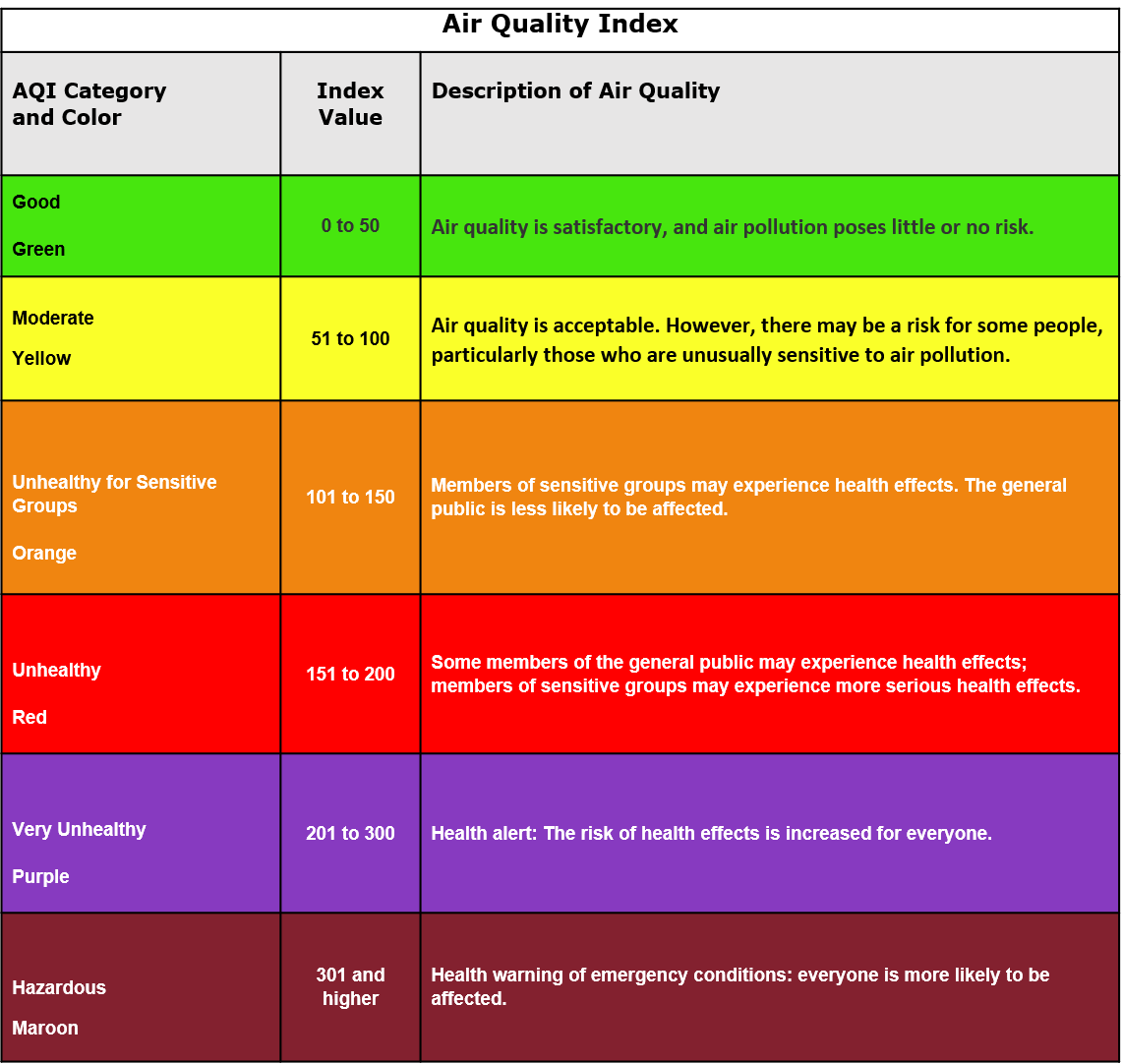
A Code Purple air quality alert means the Air Quality Index is in the 201–300 range, which the EPA labels “Very Unhealthy.” At this level, health effects are no longer expected only in people with asthma, heart disease, or other sensitive conditions. The risk is increased for everyone, and older adults need stronger protection than a “take it easy outside” reminder.[1]
For seniors, the code purple air quality alert meaning is simple enough to act on: change the day. Cancel or move outdoor errands, bring the walk indoors, close the house, run filtered air if you have it, and watch symptoms more closely than usual. A parent who feels “a little tired” or “off” on a smoke day may be reacting to the air, not just aging.
What Code Purple Means on the AQI
The Air Quality Index is the color-coded system used in U.S. air alerts. Green is good, yellow is moderate, orange is unhealthy for sensitive groups, red is unhealthy, purple is very unhealthy, and maroon is hazardous. Code Purple sits just below the most severe category.[1]
| AQI color | AQI range | What it means for seniors |
|---|---|---|
| Orange | 101–150 | Older adults are already treated as a sensitive group and should start reducing exposure.[1][2] |
| Red | 151–200 | The air is unhealthy, and seniors should limit outdoor exertion more seriously.[1] |
| Purple | 201–300 | The air is very unhealthy; older adults should avoid outdoor physical activity and move protection indoors.[1][3] |
| Maroon | 301 and higher | The air is hazardous, and exposure should be minimized as much as possible.[1] |
The important shift is that seniors do not begin at the same risk line as healthy younger adults. EPA guidance treats older adults as a sensitive group because they are more likely to have heart or lung disease, and because aging bodies may respond less well to air pollution stress.[2] So by the time the alert reaches Purple, many families are not making a first adjustment. They are moving from caution to active protection.
Why Wildfire Smoke Hits Older Adults Differently
Code Purple alerts during wildfire events are commonly driven by fine particle pollution, often called PM2.5. These particles are small enough to get deep into the lungs and may enter the bloodstream, where they can aggravate breathing and cardiovascular problems.[2] That is why a smoke alert is not only a lung issue. It can become a heart issue, a stamina issue, and sometimes a confusion issue.
The older adult who worries me most is not always the one coughing dramatically. It is the parent who says the room feels stuffy, skips lunch, seems unusually sleepy, gets winded walking from the bedroom to the kitchen, or becomes more confused than usual. Poor air quality can show up as coughing, shortness of breath, headaches, fatigue, chest pain, dizziness, and worsened confusion, especially in people already living with dementia or cognitive impairment.[4]
Longer-term wildfire smoke exposure is not a small background concern either. AARP cites a UCLA study that linked chronic wildfire smoke exposure to more than 52,000 premature deaths in California between 2008 and 2018.[5] That number does not tell you what will happen to one parent on one afternoon. It does make clear why smoke days deserve more respect than an ordinary bad-weather day.
What to Do in the Next Hour
When a Code Purple alert is active, the first hour is not for researching air chemistry. It is for reducing exposure. Start with the person, then the house, then the supplies.
- Bring the older adult indoors and postpone nonurgent outdoor activity, including walks, yard work, outdoor meals, and errands that can wait.
- Close windows and exterior doors, including the small ones that get forgotten: bathroom windows, basement doors, porch doors, and pet doors.
- Set air conditioning to recirculate if the system allows it, so the unit is not pulling smoky outdoor air inside.
- Run a portable HEPA air purifier if available, preferably in the room where the person will spend the most time.
- Move medications, water, phone chargers, eyeglasses, hearing aids, and a list of emergency contacts into that protected room.
Philadelphia’s July 17, 2026 Code Purple guidance for particulate matter gave the same practical direction: stay indoors, keep windows and doors closed, use air conditioning on recirculate, use air purifiers if available, and avoid activities that worsen indoor air.[4] That last point matters because a sealed-up home can still become a bad-air home if the stove, candles, smoking, or dust are adding particles indoors.
Build One Clean Room Instead of Trying to Perfect the Whole House
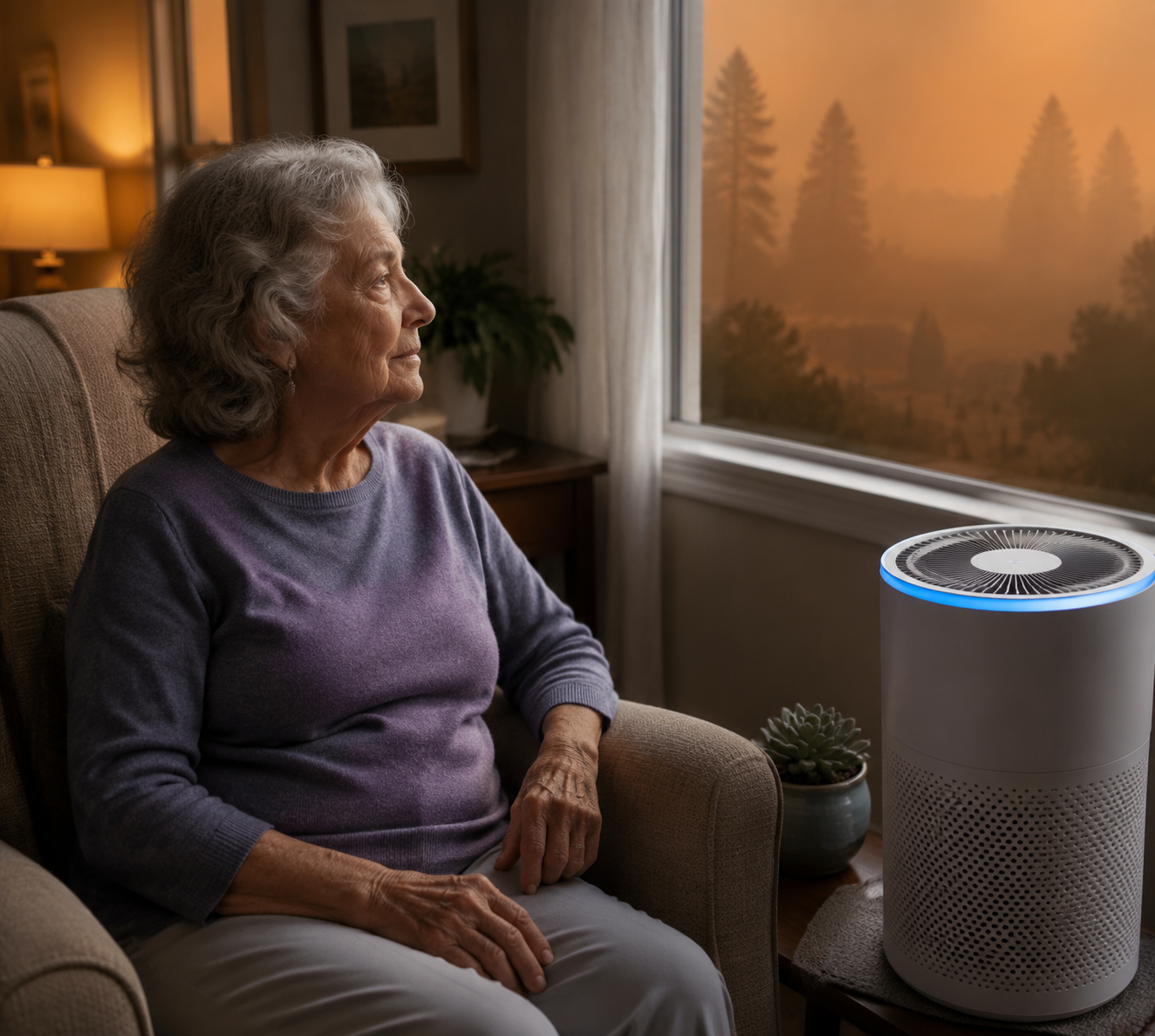
Most families cannot make an entire older house airtight by lunchtime. A clean room is the more realistic target: one room with closed windows and doors, filtered air, low activity, and the fewest indoor pollution sources. A bedroom or living room usually works better than a kitchen because cooking adds particles and people keep opening doors.

A clean room does not have to look medical. It needs to be useful. Put the purifier where airflow is not blocked by curtains or furniture. Keep the door closed as much as possible. If the person uses oxygen, a nebulizer, CPAP, or mobility equipment, set the room up around that reality instead of expecting them to keep moving through the house.
Avoid adding indoor pollution while the house is closed. That means no frying, no candles, no fireplace use, no smoking or vaping indoors, and no vacuuming unless the vacuum has high-efficiency filtration. On a normal day, these may feel like small choices. During Code Purple, they compete directly with the effort to keep the indoor air breathable.[4]
Match the Alert to the Person’s Medical Risk
Age alone is enough to take a Code Purple alert seriously. Certain conditions make the margin thinner. The same AQI number may be an inconvenience for one neighbor and a dangerous trigger for a parent with COPD, heart disease, asthma, diabetes, kidney disease, or dementia.[2]
| If the senior has | What smoke may worsen | Caregiver priority during Code Purple |
|---|---|---|
| COPD or chronic bronchitis | Shortness of breath, wheezing, coughing, lower activity tolerance | Keep rescue medications accessible, reduce exertion, and watch breathing changes closely.[2] |
| Asthma | Coughing, chest tightness, wheezing, asthma flare-ups | Follow the asthma action plan and avoid outdoor activity unless it is unavoidable.[3] |
| Heart disease | Chest pain, palpitations, fatigue, dizziness, shortness of breath | Treat chest symptoms as urgent rather than waiting to see if they pass.[2] |
| Diabetes | Higher vulnerability to cardiovascular stress during pollution events | Keep hydration, meals, medications, and symptom checks on schedule.[2] |
| Chronic kidney disease | Lower reserve during illness, dehydration, or cardiovascular strain | Avoid missed medications and call the clinician if symptoms or fluid guidance are unclear. |
| Dementia or cognitive impairment | Agitation, worsened confusion, poor judgment about going outside | Do not rely on the person to self-monitor; simplify the environment and watch for sudden changes.[6] |
The table is not a substitute for a clinician’s plan. It is a sorting tool. If your parent already has a written COPD, asthma, heart failure, or oxygen-use plan, use that plan first. If the plan says to adjust medication only after calling the clinician, do not improvise because the air looks bad. The Code Purple alert tells you to reduce exposure and prepare; medication changes still belong with the medical team unless there are standing instructions.
Outdoor Trips: Shorten, Mask, and Reconsider
Some outings cannot be skipped: dialysis, chemotherapy, urgent appointments, food pickup, a prescription that ran out. For everything else, Code Purple is a strong reason to reschedule. The American Lung Association advises older adults to avoid all physical activity outdoors when air quality reaches the Very Unhealthy range.[3]
If an older adult must go outside, keep the trip short and low-exertion. Use the car’s recirculate setting. Avoid having them wait outdoors for rides, buses, pharmacy windows, or building entry. A well-fitted N95 or KN95 offers better protection than a cloth or surgical mask for unavoidable smoke exposure, though fit and tolerance matter, especially for people with breathing disease.[3][5]
This is where family negotiations get tense. A parent may argue that the walk is part of staying independent, and they are not wrong about the value of routine. But Code Purple is not the day to prove endurance. Move the routine indoors, shorten it, or delay it until the alert improves.
Medication and Supply Readiness
Air-quality alerts have a way of exposing the ordinary weak spots in care: the inhaler is in the car, the oxygen tank is nearly empty, the pill organizer was going to be filled tonight, the phone number for the pulmonologist is somewhere in a portal no one can log into. Code Purple is the moment to close those gaps before symptoms start.
- Confirm that rescue inhalers, nebulizer medications, oxygen supplies, and daily heart or lung medications are available and not expired.
- Keep a current medication list in the clean room and on the caregiver’s phone.
- Charge phones, hearing aids, medical alert devices, portable oxygen equipment, and backup batteries.
- Check whether tomorrow’s appointments can switch to telehealth or be rescheduled if the alert continues.
- Make sure the older adult has water, easy food, glasses, mobility aids, and a bathroom path that does not require repeated trips through less protected areas of the home.
If symptoms usually trigger a call to a specialist, call earlier rather than later during a Code Purple event. That is especially true for a parent who has recently been hospitalized, started oxygen, had a medication change, or had worsening shortness of breath before the smoke arrived.
Symptoms That Should Change the Plan Fast
During Code Purple, do not wait for a symptom to become dramatic before taking it seriously. Some older adults underreport pain or breathlessness because they do not want to be “a bother.” Others cannot describe symptoms clearly because of dementia, hearing loss, anxiety, or fatigue.
- Call 911 or seek emergency care for chest pain, severe shortness of breath, bluish lips, fainting, sudden confusion, or heart palpitations.[4]
- Call the person’s clinician promptly for worsening cough, wheezing, unusual fatigue, dizziness, headache, or a clear drop in activity tolerance.
- For dementia or cognitive impairment, treat sudden agitation, unusual sleepiness, or new disorientation as a possible health change, not just behavior.[6]
- If the person uses home oxygen or respiratory equipment and seems worse despite staying indoors, get medical guidance rather than adjusting equipment on your own unless you have written instructions.
The caregiver’s job is not to diagnose smoke injury at home. It is to notice when the ordinary day has become unsafe and move the person toward help.
When the Alert Improves
Do not fling the windows open the minute the color changes if the outdoor air is still poor or the person is still symptomatic. Check the current local AQI, not yesterday’s forecast. If the air has improved, increase activity gradually, especially for someone who has been coughing, wheezing, dizzy, or unusually tired.
After a Code Purple day, it is worth doing a plain household review: which window leaked smoke, which room worked best, which medication was hard to find, which appointment could have been moved sooner, and whether a HEPA purifier or replacement filters need to be bought before the next alert. That is not overreacting. It is how caregiving gets easier the next time the phone lights up with a color no one wanted to see.
Code Purple is not just a weather note for seniors. It is a signal to change the day around protection: less outdoor exposure, cleaner indoor air, medication readiness, and a lower threshold for help when breathing, chest symptoms, dizziness, or confusion appear.
References
- AQI Basics, AirNow.gov
- Older Adults and Air Quality, AirNow.gov
- Protecting Yourself from Poor Air Quality, American Lung Association
- Philadelphia Under Code Purple Air Quality Alert for Particulate Matter, Philadelphia Department of Public Health, July 17, 2026
- How to Protect Yourself Against Wildfire Smoke, AARP
- Wildfire Smoke Isn't Just an Outdoor Problem for Older Adults, LTC News
Related reading
Noticed something outdated or inaccurate on this page? Flag a correction. We review every report against CDC, NIA, and AARP HomeFit guidance before updating a page.
Part of the Fall Prevention section.