
STEADI: Intervene
Dust Storm Safety Tips for Seniors with COPD or Asthma
An older adult with COPD or asthma faces real risk from dust storms, but most of it is preventable with a before-during-after plan. Here's what goes in the pre-storm kit, how to keep indoor air safe while the storm moves through, and why protection and symptom monitoring should continue for about a week after the dust settles.
Print-and-keep dust storm plan
For an older adult with COPD, asthma, chronic bronchitis, or another breathing condition, the safest dust storm plan is simple enough to follow when the sky turns brown: prepare before it arrives, seal and filter one room while it passes, and keep watching breathing for days afterward. Dust does not always leave when the view clears; the American Lung Association says dust particles may remain in the air from a few hours up to 10 days after a storm.[1]
| When | What to do | Why it matters |
|---|---|---|
| Before dust season or before a forecast storm | Choose a clean-air room. Stock medications. Keep a current medication and condition list. Arrange backup power for oxygen, CPAP, nebulizer, or other power-dependent medical devices. Turn on weather and air-quality alerts. Ask the clinician when to use an N95 and when not to. | The hard decisions are easier when supplies, power, and instructions are already in one place. |
| When dust is approaching or outside | Go indoors. Close windows and doors. Stop outdoor air from being pulled in. Run AC on recirculate if available. Use a HEPA purifier or a properly built box-fan filter. Avoid dry sweeping and vacuuming. | Indoors helps only if the room is not pulling in dust or stirring up dust already inside. |
| If caught driving | Pull completely off the roadway if visibility drops. Turn off lights. Set the parking brake. Stay buckled inside the vehicle. | Drivers can mistake your lights for the travel lane and follow you off the road. |
| After the sky clears | Keep the clean-air routine going if air remains dusty. Clean with damp methods. Watch for worse breathing, more rescue inhaler use, chest symptoms, fever, or infection signs for about a week. | Dust can linger, and breathing problems may show up later rather than during the storm itself. |
This is general home-safety information, not medical advice. If you have COPD, asthma, heart disease, use oxygen, or rely on a nebulizer, CPAP, BiPAP, or another powered device, ask your clinician for a written dust-storm action plan that fits your prescriptions and baseline breathing.
Before the storm: make the home ready while everyone is calm
A good dust storm kit is not a plastic bin full of things nobody can find at 9 p.m. It is a small, boring system: the medicines are there, the backup battery is charged, the clean-air room is already chosen, and the person with breathing trouble knows what they are being asked to do.
The American Red Cross recommends that older adults keep at least 30 days of medications, extra assistive items, battery backups for power-dependent medical devices, and an up-to-date list of medical information as part of emergency preparedness.[2] For dust storms, that list should be easy to read and easy to carry: diagnoses, daily medicines, rescue medicines, oxygen flow instructions if prescribed, equipment settings if the clinician wants them recorded, allergies, pharmacy, clinician phone numbers, emergency contacts, and insurance information.
- Medication supply: controller inhalers, rescue inhalers, nebulizer medication if prescribed, pills, spacers, tubing, and any supplies needed to take them correctly.
- Medical information: a current medication list, diagnoses, equipment needs, emergency contacts, pharmacy, and clinician instructions.
- Power plan: charged batteries or backup power for oxygen concentrators, CPAP, BiPAP, nebulizers, mobility equipment, phone charging, and any device the person cannot safely go without.
- Clean-air room supplies: HEPA purifier if available, replacement filters, towels for door gaps, water, phone charger, flashlight, chair, trash bag, tissues, and medicines used during breathing symptoms.
- Alert setup: phone alerts, local weather source, AirNow or another air-quality source, and a backup way to receive warnings if the person does not use a smartphone.
- Respirator supply: NIOSH-approved N95 respirators in the right size, kept dry and clean, only for times the clinician says they are appropriate.
Do not bury the power plan at the bottom of the list. If an oxygen concentrator, nebulizer, CPAP, or BiPAP depends on electricity, a dust storm power outage can turn a breathing problem into an equipment problem. The useful question is not “Do we own a battery?” but “Is it charged, does it work with this device, who knows where it is, and how long can the person safely wait if power fails?”
Alerts matter because dust storms can move fast. The American Lung Association advises making sure phones receive National Weather Service Wireless Emergency Alerts for impending dust storms.[1] If you are setting this up for a parent, do it with them, not around them: show the sound the alert makes, write down what it means, and agree on which neighbor or family member gets called if they feel unsure.
Choose the clean-air room before you need it
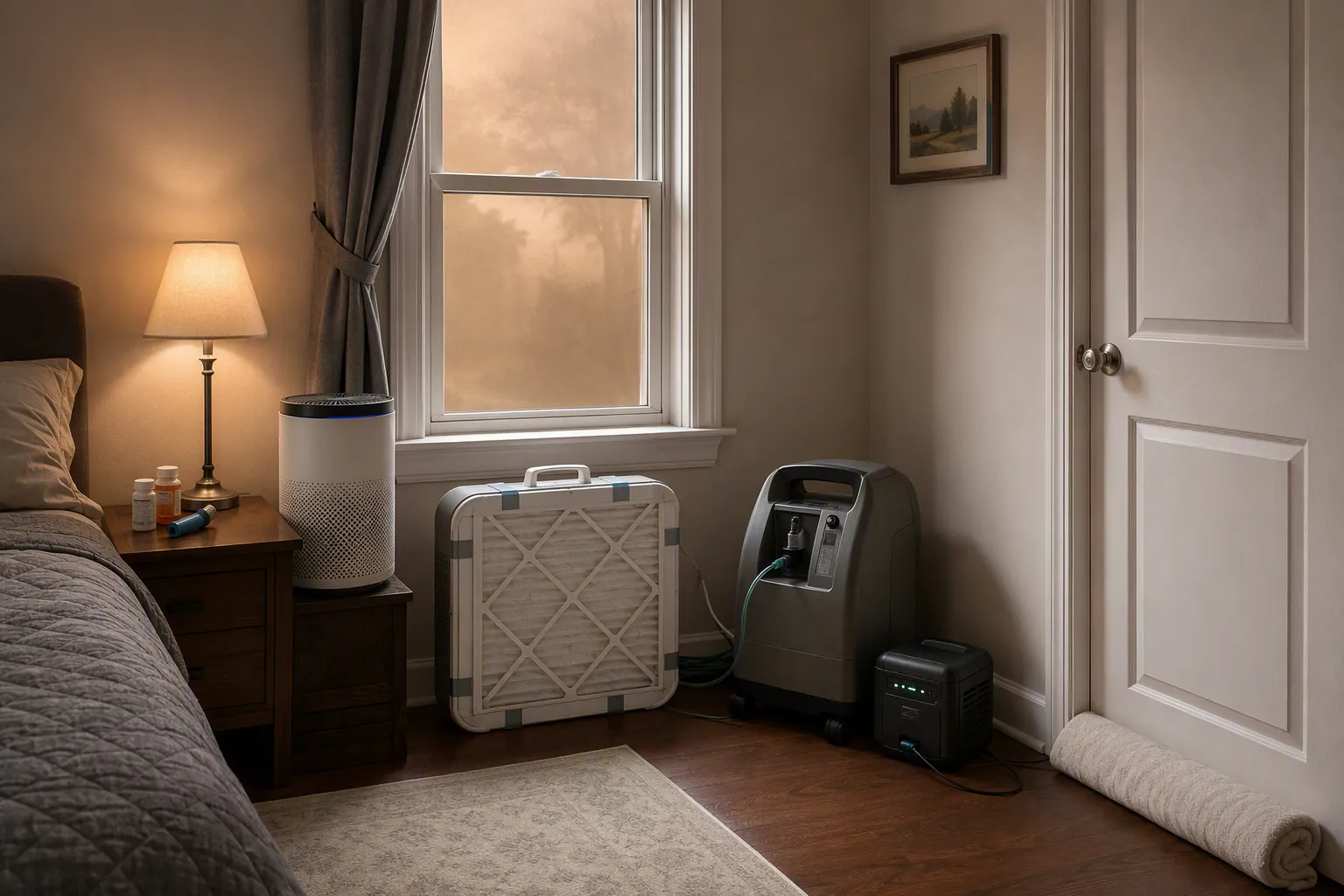
The clean-air room is usually a bedroom or small living room where the person can sit or sleep comfortably with the door closed. It should have the fewest leaky windows and exterior doors you can manage, enough outlets for needed equipment, and space for a purifier without blocking walking paths. If the person uses oxygen, mobility aids, or a walker, do not choose a tight room that turns every trip to the bathroom into an obstacle course.
If there is a portable HEPA air cleaner, place it in that room and know which setting will run long enough without being too loud for sleep. A do-it-yourself box-fan filter can help when built and used correctly, but it should be assembled before a storm, not during one, and should not be placed where it can fall, overheat, or trip someone. Keep spare filters where they belong, not in a garage full of the same dust you are trying to keep out.
Treat the N95 as a tool, not a magic shield
An NIOSH-approved N95 respirator filters at least 95% of airborne particles, but that number only matters when the respirator seals to the face.[3] Facial hair, gaps at the cheeks or nose, the wrong size, or straps worn incorrectly can let dusty air leak around the filter. NIOSH also warns that people with heart or lung conditions should consult a doctor before using an N95 because it can make breathing harder.[3]
That caveat belongs on the cabinet note in large print. For some people with COPD or asthma, an N95 may be useful for a short, necessary exposure, such as getting from the car into the house. For others, the extra breathing resistance may be unsafe or intolerable. The clinician’s action plan should say when to use it, when to skip it, and what to do instead.
Do not wash an N95. Replace it when it is wet, dirty, or damaged, and store clean respirators where they will not be crushed or contaminated.[4]
During the storm: seal, filter, recirculate
“Stay indoors” is only the first sentence. The next question is whether the indoor air is being protected. Older adults and people with lung disease are among the groups more likely to be affected by dust exposure, and fine particle pollution is linked with asthma attacks, chronic bronchitis, heart rhythm problems, heart attacks, and premature death in older adults.[1][5] Aging also reduces the body’s ability to compensate for air pollution stress.[5]
When dust is approaching, move to the clean-air room early. Close windows and exterior doors. Close fireplace dampers if they are safe to close. Put a towel at the bottom of the clean-air room door if dust is slipping in from the rest of the house. Keep pets from moving in and out if they are carrying dust on their coats.
Run the air conditioner on recirculate if the system allows it, so it is not intentionally pulling outdoor air inside. Public-health guidance from the American Lung Association, Washington State Department of Ecology, and healthdirect consistently emphasizes closing windows and doors, using recirculated indoor air when possible, using HEPA filtration or a suitable box-fan filter, and avoiding cleaning methods that stir dust into the air.[1][6][7]
- Seal: Close windows, doors, vents that bring in outdoor air, and obvious gaps where dust is entering.
- Filter: Run the HEPA purifier in the clean-air room. If using a box-fan filter, use it only as prepared and do not leave an unsafe setup unattended.
- Recirculate: Set AC or ventilation controls so outdoor air is not being drawn in. If you do not know the setting, write it down before dust season or ask an HVAC technician, landlord, or family member to label it.
- Do not stir: Skip dry sweeping, dusting, and vacuuming during the event unless the vacuum is specifically appropriate for fine particles and the person with breathing trouble is away from the dust.
If the person is already coughing, wheezing, or short of breath, do not make them walk around the house checking windows. One person should protect the room while the person with symptoms sits upright, uses prescribed rescue medication according to their action plan, and avoids exertion. Keep the phone, medication list, and emergency instructions within reach.
When symptoms should override the home plan
Call 911 or seek emergency help right away for severe trouble breathing, blue or gray lips or face, chest pain or pressure, confusion, fainting, inability to speak in full sentences, or symptoms that do not improve after prescribed rescue treatment. If the person has a clinician-written asthma or COPD action plan with different emergency instructions, follow that plan.
Call the clinician promptly, even if it does not seem like a 911 emergency, when rescue inhaler use increases, coughing or wheezing is worse than usual, oxygen readings are below the person’s instructed range, sputum changes in a concerning way, fever develops, or the person is too breathless to do normal light activities.
If you are in the car when visibility drops
Dust storm driving instructions should be short enough to remember. The National Weather Service says that if dense blowing dust lowers visibility, drivers should pull fully off the road, turn off vehicle lights, set the parking brake, and stay buckled in the vehicle.[8] Turning off the lights feels wrong to many drivers, but the reason matters: other drivers may follow taillights and leave the roadway behind you.
For an older adult with COPD or asthma, the car should not become a place to troubleshoot breathing supplies. If there is time before travel during dust-prone weather, carry the rescue inhaler, phone, water, medication list, and any prescribed portable oxygen supplies. If travel is optional and dust is forecast, postpone it.
After the sky clears, keep acting like dust is still there

The quiet hour after a dust storm is when people open doors, shake rugs, sweep porches, and decide the danger has passed. That is exactly when an older adult with COPD or asthma still needs protection. The American Lung Association’s warning that dust particles can remain airborne from a few hours up to 10 days does not give a perfect personal countdown, but it does argue against treating clear skies as an all-clear signal.[1]
A practical home rule is to keep the clean-air room running and continue checking local air-quality information for several days, then adjust based on symptoms, visible dust, and official guidance. There is no universal threshold that says every senior must take the same action for exactly the same number of hours. A person with severe COPD on oxygen and a person with mild asthma will not have the same margin for error.
Clean without putting dust back into the air
Cleanup should be slow and damp. Wipe hard surfaces with a damp cloth or mop. Bag dusty disposable materials gently. If someone must clean a heavily dusty entryway or patio, the person with COPD or asthma should stay away from that area, preferably in the clean-air room with filtration running.
Do not start with dry sweeping. Do not slap cushions or shake rugs near open doors. Be cautious with ordinary vacuuming because it can stir fine dust unless the equipment is suitable and well maintained. If the home has central HVAC, check whether the filter needs replacement after the event and whether replacing it will expose the older adult to dust; this may be a job for someone else.
Watch breathing for about a week
The week after a dust storm deserves a written symptom watch, especially for someone who tends to minimize changes. Put a simple log by the medications: date, cough, wheeze, shortness of breath, rescue inhaler use, oxygen reading if the clinician uses one, temperature, sleep quality, and whether normal activities felt harder.
- More rescue inhaler or nebulizer use than usual
- Wheezing, chest tightness, or breathlessness that is new or worsening
- Cough that keeps the person awake or produces concerning mucus changes
- Fever, chills, unusual fatigue, or other signs of infection
- Lower-than-usual oxygen readings if the person has been told to monitor them
- Chest pain, pressure, fainting, confusion, or severe shortness of breath, which should be treated as urgent
This monitoring window is a safety practice, not a prediction that every person will get sick. It reflects the reality that dust can linger and that irritated lungs may worsen after the storm itself is gone. If symptoms are trending in the wrong direction, call sooner rather than waiting for the log to look dramatic.
A note on Valley fever
In parts of the Southwest, people often ask whether a dust storm means Valley fever risk has suddenly spiked. The literature is not simple. An Arizona State University expert Q&A says haboobs do not measurably raise Valley fever cases, while also noting that dust can worsen asthma, allergies, and COPD.[9] The sensible home response is the same either way: reduce dust exposure, keep respiratory symptoms on the radar, and call a clinician for fever, persistent cough, chest pain, or illness that does not fit the person’s usual pattern.
What readiness looks like
A dust storm plan is ready when the older adult and the caregiver can both answer five questions without searching: Which room becomes the clean-air room? Where are the medications and medical list? How will oxygen, CPAP, BiPAP, nebulizer, phone, or other essential devices keep working if power fails? How will alerts arrive? What symptoms during the following week mean it is time to call the clinician or 911?
If those answers are written down and the supplies are where the note says they are, the next brown sky is no longer a surprise. It is a home-safety routine: close up, filter the room, protect breathing, and keep watch after everyone else has gone back outside.
References
- Dust Storms. American Lung Association. July 25, 2025.
- Older Adults Emergency Preparedness. American Red Cross.
- Community Respirators and Masks. CDC NIOSH.
- How to Use Your N95 Respirator. CDC NIOSH.
- Older Adults and Air Quality. AirNow.
- Dust storms: how to protect yourself. Washington State Department of Ecology. July 26, 2024.
- Dust storms. healthdirect. March 2025.
- Dust Storms and Haboobs. National Weather Service.
- What you need to know about dust storms and Valley fever. ASU News.
Related reading
Noticed something outdated or inaccurate on this page? Flag a correction. We review every report against CDC, NIA, and AARP HomeFit guidance before updating a page.
Part of the Fall Prevention section.