
STEADI: intervene
Earthquake Preparedness Checklist for Seniors Living Alone
This room-by-room checklist helps seniors living alone identify and fix falling-object hazards before an earthquake strikes — from anchoring tall furniture to placing an under-bed bag — so they can reduce injury risk and keep escape paths clear.
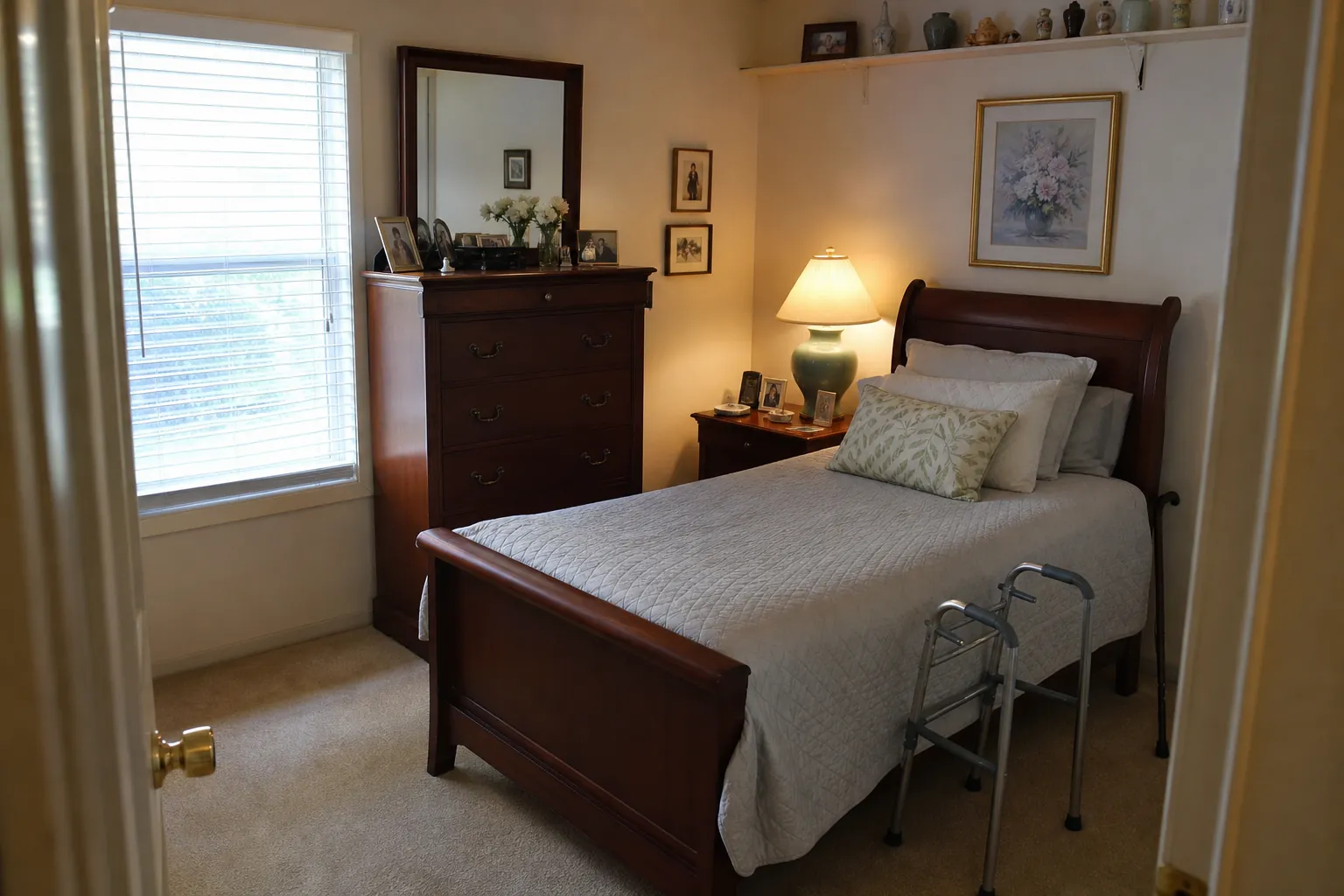
Start where an earthquake is most likely to feel unfair: in the bedroom, at night, with the power out and no one else in the house. A senior who has just been shaken awake may need glasses before they can see, shoes before they can stand safely, light before they can judge the floor, and a phone or whistle before anyone knows they need help. If those basics are across the room, under broken glass, or behind a dresser that shifted, the emergency kit in the garage is not the thing that matters first.
That is why an earthquake preparedness checklist for seniors living alone should begin as a fall-prevention walkthrough. Illinois Emergency Management Agency guidance for seniors warns that falling objects are among the greatest earthquake hazards and that older adults may not be agile enough to get under sturdy furniture quickly once shaking starts.[1] The useful work happens before the shaking: remove what can fall, anchor what can tip, latch what can fly open, and keep the first safe steps after the quake within reach.
Use This Checklist Like a Walkthrough, Not a Storage List
A standard disaster kit still has a place. Food, water, documents, batteries, and communication plans matter. But they do not keep a ceramic lamp from shattering beside bare feet, a bookcase from blocking a walker, or upper cabinets from throwing dishes across a kitchen.
For this walkthrough, judge each room with a few blunt questions:
- What can fall onto the bed, favorite chair, toilet, shower, or walking path?
- What can tip and block a door, hallway, walker route, or wheelchair route?
- What can break into glass or sharp fragments on the floor?
- What will be unreachable if furniture shifts or cabinet doors swing open?
- Can the person reach shoes, glasses, light, medication, and a way to call or signal without crossing the room?
Do not try to finish the whole house in one heroic afternoon if that means rushing past the dangerous things. The bedroom, the route out, and the kitchen usually deserve the slowest look.
Bedroom: Make the First Minute Safer
Stand at the bedroom door and look at the bed before anything else. Not the closet. Not the emergency bin. The bed. Ask what could land on the person while they are asleep, and what could block them when they sit up.
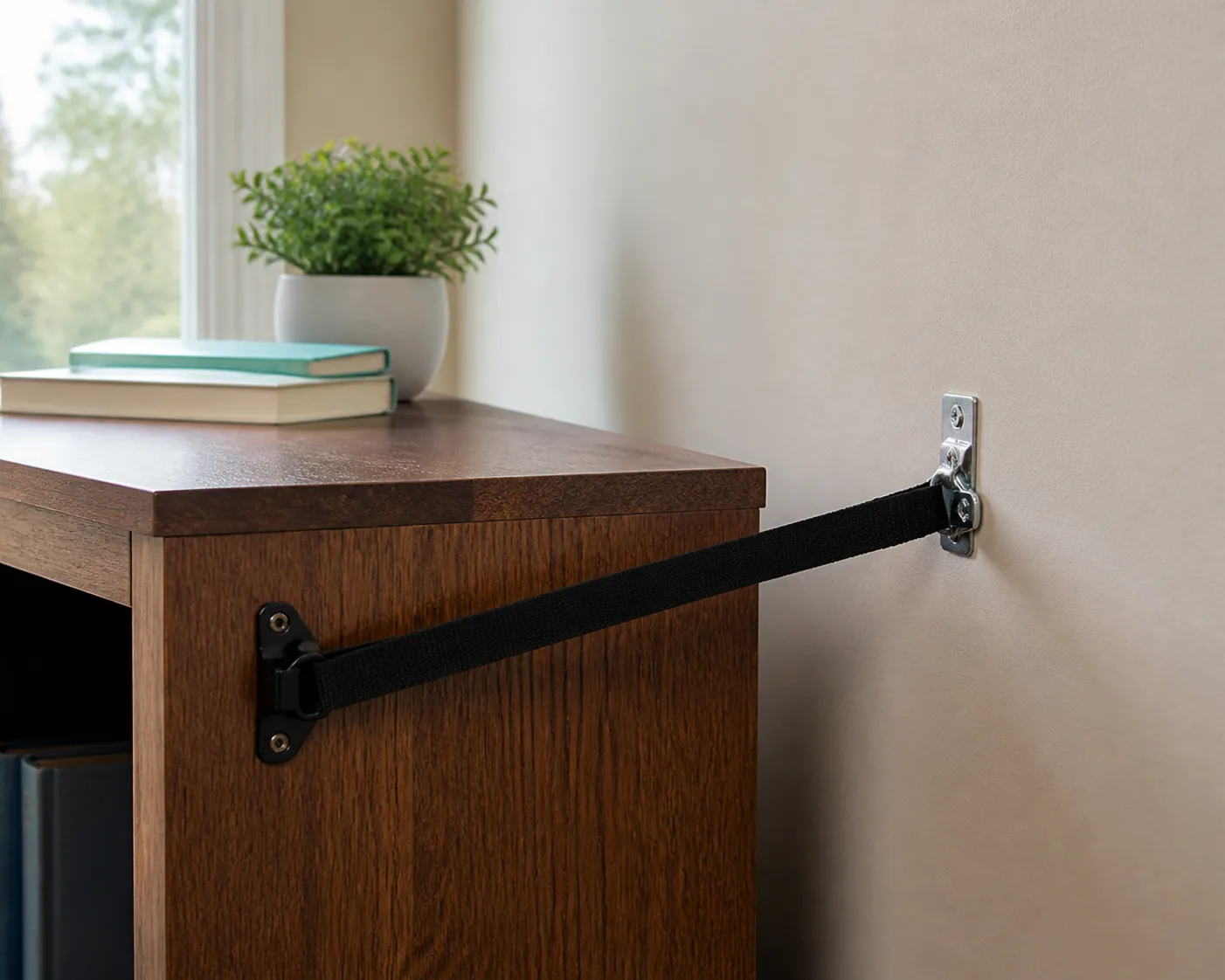
Tall dressers, wardrobes, bookcases, and freestanding shelves should be anchored to wall studs, not merely pushed neatly against the wall. FEMA’s home hazard guidance identifies tall furniture, heavy objects stored up high, unsecured water heaters, and unlatched cabinets as priority household earthquake fixes.[2] A dresser does not need to be dramatic to be dangerous. If it tips across the walking path, it has done enough damage.
Move heavy framed art, mirrors, shelves, and decorative objects away from the wall over the bed. A lightweight picture is one thing; a heavy frame with glass over a sleeping person is another. If a headboard is freestanding or loosely attached, secure it. If the nightstand holds a ceramic lamp, glass water carafe, or heavy clock, replace or reposition anything that could shatter where feet will land.
Then check the route from bed to door. It should stay usable for the person who actually lives there, not for a young visitor walking sideways. If they use a walker, the path needs walker-width clearance even when a closet door is open or a laundry basket is waiting to be put away. Low benches, stacked books, decorative trunks, pet beds, and loose cords all become worse after shaking because the person is likely to be moving in darkness, in slippers or bare feet, and under stress.
Put an Under-Bed Bag Where a Hand Can Find It
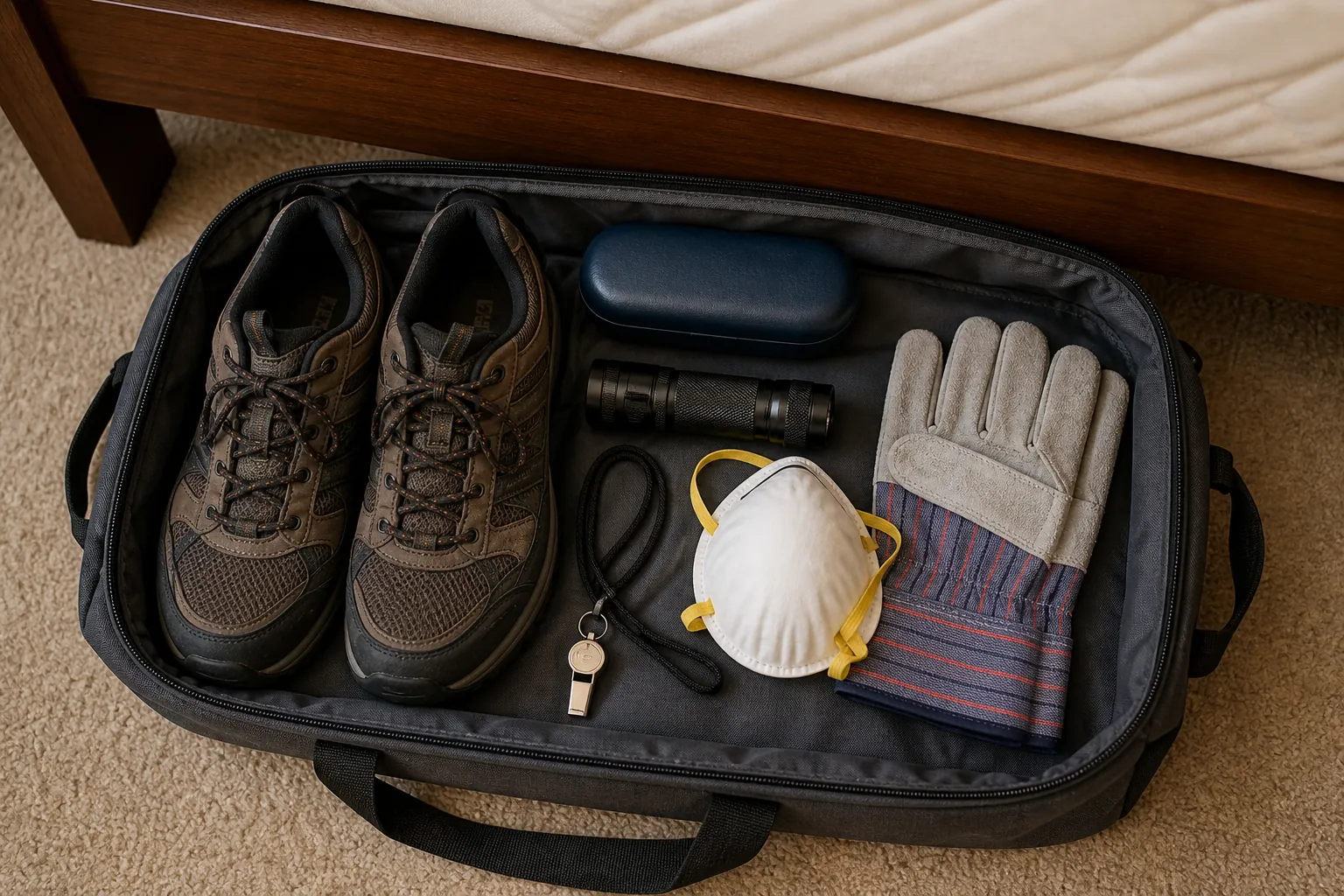
The under-bed bag deserves more respect than it usually gets. Earthquake Country Alliance recommends keeping one in each bedroom with sturdy shoes, glasses, a flashlight, a dust mask, a whistle, and work gloves, noting that items can scatter and that broken glass may end up inside shoes after a quake.[3] That is not a camping kit. It is the bridge between lying in bed and standing up without stepping into glass.
| Item | Why It Belongs Beside the Bed |
|---|---|
| Sturdy shoes | Protects feet before the person stands on a floor that may have glass, ceramic, or splinters. |
| Glasses or spare glasses | Lets the person see hazards before stepping around them. |
| Flashlight | Gives light if power is out and lamps have fallen. |
| Dust mask | Helps if dust, debris, or insulation is in the air. |
| Whistle | Lets the person signal for help without walking to a phone. |
| Work gloves | Protects hands if they must move small debris or steady themselves near rough surfaces. |
The bag should not be shoved so far under the bed that stiff shoulders, arthritis, or a bed skirt make it useless. Tie a short strap, ribbon, or loop to the bag so it can be pulled out from the bedside. If the bed is adjustable, make sure the bag cannot get caught in the mechanism. If the person sleeps in a recliner, put the same kit within reach of that chair instead of pretending the bed is the center of the night.
Earthquake Country Alliance also advises keeping copies of personal identification, medical cards, and prescription lists in go-bags and refreshing supplies every 6 to 12 months.[3] For a senior living alone, that refresh date is a good time to check whether the flashlight still works, the glasses are still the right pair, and the shoes still fit over swollen feet or braces.
Bathroom: Remove Glass and Check What Is Mounted
Bathrooms are already fall-risk rooms. After an earthquake, they add broken glass, spilled products, wet flooring, and narrow turning space. Start with the medicine cabinet. If it is loose, have it properly secured. If the door can fly open, add a latch. Heavy bottles and glass containers should not sit loose on high shelves over the sink or toilet.
Glass shower doors deserve a sober look. Safety film may reduce the hazard if the glass breaks, but installation and suitability depend on the door and material. If the shower already has grab bars, do not assume they are safe because they look sturdy. Grab bars should be mounted into proper backing or studs; suction-style handles are not a substitute for a fixed support when balance is already compromised.
Replace heavy ceramic soap dispensers, glass jars, and decorative trays near the sink with lighter, less breakable items. This is not about making the bathroom plain. It is about what lands on tile where a person may be barefoot.
Kitchen: Stop Cabinets From Emptying Themselves
The kitchen is where a neat home can become a field of glass. Upper cabinets can swing open. Plates, mugs, mixing bowls, canned goods, and glass pantry jars can fall into the exact path someone needs to cross for water, medication, a phone, or an exit.
Install cabinet latches, especially on upper cabinets holding dishes, glassware, heavy cookware, or food in glass containers. Childproof latches are often enough for the purpose, though the right hardware depends on the cabinet. Put the heaviest everyday items lower, where they are less likely to become falling objects and easier for aging shoulders to reach in normal life.
Look at the refrigerator, microwave, countertop appliances, open shelving, and hanging racks. A refrigerator may need a strap or restraint appropriate for the model and wall. A microwave sitting on a cart or shelf should not be able to slide off. Glass canisters on open shelves belong in latched cabinets or lower storage. Hanging pots over a walking path or seating area are a poor trade for convenience.
If the home has gas service, find out where the shutoff is, what tool is required, and whether the resident is physically able and authorized to operate it. Do not guess. Gas utilities and local emergency agencies may have specific instructions, and some work belongs to a qualified professional. Keep the correct wrench or tool where it can be reached, not behind a stack of paint cans or on a high garage hook.
Living and Dining Areas: Secure the Heavy, Not the Decorative
Living rooms hide hazards because they are arranged for comfort. The favorite chair may sit under a heavy wall mirror. A television may balance on a stand without a restraint. A china cabinet may be full of glass and standing beside the main path to the front door.
Anchor tall bookcases, china cabinets, display shelves, and entertainment units to wall studs. Use tip-over straps for televisions where appropriate. Move heavy objects off high shelves, especially over seating. Check pendant lights and hanging fixtures over dining tables or chairs; if they swing, fall, or shed glass, they can injure someone who did nothing more than sit in the usual place.
This is also the room where sentiment often argues with safety. Family dishes and framed photos do not have to disappear, but heavy glass-front cabinets should be secured, cabinet doors should latch, and fragile displays should not be placed where they can spill into a walking route.
Hallways and Exits: Keep the Way Out Usable
A hallway is not storage space if someone may need it after a quake. It is the route to help, medication, a bathroom, a phone, fresh air, or a safer room. For a person using a walker or wheelchair, even a small object in the wrong place can decide whether the route is passable.
Remove floor clutter first: shoes, baskets, plant stands, stacked papers, loose rugs, extension cords, and decorative stools. Then look up. Wall mirrors, framed art, shelves, and coat racks should be firmly mounted and should not be positioned so they can fall into the route. If a hallway bookcase exists because there was nowhere else to put it, anchor it or move it. A blocked exit is not a small inconvenience for someone alone.
Lighting matters because earthquakes and power failures often arrive together in the person’s experience, even if the power failure is brief. Illinois EMA recommends plug-in security lights that turn on automatically during power loss and operate for 4 to 6 hours on battery power.[1] Put them where the person actually travels at night: bedroom to bathroom, bedroom to hall, hall to exit, kitchen entrance, and near any step or threshold.
Do one practical test in daylight: have the resident move from bed to the main exit using the walker, cane, or wheelchair they would use on a bad day, not the one they use when company is watching. If the path narrows at a table, plant, shoe rack, or hallway cabinet, fix the path. The test is not whether the home looks tidy. The test is whether the person can get through it when shaken, tired, and unsure of the floor.
Garage and Utility Areas: Get Help for the Work That Needs It
The garage is where many homes keep their heaviest hazards and their least accessible emergency supplies. Paint cans, tools, storage tubs, ladders, holiday bins, and spare appliances often sit high because the floor is crowded. After shaking, those items can fall onto a car, block a door, or make the utility area unsafe to enter.
Move heavy items from high shelves to lower storage. Add shelf lips or restraints where stored items could slide. Lock casters on tool chests. Do not store heavy boxes over the path to the water heater, electrical panel, or exit. If emergency supplies are in the garage, keep a smaller set of essentials inside the living area too, because a shifted garage door or fallen shelving can make the big kit unreachable.
The water heater is a priority fix in FEMA-style home hazard hunting and should be secured properly, commonly with straps attached to wall framing, according to applicable local practice.[2] This is one of the jobs where pride should not outrank competence. If you do not know where the studs are, what hardware is correct, or whether local rules require a specific method, hire someone who does.
Mark the gas, water, and electrical shutoffs. Make sure the resident and at least one nearby helper know where they are. If the senior should not operate a shutoff because of mobility, strength, vision, or utility instructions, write that down plainly and put the right contact number where it can be found.
Medication, Glasses, Canes, and the Things That Cannot Be Buried
Some preparedness advice treats medications and assistive devices as items to pack away. For a senior living alone, that can create a second problem. If the medication list, spare glasses, cane tip, hearing aid batteries, or backup mobility aid is in a closet blocked by a shifted bookcase, it may as well be across town.
The Red Cross recommends that older adults keep at least a 30-day supply of medications and extra assistive items, such as a cane or eyeglasses, accessible for emergencies.[4] Accessible is the important word. Keep essential medication information, spare eyeglasses if available, hearing aid supplies, mobility-device accessories, and a phone-charging option in places the person can reach without climbing, bending deeply, or crossing a hazard-prone room.
If medication must stay refrigerated or controlled, follow medical and pharmacy instructions rather than improvising. The earthquake checklist still helps by keeping the path to the refrigerator clear, latching kitchen cabinets, and making sure a flashlight is available before anyone walks across the floor.
A Room-by-Room Fix List You Can Actually Use
| Area | Check First | Fix |
|---|---|---|
| Bedroom | Tall furniture, objects over the bed, glass lamps, blocked route to door | Anchor furniture, move heavy wall items, replace breakable bedside items, clear walker-width path, add under-bed bag |
| Bathroom | Medicine cabinet, glass shower door, heavy ceramic items, weak grab bars | Secure mounted items, latch cabinet doors, reduce breakables, confirm grab bars are properly installed |
| Kitchen | Upper cabinets, open shelves, glassware, refrigerator, microwave, gas shutoff access | Install latches, move heavy items lower, restrain appliances where appropriate, keep shutoff tool reachable |
| Living/Dining | TV, bookcases, china cabinet, mirrors, pendant lights | Use anchors and tip straps, latch display cabinets, move heavy decor away from seating and paths |
| Hallways/Exits | Floor clutter, rugs, cords, wall mirrors, poor lighting, narrow passages | Clear routes, secure wall items, add automatic power-failure lights, test with walker or wheelchair |
| Garage/Utility | Water heater, high storage, tool chests, blocked shutoffs | Strap water heater correctly, move heavy items low, lock casters, mark shutoffs and get professional help when needed |
The table is not a substitute for walking the rooms. It is a way to keep from being distracted by the wrong kind of preparedness. A beautifully labeled bin does not help much if the person cannot reach shoes, light, or the hallway.
What to Do First If the Whole House Feels Like Too Much
Start with the fixes that reduce injury without requiring judgment during the quake. Anchor the tallest bedroom furniture. Remove heavy objects from over the bed and favorite chair. Put sturdy shoes, glasses, a flashlight, mask, whistle, and gloves in an under-bed bag. Clear the route from bed to bathroom and bed to exit. Add automatic power-failure lighting where night walking happens.
Then move to cabinet latches, kitchen glass, water heater strapping, utility shutoffs, and reachable medication or assistive backups. Some of that work is simple. Some of it needs another person, a stud finder, the gas utility, or a professional installer. There is no virtue in pretending otherwise.
The safest earthquake plan for a senior living alone is not mainly about reacting well once the floor starts moving. It is about making the home less able to injure, trap, or confuse them before that moment arrives. Start in the bedroom today, because that is where a person is most likely to be barefoot, disoriented, and alone when the house moves.
References
- Earthquake Preparedness for Seniors, Illinois Emergency Management Agency and Office of Homeland Security, https://iemaohs.illinois.gov/preparedness/earthquake-seniors.html
- Home Hazard Hunt, Ready.gov, https://www.ready.gov
- Step 3: Organize Disaster Supplies, Earthquake Country Alliance, https://earthquakecountry.org/step3/
- Older Adults, American Red Cross, https://www.redcross.org/get-help/how-to-prepare-for-emergencies/older-adults.html
Related reading
Noticed something outdated or inaccurate on this page? Flag a correction. We review every report against CDC, NIA, and AARP HomeFit guidance before updating a page.
Part of the Fall Prevention section.