
Earthquake Safety for Seniors with Limited Mobility
When you use a cane, walker, or wheelchair, the standard Drop, Cover, and Hold On advice doesn't apply. This guide explains the adapted positions for each mobility aid, how to prepare each room of the home, and simple practice drills to ensure you can execute the right response under stress.
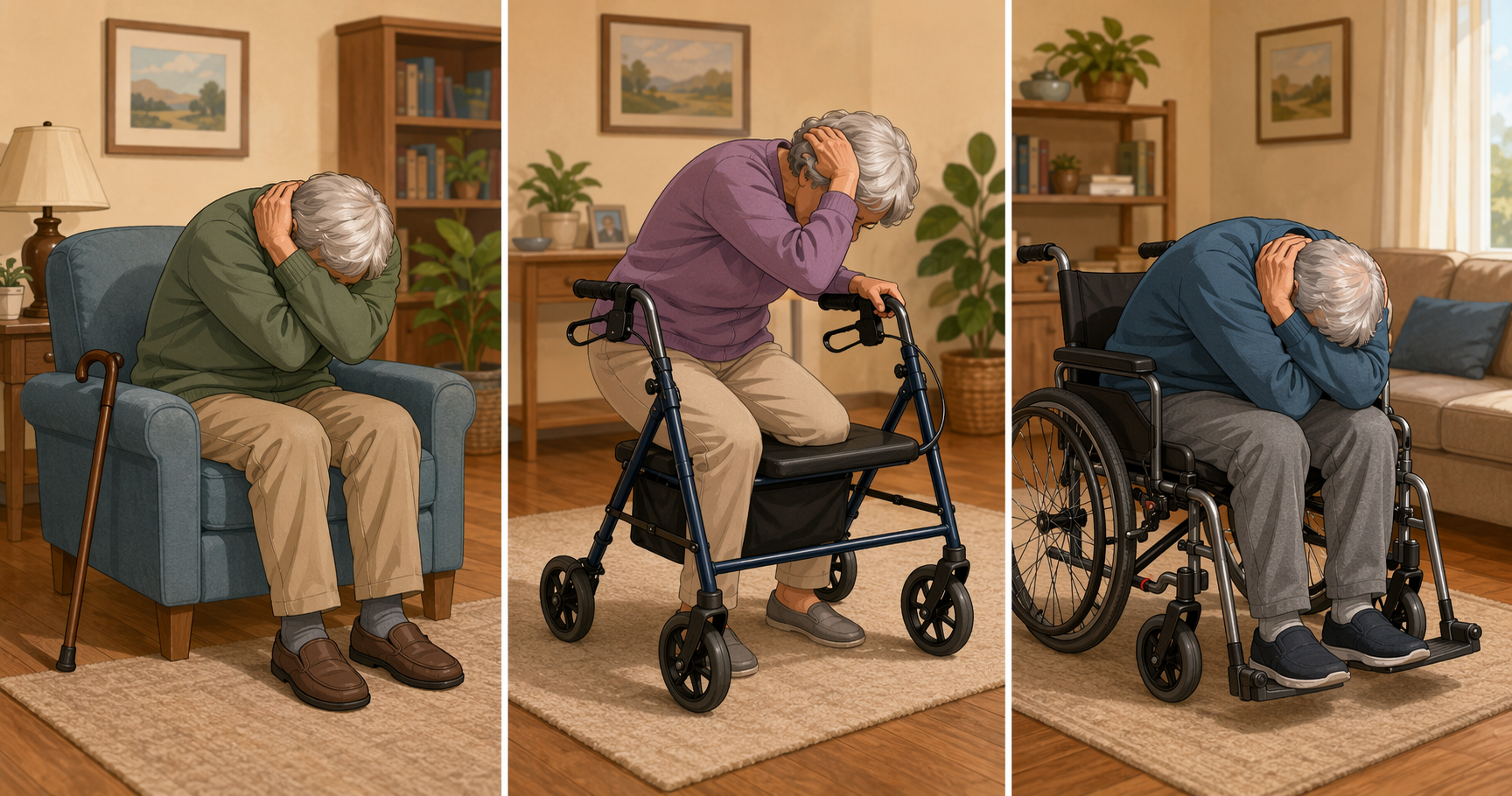
The usual earthquake advice, “Drop, Cover, and Hold On,” is clear enough until the person hearing it uses a walker, cannot kneel, or may not be able to get back up from the floor. For many older adults, the safest earthquake response is not to drop at all. It is to stay where they are, stabilize the chair or mobility aid, lower the body only as far as they safely can, and protect the head and neck.
That is not a watered-down version of earthquake safety. It is the practical version. Ready.gov tells wheelchair users to lock their wheels, bend forward, and cover their head during shaking rather than trying to get to the floor.[1] CDC gives similar device-specific adaptations for people using a cane, walker, or wheelchair.[2] Illinois emergency officials make the point plainly for older adults: some people may not be agile enough to quickly get under furniture, so the home itself has to be prepared before the shaking starts.[3]
The First Ten Seconds Matter Most
During shaking, the goal is not to travel across the room to a better spot. It is to stop a bad situation from becoming a fall, a transfer injury, or a head injury. If a senior is startled, half-asleep, in the bathroom, or sitting without their usual device in reach, a plan that depends on quick movement is already too fragile.
A useful earthquake plan for limited mobility has to answer one question room by room: “If shaking started right here, what would I do without taking more than a step or two?” The answer changes depending on whether the person uses a cane, walker, wheelchair, or is in bed.
Adapt the Response to the Mobility Aid
There is no single senior earthquake protocol that covers every body and every device. The reliable pattern across public guidance is simpler: protect the head and neck, get lower if doing so is safe, and avoid moving through the room while things are falling or sliding.
| Situation | Safer During-Shaking Response |
|---|---|
| Uses a cane | Sit in a sturdy chair if one is within immediate reach, or get as low as safely possible without risking a fall; protect the head and neck. |
| Uses a walker | Lock the walker wheels if it has brakes, sit or lower the body safely, and cover the head and neck. |
| Uses a wheelchair | Lock the wheels, bend forward if able, and cover the head and neck. |
| In bed or unable to transfer | Stay in place, cover the head and neck with pillows or arms, and rely on a prepared, hazard-reduced area around the bed. |
If You Use a Cane
A cane helps with balance, but it does not make the floor a safe destination during an earthquake. CDC’s adaptation is to sit in a sturdy chair if using a cane.[2] That sounds modest, but it is the difference between a planned seated position and a startled scramble.
The best chair is not always the nearest soft recliner. A sturdy chair with arms may give better support when sitting down and standing up after the shaking stops. If the person is already seated, they should stay seated, lean forward if they safely can, and cover the head and neck with arms, a cushion, or whatever protection is immediately at hand.
Do not send a cane user across the room toward a doorway, under a table, or toward the “best” spot if that route means crossing open floor during shaking. A short, practiced move into a nearby sturdy chair may be reasonable. A rushed trip across the living room is not.
If You Use a Walker
For walker users, the first action is to make the walker stable. CDC says that if someone uses a walker, they should lock the wheels and sit.[2] If the walker has a built-in seat, that may be the safest option. If it does not, the person needs a nearby chair that can be reached without turning the earthquake into a balance test.
This is where practice matters. Many older adults can lock walker brakes calmly during an ordinary afternoon but may not do it automatically when the floor starts moving. The brake handles should be easy to find by touch. If the walker does not have brakes, the plan should not depend on leaning heavily into it during shaking.
Once seated or lowered, the person should protect the head and neck. A small pillow kept on a favorite chair, a folded blanket within reach, or simply crossed arms over the head can be part of the plan. The point is not elegance. The point is having a repeatable position that does not require kneeling.
If You Use a Wheelchair
Wheelchair guidance is the clearest of all. Ready.gov says wheelchair users should lock the wheels, bend forward, and cover the head during an earthquake.[1] CDC also tells wheelchair users to lock the wheels and cover the head.[2]
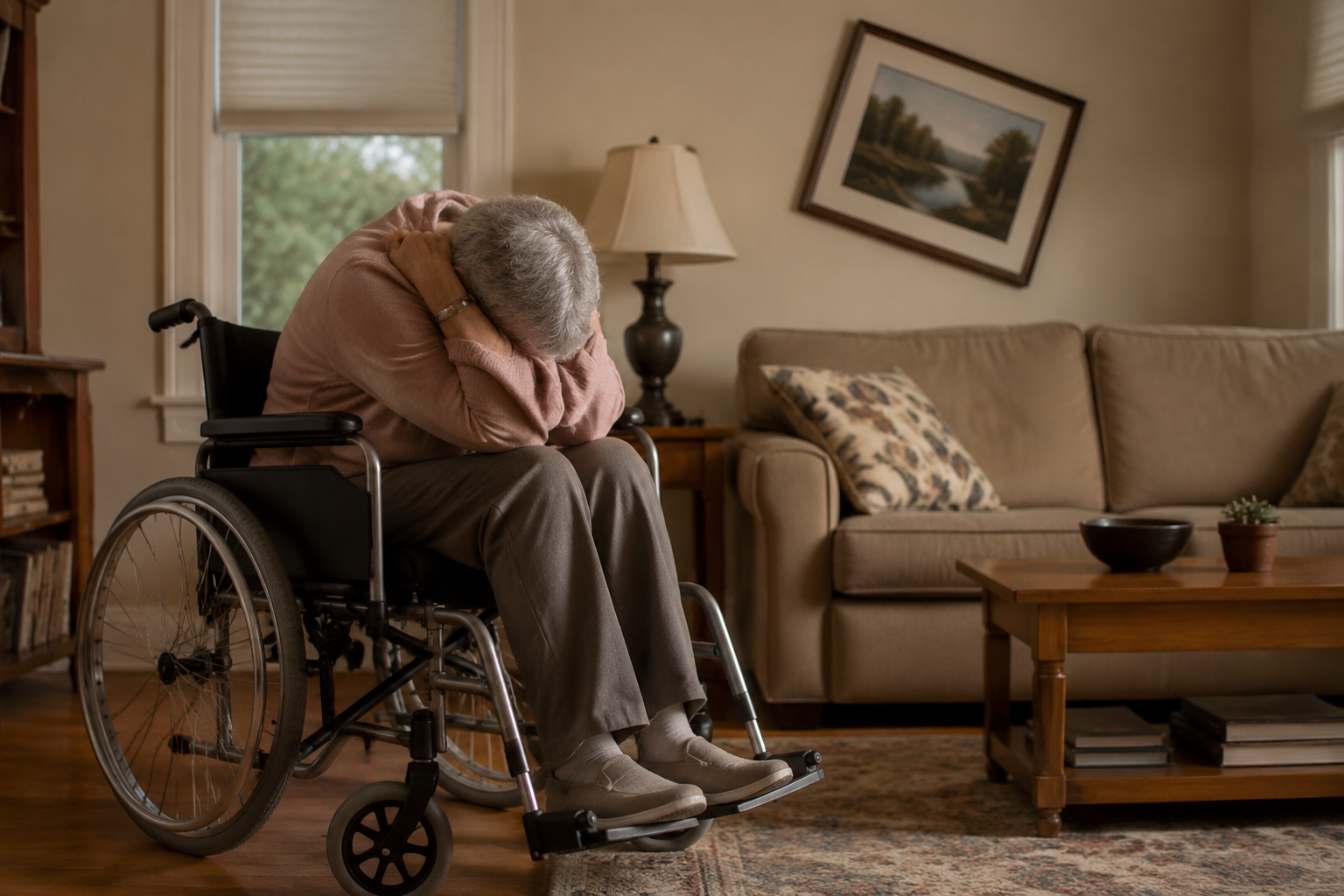
The wheelchair should not be treated as something to escape from. During shaking, it is the stable base. Lock the wheels first. If the person can bend forward without sliding or losing posture, they bend forward. If they cannot bend far, they still cover the head and neck as well as they can. A lap belt, if already used as part of normal safe positioning, should stay secured.
Caregivers should look at the chair itself before the emergency. Can the person reach both wheel locks? Are the brakes maintained? Is there a cushion, tray, or bag that would block the person from bending forward? Those details are not cosmetic in an earthquake. They decide whether the official instruction can actually be done.
If You Are in Bed
A person who is in bed when shaking starts should not be expected to transfer quickly unless that is already safe and routine. For seniors who cannot move independently, reduced-mobility guidance emphasizes that staying in place can be safer than trying to move during shaking.[4]
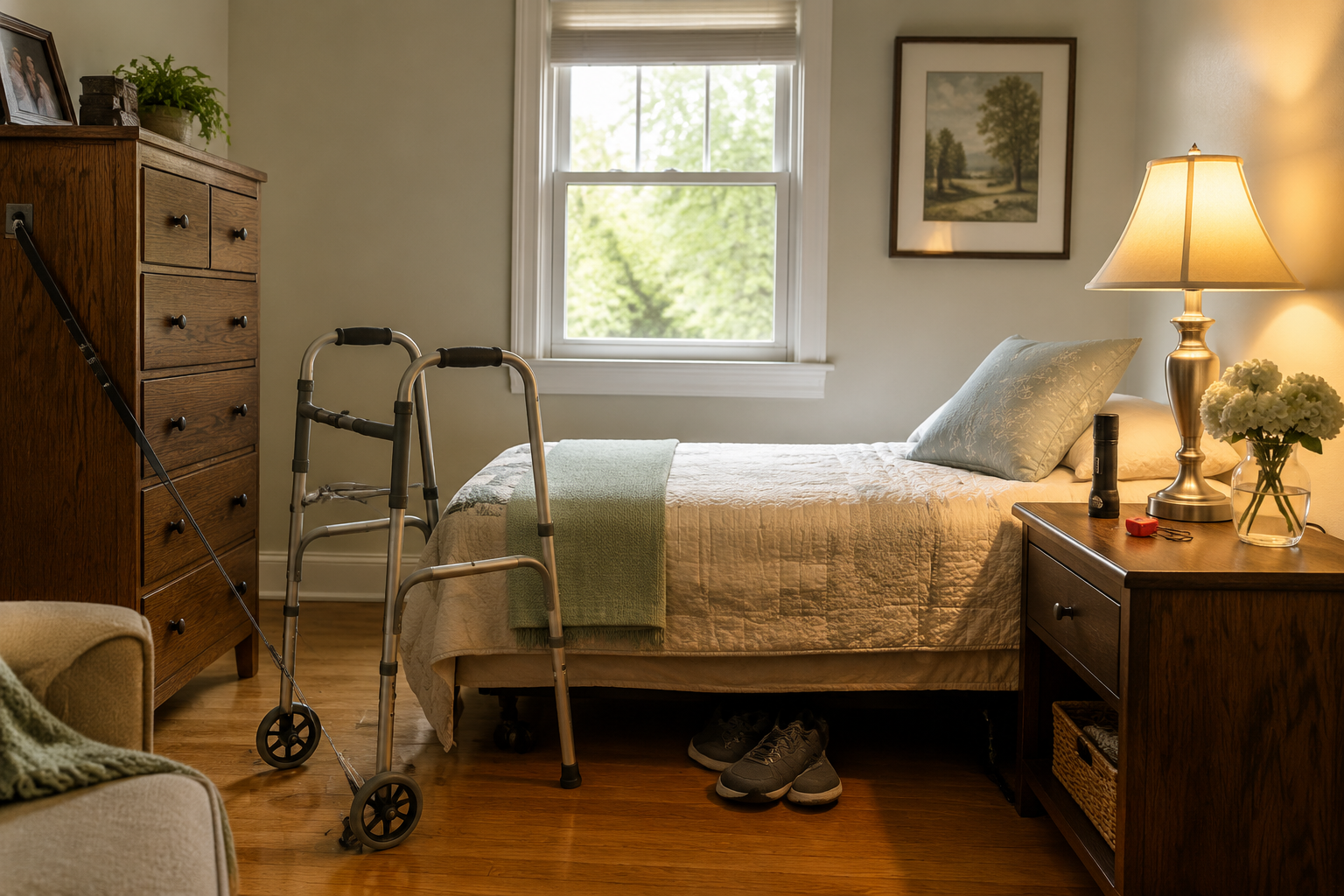
In bed, the response is to protect the head and neck with pillows, blankets, or arms and stay away from the edge if possible. The preparation around the bed matters just as much: no heavy frames over the headboard, no tall unsecured furniture that can fall toward the bed, sturdy shoes within reach for broken glass afterward, and a flashlight and whistle on the nightstand.
Prepare the Room So the Adapted Response Can Work
An adapted earthquake position is only useful if the room gives the person a safe way to use it. A walker parked in the hallway does not help someone sitting in the bedroom. A flashlight in the kitchen drawer does not help someone in the bathroom after the power goes out. Illinois emergency guidance recommends extra walking aids in multiple locations and security lights in each room, with automatic operation for 4 to 6 hours.[3]
This is why earthquake preparation for seniors belongs in the same practical family as fall prevention. You are not just preparing for cracked walls or broken dishes. You are trying to prevent the avoidable transfer, the unlit path, the rushed reach, and the unstable piece of furniture. The same thinking behind a storm-prep falls checklist applies here: reduce the need for risky movement before the emergency ever happens.
Living Room
The living room is often where the standard advice fails quietly. A favorite recliner may be comfortable but difficult to exit. A side table may be crowded with a lamp, magazines, and a cup. A cane may be leaning several feet away. Walk the room as if shaking has already started and the person cannot safely cross it.
- Keep the usual mobility aid within reach of the favorite chair.
- Place a small flashlight and whistle where they can be reached from a seated position.
- Secure tall furniture, bookcases, and televisions so they do not become falling hazards.
- Move heavy decorative objects off high shelves.
- Choose one nearby sturdy chair or seated position as the planned earthquake spot.
For furniture straps, lighting, grip aids, and other practical supports, use the same careful standard you would use for any home safety products for seniors: the product has to make the room safer without adding clutter, cords, or another trip hazard.
Bedroom
Nighttime earthquakes are unforgiving because the person may wake confused, without glasses, hearing aids, shoes, or a mobility aid in hand. The bedroom plan should assume darkness and bare feet unless the room is prepared otherwise.
- Keep a flashlight, whistle, glasses, hearing aids if used overnight, and phone within reach of the bed.
- Place sturdy shoes where they can be reached before standing.
- Keep the walker, cane, or wheelchair in its usual locked and reachable position.
- Secure dressers and remove heavy objects above the bed.
- Keep the path from bed to door as open as possible for after the shaking stops.
The goal during shaking is not to get out of bed quickly. The goal is to protect the head and neck and avoid an unsafe transfer. After shaking stops, shoes, light, and the mobility aid decide whether the next movement is controlled or dangerous.
Bathroom
Bathrooms need special attention because they combine hard surfaces, water, tight turns, and few soft places to shelter. If shaking starts while someone is seated on the toilet, in a shower chair, or at the sink, the safest action may be to stay put, hold a stable support if one is already in hand, and protect the head as well as possible. Trying to hurry out of the bathroom during shaking can create the very fall the plan is meant to prevent.
Keep the bathroom uncluttered. Use secure grab bars rather than towel bars for support. Store heavy bottles low. A small battery light or automatic light can matter after the shaking stops, especially if the person needs to wait for help before moving.
Kitchen and Dining Area
The kitchen is full of things that can move before a person can: cabinet contents, glass, small appliances, rolling carts. If a senior uses a walker or cane, the plan should not depend on crossing the kitchen during shaking. Sit if a sturdy chair is within immediate reach; otherwise, lower the body as safely as possible and protect the head and neck.
Latches on cabinets, heavier items stored low, and clear floor space are not fancy upgrades. They reduce the number of things that can fall, slide, or block a mobility aid. For someone who already has balance limitations, that is the real work of earthquake preparation.
Put Supplies Where the Person May Actually Be
A single emergency kit in the front closet is better than nothing, but it does not solve the first minutes after shaking for someone who cannot easily reach the closet. Keep a small set of immediate-use items in the rooms where the person spends time: whistle, flashlight, spare batteries or charged light, sturdy shoes if appropriate, a little water, and any assistive item that would be hard to manage without.
Midnight Sun Home Care specifically recommends keeping extra mobility aids in multiple rooms for people with reduced mobility.[4] Red Cross older adult guidance also recommends emergency supplies that include at least 30 days of medications and extra assistive items such as a cane or eyeglasses.[6]
- Medication list and current prescriptions
- Doctor, pharmacy, caregiver, and emergency contact information
- Copies of insurance and identification information
- Spare glasses, hearing-aid batteries, cane tips, or other small assistive items
- Written instructions for mobility, transfer, oxygen, or medical equipment needs
Families do not need to reinvent the paperwork every time they prepare for a different emergency. A well-kept emergency contact binder for aging parents can be the source for medication lists, doctor contacts, insurance details, and instructions that neighbors or responders may need.
Plan for the Minutes After Shaking Stops
The end of shaking is not always the end of danger. There may be broken glass, tipped furniture, blocked paths, damaged utilities, or aftershocks. For older adults with mobility limitations, physical disabilities can delay or prevent urgent evacuation, which is why the first response and the after-shaking plan need to be worked out before the emergency.[5]
The first after-shaking decision should be simple: stay put if the route is unsafe, call or signal for help, and move only when there is enough light, footwear, and support to do it safely. If the person lives alone, the plan should name who checks in, how long they wait before calling, and what to do if phones are down.
This is especially important for adult children who do not live nearby. A long-distance caregiver emergency plan should include local contacts who can physically check the home, not just a phone tree of relatives who are all too far away to see whether a doorway is blocked or a walker is out of reach.
Practice Without Making It Theatrical
A drill does not have to be dramatic to be useful. The Great ShakeOut provides senior-facility drill guidance and treats mobility-aid-specific practice as something that can be planned and done, not merely talked about.[7] At home, the same idea can be quieter and more personal.
Practice in the actual rooms where the person spends time. Sit in the favorite chair and practice covering the head. Lock the walker brakes and sit. Lock the wheelchair wheels and bend forward as far as safely possible. From bed, reach for the pillow, flashlight, whistle, shoes, and mobility aid. If any step requires stretching, twisting, standing too fast, or searching, change the room instead of asking the person to be quicker.
- Can the person reach the cane, walker, or wheelchair from the usual seat or bed?
- Can the wheelchair or walker brakes be locked by touch?
- Is there a safe seated position in each main room?
- Can the person cover the head and neck without losing balance?
- Can they reach a whistle, light, phone, shoes, and key supplies after shaking stops?
A good drill ends when the movement is plain: device locked, body lowered, head protected, supplies reachable. That is the response older adults with limited mobility need most—not a perfect performance, but a practiced action that will still make sense when the room begins to move.
References
- Earthquakes, Ready.gov
- Stay Safe During an Earthquake, Centers for Disease Control and Prevention
- Earthquake Preparedness for Seniors, Illinois Emergency Management Agency and Office of Homeland Security
- Earthquake Safety with Reduced Mobility, Midnight Sun Home Care
- Older Adults and Disaster Preparedness and Response, American Association for Geriatric Psychiatry
- Older Adults, American Red Cross
- Senior Facilities, Great ShakeOut
Related reading
Noticed something outdated or inaccurate on this page? Flag a correction. We review every report against CDC, NIA, and AARP HomeFit guidance before updating a page.
Part of the Fall Prevention section.