
STEADI: assess
How to Check on a Senior After the 2026 Egg Recall
Learn what signs to monitor in an older adult for 72 hours after possible exposure to recalled eggs, including dehydration symptoms and when to seek emergency care.
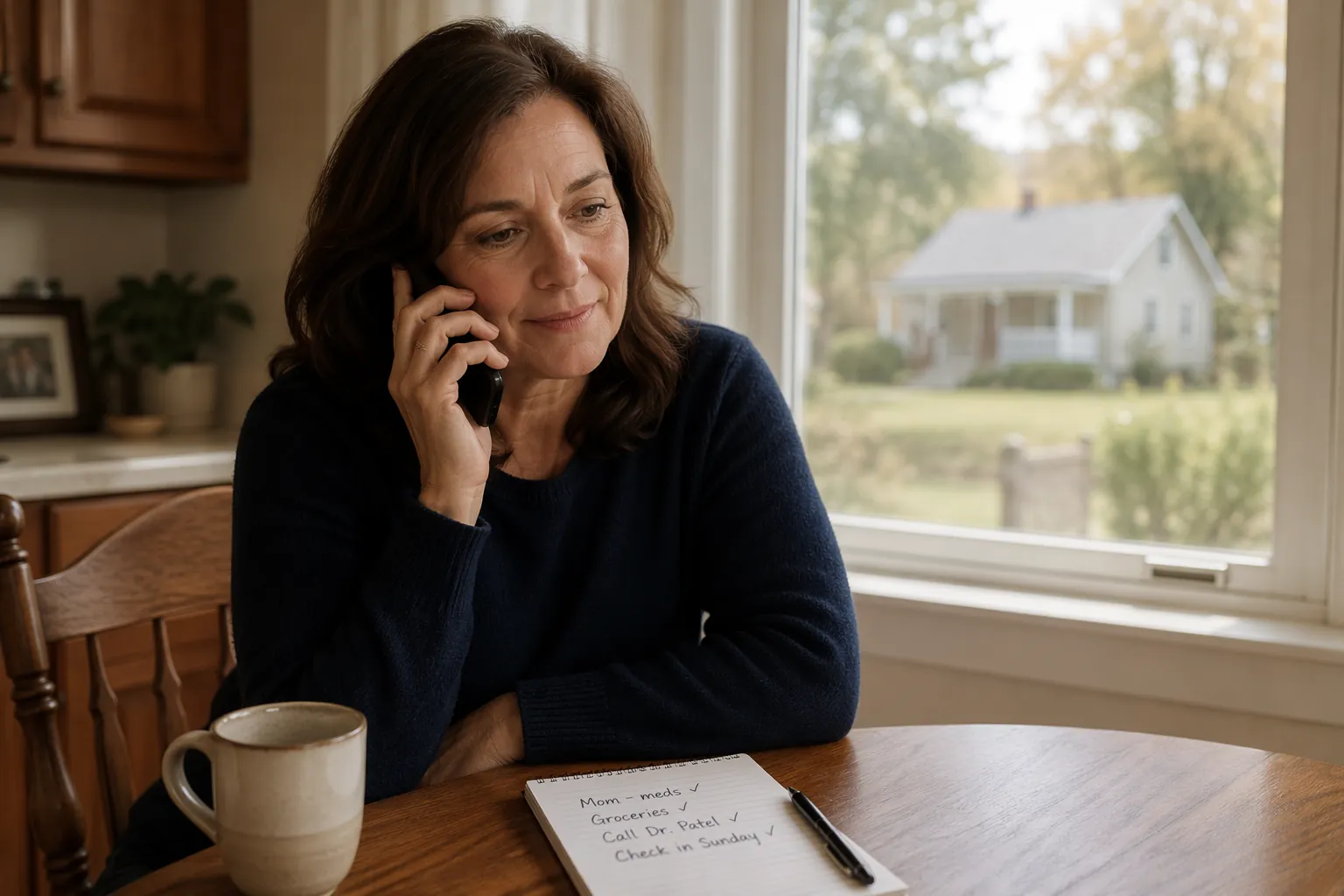
If your parent may have eaten recalled eggs, the first job is not to memorize every carton detail. It is to watch the next 72 hours closely enough that dehydration, weakness, or confusion does not have a chance to turn into a fall.
Seek urgent medical care right away if your parent has a fever over 102°F, diarrhea lasting more than 2 days without improvement, bloody diarrhea, vomiting that prevents liquids from staying down, or signs of dehydration such as dizziness when standing up. [1]
That last phrase matters. For an older adult living alone, “dizzy when standing” is not a minor detail. It can be the moment before a bathroom fall, a missed dose, or a night spent too weak to get to the kitchen.
First, Confirm Whether the Eggs Match the Recall
Spend 90 seconds on the carton if it is still in the house. The recalled shell eggs identified by the FDA recall notice include plant codes P-1950 or 0840962, Julian dates 157-184, and sell-by dates from July 20 through Aug. 17, 2026. [2]
| What to Check | Recall Detail |
|---|---|
| Plant code | P-1950 or 0840962 |
| Julian date | 157-184 |
| Sell-by date | July 20-Aug. 17, 2026 |
If the carton matches, discard it or follow the recall instructions. If your parent already ate the eggs, do not spend the rest of the day staring at codes. Move to symptom monitoring.
The outbreak was still listed as ongoing in the FDA investigation update dated July 24, 2026. At that point, FDA reported 98 confirmed illnesses and 26 hospitalizations, which is 26.5% of confirmed cases. [3]
Those numbers do not mean your parent will become seriously ill. They do mean this is not the kind of recall where “no symptoms yet” should end the conversation after one call.
The 72-Hour Check-In Window
For the next 72 hours after possible exposure, make the check-ins specific. A general “How are you feeling?” is too easy to answer with “fine,” especially from a parent who does not want to worry you, does not want a lecture, or does not remember exactly how many times they went to the bathroom.
Use the same five questions each time. Repetition is useful because you are looking for change.
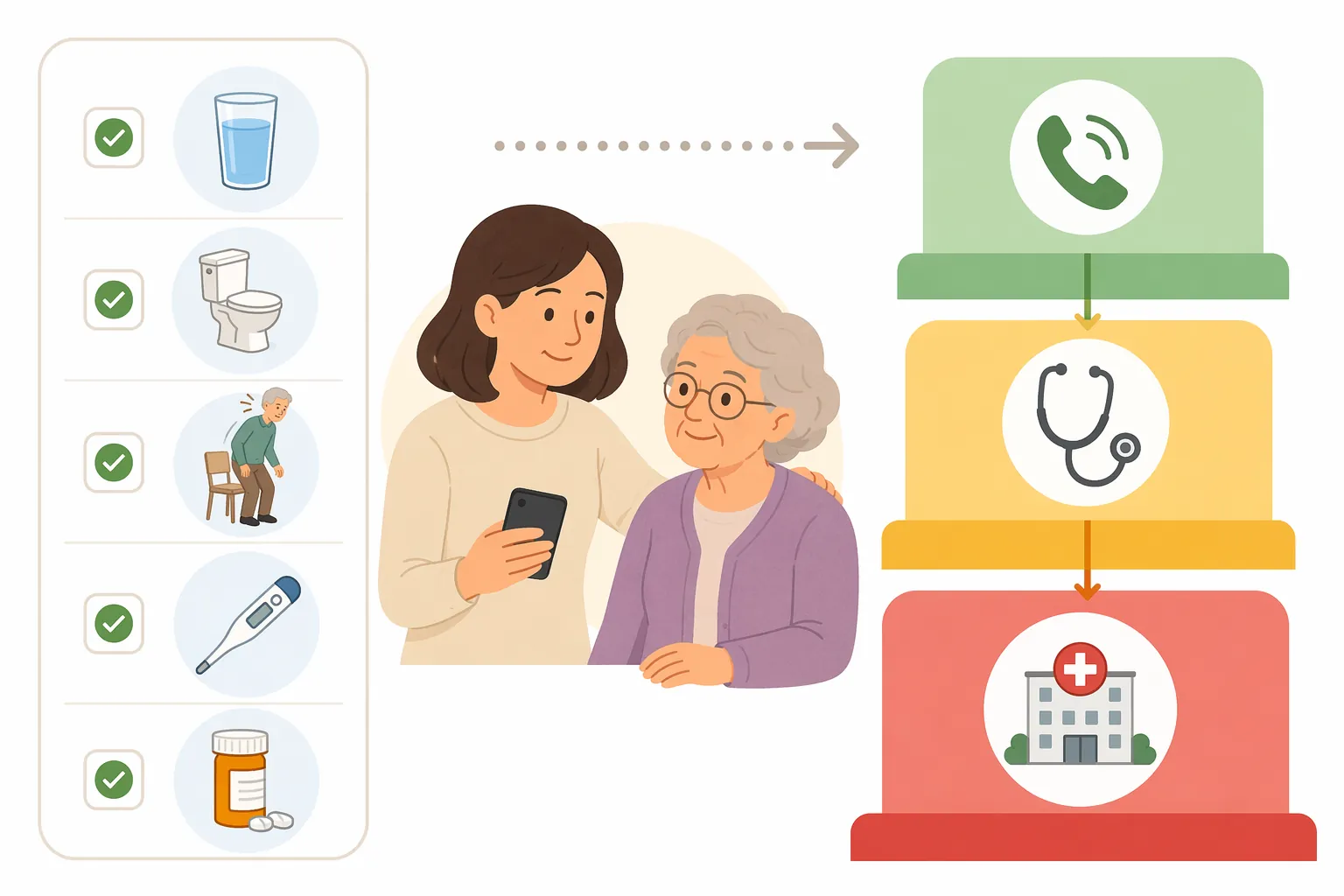
- When you stand up from a chair, do you feel dizzy, lightheaded, or unsteady?
- Have you had diarrhea today? If yes, is it getting better, worse, or staying the same?
- Is there any blood in the stool, or do you have a fever over 102°F?
- Can you keep fluids down, or are you vomiting after you drink?
- When did you last urinate, and was it a normal amount for you?
Ask the standing question before you ask about appetite. Appetite can drop with many mild illnesses. Dizziness when standing is more directly tied to dehydration and immediate fall risk, and it is one of the CDC warning signs that should move the situation out of casual monitoring. [1]
If your parent has memory problems, hearing trouble, or tends to minimize symptoms, do not argue with the answer. Ask for observable facts: “What is next to your chair right now?” “Can you bring a glass of water to the phone?” “Can you walk to the bathroom while we stay on the line?” The goal is not to test them. It is to replace a vague reassurance with something you can actually judge.
What to Look for If You Visit in Person
A phone call can miss the small physical changes that make a parent unsafe. If you visit, start with the route they have to use most often: chair to bathroom, chair to kitchen, bed to bathroom. Foodborne illness becomes a fall-prevention problem when urgency, weakness, and fluid loss meet a hallway rug or a dark bathroom.
- Watch the first stand from a chair. Do they pause, grab furniture, sway, or sit back down?
- Look at the mouth and lips. A dry mouth or cracked lips can support what they are telling you about fluid intake.
- Check whether water is within reach. A full glass across the room is not the same as a drink they can actually get.
- Notice bathroom evidence. Repeated trips, soiled clothing, or towels on the floor can mean symptoms are worse than reported.
- Look for confusion about timing. “This morning” may not be reliable if the person is ill, tired, or mildly confused.
Skin tenting is sometimes mentioned as a dehydration clue: gently pinched skin that does not spring back quickly. In older adults, skin changes can make this less clear than people expect, so do not use it as the deciding sign by itself. Pair what you see with urine frequency, standing dizziness, vomiting, fever, and whether diarrhea is improving.
Why Dehydration Comes Faster Than Families Expect
Older adults can start a stomach illness with less reserve. Aging is associated with reduced thirst sensation, decreased antidiuretic hormone production, kidneys that are less able to concentrate urine, and lower total body water, with total body water decreasing to about 40-45% of body weight. [4]
Then daily habits add another layer. Some seniors drink less because bathroom trips are painful, slow, embarrassing, or risky. Some avoid fluids in the evening because they fear incontinence. Some cannot easily carry a glass while using a walker. Some forget whether they drank anything after breakfast.
This is why “keep drinking fluids” is not enough advice. A parent may agree with it and still not do it. Better questions are: “What have you had to drink since breakfast?” “Is a drink next to you?” “Are you avoiding water because you are worried about the bathroom?”
The Institute of Medicine guidelines cited in Hamrick et al. describe adequate total water intake as 2.7 L, or 91 oz, per day for women and 3.7 L, or 125 oz, per day for men, with about 80% of that typically coming from beverages. [4]
Those are general intake figures, not a prescription for every person during illness. Heart failure, kidney disease, and some other conditions can require fluid limits. If your parent has been told to restrict fluids, call their clinician rather than guessing.
How This Connects to Falls Without Overstating It
There is not a single study here proving that this Salmonella outbreak causes falls. The safer chain is narrower: Salmonella illness can involve diarrhea and vomiting; those symptoms can cause fluid loss; dehydration is common and risky in older adults; dehydration can amplify fall risk.
In a Mayo Clinic Proceedings study of 30,634 older adults, 37.9% were dehydrated, and dehydration was associated with 13% increased odds of falling. The same study found higher fall-or-death odds when dehydration appeared alongside loop diuretic use or antidepressant use. [4]
That study was a regional retrospective cohort from the Upper Midwest and was predominantly white non-Hispanic, so it should not be treated as a perfect national picture. [4]
Even with that limit, the caregiver lesson is practical: dehydration is not just about thirst. It can change balance, blood pressure on standing, medication effects, and the ability to make it safely to the bathroom.
The same mechanism shows up in heat emergencies, where fluid loss and weakness can raise fall concerns. If you are building a broader plan, CareWise Guide’s article on how to cool seniors without AC and prevent falls during heat waves covers that parallel situation.
The Escalation Ladder
A good plan should leave room for judgment without making every symptom an emergency. Use this ladder to decide what happens after each check-in.
| What You Hear or See | What to Do |
|---|---|
| No diarrhea, no vomiting, no fever, normal urination, steady when standing | Continue scheduled check-ins through the 72-hour window. |
| Mild diarrhea but improving, able to drink, no dizziness when standing | Encourage fluids if allowed, make the next call sooner, and document symptoms. |
| Diarrhea continues close to 2 days without improvement | Call a clinician for guidance; this matches a CDC warning threshold. |
| Fever over 102°F, bloody diarrhea, repeated vomiting, or cannot keep liquids down | Seek urgent medical attention. |
| Dizziness when standing, very little urination, new confusion, or too weak to walk safely | Treat as urgent, especially if the person is alone or has already nearly fallen. |
If you are unsure which row fits, choose the more cautious action for an older adult who lives alone. That does not always mean the ER. It may mean calling the nurse line now instead of tomorrow morning, asking a neighbor to check the porch light and answer the door, or driving over before bedtime.
For a decision-tree style approach to another home crisis, the power outage fall prevention checklist uses a similar idea: match the observable condition to the next safe action.
What to Document During Each Call
Write down answers in plain language. If you end up calling a clinician, you will be calmer and more useful if you can give a short timeline instead of trying to reconstruct it from worry.
- Time of call and whether your parent sounded normal, tired, confused, or short of breath.
- Number of diarrhea episodes if known, and whether the trend is improving or worsening.
- Any fever reading, especially if it is over 102°F.
- Vomiting and whether fluids stay down.
- Last urination and any dizziness when standing.
- Medications that could matter, especially diuretics, antidepressants, blood pressure medications, or drugs with fall-risk warnings.
Do not turn the call into an interrogation. A calm script helps: “I’m writing this down so if we need to call the doctor, we do not have to guess.” Most parents tolerate practical help better than panic.
A Simple 72-Hour Plan
If exposure may have happened today, call now, tonight, tomorrow morning, and tomorrow evening. Continue through 72 hours if symptoms appear or if the timeline is uncertain. If there are no symptoms and the person is steady, drinking normally, and urinating normally, the calls can become lighter, but do not disappear after the first “I’m okay.”
- Call again sooner if diarrhea starts, fluid intake drops, or your parent sounds unusually tired.
- Visit in person if you cannot get clear answers, if symptoms are worsening, or if the person has mobility or memory concerns.
- Call a clinician if diarrhea approaches 2 days without improvement or if you are unsure how existing conditions affect hydration advice.
- Seek urgent medical care for fever over 102°F, bloody diarrhea, vomiting that prevents fluids from staying down, dehydration signs such as dizziness when standing, new confusion, or unsafe walking.
For broader prevention systems after this immediate window, use a food recall setup such as CareWise Guide’s guide to keeping an aging parent safe from food recalls. That is the kitchen-audit work. This is the next-72-hours work.
This article is educational and cannot diagnose Salmonella infection or replace medical advice. If your parent is frail, lives alone, has kidney or heart disease, takes diuretics, has diabetes, or cannot describe symptoms reliably, lower the threshold for calling a clinician.
References
- Salmonella Outbreak Linked to Shell Eggs, CDC, July 2026.
- Midwest Poultry Services, L.P. Recalls Shell Eggs Due to Possible Salmonella Enteritidis Contamination, FDA.
- Outbreak Investigation of Salmonella: Eggs, July 2026, FDA, July 24, 2026.
- Association Between Dehydration and Falls, Mayo Clinic Proceedings, 2020.
Related reading
Noticed something outdated or inaccurate on this page? Flag a correction. We review every report against CDC, NIA, and AARP HomeFit guidance before updating a page.
Part of the Fall Prevention section.