
STEADI: intervene
Protect Your Older Adult From Salmonella During This Egg Recall
A step-by-step crisis checklist for caregivers to verify recalled egg cartons, safely dispose of them, clean the kitchen, and recognize when an older adult needs medical attention — based on CDC and FDA guidance for the July 2026 egg recall.
Last verified: July 25, 2026. If your older parent may have bought eggs included in the July 2026 recall, pause egg use before anyone cooks breakfast, bakes, or finishes a half-used carton. Do not rely on memory, store receipts, or the brand name alone. Pick up the carton and check the printed details.
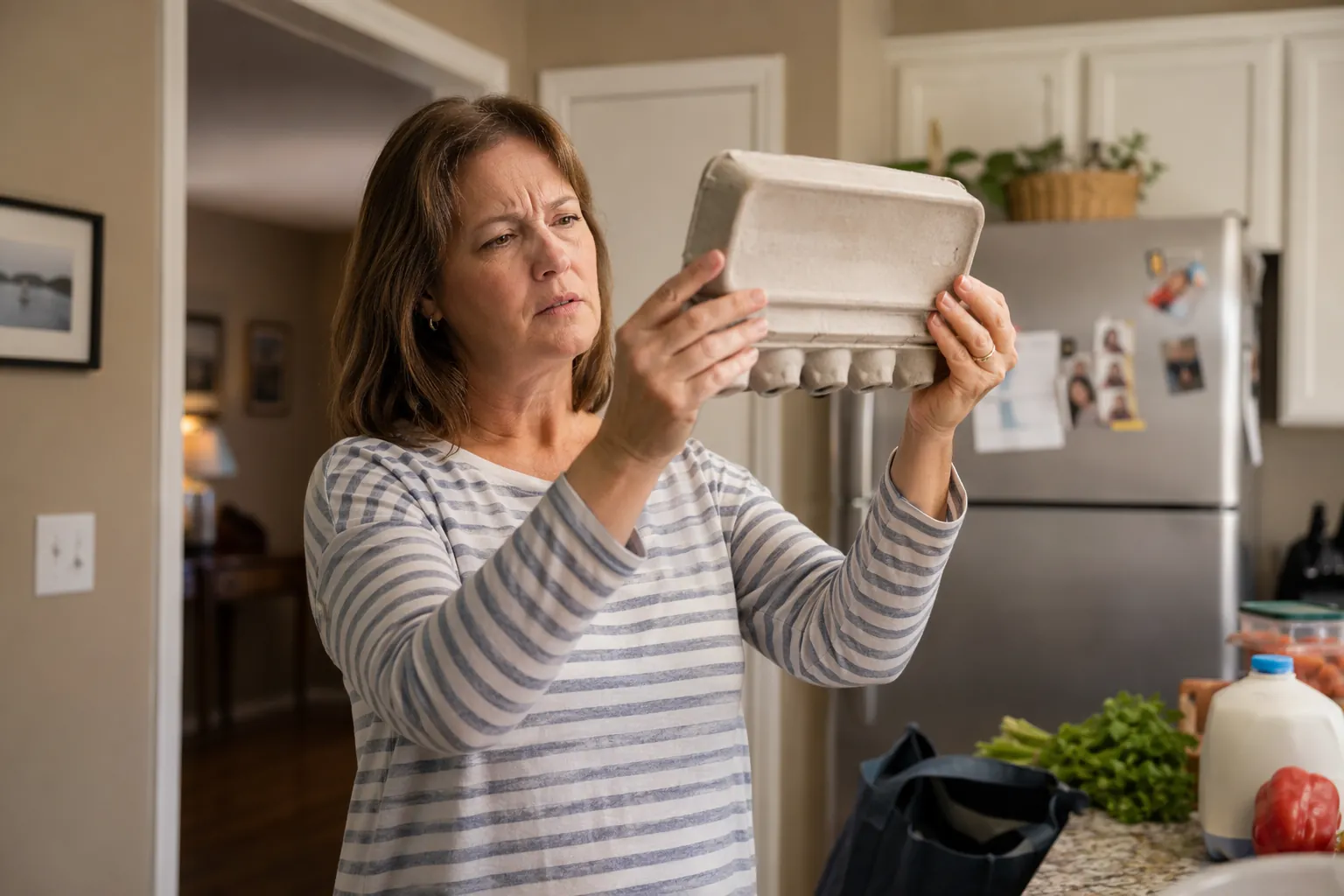
The FDA recall notice names Midwest Poultry Services, LP and covers more than 19 million shell eggs sold under Kroger, Simple Truth, Brookshire’s, Country Morning, and Sunups labels. The affected cartons have plant codes P-1950 or 0840962, Julian dates 157 through 184, and best-by dates from July 20 through August 17, 2026. The FDA notice also describes distribution in 17 states and reports 98 illnesses and 26 hospitalizations linked to the outbreak investigation at the time of the notice.[1]
| Check this on the carton | Recalled details to look for |
|---|---|
| Company named in FDA notice | Midwest Poultry Services, LP |
| Brands listed | Kroger; Simple Truth; Brookshire’s; Country Morning; Sunups |
| Plant code | P-1950 or 0840962 |
| Julian date | 157–184 |
| Best-by date | July 20–August 17, 2026 |
| Recall context | More than 19 million eggs; 17 states; 98 sick; 26 hospitalized, according to the FDA notice |
Start With the Carton, Not the Refrigerator Shelf
An older adult can be perfectly careful and still have a kitchen that makes recall response messy: one carton in the refrigerator door, another in the main compartment, a few eggs moved into a ceramic holder, or a carton already used for last night’s cornbread. The safest first move is simple: stop using all suspect eggs while you verify them.
Look for the plant code and Julian date printed on the carton. The brand helps, but it is not enough by itself. A carton needs to match the recall identifiers from the FDA notice before you treat it as part of this specific recall. If the carton is missing, the eggs have been separated from their packaging, or you cannot confidently match the code and date, do not cook with those eggs while you check the FDA recall notice or call the store for help confirming the product.
- Set aside every egg carton before opening or cooking anything.
- Check the brand, then the plant code, then the Julian date, then the best-by date.
- Treat loose eggs or eggs moved out of the carton as uncertain if you cannot trace them back to a verified non-recalled carton.
- If your parent shops independently, ask where they most recently bought eggs, but do not make the answer carry more weight than the carton code.
This is the part worth slowing down for. A recall notice is only useful if it reaches the exact object in the kitchen. “Kroger eggs” is not enough. “Kroger eggs with plant code P-1950 and Julian date 157–184” is the kind of check that changes what you do next.
Remove the Eggs Without Turning It Into a Debate
If the carton matches the recall identifiers, do not use the eggs. Follow the recall notice’s instructions for disposal or return. If your parent is proud of managing their own kitchen, keep the conversation factual: the carton matches the FDA notice, so it leaves the food supply today. This is not a judgment about how they shop or cook.
If a recalled carton is already partly used, remove the remaining eggs and then think through what the shells or raw egg may have touched: refrigerator shelf, bowl, counter, sink edge, sponge, dish towel, or hands. You do not need to reconstruct every meal. You do need to clean the contact points you can identify.
Clean What the Shells and Raw Egg Touched
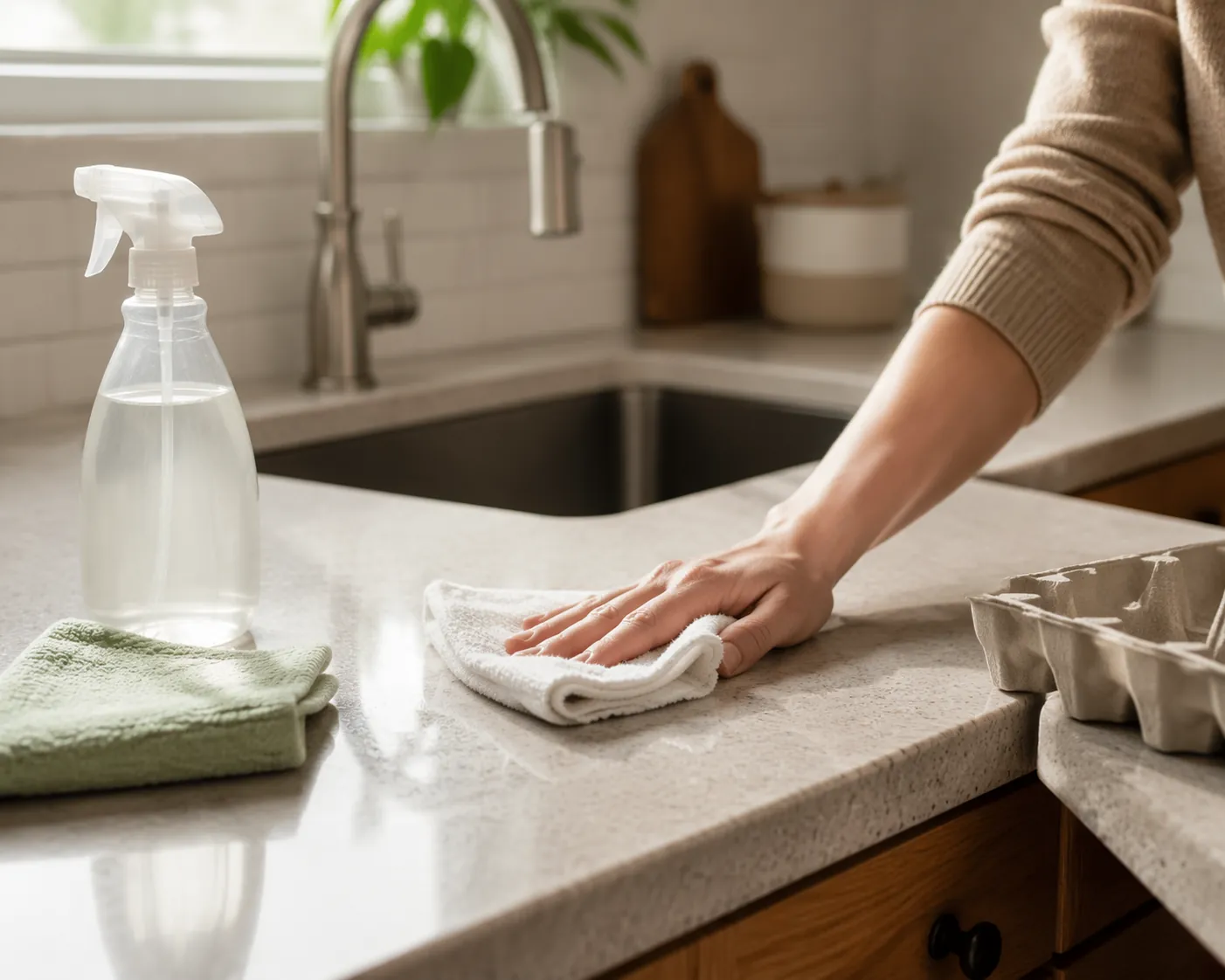
After the recalled or uncertain eggs are out of use, wash hands and clean surfaces and items that may have touched the shells or raw egg. FoodSafety.gov warns that Salmonella can be present on egg shells and inside eggs, and CDC prevention guidance emphasizes keeping raw eggs and foods that contain them from contaminating hands, utensils, counters, and other foods.[5][6]
- Wash hands after handling the carton, shells, or raw egg.
- Clean counters, refrigerator areas, bowls, utensils, and sink surfaces that may have been touched.
- Replace or launder dish towels that were used during egg handling.
- Do not reuse a bowl, whisk, cutting board, or plate that held raw egg until it has been washed.
This is also the moment to look for half-prepared food. If batter, raw egg mixture, or another uncooked food was made with eggs from a recalled or uncertain carton, do not try to rescue it by guessing. Remove it from use and clean the items it touched.
Watch the Calendar as Closely as the Symptoms
For salmonella, the CDC says symptoms usually begin 6 hours to 6 days after infection and usually last 4 to 7 days.[3] That wide window matters in a caregiver’s week. If your parent ate eggs from a recalled or uncertain carton yesterday and feels fine tonight, that does not fully close the book.
Older adults deserve a lower threshold for attention because foodborne illness can be harder on the body with age. The FDA explains that after age 60, immune system changes, reduced stomach acid, and slower digestion can increase vulnerability to foodborne illness.[4] The CDC also says nearly half of people 65 and older with lab-confirmed Salmonella infection are hospitalized.[2] That statistic does not mean nearly half of every older adult with stomach symptoms will be hospitalized; it describes lab-confirmed cases. It is still enough reason not to wave away diarrhea, fever, or vomiting as “just something going around.”

When to Watch Closely
Watch closely if your parent may have eaten recalled eggs and develops diarrhea, stomach cramps, fever, nausea, or vomiting during the 6-hour-to-6-day window. Keep track of when symptoms started, how often they are using the bathroom, whether they can keep fluids down, and whether they seem weaker, more lightheaded, or less steady than usual.
That last point matters even on a site better known for fall-prevention work. Dehydration and dizziness can turn a foodborne illness into a mobility and safety problem quickly. A parent who is usually independent may still need someone nearby if they are rushing to the bathroom, standing up at night, or skipping fluids because their stomach is unsettled.
When to Call a Clinician or Seek Urgent Help
Do not wait if dehydration signs appear. AARP’s recall guidance and CDC food-safety guidance for older adults highlight dehydration danger signs including little or no urination, dark urine, extreme thirst, dry mouth, and dizziness.[7][2] In an older adult, those signs should move the situation out of “keep an eye on it” and into “call for medical advice now.”
- Call a clinician promptly if diarrhea, vomiting, fever, or weakness is significant or worsening.
- Seek urgent help if your parent has little or no urination, dark urine, extreme thirst, dry mouth, dizziness, faintness, or cannot keep fluids down.
- Mention the egg recall exposure, the approximate date and time the eggs were eaten, and any carton details you verified.
- If your parent has serious medical conditions, is frail, or you are unsure whether symptoms are safe to monitor at home, use the stricter path and contact a medical professional.
This article is a caregiver checklist, not a medical diagnosis tool. If symptoms feel severe, unusual, or unsafe for your parent’s baseline health, get medical advice rather than waiting for a checklist item to fit perfectly.
For Non-Recalled Eggs, Tighten the Everyday Rules
Once the recalled or uncertain eggs are handled, the remaining question is what to do with eggs that do not match the recall. Keep those rules practical. FoodSafety.gov advises refrigerating eggs at 40°F or below, cooking eggs until both yolk and white are firm, and cooking egg dishes to 160°F.[5] CDC guidance also advises avoiding raw or undercooked eggs and foods made with them, especially for people at higher risk.[6]
| Going forward with eggs that are not recalled | Use this rule |
|---|---|
| Storage | Keep eggs refrigerated at 40°F or below |
| Fried, boiled, or scrambled eggs | Cook until both yolk and white are firm |
| Casseroles, custards, and other egg dishes | Cook to 160°F |
| Raw batter or dough | Do not taste foods that contain raw or undercooked eggs |
| After handling eggs | Wash hands and clean utensils and surfaces that touched raw egg |
These rules are not a substitute for recall verification. A recalled egg should not be kept because someone plans to cook it thoroughly. The recall step comes first; ordinary cooking guidance applies to eggs that are not part of the recall.
Keep the Recall Check Current
Recall details can change after publication. Before you finish the kitchen check, confirm the current notice on FDA.gov, especially if you are reading this after July 25, 2026. If the FDA updates the affected products, dates, states, or instructions, follow the current FDA notice over any saved copy, screenshot, or secondhand post.
A completed response is not dramatic: the carton is verified, recalled or uncertain eggs are out of use, contact surfaces are cleaned, symptoms are watched within the CDC window, and dehydration signs trigger medical advice instead of another night of hoping it passes.
References
- Midwest Poultry Services, LP Recalls Shell Eggs Due to Possible Salmonella Enteritidis Contamination, FDA
- Safer Food Choices for Adults 65 and Older, CDC
- About Salmonella Infection, CDC
- Food Safety for Older Adults and People with Cancer, Diabetes, HIV/AIDS, Organ Transplants, and Autoimmune Diseases, FDA
- Salmonella and Eggs, FoodSafety.gov
- Preventing Salmonella Infection, CDC
- Kroger, Brookshire Eggs Recalled Over Salmonella Concerns, AARP
Related reading
Noticed something outdated or inaccurate on this page? Flag a correction. We review every report against CDC, NIA, and AARP HomeFit guidance before updating a page.
Part of the Fall Prevention section.