
Storm Power Outage Fall Prevention Checklist for Seniors
A pre-storm room-by-room checklist that eliminates fall hazards before the power goes out, plus dark-navigation techniques to keep seniors safe when the lights fail.
The room is still familiar right up until the lights fail. Then the edge of the coffee table disappears, the hallway loses depth, the bathroom doorway shifts into shadow, and the emergency supplies everyone meant well by putting out become a second set of obstacles. For an older adult who already uses vision to judge distance and balance, a storm outage is not just a power problem. It is a walking-path problem.
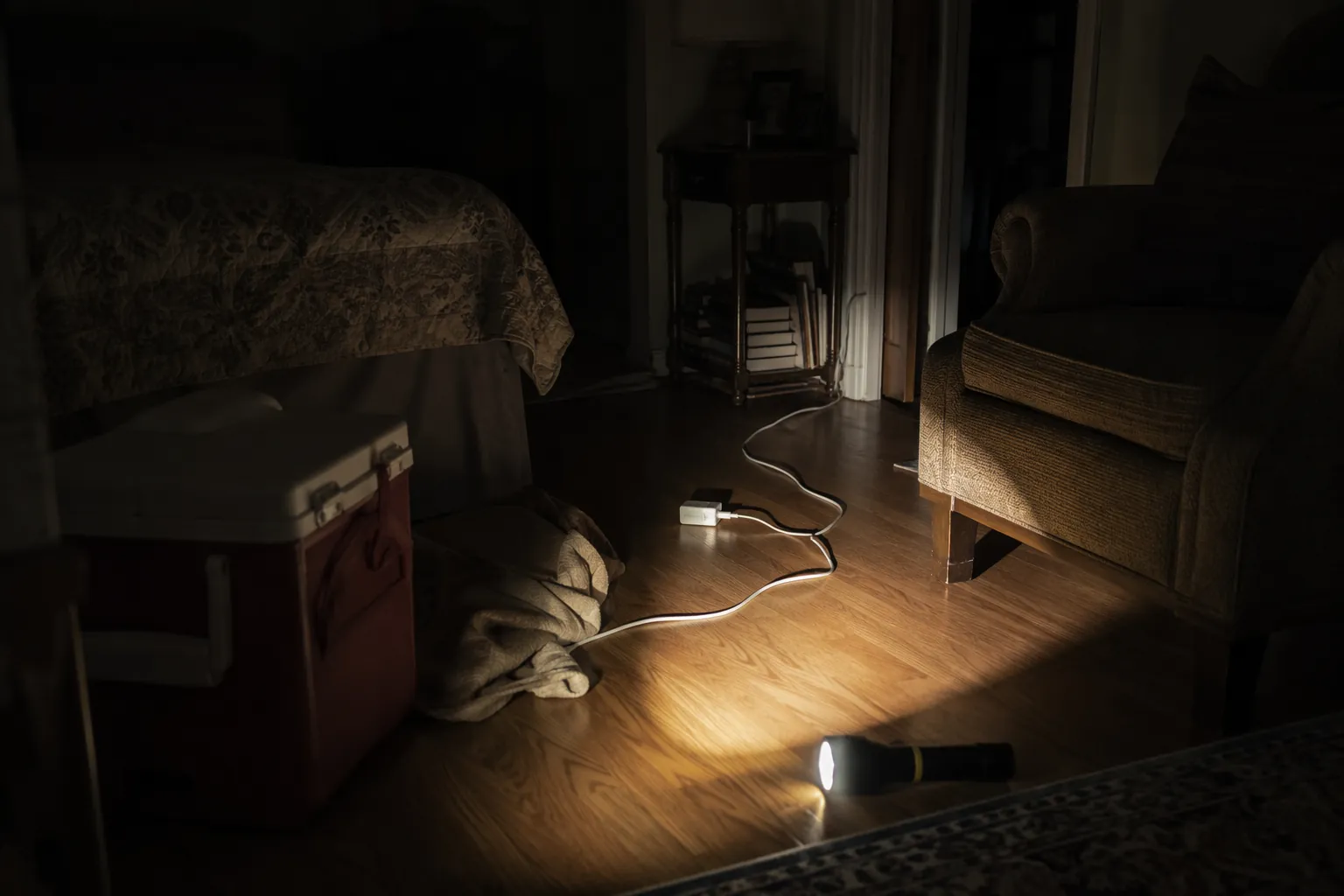
That is why storm power outage safety tips for seniors need to start before the storm, with the floor. More than 14 million older adults fall each year in the U.S., and falls lead to about 3 million emergency department visits annually.[1] In an outage, the risk changes shape: darkness removes visual depth cues, rushed emergency setup adds cords and coolers where feet usually go, and very hot or very cold indoor air can slow balance reactions and judgment.
A general outage plan can cover batteries, food, phones, medication, and medical equipment. This checklist stays narrower on purpose: it is for the five-minute scramble after the lights go out, and for the 2 a.m. walk to the bathroom after everyone else has gone to bed.
The three outage hazards ordinary fall checks miss
A normal home fall-prevention walk-through looks for loose rugs, poor lighting, clutter, slippery bathrooms, and weak handholds. Keep doing that. The CDC STEADI home fall-prevention checklist is the right year-round foundation. A storm outage adds three problems that are easy to miss when the lights are still on.
- Sudden darkness: Familiar furniture becomes harder to judge when depth cues disappear, especially for older adults who depend more on vision for balance.
- Emergency gear in the path: Flashlights on the floor, charging cords, battery packs, coolers, extension cords, fans, and portable power stations can create fresh trip hazards in rooms that were clear an hour earlier. Medical Guardian notes that outage risk for older adults often comes from secondary hazards such as falls, disrupted devices, and unsafe conditions rather than the outage alone.[2]
- Temperature stress: Indoor heat above 90°F or cold below 50°F can impair balance and reaction time, and older adults are especially vulnerable during extreme temperatures.[3]
The fix is not a bigger supply pile. It is a quick audit that gives every item a home, every walking route a clear edge, and every person a simple rule for what happens when the lights cut out.
Before the storm: walk the house in the order someone will move through it
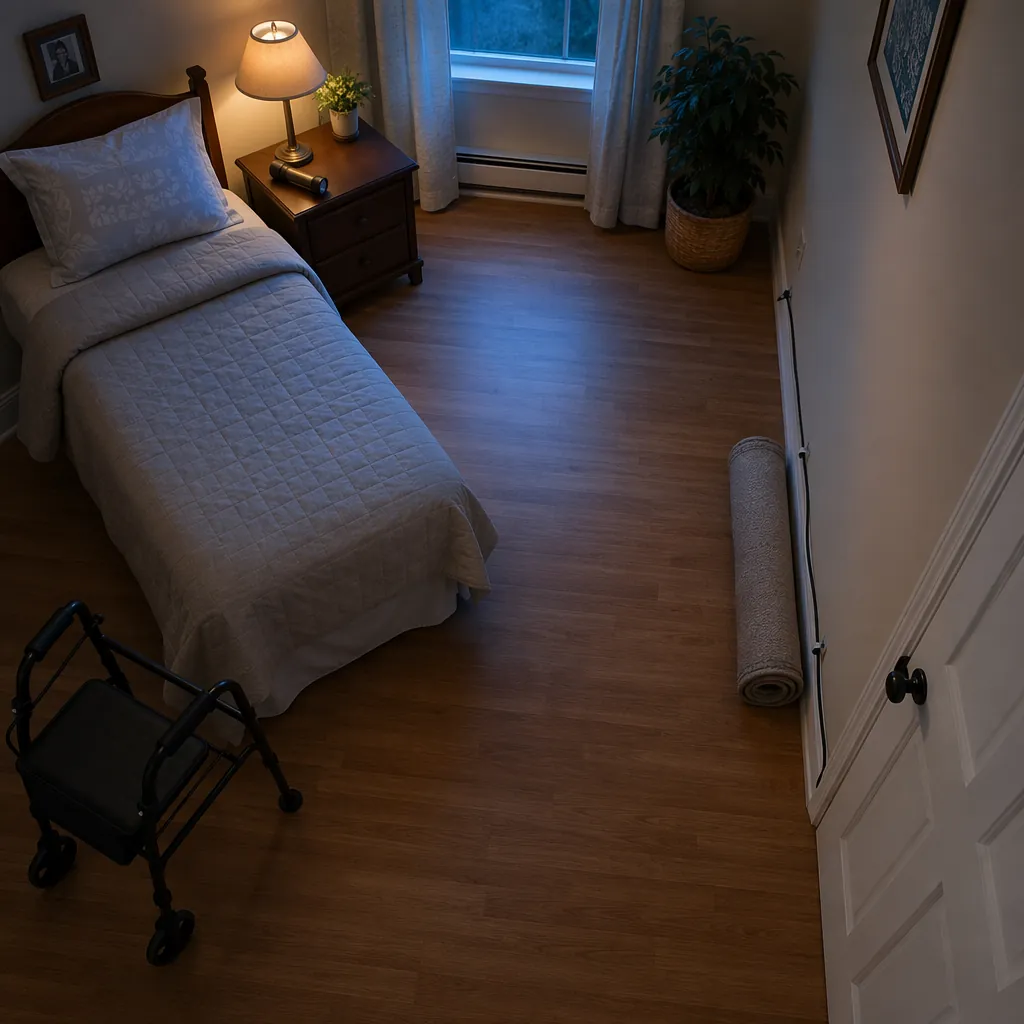
Do this while it is still light. Carry a roll of painter’s tape or gaffer tape, a small trash bag, spare batteries, and the flashlight the older adult will actually use. If a walker, cane, or rollator is part of daily life, keep it in the audit. A clear path that only works without the mobility aid is not a clear path.
| Room | Pre-storm fall-prevention actions |
|---|---|
| Bedroom | Put a working flashlight within arm’s reach of the bed; clear the bed-to-door path; remove or tape rugs; keep glasses, shoes, cane, walker, and phone in predictable places; avoid placing backup batteries or power stations beside the bed path. |
| Bathroom | Check grab bars; use non-slip surfaces; place a battery light or motion-sensor backup light; clear the toilet and sink approach; keep towels, bath mats, and laundry off the floor. |
| Hallways and stairs | Install or test battery-powered hallway and stair lights; make sure handrails are secure; tape cords along baseboards; remove shoes, pet bowls, baskets, and folded walkers from the route. |
| Living room | Remove or tape throw rugs; keep flashlight and phone charging stations off the floor; route emergency cords along walls; choose a safe chair with a clear path to the bathroom. |
| Kitchen | Clear the counter approach; keep a manual can opener and no-cook food reachable; do not place coolers or water jugs in the walkway; keep pet supplies out of foot traffic. |
| Coolest or warmest room | Choose the room before the outage; set up seating, water, blankets or cooling supplies without blocking the entrance; keep the route from bedroom to this room simple. |
PowerOutage.us and Keystone Health both emphasize practical room preparation for older adults, including bedside flashlights, clear paths, backup lighting, non-slip bathroom surfaces, secure handrails, and keeping emergency supplies reachable without blocking movement.[4][5] The important word is reachable. A flashlight in a kitchen drawer does not help the person sitting on the edge of the bed in the dark.
Bedroom first, because nighttime movement starts there
Start at the bed and pretend the power has already failed. Can the older adult reach a flashlight without standing? Can they put on stable shoes or slippers without crossing the room? Is the cane or walker close enough to use, but not parked where a foot will hit it?
The path from bed to door should be boring: no laundry basket, no decorative bench, no oxygen tubing or charging cord crossing the middle, no rug edge waiting to curl. If a backup battery must be in the bedroom, put it against a wall and tape the cord down along the baseboard. If the bed is high, low, or crowded by furniture, fix that before the storm, not after the first bathroom trip.
Bathroom: make the landing zone obvious
Bathrooms are unforgiving in an outage because they combine hard surfaces, small turns, water, and urgency. Check grab bars by putting weight on them. A towel bar is not a grab bar. Make sure the route to the toilet is open enough for the person’s usual gait or mobility aid, and remove bath mats that slide or bunch.
A small battery-powered light near the bathroom entrance is worth more than a bright lantern left on the sink if the older adult has to cross a dark hallway to reach it. If supplies are being staged in the bathroom because it has interior walls or no windows, keep them under a counter or against a wall, not in the turning space.
Hallways and stairs need edges, not clutter
Hallways become harder when the lights fail because there is less visual information to tell where the wall ends, where the floor changes, or where the first stair begins. Test battery stair lights before storm season. Put fresh batteries in the ones that matter. Tug on handrails and tighten what moves.
Then look down the hall for the things families tend to move during storm prep: a case of water, a folded camp chair, a pet carrier, a cooler, a charging cord from the wall to a power bank. If it narrows the path or creates a line across it, move it. If the cord has to stay, tape it along the wall, not diagonally across the walking route.
Living room: pick the safe chair before anyone is tired
The living room often becomes command central during an outage. Phones charge there. Coolers appear there. Flashlights, radios, blankets, and battery packs spread out there. That is exactly why it needs a rule.
Choose one safe chair where the older adult can sit during the worst of the outage. It should be stable, easy to rise from, close to a light source, and on a clear route to the bathroom. Do not choose the softest low chair in the room if standing from it takes two tries. Put the charging station beside a wall or on a table. Keep the flashlight on the table, not on the floor. If there is a throw rug between the chair and the bathroom, remove it or tape every edge.
Kitchen: do not let supplies occupy the walking lane
The kitchen should be set up so no one needs to hunt. Keep no-cook food, water, and a manual can opener at waist-to-shoulder height if possible. Clear the approach to the counter and sink. If a cooler comes out, give it a parked location outside the walking lane. A cooler in the hallway may feel convenient when someone sets it down. At night, it is furniture nobody remembers.
This is also where good intentions create cords. If phones, lanterns, fans, or power stations are charging before the outage, route every cord along a wall. Tape it before the storm arrives. Nobody tapes cords neatly after the house is dark and the weather radio is talking.
The coolest or warmest room is part of the fall plan
Temperature planning is usually discussed as heat illness or hypothermia prevention. For fall prevention, it matters because heat and cold can also affect balance, reaction time, and judgment. Ready.gov advises older adults to plan for disasters with attention to support needs, supplies, and local resources; the same planning should include where the person will sit if the home becomes too hot or too cold.[3]
Pick the coolest room for a summer outage or the warmest safe room for a winter outage. Set it up without blocking the entrance. If indoor conditions become unsafe, call 211, check the county emergency management site, or use local alerts for cooling centers, warming centers, or shelter information. There is no single national shelter path that works everywhere, and the right answer is usually local.
When the lights go out: the dark-navigation plan
The first rule is to stop. Not for long. Just long enough for the older adult to get both feet flat, orient to the room, and put a hand on something stable before standing. The CDC’s power outage guidance emphasizes using flashlights rather than candles and taking practical steps to avoid injury during outages.[6] For fall prevention, that means light comes before movement.
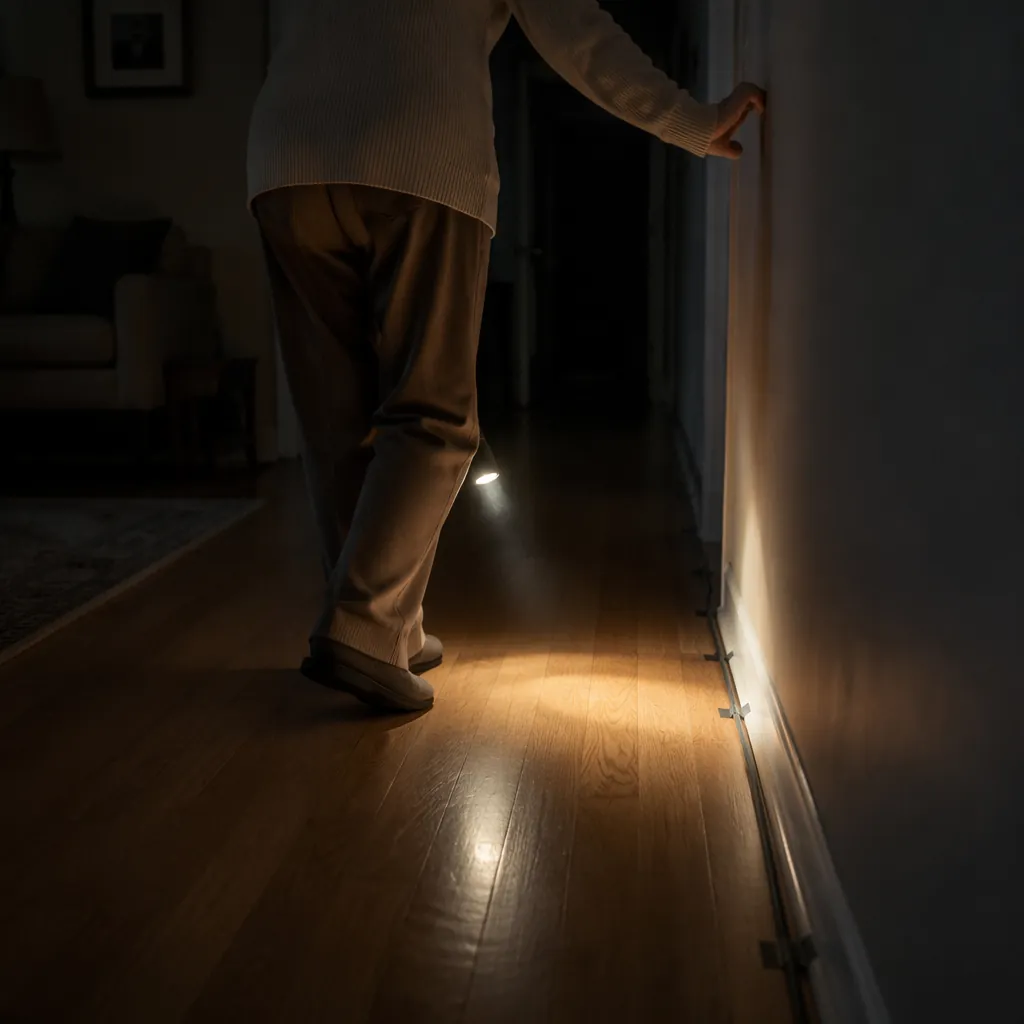
- Pause before standing. Sit at the edge of the bed or chair, place both feet on the floor, and wait for dizziness or confusion to pass.
- Turn on the flashlight before the first step. Aim it low enough to show the floor, not just straight ahead.
- Slide feet instead of taking high steps. Sliding helps detect objects early and reduces the chance of catching a toe on a rug edge, cord, or misplaced supply.
- Keep one hand free. Do not carry a cooler, lantern, phone, and water bottle at the same time. Ask someone else to move supplies.
- Use walls, counters, and handrails for orientation. Do not use rolling chairs, towel bars, tray tables, or stacked supplies for support.
- Return to the safe chair. Once urgent needs are handled, the older adult should not roam from room to room checking on the outage.
NCOA’s emergency preparedness guidance for older adults stresses planning ahead, communicating needs, and preparing supplies before disaster conditions arrive.[7] In the house, that planning should show up as fewer decisions in the dark. The senior should know which chair to use, which flashlight to reach for, which route to take to the bathroom, and which areas are off-limits until lights return.
Give emergency gear a parking rule
Every outage household needs one blunt rule: nothing new goes in the walking path. Not for a minute. Not because someone is “just setting it down.” The first confused minutes after a power cut are exactly when people drop flashlights, drag coolers into hallways, stretch cords to charge phones, and turn a prepared home into an obstacle course.
| Item | Better location | Fall-prevention rule |
|---|---|---|
| Flashlight | Nightstand, side table, wall hook, or basket on a table | Never leave it on the floor. |
| Phone or battery pack | Table or counter against a wall | Cord runs along the wall and is taped if it reaches the floor. |
| Cooler | Kitchen corner, under a table edge, or another agreed parking spot | Never in a hallway, doorway, or bathroom route. |
| Portable power station | Ventilated spot against a wall | No cord crosses the main walking route. |
| Lantern | Stable table, counter, or shelf | Do not place it at ankle height. |
| Pet bowls and supplies | Out of the bedroom-bathroom route | Move them before dark, not after someone trips. |
If more than one person lives in the home, assign the gear-moving job to someone with steadier mobility. The older adult should not be the person stepping around cords to solve the cord problem.
A firm generator warning that belongs outside the walking plan
Portable generators are not indoor equipment. The American Red Cross says generators should be kept outside, away from doors, windows, and vents, and Ready.gov states they should be used at least 20 feet away from windows, doors, and attached garages to reduce carbon monoxide risk.[8][9] Do not run a generator in a garage, on a porch, in a breezeway, or near an open window.
From a fall-prevention point of view, the generator also creates cord decisions. Extension cords should not cross the senior’s walking path. If the safe way to power something requires a cord through the hallway, that setup is not safe for a person who may need to walk in darkness.
What this checklist does not try to cover
Falls deserve their own outage plan, but they are not the only outage risk. If the older adult uses oxygen, CPAP, a hospital bed, a powered lift chair, a stair lift, refrigerated medication, or any device that cannot simply wait for the grid to come back, use a medical-device plan alongside this checklist. The more general guide to keeping older adults safe during a power outage covers broader outage risks, and the guide to power outage preparedness for elderly people with medical equipment is the better place to handle backup power and device-specific planning.
Utility medical baseline or priority restoration programs can also be worth checking, but they vary by utility and state. Registering may help with notifications or planning; it should not be treated as a guarantee that power will return before the home becomes unsafe.
Printable storm outage fall-prevention sequence
Use this as the short version to repeat each storm season. If the home has not had a full baseline fall-prevention review, start with a room-by-room fall prevention checklist for caregivers, then add this outage layer before storms.
- Before the storm, place a working flashlight within arm’s reach of the bed and another near the safe chair.
- Clear the bedroom-to-bathroom route, including rugs, cords, laundry, pet bowls, and emergency supplies.
- Check bathroom grab bars, non-slip surfaces, and a battery light near the entrance.
- Test hallway and stair lighting, tighten handrails, and tape any necessary cords along walls.
- Choose the safe chair and keep its route to the bathroom open.
- Park coolers, battery packs, lanterns, and water supplies outside walking lanes.
- Choose the coolest or warmest room and know where to get local shelter information if indoor temperatures become unsafe.
- When the lights fail, pause, turn on the flashlight before stepping, slide feet, keep one hand free, use walls or handrails, and return to the safe chair.
For families building a broader year-round plan, fold this storm routine into a fall prevention action plan using the CDC STEADI framework. The best outage fall-prevention plan is not more gear in the house. It is fewer surprises in the path.
References
- Facts About Falls, CDC
- How Power Outages Affect Older Adults, Medical Guardian
- Older Adults, Ready.gov
- Power Outage Preparedness for Seniors & Elderly, PowerOutage.us
- Emergency Preparedness for Seniors, Keystone Health
- What to Do to Protect Yourself During a Power Outage, CDC
- Emergency Preparedness 101: What to Do Before, During and After Disaster, NCOA
- Power Outage Safety, American Red Cross
- Power Outages, Ready.gov
Continue from here
Suggest a correction
We keep this content strictly product-neutral and reviewed against CDC STEADI, NIA, and AARP HomeFit guidance. If something here looks outdated, unclear, or inaccurate, tell us — this page does not carry open public comments, because it touches medical urgency, cost, or capacity-adjacent decisions where a discussion thread is a trust liability rather than a trust asset.
See the correction process on our editorial standards page →