
STEADI: screen
How to Keep Elderly Cool Without AC (and Prevent Falls)
Learn how to keep an older adult cool and fall-free during a heat wave when air conditioning is not available. This guide explains why heat raises fall risk and provides a step-by-step cooling plan addressing dehydration, medication effects, and safe fan use.
Start with the fall risk, not the thermostat
If your parent has no AC and a heat wave is coming, the first question is not only how to keep them comfortable. It is how to keep them steady when they stand up, walk to the bathroom, answer the phone, or cross a dim room after sweating for hours. Keeping an older adult cool during a heat wave without air conditioning is fall prevention.
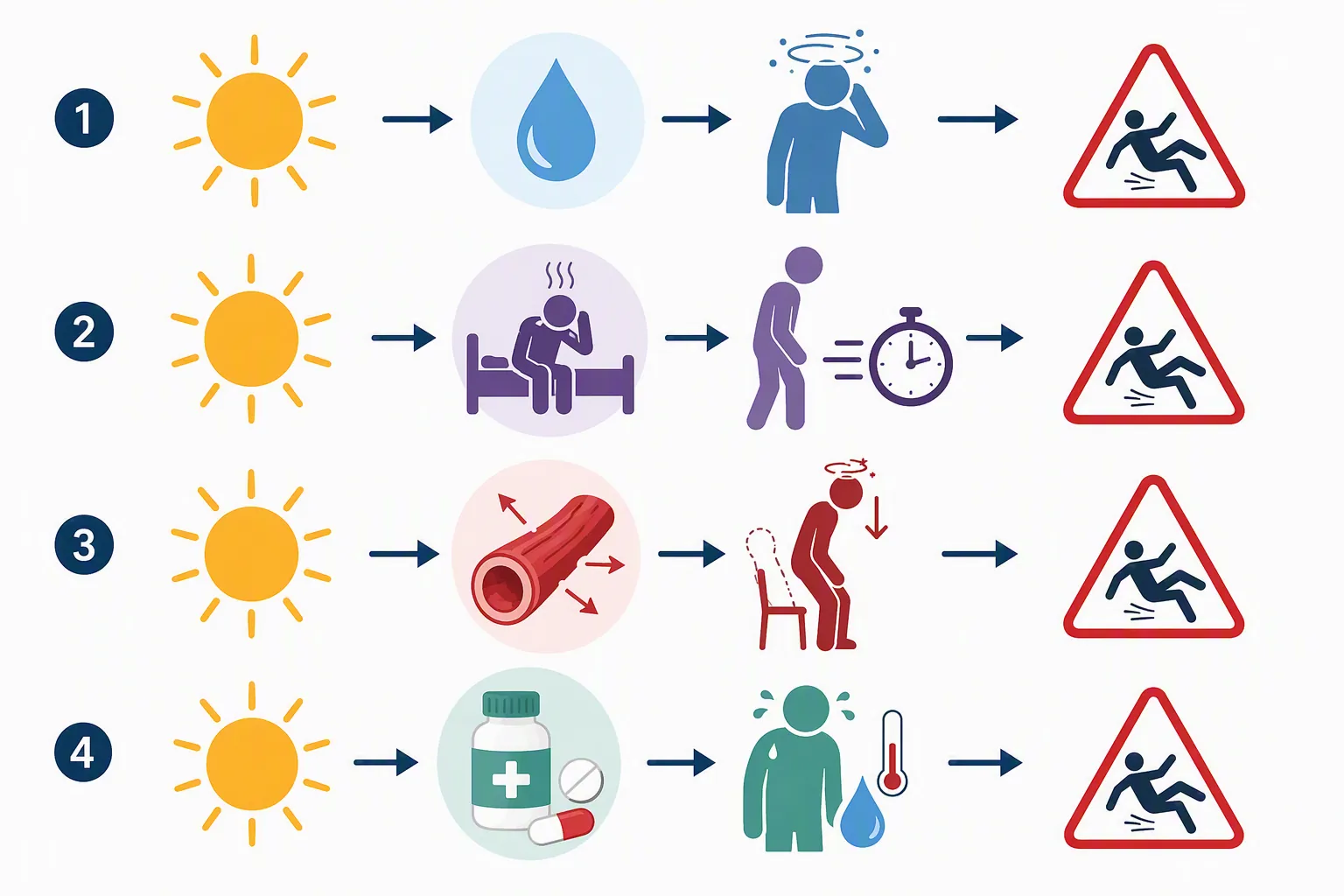
Heat raises fall risk through several ordinary-looking problems that can stack quickly: dehydration can lead to dizziness; fatigue can slow reaction time; heat-related widening of blood vessels can lower blood pressure when an older adult stands; and some medications can interfere with hydration or heat regulation. Injury Matters’ Stay On Your Feet program describes these heat-related pathways as fall risks for older adults, not just comfort issues. [1]
The urgency is not theoretical. The World Health Organization reports an 85% increase in heat-related mortality among adults 65 and older between 2000–2004 and 2017–2021, citing the Lancet Countdown 2023. [2] The American Geriatrics Society notes that nearly 600 Americans die annually from heat-related illness, with most deaths occurring in people over age 50. [3] Those numbers matter because they point to the same practical conclusion: in a hot home, a delay can become dangerous.
The 30-second check-in: drinking, standing, thinking
A caregiver calling during a heat advisory does not need a long interview first. Start with three questions, and listen for the answer behind the answer:
- Are you drinking? Not “Do you have water?” but “What have you had to drink since breakfast?”
- Can you stand safely? Ask whether they felt dizzy the last time they got up, and whether they are using their cane, walker, grab bars, or furniture for balance.
- Are you confused? Listen for unusual sleepiness, trouble following the conversation, repeated answers, or a sudden change from their normal judgment.
This kind of quick check-in matches the practical fall-prevention approach used in senior summer safety guidance: hydration, safer movement, home hazards, and monitoring for heat effects all belong in the same conversation. [4][5]
If the answer to any of the three questions is worrying, do not spend the call collecting perfect details. Have them sit or lie down, keep water within reach if they are allowed fluids, cool the body directly, and arrange for someone to check in person if there is dizziness, confusion, weakness, or unsafe walking. Confusion, fainting, very high body temperature, or symptoms that suggest heat stroke require emergency help; heat stroke may occur with hot, dry skin or with damp skin, so damp skin should not reassure anyone by itself. [6]
A same-day plan for a hot home without AC
The plan is simple on purpose. It reduces heat strain and reduces the number of risky transfers, trips, and decisions an older adult has to make while overheated.
| What to do first | Why it matters for falls |
|---|---|
| Move water, phone, glasses, medications, cooling cloths, and mobility aids within reach. | Less walking across hot rooms and fewer rushed trips to answer calls or fetch supplies. |
| Set a hydration rhythm tied to routine moments, such as waking, meals, medication times, and caregiver calls. | Dehydration can worsen dizziness, especially when standing. |
| Make standing a slow sequence: sit upright, pause, plant feet, stand, pause again, then walk. | Heat-related low blood pressure on standing can turn a normal transfer into a fall. |
| Create one cool corner and make that path clear. | The safest room is not safe if the route has cords, rugs, clutter, pets, or poor lighting. |
| Cool the body directly with damp cloths, cool showers if safe, and pulse-point cooling. | Direct cooling can reduce heat strain without requiring repeated movement around the home. |
| Use fans only within safe limits. | In hotter indoor air, a fan may worsen heat stress instead of reducing it. |
| Flag heat-sensitive medications for clinician or pharmacist review. | Medication effects can change thirst, sweating, blood pressure, alertness, and hydration. |
Put water where the fall risk happens
“Drink more water” is too vague for a heat wave. The safer version is: put drinks within arm’s reach of the chair, bed, and bathroom route; pair drinking with existing habits; and check that the person is actually drinking, not just saying yes because a bottle is nearby.
For an older adult who has fluid restrictions, heart failure, kidney disease, or another condition where fluid intake is medically managed, the caregiver should ask the clinician what to do during heat advisories. Do not override a fluid restriction at home because the day is hot. The useful move is to make the question specific: “During a heat wave, what should we do if she is sweating, dizzy, and drinking less than usual?”
Hydration also changes the layout of the day. If the older adult has to walk to the kitchen every time they need a drink, the cooling plan has already created extra fall exposure. Use a stable side table, a spill-resistant cup if needed, and a clear rule: no rushing to get water after feeling dizzy. Sit first, call first, then move with help if help is available.
Make standing slower than usual
Heat makes quick standing more dangerous. An older adult who has been sitting in a hot room may feel fine until they rise. Then blood pressure can drop, the room can tilt, and the first steps become the problem.
Use a deliberate standing sequence during the hottest hours: sit upright first; place both feet flat; hold the chair arms, walker, or a stable surface; stand; pause before walking; then take the first steps slowly. If dizziness appears, sit back down. Do not “walk it off.” That phrase has put too many people on the floor.
This is also the time to reduce optional walking. Move meals, water, medications, tissues, chargers, and the phone closer to the cool area. If the bathroom is far from the cool corner, clear that route before the hottest part of the day. Night-lights or lamps matter if the person will nap and wake in a dim room.
Treat confusion as a heat and fall warning
Confusion is not just a symptom to write down. It changes what the person can safely do next. Someone who is confused may forget the walker, misjudge the distance to the bathroom, drink too little, open windows at the wrong time, or keep a fan running in unsafe heat because it feels like the right thing to do.
On a check-in call, listen for a change from normal: trouble answering simple questions, unusual irritability, repeated stories, slurred or slowed responses, or not knowing whether they have eaten or drunk anything. If that is new, arrange in-person help promptly. If severe symptoms suggest heat stroke or the person may fall if they stand, call emergency services rather than trying to manage the situation by phone. [6]
Build one cool corner, then make it safe to use
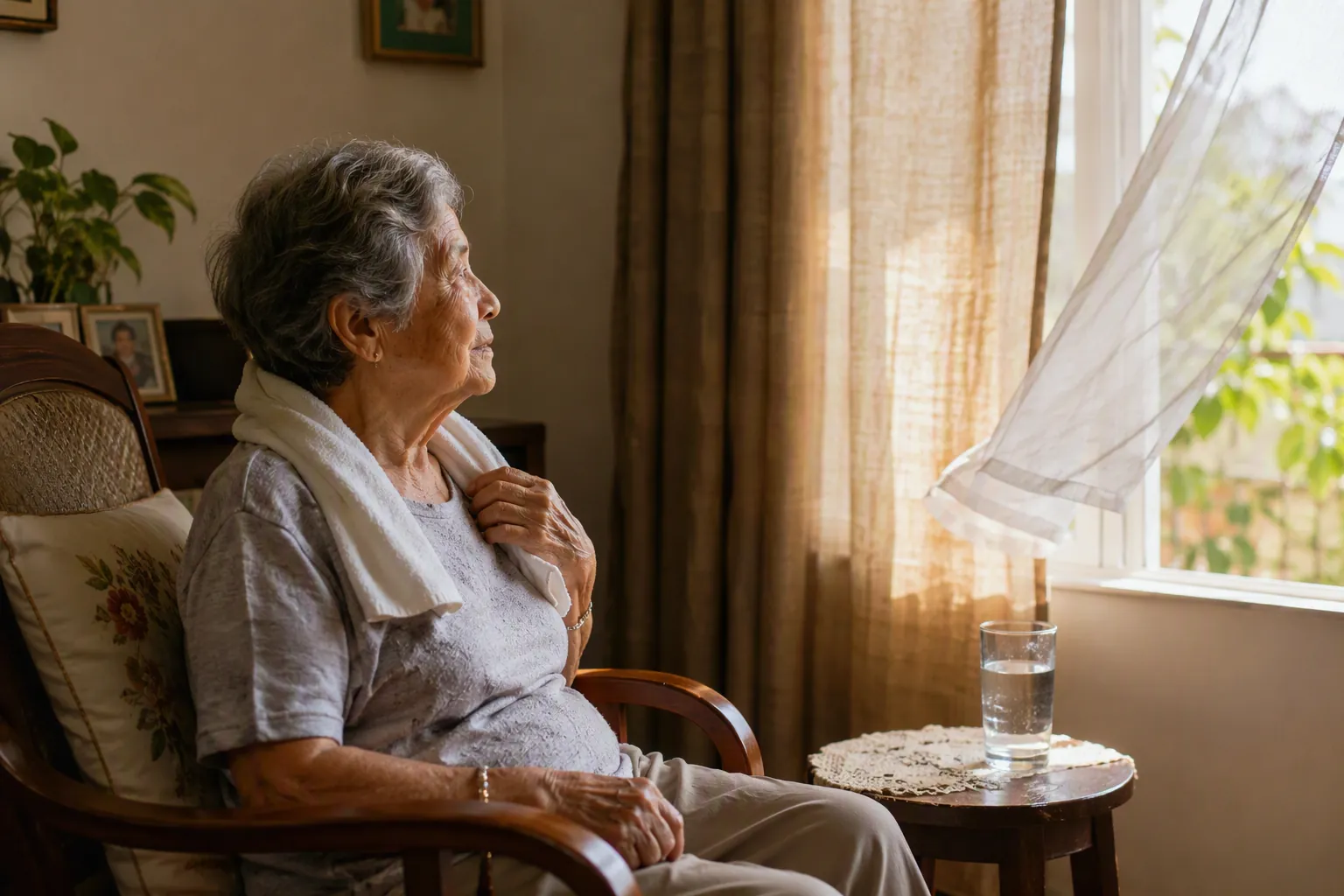
A no-AC home does not need every room improved at once. Pick the coolest usable area and make it the place where the older adult spends the worst hours of the day. Public guidance on staying cool without air conditioning commonly emphasizes blocking sun, using shade, improving airflow when outdoor conditions allow, and cooling the body directly. [7][8]
The best cool corner is usually on the lowest floor, away from direct sun, with curtains or blinds closed against the hottest light. If the outside air is cooler than inside, opening windows to create a cross-breeze may help. If the outside air is hotter, open windows may work against the goal. This is where a cheap indoor thermometer earns its place: guessing by feel is unreliable during a long hot spell.
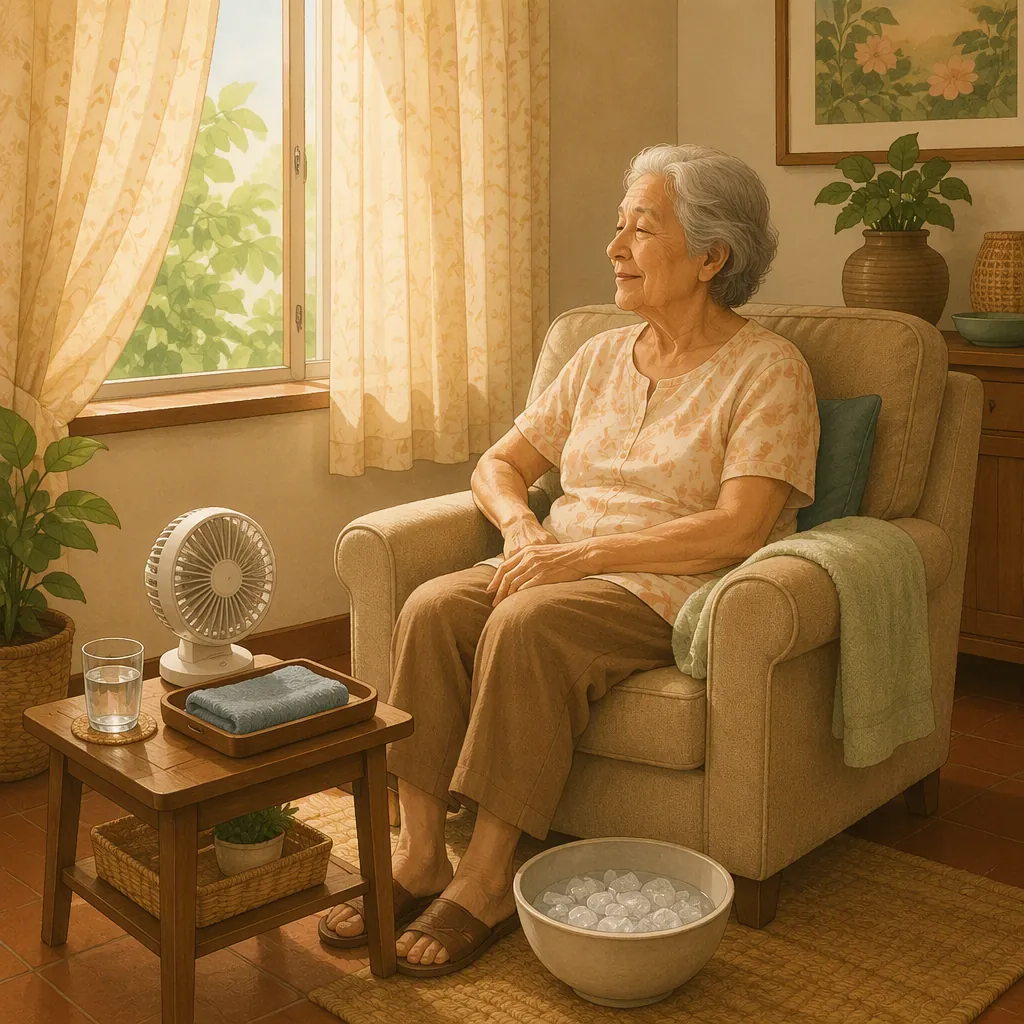
Once the cool corner is chosen, treat it like a fall-prevention zone. Remove throw rugs and cords. Keep the walking path wide enough for the walker or cane actually used. Put the chair where the person can stand with arm support, not from a low soft seat that swallows them. Keep eyeglasses, hearing aids, the phone, and water close enough that getting them does not become a trip across the room.
Low-tech cooling options can help here: damp towels at the neck, wrists, or ankles; a cool shower or sponge bath if the bathroom setup is safe; shaded windows; and a fan with a bowl of ice in front of it when indoor temperature and humidity make fan use reasonable. NPR, PBS NewsHour, and home-care guidance describe these kinds of no-AC cooling tactics, but there is no head-to-head evidence base ranking them specifically for older adults at home, so it is better to use them as practical options rather than pretend one is proven best. [7][8][9]
Fans are not always safer than nothing
This is the part many families miss: a fan is not a safe default in every hot room. CDC guidance for older adults says that when indoor temperature is above 90°F, using a fan can increase body temperature rather than cool it. [10] That is the opposite of the usual household instinct, and it matters most when the person is alone, dehydrated, or already dizzy.
Guidance varies by source; some international guidance uses a higher temperature threshold. Humidity also changes how well fans help because fans cool mainly by increasing evaporation from the skin, and evaporation is less effective in humid air. For a U.S. caregiver making a home decision during a heat wave, the conservative CDC line is the one to use: if the indoor room is over 90°F, do not rely on a fan as the main cooling method.
If a fan is being used below that threshold, use it in a way that reduces walking and heat strain. Place it where the older adult can turn it on or off without bending or crossing the room. Keep cords out of the walking path. Do not aim strong airflow so it dries the eyes or makes the person avoid drinking. If the room gets hotter, change the plan: move to a cooler location, cool the skin directly, call a neighbor or family member, or go to a cooling center if transportation can be arranged safely.
Use direct body cooling without creating a bathroom fall
Pulse-point cooling is useful because it can happen while the person is seated. A damp cloth at the neck, wrists, ankles, or underarms may be easier and safer than repeated trips to the bathroom. Keep a small tray or bowl near the chair, and refresh the cloth during check-ins or caregiver visits.
Cool showers can help, but only if the bathroom is already safe. A slippery tub, no grab bar, poor lighting, or a weak person stepping over a tub wall can turn a cooling tactic into a fall. If the bathroom is questionable, use a seated sponge bath, damp washcloths, or help from another person rather than sending an overheated older adult to shower alone.
Clothing should make cooling easier: light, loose layers; dry clothes after heavy sweating; and shoes or non-slip footwear if the person is walking. Bare feet on slick floors, loose slippers, and wet bathroom tile are not small details during a heat wave.
Medication review is part of the heat plan
Do not stop or change medications because the weather is hot. Do make a same-day list for the clinician or pharmacist if the older adult is dizzy, weak, unusually sleepy, dehydrated, or confused during the heat wave.
Medication classes that deserve a heat-related review include diuretics, antihypertensives, antidepressants such as SSRIs and tricyclic antidepressants, anticholinergics, and antipsychotics. CDC and clinical guidance note that medications can increase heat risk by affecting hydration, sweating, blood pressure, thirst, alertness, or temperature regulation. [10][11][12]
- Ask whether any medication increases dehydration risk or changes how much fluid is safe.
- Ask whether dizziness on standing could be related to blood pressure medication, dehydration, or the combination.
- Ask whether any medication may reduce sweating, reduce thirst, or cause sleepiness or confusion in heat.
- Ask what symptoms should trigger urgent care during a heat advisory.
The caregiver’s job is not to practice pharmacy from the kitchen table. It is to notice the heat pattern, describe it clearly, and get medication-specific guidance before the next dangerous afternoon.
If the heat wave is not a one-time problem
If the home regularly becomes unsafe in summer, the plan has to move beyond damp towels and check-in calls. Ask the local aging services office, utility company, health department, or community organization about cooling centers, transportation, bill assistance, and home cooling support.
The Low Income Home Energy Assistance Program, or LIHEAP, may help eligible households with energy costs or weather-related assistance. The national LIHEAP phone number is 1-866-674-6327. Eligibility, benefits, timing, and funding vary by state, so the practical next step is to contact the state LIHEAP office rather than assume help is guaranteed.
For today, the priority is narrower: check drinking, standing, and confusion; move the person into the safest cool area; cool the body directly; use fans only within safe limits; reduce unnecessary walking; and get medication guidance when heat and symptoms overlap. In a hot home, those are not comfort upgrades. They are the fall-prevention plan.
References
- Supporting older adults to beat the heat, Injury Matters
- Heat and health, World Health Organization, July 2026
- Tip Sheet: Hot Weather Safety Tips for Older Adults, HealthInAging / American Geriatrics Society
- Summer Fall Prevention for Seniors: 10 Safety Tips, WelbeHealth
- How Heat and Humidity Can Impact Senior Safety at Home, Oakley Home Access
- About Heat and Your Health, CDC
- Keep cool in extreme summer heat without air conditioning, NPR, July 2026
- How to stay cool and safe in a heat wave, even without air conditioning, PBS NewsHour
- Senior Comfort in Warmer Months: Beyond the Fan Myth, PreferHome
- Heat and Older Adults (Aged 65+), CDC, July 2026
- How Seniors Can Stay Safe in Summer, Brown Health
- Staying Safe in Summer Heat: Essential Tips for Seniors, Flagship Health
Related reading
Noticed something outdated or inaccurate on this page? Flag a correction. We review every report against CDC, NIA, and AARP HomeFit guidance before updating a page.
Part of the Fall Prevention section.