
STEADI: intervene
Know When to Keep Your Elderly Parent Away from Tornado Cleanup
Decide if it's safe for your elderly parent to be near the cleanup zone after a tornado, using a three-tier framework based on mobility, damage, and health stability. Learn when to keep them away, allow supervised presence, or permit light tasks.
The hard part is often not the debris. It is the moment your parent says, “I just want to see the house,” and everyone looks at you as if one careful walk through the yard would settle things.
After a tornado, that walk may not be careful enough. The driveway that looked familiar yesterday may now have glass in the mud, nails in the grass, a loose gutter overhead, a power line you did not notice, or a porch step that shifted just enough to catch a walker wheel. If your elderly parent uses a cane, walker, wheelchair, oxygen, medications that affect balance, or help from another person, the question is not how they can help with cleanup. The first question is whether they belong anywhere near the cleanup zone.
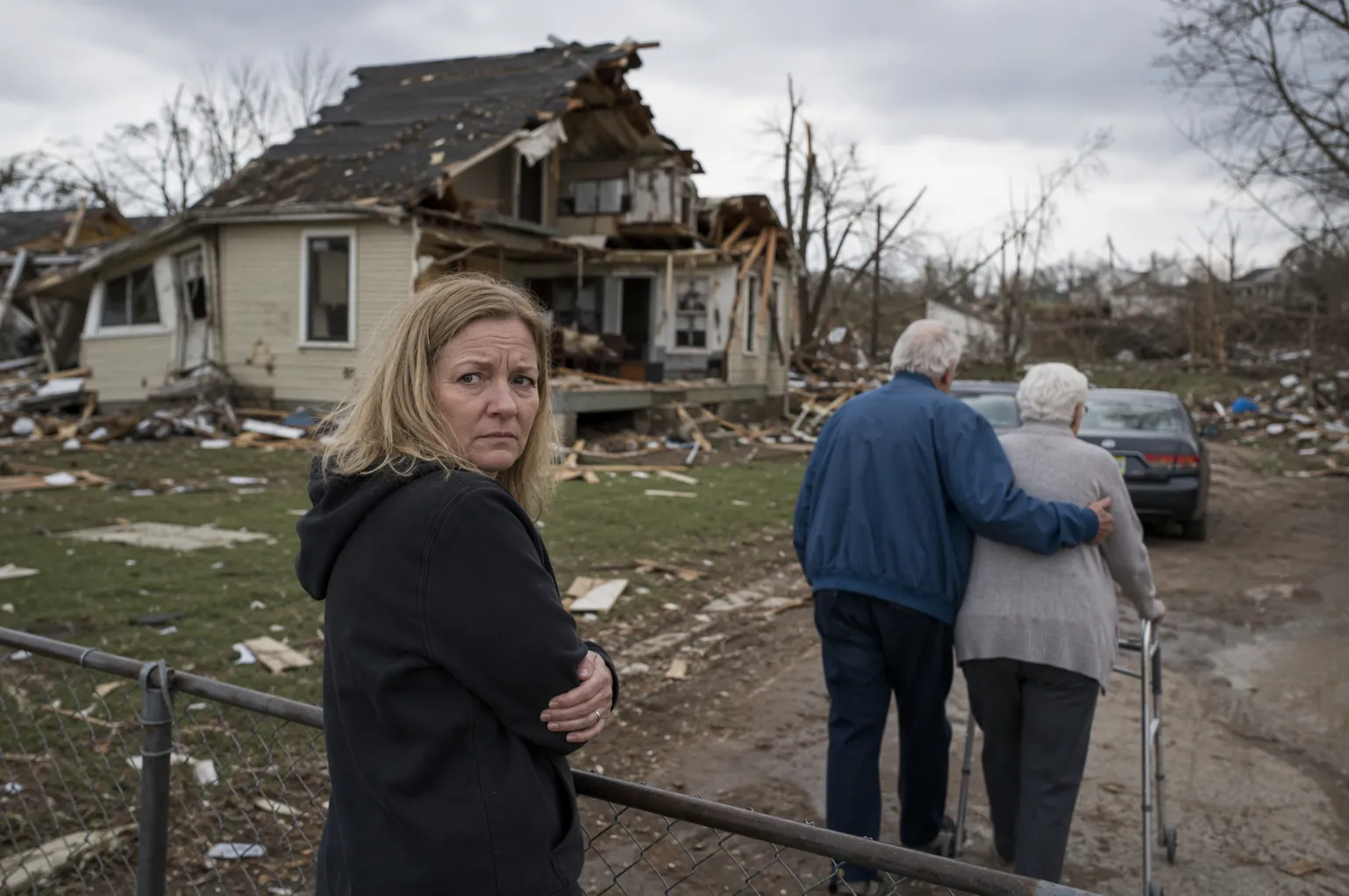
You are allowed to say no before you have a perfect alternative plan. You are allowed to disappoint a scared parent while you gather facts. CDC tornado guidance says not to enter a damaged building until local authorities determine it is safe.[1] For an older adult with fall risk, that same standard should be applied more widely: not just the living room, but the porch, side yard, driveway, garage entrance, and property line where the family is “only going to look.”
This is not about treating your parent like a child. It is about recognizing that tornado damage changes the walking surface, the lighting, the handholds, the exit routes, and the speed at which help can reach them. A younger adult may step over a board and keep moving. An older adult may catch a toe, reach for a railing that is no longer anchored, and turn a two-minute visit into an ambulance call.
Start With The Property, Not The Parent’s Good Intentions
Most families start in the wrong place. They ask whether Dad will promise to be careful, whether Mom can sit in a chair and supervise, or whether the visit would make them feel better. Those questions matter emotionally, but they cannot answer the safety question.
The safer starting point is blunt: has someone competent determined that the damaged structure and the area around it are safe enough for an older adult to approach? If the answer is no, your parent stays away. If the answer is “I think so,” that is still no.
Post-tornado injuries are not limited to dramatic hazards. AIHA’s tornado recovery guidance points to hazards such as stepping on nails and being struck by falling objects.[2] Those are exactly the hazards that become harder to avoid when someone has reduced vision, slower reaction time, neuropathy, balance problems, or a device that needs a clean, level path.
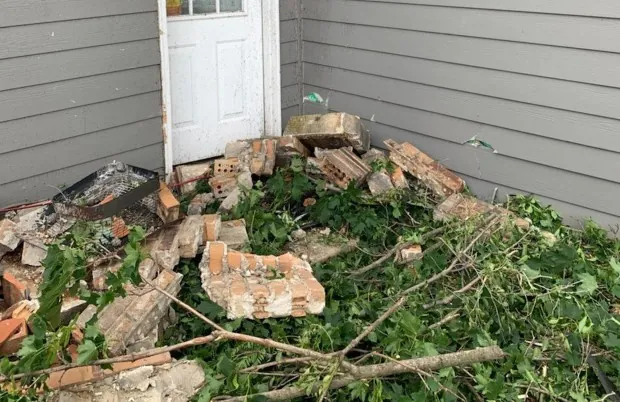
There is not a good public statistic that tells us how many older adults fall specifically during tornado cleanup. That gap should make caregivers careful about overclaiming, not casual about the risk. The available guidance still points in the same direction: damaged buildings, scattered debris, disrupted support, and delayed assistance all make ordinary mobility problems more dangerous.
The Three Questions That Decide Whether Your Parent Stays Away
Use three factors before you allow any presence near the cleanup area: mobility, damage, and health stability. This is not a medical scoring tool. It is a caregiver’s triage method for a chaotic day.
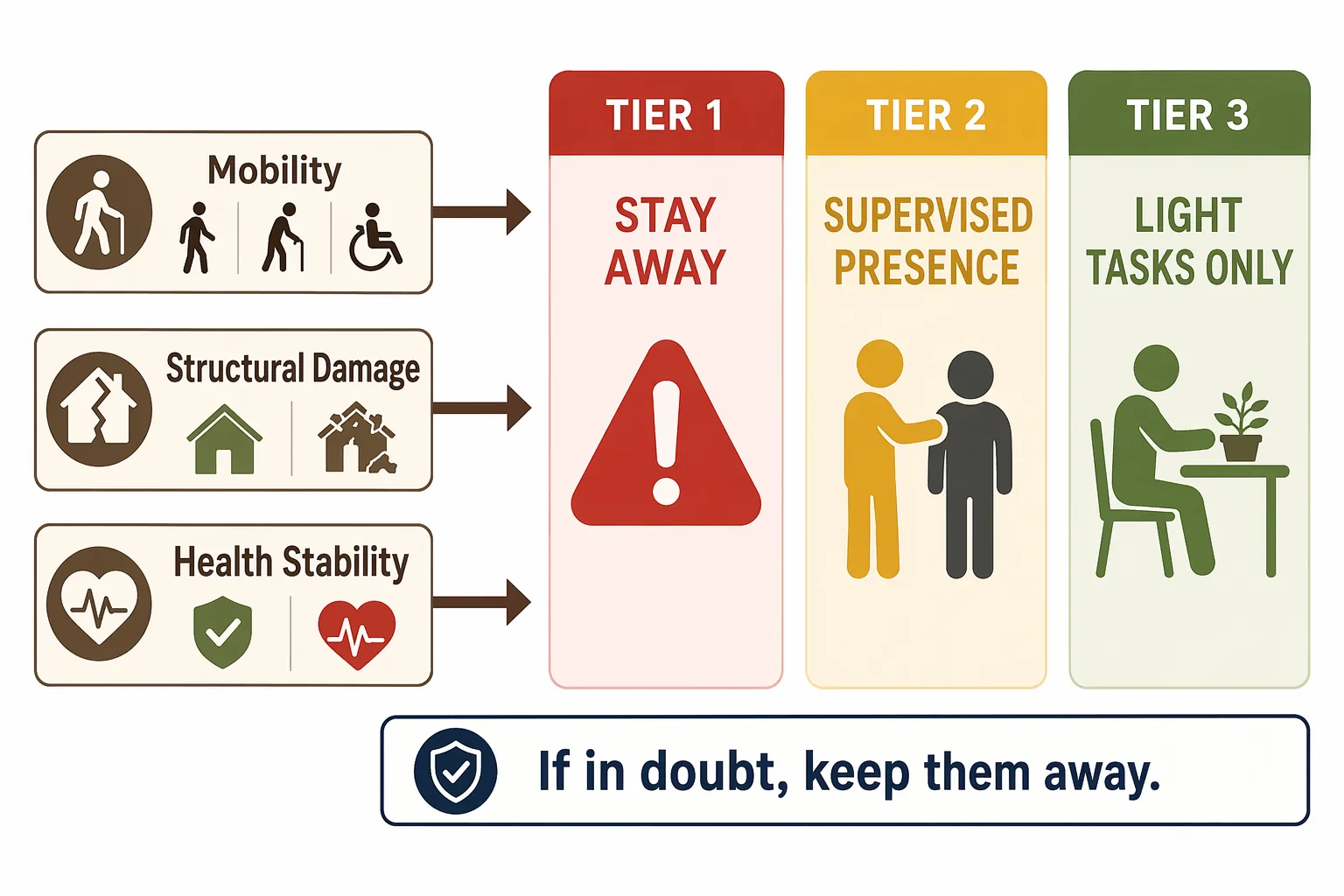
| Factor | What You Are Really Asking | If You Cannot Answer Confidently |
|---|---|---|
| Mobility | Can they move safely on an uneven, debris-filled surface without grabbing unstable objects or rushing? | They stay away. |
| Damage | Has the building and immediate outdoor area been judged safe enough to approach? | They stay away. |
| Health stability | Can they tolerate stress, heat or cold, missed routines, medication timing changes, and delayed help? | They stay away. |
Mobility: Can They Recover From A Bad Step?
Do not ask only whether your parent can walk. Ask what happens when the surface surprises them. Can they step over a hose, broken limb, or loose board without looking down for several seconds? Can they turn around in a narrow path? Can they keep both hands free, or do they need one hand on a cane, walker, railing, wall, or another person?
A cane user may be able to manage a cleared sidewalk but not a lawn with hidden debris. A walker user may be steady indoors but unsafe on gravel, mud, buckled flooring, or a threshold with splintered trim. A wheelchair user may be trapped by soft ground, broken ramps, blocked exits, or a van route that cleanup trucks now occupy.
The Red Cross has reported that older adults who depend more heavily on assistive devices and caregiver support face heightened disaster risk, and that risk continues after the storm when support systems are strained.[3] That matters during cleanup because the caregiver who usually steadies Mom at the step may be carrying plywood, talking to an adjuster, or trying to keep a generator dry.
If your parent cannot move safely without your full attention, they should not be in a place where your attention will be split. That is especially true when more than one person is giving instructions, tools are moving, and no one has a clear view of the ground.
Damage: Has The Area Actually Been Cleared, Or Just Looked At?
There is a big difference between “the house is still standing” and “this is safe for an elderly person to enter.” Cosmetic damage may still leave nails in the driveway, insulation in the air, wet flooring, broken glass in carpet, or a refrigerator leak after the power has been out. Structural damage may not be obvious to a family member standing in the yard.
Keep your parent away entirely when any of these are true:
- Authorities have not cleared the damaged building for entry.
- There are downed lines, gas odor, standing water near electrical equipment, or visible structural shifting.
- The porch, ramp, garage entrance, or main walkway is blocked, loose, wet, muddy, or poorly lit.
- Debris is still being moved overhead, dragged across paths, or piled near the entrance.
- No one has walked the route slowly enough to check for nails, glass, splinters, holes, and unstable handholds.
The yard counts. The side door counts. The place where your brother says, “Just stand here for a second,” counts. If the only safe plan depends on your parent not looking down, not shifting weight, not reaching for anything, and not becoming upset, it is not a safe plan.
Health Stability: Will Cleanup Conditions Turn A Small Problem Into A Crisis?
A parent who is medically stable at breakfast may not stay stable through a tornado cleanup visit. Stress, heat, cold, dehydration, missed meals, delayed medications, poor sleep, pain, and fear all affect balance and judgment. If the power is out, the risk changes again for anyone who relies on powered medical equipment, refrigerated medication, oxygen equipment, powered mobility devices, or a lift chair.
NCOA emergency preparedness guidance recommends that older adults have both shelter-in-place and evacuation plans.[4] After tornado damage, the evacuation plan may be the cleanup safety plan: move your parent to a safer location first, then deal with property decisions.
Also ask how quickly help could arrive if something goes wrong. Oklahoma State University Extension advises older adults to identify ahead of time how long it may take for mobility assistance to arrive during severe weather planning.[5] After a tornado, that wait may be longer because roads are blocked, responders are stretched, elevators may be down, and neighbors who normally help may be dealing with their own damage.
If your parent has new dizziness, shortness of breath, confusion, weakness, low intake, uncontrolled pain, unstable blood sugar, missed medication, recent hospitalization, or a recent fall, do not bring them to the cleanup area to “boost morale.” Their body is already spending its margin.
The Three Access Decisions
Once you have looked at mobility, damage, and health stability, choose one of three decisions. Do not negotiate your way up a tier because your parent is upset. Move up only when the conditions actually change.
Tier 1: Stay Away Entirely
This is the default immediately after a tornado and anytime you are unsure. It means your parent does not enter the home, walk the yard, sit on the porch, wait in the car beside active cleanup, or stand near people carrying debris.
Choose stay away entirely when:
- The building has not been cleared for entry by appropriate authorities or qualified professionals.
- The path from car to door is uneven, wet, cluttered, dim, or still changing.
- Your parent uses a walker, wheelchair, oxygen, or hands-on assistance and the route is not fully clear.
- Your parent is tired, dehydrated, confused, emotionally overwhelmed, dizzy, short of breath, or off their medication schedule.
- Cleanup workers, relatives, chainsaws, ladders, generators, vehicles, or falling debris are active nearby.
This decision may feel harsh because the house may hold your parent’s marriage, photographs, recipes, tools, holiday boxes, and the exact corner where a grandchild learned to walk. Letting them see that loss too early does not make them safer or more in control. It may simply place them inside the danger before anyone has had time to reduce it.
Tier 2: Supervised Presence Only
Supervised presence is not cleanup help. It is a short, controlled visit with one purpose: to let your parent see something specific, retrieve an essential item if someone else can safely get it, or participate in a limited decision without being exposed to active hazards.
This tier may be reasonable only when the building and route have been cleared, debris has been removed from the walking path, lighting is adequate, the weather is tolerable, your parent is medically stable, and one adult is assigned to your parent alone. That person is not also carrying boxes, taking photos for insurance, handling pets, moving branches, or answering the contractor’s questions.
Set the visit before the car door opens:
- Name the exact route: for example, from car to cleared front walk to a stable chair.
- Name the time limit: short enough that fatigue does not become the deciding factor.
- Name the purpose: one room viewed from the doorway, one item identified, one decision made.
- Name the stop signs: dizziness, anger, tears, heat stress, pain, confusion, or a change in the site.
If your parent argues for “just one more minute,” do not make the safety call while everyone is tired and standing in debris. The limit was set when you were thinking clearly. Use it.
Tier 3: Light Tasks Only
Light tasks are appropriate only after the environment has already been made safe. They are not a way to make an unsafe site feel inclusive. The task should be seated, short, away from debris, and easy to stop without leaving anything half-done that pressures your parent to continue.
Better tasks include identifying family photos from a clean table, making a list of missing medications, choosing which documents matter most, calling relatives from a safe location, or sorting clean items after someone else has removed them from the damaged area. Poor tasks include sweeping, picking through piles, carrying damp boxes, watching children near cleanup, holding a flashlight on uneven ground, or “supervising” from a folding chair in the driveway while work happens around them.
If your parent wants a role, give them one that does not depend on balance, speed, or pain tolerance. Feeling useful should not require standing where nails, glass, mud, and stress are doing the testing.
What To Watch For During The First 72 Hours
If your parent was present during the tornado, returned to the property afterward, or spent even a short time near cleanup, keep a close watch for the next few days. A fall risk does not always announce itself at the curb. It may show up later as exhaustion, dehydration, poor sleep, skipped medication, shakier transfers, or a slower walk to the bathroom.
Watch for:
- New unsteadiness, furniture-walking, shuffling, or hesitation at thresholds.
- Dizziness when standing, unusual sleepiness, confusion, or new irritability.
- Missed doses, double doses, lost medications, or medication taken without enough food or water.
- Reduced fluid intake, heat exposure, sweating, headache, or weakness.
- Pain they minimize, especially hip, back, shoulder, wrist, or head pain after a stumble.
If there was an actual fall, near fall, or suspected injury, use a more detailed first-response plan such as Your Parent Just Fell: A Caregiver's Guide to the First 72 Hours. If the tornado caused a power outage and your parent depends on powered medical equipment, refrigerated medication, or charging for mobility devices, move quickly to a 72-hour power outage plan for medically dependent seniors. Hot weather deserves the same seriousness because dehydration and heat stress can make falls more likely; use a senior heat preparedness plan if temperatures are part of the problem.
Move Them Somewhere Boring And Safe
A safe relocation does not need to be elegant. It needs a working bathroom, clear walking paths, medication access, power if medically needed, a place to sleep, and someone who knows what your parent needs help with. A relative’s house, hotel, respite option, or community shelter may all be better than sitting beside a damaged home because no one wants to say the visit is over.
If family is hosting your parent during cleanup, treat that home as a temporary fall-prevention site, not just a spare bedroom. Clear cords, check bathroom access, set up night lighting, and decide who handles medication timing. A practical elderly guest safety guide can help the host prepare without turning the whole house upside down.
Broader disaster data also supports taking relocation seriously. Caring.com, citing FEMA data, reports that 2 in 3 Hurricane Ian fatalities were adults age 60 and older.[6] A hurricane is not a tornado, and that figure is not a tornado-cleanup fall statistic. But it does underscore a larger point caregivers already recognize at the kitchen-table level: disaster conditions magnify vulnerabilities that may be manageable on an ordinary day.
When Family Judgment Is Not Enough
Call in help when the safety question depends on expertise you do not have. A building inspector or other qualified local professional should address structural safety before anyone treats the home as usable. Utility professionals should handle suspected gas, electrical, and power-line hazards. Cleanup crews may be needed when debris removal itself creates risks that family members cannot control.
For the older adult’s return, an occupational therapist or home safety professional can look at the practical details families miss: transfer points, bathroom access, lighting, temporary ramps, threshold height, device storage, and whether the parent’s usual walking route still works. If you are unsure what that kind of evaluation includes, start with this guide to professional home safety assessments for older adults.
This article is not medical, legal, financial, or structural advice. If your parent has new symptoms, a possible injury, a device failure, medication interruption, or unsafe housing conditions, contact the appropriate medical, emergency, utility, insurance, or building professional for your area.
Use The Cleanup Checklist After The Access Decision
Once your parent is kept away, cleared only for supervised presence, or limited to safe seated tasks, the cleanup plan can become more practical. Use Helping Elderly Parents Avoid Falls After a Tornado for the step-by-step fall-prevention checklist after the access decision is made.
After a tornado, protecting an elderly parent may mean refusing the visit they want most. That refusal is not a family failure. It is the safety decision that keeps one bad step from becoming the next emergency.
References
- Stay Safe After a Tornado, CDC
- Tornado Recovery Hazards, AIHA
- New Research: Older Adults More Vulnerable After Disasters, American Red Cross, 2020
- Emergency Preparedness 101: What to Do Before, During, and After Disaster, NCOA
- Older Adults and Planning Ahead for Severe Weather, Oklahoma State University Extension
- Older Adults at Risk: Preparation for Extreme Weather Events, Caring.com
Related reading
Noticed something outdated or inaccurate on this page? Flag a correction. We review every report against CDC, NIA, and AARP HomeFit guidance before updating a page.
Part of the Fall Prevention section.