
STEADI: intervene
Why Extreme Heat Makes Falls More Likely and How to Prevent Them
Learn how extreme heat directly increases fall risk in older adults through dehydration, medication interactions, and fatigue, and discover a three-point prevention plan to keep them safe at home during hot weather.
Yes: extreme heat can make an older adult more likely to fall, even inside the house. Protecting an older adult from extreme heat at home starts with three linked pathways: dehydration can cause dizziness and poorer blood flow to the brain; common medications can make it harder to sweat, stay hydrated, or keep blood pressure steady when standing; and heat fatigue can slow balance, judgment, and reaction time.
That matters because most falls do not happen while someone is calmly sitting under a vent. They happen during transitions: getting out of bed, crossing a hallway to the bathroom, standing at the stove, turning on stairs, or deciding whether to keep walking after feeling lightheaded. Heat makes those moments less forgiving.
The broader heat numbers are not small. A Harvard Chan School analysis of 73.7 million Medicare beneficiaries found that heat waves produce about 17,600 extra deaths per year among Americans age 65 and older, with Black older adults facing three times higher mortality; much of the excess mortality was linked to cardiovascular events and Alzheimer’s complications, both of which overlap with the same vulnerability pathways caregivers see at home: blood pressure instability, impaired judgment, and reduced physical reserve.[1]
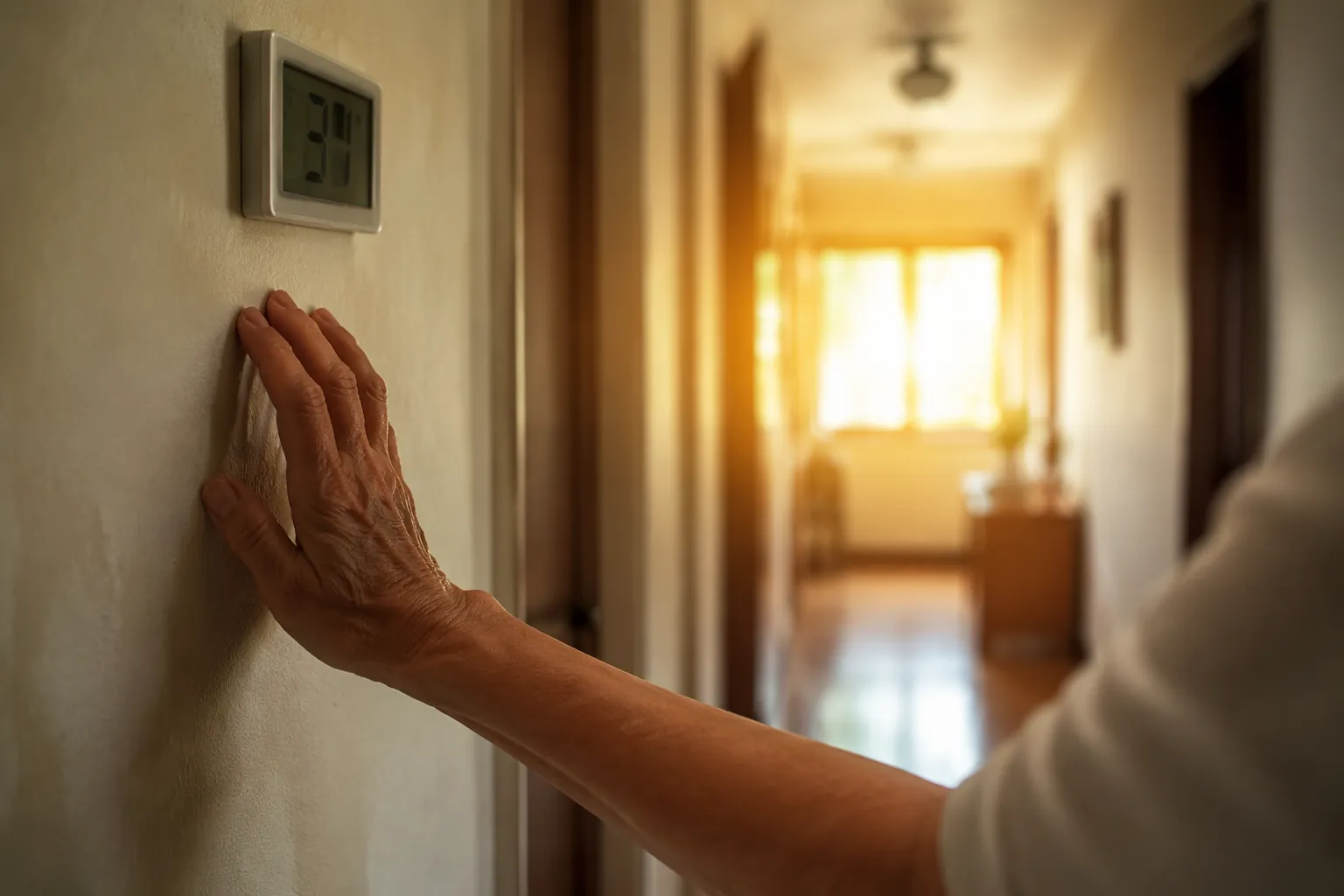
Why heat turns ordinary movement into a fall risk
The first pathway is dehydration, and it is easy to underestimate because thirst is a late and unreliable alarm for many older adults. During hot weather, the body loses fluid through sweating and faster breathing. If fluid is not replaced, blood volume can drop. When the person stands, blood pressure may fall instead of adjusting quickly. The result can be dizziness, faintness, blurry thinking, or a few seconds of unsteadiness at exactly the wrong time.
Fall-prevention advice often says “watch for clutter,” which is still true. But a clear hallway does not solve the problem if someone stands up from a chair, gets lightheaded, and reaches for a wall that is not there. Injury Matters describes the chain plainly: heat can contribute to dehydration, dehydration can contribute to orthostatic hypotension, and orthostatic hypotension can contribute to falls.[2]
The second pathway is medication interaction. This is where vague heat advice becomes concrete. The CDC’s heat and medications guidance identifies several medication groups that can increase heat-related harm, including diuretics, beta blockers, ACE inhibitors, ARBs, anticholinergics, antipsychotics, SSRIs, SNRIs, TCAs, and NSAIDs.[3] These medicines are not “bad” medicines. Many are important and protective. The problem is that heat adds stress to the same systems those drugs affect: fluid balance, sweating, blood pressure, kidney function, alertness, and thirst.
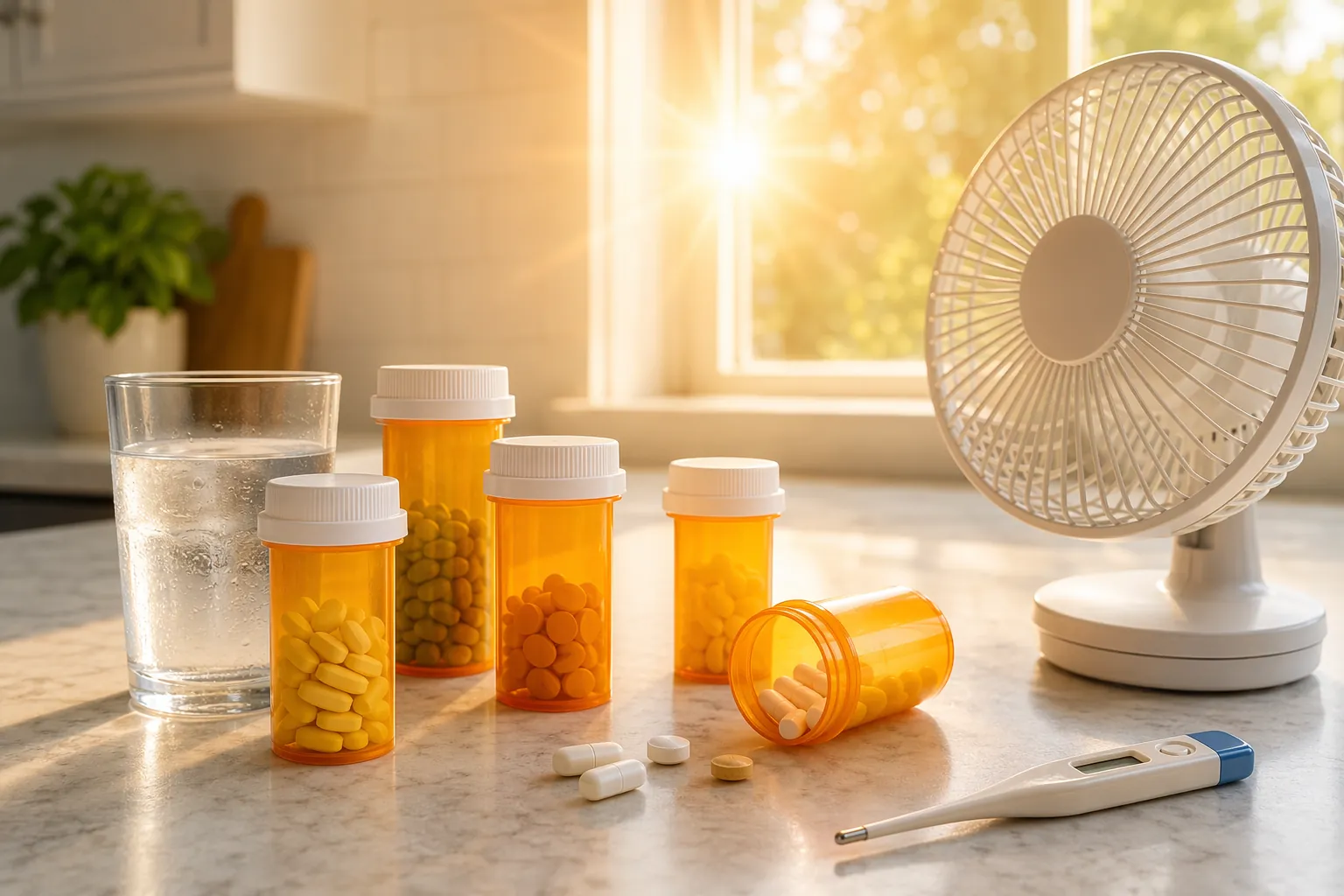
A diuretic may help control blood pressure or fluid buildup, but it can also increase fluid loss. A beta blocker may help the heart, but it can affect the body’s ability to respond to heat and physical strain. Anticholinergic drugs can reduce sweating. Some antidepressants and antipsychotics can affect temperature regulation, alertness, or blood pressure. NSAIDs can add kidney stress during dehydration. Cleveland Clinic and Rush University Medical Center both describe the practical consequence caregivers notice first: the person may become dizzy or faint when standing, especially during hot weather.[4][5]
This is not a reason to stop a medication. It is a reason to review the medication list with the prescriber or pharmacist before summer, or as soon as a heat wave starts causing dizziness, weakness, confusion, or near-falls. The CDC specifically warns against stopping medications abruptly.[3] Some medicines need careful tapering; others are treating conditions that could become dangerous if the drug is skipped.
AARP’s July 2026 medication update also highlights common medication categories that do not mix well with heat, reinforcing the point that the review should include prescription drugs, over-the-counter pain relievers, sleep aids, bladder medicines, allergy medicines, and supplements—not only the pills a caregiver already thinks of as “heart” or “blood pressure” drugs.[6]
The third pathway is heat fatigue. Heat makes the body work harder to maintain a safe internal temperature. That can leave an older adult slower to react, less coordinated, and more likely to make a poor split-second decision: stepping over a cord instead of moving it, carrying laundry up stairs while tired, or continuing toward the bathroom after a wave of dizziness. This is not about panic. It is about the few seconds between noticing something is wrong and recovering balance.
The fall scenarios to take seriously during a heat wave
A heat-related near-fall often sounds ordinary when it is described afterward: “I stood up too fast,” “I just got a little woozy,” “the kitchen was too hot,” or “I needed a minute on the stairs.” Those comments deserve attention during extreme heat because they may point to a pattern, not a one-off clumsy moment.
| Home moment | Why heat can make it riskier | What to check first |
|---|---|---|
| Getting out of bed at night | Dehydration and blood pressure drops can hit when standing after lying down | Bedside water, slow sit-to-stand routine, clear route, night lighting |
| Walking to the bathroom | Warm hallways and urgency leave little time to recover from dizziness | Cooling along the route, grab points, dry floors, no loose mats |
| Cooking in the kitchen | Stove heat adds to room heat; standing still can worsen fatigue | Fan placement, shorter cooking tasks, seated prep, hydration before cooking |
| Using stairs | Heat fatigue reduces coordination and reaction time | Handrail use, avoiding loads, cooling the stairwell if possible |
| Standing after meals or medications | Some medicines and dehydration can worsen orthostatic hypotension | Medication timing questions for a clinician, slow transitions, symptom log |
Heat syncope—fainting or near-fainting related to heat—is especially dangerous for older adults because the faint itself may be brief, but the fall can cause a fracture or head injury. That is why the warning sign is not only “did they pass out?” It is also “did they reach for furniture, sit down suddenly, sway, or stop mid-walk because they felt off?”
Air conditioning helps, but it is not the whole plan
“Use the AC” is fine advice only if the AC exists, works, is affordable to run, and protects the places where movement happens. A Center for American Progress analysis found that nearly one in three older adults—14.8 million people—are energy insecure, meaning they may struggle to afford home energy costs.[7] Harvard Medicine Magazine also reported that 91% of indoor heat deaths in Phoenix involved homes with air conditioning, but the AC was off, broken, or not set in a way that protected the person.[8]
That does not mean cooling is useless. It means a caregiver should not stop at “there’s AC in the house.” Check the bedroom, bathroom route, kitchen, and stairs at the time the person actually uses them. A living room can feel tolerable while the hallway to the bathroom is stale and hot. A bedroom can cool down by midnight while the kitchen becomes unsafe at 5 p.m. A thermostat reading in one room does not tell you what happens when someone stands up and walks.
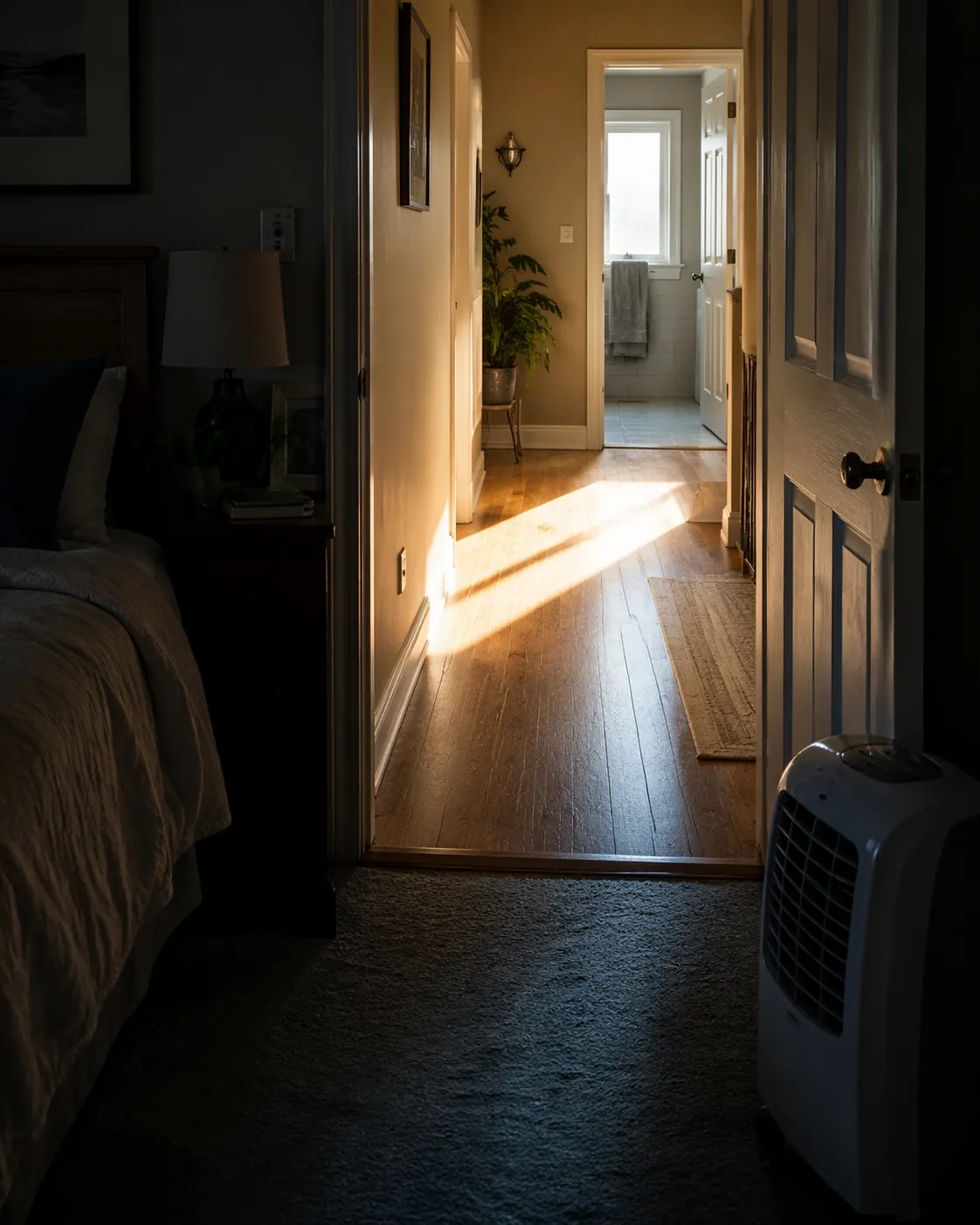
A three-part home plan that targets the heat-specific fall pathways
The safest plan does not depend on one fix. Hydration without medication review may miss a blood pressure problem. Medication review without cooling may leave the person standing in a hot kitchen. Cooling one room may not protect the bed-to-bathroom route. The plan needs to interrupt all three pathways: dehydration, medication-related instability, and heat fatigue.
Schedule fluids instead of waiting for thirst
“Drink more water” is too vague to be useful during a heat wave. A schedule is easier to see and easier to adjust. The goal is not to force large amounts of fluid at once. It is to reduce the long dry stretches that make standing dizziness more likely.
- Put water within reach at the bed, favorite chair, and kitchen table.
- Pair small drinks with existing routines: after waking, with morning medications if allowed, mid-morning, with lunch, mid-afternoon, with dinner, and early evening.
- Avoid making the first big drink happen right before bed if nighttime bathroom trips are already a fall risk.
- Watch for darker urine, dry mouth, unusual fatigue, headache, dizziness, or new confusion, and treat these as reasons to slow the day down and check in.
- If the person has heart failure, kidney disease, fluid restrictions, or has been told to limit fluids, ask the clinician for a heat-wave hydration plan rather than guessing.
Build the schedule around movement. A small drink before cooking, before a shower, before a short walk to the mailbox, or before a physical therapy routine may matter more than a glass left untouched beside the recliner.
Review medications with a clinician before heat becomes an emergency
The medication review should be practical, not dramatic. Bring the full list: prescriptions, over-the-counter pain relievers, allergy pills, sleep aids, bladder medicines, supplements, and “as needed” drugs that may be used more often than anyone realizes. Ask specifically about heat, dizziness, blood pressure drops when standing, sweating, thirst, and kidney stress.
- “Could any of these medicines make dehydration, overheating, or dizziness more likely during a heat wave?”
- “Should we monitor blood pressure sitting and standing during hot weather?”
- “Are there warning signs that mean we should call you the same day?”
- “Are any medications especially risky if appetite drops or fluid intake is lower?”
- “If dizziness happens after a dose, what should we do before changing anything?”
A Yale study gives a useful reminder that heat-medication interactions can be acute, not theoretical: antiplatelet medication use during hot weather was associated with a 63% increase in heart attack risk, beta-blocker use with a 65% increase, and using both together with a 75% increase.[9] That study is about heart attack risk, not falls, so it should not be stretched beyond what it measured. But it does support the larger safety point: hot weather can change the risk picture around common medications quickly.
If a parent says, “I only got dizzy after my pills,” do not skip the pills to test the theory. Write down the time, medication, temperature conditions, fluid intake, meal timing, and what the person was doing when dizziness started. That gives the clinician something useful to work with and avoids a dangerous do-it-yourself medication change.
Cool the transition zones, not just the room with the thermostat
Start with the route between bed and bathroom. It is used when the person is sleepy, often dehydrated, sometimes medicated, and not fully steady. Add night lighting, remove loose rugs, keep a cane or walker within reach if used, and cool the hallway as much as possible before bedtime. If the bedroom is cool but the hallway is hot, leave the door open earlier in the evening, use a fan to move cooler air, or shift portable cooling toward the route rather than aiming everything at the bed.
Then check the kitchen. Heat from cooking can make a safe-looking task harder. During extreme heat, choose shorter cooking tasks, use appliances that add less heat when possible, sit for prep work, and keep water visible. If the person insists on cooking, make the safer version easier: clear the counter, place commonly used items at waist height, and avoid meals that require carrying heavy pots across the room.
Stairs need a stricter rule during heat waves: no carrying laundry, trash, groceries, or bulky items if the person is already tired or lightheaded. Keep both hands available for the rail when possible. If the home has one cooler level, consider shifting daytime activities there during the hottest hours instead of asking the person to keep traveling between floors.
| Zone | Heat-wave adjustment |
|---|---|
| Bedside | Water, phone, glasses, walking aid, and light reachable before standing |
| Bed-to-bathroom path | Cool air movement, no loose rugs, clear floor, night lighting, stable handholds |
| Bathroom | Dry floor, shower chair if needed, avoid very hot showers, ventilate after bathing |
| Kitchen | Shorter cooking sessions, seated prep, visible water, avoid heavy carrying |
| Stairs | Use rail, avoid loads, delay nonurgent trips during peak heat |
When dizziness during heat needs faster attention
A single lightheaded moment during a heat wave is still worth noting. Repeated dizziness, fainting, confusion, weakness, chest pain, shortness of breath, a fall, or a near-fall should move the situation out of the “keep an eye on it” category. The next step may be a same-day call to the clinician, urgent care, or emergency services depending on severity.
It helps to keep a short heat log for a few days: indoor temperature by zone if you can measure it, fluids, meals, medications, dizziness episodes, bathroom trips, and where the person felt unsteady. The pattern may show something fixable, such as dizziness after standing from bed, weakness after cooking, or symptoms on days when the AC is left off to save money.
None of this means an older adult is suddenly unable to live independently. It means hot weather has changed the conditions in the house. During extreme heat, fall prevention is not only about removing rugs or turning down the thermostat; it is about interrupting the heat-specific pathways that make a person dizzy, slower, and less steady before a fall happens.
References
- Heat waves and annual death rates in older adults in the United States — Harvard Chan School
- Beat the Heat This Summer — Injury Matters
- Heat and Medications Guidance — CDC, 2025
- How Your Medicine Might Make You More Susceptible to Heat Stroke — Cleveland Clinic
- Older Adults Face Extra Hazards in the Heat — Rush University Medical Center
- 8 medication categories that don’t mix with heat — AARP, July 2026
- Center for American Progress analysis on older adults and energy insecurity — Center for American Progress
- Harvard Medicine Magazine report on indoor heat deaths in Phoenix — Harvard Medicine Magazine
- Yale study on heart medications and hot weather heart attack risk — Yale
Related reading
Noticed something outdated or inaccurate on this page? Flag a correction. We review every report against CDC, NIA, and AARP HomeFit guidance before updating a page.
Part of the Fall Prevention section.