
STEADI: intervene
Earthquake Safety Checklist for Elderly Residents of Japan
Standard earthquake preparedness guidance overlooks the specific vulnerabilities of older adults in Japan. This phase-by-phase checklist covers pre-quake registration, mobility-adapted drop-cover-hold actions, medication continuity, and disaster-related death prevention that accounts for the majority of elderly casualties.
A standard earthquake checklist in Japan often begins with the right verbs: drop, cover, hold on; prepare water; know the shelter; check the hazard map. For an older resident, those verbs can fall apart in the first few seconds. A 78-year-old with a cane may not be able to drop safely. A wheelchair user may be safest staying seated with the brakes locked. A person who depends on daily medication may survive the shaking and then deteriorate because the medicine notebook, spare pills, hearing-aid batteries, or warm clothes are trapped in a dark apartment upstairs.
That is why an elderly earthquake safety checklist in Japan has to treat the days after the quake as part of the main plan, not as an afterthought. After the 2024 Noto Peninsula earthquake, reporting based on Ishikawa Prefecture data said that 94% of 456 disaster-related deaths were among people aged 70 or older; those figures were still subject to official updates, but the pattern is too important to ignore.[1][2] For older residents, the danger is not only collapsing walls. It is dehydration, cold, interrupted care, chronic illness under stress, unsafe shelter conditions, and falls in a home that has shifted by only a few centimeters.
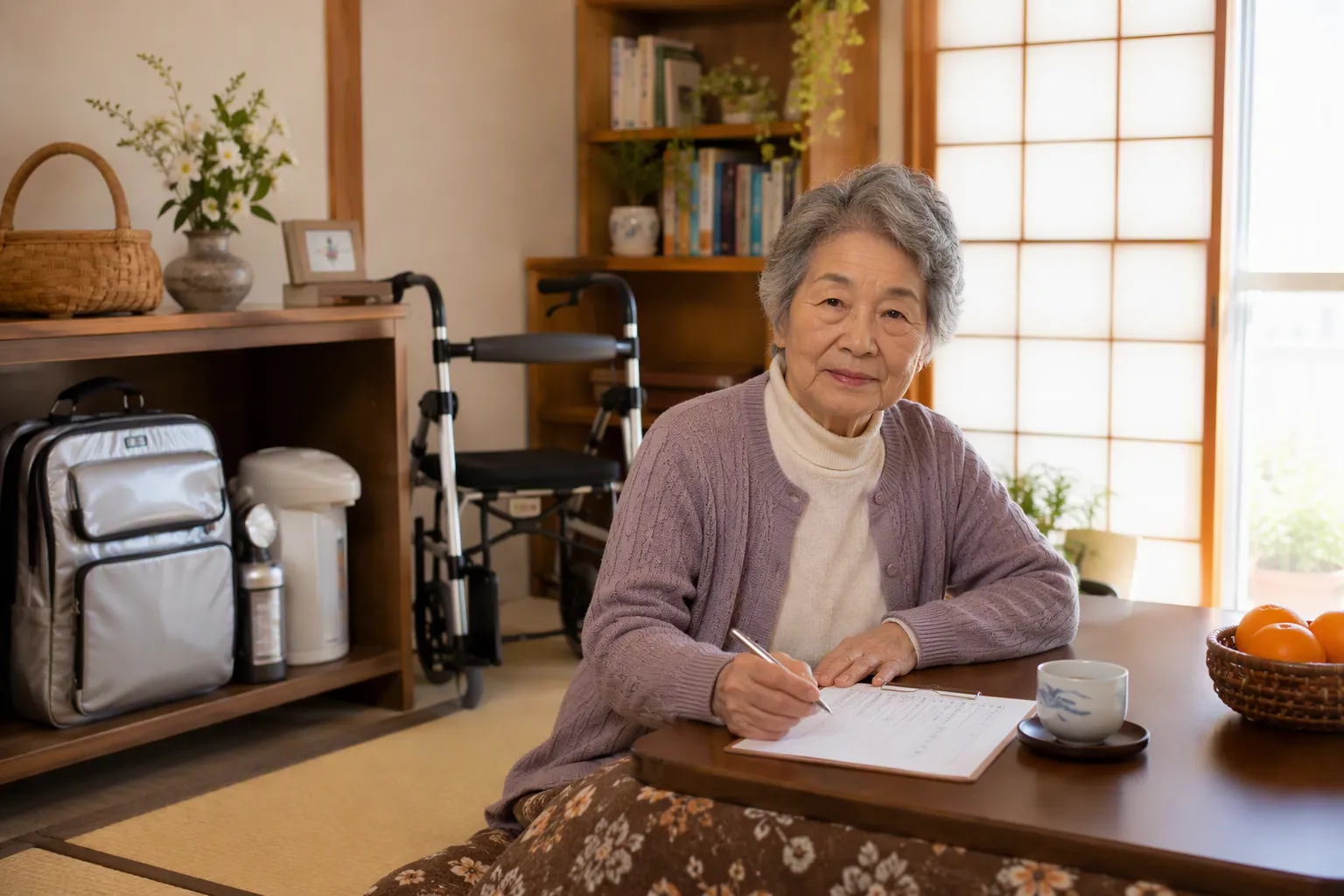
Start Before the Shaking: Register the Person, Not Just the Address
The first item is not a flashlight. It is finding out whether the older resident is on the municipality’s support list and whether an individual evacuation plan, or 個別避難計画, exists for that person.
Japan’s Basic Act on Disaster Management was amended in 2021 to require municipalities to make efforts to formulate individual evacuation plans for residents who need support evacuating, including many older and disabled people.[3] After Noto, the policy direction was strengthened further toward a more people-centered approach that connects evacuation planning with welfare services, though the exact process still varies by city, town, and ward.[4] That variation matters. A daughter calling from Osaka about a parent in Kanazawa, Tokyo, or a small coastal town cannot assume the same form, eligibility rule, or responsible desk.
When you call the city hall or ward office, ask in plain terms first, then use the Japanese term if needed: “My parent is elderly and may not be able to evacuate alone. How do we apply for an individual evacuation plan, 個別避難計画?” If the first desk redirects you, the likely offices are disaster prevention, welfare, elder care, disability support, or the community comprehensive support center, 地域包括支援センター.
- Ask whether the resident is eligible for the municipality’s evacuation support list for people needing assistance, often called 避難行動要支援者.
- Ask whether a 個別避難計画 can name actual helpers: neighbors, family, care managers, local welfare commissioners, or community disaster volunteers.
- Ask where the person should go if a general gym-floor shelter is unsuitable: a welfare shelter, 福祉避難所, or another welfare-linked site.
- Ask whether the municipality opens welfare shelters directly or only after triage from a general evacuation shelter; this differs by locality.
- Ask how the plan is updated when the resident’s mobility, dementia symptoms, oxygen use, dialysis schedule, or care-service provider changes.
Families sometimes stop at “registered” and feel reassured. Registration is only useful if it translates into a real path: who knocks, who has the key or key-box code, who knows the resident cannot hear an outdoor loudspeaker, who can push the wheelchair, and who decides that a welfare shelter is needed. Write those names and phone numbers on paper as well as in a phone.
Make the Home Less Likely to Injure the Person
For an older adult, earthquake preparation is also fall prevention. Tokyo’s 2026 Stay-at-Home Evacuation Campaign named furniture tip-over prevention as one of its three pillars, and it cites the Tokyo Fire Department estimate that about 30% to 50% of earthquake injuries are caused by falling or tipping furniture.[5] The exact original fire department wording and time period are worth confirming when a municipality uses the statistic, but the practical conclusion is not subtle: unsecured furniture can become the thing that injures the person before help can arrive.
Anchor the tall cabinet before buying a nicer emergency pouch. A chest of drawers beside a futon, a bookshelf near a favorite chair, or a microwave on a high shelf can become a fall and crush hazard. In small Japanese apartments, the walking route from bed to toilet is often narrow enough already; after shaking, one fallen storage rack can turn that route into a trap.
- Anchor tall bookshelves, wardrobes, refrigerators, and cabinets with proper brackets, poles, straps, or wall fittings suitable for the building.
- Move heavy objects from high shelves to low shelves, especially above the bed, sofa, dining chair, toilet path, and wheelchair parking spot.
- Keep the cane, walker, glasses, hearing aids, phone, shoes, and flashlight in the same reachable place every night.
- Create a clear route from bed to door and bed to toilet; do not store bottled water boxes where the walker must turn.
- Place emergency supplies on a low, reachable shelf rather than in an overhead closet.
If you want the fall-prevention logic behind this in more depth, earthquake preparedness for elderly residents in Japan is fall prevention explains why the home setup deserves as much attention as the evacuation bag.
Reduce Fire Risk Before the Power Comes Back
Electrical fire is another “after the shaking” danger that belongs in the before-quake checklist. The Tokyo Metropolitan Government’s 2026 campaign states that about 60% of earthquake-caused fires are electrical and recommends seismic circuit breakers.[5] These devices shut off electricity when strong shaking is detected or when a dangerous tilt occurs, depending on the type.
For an older person, the point is not only protecting the building. It is preventing a situation where a resident with limited mobility must escape smoke in the dark, down stairs, or without an elevator. Ask a licensed electrician or building manager what type of seismic circuit breaker is appropriate for the home, especially in an older apartment, rental unit, or house with medical equipment.
Build the Emergency Kit Around the Body That Will Use It
Most Japanese earthquake kits include water, food, a radio, batteries, a flashlight, gloves, cash, portable toilet supplies, and copies of documents. Keep those. Then add the items that make the kit elderly-specific.
| Need | What to prepare |
|---|---|
| Medication continuity | At least a 7-day supply where possible, current prescription list, お薬手帳, pharmacy name, doctor name, allergies, and dosing schedule |
| Mobility | Spare cane tip, walker label, wheelchair charger if used, tire pump if relevant, compact repair tools, and gloves for a caregiver pushing outdoors |
| Vision and hearing | Spare glasses, hearing-aid batteries or charger, written instructions in large print, and a flashlight reachable from bed |
| Warmth and circulation | Thermal blanket, socks, easy layers, kairo heat packs if safe for the person, and a hat for winter evacuation |
| Hydration and toileting | Small bottles that arthritic hands can open, oral rehydration supplies if medically appropriate, adult briefs if used, wipes, and portable toilet bags |
| Communication | Phone charger, power bank, paper contact list, 171 instructions, care-manager contact, and family group-chat backup plan |
Do not pack all of this into one heavy backpack and call it finished. A frail resident may not be able to lift it. Split supplies: one reachable indoor kit, one small grab bag, and extra water or toilet supplies stored low. Label everything in Japanese if neighbors, care workers, or shelter staff may need to understand it quickly.
Decide Who Checks In, and How
A family chat is useful until mobile networks clog, batteries die, or the older person forgets where the phone is. Japan’s disaster message dial, 171, should be written on paper and practiced lightly before it is needed. If the family uses smartphones, decide which app is primary, which relative calls first, and who contacts the neighbor, care manager, or building manager if there is no response.
- Write one check-in card in large print: family numbers, 171 instructions, address, blood type if known, allergies, medications, doctor, pharmacy, and care manager.
- Put one copy near the phone, one in the emergency kit, and one with an outside-family caregiver.
- Choose a nearby person who can physically check the door if the family lives far away.
- Agree on a simple status phrase: “safe at home,” “need help but not injured,” “leaving for shelter,” or “medical help needed.”
For families worried about communication failure beyond ordinary phone networks, satellite direct-to-phone emergency communication is worth understanding as a backup concept, but it should not replace paper instructions, local helpers, and 171.
During the Quake: Adapt Drop, Cover, and Hold to the Person’s Mobility
During shaking, the safest action is the one the person can actually perform without creating a second injury. A caregiver can practice these movements slowly on an ordinary day, not as a dramatic drill, but as a body check: Can she reach the walker brakes? Can he cover his head without losing balance? Can the bed-bound resident reach a pillow?
| Situation | Modified action during shaking |
|---|---|
| Uses a cane | Do not try to cross the room. Lower the body if safe, protect the head and neck, and hold a stable surface rather than the cane alone. |
| Uses a wheeled walker | Lock the wheels if possible, crouch or sit low beside it if safe, grip the frame, and cover the head with the free arm. |
| Uses a wheelchair | Lock the brakes, stay seated, bend forward if able, protect the head and neck, and keep clear of windows, shelves, and hanging objects. |
| Uses a bed or cannot transfer quickly | Stay in bed, protect the head with a pillow or blanket, keep arms away from glass, and wait until shaking stops before attempting transfer. |
| Is in the bathroom or toilet | Stay low, protect the head, avoid rushing through a doorway, and check for broken glass or water before standing. |
| Is using oxygen or medical equipment | Protect the body first. After shaking stops, check tubing, power, batteries, and fire risk if it is safe to do so. |
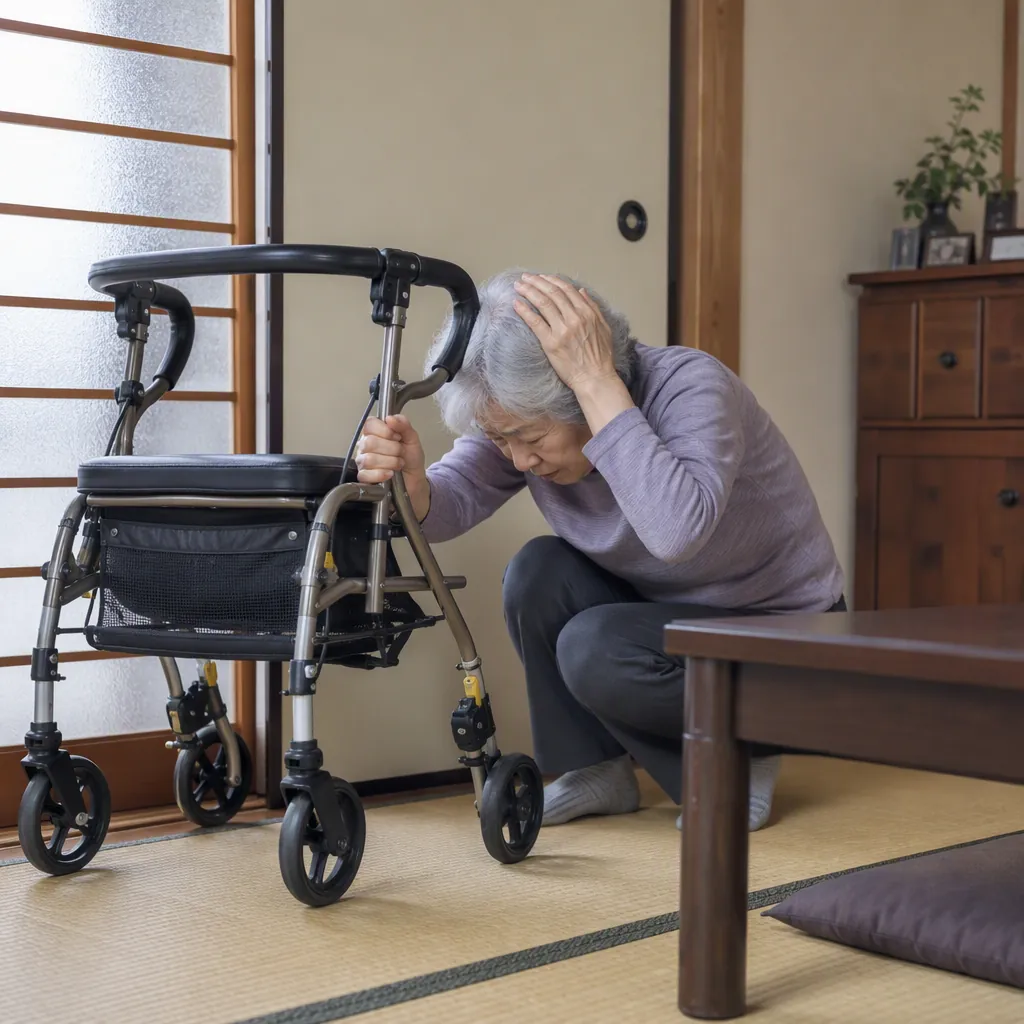
The old doorway advice still lingers in some families, but for many older apartments and older bodies, moving toward a doorway during violent shaking is not a good trade. The more practical target is shorter: stay where the fall risk is lowest, protect the head and neck, and do not try to walk while the floor is moving.
After the Shaking: Treat the Next Days as a Survival Phase
After the first shaking stops, families often ask the visible questions first: Is the building standing? Is there a fire? Is the person bleeding? Those are urgent. For older residents, the less visible questions need to come almost immediately after: Did they take the heart medicine? Are they drinking? Are they cold? Can they toilet safely? Is the elevator out? Has the familiar walking route become unsafe?
This is where the Noto figures should change household behavior. When disaster-related deaths among people aged 70 and older dominate the casualty pattern, the plan cannot end at “survived the shaking.”[1][2] It has to protect the older person from the slow injuries of disruption: missed medication, dehydration, hypothermia, exhaustion, infection risk, and chronic conditions pushed out of control.
Check the Body Before Cleaning the Room
A tidy older person may want to start picking up dishes, books, or fallen storage bins. Stop that impulse if you are there. If you are calling from far away, ask the person to sit somewhere safe with shoes on and wait for a helper if there is broken glass, spilled water, or furniture blocking the path.
- Ask about pain in the hip, head, wrist, ribs, and back, even if the person says “I’m fine.”
- Check whether glasses, hearing aids, dentures, cane, walker, wheelchair, and phone are intact and reachable.
- Put on sturdy shoes before walking through any room.
- Do not let the person use a damaged handrail, shifted step stool, wet bathroom floor, or blocked balcony route.
- If gas odor, smoke, structural damage, or serious injury is present, prioritize emergency services and evacuation support.
For a deeper room-by-room inspection, use a post-earthquake fall prevention checklist for seniors once immediate danger has passed.
Keep Medication and Care Routines From Breaking
The お薬手帳 is not a nice extra in a Japanese disaster. It is the bridge between the person, the pharmacy, the clinic, the evacuation site, and any unfamiliar medical worker. Keep it with the emergency kit or in the same pouch as the insurance card, not buried in a drawer that only the resident understands.
After a quake, confirm the next dose, not just the pill supply. A person with mild cognitive impairment may double-dose after stress or skip medication because meals are irregular. If insulin, anticoagulants, heart medication, Parkinson’s medication, oxygen, dialysis, or psychiatric medication is involved, the family’s check-in script should move quickly from “Are you safe?” to “What medicine did you take today, and when?”
- Photograph the current medication pages and share them with the family caregiver, with privacy handled carefully.
- Keep medicines in a waterproof pouch with the お薬手帳, allergy list, and pharmacy contact.
- Ask the pharmacy in advance how emergency refills are handled after disasters.
- If evacuation is needed, bring the medication pouch on the person, not in a separate suitcase that can be left behind.
Do Not Assume a General Shelter Is Safe Enough
A general evacuation shelter may be lifesaving, but it may also be physically hard for an older person: gym floors, shared toilets, noise, cold, infection concerns, steps at entrances, long queues, and unclear announcements. Japan’s disaster-management revisions and official discussions after recent disasters have increasingly recognized the need to accommodate elderly medical and care needs in evacuation settings, but welfare shelter availability and eligibility still differ by municipality.[4][6]
If the person needs assistance with toileting, transfers, dementia supervision, oxygen, tube feeding, wound care, or temperature control, ask for welfare-linked support rather than quietly enduring a shelter that is not suitable. The exact route may be frustrating: some municipalities direct people first to a general shelter for assessment, while others identify welfare shelters through care managers or municipal staff. This is why the question belongs in the before-quake call, not in the dark after the earthquake.
Watch Hydration, Warmth, Toileting, and Power
Older people may drink less after a disaster because they fear needing the toilet, do not want to be a burden, or cannot reach stored water. That choice can become dangerous quickly, especially with chronic disease or medication that affects fluid balance. Make drinking visible: small bottles, a written schedule, and a family check-in question that asks what was actually consumed.
Cold is just as concrete. If power fails and the resident stays home, the safe route to the toilet at night matters as much as the blanket. Keep a flashlight, slippers or shoes, portable toilet supplies, and warm layers within reach. For detailed lighting and route checks, the senior power outage fall prevention checklist is a useful companion.
If the quake brings tsunami risk, follow local evacuation orders and hazard-map guidance; do not let fall prevention become a reason to delay vertical or inland evacuation. For older residents near coastal or river areas, flood and water-related movement risks should be planned separately in advance, especially where stairs, slopes, or nighttime evacuation are likely.
A Practical Three-Phase Checklist
| Phase | Checklist for elderly residents in Japan |
|---|---|
| Before | Ask the municipality about 個別避難計画, evacuation support registration, and 福祉避難所 access; anchor furniture; move heavy items low; consider a seismic circuit breaker; prepare medication, mobility, hearing, vision, warmth, toileting, and communication supplies; assign local and remote check-in roles. |
| During | Do not rush across the room; protect head and neck; lock walker or wheelchair brakes if possible; stay seated or in bed when that is safer than dropping; wait for shaking to stop before transferring or walking. |
| After | Check injuries, medication, hydration, warmth, toileting, power, and communication; inspect fall hazards before cleaning; use 171 and local helpers; request welfare shelter or care-linked support when a general shelter cannot meet medical or mobility needs. |
The safest plan for an elderly resident in Japan is not simply a bag by the door. It is a registered support pathway, a stabilized home, a during-quake action the person’s body can perform, and an after-quake care plan that treats disaster-related death prevention as central.
References
- From Survivors to Victims: Disaster-Related Deaths After Noto Earthquake, NHK WORLD-JAPAN
- Disaster Planning for Aging Communities: Lessons from Japan's Noto Earthquake, ICMA
- Importance of individualized disaster preparedness… Lessons from legal revisions to the Basic Act on Disaster Management in Japan, PMC / National Library of Medicine
- Nobody Left Behind: Individual Evacuation Plans for Elderly, Yomiuri Shimbun / Japan News, July 22, 2025
- Implementation of the 'Stay-at-Home' Evacuation Campaign, Tokyo Resilience Project
- White Paper on Disaster Management 2025, Cabinet Office, Government of Japan, 2025
Related reading
Noticed something outdated or inaccurate on this page? Flag a correction. We review every report against CDC, NIA, and AARP HomeFit guidance before updating a page.
Part of the Fall Prevention section.