
STEADI: intervene
A Room-by-Room Earthquake Safety Checklist for Older Adults
This room-by-room checklist helps older adults and their caregivers prepare for an earthquake by addressing fall risks, medication needs, and mobility limitations — covering furniture anchoring, senior-specific emergency supplies, and a communication plan to reduce injury during shaking and complications after.
Generic earthquake advice often sounds tidy until you picture an actual older adult’s bedroom at 2 a.m.: glasses on the dresser, a cane across the room, slippers under the bed, a bookcase beside the path to the bathroom, and no lights if the power goes out. The question is not only whether the household has water and a flashlight. It is whether the person who needs them can reach them without falling, cutting a foot, losing a hearing aid, or being unable to explain medications when phones and internet are down.
Older adults have shown disproportionate harm in major earthquakes. After the 2011 Great East Japan Earthquake, UNDRR reported that people age 65 and older accounted for 56% of fatalities, while making up about 23% of Japan’s population at the time.[1] That figure should not be treated as a direct forecast for a U.S. household; Japan’s housing stock, community patterns, tsunami exposure, and building-code context differ. It does, however, make one point hard to ignore: age, mobility, sensory loss, and dependence on routines can turn the same shaking into a very different emergency.
Falls are the bridge between ordinary aging-in-place work and earthquake preparation. The CDC reports that 1 in 4 older adults falls each year, that falls are the leading cause of fatal and nonfatal injuries among adults 65 and older, and that 37% of falls result in an injury requiring medical treatment or restricted activity.[2] An earthquake adds darkness, broken glass, toppled furniture, spilled cabinet contents, interrupted medication, and the pressure to move before the floor is safe. A senior-specific earthquake checklist has to start there.
Start With the Room Where Shaking Would Be Most Unforgiving
The bedroom deserves the first pass because nighttime shaking removes nearly every advantage: shoes are off, glasses may be out of reach, hearing aids may be charging, medications may be on another surface, and the person may wake up disoriented. CDC earthquake guidance includes preparing for injuries, power outages, and damaged surroundings; for an older adult, the first preparation is making the first five feet around the bed safer before anything happens.[3]
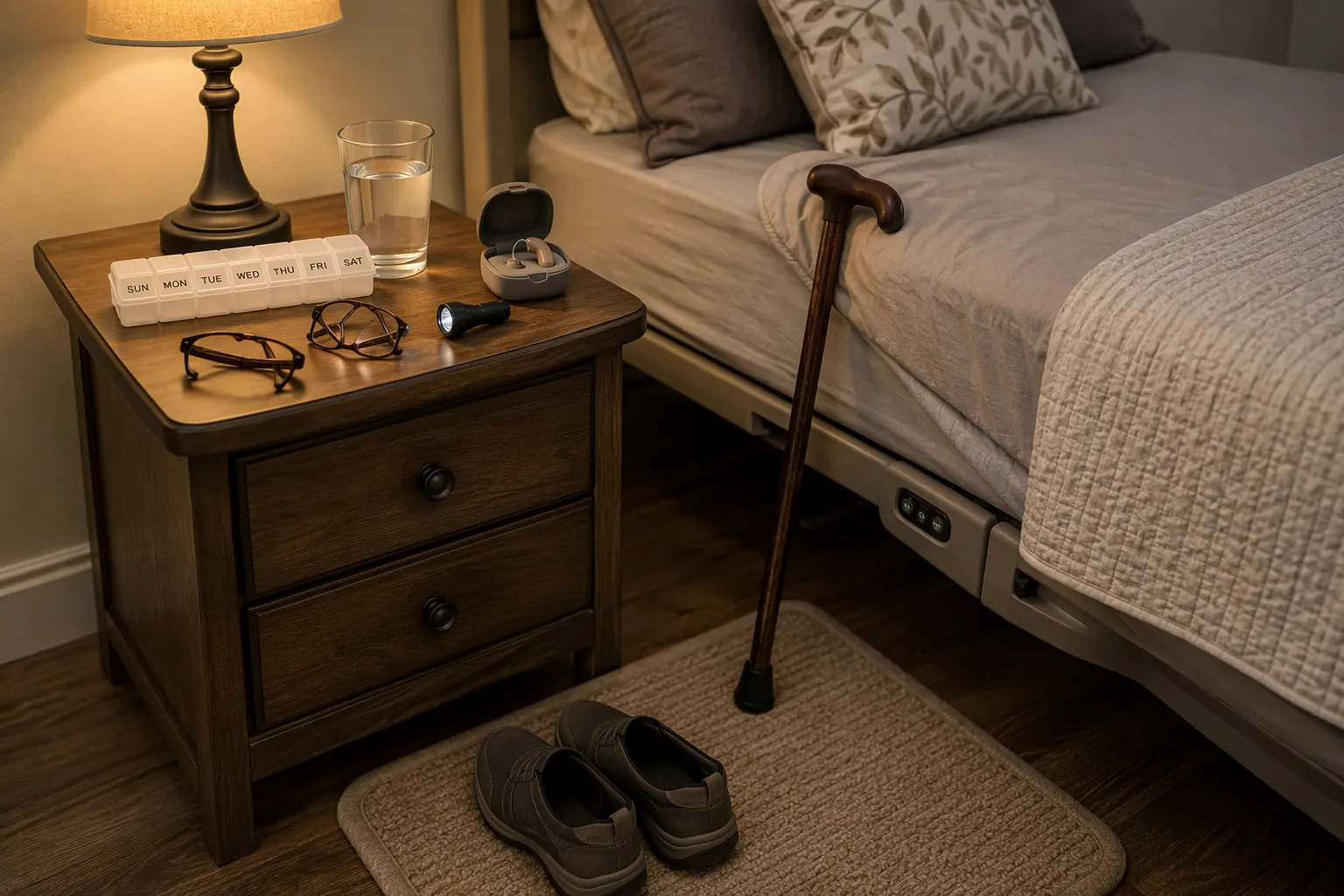
- Move the bed away from windows, tall unsecured furniture, mirrors, framed glass, and shelves that could drop objects onto the sleeper.
- Place sturdy closed-toe shoes beside the bed, not soft slippers. Broken glass and fallen objects make bare feet dangerous even inside the home.
- Keep a flashlight within arm’s reach and test whether the older adult can find and turn it on without sitting fully upright.
- Keep glasses, hearing aids, dentures or denture supplies, a phone, and a whistle in the same predictable bedside location.
- Position the walker, cane, wheelchair, or transfer device where it will not roll away or be buried by falling items.
- Clear both sides of the bed if possible, even if the person usually exits from only one side. Furniture can shift.
A bedside kit is not a decorative basket of supplies. It is a small rescue station for the person who may need to sit still, put on shoes, find glasses, cover the mouth from dust, and call for help before walking. The American Red Cross specifically separates older-adult emergency supplies into a Go-Kit, a Stay-at-Home Kit, and a Bed-Kit, and includes items such as sturdy shoes, flashlight, glasses, dust mask, and whistle in that bedside layer.[4]
The bedside test
Sit on the bed with the lights off and do not stand up. Can the older adult reach glasses, hearing aids, shoes, flashlight, phone, water, and mobility aid? Can they put the shoes on without the flashlight rolling away? Can they tell which cane is theirs if a caregiver or neighbor comes in to help? The California Department of Aging recommends keeping walking aids nearby, placing extra aids in different rooms, and labeling equipment with name, address, and phone numbers.[5]
Bathroom: Reduce Slips Before the Floor Gets Wet or Dark
Bathrooms are already high-risk rooms for falls. After shaking, the same room can add water, broken containers, fallen toiletries, a jammed door, or no working light. The earthquake checklist here is not separate from fall prevention; it is fall prevention under worse conditions.
- Install grab bars where the person actually transfers: near the toilet, shower entry, and bathing seat.
- Use non-slip flooring or secure non-slip mats; remove loose rugs that can bunch, slide, or hide broken glass.
- Store daily toiletries in low, latched, easy-reach locations rather than on high shelves or narrow ledges.
- Keep a small flashlight or automatic emergency light near the bathroom path, not inside a drawer.
- Add adult briefs, wipes, hand sanitizer, denture supplies, and disposable bags to the household emergency supplies if they are part of daily care.
For a caregiver trying not to turn a visit into an inspection, the bathroom is a good place to use ordinary language: “Let’s make this easier at night” often lands better than “This is unsafe.” The work is the same either way: fewer loose surfaces, better handholds, reachable supplies, and a path that still makes sense when the light fails.
Kitchen: Keep Heavy, Sharp, and Breakable Things From Becoming Floor Hazards
A kitchen can empty itself onto the floor during shaking. For an older adult, the danger is not only being struck by a falling pan or dish. It is the blocked route afterward: glass underfoot, cabinet doors hanging open, spilled oil, pet bowls overturned, and the walker unable to roll through.
- Move heavy pots, cast-iron pans, small appliances, and bulk food containers to lower cabinets.
- Install latches on cabinets that hold glassware, dishes, cleaning products, or anything that would block the walking path if it fell.
- Store a flashlight, work gloves, and closed-toe shoes near the kitchen if the older adult spends long periods there.
- Keep emergency water and easy-open food at a height the person can reach without a step stool.
- Remove throw rugs or use secure, low-profile, non-slip mats only where they do not catch a cane, walker, or foot.
Ready.gov earthquake guidance includes securing items that could fall and injure people, and FEMA’s older-adult guidance emphasizes planning around medical, mobility, and support needs rather than assuming everyone can evacuate in the same way.[6][7] In the kitchen, that means the safest storage plan is not the neatest one; it is the one that keeps the floor passable.
Living Room and Sitting Areas: Anchor What Could Tip, Then Clear the Route
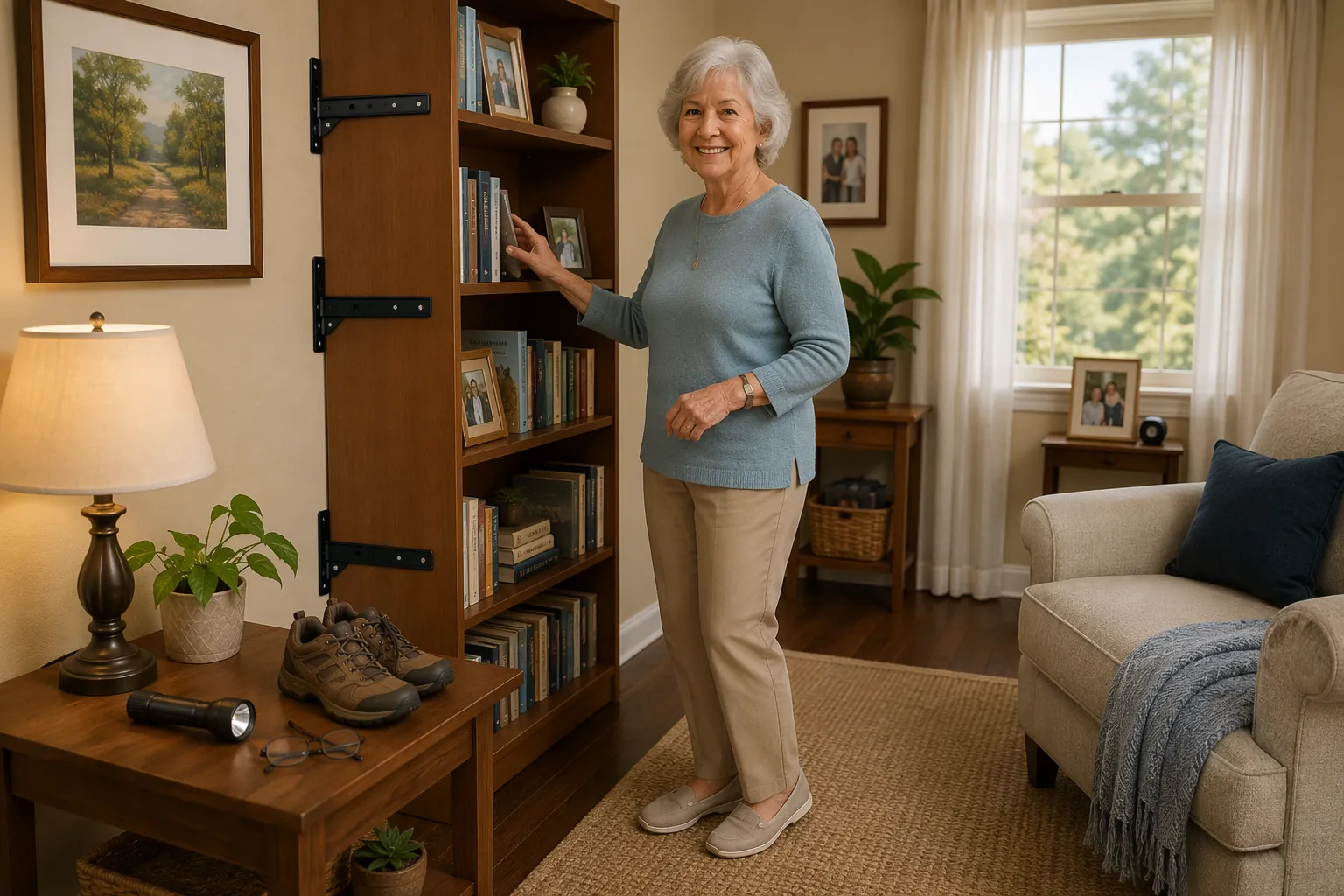
The living room is where “secure heavy furniture” becomes either useful or too vague to help. A tall bookcase, media cabinet, curio cabinet, or freestanding shelving unit should be anchored into wall studs, not drywall alone. L-brackets, straps, and other hardware only do their job when attached to a structural point that can resist force. If you are unsure where the studs are or whether the wall material is suitable, this is a small job worth treating as a real installation rather than a quick favor.
The Red Cross advises securing items that could fall, moving heavy or breakable objects to lower shelves, and knowing safe spots in each room.[8] For an older adult, the same pass should include the walking route: the path from favorite chair to bathroom, bedroom, front door, and phone should not depend on stepping around ottomans, magazine baskets, plant stands, cords, or a rug edge.
- Anchor bookcases, TV stands, display cabinets, and tall storage units into studs or other appropriate structural backing.
- Move heavy objects from high shelves to lower shelves; use museum putty or closed storage for smaller breakables where appropriate.
- Keep remote controls, phone chargers, reading glasses, and hearing aid supplies in predictable places so they are not scattered across multiple surfaces.
- Tape down or reroute electrical cords that cross walking paths; do not run cords under loose rugs.
- Choose chairs that are stable to rise from. A low, soft chair can become a trap if the person is shaken, tired, or using one hand for a cane.
Hallways, Stairs, and Exits: Make the Escape Path Boring
If the bedroom is the most unforgiving room, the hallway is the test of whether preparation worked. A person may not evacuate immediately after shaking; staying put can be safer when there are hazards outside. But if they need to leave for fire, gas odor, structural damage, or a caregiver’s direction, the route should not require judgment over every footstep.
| Area | What to check | Why it matters for older adults |
|---|---|---|
| Bedroom-to-bathroom path | Remove clutter, loose rugs, low baskets, pet beds, and unstable furniture. | This is often the first route taken in darkness or while half-awake. |
| Hallways | Add night lights or emergency lights that activate during power loss. | Vision changes and disorientation make dark debris harder to judge. |
| Stairs | Secure handrails on both sides where possible; keep steps clear and visible. | A cane or walker user may need extra contact points after shaking. |
| Entry | Keep shoes, keys, flashlight, printed contacts, and a small Go-Kit reachable. | Evacuation should not depend on searching cabinets under stress. |
| Exterior route | Check whether ramps, railings, gates, and walkways remain usable without power. | A caregiver may not arrive immediately, and neighbors may be the first helpers. |
The California Department of Aging recommends security lights that activate automatically when power is lost and identifying two people who can check on the older adult.[5] That advice belongs right here, at the exits. Write the two names and phone numbers on paper, place a copy near the main door and in the Go-Kit, and make sure those people know whether there is a spare key, lockbox, gate code, mobility device, oxygen equipment, pet, or medication concern.
For a deeper aging-in-place pass, use an aging-in-place modification checklist alongside this earthquake checklist. The day-to-day fixes—lighting, handrails, rug control, bathroom supports—are the same fixes that keep a post-quake exit from becoming a second emergency.
Utility, Garage, and Storage Areas: Handle the Hazards That Do Not Look Like Fall Risks
Some earthquake preparations sit outside the usual fall-prevention conversation but still affect whether an older adult can stay safe at home afterward. Water heaters should be properly strapped or anchored, gas appliances should have appropriate flexible connectors where required, and households should know how to shut off gas if they smell gas or are instructed to do so. Ready.gov includes utility shutoff knowledge and securing hazards as part of earthquake preparation.[6]
This is also where cost and tenancy matter. A renter may not be able to install a seismic gas shutoff valve or alter a water heater without the landlord. A low-income caregiver may need to choose between paid installation and lower-cost fixes first. Separate the list into three piles: do today, ask permission for, and hire out. Moving heavy boxes off a high garage shelf can happen now. Gas, water heater, and structural questions may need a licensed professional or landlord approval.
- Strap or anchor the water heater according to local code and manufacturer requirements.
- Store paint, cleaning chemicals, tools, and heavy bins low and latched so they do not spill into a walking route.
- Keep a wrench or shutoff tool where the responsible adult can find it, but do not shut off gas unless there is a reason or official instruction.
- Ask whether a seismic gas shutoff valve is recommended or required in your area; installation guidance varies by jurisdiction.
- Do not stack emergency supplies so deeply that the older adult must climb, lift, or dig to reach them.
Build Supplies in Three Layers, Not One Giant Kit
A single emergency kit in the hall closet helps only if the older adult can reach it, lift it, and knows what is inside. The Red Cross three-layer structure is more practical for seniors because it admits that evacuation, sheltering at home, and waking up after nighttime shaking are different situations.[4]
| Supply layer | Purpose | Senior-specific additions |
|---|---|---|
| Bed-Kit | Reachable immediately after nighttime shaking. | Sturdy shoes, flashlight, glasses, hearing aid case or batteries, dust mask, whistle, small water bottle, written emergency contacts. |
| Go-Kit | Grab if evacuation is needed. | Medication list, copies of insurance and ID, phone charger, backup glasses, mobility-device information, continence supplies, denture care, small comfort items. |
| Stay-at-Home Kit | Support the household if roads, stores, power, or caregivers are disrupted. | Water, easy-open food, hygiene supplies, medical-device backup plans, batteries, assistive-device chargers, pet supplies if relevant. |
The item-level details matter more than the container. A Japanese disaster-preparedness article supervised for senior disaster planning uses a tiered supply hierarchy and calls out items such as denture care, hearing aid batteries, adult briefs, backup eyeglasses, and printed medication information.[9] The housing and disaster context is not identical to a U.S. household, but those personal-care items transfer well because they answer the same question: what daily function fails if the usual drawer, pharmacy, caregiver, or power outlet is unavailable?
Medication and device continuity
Keep a printed medication list in the Go-Kit and another near the main caregiving paperwork. Include drug names, doses, schedule, allergies, prescriber, pharmacy, medical conditions, and emergency contacts. Do not rely on a phone app being charged or a pharmacy system being reachable. If refrigerated medication, oxygen, CPAP, power wheelchair charging, or other powered medical equipment is part of daily life, fold that into the earthquake plan rather than treating it as a separate problem. The Family Caregiver Alliance recommends caregivers keep emergency information, medication details, physician contacts, and support plans accessible before a disaster.[10]
For households with equipment that depends on electricity, pair this checklist with a medical-equipment power outage plan. Earthquakes often create power problems after the shaking ends, and the preventable harm may come hours later when batteries, refrigeration, or communications fail.
Communication Planning for the Caregiver Who Cannot Get There
The plan has to assume that the adult child, neighbor, or usual aide may not be able to reach the home right away. Roads may be blocked, phones overloaded, elevators stopped, and the older adult may not hear alerts clearly or may be unable to explain needs under stress.
- Choose two check-in people: one nearby if possible, and one outside the immediate area who can receive updates.
- Print contacts in large type and place copies by the bed, by the main exit, in the Go-Kit, and with caregiving paperwork.
- Label mobility aids, medical equipment, chargers, and supply bags with name, address, and phone numbers.
- Write down where shutoffs, medications, spare keys, lockboxes, pet supplies, and emergency kits are located.
- Agree on what the older adult should do if no one answers: stay put, move to a known safe room, contact a neighbor, or call emergency services depending on the situation.
This does not need to become a binder that nobody opens. One page in large type is better than a perfect plan hidden in a computer. If the older adult is proud of independence, frame the page as a way to keep helpers from guessing, not as permission for others to take over.
A Practical Walkthrough Order
Do not try to finish the entire home in one afternoon if that turns the work into an argument or an expense list. A good first pass is visible, physical, and limited: move hazards, place the bedside items, clear routes, and print information. Larger projects can follow.
| Do this now | Plan next | Hire or request permission |
|---|---|---|
| Put shoes, flashlight, glasses, hearing aid supplies, phone, whistle, and mobility aid within bedside reach. | Build the Go-Kit and Stay-at-Home Kit around real medications, devices, hygiene needs, and diet. | Anchor tall furniture into studs if the household cannot safely do it. |
| Remove loose rugs, cords, baskets, and clutter from bedroom-to-bathroom and exit paths. | Add emergency lighting for hallway, bathroom, stairs, and entry. | Install grab bars, improve railings, or modify ramps where transfers and exits are unsafe. |
| Move heavy kitchen and storage items to lower shelves. | Label equipment and print contact, medication, and caregiver information. | Evaluate water heater strapping, flexible gas connectors, or seismic gas shutoff options. |
Seasonal and regional adjustments belong after the core setup. In hot climates, add heat and hydration planning. In cold regions, consider blankets, safe warmth, and medication storage if power is out. For storm-prone areas, the same room-by-room discipline applies; a storm-prep fall checklist can sit beside this one without replacing earthquake-specific work like anchoring furniture and planning for gas or water heater hazards.
Before the Checklist Is Done, Practice the First Move
This article is about preparing the home before the earthquake. The actual during-shaking response—how to protect the head and neck, what to do with a walker or wheelchair, and when not to try to cross a room—needs its own instructions. Use this plan-ahead checklist with the companion guide on earthquake safety for seniors with limited mobility so the home setup and the crisis response match.
The strongest senior earthquake plan looks less like a generic disaster list and more like a careful walk through the home: bed first, bathroom next, kitchen cabinets, anchored living-room furniture, clear halls, usable exits, labeled equipment, printed medication information, and supplies placed where the older adult can actually reach them. That is why this belongs in fall prevention as much as earthquake preparedness. The shaking may be seismic; the injury path is often the floor.
References
- Japan quake took toll on women and elderly, UNDRR
- Facts About Falls | Older Adult Fall Prevention, CDC
- Preparing for Earthquakes, CDC
- Older Adults Emergency Preparedness, American Red Cross
- Disaster Preparedness Tips for Seniors, California Department of Aging
- Earthquakes, Ready.gov
- Older Adults, Ready.gov
- Earthquake Safety, American Red Cross
- 高齢者の災害対策, Rakuten Insurance
- Emergency Preparedness Checklist for Caregivers, Family Caregiver Alliance
Related reading
Noticed something outdated or inaccurate on this page? Flag a correction. We review every report against CDC, NIA, and AARP HomeFit guidance before updating a page.
Part of the Fall Prevention section.