
Ate Recalled Eggs? Salmonella Guide for Elderly Parents
When an elderly parent has eaten recalled eggs contaminated with Salmonella, the 6-hour-to-6-day incubation window demands a different response than for younger adults. This guide walks you through the immediate steps, when to call a doctor or 911, and how to monitor vitals with age-specific red flags for dehydration, confusion, and fall risk.
Medical disclaimer: This guide is for caregiver education, not a diagnosis or a substitute for medical care. If your elderly parent may have eaten recalled eggs and is ill, call their clinician, poison control, urgent care, or 911 based on the symptoms below.
Clinical review pending: Add a named clinical reviewer credential before publication under the site’s YMYL standards.
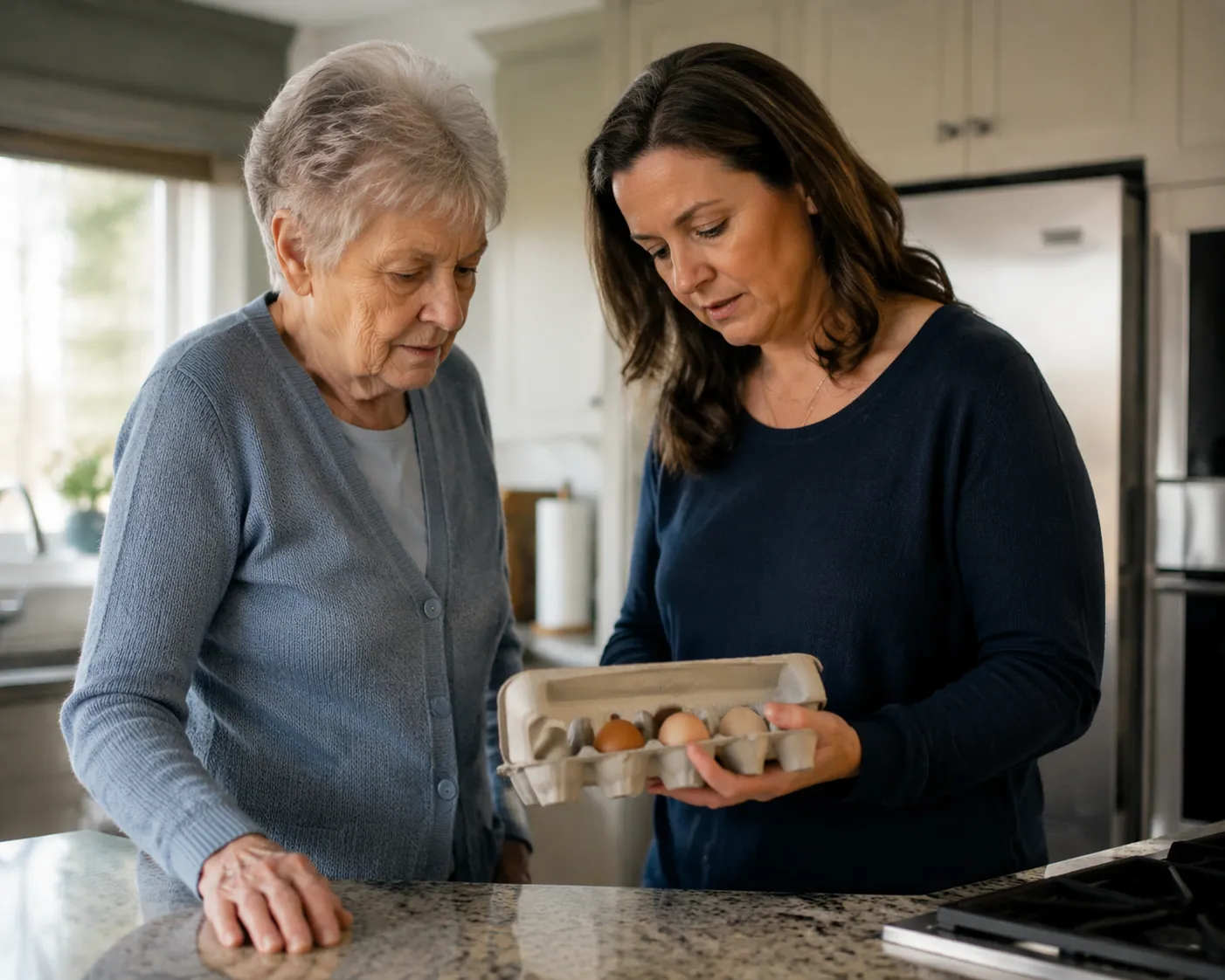
If your elderly parent ate eggs that may be under a Salmonella recall, start with the decision that matters most: are they safe right now, or do they need medical help before you finish checking the carton?
| What you see now | What to do |
|---|---|
| New confusion, fainting, extreme weakness, inability to stand safely, signs of severe dehydration, high fever with shaking chills or rigors, severe abdominal pain, bloody diarrhea, or a fall or near-fall after symptoms began | Call 911 or seek emergency care now. |
| Diarrhea lasting more than 2 days, fever over 102°F, vomiting or inability to keep fluids down, blood in stool, worsening dizziness, very little urination, or any concern because they are 65+ or medically fragile | Call their doctor, nurse line, or urgent care today. Do not wait for a lab confirmation. |
| They ate the eggs but have no symptoms, or only mild symptoms and can drink, urinate, think clearly, and stand safely | Remove the eggs, clean the kitchen contact points, and monitor closely for 6 full days after the last exposure. |
Salmonella usually causes diarrhea, fever, and stomach cramps, and symptoms can begin anywhere from 6 hours to 6 days after swallowing the bacteria.[1] That range is the reason “they seemed fine last night” is not enough for an older parent. The clock starts from the last time they ate the recalled eggs, not from the day you read the recall notice.
Salmonella is a bacteria that can irritate the intestines and, in some people, spread beyond the gut. The CDC estimates that about 8% of lab-confirmed Salmonella infections become invasive, and invasive disease is most common in older adults and people with weakened immune systems.[2]
First 15 Minutes: Make the Parent Safe, Then Check the Eggs
Before you go hunting for a plant code, put your parent somewhere safe. If they are lightheaded, weak, rushing to the bathroom, or embarrassed and trying to prove they are fine, the fall risk is immediate. Clear the path to the bathroom, turn on lights, move loose rugs if needed, and keep a phone within reach. If they already seem confused or cannot stand steadily, treat that as a medical escalation sign, not as ordinary tiredness.
Older adults are not just “a little more vulnerable.” USDA FSIS describes adults 65 and older as an at-risk population because immune defenses and stomach acid may be reduced with age, and illness can become more serious.[3] That changes the threshold for calling. A younger adult with mild diarrhea might reasonably watch and hydrate; an 82-year-old on a diuretic who is suddenly unsteady deserves earlier medical input.
- Save the egg carton or take clear photos of every panel before discarding anything.
- Write down when your parent last ate the eggs and what they ate with them.
- Move the eggs into a sealed bag or container so no one else uses them while you verify the recall.
- Wash hands, the counter, refrigerator shelf contact points, and any utensils or bowls used with the eggs.
- Start a simple monitoring note with temperature, diarrhea count, fluids, urination, dizziness, confusion, and standing ability.
How to Confirm Whether the Eggs Match a Recall
Do not rely on memory of the brand alone. Egg recalls are usually confirmed by matching several details on the carton: brand or producer, plant code, lot or Julian date, sell-by or use-by date, carton size, and sometimes distribution states or stores.
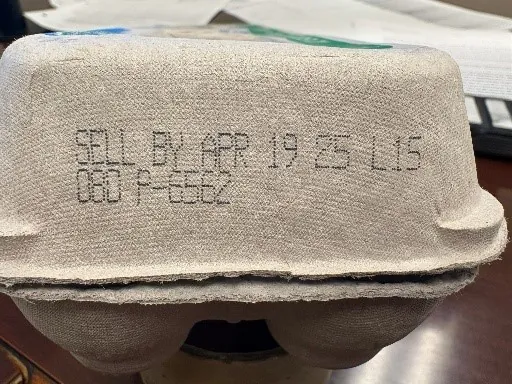
A useful example is the FDA’s June 2025 egg outbreak investigation. That notice identified recalled eggs by details including Julian dates 32 through 126, plant codes P-6562 and CA-5330, and a Salmonella Enteritidis strain; the FDA reported 134 illnesses in 10 states and 38 hospitalizations in that investigation.[4] By Q3 2026, that outbreak should be treated as an example of how egg recall notices are structured, not as proof that the carton in your refrigerator is part of that event.
The CDC later posted an egg-linked Salmonella outbreak page in August 2025, which is another reminder to check the current FDA, CDC, store, or producer notice rather than old screenshots or social media summaries.[5] If the carton details match, follow the recall instructions. If the carton details do not match but your parent is ill, the medical decision still depends on symptoms, age, hydration, and fall risk.
Once you have photographed the carton, discard the recalled eggs according to the recall instructions or isolate them until you can return them if the store requires it. Do not cook them “extra well” for an elderly parent. Do not keep the carton in the refrigerator where someone else may use it by mistake.
Cleaning matters because raw egg residue moves easily from shell to hands, hands to drawer pulls, and bowls to sponges. FoodSafety.gov’s basic food-safety steps are clean, separate, cook, and chill; in this situation, clean and separate are the first priorities after exposure.[6]
The 6-Day Monitoring Window
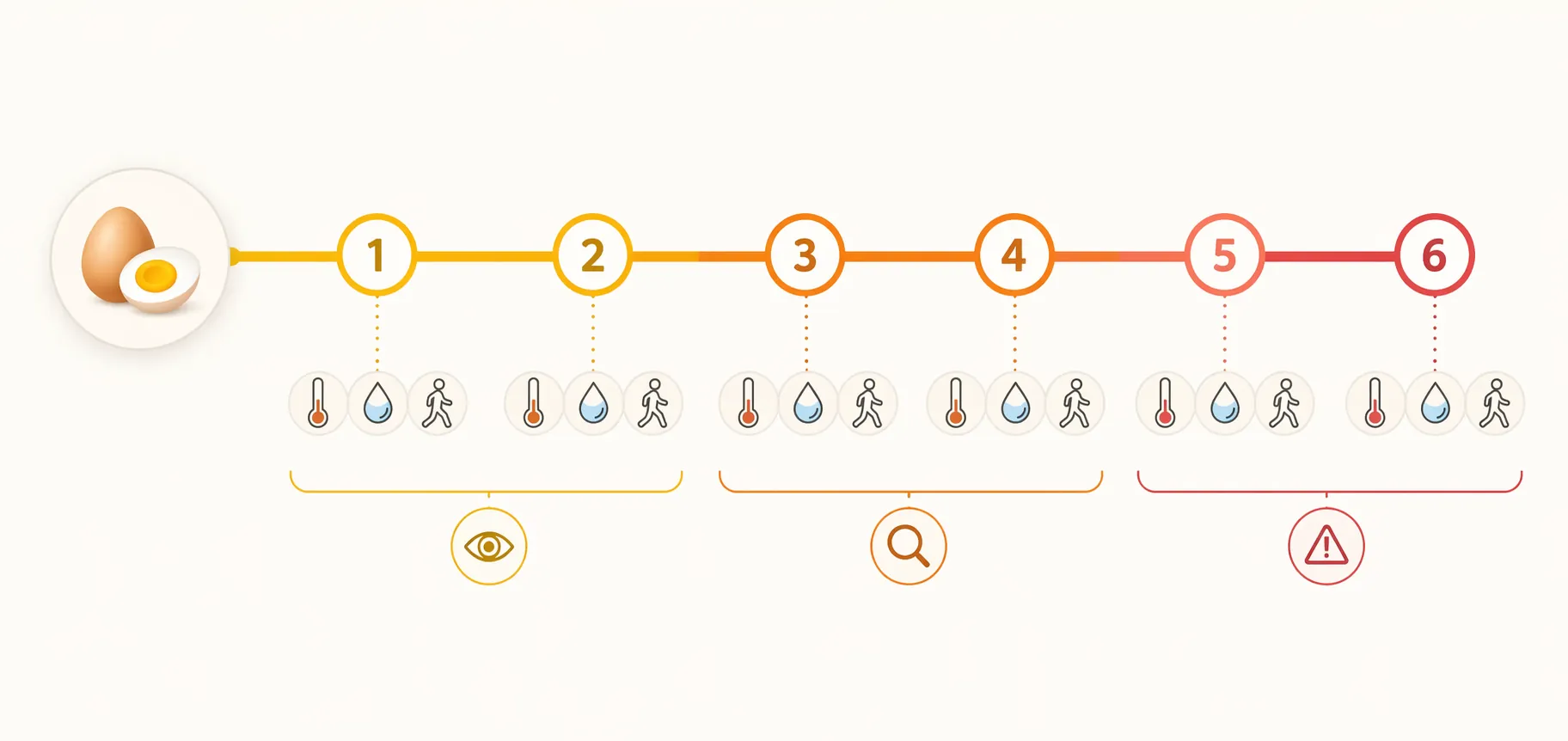
Use 6 full days as the monitoring window after the last possible exposure. If your parent ate the eggs on Monday at breakfast, do not stop paying attention on Tuesday night just because nothing dramatic has happened. The CDC’s symptom window for Salmonella is 6 hours to 6 days.[1]
| Time after last exposure | Caregiver task | What changes the plan |
|---|---|---|
| Now to 6 hours | Confirm recall details, remove eggs, clean contact surfaces, record baseline temperature and standing ability. | Any confusion, inability to stand, severe weakness, or high fever with rigors moves this out of home monitoring. |
| 6 to 24 hours | Check for diarrhea, fever, stomach cramps, nausea, vomiting, dizziness, and reduced fluid intake. | Vomiting that prevents fluids, bloody stool, or unsafe walking warrants prompt medical contact or emergency care. |
| Day 2 | Log each bowel movement, temperature, fluid intake, urination, dizziness, confusion, medication concerns, and fall risk. | Diarrhea lasting more than 2 days, fever over 102°F, or worsening dehydration signs should trigger a clinician call. |
| Days 3 to 6 | Continue daily logs even if the first 48 hours were quiet. | New symptoms can still begin inside the incubation window. |
| After symptoms start | Shift from exposure monitoring to illness monitoring: hydration, fever, stool frequency, medication safety, and mobility. | Older age, chronic disease, immunosuppression, or signs of invasive illness lower the threshold for medical evaluation. |
| After diarrhea ends | Continue careful hand hygiene and do not prepare food for others for the recommended period. | Persistent weakness, dizziness, or unsteady walking may require a fall-prevention reset before normal routines resume. |
A paper notebook is fine. A note on your phone is fine. The point is to stop relying on impressions like “a little better” or “not too bad.” When a parent minimizes symptoms, the log gives the doctor something concrete and gives you something firmer than worry.
What to Write Down Each Day
- Temperature: write the number, the time, and whether fever medicine was taken.
- Diarrhea: count episodes, note blood or black stool, and note whether your parent made it to the bathroom safely.
- Fluids: track what they actually drank, not what they promised to drink.
- Urination: note very dark urine, very little urine, or long gaps without urinating.
- Dizziness and standing: record whether they can rise from a chair, walk to the bathroom, and turn safely.
- Thinking and behavior: note new confusion, unusual sleepiness, agitation, vague answers, or not acting like themselves.
- Medications: list diuretics, blood-pressure medicines, diabetes medicines, immune-suppressing drugs, and recent antibiotics.
- Food prep: record whether they handled food for anyone else after symptoms began.
The bathroom trip is often where this becomes a fall-prevention problem. Diarrhea creates urgency. Fever and dehydration can cause dizziness. A parent may stand too fast because they are embarrassed. If illness leaves them weaker or less steady, connect this episode to the broader home-safety work covered in CareWise Guide’s fall-prevention resources, including How Fall Prevention Services Enable Aging in Place: A Family Caregiver’s Roadmap and The Worst U.S. Cities for Air Quality and Senior Fall Risk.
When Symptoms Begin
If diarrhea, fever, or stomach cramps begin, call the clinician sooner rather than later if your parent is 65 or older, especially if they have heart disease, kidney disease, diabetes, immune suppression, a history of dehydration, or frailty. The CDC’s general symptom guidance says to call a healthcare provider for diarrhea lasting more than 2 days, fever higher than 102°F, bloody diarrhea, frequent vomiting that prevents keeping liquids down, signs of dehydration, or symptoms lasting more than 3 days without improvement.[1]
For an elderly parent, those thresholds are not a reason to wait until the last minute. They are the outer rails. If your parent is 88, lives alone, takes a diuretic, and has already had two urgent bathroom trips with dizziness, a same-day call is reasonable even before the second day of diarrhea.
Call 911 or Seek Emergency Care Now If
- They are newly confused, difficult to wake, fainting, or not answering normally.
- They cannot stand, cannot walk to the bathroom safely, or have fallen.
- They have signs of severe dehydration, such as very little urination, extreme weakness, dizziness, or inability to keep fluids down.
- They have high fever with shaking chills or rigors.
- They have bloody diarrhea, severe abdominal pain, or symptoms that feel rapidly worse rather than gradually manageable.
Call the Doctor Today If
- Diarrhea continues beyond 2 days or is frequent enough to threaten hydration.
- Fever is over 102°F.
- They vomit repeatedly or cannot keep fluids down.
- There is blood in the stool.
- They have chronic illness, immune suppression, a heart or joint condition, or are taking medications that make dehydration more dangerous.
- You are seeing new weakness, dizziness, or unsafe walking even if diarrhea seems “mild.”
Why Older Adults Need a Lower Threshold
The most dangerous part may not look dramatic at first. Older adults often have lower total body water, a reduced thirst response, and medication patterns that can make fluid loss harder to tolerate. USDA FSIS identifies adults 65 and older as an at-risk group for severe foodborne illness, and common age-related changes can make infections more serious.[3]
A Canadian study of nontyphoidal Salmonella hospitalizations from 2000 to 2010 found age-stratified mortality estimates of 4.3% for ages 60 to 79 and 7.4% for age 80 and older; hospitalized seniors had a median hospital stay of 7 days compared with 4 days for younger adults, and 60% had at least one chronic condition.[7] Those are Canadian data, not official U.S. national rates, but they are useful senior-specific context and align with the broader public-health pattern that older adults fare worse.
AARP, citing CDC FoodNet data, reports that nearly half of adults 65 and older with lab-confirmed Salmonella are hospitalized.[8] That figure does not mean half of all exposed older adults will be hospitalized; it refers to lab-confirmed cases, which are more likely to include people sick enough to be tested. Still, it is a good reason not to treat a frail parent’s diarrhea as routine.
Dehydration is also quieter in older adults. Harvard Health notes that older people may have less reserve against fluid loss and that dehydration can appear as confusion or dizziness rather than simple thirst.[9] If your parent says “I’m not thirsty” while giving vague answers and pushing up from the chair with both hands, believe the behavior, not the reassurance.
Antibiotics: Ask Promptly, Do Not Self-Start
Antibiotics are not automatic for Salmonella. The CDC says most people recover without antibiotics, and antibiotics are generally not recommended for many otherwise healthy people because they may not shorten illness and can prolong asymptomatic Salmonella carriage.[2]
The same CDC clinical overview says antibiotics should be considered for people at risk of invasive disease, including adults 65 and older and people with atherosclerosis, immunosuppression, or heart or major joint disease.[2] That is the tension: do not demand leftover antibiotics from a cabinet, and do not assume “no antibiotics” is always the right answer for an older adult. Call the clinician and ask whether stool testing, culture, susceptibility results, or the parent’s medical history changes the plan.
If No Symptoms Appear
If 6 full days pass after the last exposure and your parent has had no diarrhea, fever, stomach cramps, vomiting, new confusion, unusual weakness, or change in standing safety, the Salmonella incubation window has passed according to the CDC’s usual symptom timing.[1] You can stop the special exposure log and return to normal routines.
Normal routines should not include returning recalled eggs to the refrigerator. If the eggs matched a recall, they are gone or returned according to the notice. The cleaned surfaces stay clean. Anyone who touched the carton washes hands. That part is not medical drama; it is how the next person in the house avoids becoming the patient.
After Diarrhea Ends
The end of diarrhea is not the same as the end of responsibility around food. The CDC advises people with Salmonella to stay home from daycare, school, or work until 2 weeks after diarrhea has ended, and to avoid preparing food for others during that period because people can continue shedding Salmonella after symptoms stop.[1]
For an elderly parent, also watch the recovery period as a mobility period. A few days of poor intake, fever, and urgent bathroom trips can leave someone weaker than they were before the recall notice entered the kitchen. Keep the route to the bathroom clear, consider temporary supervision for showers, and do not rush back to cooking for others if they still tire easily or need both hands to stand.
The practical endpoint is clear: 6 symptom-free days after the last exposure ends the incubation watch; a resolved illness still requires strict hand hygiene and no food preparation for others during the CDC’s post-diarrhea window; and any lingering weakness, dizziness, or unsteadiness belongs in the fall-risk plan, not in the category of “probably fine.”
References
- Symptoms of Salmonella Infection, CDC.
- Clinical Overview of Salmonellosis, CDC.
- Adults 65 and Older: An At-Risk Population, USDA FSIS.
- Outbreak Investigation of Salmonella: Eggs (June 2025), FDA.
- Salmonella Outbreak Linked to Eggs, CDC, August 2025.
- 4 Steps to Food Safety, FoodSafety.gov.
- Canadian Hospitalizations Study (2000–2010), PMC.
- What Should You Do if You Eat a Recalled Food?, AARP.
- Salmonella is sneaky: Watch out, Harvard Health.
Related reading
Noticed something outdated or inaccurate on this page? Flag a correction. We review every report against CDC, NIA, and AARP HomeFit guidance before updating a page.
Part of the Fall Prevention section.