
STEADI: Assess
My Elderly Parent Ate Recalled Frozen Blueberries, Now What?
Your elderly parent ate recalled frozen blueberries — follow the exact check-and-respond steps: confirm the recalled product, stop further exposure, and clean up per FDA guidance. Then use CDC symptom thresholds to decide between seeking care now or starting a defined monitoring window, with fall-protection steps through the illness.
Last verified: August 5, 2026. Recall and outbreak pages can change; use the live FDA and CDC pages while you check the package.
If the bag is on the counter and your parent has already eaten some, start with the physical problem in front of you: stop any more exposure, confirm whether this is the exact recalled product, clean the contact surfaces, then decide whether symptoms already meet CDC’s care threshold. The sinking feeling can wait ten minutes. The berries cannot.
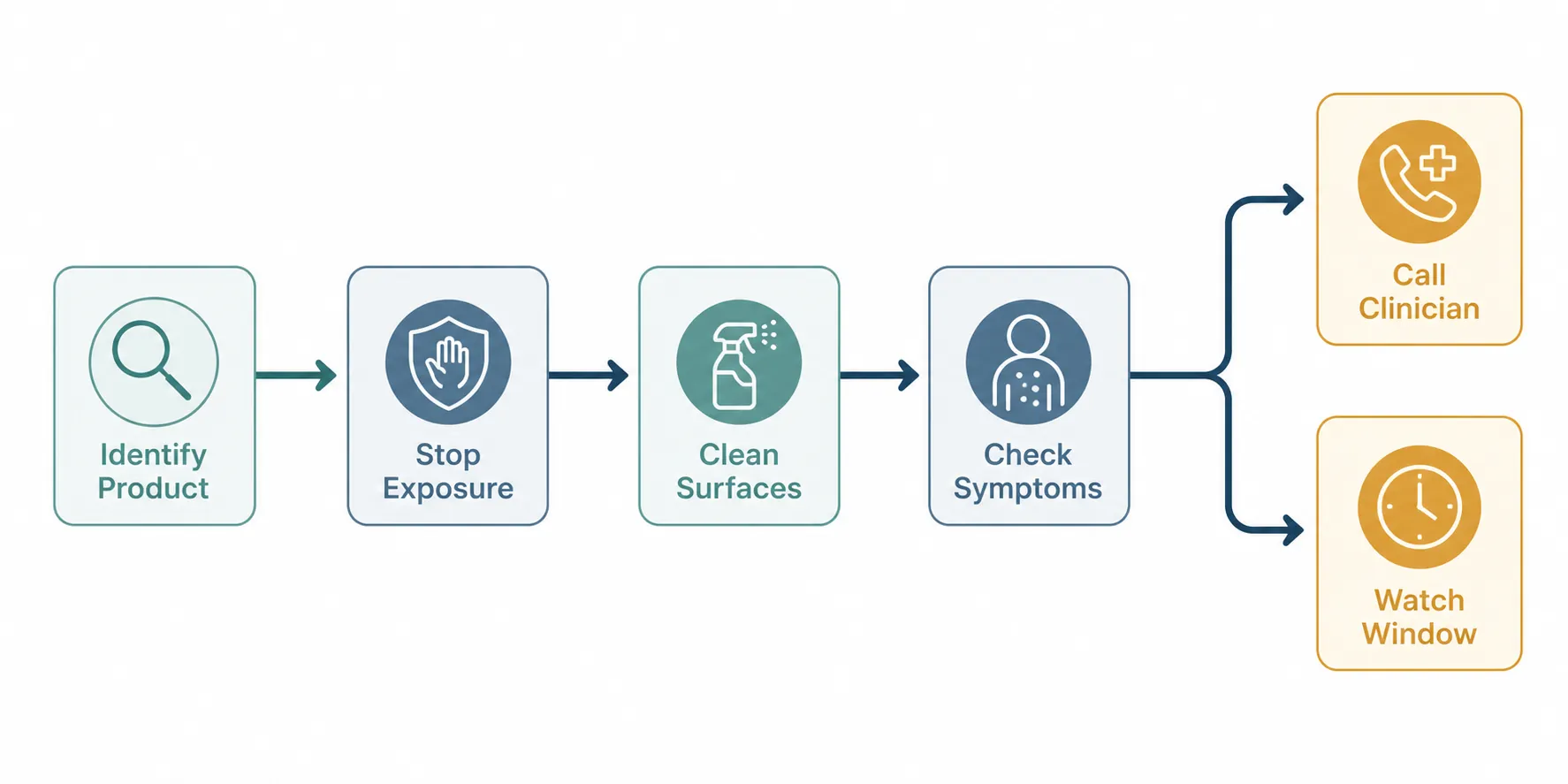
The first ten minutes: do these in order
| Action | What to do right now | Why it matters |
|---|---|---|
| 1. Separate the food | Take the bag away from the freezer and the eating area. Do not serve it again. | This prevents a second exposure while you are still checking the recall. |
| 2. Confirm the product | Match the brand, product name, size, UPC on the FDA notice, lot, and best-by date. | A similar-looking frozen berry bag is not automatically part of this recall. |
| 3. Dispose of or return it safely | If it matches, wrap or bag it securely and discard it or return it as directed. Do not give it to another person or to pets. | A recall is not just a personal preference; it is a hazard-removal step. |
| 4. Clean the exposure path | Wash surfaces that touched the berries, then sanitize according to FDA guidance. | The counter, bowl, blender, spoon, freezer shelf, or sink area can keep the exposure going. |
| 5. Check symptoms | Use CDC’s severe-symptom thresholds: bloody diarrhea, diarrhea over three days without improvement, fever above 102°F, vomiting that prevents liquids, or dehydration signs such as dizziness when standing. | This is the branch point between calling for care now and starting a watch window. |
Confirm whether this is the GreenWise recalled product
The July 2026 recall involves GreenWise Organic Whole Blueberries and GreenWise Organic Whole Mixed Berries sold at Publix. The FDA recall notice identifies 10-ounce and 48-ounce products, four UPCs, lot 60401, and a best-by date of February 9, 2028; the products were sold at Publix stores in eight states.[1] As of the CDC’s July 30, 2026 outbreak snapshot, there were 12 E. coli O145:H28 illnesses, 4 hospitalizations, and 0 deaths, with illnesses reported in Florida and Georgia.[2]
That is enough to take seriously, and not enough to assume every frozen blueberry in the house is part of the recall. Put the package next to the live FDA recall page and check one line at a time:
- Brand: GreenWise.
- Product name: Organic Whole Blueberries or Organic Whole Mixed Berries.
- Package size: 10 oz or 48 oz.
- UPC: match the UPC printed on your package to the UPC listed on the FDA recall notice.
- Lot and best-by: look for lot 60401 and best-by February 9, 2028, as identified in the recall materials.
If your parent threw the bag away and you can still retrieve it safely, do so with gloves or a clean bag, then wash your hands. If the package is gone, check the grocery receipt, online Publix order history, freezer inventory notes, or a photo you may have taken. Do not spend an hour searching while the same berries sit available to eat. Remove access first; refine the paperwork second.
If the product does not match the FDA recall notice, keep watching for any illness because your parent did eat food that worried you, but do not treat the bag as confirmed recalled. If it does match, move straight to cleanup and symptom checking.
Get the berries out of circulation, then clean the path they touched
For a matching recalled product, FDA consumer recall guidance is plain: discard the food or return it, and do not give recalled food to other people or animals.[4] In a real kitchen, that means the bag should not stay half-open in the freezer “just in case,” and it should not be poured into the trash loose where a pet, grandchild, or another adult can reach it.
- Put the recalled berries in a sealed bag or wrap the package securely.
- Place it where no one can eat from it while you decide whether to discard or return it.
- Wash your hands after handling the package.
- Check where the berries went: bowl, spoon, blender, measuring cup, cutting board, sink, counter, freezer drawer, and any towel used to wipe drips.
FDA’s cleanup direction is to wash surfaces that touched recalled food with hot, soapy water, then sanitize with a solution of 1 tablespoon chlorine bleach per gallon of hot water.[4] Do the washing first. Sanitizer works on a cleaned surface, not on blueberry juice, crumbs, or a sticky blender base.
If the berries were used in a smoothie, clean more than the cup. The blender gasket, lid rim, pitcher threads, countertop splash area, and sink strainer are the places that get missed. If they were poured over cereal or oatmeal, check the spoon rest, placemat, and the spot where the bag sat while someone read the label.
Now ask the symptom question, not the worry question
The useful question is not “Do they seem okay?” It is whether your parent has any CDC warning signs that should prompt a call to a healthcare provider or urgent care decision now. For this E. coli context, use CDC’s food-poisoning thresholds, including fever above 102°F; do not blend that with other general adult fever cutoffs.[5]
Call a healthcare provider, urgent care, or your local nurse line now if any of these are present after the exposure:
- Bloody diarrhea.
- Diarrhea lasting more than three days and not improving.
- Fever above 102°F.
- Vomiting so often that they cannot keep liquids down.
- Signs of dehydration, including little or no urination, very dry mouth or throat, or feeling dizzy when standing up.
That last item deserves more attention in an older adult. “Dizzy when standing” is not a vague complaint to file under weakness. CDC lists it as a dehydration warning sign in food poisoning, and for a 65+ adult it is also a fall warning. If your parent says, “I’m just lightheaded,” the next step is not to let them hurry to the bathroom alone.[5]
If symptoms are severe, sudden, or confusing, do not wait to complete a perfect recall investigation. Bring the product name, package photo, lot or best-by information if you have it, and the time eaten. The clinician can work with incomplete paperwork; they cannot work with a fall in the hallway that no one heard.
Why age 65 changes the level of caution
The recalled outbreak strain is E. coli O145:H28, a Shiga toxin-producing E. coli, or STEC. The Publix recall notice specifically names older adults among groups at risk for hemolytic uremic syndrome, a serious complication that can affect the kidneys.[1] CDC notes that about 5% to 10% of people diagnosed with E. coli infection develop hemolytic uremic syndrome; that figure is not a prediction for one person sitting at your kitchen table, but it is the reason bloody diarrhea and dehydration signs should not be brushed off.[2]
There is also a broader age-risk signal. CDC says nearly half of people age 65 and older with lab-confirmed Salmonella, Campylobacter, Listeria, or E. coli infection are hospitalized.[6] That statistic does not mean nearly half of exposed older adults will be hospitalized. It means that when older adults do develop confirmed foodborne infection, the illness is more likely to become serious enough for hospital care.
That is the practical middle ground: no panic, no shrugging. Your parent may feel perfectly fine today and still need a watch plan because E. coli symptoms often do not start immediately.
If there are no warning signs now, start a dated watch window
CDC says symptoms usually start 3 to 4 days after swallowing the bacteria, while the FDA outbreak investigation notes onset can range up to 9 days.[2][3] So “no symptoms right now” is good news, not the end of the job.
Write down the last time your parent ate the recalled berries. If you are not sure, use the latest possible time. Count a monitoring window through day 9 after that last possible exposure. During that window, check at least morning and evening, and add a check after any diarrhea, vomiting, poor fluid intake, feverish feeling, or bathroom trip that seems unsteady.
| What to check | What to write down | What changes the plan |
|---|---|---|
| Bowel symptoms | Diarrhea start time, frequency, whether there is blood, whether it is improving | Bloody diarrhea or diarrhea over three days without improvement |
| Vomiting | How often, whether liquids stay down | Vomiting that prevents keeping liquids down |
| Temperature | Actual thermometer reading and time | Fever above 102°F |
| Hydration | Urination pattern, dry mouth or throat, fluid intake, dizziness when standing | Little/no urination, very dry mouth or throat, dizziness on standing |
| Walking safety | Near-falls, grabbing furniture, rushing to bathroom, new confusion or weakness | Any unsteady bathroom trip or dizziness should trigger hands-on fall precautions and a care call if dehydration signs are present |
If your parent is annoyed by the notebook, keep the wording adult: “I’m not grading you. I’m writing down times so the nurse does not have to guess.” That preserves dignity and still gets the information that matters.
Keep the bathroom route boring
Diarrhea and vomiting create hurry. Hurry creates bad transfers, skipped lights, wet floors, and “I can make it” decisions. During the watch window, especially overnight, set the route before anyone needs it:
- Turn on a hallway or bathroom night-light before bed.
- Move throw rugs, cords, laundry baskets, and low stools out of the path.
- Keep shoes, slippers with backs, glasses, walker, or cane within reach.
- Put water, a thermometer, phone, and symptom note on the side table.
- Ask your parent to sit at the edge of the bed or chair before standing, especially after vomiting, diarrhea, or poor fluid intake.

This is not a full home fall-proofing project. It is a short-term response to a specific chain: possible foodborne illness, fluid loss, dizziness when standing, then a fall. A study of adults 65 and older found dehydration was associated with falls, with an odds ratio of 1.13.[8] That does not prove one bout of diarrhea will cause a fall, but it supports treating dehydration cues as mobility cues, not just stomach cues.
If the larger food-recall routine would help after this immediate check, CareWise has a broader guide to why food recall safety is fall prevention for seniors. For dehydration-specific fall patterns, the same chain appears in other foodborne illnesses, including cyclospora symptoms and fall risk in older adults.
Save the package information and report illness if symptoms develop
Keep a photo of the package front, UPC, lot, best-by date, and receipt if you have it. Marler Clark, a plaintiff personal-injury firm that publishes foodborne-illness consumer guidance, recommends keeping packaging and receipts, noting when the food was eaten, reporting illness to the local health department, and seeking care the same day if symptoms appear within the incubation window.[7] The useful part here is not a lawsuit strategy. It is that accurate package and timing details help health departments and clinicians connect the right dots.
A simple note is enough:
- Product: GreenWise Organic Whole Blueberries or Whole Mixed Berries.
- UPC, lot, and best-by date from the package.
- Where and when it was bought, if known.
- When your parent ate it, including approximate date and time.
- Symptoms, temperature readings, vomiting or diarrhea frequency, fluid intake, urination, dizziness, and any near-fall.
If you call a clinician, read from the note. If you report illness to the local health department, use the same note. If there is no illness by the end of the monitoring window, keep the photo and receipt for a little while, then clear the kitchen drawer when you are ready.
The branch point to remember tonight
If your elderly parent ate recalled frozen blueberries and has bloody diarrhea, diarrhea that is not improving after more than three days, fever above 102°F, vomiting that prevents fluids, or dehydration signs such as dizziness when standing, call for medical guidance or seek care using CDC’s thresholds.[5] If none of those are present, remove and clean up the recalled food, document the exposure, and monitor through day 9 after the last possible time eaten because onset can run beyond the first few days.[3]
This article is educational triage, not a diagnosis or a substitute for medical care. For a 65+ adult, the practical response is a defined short-term medical-and-fall-risk plan: live-source recall checking, no more exposure, cleaned surfaces, CDC symptom thresholds, and a low threshold to call a clinician if the warning signs appear.
References
- “Publix recalls all lots of GreenWise Organic Frozen Blueberries and Whole Mixed Berries...” — FDA.
- “E. coli Outbreak Linked to Frozen Blueberries” — CDC.
- “Outbreak Investigation of E. coli O145:H28: Frozen Blueberries (July 2026)” — FDA, July 2026.
- “Food Recalls: What You Need to Know” — FDA.
- “Food Poisoning Symptoms” — CDC.
- “People at Increased Risk for Food Poisoning” — CDC.
- “What should I do if I already ate a product that was just recalled?” — Marler Clark.
- “Association Between Dehydration and Falls” — PMC, 2020.
Related reading
Noticed something outdated or inaccurate on this page? Flag a correction. We review every report against CDC, NIA, and AARP HomeFit guidance before updating a page.
Part of the Fall Prevention section.