
STEADI: Intervene
Protect Your Parent from Hospital Errors at the Bedside
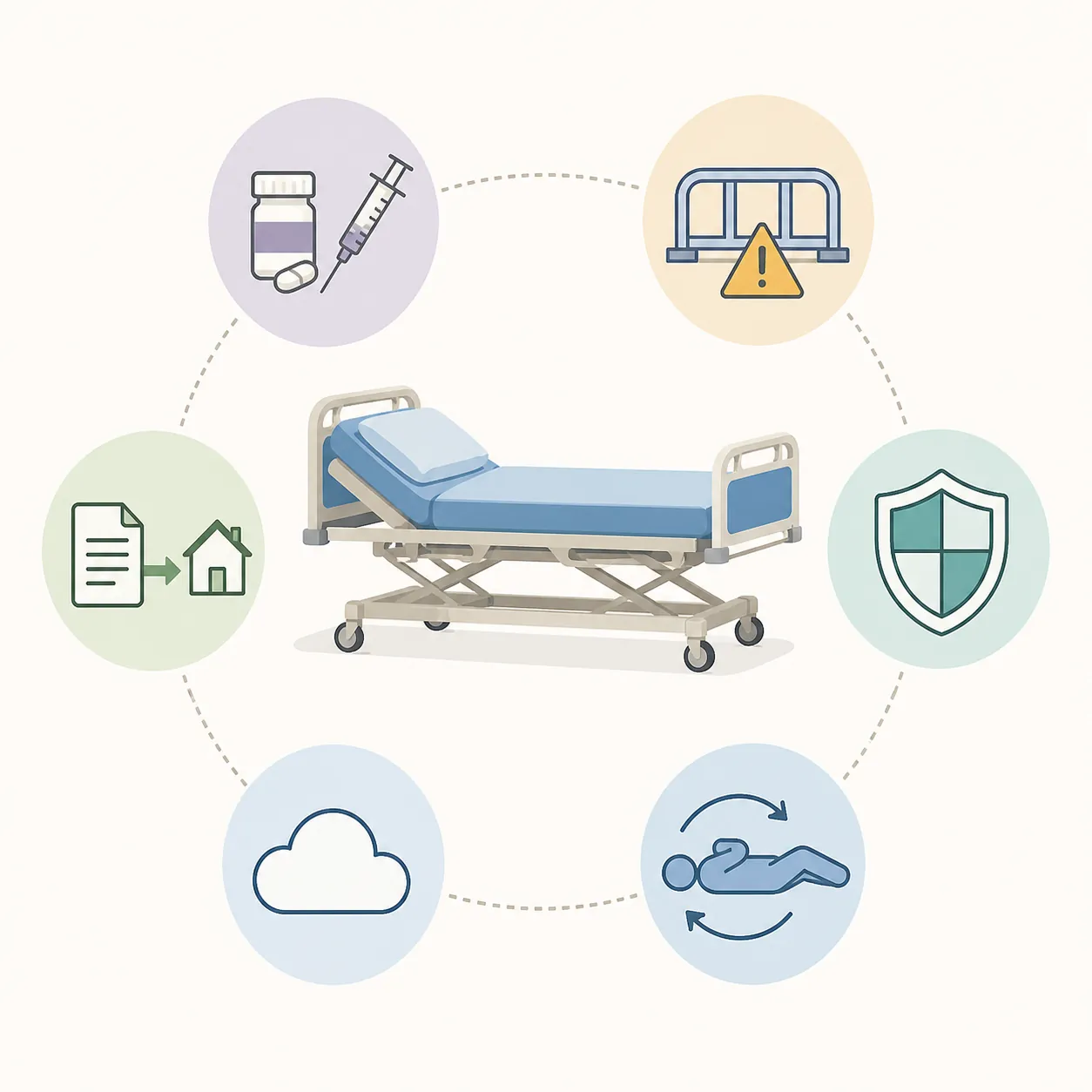
Most harm to older hospital patients clusters into a predictable handful of events — medication errors, falls, infections, pressure injuries, delirium, and discharge mix-ups — and families are the only continuous observers at the bedside. This checklist spells out what to ask for, watch for, and do for each risk, plus how to escalate when staff don't respond.
If your parent is in the hospital, your job is not to police every clinician in the building. Your job is to be the one person who remembers what your parent is usually like, notices what changed, and turns worry into checks that can be repeated at every shift change.

This is not a substitute for medical, legal, or financial advice. Families are advocates and observers, not replacements for nurses, physicians, pharmacists, infection preventionists, therapists, or discharge planners. But a family caregiver can still protect an older parent from hospital errors during a stay by asking specific questions, watching for predictable harms, writing down answers, and escalating calmly when a safety concern is not being addressed.
The reason this role matters is uncomfortable but useful. In an October 2018 sample of hospitalized Medicare patients, the HHS Office of Inspector General found that 25% experienced harm; 43% of harm events were medication-related, and physician reviewers judged 43% of events preventable. That figure is Medicare-only and from one sampled month, not a prediction for every patient. It is still enough to justify preparation instead of vague hope.[1]
A newer OIG review found that hospitals did not capture about half of patient harm events in their incident-reporting systems. That does not mean every missed event is negligence. It does mean families should not be treated as nuisances when they raise a concrete concern: a new confusion, a missing walker, a medication that looks different, a catheter that no one has mentioned today.[2]
If possible, ask the hospital to list you or another trusted person as the family care partner. AHRQ PSNet notes that more than 42 states have passed CARE Act laws allowing patients to name a family care partner, a practical support for being included in discharge teaching and care conversations.[3]
Start with one bedside page
Use one notebook page, phone note, or shared document. The format matters less than making it easy for the next relative, nurse, or doctor to see what has changed. Put the date at the top. Add the room number, the nurse’s name for the shift if shared with you, the doctor or team name, and the best phone number for the family contact.
- Baseline: what your parent is normally like — alert, forgetful, walks with a cane, needs hearing aids, wears glasses, toilets independently, sleeps poorly, eats with dentures.
- Medication basics: home medication list, allergies, pharmacy name, recent changes, and anything your parent stopped because of side effects.
- Mobility: how your parent usually transfers, whether they need a walker, and whether they are safe getting to the bathroom alone.
- Today’s concerns: new confusion, pain, dizziness, skipped meals, loose IV dressing, redness on skin, missed bathroom help, or unclear discharge plans.
- Questions asked and answers given: include names when you can, but write neutrally. The point is continuity, not blame.
At every handoff you can manage — morning rounds, evening shift change, a phone check-in if you cannot be there — come back to the same six risk areas: medications, falls, infections, pressure injuries, delirium, and discharge.
| Risk | Ask for | Watch for | Do |
|---|---|---|---|
| Medication errors | A medication reconciliation and, when the list is complicated, a pharmacist review | New pills, skipped home medicines, allergy mismatches, unusual sleepiness, dizziness, or agitation | Keep a current list and ask what changed, why, and what continues after discharge |
| Falls | A fall-risk plan that matches your parent’s real mobility and bathroom habits | Getting up alone, bed alarm off, call bell out of reach, missing glasses or walker | Ask for bathroom help, non-skid socks, low bed, clear pathway, and mobility aid within reach |
| Infections | Hand hygiene, line/catheter checks, and daily review of whether a catheter is still needed | Fever, new pain, drainage, loose dressings, burning with urination, worsening cough | Speak up early and ask what signs the team is tracking |
| Pressure injuries | A turning/repositioning plan and skin checks if your parent is in bed or a chair for long periods | Redness, tenderness, moisture, heel pain, sacral pain, poor eating or drinking | Report skin changes promptly and ask about pillows, heel protection, nutrition, and moisture care |
| Delirium | A plan to prevent and respond to new confusion | Sudden confusion, hallucinations, reversed sleep, withdrawal, agitation, pulling at lines | Bring glasses, hearing aids, dentures, familiar items, daylight, orientation, and calm reminders |
| Discharge mix-ups | Written instructions in plain language before leaving | Unclear medication changes, missing equipment, no follow-up appointment, no home health plan | Review medications, equipment, warning signs, appointments, and who to call before transport arrives |
Medication safety: make every change visible
Medication harm deserves extra attention because it was the largest category in the OIG Medicare sample: 43% of harm events were medication-related.[1] Older adults often arrive with a long home list, over-the-counter medicines, supplements, recent dose changes, and old prescriptions that are still sitting in a pill organizer. The hospital team has to rebuild that list under time pressure.
Medication reconciliation is the process of comparing what the patient was taking before admission with what is ordered in the hospital and what should continue afterward. StatPearls describes it as a safety process used across transitions of care, where discrepancies can occur if medication histories, orders, or discharge lists do not match.[4]
Ask for
- A medication reconciliation using the list you brought from home.
- A pharmacist review if your parent takes many medicines, has kidney disease, has recent falls or confusion, or has had side effects before.
- A plain-language explanation for every new medication: what it is for, when it starts, common side effects to watch for, and whether it replaces something from home.
- Confirmation that allergies in the chart match the allergy band and what your parent or family reports.
Watch for
- A pill, injection, patch, or IV medicine you have not heard mentioned before.
- A home medicine that suddenly disappears without explanation.
- New dizziness, extreme sleepiness, nausea, rash, agitation, hallucinations, or a sudden change in walking.
- Two lists that do not match: the whiteboard, portal, printed medication list, pill organizer from home, or discharge paperwork.
Do
- Keep the home medication list updated in one place. Do not rely on memory at 6 a.m.
- Before a new medication is given, it is reasonable to ask: “Can you tell me what this is and what it is for?”
- If your parent is too confused, sleepy, or hard of hearing to answer allergy questions reliably, say so clearly.
- Write down each hospital medication change as one of four categories: started, stopped, changed dose, or continue as before.
- If something feels wrong, do not say “I think this is dangerous” as the first move. Say the concrete thing: “This pill is not on yesterday’s list,” or “She had a rash the last time she took that.”
Falls: protect the bathroom trip, not just the bed
AHRQ PSNet estimates that about 700,000 to 1 million patients fall in U.S. hospitals each year. It also reports that the AHRQ-funded Fall TIPS toolkit, used in more than 500 hospitals, has been associated with about 25% fewer falls. The useful lesson for families is not that one poster prevents every fall; it is that fall prevention works best when the patient’s specific risk is visible to everyone who enters the room.[5]
The most dangerous moment is often ordinary: a parent who hates bothering people decides to go to the bathroom alone. Add pain medicine, unfamiliar flooring, poor sleep, IV tubing, a missing walker, and glasses left on the tray table, and the room has changed faster than the patient realizes.
Ask for
- The current fall-risk status and what it means in this hospital.
- A bed alarm if your parent is confused, impulsive, weak, or likely to forget to call.
- A low bed position, non-skid socks, call bell within reach, and a clear path to the bathroom.
- The walker, cane, glasses, hearing aids, and dentures to be within reach before your parent is asked to stand or answer questions.
- Help with every bathroom trip if your parent is not steady or is newly confused. The Care Partner Project specifically includes requesting a bed alarm, non-skid socks, low bed, escorting bathroom trips, and asking to join a post-fall huddle among its caregiver safety actions.[6]
Watch for
- Your parent reaching for furniture, IV poles, or the tray table to steady themselves.
- The call bell clipped behind the bed, under blankets, or out of reach.
- A bed alarm that is turned off after care and not reset.
- New dizziness after medication, blood pressure changes, dehydration, or a long time in bed.
- A parent who insists they are fine but cannot remember where they are.
Do
- Say the practical sentence before you leave: “Please do not get up without calling. I am going to put the call button in your hand.”
- If you are present, call for help before the bathroom trip, not after your parent is halfway out of bed.
- If staff are busy and your parent is unsafe to stand, keep them seated or in bed and use the call button again. Do not attempt a transfer you cannot safely handle.
- If a fall happens, ask: “Can I be included in the post-fall review or huddle?” Then ask what changed in the plan: bathroom assistance, alarm, medication review, mobility aid, or observation.
Infections: small reminders are allowed
The CDC says about 1 in 38 hospital patients has at least one healthcare-associated infection on any given day.[7] Families cannot manage infection control, but they can notice breaks in routine: a dressing that is loose, a catheter no one has discussed, a hand-cleaning step skipped during a rushed entrance.
Ask for
- Everyone entering for hands-on care to clean their hands. The CDC includes patient and family reminders about hand hygiene among its patient-safety tips.[8]
- A daily answer to: “Does this catheter still need to be in?”
- What signs the team is watching for around an IV, central line, wound, surgical site, or urinary catheter.
Watch for
- A dressing that is wet, peeling, bloody, or visibly dirty.
- New redness, swelling, warmth, drainage, odor, burning with urination, worsening cough, fever, or chills.
- Your parent touching a line, dressing, or catheter because they are confused, itchy, or uncomfortable.
Do
- Use a calm prompt: “Would you mind cleaning your hands before you check the IV?”
- Tell the nurse early if your parent is pulling at tubes. Waiting until the line is out creates a bigger problem.
- Write down when a catheter, drain, or line was placed if you know it, and ask each day whether it is still needed.
Pressure injuries: look where the patient cannot see
Pressure injuries can start quietly when an older adult lies or sits in one position, has fragile skin, is damp from sweat or urine, is not eating well, or cannot feel pain clearly. Johns Hopkins describes bedsores as injuries caused by pressure that limits blood flow, commonly affecting areas such as the tailbone, hips, heels, ankles, elbows, and shoulder blades.[9]
Ask for
- A repositioning plan if your parent is spending most of the day in bed or a chair.
- Heel protection or pillows if heels are pressing into the mattress.
- Help with moisture care if your parent is incontinent, sweating, or unable to call in time.
- A nutrition or swallowing discussion if your parent is not eating or drinking enough.
Watch for
- Redness that does not fade after pressure is relieved.
- Complaints of burning, tenderness, heel pain, or tailbone pain.
- Wet sheets, damp gowns, bunched linens, tubing under the body, or crumbs in the bed.
- A parent who is too weak, sedated, or confused to shift position.
Do
- Report redness, pain, or skin breakdown as soon as you see it. Do not wait until the next day because you are unsure whether it “counts.”
- When staff reposition your parent, notice whether heels, elbows, oxygen tubing, catheter tubing, and wrinkles are relieved.
- If your parent is embarrassed about toileting or moisture, say it plainly to the nurse outside the room if needed. Skin care is safety care.
Delirium: say “this is new” as early as possible
Delirium is not just “acting old” or being difficult. For families, the key question is baseline: Is this how your parent normally thinks, talks, sleeps, and recognizes people? Health in Aging, from the American Geriatrics Society, emphasizes that family members play an important role in recognizing and preventing delirium in older adults, including staying with the patient when possible and keeping eyeglasses, hearing aids, and dentures available.[10]
This matters because confusion connects to other harms. A confused parent may pull out an IV, skip food and fluids, misunderstand medication questions, climb over a bedrail, or leave the hospital with instructions no one in the family can reconstruct.
Ask for
- An assessment when confusion is new, worse, fluctuating, or unlike your parent.
- Pain, infection, dehydration, medication side effects, constipation, urinary retention, sleep disruption, and low oxygen to be considered by the clinical team when appropriate.
- Glasses, hearing aids, dentures, and communication tools to be used before asking important questions.
- The room whiteboard to show the date, place, nurse name, family contact, and plan for the day when available. AARP also recommends familiar objects, normal routine cues, sunlight, and use of the room whiteboard during a hospital stay.[11]
Watch for
- A parent who is normally sharp but now cannot follow the conversation.
- Sleep-wake reversal: awake all night, hard to wake during the day.
- New paranoia, hallucinations, agitation, tearfulness, withdrawal, or unusual quietness.
- Pulling at IVs, oxygen, catheters, dressings, or bedrails.
- A sudden inability to use the call button, walker, phone, or hearing aids.
Do
- Use the sentence staff can act on: “This confusion is new for her.” Or: “He is usually able to tell you the date and manage his own medicines.”
- Bring or request the basics: glasses, hearing aids with batteries, dentures, familiar blanket or photo, phone charger, and a visible clock if allowed.
- Reorient gently: “You’re at the hospital. It’s Tuesday morning. I’m here. The nurse is coming back after labs.”
- If relatives rotate, keep the same baseline description in the shared note so every person says the same thing.
- If your parent is trying to climb out of bed, pulling lines, or too confused to stay safe, use the call button immediately and stay within sight if you can do so safely.
Discharge: do not let the handoff happen in a fog
Discharge is where hospital confusion follows the family home. AARP’s hospital-discharge guidance cites a 2025 Journal of General Internal Medicine study finding that nearly 40% of older adults made at least one medication error within a week of discharge. It also cites a 2023 Joint Commission Journal study in which more than 90% of patients felt confident they understood their care, yet only 43% to 64% could accurately recall key diagnosis, treatment, and medication details within two days of discharge.[12]
Confidence is not the same as a safe plan. Before your parent leaves, make the discharge instructions pass through ordinary language.
Ask for
- A medication list that clearly marks what to start, stop, continue, and change.
- Equipment to be arranged before discharge: walker, shower chair, raised toilet seat, oxygen, wound supplies, or anything the team says is needed. AARP notes that families should ask because equipment and home health may not be fully arranged unless the need is made explicit.[12]
- Home health, therapy, nursing, wound care, or aide services if your parent cannot safely manage at home.
- Follow-up appointments, lab checks, imaging, therapy visits, and who is responsible for scheduling each one.
- Warning signs that mean call the doctor, call home health, return to urgent care, or call emergency services.
Watch for
- Discharge paperwork arriving after transportation is already waiting.
- A medication list that says “resume home meds” without explaining what changed in the hospital.
- A walker, oxygen tank, wound dressing supply, or prescription that has been discussed but not ordered.
- Instructions given only to your parent when they are exhausted, medicated, hard of hearing, or confused.
- No name or phone number for questions after you get home.
Do
- Read the medication list out loud with the nurse or discharge planner. Circle anything you cannot explain back.
- Ask: “Which medications from home should not be taken anymore?” This catches duplicates and old bottles waiting in the kitchen cabinet.
- Ask: “What has to happen in the first 24 hours after we get home?” Then write those items at the top of the page.
- If mobility changed, ask the therapist or nurse to describe the safest transfer plan before leaving.
- If your parent is going home at higher fall risk, use discharge as the bridge into home safety rather than a separate project. Start with post-hospital fall prevention strategies and a room-by-room fall prevention checklist once the hospital handoff is complete.
When staff do not respond

Hospitals are busy places, and a delayed response is not automatically dismissal. Still, if the concern is safety — a confused parent climbing out of bed, a possible medication mismatch, a wet dressing, new weakness, or discharge without equipment — escalate by making the risk easier to act on.
- Repeat the concern calmly and specifically: “My father is trying to stand but cannot remember he needs help. I’m worried he will fall.”
- Use the call button or room phone and ask for the bedside nurse.
- If the bedside nurse is unavailable and the risk is still active, ask for the charge nurse.
- If the concern remains unresolved, ask how to contact the patient advocacy department, patient representative, or hospital ombudsman. VNS Health includes patient advocates and hospital ombudsmen among resources families can use when advocating for a patient.[13]
- If there is immediate danger — trouble breathing, chest pain, a fall, severe bleeding, sudden unresponsiveness, or another emergency — call for urgent help immediately using the hospital’s emergency process or the call button.
The wording matters. “Nobody is doing anything” may be how it feels, especially at night. “She is newly confused and trying to get out of bed with the IV pole” gives the next person a risk, a behavior, and an action to prioritize.
If you cannot be there all the time
Many families cannot keep someone at the bedside around the clock. That does not make the checklist useless. It means the system has to be simple enough for rotating relatives, phone-based advocates, and short visits.
- Choose one primary contact for the hospital whenever possible, then share updates with the rest of the family separately.
- Use a shared note with the six headings: medications, falls, infections, skin, confusion, discharge.
- Ask one person per day to call the nurse’s station at a reasonable time for a focused update, not a long interrogation.
- Leave a short baseline note in the room if allowed: “Normally wears hearing aids, walks with walker, recognizes family, needs glasses to read, becomes unsteady at night.”
- Ask whether the hospital portal shows medication lists, test results, discharge instructions, or team messages, and decide who will monitor it.
- When a new relative arrives, have them read the last update before asking staff the same questions again.
The final discharge safety pass
Before your parent leaves the hospital, stop long enough to make one final pass. This is not the time to understand every lab result. It is the time to make sure the next 24 to 72 hours are not built on assumptions.
- Medications: What starts, stops, changes, and continues? Which old bottles should be removed from the pill area at home?
- Equipment: Is the walker, oxygen, commode, shower chair, wound supply, or other equipment already ordered, delivered, or scheduled?
- Home services: Is home health, therapy, nursing, or aide support ordered if needed? Who will call, and by when?
- Follow-up: Which appointments are scheduled, which are pending, and who is responsible for making them?
- Warning signs: What symptoms mean call the doctor, call home health, go back to the hospital, or call emergency services?
- Contact: What number should the family use for discharge questions after leaving?
Families cannot prevent every harm. They can catch the predictable errors that fall between shifts, systems, and assumptions: the allergy band that does not match, the walker that never arrived, the new confusion that someone mistakes for normal aging, the discharge medication change that no one translated into plain language.
References
- Adverse Events in Hospitals: A Quarter of Medicare Patients Experienced Harm in October 2018 — Office of Inspector General, U.S. Department of Health and Human Services, 2022.
- Hospitals Did Not Capture Half of Patient Harm Events, Limiting Information Needed To Make Care Safer — Office of Inspector General, U.S. Department of Health and Human Services, 2025.
- Patient and Family Roles in Safety — AHRQ PSNet.
- Medication Reconciliation — StatPearls.
- The Ongoing Journey to Prevent Patient Falls — AHRQ PSNet.
- A Safe and Sound Hospital Stay — The Care Partner Project.
- About Healthcare-Associated Infections — Centers for Disease Control and Prevention.
- About Patient Safety — Centers for Disease Control and Prevention.
- Bedsores — Johns Hopkins Medicine.
- Tip Sheet: Managing Delirium in Older Adults — Health in Aging.
- What to Bring to a Hospital Stay — AARP.
- Hospital Discharge Tips for Older Adults — AARP.
- How to Be a Patient Advocate for a Family Member — VNS Health.
Related reading
Noticed something outdated or inaccurate on this page? Flag a correction. We review every report against CDC, NIA, and AARP HomeFit guidance before updating a page.
Part of the Fall Prevention section.