
STEADI: Intervene
What to Do When Your Elderly Parent Falls After a Stroke
A parent's fall after a stroke isn't automatically an ER trip. Know when to call 911, when helping them up at home is safe, and what to watch for in the 72 hours after.
If your elderly parent has fallen after a stroke and is still on the floor, start with the person in front of you, not with a long list of stroke recovery tips for elderly parents. Are they awake? Are they breathing normally? Are they bleeding, confused, in severe pain, or unable to get up? Those answers decide whether this is a 911 call or a careful assisted stand at home.
This is educational triage, not a diagnosis and not a substitute for emergency medical care. If a dispatcher, clinician, discharge plan, or your own concern says to call 911, call. It is better to be told the ambulance was not needed than to move someone with a head, neck, hip, or bleeding injury because everyone in the room felt embarrassed.

First decision: are they responsive and breathing?
Speak to them clearly. Use their name. Ask what happened. If they do not respond, are not breathing normally, or you cannot tell whether they are breathing, call 911 immediately and follow the dispatcher’s instructions.
If they are awake and breathing, do not rush to lift. A parent who had a stroke may be frightened, weak on one side, dizzy, or unable to explain pain clearly. Your next job is to decide whether moving them could make things worse.
- If they are unconscious, difficult to wake, or breathing abnormally: call 911.
- If they are awake but may have hit their head or neck: call 911 and do not move them unless a dispatcher tells you to.
- If they are awake, breathing, talking normally, and there are no red flags: keep them still for a moment and check for pain, bleeding, bruising, and whether they can move safely.
Call 911 if any red flag is present
The American Stroke Association tells caregivers to seek emergency care for serious falls involving severe pain, bruising, or bleeding. It also says minor falls more than two times within six months should trigger contact with a physician or physical therapist, which matters later if today’s fall is not an ambulance call. [1]
Use the stricter rule in the moment: if any of the following are present, call 911 rather than trying to solve the fall by yourself.
- They are unconscious, fainted, or are hard to wake.
- They have new confusion, slurred speech that is new or worse, sudden worsening weakness, or a change that makes you worry another stroke may be happening.
- They hit their head, might have hit their head, or you are not sure whether their head or neck was injured.
- They take blood thinners or have been told they are at higher bleeding risk.
- They have severe pain, especially in the hip, back, neck, head, shoulder, or wrist.
- You see bleeding, rapid swelling, major bruising, or a limb that looks out of position.
- They cannot move a leg or arm the way they usually can after the stroke.
- They cannot get up safely, even with simple support.
- You are too small, injured, shaken, or alone to help without risking a second fall.
That last point is not a personal failure. The European Stroke Organisation, citing Goto et al. 2019, reports that 34.1% of stroke survivors who fell could not get up by themselves. A parent stuck on the floor is not an unusual family disaster; it is a predictable safety problem after stroke. [2]
If you are heading to the ER, bring the medication list, stroke discharge paperwork if it is nearby, the time of the fall, what you saw, and what changed afterward. A simple hospital emergency safety checklist for elderly patients can help you avoid trying to remember everything while your parent is in pain.
If there are no red flags, decide whether helping them up is safe
A minor fall at home is one where your parent is awake, breathing normally, answering as usual, did not hit their head, has no severe pain, has no concerning bleeding or bruising, and can participate in getting up. “Participate” is the important word. If you would have to lift most of their body weight, drag them, pull under their arms, or haul on a weak shoulder, stop and call for help.
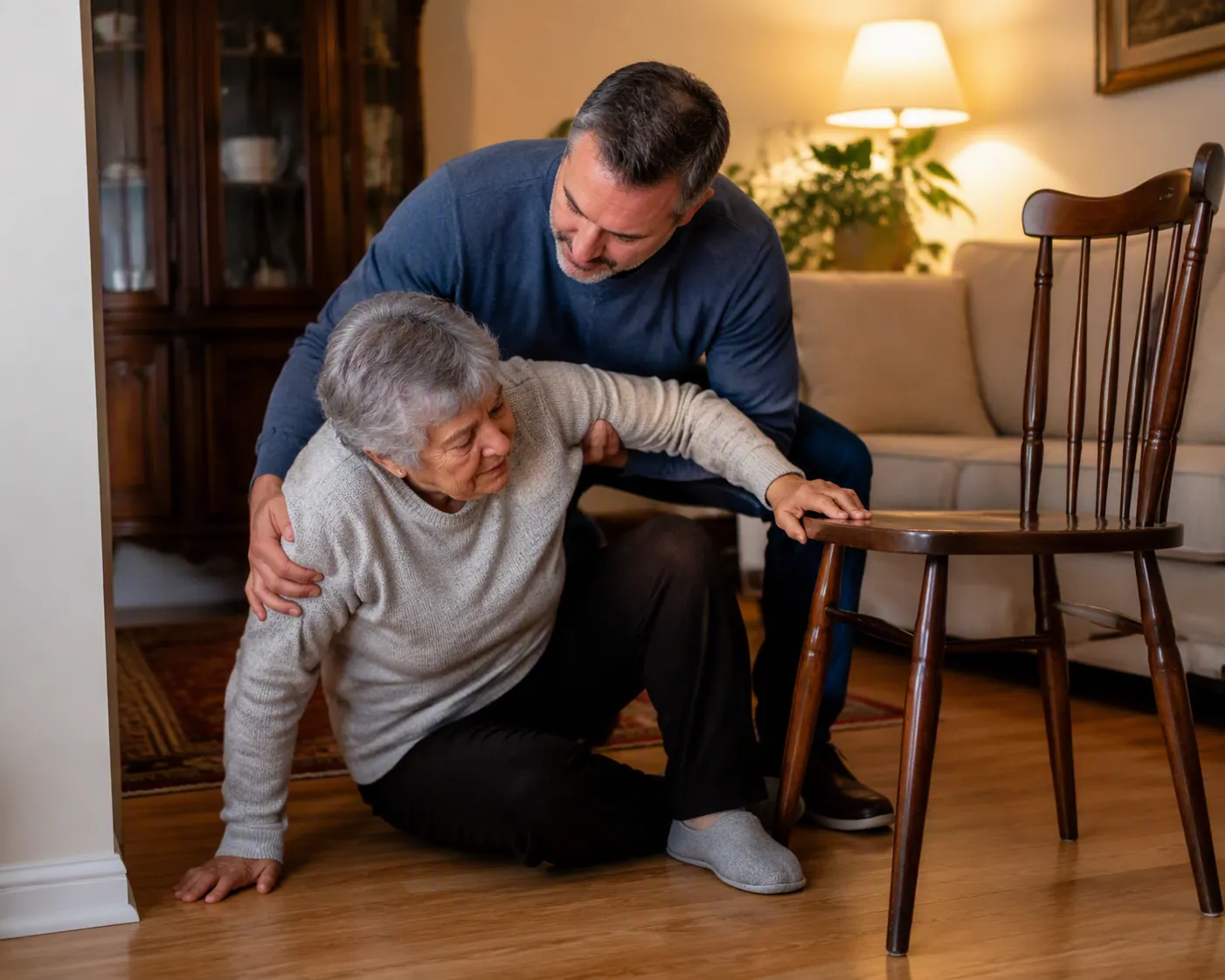
Before anyone moves, give the room a minute. Many caregivers injure themselves because the parent says “just help me up” and everyone obeys too quickly. Move pets away. Clear shoes, cords, rugs, and furniture legs from the path. Bring a sturdy chair close enough that your parent can use it, but not so close that it blocks their knees.
- Ask where it hurts. If the answer changes from “I’m fine” to hip, head, neck, back, wrist, or shoulder pain, stop.
- Ask them to move slowly. Do not yank an arm, especially the weaker arm after stroke.
- Have them roll to a side only if they can do so without head, neck, back, or hip pain.
- Use a sturdy chair, sofa, or other stable surface so they can push with their stronger side. Do not use a rolling chair, towel bar, walker that may slide away, or anything loose.
- Let them do the pushing. Your role is to guard, steady, and prevent a second fall, not to deadlift them from the floor.
- Once seated, wait. Check color, breathing, pain, dizziness, speech, and whether they seem like themselves before walking anywhere.
If the fall happened in the bathroom, be suspicious of the surroundings before you blame the parent’s balance. Wet tile, low toilets, towel bars used as grab bars, and narrow spaces make a small loss of balance harder to recover from. After the urgent part is over, review whether the support they reached for was actually load-bearing; a towel bar is not a grab bar.
The next 72 hours are part of the fall response
Once your parent is sitting in a chair, the fall is not automatically over. Some problems show themselves later: swelling becomes visible, pain sharpens when adrenaline fades, bruising spreads, or confusion becomes easier to notice when the house is quiet.
For the next 72 hours, check more often than usual. You do not need to hover every minute, but you do need a short watch list and a low threshold for calling the doctor, nurse line, or 911 if something changes.
- New or worsening confusion, unusual sleepiness, agitation, or behavior that is not typical for them.
- Headache, vomiting, dizziness, faintness, or any concern that the head was hit.
- New pain when standing, walking, using the bathroom, reaching, or turning in bed.
- Bruising or swelling that grows, especially around the head, hip, shoulder, wrist, ribs, or spine.
- Bleeding that restarts, does not stop, or appears in urine, stool, vomit, or from the nose or mouth.
- Walking that is worse than usual, new dragging of the foot, more leaning, or needing much more help than before.
- A new refusal to walk because they feel unsafe, dizzy, weak, or afraid.
New confusion after a fall deserves particular respect in a stroke survivor. If it is sudden, severe, paired with weakness or speech changes, or follows a possible head injury, treat it as urgent. If the change is more gradual but still real, write down what changed and use a structured guide for what to do first when a parent shows cognitive decline so the next conversation with the clinician is specific.
When one fall becomes a care-plan problem
A single minor fall can happen even in a careful home. Stroke often changes strength, coordination, attention, vision, sensation, and confidence. The CDC notes that stroke reduces mobility in more than half of stroke survivors age 65 and older, which helps explain why falls after stroke are not rare events. [3]
The line that should change your plan is repeated falling. The American Stroke Association’s caregiver guidance says that minor falls more than two times within six months warrant follow-up with a physician or physical therapist. The same guidance points caregivers toward PT or OT help for dizziness, imbalance that results in falls, difficulty walking, inability to walk six minutes without stopping, or inability to complete daily activities. [1]
At that point, do not settle for “be more careful.” Ask for specific services. The useful requests are plain:
- A physical therapy reassessment for gait, strength, transfers, stairs, dizziness, and safe floor recovery.
- An occupational therapy home evaluation for the exact places falls happen: bed, toilet, shower, recliner, kitchen, entryway, and nighttime path to the bathroom.
- A medication fall-risk review, especially if there is dizziness, sleepiness, low blood pressure, new confusion, or recent medication changes.
- Assistive-device fitting and training. A cane, walker, brace, or wheelchair that is the wrong height or used the wrong way can create new hazards.
- A written floor-recovery plan: who to call, where phones should be kept, whether a medical alert device is needed, and when the family must call 911 instead of lifting.
If you need a way to organize those requests before an appointment, the service framework in MS self-advocacy questions to prevent falls translates well to stroke caregiving: ask what is being evaluated, who is responsible, and what the family should do if another fall happens before the next visit.
For the broader plan after the crisis, use a fall-first stroke recovery checklist for elderly parents rather than trying to rebuild the whole recovery plan from memory on the day of the fall.
Do not let fear turn into permanent stillness
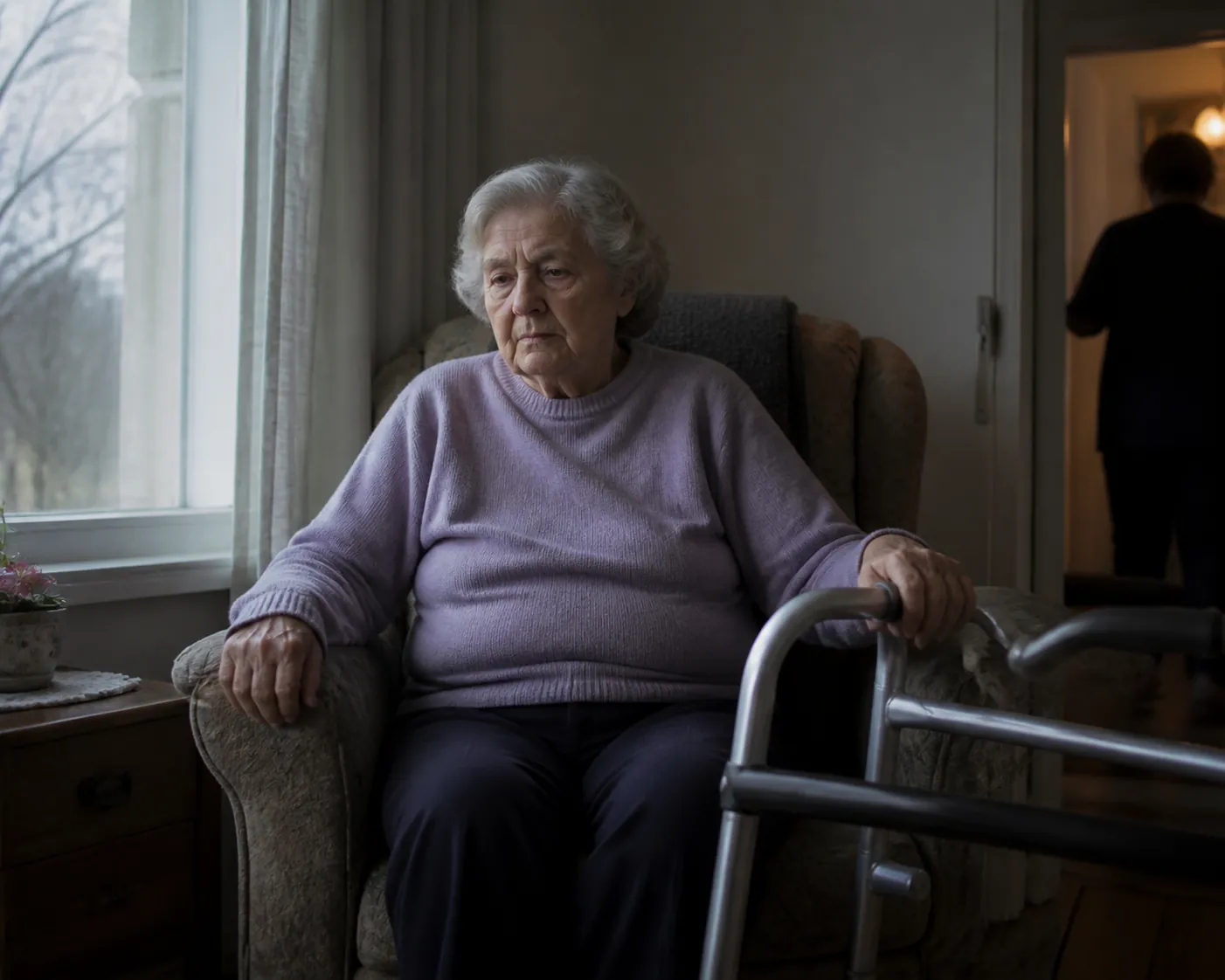
After a fall, many families quietly shrink the parent’s world. No more walking to the mailbox. No more shower unless someone is home. No more standing at the sink. Some restrictions are reasonable while you wait for medical advice or therapy. The problem starts when fear becomes the new care plan.
The American Stroke Association reports that 30% to 80% of stroke survivors say they fear falling. That fear matters because it can reduce activity, and less activity can feed weakness, poorer balance, and more dependence. [1]
This does not mean telling a frightened parent to “just stay active.” Cochrane’s 2019 review found that exercise may reduce the rate of falls after stroke, with a reported rate ratio of 0.72, but the evidence was low quality and the finding supports appropriate, guided exercise—not unsupervised pushing through dizziness, pain, or unsafe walking. [4]
If your parent becomes withdrawn, refuses normal activities, or seems newly hopeless after a fall, treat that as part of recovery, not as stubbornness. Fear, grief, and depression can look like “not trying.” A guide to signs of depression in elderly parents that are not sadness can help you decide what to document and raise with the clinician.
The safe path is narrow but clear: emergency signs need emergency care; a minor fall needs a slow assisted stand and 72-hour watch; repeated falls need reassessment; and recovery needs protected movement planned with the people trained to judge balance, transfers, medications, and home hazards.
References
- 15 Things Caregivers Should Know After a Loved One Has Had a Stroke, American Stroke Association
- Falls after a stroke, European Stroke Organisation
- Stroke Facts, Centers for Disease Control and Prevention
- Interventions for preventing falls in people after stroke, Cochrane, 2019
Related reading
Noticed something outdated or inaccurate on this page? Flag a correction. We review every report against CDC, NIA, and AARP HomeFit guidance before updating a page.
Part of the Fall Prevention section.