
How to Protect an Older Adult From Wildfire Smoke
A complete caregiver's guide to protecting older adults from wildfire smoke, covering home preparation, respiratory protection, medical equipment continuity, and evacuation readiness to reduce the disproportionate health risks they face during smoke events.
When the July 2026 smoke alerts spread across the country, they were not a distant Western-state problem. More than 115 million people in 20 U.S. states were under hazardous air quality alerts from Canadian wildfire smoke, according to the American Red Cross.[1] For a caregiver, that alert changes the evening quickly: the sky turns orange-brown, the air conditioner is running, an older parent is using oxygen or a CPAP machine, and someone has to decide whether to close up the house, call a neighbor, move medications, or start packing.
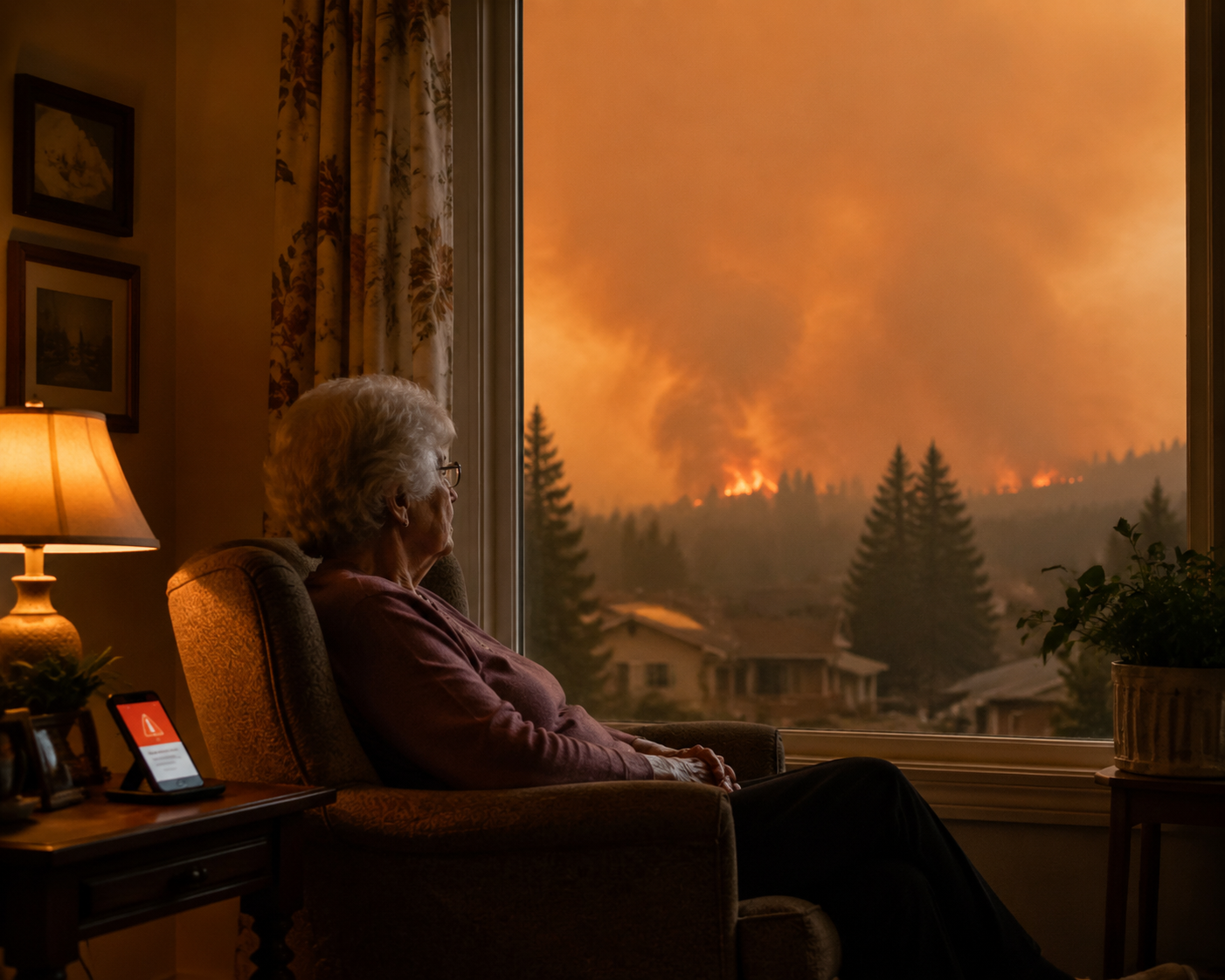
The first rule of protecting an older adult from wildfire smoke is that they should not be treated as an average adult with a little extra caution added on. Wildfire smoke contains fine particles that can travel deep into the lungs and enter the bloodstream. AARP, citing research on fine-particle pollution, reports that wildfire smoke can be about 10 times more toxic than comparable doses of ambient PM2.5 from fossil fuel combustion.[2] That difference matters because the usual advice to “limit outdoor activity” is too thin for someone with COPD, heart disease, diabetes, chronic kidney disease, limited mobility, or equipment that depends on electricity.
A good smoke plan has to answer practical questions in order: Is the air getting worse right now? Where is the cleanest room? Can the person breathe safely if they must go outside? Will their medications, oxygen, CPAP, hearing aids, walker, and transportation still be usable if the power fails or evacuation orders come? And when does “watch closely” become “call 911”?
Why Older Adults Need a Different Smoke Plan
Older adults are more likely to live with the very conditions wildfire smoke aggravates. The EPA identifies people with heart or lung disease, older adults, children, pregnant people, outdoor workers, and people with lower socioeconomic resources as groups at increased risk from wildfire smoke exposure.[3] For an older adult, the risk is rarely just “lungs.” Smoke can worsen breathing, strain the heart, interact with heat stress, reduce stamina, disturb sleep, and make existing caregiving routines harder to carry out.
The emergency data are not subtle. AARP reports that wildfire smoke contributed to more than 52,000 premature deaths in California from 2008 through 2018, based on a 2024 Science Advances study.[2] It also cites CDC findings that asthma emergency department visits rose 82% on severe smoke days.[2] Those numbers do not mean every older adult exposed to smoke will have an emergency. They do mean caregivers should treat a smoke alert as a medical-preparedness event, not only as a weather inconvenience.
Heat makes the decision harder. Smoke season can overlap with high temperatures, and a fully sealed house may become unsafe if the cooling system is weak, the power is unstable, or the older adult cannot sense or communicate overheating. The safer plan is not simply “close everything and wait.” It is to create the cleanest feasible indoor air while keeping cooling, hydration, medical equipment, and an exit plan intact.
Smoke can also raise fall risk indirectly. Dizziness, weakness, confusion, poor sleep, coughing, and hurried movement during alerts can make an older adult less steady. That is a secondary issue, not the main frame. If you are already managing fall risk during smoke events, this related guide on why wildfire smoke is a fall hazard for seniors can sit beside, not replace, the smoke-safety plan.
Start With Real-Time Air Quality, Not Yesterday’s Forecast
Wildfire smoke moves unevenly. A neighborhood can look clearer in the morning and become unhealthy by dinner. Caregivers should check current conditions through AirNow.gov, local emergency alerts, or local public health updates before deciding whether an older adult should go to an appointment, open windows, exercise outdoors, or wait for a ride.[4]
For families who need help interpreting AQI categories, use a dedicated guide rather than guessing from sky color. Our AQI guide for protecting an aging parent explains what the alert levels mean in caregiver terms. In the middle of a smoke event, a shorter air quality alert safety checklist for seniors may be easier to use by phone with a neighbor or home aide.
| Caregiver decision | What to check before acting |
|---|---|
| Can they go outside? | Current AQI, symptoms, exertion required, mask tolerance, transportation time |
| Can windows be opened? | Outdoor smoke level, indoor temperature, cooling options, whether a cleaner room is available |
| Should an appointment be rescheduled? | Medical urgency, travel distance, waiting-room exposure, availability of telehealth |
| Should someone check in? | Symptoms, cognition, power status, medication access, whether the older adult can follow instructions |
| Should evacuation planning start? | Official alerts, mobility limits, oxygen or CPAP dependence, medication refrigeration, caregiver distance |
Build the Clean-Air Room Before the House Smells Like Smoke
The clean-air room is the center of the home plan. It gives an older adult one place to sleep, rest, use medical equipment, take medications, and wait while outdoor smoke is high. It does not have to be fancy. It does have to be chosen and stocked before the caregiver is trying to troubleshoot everything at 9 p.m.
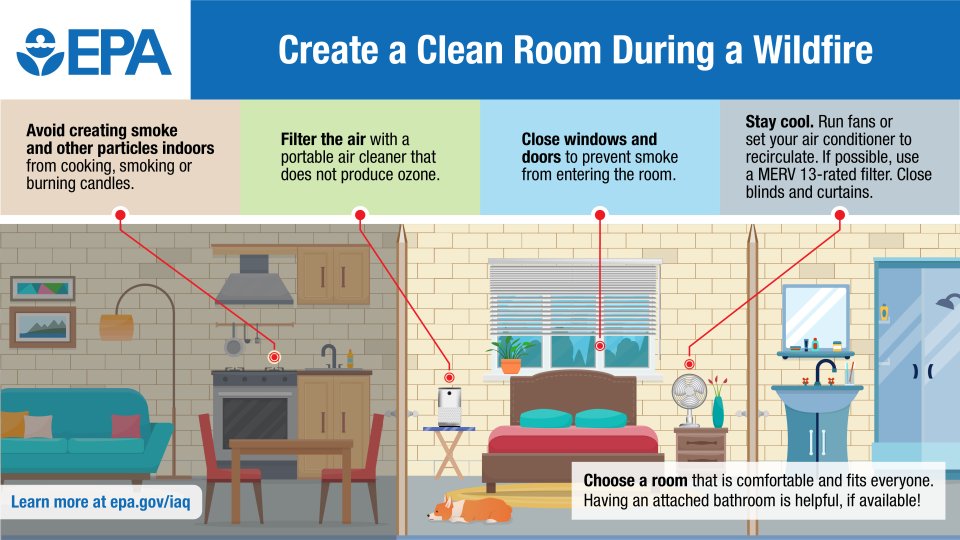
Choose a room where the older adult can comfortably spend many hours: usually a bedroom or living room with a door that closes, few drafty openings, access to a bathroom nearby, and enough electrical outlets for medical devices and an air cleaner. Close windows and exterior doors. Limit activities that add particles indoors, such as frying food, burning candles, vacuuming without a HEPA filter, or smoking. If the home uses central air, use the highest-rated filter the system can safely handle and set the system to recirculate if that option is available.[5]
A portable HEPA air cleaner is the most useful single purchase for many households. Oregon State University Extension estimates that portable HEPA air cleaners reduce indoor PM2.5 by about 45% during wildfire events.[6] Broader research has reported higher reductions in some indoor air pollution contexts, but the conservative wildfire-specific figure is the better expectation to plan around. A cleaner that reduces particles by roughly half can be meaningful for someone with vulnerable lungs or a strained heart, but only if it is sized for the room, kept running, and not fighting constant smoke leaks.
Place the cleaner where airflow is not blocked by curtains, bedding, or furniture. Do not put it so far from the older adult that the cleanest air is across the room while the person sleeps beside a leaky window. Keep replacement filters on hand if the manufacturer recommends them. If the older adult uses oxygen, confirm equipment placement and electrical load with the oxygen supplier or clinician rather than improvising a crowded extension-cord setup.
Use DIY Box Fan Filters Only With Guardrails
A do-it-yourself box fan filter can help in some households when no portable HEPA cleaner is available, but it is not the first choice for an older adult’s smoke plan. AirNow warns that box fans made before 2012 may pose an electrical fire risk, and DIY fan-filter units should not be left unattended.[4] That warning matters in homes where the caregiver is not present overnight, the older adult has memory loss, or the spouse caregiver cannot safely move the unit.
If a DIY setup is the only immediate option, use a newer fan, follow public health or manufacturer guidance, keep it away from water and tripping paths, and do not run it while no one responsible is awake and nearby. A long-distance caregiver should not mail filters to a parent with dementia and assume the problem is solved.
What to Do During an Active Smoke Event
Once the air quality is unhealthy for the older adult, the goal is to reduce exposure and avoid decisions that create a second emergency. Move the person into the clean-air room early, before coughing, fatigue, or confusion makes the move harder. Bring water, medications, phone, charger, glasses, hearing aids, mobility device, tissues, pulse oximeter if prescribed, and any written action plan for asthma, COPD, heart disease, or diabetes.
- Close windows, exterior doors, and fireplace dampers if safe to do so.
- Run the portable HEPA cleaner continuously in the selected room.
- Reduce outdoor trips, including errands that can wait or be reassigned.
- Avoid indoor particle sources such as candles, frying, fireplaces, tobacco smoke, and unnecessary vacuuming.
- Check symptoms at regular intervals, especially breathing, chest discomfort, confusion, weakness, and unusual fatigue.
For a parent with COPD or another chronic lung condition, a room-by-room plan can remove guesswork. Use the air quality checklist for seniors with COPD to identify where smoke is likely entering and what should be moved into the clean-air space.
Respirators Help Only When They Fit and Can Be Tolerated
If an older adult must go outside during smoke, a NIOSH-approved N95 or P100 respirator can reduce inhaled fine particles when it seals properly to the face. CDC guidance notes that N95 respirators filter at least 95% of airborne particles when properly fitted and used.[7] A loose surgical mask, cloth face covering, or mask worn under the nose does not provide the same protection from fine smoke particles.
The caveat is not small print. People with severe lung disease may have difficulty breathing through an N95, and a frightened or breathless older adult may pull the respirator away from the face. Caregivers should ask the person’s healthcare provider in advance whether respirator use is appropriate, especially for severe COPD, advanced heart disease, oxygen use, or a history of panic with restricted breathing.
Fit also depends on the face. Facial hair, deep wrinkles, a very small face, or poor dexterity can make a seal difficult. Practice on a clear-air day. Have the older adult put the respirator on, shape the nosepiece, check for gaps, and sit quietly for a few minutes. If they become dizzy, short of breath, or distressed, do not wait for a smoke emergency to discover that the plan is unusable.
Keep Medications and Medical Equipment Usable
This is where many generic smoke checklists fail older adults. Staying indoors is not enough if the oxygen concentrator stops, the CPAP machine has no power, insulin gets too warm, the hearing aid batteries are dead, or the walker is in the garage behind boxes. During smoke season, medical continuity belongs in the same plan as air filtration.
CDC wildfire guidance tells people to prepare for power outages, gather emergency supplies, and follow local evacuation instructions.[7] For an older adult at home, that general instruction becomes a specific inventory: what equipment uses electricity, what medication requires refrigeration, what supplies must travel with the person, and who knows how to operate or move each item.
| Need | Caregiver action |
|---|---|
| Oxygen concentrator | Ask the supplier about backup tanks, battery options, power needs, and evacuation instructions. |
| CPAP or BiPAP machine | Identify backup power, pack tubing and mask, and keep distilled water if required. |
| Refrigerated medication | Plan for a cooler, cold packs, temperature guidance from the pharmacist, and transport during evacuation. |
| Daily medications | Maintain at least a 7-day supply when possible and keep an updated medication list. |
| Inhalers and nebulizers | Confirm refill status, spacer availability, cleaning supplies, and whether the nebulizer needs electricity. |
| Diabetes supplies | Pack meter or CGM supplies, strips, batteries, snacks, water, sharps container, and medication storage. |
| Hearing, vision, and mobility | Keep hearing aid batteries, glasses, cane, walker, wheelchair parts, and chargers accessible. |
A long-distance caregiver should make this plan visible to the people who may actually be there: a spouse, neighbor, home health aide, building manager, or nearby adult grandchild. Put a one-page equipment list on the refrigerator or inside the emergency folder. Include device names, power needs, supplier phone numbers, clinician contacts, medication allergies, pharmacy information, and where supplies are stored.
Do not assume the older adult can lift or relocate equipment during an alert. A portable air cleaner, oxygen tank, box fan, or emergency water supply may be light enough for one caregiver and unsafe for an older spouse. If supplies must be moved into the clean-air room, decide in advance who moves them.
Prepare for Evacuation Before the Order Comes
Smoke sometimes arrives without nearby flames, but caregivers should not separate smoke planning from evacuation planning. The same person who is vulnerable to smoke may also need extra time to leave, extra space for medical equipment, and a destination that can handle oxygen, mobility aids, pets, or refrigerated medication.
AirNow recommends identifying cleaner-air spaces before smoke becomes severe, including places with filtered air or public clean-air shelters when available.[4] That step is especially important for older adults in homes without reliable cooling or filtration. A shelter is not automatically a good fit, though. Confirm accessibility, transportation, medical-device rules, power availability, restroom access, and whether a caregiver can stay.
- A 7-day medication supply, if refills and insurance allow.
- Medication list, diagnoses, allergies, insurance cards, advance directive, and clinician contacts.
- Chargers, backup battery packs, hearing aid batteries, glasses, dentures, and mobility-aid accessories.
- N95 or P100 respirators if approved and tolerated, plus a few spares.
- Water, snacks that do not require refrigeration, incontinence supplies, wipes, and a change of clothes.
- Oxygen, CPAP, nebulizer, diabetes, wound-care, or other device supplies with written setup instructions.
If the older adult resists leaving, do not wait until the only remaining option is a rushed argument at the door. Discuss the threshold in advance: an evacuation order, loss of power needed for oxygen or cooling, uncontrolled symptoms, indoor heat, or inability to keep the clean-air room functioning. A familiar destination helps. So does a written plan that names who will drive, who will call, and what gets packed first.
For families building a broader emergency kit, the senior storm safety checklist can help with lighting, batteries, tripping hazards, and power-outage routines that overlap with smoke-season planning.
When Symptoms Mean Emergency Care
Caregivers should not wait for a perfect AQI number before responding to symptoms. Some older adults deteriorate before the household realizes how much smoke has entered the home. Others underreport symptoms because they do not want to be a burden or do not connect fatigue, confusion, or chest tightness with smoke exposure.
Seek urgent medical help or call 911 for difficulty breathing, chest pain or pressure, irregular heartbeat, severe wheezing that does not improve with the person’s prescribed plan, bluish lips or fingernails, fainting, new confusion, slurred speech, one-sided weakness, or a severe headache. CDC, AARP, and Red Cross wildfire guidance all emphasize taking serious symptoms promptly rather than trying to manage worsening breathing or cardiac signs at home.[1][2][7]
For chronic disease plans, follow the clinician’s instructions rather than inventing new medication routines during a smoke event. An asthma, COPD, heart failure, or diabetes action plan should say which symptoms can be monitored, which medication changes are allowed, and which signs require same-day care.
A Practical Caregiver Workflow
The plan does not need to be elegant. It needs to work when the caregiver is tired, the older adult is anxious, and the air is getting worse. Put the workflow somewhere visible and share it with every person who may be asked to help.
- Monitor current air quality through AirNow.gov or local emergency alerts, and recheck when conditions shift.
- Move the older adult into the clean-air room before symptoms or fatigue make the transition harder.
- Run the portable HEPA cleaner, reduce indoor particle sources, and keep cooling and hydration safe.
- Use a properly fitted N95 or P100 respirator only when outdoor exposure is unavoidable and medically tolerated.
- Confirm medications, oxygen, CPAP, refrigerated supplies, chargers, batteries, mobility aids, and documents are ready.
- Escalate quickly for serious breathing, heart, neurologic, or confusion symptoms, and leave if the home plan can no longer keep the person safe.
If you need a crisis-mode version to print or send to another caregiver, use the wildfire smoke safety checklist for older adults. The full plan is still worth building, because a checklist cannot know whether your parent’s oxygen supplier delivers backup tanks, whether their insulin can stay cold during a power outage, or whether the person who promised to check in can lift the air purifier safely.
No caregiver can remove wildfire smoke risk completely. But a plan that protects indoor air, handles unavoidable exposure carefully, keeps medications and medical equipment usable, prepares for evacuation, and names emergency symptoms gives an older adult at home a materially safer margin.
References
- What You Should Do as Wildfire Smoke Moves Across U.S., American Red Cross, July 2026, link
- 8 Ways Wildfire Smoke Affects Your Health, AARP, July 17, 2026, link
- Who is at Increased Risk of Health Effects from Wildfire Smoke Exposure?, EPA, link
- Be Smoke Ready, AirNow, link
- During the Fire, National Center for Healthy Housing, link
- Protecting Indoor Air from Wildfire Smoke, Oregon State University Extension, link
- Safety Guidelines: Wildfires and Wildfire Smoke, CDC, link
Related reading
Noticed something outdated or inaccurate on this page? Flag a correction. We review every report against CDC, NIA, and AARP HomeFit guidance before updating a page.
Part of the Fall Prevention section.