
STEADI: intervene
How to Prevent Falls During an Extreme Heat Warning
Extreme heat warnings create a hidden fall-risk cascade in older adults through dehydration, medication effects, and sudden fainting. This guide explains the physiological chain and provides immediate actions for dizziness plus a preparation checklist for caregivers.
If an older adult feels lightheaded during an extreme heat warning, treat that moment as a fall warning. Do not ask them to walk to another room, stand at the sink, or “see if it passes.” The safer first move is to get the body low before the blood pressure drops further.
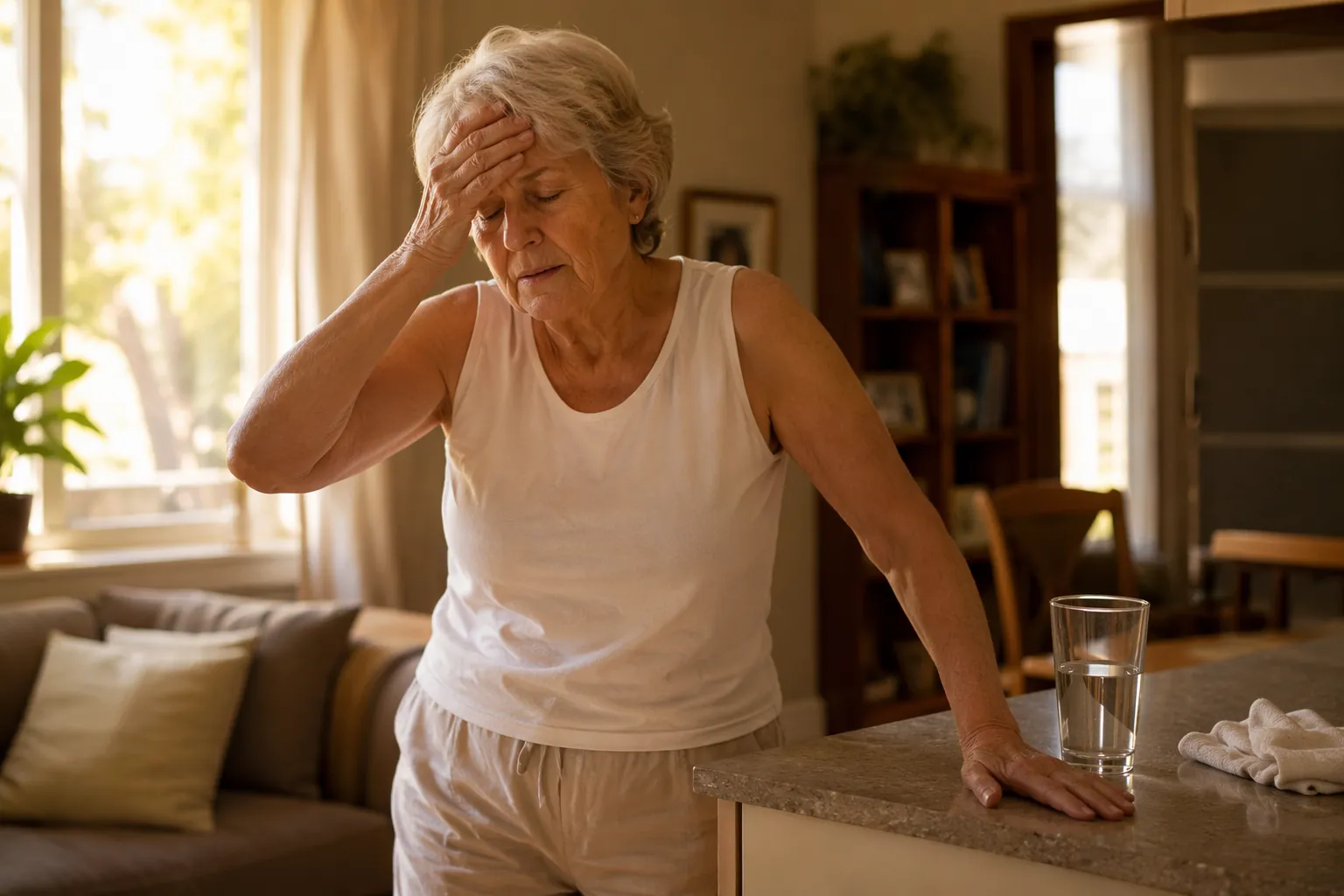
Have the person lie down right away, ideally on their back, with legs raised above heart level. If lying flat is not possible, have them sit with their back supported and head lowered only if they can do so safely. Cool the neck, wrists, armpits, and groin with damp cloths or cool packs wrapped in fabric. Offer small, slow sips of cool water if they are awake, alert, and able to swallow. If a blood pressure monitor is nearby, check pressure while seated or lying down; do not make the person stand just to “test” whether they are better. The immediate goal is not to finish a glass of water. It is to prevent the next step: fainting and falling.
- Do not let the person walk it off; fainting can follow the dizzy phase.
- Move them out of direct sun or away from a hot room if this can be done without walking.
- Loosen tight clothing and start cooling the skin at pulse points.
- Use slow sips, not forced drinking, especially if nausea is present.
- Call for help if they are alone, confused, weak, or unable to get safely to the floor.
Home-safety guidance for heat and humidity makes the same practical point: dizziness in heat is not a symptom to push through, because it can turn into a sudden fall before anyone has time to reorganize the room around the person [1].
Know the 911 Boundary Early
Heat stroke is the line that does not belong in a wait-and-see plan. Call 911 if the person has a body temperature above 103°F, hot red skin, a rapid strong pulse, confusion, loss of consciousness, seizure, or any altered mental status. While waiting, start cooling with whatever is available: shade, air conditioning, cool cloths, a fan, or a cool bath if it can be done safely. Do not give fluids to someone who is unconscious, confused enough to choke, or unable to swallow safely [2].
This article is not a substitute for emergency care, and medication changes should not be made without a doctor or pharmacist. But caregivers do need a fast distinction: dizziness that improves when lying down may still be dangerous, while confusion, hot skin, collapse, or altered consciousness belongs with emergency services.
Why Heat Turns Standing Up Into the Risky Moment
The fall risk often starts before a person looks severely ill. In heat, the body sweats and shifts blood toward the skin to release heat. Older adults are more vulnerable because aging can reduce sweating capacity and make temperature regulation less efficient [3][4]. The person may still be speaking normally, still insisting they are fine, and still be one stand-up away from losing balance.
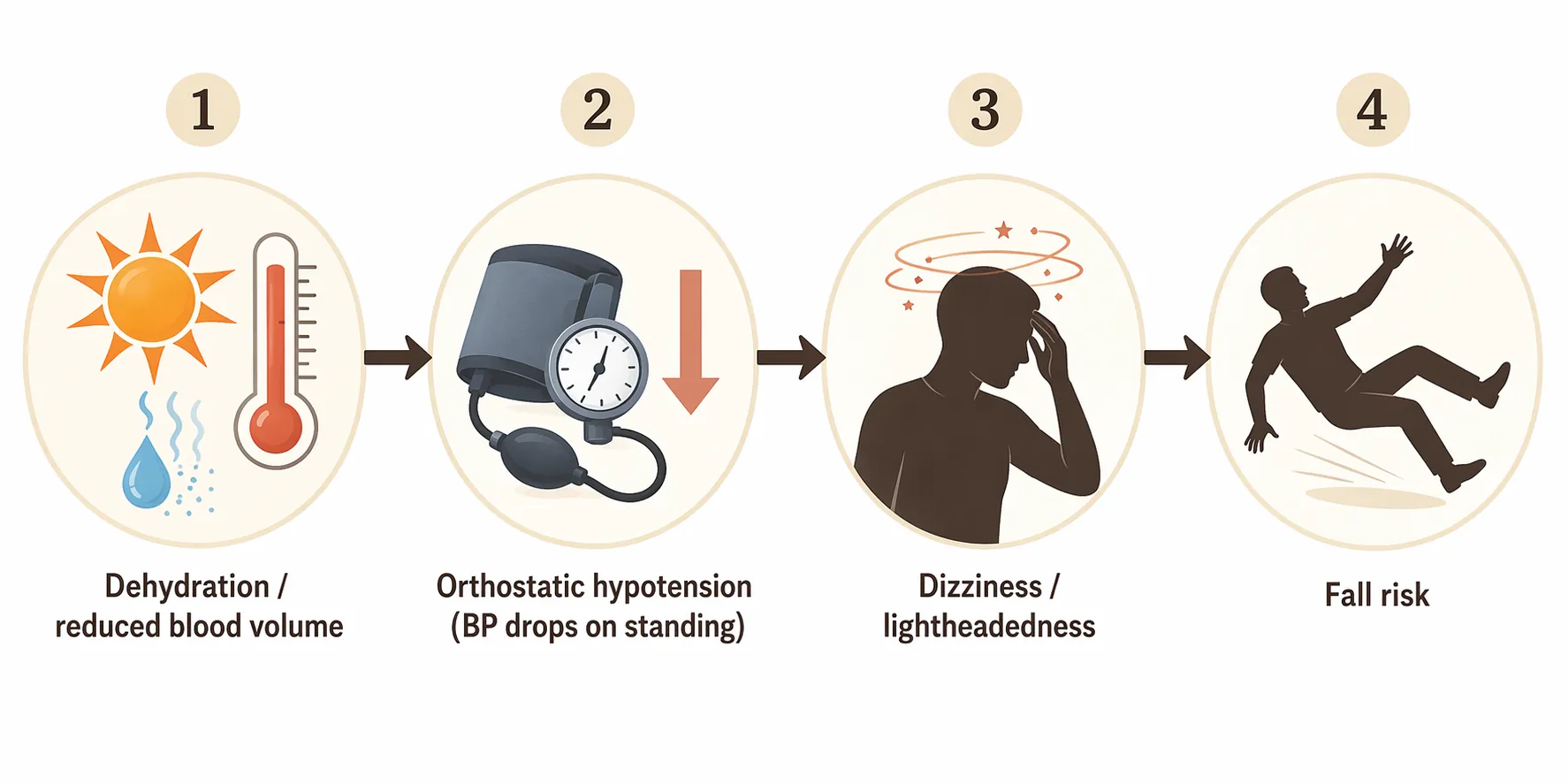
Dehydration reduces blood volume. With less fluid circulating, the heart has less volume to push upward when a person stands. Blood pressure can drop, the brain briefly gets less blood flow, and vision may narrow or gray out. That is orthostatic hypotension: a blood pressure drop related to position change. In a younger person it may feel like a quick head rush. In an older adult with slower reflexes, weaker legs, neuropathy, arthritis, or a walker parked across the room, the same head rush can become a fall.
Heat adds another problem. Blood vessels widen to move heat toward the skin. If blood pools in the legs and the heart cannot compensate quickly enough, the person may faint. This is why the advice to lie down with legs elevated is not just comforting. It uses gravity to bring blood back toward the heart and brain while cooling begins.
A 2025 study in npj Climate and Atmospheric Science gives this heat-fall connection more weight, but it should be read carefully. In older adults in China, researchers found that for every 1°C above the minimum mortality temperature, fall-related mortality risk rose by 1.48%, with higher risk among the oldest old [5]. That does not prove the exact share of U.S. senior falls caused by heat. It does support a narrower and useful point: high temperature and fall outcomes are connected strongly enough that fall prevention belongs inside heat-warning planning.
The Medication Multiplier
Medication is where many heat-safety checklists become too vague. The issue is not only that a drug may make someone “sensitive to heat.” Some medications affect cooling, blood pressure, alertness, and balance at the same time.
CDC clinician guidance identifies several medication categories that can increase heat-related risk, including diuretics, beta blockers, selective serotonin reuptake inhibitors and serotonin-norepinephrine reuptake inhibitors, antipsychotics, anticholinergics, and benzodiazepines [6]. For fall prevention, those categories matter because the same pill bottle that changes sweating or fluid balance may also increase dizziness, sedation, slowed reaction time, or blood pressure drops.
| Medication category | Why it matters during heat |
|---|---|
| Diuretics | Can contribute to fluid loss and dehydration, which may worsen blood pressure drops on standing [6]. |
| Beta blockers | Can reduce cardiac output and superficial vasodilation, limiting heat dissipation and making compensation harder during position changes [6]. |
| SSRIs and SNRIs | Can affect thermoregulation and may also contribute to dizziness or unsteadiness in some people [6]. |
| Antipsychotics | Can impair temperature regulation and may add sedation or movement-related fall risk [6]. |
| Anticholinergics, including diphenhydramine | Can interfere with sweating; CDC guidance notes that anticholinergic antihistamines can block sweat gland function [6]. |
| Benzodiazepines | Can add sedation, slowed reaction time, and balance impairment, which become more dangerous during dehydration or heat stress [6]. |
The practical step is a medication review before the next heat warning, or as early in the season as possible, not a rushed decision during a warning. Ask the pharmacist or prescribing clinician three plain questions: Does this medication reduce sweating, thirst, or heat tolerance? Can it cause dizziness, sedation, or blood pressure drops? If an extreme heat warning is expected, is there anything about timing, monitoring, or hydration that should change? The answer may be “no change,” and that is still useful information. What should not happen is stopping a beta blocker, diuretic, antidepressant, antipsychotic, sleep medicine, or antihistamine abruptly because the forecast looks bad.
Over-the-counter drugs deserve the same attention. Diphenhydramine, often used for allergies or sleep, is an anticholinergic. In hot weather, “just a sleep aid” can become part of a larger balance problem, especially if the person wakes at night dehydrated and walks to the bathroom in the dark.
Dizzy, Exhausted, or in Heat Stroke?
The labels matter only because they change the next move. A person does not need a perfect diagnosis to be protected from a fall. They need the right level of urgency.
| Condition | What it can look like | What to do |
|---|---|---|
| Heat syncope | Sudden fainting or near-fainting from blood vessel dilation and blood pooling in the legs; the person may recover quickly after lying flat [7]. | Keep them down, elevate legs, cool the body, give slow sips if alert, and do not let them resume walking too soon. |
| Heat exhaustion | Heavy sweating, cold clammy skin, weakness, nausea, and a weak pulse [2]. | Move to a cooler place, loosen clothing, cool the skin, offer sips if safe, and get medical help if symptoms worsen or do not improve. |
| Heat stroke | Temperature above 103°F, hot red skin, rapid strong pulse, confusion, collapse, or altered consciousness [2]. | Call 911 immediately and begin cooling while waiting. |
Heat syncope is easy to underrate because the person may wake quickly and feel embarrassed. That quick recovery is not proof that walking is safe. It may only mean the brain received enough blood flow once the person was horizontal. Standing again can restart the same chain.
Prepare the Home Like the Warning Is a Fall Event
Extreme heat warning safety tips for seniors should start before the alert arrives. The aim is not to make the house perfect. It is to remove the predictable obstacles that appear when someone is hot, weak, thirsty, or rushing to the bathroom.
- Place a stable chair along the route between the bedroom, bathroom, and kitchen so the person has a planned place to sit before dizziness becomes a fall.
- Clear cords, shoes, throw rugs, pet bowls, and low clutter from the bathroom route, especially for nighttime trips.
- Use non-slip surfaces in and near the bathroom; humidity can make smooth floors more treacherous even indoors.
- Put water within reach of the usual chair, bed, and medication area so hydration does not require extra walking.
- Keep a blood pressure monitor, phone, medication list, and emergency contacts in a visible place.
Hydration also needs structure. Thirst can become less reliable with age, so a timer or routine often works better than waiting until a person feels thirsty [3]. A simple schedule might be a few small drinks across the day, adjusted for the person’s medical conditions and clinician guidance. People with heart failure, kidney disease, fluid restrictions, or diuretics need individualized advice; “drink more” is not always safe as a blanket instruction.
For caregivers managing from a distance, the most useful question is not “Are you drinking water?” It is “When did you last pee, what color was it, and did you feel steady when you stood up?” Reduced urination, new confusion, and unsteady gait give more information than reassurance offered by someone who does not want to worry a child.
Cooling Plans Need Addresses, Not Intentions
A cooling center plan is useful only if it is specific before the warning. Write down the nearest location, hours, transportation option, and whether the person can get there without standing in heat while waiting. Seniors with limited income may be eligible for cooling assistance through LIHEAP-related programs, and the National Council on Aging lists 1-866-674-6327 as the National Energy Assistance Referral line for help finding energy assistance, including support related to air conditioning [8].
For local cooling centers, 2-1-1 is often the most practical starting point because locations and hours can change by county and by event [9]. If the person would need to drive to a cooling center, build in the fall-risk details: where they will park, how far they will walk, whether they have a cane or walker in the car, and whether the return trip happens at the hottest part of the day.
Check-Ins Should Ask About Standing, Not Just Temperature
During an extreme heat warning, twice-daily check-ins are more useful when they are concrete. Ask whether the person felt dizzy when standing, whether they held onto furniture, whether they skipped meals, whether they urinated less than usual, and whether they are using any new allergy, sleep, pain, or cold medication. If the answer is vague, slow the conversation down. A person saying “I’m fine” while also admitting they sat on the edge of the bed for a long time before walking is giving you the important part.
If a fall has already happened during or after heat exposure, use a fall response plan rather than treating it as an ordinary stumble. CareWise Guide’s first 72 hours after a parent falls guide can help with the immediate observation window, but heat adds one more question: was dehydration, fainting, or medication-related dizziness part of the fall?
Keep Watching for 72 Hours After the Heat Breaks
The end of the weather warning is not always the end of the fall risk. Brown University Health advises monitoring older adults after heat exposure because lingering dehydration, electrolyte imbalance, and weakness can continue after the hottest hours have passed [10]. For a caregiver, that means the next three days still count.
- Watch for dizziness when rising from bed or a chair.
- Notice new confusion, slower responses, or unusual sleepiness.
- Ask about reduced urination or very dark urine.
- Look for a wider stance, furniture-walking, or hesitation before steps.
- Keep the bathroom route clear and the planned chair in place until strength is back to baseline.
The quiet danger is the delayed fall: the warning has expired, the family relaxes, and the older adult stands up too quickly after two difficult nights. Heat safety for seniors is still about cooling and fluids, but during an extreme heat warning it is also about timing. Sit before standing. Lie down before fainting. Review medications before the next heat warning. Keep watching stability after the air finally cools.
References
- How Heat and Humidity Can Impact Senior Safety at Home — Oakley Home Access
- Extreme Heat Safety — American Red Cross
- Heat and Older Adults (Aged 65+) — CDC
- The Effects of Heat on Older Adults — Harvard Medicine Magazine
- Age inequality in temperature-related fall mortality among old people in a warming climate — npj Climate and Atmospheric Science, 2025
- Heat and Medications – Guidance for Clinicians — CDC
- Supporting older adults to beat the heat — Injury Matters
- Cooling Assistance Programs That Can Help You Pay for Air Conditioners — NCOA
- How Can Older Adults Stay Safe During an Extreme Heat Event? — Cal OES News
- How Seniors Can Stay Safe in Summer — Brown University Health
Related reading
Noticed something outdated or inaccurate on this page? Flag a correction. We review every report against CDC, NIA, and AARP HomeFit guidance before updating a page.
Part of the Fall Prevention section.