
STEADI: intervene
How Extreme Heat Trips Up Seniors' Balance and What to Do
Extreme heat creates a physiological cascade—reduced thirst, dehydration, orthostatic hypotension, dizziness, and fatigue—that directly increases seniors' fall risk. This guide explains the mechanism with study data and provides a prevention checklist covering hydration timing, medication review, and home adjustments.
At 4 p.m. on a hot day, an older adult stands up from the kitchen table, takes two steps toward the sink, and stops. One hand goes to the counter. The room is not dramatic. No ambulance, no broken hip, no obvious emergency. Just a pause, a little lightheadedness, and maybe the familiar explanation: “It’s just the heat.”
That is exactly the moment extreme heat safety tips for seniors need to get more specific. Heat does not only threaten older adults by making them overheated outdoors. It can quietly change balance inside the home: less thirst, less fluid, lower blood volume, a blood-pressure drop when standing, then dizziness, confusion, fatigue, or one badly timed reach for the wall.
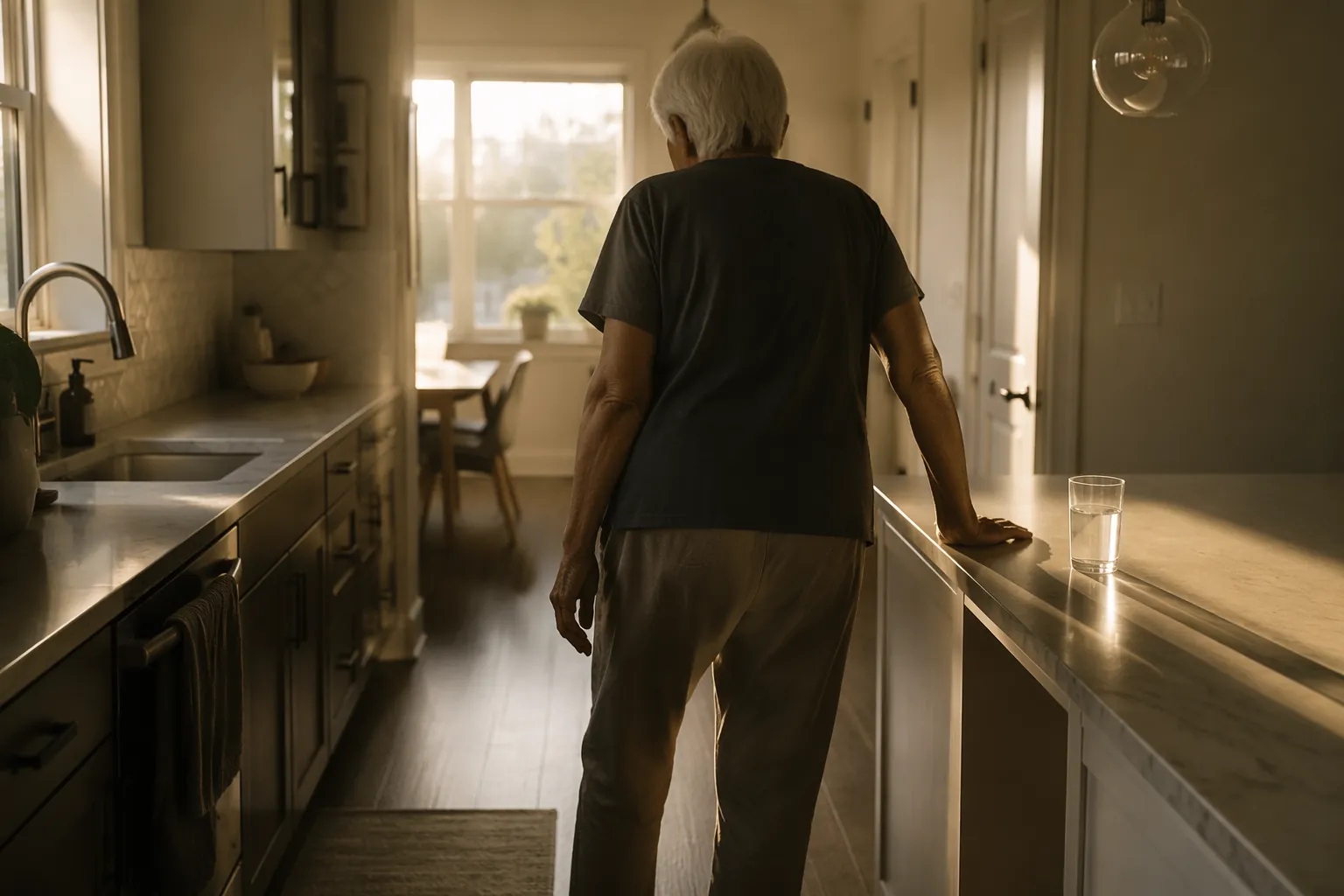
The fall may happen in the bathroom, hallway, kitchen, or bedroom. The chain often starts earlier, before anyone thinks to call it a fall-prevention problem.
The Hidden Heat-to-Fall Cascade
The most useful way to think about heat and senior falls is as a sequence, not as a weather warning. Older adults may not feel thirsty as reliably as younger adults, even when their bodies need fluid. Harvard Health describes this reduced thirst response as one reason older adults are more vulnerable during extreme heat.[1]
When fluid intake falls behind fluid loss, dehydration can reduce circulating blood volume. That matters when someone stands up. Blood pressure can drop, especially during the first moments after rising, and the person may feel dizzy, weak, foggy, or unsteady. Add heat fatigue, poor sleep, a dim hallway, or a hurried trip to the bathroom, and the “just wobbly” moment becomes a fall risk.
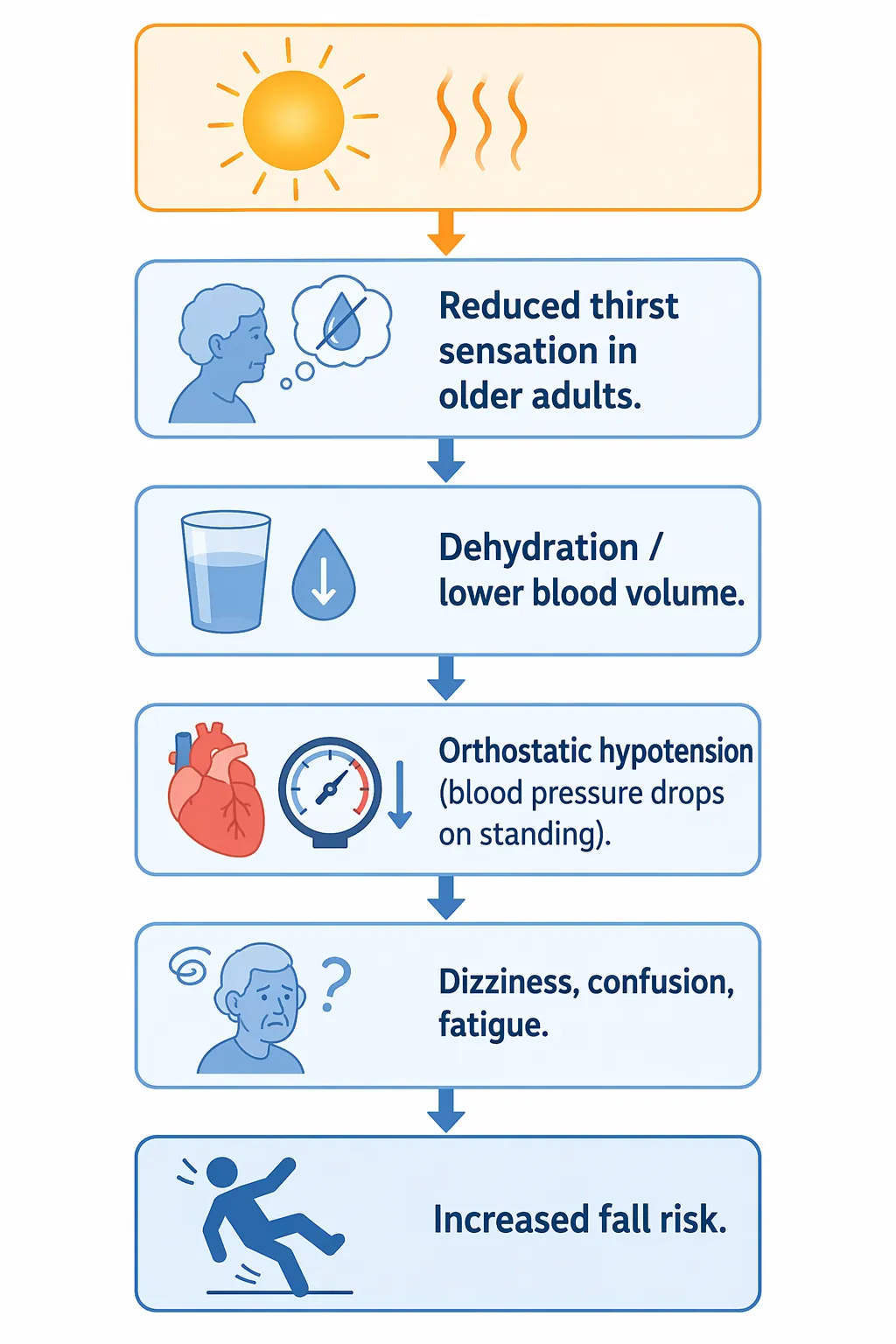
This does not mean every dizzy spell on a hot day has the same cause. It does mean caregivers should stop treating hydration, medications, indoor temperature, and walking routes as separate chores. On hot afternoons, they are one balance system.
The Study That Makes the Risk Harder to Dismiss
A large cohort study by Hamrick and colleagues gives numbers to a pattern many families notice only after a scare. Among 30,634 older adults, 37.9% were dehydrated. That figure is the first reason to pay attention: dehydration was not rare in this group; it was common.[2]
Falls were also more frequent among dehydrated older adults. In the study, 13.3% of dehydrated participants fell compared with 10.2% of those who were not dehydrated, a statistically significant difference. After adjustment, dehydration was associated with an odds ratio of 1.13 for falls.[2]
That is a measured finding, not a reason to panic. An adjusted odds ratio of 1.13 does not say dehydration is the only cause of falls, or that every dehydrated older adult will fall. It says dehydration was independently associated with higher fall odds in this cohort. For a caregiver trying to prevent one more “minor” fall, that is enough to move hydration from a vague wellness reminder into the fall-prevention plan.
The same study also reported medication associations that deserve careful handling. Loop diuretics were associated with an odds ratio of 1.26 for falls, antidepressants with 1.58, and anticholinergics with 1.24 in that cohort.[2] Those numbers should not be treated as a universal ranking of dangerous medications. They do, however, point to a practical question for hot days: could a medication that affects fluid balance, alertness, sweating, blood pressure, or thinking be making the afternoon wobble more likely?
Why Older Adults Have Less Margin in Extreme Heat
The CDC notes that adults over 60 account for more than 80% of heat-related deaths, which is a stark reminder that heat risk rises with age.[3] For fall prevention, though, the most useful detail is not the death statistic. It is the smaller day-to-day margin: less thirst, slower cooling, more chronic conditions, and more medications that can interfere with heat response.
The CDC’s medication guidance for clinicians specifically flags that some medications can increase heat vulnerability, including diuretics, anticholinergics, and psychotropics.[4] In ordinary weather, a medication routine may be stable. During a heat wave, the same routine may leave an older adult with less fluid reserve, more dizziness, or more confusion when standing.
This is not a reason to stop medications on your own. It is a reason to ask better questions before the hottest part of the season: Which medicines increase urination? Which can cause sleepiness or lightheadedness? Which may reduce sweating or cloud thinking? Which should be watched more closely if appetite or fluid intake drops?
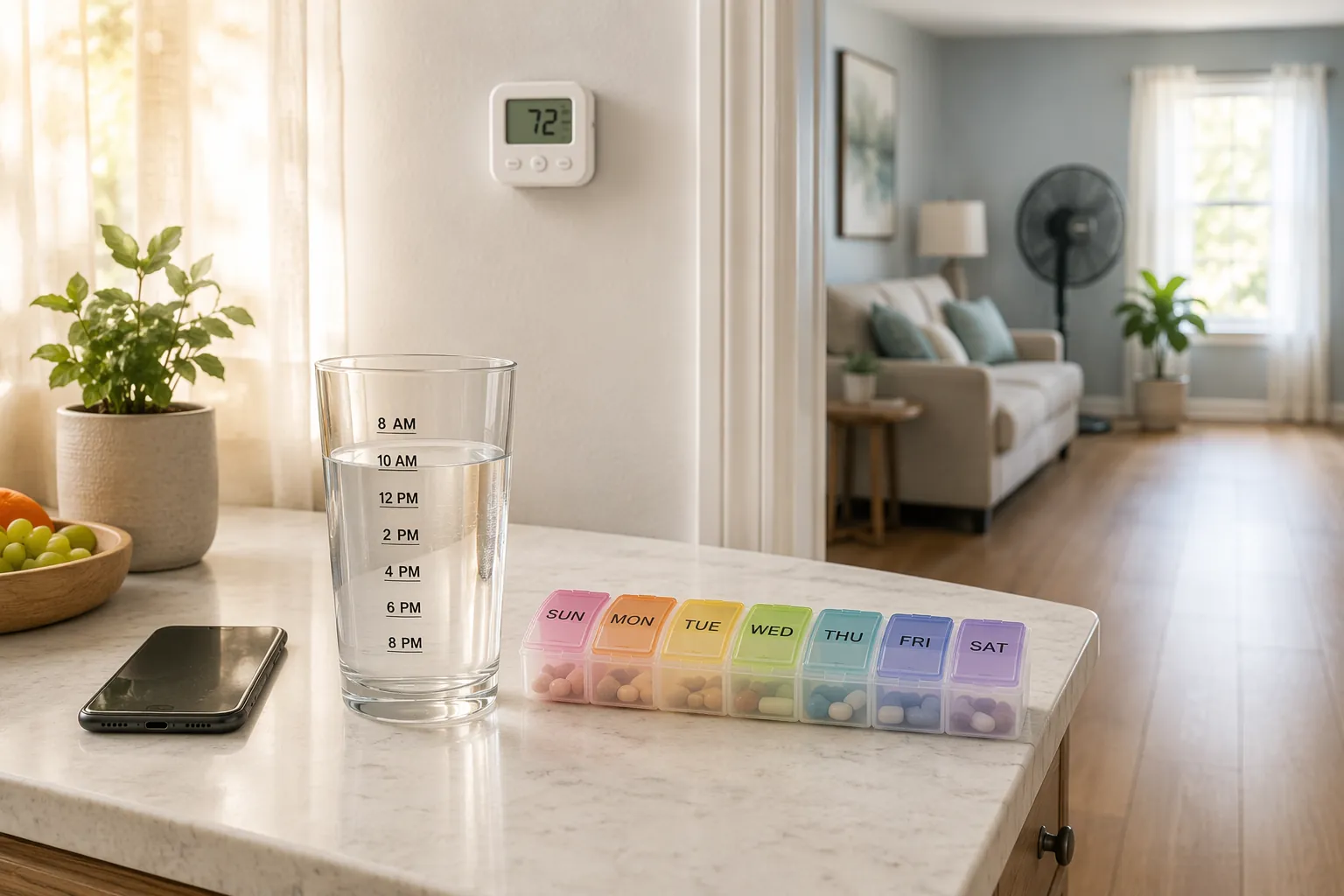
A Hot-Day Fall-Prevention Routine
The goal is not to turn a parent’s home into a clinic. The goal is to make the risky hours less improvised. A good hot-day routine starts before the older adult feels thirsty, before the bathroom gets humid, and before fatigue shortens their reach.
- Set fluid timing, not just a fluid goal. Put water where the person already pauses: bedside table, breakfast spot, favorite chair, bathroom counter after morning grooming. If a clinician has restricted fluids, follow that medical plan rather than using generic hydration advice.
- Pair drinking with transitions. A few sips before standing for a meal, shower, mailbox trip, or afternoon bathroom walk are easier to remember than an abstract instruction to “drink more.”
- Map the coolest safe route. Identify the room that stays coolest, the chair with arms that is easiest to rise from, and the path with the fewest turns. Keep the phone, water, glasses, and walking aid on that route.
- Ask for a medication review before the heat wave. A pharmacist or clinician can explain whether diuretics, anticholinergics, antidepressants, sleep medications, blood-pressure drugs, or other prescriptions deserve extra monitoring in heat. Do not skip or change doses without medical guidance.
- Move the hardest tasks earlier. Bathing, laundry, grocery unloading, changing sheets, and carrying trash are more likely to become balance problems when they are saved for the hottest, most tiring part of the day.
- Use check-in questions that reveal function. “Did you drink water?” often gets a polite yes. Better questions are: “Any dizziness when you stood up?” “Are you holding furniture today?” “Did you skip lunch?” “Is the bathroom floor damp?”
Caregivers who already use a room-by-room fall prevention checklist can adapt it for heat by asking what changes after lunch: Does the hallway get glare? Does the bathroom stay steamy? Does the person stop using the walker because the route to the cool room is cluttered? The afternoon version of the home may be riskier than the morning version.
When Dizziness May Be Heat, Blood Pressure, or Both
No home checklist can diagnose dizziness. Still, patterns help caregivers decide whether to slow the day down, call the clinician, or treat the situation as urgent. Heat exhaustion, dehydration, medication effects, and orthostatic hypotension can overlap, especially in older adults with several chronic conditions.
| What You Notice | What It May Suggest | What To Do Next |
|---|---|---|
| Dizziness mainly when standing up from a chair, bed, or toilet | A possible blood-pressure drop with position change, especially if fluid intake has been low | Have the person sit back down, rest, sip fluids if allowed, and mention the pattern to a clinician or pharmacist. |
| Weakness, heavy fatigue, feeling overheated, or confusion during a hot room or hot afternoon | Possible heat stress, dehydration, medication effects, or a combination | Move to a cooler place, reduce activity, encourage safe fluids if allowed, and seek medical advice if symptoms persist or worsen. |
| Unsteady walking plus new confusion, fainting, chest pain, severe weakness, or symptoms that feel sudden or alarming | A potentially urgent medical problem, not a normal hot-day wobble | Use emergency medical services or urgent medical care rather than trying to manage it as routine heat discomfort. |
| Repeated near-falls at the same time of day | A predictable routine problem: medication timing, missed meals, dehydration, heat buildup, glare, or fatigue | Track the time, room, recent fluids, meals, and medications, then bring that pattern to the care team. |
The key detail is timing. A person who is steady at breakfast but furniture-walking by late afternoon may not need a lecture about water. They may need a different schedule, a cooler route, a medication review, and fewer standing tasks during the hottest hours.
Heat-Specific Home Changes That Prevent Falls
The usual fall-prevention advice still matters: clear pathways, good lighting, sturdy shoes, grab bars, non-slip surfaces, and a walking aid that is actually within reach. In heat, those details need a second look because the user is more tired, more distracted, and more likely to misjudge a step or reach.
- Bathroom: Humidity can make floors slick and standing tolerance shorter. Use non-slip mats that do not bunch, keep towels off the floor, and make sure a grab bar is reachable from the actual standing position after a shower or toilet transfer.
- Kitchen: Put water, snacks, medications, and the phone at counter height so the person is not bending into low cabinets or reaching overhead when lightheaded.
- Hallway: Remove cords, shoes, laundry baskets, and throw rugs from the route between the cool room, bathroom, and bedroom. Heat-related fatigue makes small obstacles less forgiving.
- Favorite chair: Choose a seat with arms, stable height, and a clear place for the walking aid. A soft low chair may be comfortable but harder to rise from when dehydrated or tired.
- Lighting and glare: Close blinds where late-day sun hits the floor or reflects off tile. Poor visual judgment and heat fatigue are a bad pairing.
- Power planning: If cooling depends on electricity, prepare for outages before the heat arrives. A power shutoff plan and a 72-hour outage plan are part of fall prevention when medical devices, lighting, fans, phones, or air conditioning are involved.
None of these changes asks an older adult to give up independence. They remove the little negotiations that heat makes harder: one more reach, one more damp step, one more walk across a bright hallway without the cane.
What To Ask the Pharmacist or Clinician
A medication review is most useful when it is concrete. Bring the full medication list, including over-the-counter sleep aids, allergy medicines, bladder medicines, supplements, and “as needed” pills. Ask about heat, dizziness, and falls in the same conversation.
- Could any medication increase urination, dehydration risk, sleepiness, confusion, or lightheadedness?
- Should blood pressure be checked sitting and standing if dizziness happens after rising?
- What signs mean we should call the office, urgent care, or emergency services?
- If appetite or fluid intake drops during a heat wave, are there medicines that need closer monitoring?
- Are there safer times of day for errands, bathing, or medications that cause drowsiness?
The answer may be “keep everything the same.” That is still useful. It gives the family a clearer plan and reduces the temptation to guess during a hot, stressful afternoon.
Before the Hottest Part of the Day
The best heat-and-fall plan is built before 4 p.m. Fill the water glass in the morning. Clear the path before the room gets dim. Move bathing and chores earlier. Put the phone where it can be reached from a chair. Check whether the walker is beside the cool-room seat, not parked across the room. Review medications before the forecast turns dangerous.
Heat safety for seniors is also fall prevention. It does not require panic or constant supervision. It requires timed fluids, medication awareness, cooler movement routes, and home supports ready before heat turns a normal walk to the sink into a balance test.
References
- Extreme heat endangers older adults: What to know and do, Harvard Health Publishing.
- Association Between Dehydration and Falls, Mayo Clinic Proceedings.
- Heat and Older Adults (Aged 65+), Centers for Disease Control and Prevention.
- Heat and Medications Guidance for Clinicians, Centers for Disease Control and Prevention, September 2025.
Related reading
Noticed something outdated or inaccurate on this page? Flag a correction. We review every report against CDC, NIA, and AARP HomeFit guidance before updating a page.
Part of the Fall Prevention section.