
STEADI: Intervene
Room-by-Room Extreme Heat Safety Tips for Older Adults
A room-by-room heat-safety checklist for an older adult's home, covering the temperature thresholds that signal danger, window and kitchen adjustments, no-AC fallback plans, caregiver check-in routines, and programs that help pay for cooling.
The most important heat-safety question is not whether the forecast looks ugly. It is whether this living room, bedroom, and kitchen can stay cool enough for the older adult who will actually be sitting, cooking, sleeping, and waiting here.
New York City’s 2026 Heat Mortality Report is not a national statistic, but it is a hard warning about home exposure: among older-adult heat-stress deaths with location detail, about 48% occurred at home; among those at-home cases with air-conditioning data, none had a working unit. The same report found that about 9% of NYC adults had no air conditioning and 14% used it rarely or never because of cost. A unit in the window does not count as protection if it blows warm air, trips the breaker, leaks around the frame, or stays off because the electric bill is frightening. [1]
So the practical test is simple and a little unforgiving: what is the indoor temperature, does the cooling work, what indoor reading means leaving for somewhere cooler, and who checks twice a day if the heat lasts? One threshold belongs near the top of the page: the CDC says fans should be used only when indoor temperature is below 90°F. Above 90°F, a fan can increase body temperature by blowing hot air across the body. [2]
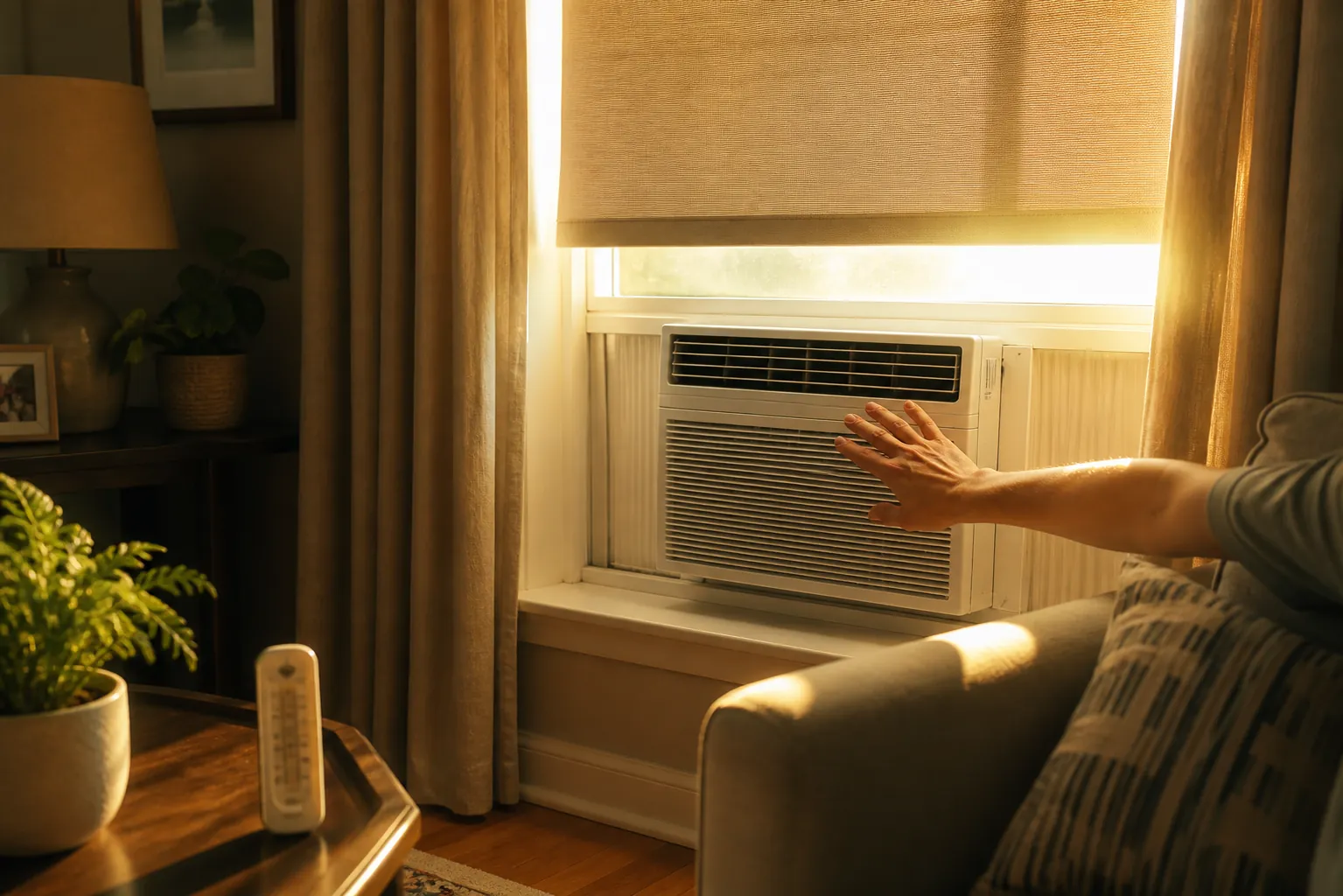
Start where heat enters: living room, windows, and the AC
The living room is often where the heat problem shows itself first because it has the biggest windows, the longest daytime use, and the most visible evidence. Before noon, stand where the older adult usually sits and look for four things: the thermometer, the sun, the air conditioner, and the gaps.
- Put a readable indoor thermometer in the room where the person spends the most time. Do not rely on the thermostat if the older adult does not sit near it or cannot read it easily.
- Close curtains, shades, blinds, or reflective coverings on sun-exposed windows before the room heats up, especially west- and south-facing windows.
- Turn the air conditioner on long enough to confirm that it produces cold air, drains properly, and does not shut off after a few minutes.
- Seal obvious gaps around window AC units so hot air is not being invited in around the machine that is supposed to keep the room livable.
- Write down the indoor temperature that triggers a move to a cooler place. For a home without reliable AC, 90°F indoors is too late for improvising with a fan.
Window coverings are not decoration during a heat wave. Ready.gov recommends covering windows with drapes or shades, and Mass.gov notes that outdoor awnings or louvers can reduce solar heat entering a home by up to 80%. [3][4] Not every apartment allows exterior shades or awnings, and not every homeowner can install them quickly, but the principle still holds: block the sun before it turns the room into storage for heat.
Testing the AC should feel boring. Turn it on before the first heat alert. Wait. Put a hand near the vent. Check the thermometer after the room has had time to respond. If the air is not cold, if the plug or cord feels hot, if the unit cycles off, or if the older adult says it “worked last year” but cannot remember using it this season, treat that as an open problem, not a reassuring memory.
Cost has to be part of the check. A working AC that the person is afraid to use is not a working cooling plan. Ask plainly what setting feels financially safe to them, whether they avoid running it during peak hours, and whether a utility assistance call needs to happen before the next heat wave. This conversation goes better when it is framed as preserving control over the home, not as catching someone doing something wrong.

Kitchen checks should remove heat, not add chores
The kitchen part of the walkthrough is shorter because the goal is blunt: do not add oven and stove heat to a home that is already struggling. Ready.gov advises reducing stove and oven use during extreme heat. [3] That may mean cold meals, microwave meals, batch cooking before the heat arrives, or accepting that the best heat-wave dinner is not the one anyone would choose in October.
- Stock easy foods that do not require standing over a burner.
- Move water, electrolyte drinks if recommended by the person’s clinician, and preferred cold foods to the front of the refrigerator.
- Check that the older adult can carry drinks safely from the kitchen to the room where they sit.
- If heat-related dizziness or weakness has been an issue, connect this plan with a fall-prevention check; our heat-wave fall-risk guide covers that mechanism in more detail.
Hydration matters, but it cannot carry the whole plan. Older adults may feel thirst less reliably and may sweat less, so waiting to feel thirsty can be a poor warning system. The National Institute on Aging recommends drinking plenty of liquids in hot weather unless a doctor has advised limits. [5] If the person has heart failure, kidney disease, fluid restrictions, or a clinician-specific plan, use that medical plan rather than a generic internet rule.
Bedroom: plan for the hottest night, not the prettiest setup
A house that is barely tolerable in the afternoon can become unsafe overnight if the bedroom traps heat. Bedrooms deserve a separate check because sleep location, window habits, and fan use all change once the person is tired.
Put the thermometer where the person can see it at bedtime. If there is AC in the living room but not the bedroom, decide before the heat arrives whether they will sleep near the cooled room, use a temporary lower-floor setup, or leave for a cooler location. A neat upstairs bedroom is not a safety feature if the lower floor is cooler.
Night ventilation only helps when the outdoor air is cooler than the indoor air. If the outside temperature drops below the inside temperature, opening windows on the cooler side of the home can help move heat out. NPR’s 2026 guidance on staying cool without air conditioning includes older, low-tech measures such as cool showers, damp cloths, and sleeping lower in the home when possible. [6] But if the outdoor air is still hotter, smoky, unsafe, or humid enough that the room does not cool, open windows may not solve the problem.
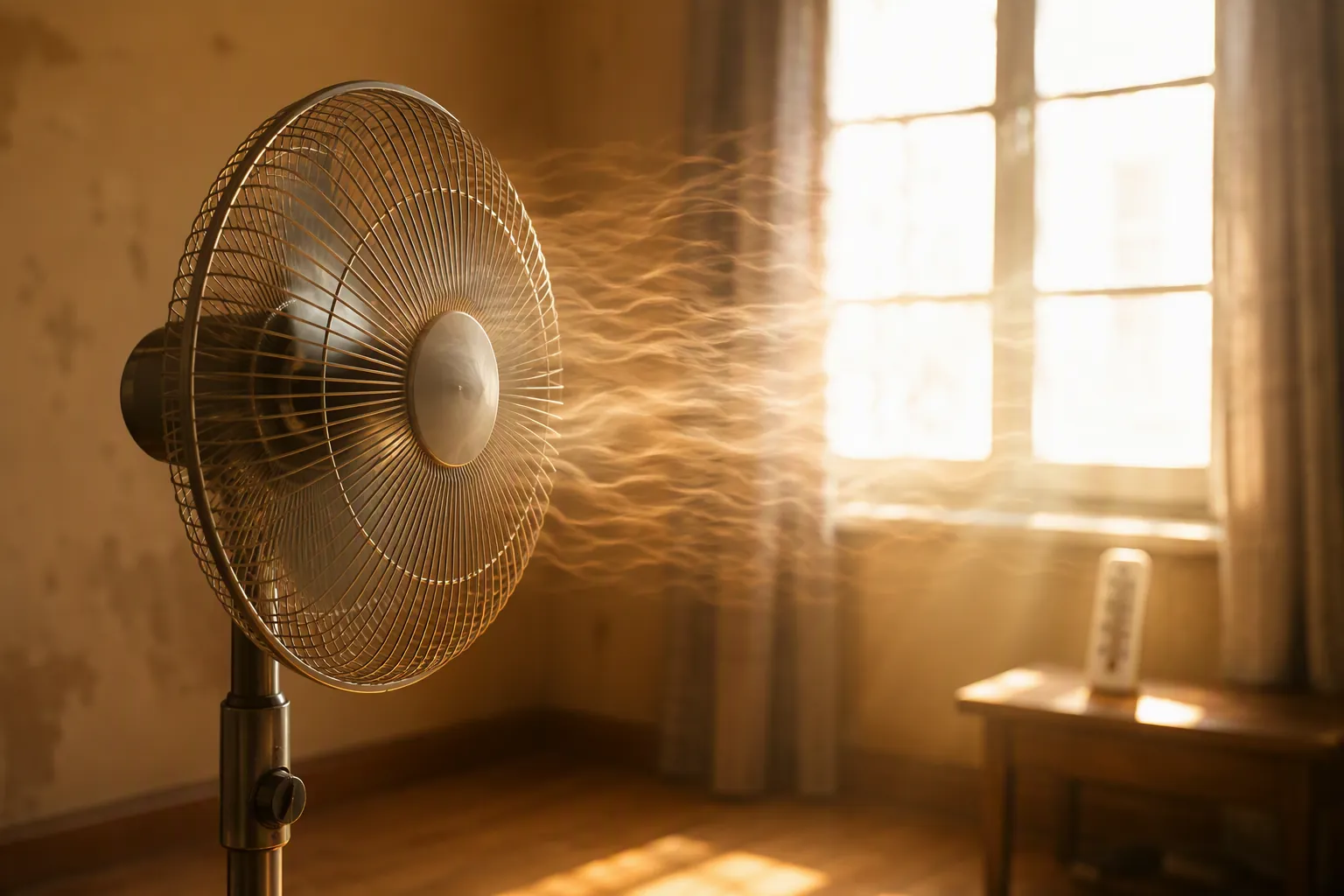
This is where the fan rule matters. A box fan in a window can be useful when it is pulling in cooler outdoor air. A fan aimed at a person in a 92°F room is different. The CDC’s warning is specific: fans are appropriate below 90°F indoors, and above that they can make body heat worse. [2] If the bedroom reaches that range and there is no reliable cooling, the plan should move from “make this room nicer” to “leave this room.”
| Bedroom condition | Practical next move |
|---|---|
| Bedroom is cooler than the rest of the home and below 90°F | Use shades, light bedding, hydration nearby, and check again in the morning. |
| Bedroom is hotter than the living room | Sleep in the cooler room or on a lower floor if safe and acceptable. |
| Indoor air is hotter than outdoor air at night | Ventilate only if outdoor air quality and safety allow; compare temperatures again before relying on a fan. |
| Bedroom is near or above 90°F without AC | Do not depend on a fan alone; use the written fallback destination and ride plan. |
If the home cannot be kept cool, decide where to go before it is urgent
A no-AC fallback plan should be written down, not carried in a group text where everyone assumes someone else is available. The destination can be a cooling center, library, mall, community center, senior center, relative’s home, or another reliably air-conditioned place. Ready.gov recommends going to public places such as libraries or shopping malls if a home does not have air conditioning, and 2-1-1 can help locate cooling centers or local resources in many areas. [3]
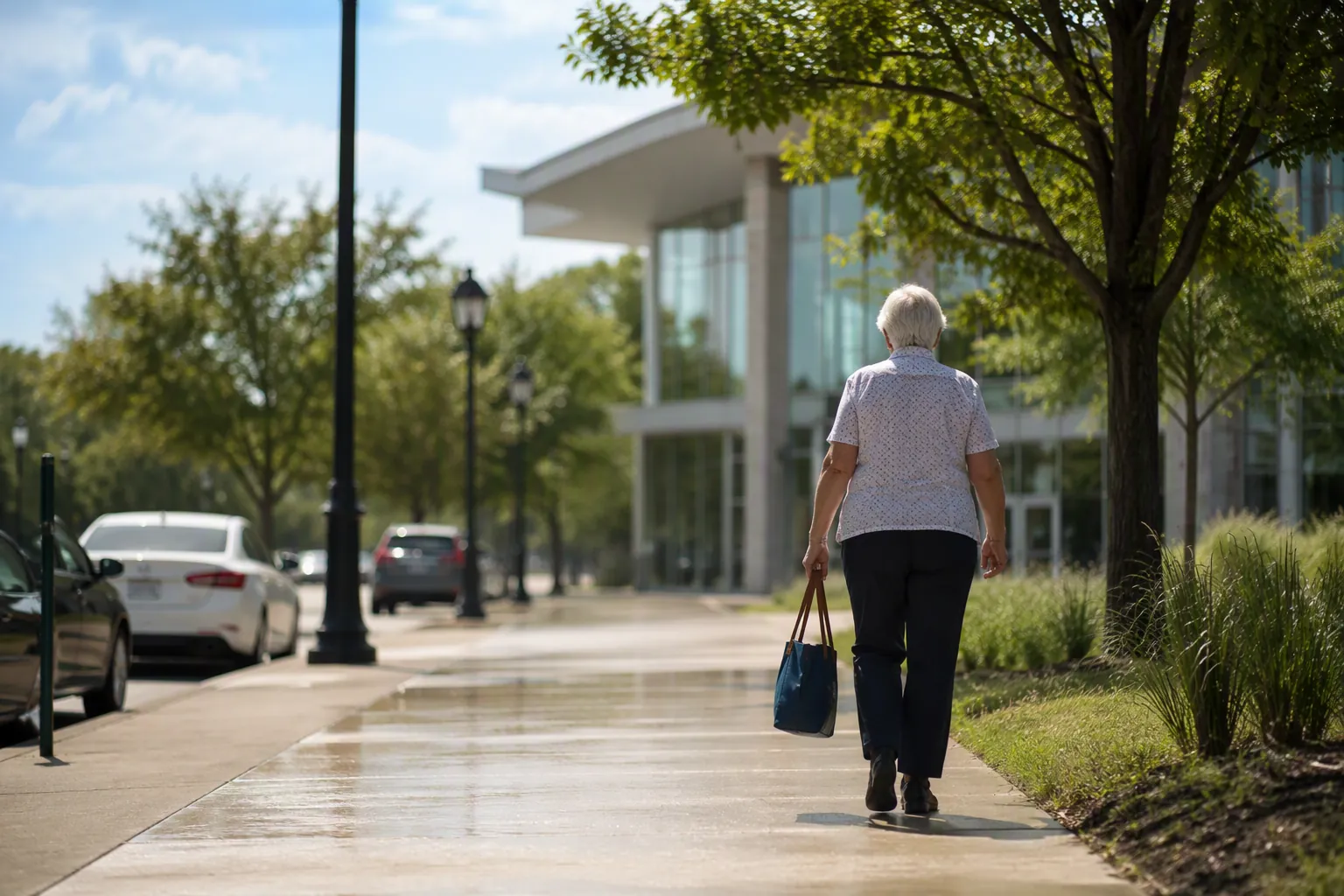
Name the place. Check its hours. Confirm whether it is open on weekends. Decide how the older adult gets there if the regular driver is at work, the bus stop is too far in the heat, or the power is out and elevators are not running. A fallback plan without transportation is only half a plan.
- Write the primary cooling destination, address, phone number, and hours.
- Choose a second destination in case the first is closed, full, or hard to reach.
- List the ride plan: who drives, what service is used, or which neighbor can help.
- Pack a small heat bag: water, keys, phone charger, medication list, glasses, hearing-aid supplies, ID, payment card or cash, and any mobility aid that tends to be forgotten in a rush.
- For a broader before/during/after timeline, use the heat wave safety checklist for seniors alongside this room walkthrough.
Power outage and medical-equipment details belong in the same plan
Extreme heat becomes more dangerous when the power fails. The CDC advises older adults to plan for refrigerated medications, such as insulin, and for electric medical devices during heat and outages. It also warns that inhalers can burst in hot environments and that EpiPens may malfunction in heat; medications should not be left in cars or hot places. [7]
This is logistics, not medication management. Do not stop, skip, or change prescriptions because of a heat article. Instead, ask the clinician or pharmacist ahead of time how each heat-sensitive item should be stored, what counts as too warm, and what to do if the refrigerator loses power. If the home depends on powered medical equipment, the outage plan should connect to a more detailed 72-hour power outage checklist.
The twice-daily check-in should ask for readings, not just feelings
During a heat event, “How are you doing?” is too easy to answer with “fine.” The CDC and emergency-management guidance recommend checking on adults 65 and older twice a day during extreme heat, with attention to temperature, hydration, air-conditioning access, transportation to a cool location, power, and medical equipment. [2][8]
Make the routine specific enough that any sibling, neighbor, aide, or friend can do it without interpretation.
| Check-in item | What to ask or verify |
|---|---|
| Indoor temperature | What does the thermometer read in the room where you are sitting or sleeping? |
| Outdoor comparison | Is it cooler outside than inside, or is opening windows likely to bring in hotter air? |
| Cooling | Is the AC running and blowing cold air? If not, what is the backup plan right now? |
| Fan use | Is the room below 90°F if a fan is being used? |
| Hydration and food | Have you had fluids and something to eat? Are drinks within reach? |
| Power and devices | Is the power on? Are medical devices working? Are refrigerated medications still cold? |
| Transportation | If the indoor temperature keeps rising, who is taking you to the cooling location and when? |
Write the morning and evening check-in times. Put one person in charge of each time slot. If a group text exists, pin the plan or send the same checklist every time. If no one gets an answer, decide in advance who calls again, who contacts a neighbor, and who goes over.
When cooling is a cost problem, make the assistance calls early
Cooling advice that ignores money fails in real homes. The National Council on Aging describes several programs that may help older adults pay for cooling, including LIHEAP, the Weatherization Assistance Program, free-fan programs in some areas, and 2-1-1 referrals. [9] These programs are not instant fixes during the worst afternoon of the year, so the useful time to call is before the next heat alert.
Dollar amounts vary by state. New York’s cooling assistance program, for example, may provide up to $800 for a portable air conditioner or fan and up to $1,000 for an existing wall-sleeve unit, but those figures are New York-specific and should not be treated as national benefits. [10]
- Call 2-1-1 and ask about local cooling centers, utility assistance, fan programs, and emergency transportation options.
- Ask the utility company about medical-device registries, shutoff protections, payment plans, or energy-assistance referrals.
- Apply for LIHEAP or state cooling assistance before the AC fails or the bill becomes the reason it stays off.
- Ask about Weatherization Assistance Program options if the home loses cooled air through poor sealing, insulation, or inefficient equipment.
Know when the plan has become a medical emergency
The home plan is meant to prevent the emergency, not diagnose one. Heat illness warning signs can include heavy sweating, weakness, dizziness, headache, nausea, muscle cramps, confusion, fainting, or loss of consciousness. Heat stroke is an emergency; call 911 if someone has a very high body temperature, confusion, loss of consciousness, or other severe symptoms. [2]
While waiting for help, move the person to a cooler place if it can be done safely, remove excess layers, and use cool cloths or other cooling measures. Do not give fluids to someone who is unconscious, confused enough to choke, or unable to swallow safely.
A heat-safe home has visible proof
By the end of the walkthrough, the proof should be visible: a thermometer that can be read from the chair or bed, shades closed on the hot side of the home, an AC unit that has actually been tested, sealed gaps around the unit, a kitchen plan that does not heat the house, and a bedroom plan that does not depend on a fan in a 90°F room.
The paper plan should be just as concrete: the indoor temperature that triggers leaving, the cooling destination, the ride, the medication and power-outage steps, the morning and evening check-in names, and the assistance calls already made before the next heat alert.
References
- 2026 Heat Mortality Report | NYC Environment and Health Data Portal, NYC Environment and Health Data Portal
- About Heat and Your Health | Heat Health | CDC, CDC
- Extreme Heat, Ready.gov
- Preparing for Extreme Heat, Mass.gov
- Hot Weather Safety for Older Adults, National Institute on Aging
- How to stay cool in extreme heat if you don't have air conditioning, NPR, 2026-07-15
- Heat and Older Adults (Aged 65+), CDC
- How Can Older Adults Stay Safe During an Extreme Heat Event?, Cal OES
- Programs to Help Pay for Air Conditioners and More: A Guide for Older Adults, National Council on Aging
- Apply for Cooling Assistance, NY.gov
Related reading
Noticed something outdated or inaccurate on this page? Flag a correction. We review every report against CDC, NIA, and AARP HomeFit guidance before updating a page.
Part of the Fall Prevention section.