Extreme Heat Safety Tips to Prevent Senior Falls
Extreme heat silently increases fall risk in older adults through dehydration, medication interactions, and slowed reactions. This guide explains the mechanism and provides specific prevention steps that go beyond generic cooling advice.
When an older parent seems a little more wobbly during extreme heat, even inside the house, it is worth taking seriously. Heat is usually discussed as a heat exhaustion or heatstroke problem. For seniors, it can also become a fall problem long before anyone looks dramatically ill.
The sequence is practical and easy to miss: heat increases fluid loss, dehydration can reduce blood volume and impair blood flow to the brain, standing up can bring on dizziness or orthostatic hypotension, and a small correction that would normally prevent a stumble may arrive too late. In a retrospective cohort study of 30,634 older adults, 37.9% were dehydrated, and dehydration was associated with higher odds of falling, with an odds ratio of 1.13.[1]
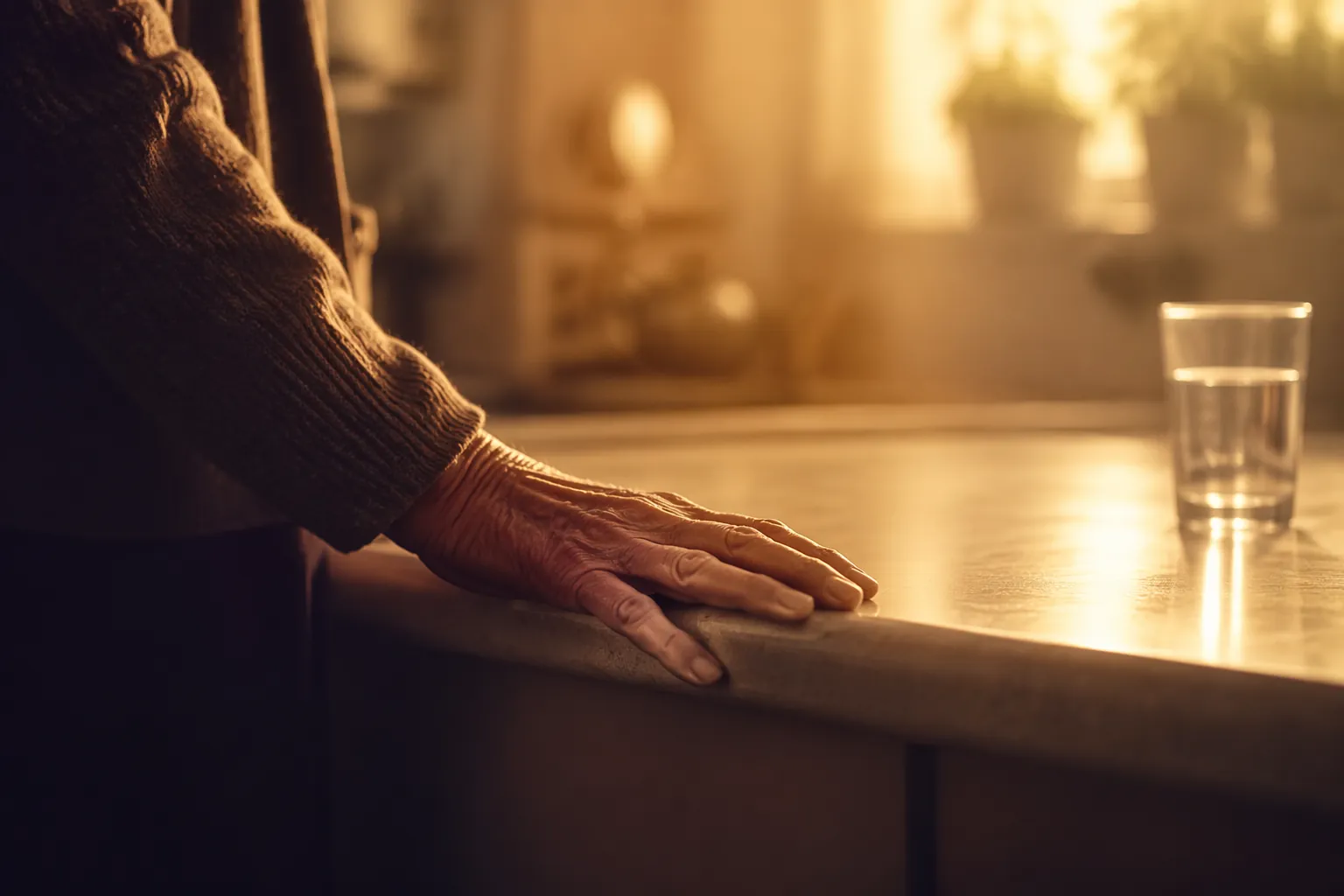
That finding does not mean every dehydrated older adult will fall, or that hydration alone prevents falls. It does mean that the half-finished water glass, the slow rise from a recliner, and the comment that “I just got lightheaded” belong in the same safety conversation.
Why Heat Can Turn Into a Fall Risk
Older adults have less margin for fluid loss than younger adults. Body water content declines across the lifespan, from about 70% at birth to about 40% in older women and 45% in older men.[1] That smaller reserve matters on hot days because the body has less cushion before dehydration begins to affect steadiness.
The warning signs are not always reliable either. A 2025 systematic review described age-related changes that can include reduced sweating, attenuated cutaneous vasodilation, and blunted thirst perception.[2] In plain terms, an older person may not feel thirsty soon enough, may not cool as efficiently, and may not recognize heat strain until balance is already affected.
This is why a parent can truthfully say they feel fine and still be at higher risk when they stand up. The body may be compensating quietly: working harder to cool itself, circulating less fluid, and giving the brain a momentary drop in blood flow when posture changes.
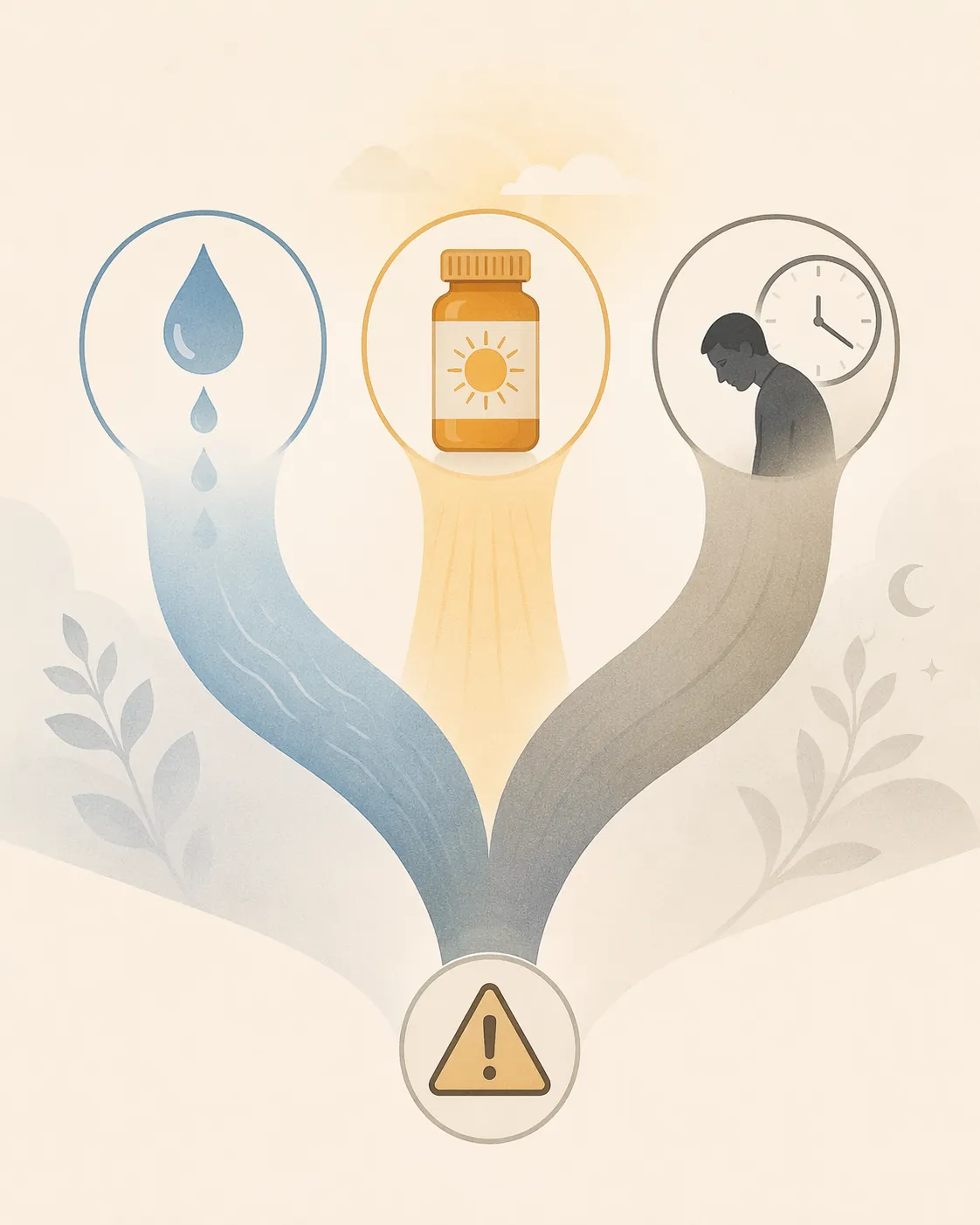
The Three Pathways That Matter Most
Dehydration, Dizziness, and Standing Up
The dehydration pathway is the easiest to underestimate because it does not always look like an emergency. A hot room, less drinking, sweating that goes unnoticed, and a normal trip to the bathroom can be enough to make standing more precarious.
Hamrick and colleagues describe the mechanism directly: dehydration can impair brain perfusion, contribute to dizziness, and lead to orthostatic hypotension, which can act as a direct trigger for a fall.[1] The dangerous moment is often not while sitting still. It is the first few seconds after getting up from bed, a dining chair, the toilet, or a favorite recliner.
That changes the way families should watch hot days. The question is not only “Did they drink water?” It is also “Did they pause before walking?” and “Did they have to grab the counter after standing?”
Medications That Complicate Heat and Balance
Medication is the second pathway, and it is where caregivers need to be careful. The right response is not to stop, skip, or change doses at home. The right response is to ask a pharmacist or prescriber, before the hottest stretch of summer if possible, whether any current medications raise heat or fall concerns.
In the Hamrick study, several medication classes were associated with higher fall odds: antidepressants had an odds ratio of 1.58, anticholinergics 1.24, hypnotics 1.31, and loop diuretics 1.26 for falls or death.[1] Separately, the thermoregulation review notes that diuretics, beta-blockers, and anticholinergics can interfere with sweating and vasodilation, two processes the body uses to manage heat.[2]
Those are not instructions to blame a medication for every stumble. They are a reason to bring a real list to a professional: prescriptions, over-the-counter sleep aids, bladder medicines, allergy medicines, supplements, and any recent dose changes. Summer heat can make an old medication plan behave differently in daily life, especially if appetite, fluid intake, or sleep has changed.
Heat Fatigue and Slower Corrections
The third pathway is less dramatic but just as practical: fatigue. Heat can make ordinary movement slower and less precise. A senior may still be walking, talking, and insisting everything is fine, but the small balance corrections that prevent falls may be delayed.
Caregivers often notice this before anyone names it. The walker is left a few feet away. A hand reaches for the wall. Steps get shorter near the end of the afternoon. A person who usually turns smoothly now pivots in two or three hesitant pieces. None of these observations proves heat is the cause, but during extreme weather they are enough to treat the day as higher risk.
The Air Conditioner Still Has to Be Checked
Owning cooling equipment is not the same as being protected by it. That distinction matters because it is where many family plans fail. Harvard Medicine Magazine reported that among older adults with air conditioning who died indoors from heat in Phoenix in 2019, 91% had AC units that were off, set too low to cool effectively, or broken.[3]
That finding should change behavior. During high-risk weather, someone should verify that the cooling system is on, set appropriately, producing cool air, and actually lowering the room temperature where the person spends time. A thermostat on the wall is not proof that the bedroom, kitchen, or favorite chair is safe.
Fans deserve the same practical scrutiny. They can help in some conditions, but the American Red Cross warns that electric fans alone may not prevent heat-related illness when temperatures are in the high 90s.[4] If a fan is only pushing hot air around a room, the fall-prevention plan needs a cooler location, not just more airflow.
For deeper cooling tactics when a home does not have reliable air conditioning, use a dedicated guide such as Cool seniors without AC and prevent falls during heat waves. For outages or equipment failure, a Power Outage Fall Prevention Checklist for Seniors belongs in the same summer file as medication lists and emergency contacts.
A Targeted Heat-Fall Prevention Checklist
Generic heat safety tips for seniors during extreme weather often stop at “drink water and stay cool.” Those are useful words, but they do not assign responsibility or timing. A fall-prevention plan needs to say what gets checked before the hottest hours, what changes during the heat, and who follows up if something looks off.
| Risk pathway | What to check | What to do before or during extreme heat |
|---|---|---|
| Dehydration and dizziness | Fluid access, intake pattern, dizziness after standing | Set a medically appropriate hydration plan, place drinks where they are actually used, and slow all position changes |
| Medication and thermoregulation | Diuretics, beta-blockers, anticholinergics, antidepressants, hypnotics, recent dose changes | Ask a pharmacist or prescriber for a summer medication review; do not adjust medications without clinical guidance |
| Heat fatigue and slowed reactions | Unusual tiredness, slower turns, wall-touching, shorter steps, skipped mobility aids | Reduce unnecessary walking during peak heat and keep supports within reach |
| Cooling failure | AC on/off status, thermostat setting, cool air output, room comfort, backup plan | Verify equipment before the hottest hours and identify a cooler destination if the home cannot stay safe |
Plan Hydration, but Do Not Guess Around Medical Limits
Hydration advice has to be individualized. General population guidance is not the same as a safe target for someone with heart failure, kidney disease, a fluid restriction, or medication instructions that affect fluids. If a clinician has set limits, those limits come first.
The useful caregiver move is to turn hydration from a vague goal into a visible routine. Put drinks in the places where the person already sits. Notice whether the glass is emptying. Pair fluids with ordinary anchors such as breakfast, medication times, or a favorite TV program, unless a clinician has advised otherwise. During heat waves, ask about dizziness after standing, not just thirst.
Review Medications Before the Weather Forces the Issue
The best time to ask about heat-sensitive medication issues is before a heat wave, not after a fall. Bring the full list to a pharmacist or prescriber and ask specific questions: Which medicines can increase dizziness? Which can affect sweating or cooling? Which can worsen dehydration risk? What symptoms should trigger a call?
This is especially important after a new prescription, a hospital stay, a dose increase, or the addition of sleep, allergy, bladder, or mood medication. The caregiver’s job is to surface the pattern and ask for review, not to make medication changes independently.
Slow the First Minute After Sitting or Lying Down
Many heat-related falls will not happen in the hottest room. They may happen at the transition: standing from bed at night, getting up from the toilet, leaving the table, or walking to answer the door. During extreme heat, build in a pause.
- Sit at the edge of the bed or chair before standing.
- Stand still for a few seconds before walking.
- Keep canes, walkers, glasses, and phones within reach before the person gets up.
- Use night lights and clear paths to the bathroom before evening, when heat fatigue may be worse.
- Treat new dizziness, faintness, confusion, or unusual weakness as a reason to call for medical advice promptly.
Check Cooling Like a Safety Device
A caregiver does not need to be dramatic about this. Just check the equipment the way you would check a grab bar or smoke detector. Is the AC on? Is the setting realistic? Is cool air coming out? Is the room where the person naps actually cooling? Is the filter blocked? Is the unit tripping a breaker? Is the person turning it off because of cost, noise, or feeling chilled?
If the answer is uncertain, make a backup plan before the hottest part of the day: a cooled room in the home, a neighbor or relative’s house, a library, a senior center, or a local cooling center. The plan should include transportation, a phone number, mobility equipment, medications, and what to do if the power fails.
Watch for Slowed Reactions, Not Just Heat Illness
Classic heat illness signs matter, but fall prevention adds another watch list. Look for slower walking, more furniture-walking, missed steps, unusual sleepiness, reluctance to eat or drink, confusion about routine tasks, or a new need to sit down midway through an activity.
These signs should lower the activity level for the day. Move chores earlier or postpone them. Bring meals, water, phones, and medications closer to the main sitting area. Keep bathroom paths clear. If air quality alerts arrive at the same time as heat, use the same weather-related fall-planning mindset described in Protect Seniors from Falls When Air Quality Alerts Arrive.
Put Heat Into the Fall-Prevention Plan
The CDC’s STEADI fall-prevention framework is built around screening, assessment, and intervention. Extreme heat belongs inside that same logic: it changes the conditions under which a senior walks, stands, hydrates, takes medications, and reacts to imbalance.
There is also a larger reason to take heat seriously for older adults. More than 80% of the estimated 12,000 annual heat-related deaths in the United States are among people over 60.[3] That number is about mortality, not falls, but it shows how heavily heat risk concentrates in the same age group families are trying to keep steady and independent.
The evidence has limits. The dehydration-falls study came from one Upper Midwest health system and had a population that was 94.6% white non-Hispanic, so its findings may not apply equally to every community.[1] The thermoregulation review also notes that much of the available research comes from high-income, temperate-climate countries, which limits how confidently it can be extended to tropical or low-resource settings.[2] Those limits do not erase the practical pattern; they keep the conclusion appropriately narrow.
On extreme heat days, treat the home as a temporary high-fall-risk environment. Check fluids. Check cooling. Check medications with professionals. Slow transfers and standing. Verify the rooms, routes, and backup plan before the hottest hours arrive.
References
- Dehydration and Falls in Older Adults: A Retrospective Cohort Study, Mayo Clinic Proceedings, 2020
- Núñez-Rodríguez et al. 2025 systematic review, PMC, 2025
- The Effects of Heat on Older Adults, Harvard Medicine Magazine
- Extreme Heat Safety, American Red Cross
Continue from here
Suggest a correction
We keep this content strictly product-neutral and reviewed against CDC STEADI, NIA, and AARP HomeFit guidance. If something here looks outdated, unclear, or inaccurate, tell us — this page does not carry open public comments, because it touches medical urgency, cost, or capacity-adjacent decisions where a discussion thread is a trust liability rather than a trust asset.
See the correction process on our editorial standards page →