
What the 2026 Zyrtec Recall Means for Seniors
This guide helps seniors and caregivers identify if their Zyrtec is part of the July 2026 recall, understand why antihistamines increase fall risk, and find safer allergy alternatives.

Start with the bottle in your hand, not the brand name in your memory. The July 2026 Zyrtec-related recall is limited to cetirizine hydrochloride 5 mg tablets made by Unique Pharmaceutical Laboratories and distributed by Rising Pharma, with NDC 16571-401-10, expiration 10/2028, and lot numbers GY825029, GY825030, GY825031, or GY825032. The FDA recall notice says the reason is ranitidine cross-contamination, and no adverse events had been reported as of the recall announcement on July 18, 2026.[1]
If every one of those fields matches your bottle, stop using that bottle and contact the pharmacy, prescriber, or recall contact listed with your medication source. Do not throw the bottle away before you photograph the label and write down the lot number; the pharmacy may need those details. If the fields do not match, this specific recall does not appear to include your bottle, but the safety check should not end there. Allergy medicines can still matter in a senior’s fall-prevention plan.
The Two-Minute Bottle Check
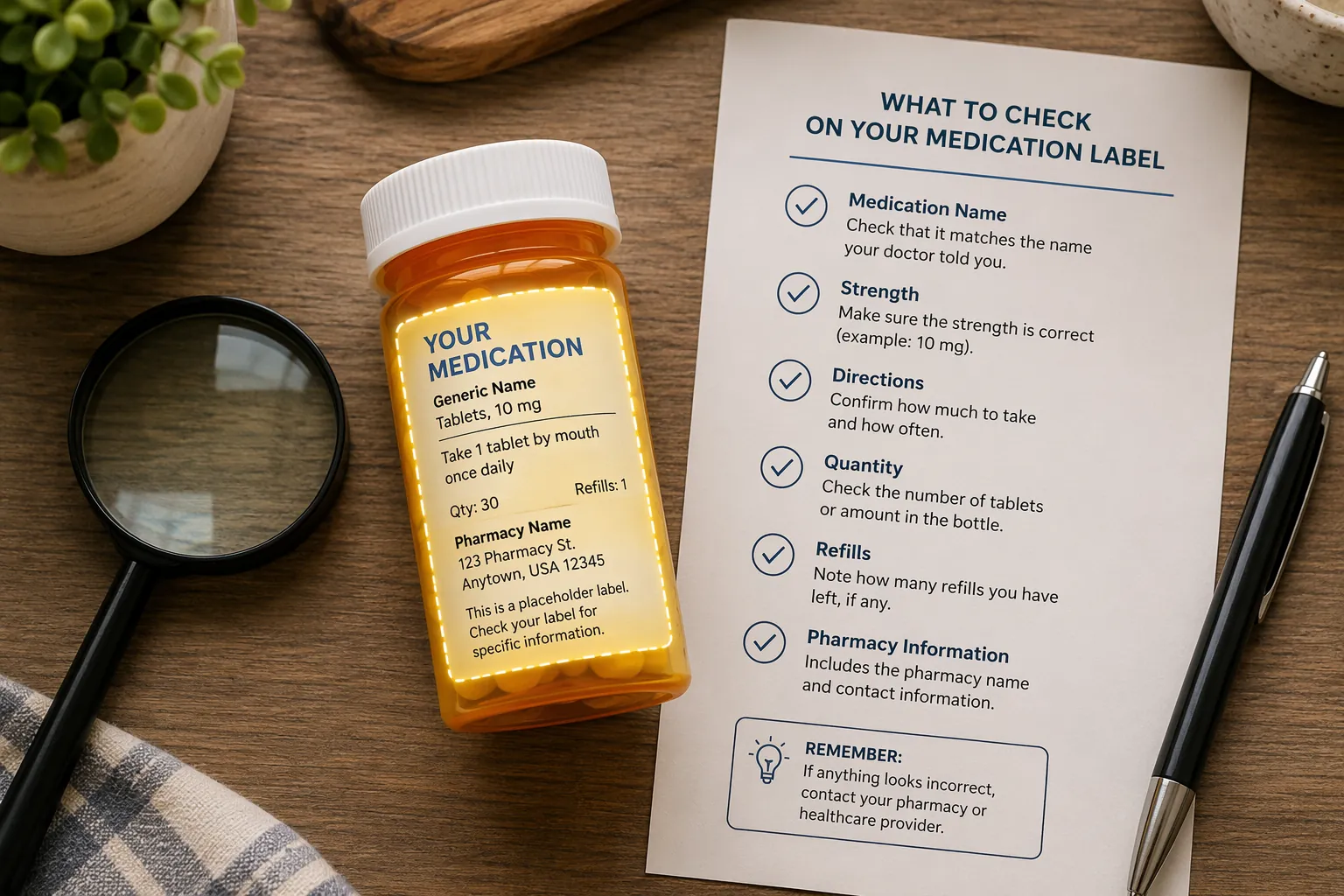
Find the smallest print on the prescription label or manufacturer label. On some pharmacy bottles, the NDC or lot number may be on the manufacturer container, not the large pharmacy label. If the pills were poured into a weekly organizer, check the original bottle before making a decision.
| Label field | Recalled product field | What to do |
|---|---|---|
| Drug name | Cetirizine hydrochloride tablets | Generic Zyrtec may say cetirizine. Do not rely only on the word Zyrtec. |
| Strength | 5 mg | This recall field is strength-specific. Do not assume a 10 mg product is included unless its own label matches a recall notice. |
| Manufacturer / distributor | Unique Pharmaceutical Laboratories / Rising Pharma | Match the company names where they appear on the bottle, package, or pharmacy paperwork. |
| NDC | 16571-401-10 | Compare all three number groups. One wrong digit means it is not this listed NDC. |
| Expiration date | 10/2028 | Match the month and year. |
| Lot number | GY825029, GY825030, GY825031, or GY825032 | The lot number is the deciding field after the drug, strength, NDC, and expiration match. |
Before You Call the Pharmacy
A good call is short because the information is ready. Put the bottle on the table, turn on a bright light, and collect these details before dialing:
- A clear photo of the front pharmacy label and any manufacturer label
- Drug name, strength, NDC, lot number, expiration date, and manufacturer or distributor
- Where and when the bottle was purchased or filled
- How often the senior takes it and whether it is taken at night
- Any recent dizziness, unusual sleepiness, near-falls, falls, confusion, or nighttime unsteadiness
Do not mix this recall with older medication stories. This is not the 2015 Sandoz recall of Zyrtec 10 mg capsules, and the ranitidine contamination issue in this 2026 notice is separate from the older NDMA-related ranitidine market withdrawal. Treat the bottle in front of you as its own label check.
If the Bottle Matches, What Changes Today
For a matching bottle, the immediate action is not to keep taking it while waiting to see if symptoms appear. Stop using that recalled bottle and ask the pharmacy or prescriber what to use instead. If allergies are severe, the replacement decision still matters; swapping one medication for a more sedating one can solve the recall problem while making the fall-risk problem worse.
If the bottle does not match, do not empty the weekly pillbox in relief and move on. Cetirizine may still belong in a medication review, especially if the person taking it is over 65, has fallen recently, gets up at night to use the bathroom, uses a cane or walker, takes sleep medicine, or already complains of morning grogginess.
Why Allergy Pills Show Up in Fall-Prevention Work
The CDC’s STEADI fall-prevention materials group sedating antihistamines with medications that can increase fall risk, and the same CDC materials report that 30% to 40% of adults age 65 and older fall each year.[2] That does not mean every older adult who takes an allergy pill will fall. It means a medication that adds sleepiness, dizziness, slower reaction time, or foggier nighttime walking deserves attention before a fall forces the issue.
The highest concern is with first-generation antihistamines such as diphenhydramine and chlorpheniramine. A 2018 systematic review and meta-analysis found first-generation antihistamine use was associated with higher odds of injurious falls or fracture, with an odds ratio of 2.03 and a 95% confidence interval of 1.49 to 2.76.[3] That figure should not be pasted onto cetirizine as if all allergy medicines carry the same risk. They do not.
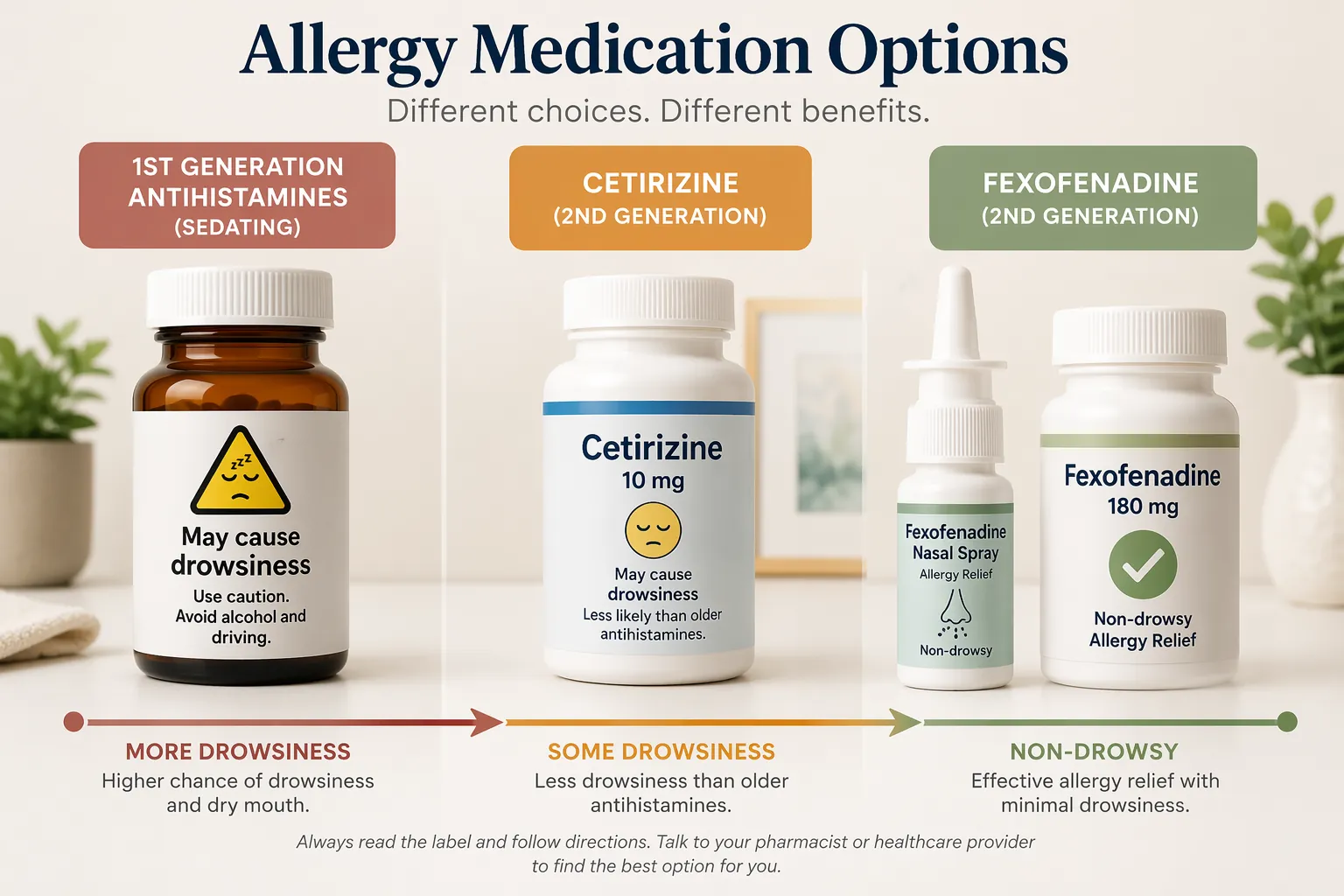
Cetirizine is a second-generation antihistamine, generally less sedating than diphenhydramine. Still, less sedating is not the same as no sedation. The NHS lists sleepiness as a common cetirizine side effect occurring in more than 1 in 10 people.[4] In a younger adult sitting at a desk, that may be an inconvenience. In an older adult standing up quickly in the dark, stepping around a dog bowl, or hurrying to the bathroom at 2 a.m., a small delay can matter.
This is where families often miss the connection. They remember to worry about blood pressure pills after a dizzy spell. They ask about sleep aids after a morning fall. But the allergy tablet sits in the cabinet under the comforting phrase “non-drowsy” or “second-generation,” even when the person taking it says they feel heavy-headed after dinner.
Safer Allergy Options to Discuss
For seniors, the best replacement is usually not another pill grabbed from the allergy shelf in a hurry. AARP’s senior-focused allergy guidance points older adults toward nasal steroid sprays or fexofenadine as first-line options to discuss, rather than older sedating antihistamines.[5] The right choice still depends on symptoms, other diagnoses, and current medications, but the ranking is useful when someone needs a practical starting point.
| Option | Best fit | Fall-safety note |
|---|---|---|
| Nasal steroid spray | Daily nasal congestion, sneezing, postnasal drip, seasonal allergy control | Often a good first discussion because it treats nasal symptoms without relying on a sedating oral antihistamine. |
| Fexofenadine | When an oral antihistamine is still needed | Often preferred among oral options for older adults because it is less likely to cause central nervous system effects than more sedating antihistamines. |
| Cetirizine | Some people who tolerate it well and need oral allergy relief | Lower concern than first-generation antihistamines, but still review if there is sleepiness, dizziness, or fall history. |
| Diphenhydramine, chlorpheniramine, and similar older antihistamines | Avoid unless a clinician specifically advises it | Highest concern in this group because sedation and anticholinergic effects can worsen fall risk. |
If the senior already uses several medications, ask for a full medication review rather than a single allergy substitution. Mayo Clinic’s fall-risk medication guidance lists multiple medicine groups that can contribute to falls, including sedatives, blood pressure medicines, antidepressants, opioids, and other drugs that affect alertness or balance.[6] The allergy medicine may be one piece of a larger pattern.
What to Say to the Pharmacist or Prescriber
The most useful question is specific: “This bottle is recalled,” or “This bottle is not recalled, but I’m worried about drowsiness and falls. What is the least sedating allergy plan for this person?” That gives the clinician the real decision to make.
- If symptoms are mostly nasal: ask whether a nasal steroid spray is appropriate.
- If an oral antihistamine is needed: ask whether fexofenadine is a safer choice than cetirizine for this person.
- If the person takes diphenhydramine for sleep or allergies: ask how to stop or replace it safely.
- If there has been a recent fall, near-fall, or new dizziness: say that at the beginning of the call.
- If kidney disease, memory problems, glaucoma, urinary retention, or many medications are involved: make sure the prescriber knows before choosing an allergy drug.
Do not stop essential prescription medications on your own because of a fall-risk article. But an over-the-counter allergy medicine is exactly the kind of bottle families should bring into a medication review, because it is easy for everyone to forget it counts.
Printable Medication-Cabinet Checkpoint
Use this as the kitchen-table pass. One person reads the bottle, one person writes. If no one can read the lot number, take a phone photo and enlarge it.
- Check for cetirizine hydrochloride tablets, including bottles labeled generic Zyrtec.
- Confirm whether the strength is 5 mg.
- Compare the NDC to 16571-401-10.
- Compare the expiration date to 10/2028.
- Compare the lot number to GY825029, GY825030, GY825031, or GY825032.
- If all fields match, stop using that bottle and contact the pharmacy or prescriber.
- If the bottle does not match, still mark whether the medicine causes sleepiness, dizziness, confusion, or nighttime unsteadiness.
- Flag any diphenhydramine, chlorpheniramine, nighttime cold medicine, or “PM” product for medication review.
- Ask about nasal steroid spray or fexofenadine before replacing a recalled or poorly tolerated allergy medicine.
The July 2026 recall is narrow. The useful response is wider: remove a recalled bottle if it is there, then use the same label-by-label attention to reduce sedating medication exposure in a home where one unsteady night can change everything.
References
- Unique Pharmaceutical Laboratories Issues Voluntary Nationwide Recall of Cetirizine Hydrochloride Tablets Due to Ranitidine Cross-Contamination, FDA, July 18, 2026.
- Medications Linked to Falls, CDC STEADI.
- First-Generation Antihistamine Use and Risk of Injurious Falls or Fracture in Elderly Patients: A Systematic Review and Meta-Analysis, PubMed, 2018.
- Side effects of cetirizine, NHS.
- What Older Adults Should Know Before Taking Allergy Medication, AARP, July 2026.
- Medicines that increase fall risk in older adults, Mayo Clinic.
Continue from here
Suggest a correction
We keep this content strictly product-neutral and reviewed against CDC STEADI, NIA, and AARP HomeFit guidance. If something here looks outdated, unclear, or inaccurate, tell us — this page does not carry open public comments, because it touches medical urgency, cost, or capacity-adjacent decisions where a discussion thread is a trust liability rather than a trust asset.
See the correction process on our editorial standards page →