
STEADI: Intervene
Extreme Weather Safety Tips to Prevent Falls in Seniors
Learn how extreme heat increases fall risk in older adults through dehydration, medication effects, and other pathways, plus actionable tips to keep a senior safe during a heat wave.
If your mother takes blood pressure medication and gets dizzy when it is hot, treat that as a fall-prevention issue, not just a comfort complaint. Heat can pull several small problems into the same afternoon: less fluid in the body, blood vessels opening wider, a slower reaction when she stumbles, and medications that make it harder to cool down or keep blood pressure steady. That is the chain families often miss until someone is already holding the counter and saying, “I’m fine.”
Falls are already the leading injury cause for adults 65 and older, with about 3 million emergency department visits and 1 million hospitalizations each year in the United States.[1] Heat does not have to be the only cause of a fall to matter. It only has to be the extra strain that turns a normal trip to the bathroom, mailbox, shower, or kitchen into the moment when balance runs out.
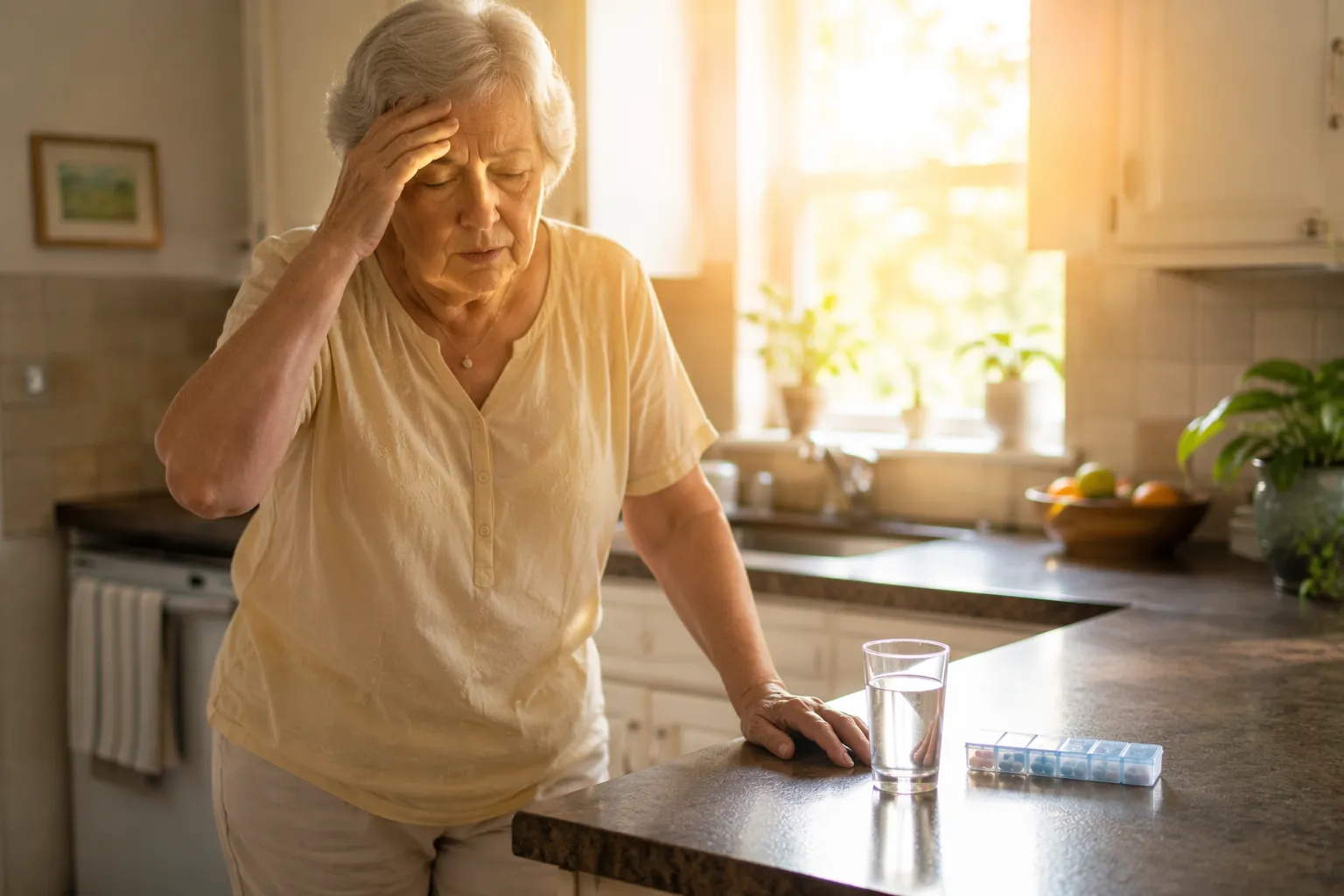
Heat Changes the Fall Equation Before Anyone Feels “Sick”
Older adults are more vulnerable in hot weather because the body’s ability to regulate temperature changes with age, and chronic conditions can make heat harder to tolerate.[2] That is the medical reason behind the ordinary-looking sequence caregivers notice: the bedroom stayed warm overnight, breakfast was light, the diuretic was taken on schedule, then the short walk outside felt longer than usual.
The useful question is not only, “Is she drinking enough water?” It is, “Which heat pathway is increasing her fall risk today?” Dehydration, blood pressure shifts, fatigue, and medication effects call for different actions. A single reminder to drink more water may help one pathway while leaving the others untouched.
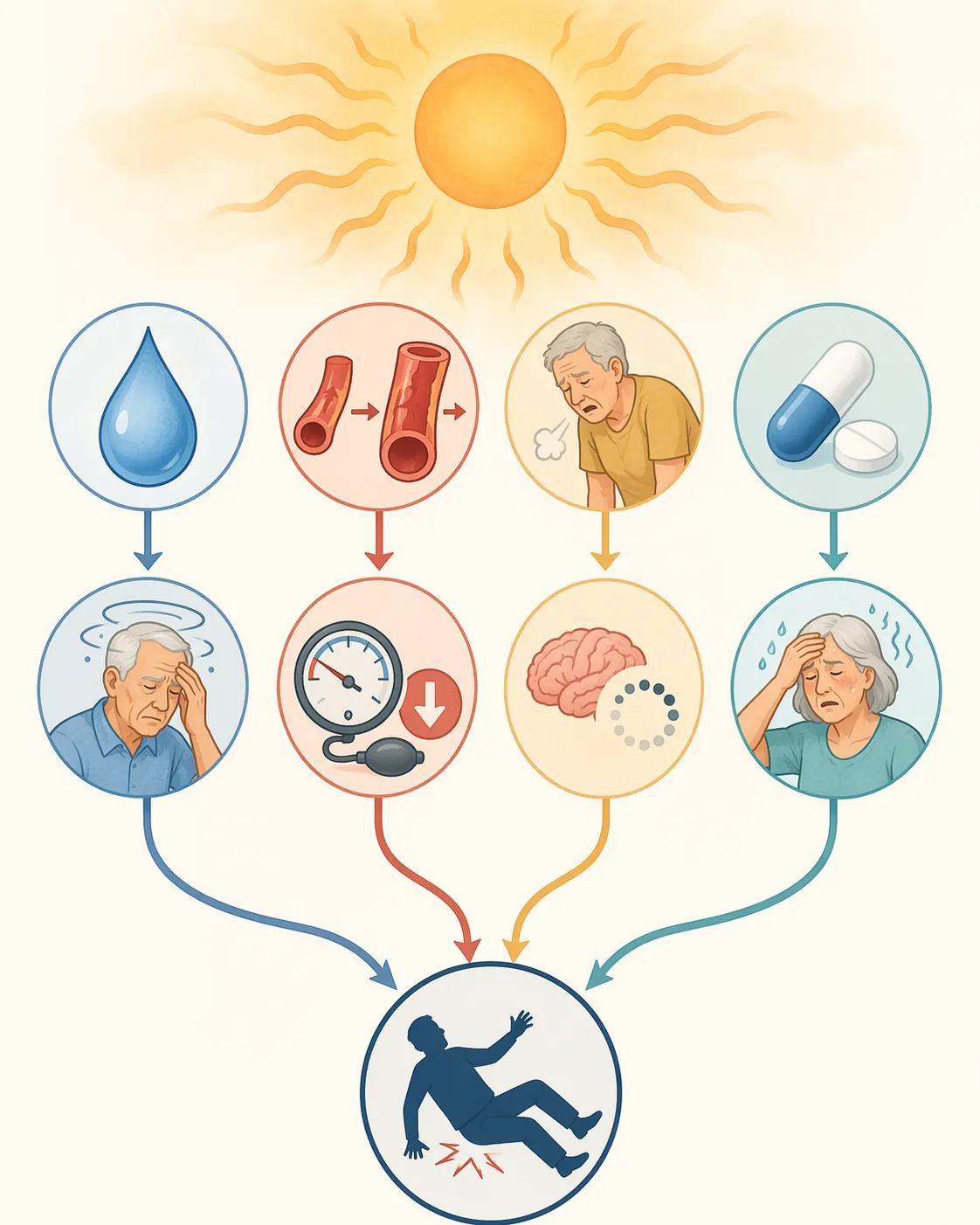
Four Heat-to-Fall Pathways to Watch
1. Dehydration can show up as dizziness, confusion, or bad decisions
Heat increases fluid loss, and dehydration can contribute to dizziness, confusion, impaired judgment, and postural hypotension, all of which can precede a fall.[3] The scary part is that the warning signs may not look dramatic at first. An older adult may simply seem unusually tired, a little irritable, slow to answer, or unsteady after standing.
This is where “drink more water” needs to become a real plan. Put fluids where the person already moves: by the bed, near the favorite chair, next to the pill organizer, and in the bag used for errands. If plain water is not appealing, ask the clinician whether an oral rehydration drink or electrolyte beverage is appropriate, especially if the person has heart failure, kidney disease, fluid restrictions, or takes diuretics. More fluid is not automatically safer for every medical situation.
- Watch for dark urine, very little urination, headache, muscle cramps, sudden fatigue, confusion, or feeling faint when standing.
- Pair fluids with normal routines: morning medications, meals, television breaks, and the evening phone call.
- Do not wait for thirst alone; some older adults do not feel thirst strongly enough to keep up with heat.
- If dizziness, confusion, or weakness is new or worsening, treat it as a reason to check in with a clinician, not as a normal part of summer.
2. Wider blood vessels can make standing up risky
In hot weather, blood vessels near the skin widen to help release heat. That can lower blood pressure, and the drop may be most noticeable during transitions: getting out of bed, rising from a recliner, standing after using the toilet, stepping out of a shower, or bending down and straightening up again. For someone already prone to orthostatic hypotension, the hot day does not create a new vulnerability so much as expose it.
The practical move is to slow down the first minute after every position change. Sit on the edge of the bed before standing. Pause after standing before walking. Keep a hand on a stable surface until the head clears. If a walker or cane has been prescribed, the hottest days are not the time to “just leave it for a quick trip.”
| Transition | Heat-day fall precaution |
|---|---|
| Getting out of bed | Sit first, move ankles, stand slowly, and wait before walking. |
| Rising from a chair | Use armrests, stand fully, then pause before taking the first step. |
| After using the toilet | Stand slowly and use a grab bar or stable support, not a towel rack. |
| After a shower | Use ventilation, a bath mat, a shower chair if needed, and a seated cool-down before walking away. |
| After outdoor activity | Sit in a cool place first; do not go straight into stairs or carrying laundry. |
3. Heat fatigue slows the save
A lot of falls are not clean collapses. They are near-misses that become falls because the person cannot correct quickly enough: a toe catches on a threshold, a hand reaches too late, or the body sways and the next step does not land where it should. Heat-related fatigue matters because it can take away that last protective second.
Move the most fall-prone tasks out of the hottest part of the day. Mail, trash, watering plants, carrying groceries, walking the dog, and showering all deserve a second look during a heat wave. The task may be ordinary; the timing is what changes the risk.
- Put outdoor errands in the morning or evening when conditions are cooler.
- Break chores into smaller pieces instead of finishing them “while I’m already up.”
- Avoid carrying heavy bags, laundry baskets, or watering cans when the house is warm.
- Make the cooler room the default resting place, not just the place to go after symptoms start.
4. Medications can stack heat risk and fall risk at the same time
This is the part caregivers should not handle by guesswork. The CDC’s clinical guidance on heat and medications identifies multiple medication classes that can increase heat sensitivity, dehydration risk, dizziness, blood pressure changes, or impaired thermoregulation, including diuretics, beta-blockers, SSRIs, antipsychotics, anticholinergics, ACE inhibitors, and calcium channel blockers.[4] Those are not obscure drugs. They are the kinds of names that show up on many older adults’ medication lists.
A diuretic may contribute to fluid and electrolyte loss. A beta-blocker may make it harder for the heart to respond to heat stress and may blunt some warning signals. Some antidepressants and antipsychotics can affect temperature regulation, alertness, or dizziness. Blood pressure medications may be exactly right on a normal day and still deserve a heat-season review because heat itself can lower blood pressure.
The action is a medication review, not an at-home medication experiment. Before heat season, ask the prescriber or pharmacist which medicines raise heat risk, which symptoms should trigger a call, whether home blood pressure checks are useful, and what to do if oral intake drops during a heat wave. Do not stop, skip, or reduce a blood pressure medication, diuretic, antidepressant, or psychiatric medication without clinical instructions.
| Medication class to ask about | Why it matters on hot days |
|---|---|
| Diuretics | May contribute to dehydration or electrolyte imbalance. |
| Beta-blockers | May affect cardiac response to heat and can blunt some physical signals. |
| SSRIs | May be associated with dizziness or impaired thermoregulation. |
| Antipsychotics | May impair thermoregulation or alertness. |
| Anticholinergics | May reduce sweating and contribute to confusion or overheating. |
| ACE inhibitors | May contribute to blood pressure changes during heat stress. |
| Calcium channel blockers | May contribute to blood pressure changes, dizziness, or swelling. |
Before the Heat Wave: Set Up the Decisions You Do Not Want to Make in a Panic
The best heat-wave plan is made while everyone is still calm. Once an older adult is dizzy, weak, overheated, or embarrassed, the conversation gets harder. Preparation should focus on the points where heat most directly changes fall risk: medications, fluids, cooling access, and movement.
- Schedule a medication review before the hottest part of the year, especially if the person takes diuretics, blood pressure medicines, antidepressants, antipsychotics, sleep aids, bladder medicines, or several medications together.
- Check the cooling plan: working air conditioning, fans used safely, transportation to a cooling center, or a backup place to spend the hottest hours.
- Stock easy fluids and simple foods so skipped meals do not compound dehydration and weakness.
- Clear walking paths to the bathroom, kitchen, bedroom, thermostat, and phone; heat-day dizziness should not meet clutter.
- Place stable chairs near entryways or long hallways if the person tends to push through fatigue.
- Write down who calls, who visits, and what symptoms mean the plan changes.
General heat safety advice still matters: loose, lightweight clothing; avoiding strenuous activity in the hottest hours; checking forecasts; and staying in air-conditioned spaces when possible are all part of the baseline guidance for older adults.[5] They just should not crowd out the less obvious fall-prevention work.
The temperature number deserves humility. Reporting on published research has noted that temperatures as low as 80°F can pose significant danger for older adults with health conditions, and that by 2050, an estimated 250 million more older adults may be exposed to dangerous heat days.[6] That does not mean 80°F is a universal cliff. Risk depends on chronic conditions, medications, acclimatization, humidity, nighttime cooling, and whether the home actually gets cool.
During the Heat Wave: Watch the Transitions, Not Just the Thermometer
On the hot day itself, the most useful senior safety tips for extreme weather are the ones tied to specific moments. Call before the outdoor errand, not afterward. Ask about dizziness after standing, not only whether the house feels hot. Notice if the person sounds foggy, unusually tired, or determined to finish a chore that can wait.
| What you notice | What to do next |
|---|---|
| Feeling faint after standing | Have the person sit or lie down safely, cool the room, offer appropriate fluids, and contact a clinician if symptoms are new, severe, or recurring. |
| Dark urine or very little urination | Increase attention to hydration if medically allowed and ask a clinician for guidance if intake is poor or symptoms persist. |
| Sudden fatigue or weakness | Cancel errands and chores, move to a cooler place, and reduce walking until the person feels steady again. |
| Confusion, unusual behavior, or trouble answering | Treat this as urgent; overheating, dehydration, infection, medication effects, and other causes may need prompt medical attention. |
| Muscle cramps, headache, or nausea | Stop activity, cool down, hydrate if appropriate, and monitor closely for worsening symptoms. |
| Warm home overnight | Do not assume sleep fixed the risk; start the next day with extra caution around standing, showering, and outdoor tasks. |
Nighttime heat is worth taking seriously even when the daytime forecast gets all the attention. Warm nights may keep the body from recovering, and they can leave an older adult starting the morning already tired or underhydrated. The evidence on exact nighttime thresholds for medication-related fall risk is less definitive, so the safer caregiving move is practical rather than precise: if the bedroom stayed hot, treat the morning as higher risk.
Protect Independence Without Pretending the Risk Is Small
A heat plan can become overbearing if it turns every normal habit into a negotiation. The goal is not to make an older adult feel supervised in their own home. It is to remove the few heat-day traps that are most likely to steal independence: standing too fast, walking too far in the heat, taking medications without knowing the heat plan, skipping fluids, or pushing through dizziness because the task seems small.
Give choices where choices are safe. “Would you rather get the mail at 8 a.m. or have me bring it in?” usually lands better than “Don’t go outside.” “Let’s ask the pharmacist what these medications mean during a heat wave” respects the person’s routine more than silently deciding the pill schedule is the problem.
Heat belongs beside smoke, sleep disruption, food safety, and other seasonal hazards in a fall-prevention plan. If your family is building a broader readiness routine, companion planning can include wildfire smoke as a fall hazard for seniors, using the AQI to protect an aging parent, and dehydration risks tied to food illness and recalls. The common thread is not fear of the season. It is noticing when the environment quietly changes balance, alertness, hydration, or reaction time.
If heat can trigger falls through multiple pathways, the safest plan is not one reminder. It is a matched set of actions: fluids that fit the person’s medical situation, a medication review before heat season, cooler timing for risky tasks, slower transitions from sitting or lying down, and a clear response when dizziness, confusion, dark urine, cramps, headache, or sudden fatigue appears.
References
- About Older Adult Fall Prevention, CDC.gov
- Heat and Older Adults (Aged 65+), CDC.gov
- Supporting older adults to beat the heat, Injurymatters.org.au
- Heat and Medications – Guidance for Clinicians, CDC.gov
- Hot Weather Safety for Older Adults, NIA.NIH.gov
- Heat waves can be deadly for older adults, GAVI.org
Related reading
Noticed something outdated or inaccurate on this page? Flag a correction. We review every report against CDC, NIA, and AARP HomeFit guidance before updating a page.
Part of the Fall Prevention section.