
STEADI: Intervene
Heat Dome Safety Tips for Older Adults to Prevent Falls
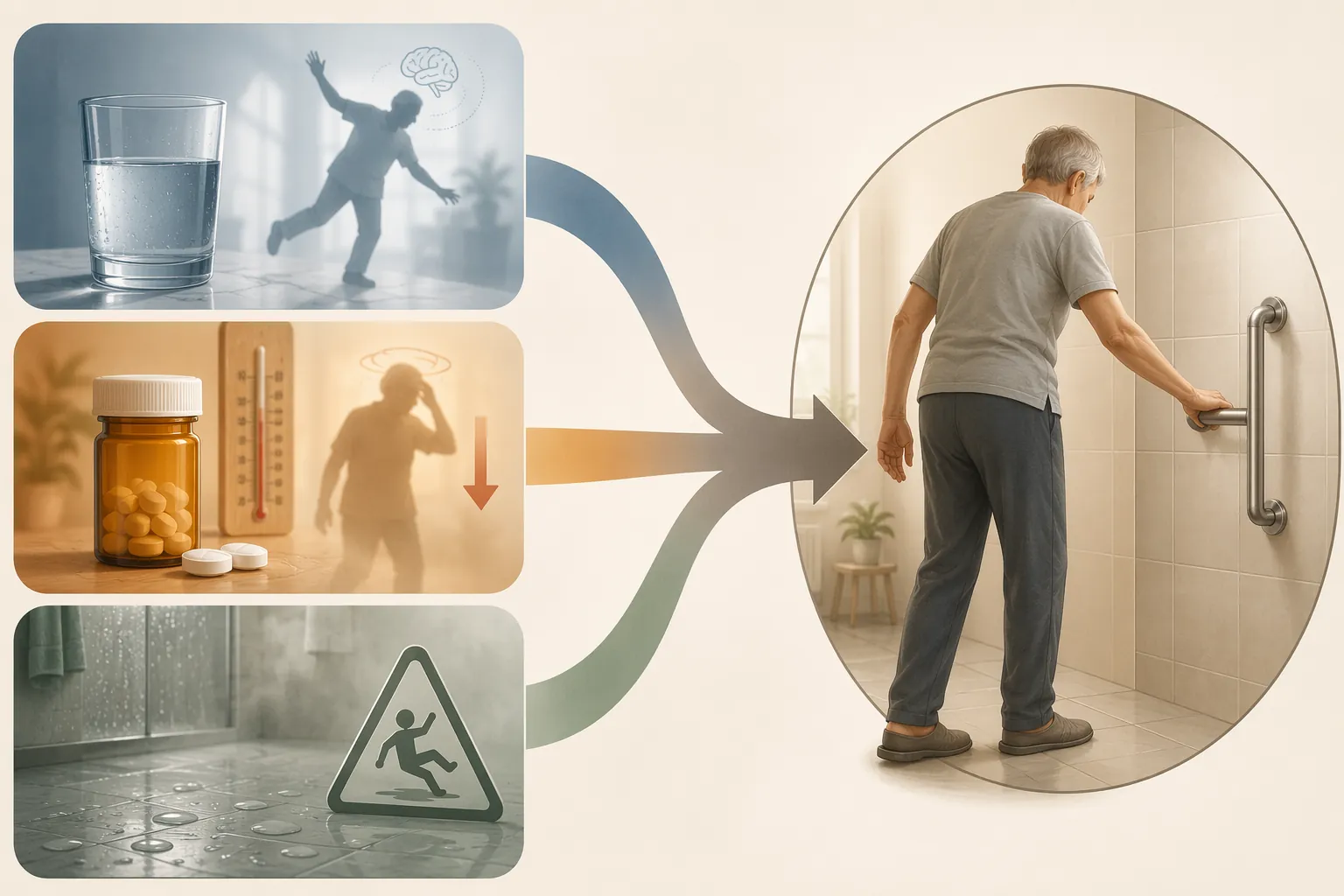
A heat dome creates a triple threat for falls in older adults — dehydration impairs balance and thinking, common medications cause dizziness and low blood pressure, and high humidity makes floors dangerously slippery. This article explains why heat-dome conditions are uniquely dangerous and offers specific steps to prevent falls during extreme heat.
A heat dome is not just “a very hot day.” It is a weather pattern that traps hot air under a high-pressure system, often described as a lid on a pot. The practical problem for an older adult living at home is that the house may not get a real nighttime reset. Heat builds across rooms, across medications, across sleep, and across several days of small decisions that would be safer in ordinary summer weather.[1]
That is why heat dome safety tips for older adults need to include fall prevention, not just reminders to drink water and avoid the sun. During a heat dome, an older adult may stand up with less fluid in the body, less reliable temperature regulation, a medication schedule that makes dizziness more likely, and a bathroom or kitchen floor that has become slick from humidity. The fall may happen indoors, long after everyone has stopped thinking about the forecast.

Older adults are more vulnerable to heat because aging can reduce sweating, change circulation, and make it harder for the body to regulate temperature, especially when chronic conditions are also present.[2] In the 2021 Pacific Northwest heat dome, AARP reported that 78% of heat-related deaths in Multnomah County were among people age 60 and older; the same reporting described homes where air-conditioning units existed but were unplugged or broken.[3] That detail matters. A safety measure that no one has tested is not yet a safety measure.
The Triple Threat: Dehydration, Medications, and Slick Surfaces
For fall prevention, the heat dome problem is best treated as three pathways that can overlap in the same person on the same afternoon.
| Heat-dome fall pathway | What changes inside the home | What a caregiver should verify |
|---|---|---|
| Dehydration | Balance, thinking, and reaction time can worsen before the person feels clearly thirsty. | Fluids are visible, reachable, and actually being consumed; bathroom trips are safe. |
| Medication effects | Some medicines can increase heat risk through fluid loss, reduced thirst, impaired sweating, or low blood pressure. | The medication list is reviewed with a clinician or pharmacist before or during extreme heat. |
| Humidity-slicked surfaces | Bathroom and kitchen floors can become damp, steamy, or slippery during heat and humidity. | Floors, mats, grab bars, footwear, and night paths are checked in person. |
Dehydration Can Look Like Clumsiness Before It Looks Like Thirst
The caregiver version of “stay hydrated” is not a slogan. It is a check: Is there water within reach? Is the person drinking it? Are they walking farther than usual to get it? Are they rushing to the bathroom because they waited too long? Heat-related dehydration has been linked to impaired balance, and heat can also affect thinking in ways that make a person misjudge a step, forget a cane, or stand too quickly.[4]
The tricky part is that thirst may not be a reliable early warning. CDC clinician guidance notes that some medications can reduce thirst sensation or contribute to volume depletion, which means the person who says “I’m not thirsty” may still be moving through the house with less reserve than usual.[5] During a heat dome, the question is not whether a parent can explain hydration. The question is whether the home setup makes drinking easy enough that it happens without a negotiation every time.
- Place water or an appropriate clinician-approved drink at the chair, bedside, and kitchen table, not only in the refrigerator.
- Use a visible cue, such as a filled bottle or marked pitcher, so someone can tell whether fluids are being consumed.
- Watch for new confusion, unusual fatigue, unsteadiness, or a parent “furniture walking” from surface to surface.
- Keep the route to the bathroom clear, lit, and dry, because more frequent fluid intake can mean more trips.
- Call a clinician promptly for concerning symptoms, especially if the person has heart, kidney, fluid-restriction, or blood-pressure issues.
For someone who resists reminders, the least dramatic approach is often the most useful: put the drink where the person already sits, then check the level later. It avoids turning every glass of water into a lecture, and it tells the caregiver something real.
Medication Risk Is a Heat-Dome Planning Issue, Not a Reason to Improvise
No one should stop, skip, or change a prescription because the forecast is frightening. The safer move is to know which medicines deserve a clinician or pharmacist conversation before the worst heat arrives, especially for an older adult who already has dizziness, low blood pressure, fainting episodes, or prior falls.
CDC’s heat-and-medications guidance for clinicians identifies several medication classes that can raise heat risk through mechanisms that matter for falls: diuretics, anticholinergics, beta-blockers, SSRIs, and antipsychotics. The guidance also notes that ACE inhibitor plus diuretic combinations can increase fall risk on hot days, in part because of hypotension, fainting, and reduced thirst sensation.[5]
Translated into a home-safety task, this means someone needs a current medication list, including over-the-counter sleep aids, allergy medicines, bladder medicines, and supplements if those are being used. The goal is not to challenge the prescription. The goal is to ask the right question: “During this heat dome, should we watch for dizziness, low blood pressure, dehydration, or reduced sweating with any of these?”
| Medication-related concern | Why it can matter during heat | Caregiver action |
|---|---|---|
| Diuretics | Can contribute to fluid loss and volume depletion. | Ask the clinician what symptoms should trigger a call; monitor dizziness and bathroom safety. |
| Anticholinergics | Can interfere with sweating or thirst cues in some situations. | Ask whether any over-the-counter medicines add anticholinergic burden. |
| Beta-blockers | Can affect the body’s heat response and cardiovascular adjustment. | Watch standing tolerance and ask whether pulse or blood-pressure checks are appropriate. |
| SSRIs or antipsychotics | Can be part of heat-risk medication profiles identified by CDC. | Do not stop suddenly; ask the prescriber what heat-related warning signs matter. |
| ACE inhibitor plus diuretic combination | CDC specifically flags the combination as amplifying hot-day fall risk. | Discuss heat-wave instructions before changing any dose. |
A useful phone call can be short. “My parent is 78, lives alone, and we are under a multi-day heat dome. These are the medications. Are any of them likely to increase dizziness, dehydration, low blood pressure, or heat illness? What should we monitor, and when should we call?” That is a better plan than discovering the issue after a near-fall between the bed and bathroom.
The Bathroom and Kitchen Become Part of the Heat Plan
Humidity is where many heat-safety checklists get too vague for fall prevention. A humid home can make bathroom and kitchen surfaces slick, especially where steam, condensation, spills, or damp mats are already part of daily life. Oakley Home Access, a home-accessibility company, specifically connects hot, humid weather with slippery bathroom and kitchen floors and recommends practical measures such as grab bars and non-slip mats.[6] It is an industry source, not a federal fall-prevention guideline, but the mechanism is exactly the kind that shows up under a caregiver’s feet.
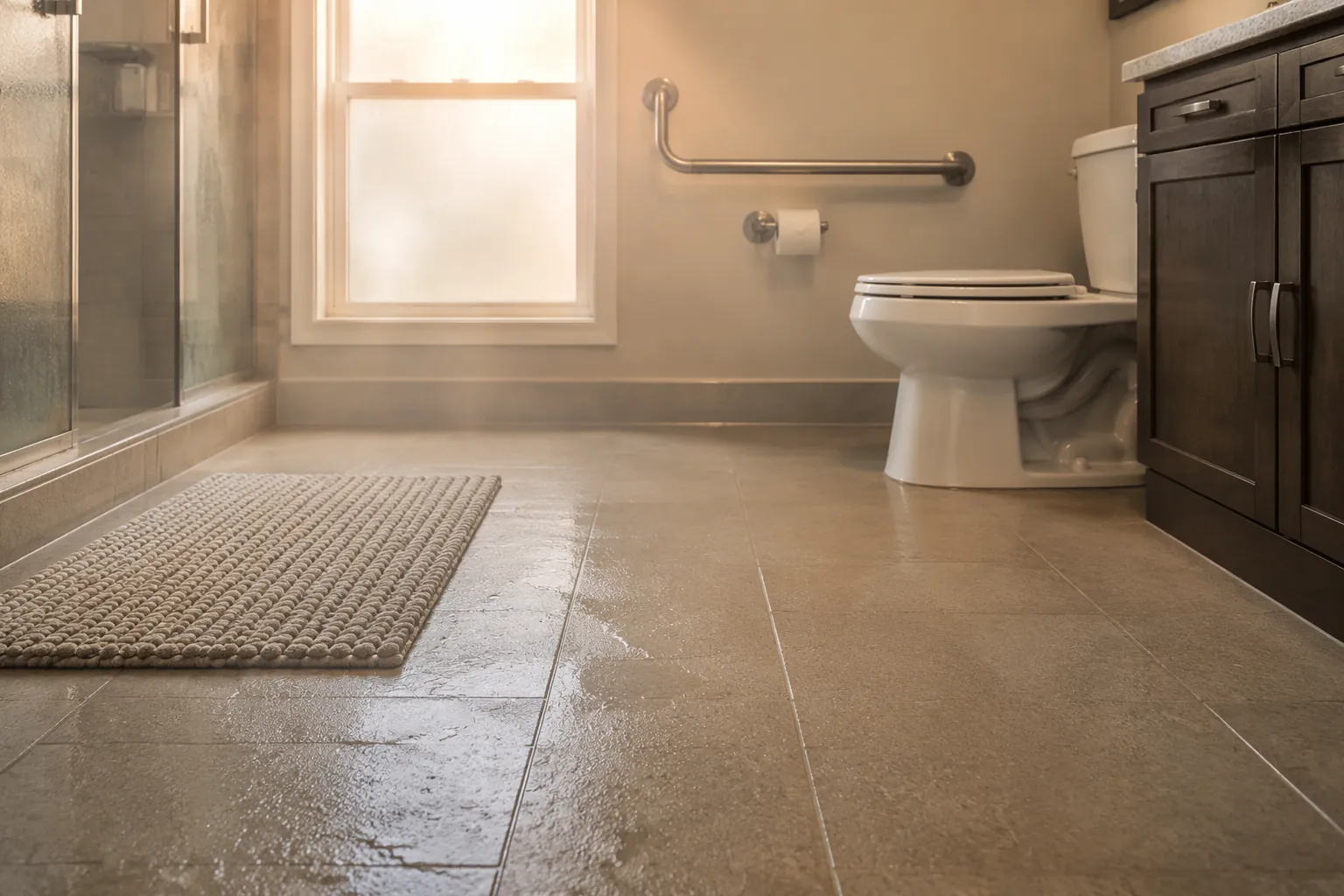
This is the part that requires a walk-through, not a reminder. Open the bathroom door after a shower. Step on the mat. Look at the tile near the toilet. Check the path from the bed to the bathroom at night. Then do the kitchen: sink area, refrigerator area, pet bowls, ice dispenser, and any place where someone may carry a cold glass with condensation dripping down the outside.
- Replace loose towels used as bath mats with a non-slip mat that stays flat.
- Confirm grab bars are installed into proper support and are not towel bars being used as handholds.
- Move shampoo, soap, and towels so the older adult does not have to twist, reach, or step out wet to retrieve them.
- Dry the floor after showers, spills, and condensation, especially before evening bathroom trips.
- Have the person wear supportive, non-slip footwear indoors instead of socks on smooth floors.
The bathroom is also where independence and risk collide. A parent may accept a grab bar more easily if it is framed as heat-dome equipment, not as a permanent symbol of decline. The same goes for a shower chair, a night light, or asking someone to leave the bathroom fan running longer. The point is to reduce the number of wet, dizzy, half-awake steps.
Cooling Has to Be Verified, Not Assumed
Air conditioning matters because it lowers the strain behind all three fall pathways. The Red Cross describes air conditioning as the most effective way to stay safe during extreme heat and warns that electric fans may not prevent heat illness when temperatures are in the high 90s.[7] That does not mean every home has equal access to cooling, and it does not mean the equipment is working just because it is in the room.
The check is simple and slightly annoying, which is why it gets missed: Is the unit plugged in? Is the filter clean enough? Is cool air actually coming out? Is the thermostat set to a usable temperature? Can the older adult operate it without standing on a chair, reading a tiny display, or navigating a confusing remote? During the 2021 Pacific Northwest heat dome, AARP’s reporting on unplugged or broken AC units is the warning label for every family that assumes “they have AC” means “they are cooled.”[3]
- Test the AC before the hottest hours, not after the indoor temperature has climbed.
- Choose one cool room where the older adult can spend the most dangerous part of the day.
- Move water, phone, charger, medications, glasses, cane or walker, and a comfortable chair into that room.
- Close blinds or curtains where sun is heating the room, while keeping safe lighting for walking paths.
- If the home cannot be cooled, check local cooling centers, senior services, emergency management updates, or utility assistance resources.
A cooling center may be the safer choice, but only if the transportation plan is safe too. A long walk to a bus stop in extreme heat, an unsteady transfer into a car, or a return home after dark can introduce its own fall hazards. Plan the movement, not just the destination.
A Heat-Dome Walk-Through for the Next 24 Hours
HealthInAging, which cross-references National Institute on Aging guidance, recommends practical hot-weather precautions for older adults, including staying in air-conditioned places, drinking fluids, dressing appropriately, and checking in with others.[8] For fall prevention, those basics need to be tied to rooms, surfaces, medications, and actual people.
- Cooling: Confirm the AC works, the older adult can operate it, and one room will stay cool through the hottest part of the day.
- Hydration: Put fluids within arm’s reach in the places where the person already sits, and check whether they are being consumed.
- Medication: Review the current medication list with a clinician or pharmacist if dizziness, low blood pressure, diuretics, anticholinergics, beta-blockers, SSRIs, antipsychotics, or ACE inhibitor plus diuretic combinations are involved.
- Bathroom: Check the floor after showering, secure non-slip mats, verify grab bars, and keep toiletries within easy reach.
- Kitchen: Dry the sink and refrigerator area, remove loose rugs, and watch for condensation from cold drinks or ice.
- Night route: Light the path from bed to bathroom, clear cords and clutter, and place the cane or walker where it can be reached before standing.
- Check-ins: Decide who calls, who visits if the phone is not answered, and who has permission to enter if there is concern.
- Backup plan: Identify local cooling resources before the AC fails or the indoor temperature becomes unsafe.
The most useful heat dome safety plan for an older adult is not complicated. It is specific. Someone tests the cooling. Someone looks at the bathroom floor. Someone asks about dizziness and medications. Someone makes sure the parent can drink, walk, toilet, and rest without adding one more preventable fall risk to an already dangerous stretch of heat.
References
- Heat Dome Grips the West, CU Anschutz,
- Heat and Older Adults, CDC,
- Extreme Heat Waves Pose Deadly Risk to Older Adults, AARP,
- Supporting older adults to beat the heat, Injury Matters,
- Heat and Medications – Guidance for Clinicians, CDC, Sept. 2025,
- Senior Safety During Hot Weather, Oakley Home Access,
- Extreme Heat Safety, Red Cross,
- Hot Weather Safety Tips for Older Adults, HealthInAging,
Related reading
Noticed something outdated or inaccurate on this page? Flag a correction. We review every report against CDC, NIA, and AARP HomeFit guidance before updating a page.
Part of the Fall Prevention section.