
Fall Prevention at Home: How a Certified Aging-in-Place Specialist Can Help (Room-by-Room Guide)
After a parent's fall, a CDC checklist is a good start, but it misses structural hazards. This guide explains how a Certified Aging-in-Place Specialist (CAPS) performs a systematic, room-by-room assessment to identify hidden fall risks and create a prioritized modification plan.
Why a Fall at Home Changes Everything
When an older adult falls in their own home, the emotional aftershock ripples through the entire family. The parent who once moved confidently through their own kitchen now eyes the hallway with hesitation. The adult child who lives three states away suddenly realizes the house they grew up in is filled with hidden hazards. This moment of crisis is also a moment of clarity: the home, the place everyone assumed was safe, has revealed itself as the most dangerous environment of all.
The numbers bear this out. According to the National Council on Aging (NCOA), over half of all falls take place at home. This is not a statistic about icy sidewalks or unfamiliar public spaces — it is about the living room rug, the bathroom step, the hallway that has been walked a thousand times. For families reeling from a recent fall, the immediate question is not whether to act, but what to do first, whom to call, and how to ensure it does not happen again.
This guide is written for families who have just lived through that moment. It explains why a standard do-it-yourself safety checklist, while useful, is not enough to address the structural fall risks that a trained professional can identify. And it introduces the one specialist whose entire training is built around making homes safer for aging adults: the Certified Aging-in-Place Specialist (CAPS).
Why a DIY Checklist Isn't Enough for Fall Prevention
The CDC's STEADI (Stopping Elderly Accidents, Deaths & Injuries) model provides an excellent starting point for fall prevention. Its checklists help families identify obvious tripping hazards: loose rugs, clutter on stairs, inadequate lighting, and missing grab bars. For a family member conducting a quick walk-through after a fall, these checklists are invaluable — they catch the low-hanging fruit.
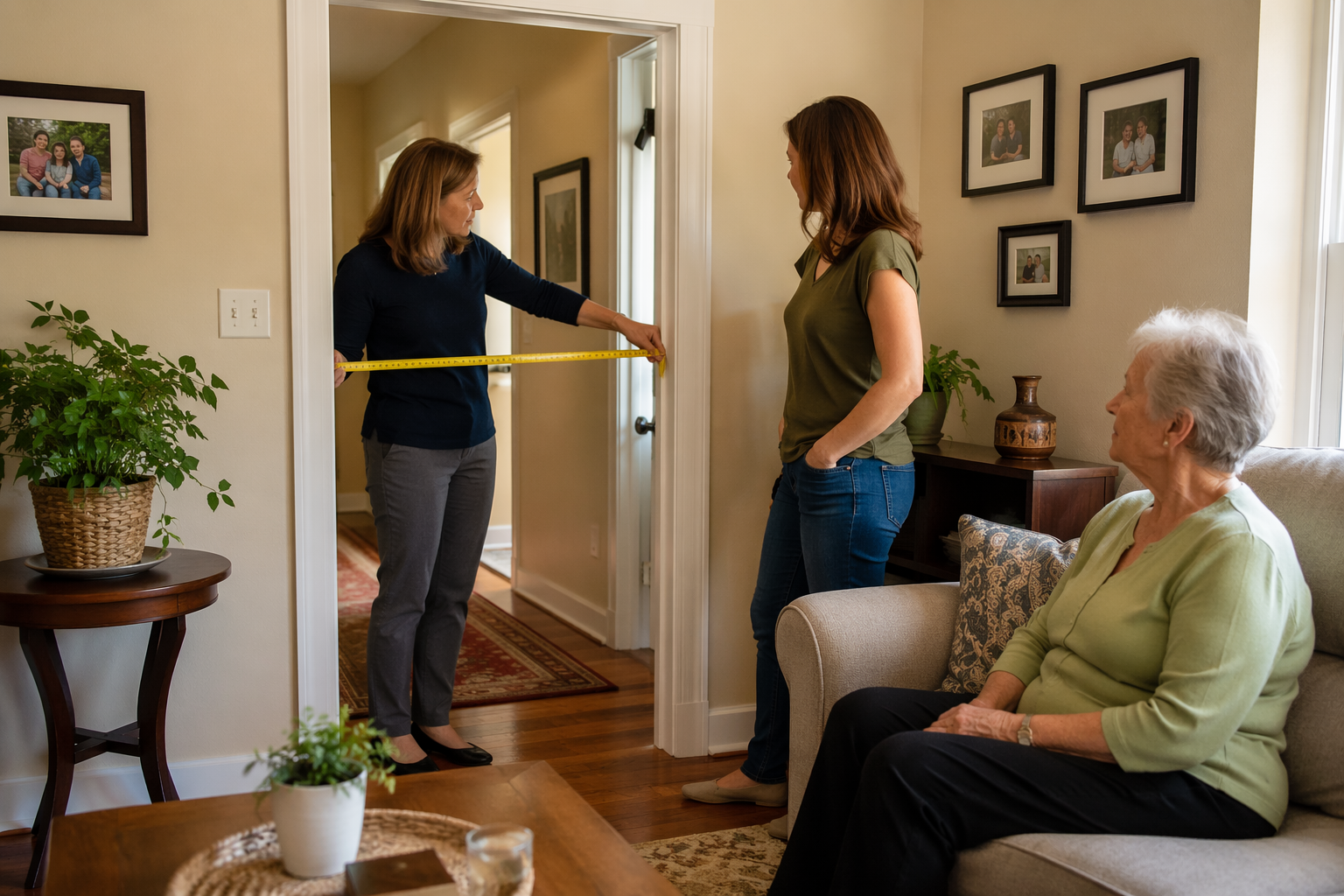
But a checklist cannot see inside the walls. It cannot tell you whether the studs behind the bathroom tile are properly reinforced to support a grab bar under the full weight of a person. It cannot measure whether a doorway is wide enough — at least 32 inches — to accommodate a walker or wheelchair. It cannot assess whether a threshold exceeds the recommended half-inch height that can catch a shuffling foot. These are structural risks, and they are invisible to the untrained eye.
- A CDC checklist identifies surface hazards (rugs, cords, clutter). A CAPS identifies structural hazards (improper wall blocking, undersized doorways, excessive threshold heights).
- A family member can spot a loose rug. A CAPS can assess whether the bathroom layout provides enough turning radius — at least 5 feet by 5 feet — for safe wheelchair or walker maneuverability.
- A checklist tells you to improve lighting. A CAPS evaluates lighting contrast — the difference between wall and floor colors that helps a person with declining depth perception navigate safely.
- A family member can buy a grab bar at a hardware store. A CAPS knows where to place it based on the person's height, reach, and typical transfer patterns, and can verify that the wall has proper blocking to support it.
The gap between a checklist and a professional assessment is the difference between treating symptoms and addressing root causes. A CAPS fills that gap.
The CAPS Room-by-Room Fall Risk Assessment
A Certified Aging-in-Place Specialist is trained through the National Association of Home Builders (NAHB), in partnership with AARP, to apply universal design principles and structural modification techniques specifically for aging adults. The CAPS curriculum — three courses covering marketing, design concepts, and detailed solutions — teaches professionals to identify and avoid common design and installation errors, and to apply targeted solutions for single-room modifications and full-home projects.
When a CAPS conducts a fall risk assessment, they walk through every room of the home with a systematic eye. Here is what they look for in each area.
Related reading
- How to Prioritize Aging-in-Place Home Modifications by Fall Risk and Cost
- The Aging-in-Place Gap: Why 92% of Older Adults Want to Stay Home but Only 10% of Homes Are Ready — A Practical Guide for Families
- Fall Prevention at Home: How to Build a Complete Aging-in-Place Safety System Using CDC STEADI, Home Modifications, and Community Services
Noticed something outdated or inaccurate on this page? Flag a correction. We review every report against CDC, NIA, and AARP HomeFit guidance before updating a page.
Part of the Fall Prevention section.