
When a Fall Signals It's Time for Help: A Family Guide to Home Safety and Support Services
A fall is often the first clear sign that an older adult needs more help at home. This guide helps adult children turn that moment into a practical action plan — starting with low-cost home modifications and extending into personal care, meal support, and funding programs.
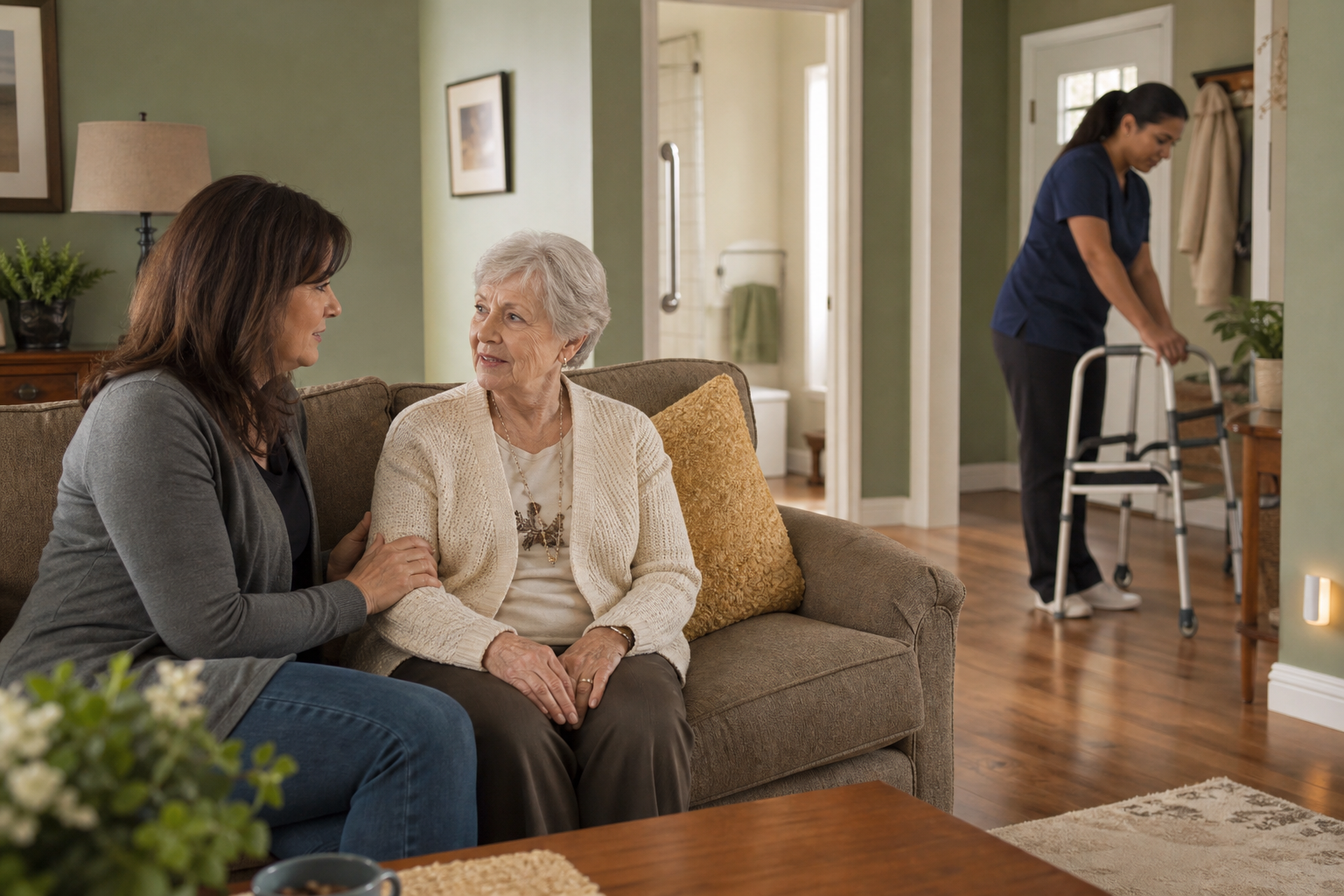
The Fall as a Signal: Why This Moment Matters
A fall is rarely just a stumble. For an older adult living at home, it is often the first unmistakable signal that the environment, the body, or both need attention. For the adult child who gets the phone call — "Mom took a spill in the bathroom, but she says she's fine" — the moment is charged with fear, uncertainty, and the dawning realization that things have changed.
This guide is built on a single premise: a fall is not the end of independence — it is the beginning of a more informed, safer care plan. Over half of all falls take place at home, according to the National Council on Aging (NCOA), which means the home itself is the highest-leverage place to intervene. The changes that reduce fall risk — grab bars, better lighting, cleared pathways — are the same changes that make it possible for a senior to age in place safely for years longer than they would without them.
How Common Are Falls? The Numbers Behind the Warning
The statistics are not abstract. They describe the experience of millions of families every year, and they explain why a single fall demands a systematic response rather than a reassurance that "it won't happen again."
- One in four older adults falls each year, according to the CDC's STEADI initiative (cited by the National Institute on Aging).
- One in five falls causes a serious injury — a broken bone, a head injury, or internal trauma.
- The annual medical cost of falls in the United States exceeds $50 billion, a figure that includes hospitalizations, emergency department visits, rehabilitation, and long-term care.
- More than half of all falls occur inside the home, making the home environment the single most important place to focus prevention efforts.
These numbers come from the CDC and are reinforced by state-level programs like California's Dignity At Home Fall Prevention Program, which cites the same 1-in-4 and 1-in-5 figures in its program design. They are not scare tactics — they are the basis for a rational, evidence-informed response.
Room-by-Room Fall Prevention Checklist
The most effective fall prevention begins with a physical walkthrough of the home. The NCOA recommends five quick modifications that address the most common hazards. Below is a room-by-room checklist organized by priority, with estimated costs and difficulty levels.
| Room | Hazard to Fix | Recommended Change | Estimated Cost | Difficulty |
|---|---|---|---|---|
| Bathroom | Slippery surfaces, no support | Install grab bars near toilet and shower; add a shower seat and adjustable-height handheld shower head | $50 – $300 | Low to Moderate |
| Stairs | Missing or loose handrails, poor lighting | Install handrails on both sides; ensure top and bottom are well-lit; add non-slip treads | $100 – $500 | Moderate |
| Bedroom | Cluttered pathways, dark routes to bathroom | Place a sturdy chair for dressing; install night lights along the path to the bathroom; remove throw rugs | $20 – $150 | Low |
| Kitchen | Frequently used items out of reach | Store daily-use items between waist and shoulder height; secure loose cords; improve under-cabinet lighting | $10 – $100 | Low |
| Entryway / Living Room | Loose rugs, poor lighting, clutter | Remove or secure all throw rugs with non-slip backing; ensure clear walking paths; replace dim bulbs with bright, non-glare LEDs | $15 – $100 | Low |
Low-Cost Modifications That Make a Real Difference
One of the most persistent myths about home safety is that it requires a major renovation. In reality, the Administration for Community Living's Eldercare Locator estimates that minor home repairs for fall prevention cost between $150 and $2,000 per home. Even more striking is the data from the Home Hazard Removal Program (HARP) at Washington University School of Medicine, which found that home modifications completed through occupational therapist assessments averaged less than $200 per home when partnered with nonprofit organizations.
The key is knowing what to prioritize and who can help with installation:
- Grab bars and handrails: A general handyman can install these for $50–$150 in labor. For bathrooms with tile or fiberglass, a CAPS-certified contractor ensures proper wall reinforcement.
- Lighting upgrades: Replacing dim bulbs with bright, non-glare LEDs costs under $20 per fixture and can be done by anyone.
- Non-slip flooring: Adhesive treads for stairs cost $10–$30 per set. Non-slip bath mats are under $25.
- Shower seats and raised toilet seats: These are available at most drugstores and hardware stores for $30–$150 and require no installation.
For families considering more extensive work — stair lifts, walk-in tubs, or doorway widening — the investment is larger but still within reach of many funding programs. See our guide on how an aging-in-place specialist prevents falls for a deeper look at professional assessment and remodeling.
Funding Sources for Home Safety Modifications
Cost should never be the reason a family skips fall prevention. Multiple federal, state, and nonprofit programs exist specifically to fund home modifications for older adults. The table below summarizes the most accessible options.
| Program | What It Covers | Who Is Eligible | Typical Amount |
|---|---|---|---|
| USDA Section 504 Home Repair Program | Loans and grants for home improvements that minimize health and safety risks | Very low-income homeowners in rural areas | Up to $40,000 (loan); up to $10,000 (grant) |
| Older Americans Act Title III (via Area Agencies on Aging) | Minor and major home modifications, including grab bars, ramps, and bathroom safety equipment | Adults 60+; priority given to those with greatest economic or social need | Varies by local AAA budget |
| California Dignity At Home Fall Prevention Program | In-home environmental assessments, home modifications, fall prevention education, and injury prevention equipment | Adults 60+ or persons with disabilities; income ≤ 80% of area median; must have fallen or be at risk | Varies; covers full cost of eligible services |
| Rebuilding Together Safe at Home | Free home safety modifications including grab bars, handrails, lighting, and ramp installation | Low-income older adults and veterans | Free (volunteer labor + materials) |
| Meals on Wheels In-Home Safety Initiative | Home hazard identification and repair services, either directly or through referrals | Adults 60+ who are homebound or at risk | Varies; often free or low-cost |
| Habitat for Humanity Aging in Place Program | Free home modifications including grab bars, ramps, and bathroom safety equipment | Low-income older adults; eligibility varies by local affiliate | Free (volunteer labor + materials) |
For a more detailed breakdown of financing options, including tax deductions and CAPS-guided project costs, see our companion guide: How to Pay for a CAPS-Guided Home Modification: Grants, Tax Deductions, and Financing Options in 2026.
Beyond Modifications: When a Fall Points to Broader Needs
A fall is rarely just a physical event. It often reveals underlying challenges that have been quietly accumulating: difficulty preparing meals, missed medications, declining strength, or social isolation. The NIA notes that signs an older adult needs help include an inability to prepare meals safely, not bathing regularly, clutter, and missed medications — all of which increase fall risk and all of which are more visible after a fall.
Once the home is physically safer, families should assess whether the senior needs support in these areas:
- Personal care: Bathing, dressing, toileting, and transferring. The national median cost for in-home personal care in 2026 is $34 per hour (A Place for Mom).
- Meal support: Meal delivery programs like Meals on Wheels bring nutritious meals to the home on a daily or weekly basis. Medicare does not generally cover meal delivery, but many local programs offer sliding-scale fees.
- Medication management: Missed or incorrect doses are a leading cause of hospital readmission after a fall. A home health aide or pharmacist-led review can help.
- Transportation: Loss of driving privileges after a fall is common. Area Agencies on Aging often provide or coordinate senior transportation services.
- Monitoring technology: Emergency alert systems, passive home sensors, and GPS trackers can provide peace of mind and rapid response. See our guide on how monitoring technology can reduce in-home senior care costs for a cost-benefit framework.
For families ready to build a comprehensive plan, our Aging in Place Services Plan: A Staged Decision Framework for Family Caregivers provides a step-by-step approach to matching services to evolving needs.
Connecting Fall Prevention to Broader Funding Programs
A documented fall can be the key that unlocks several major funding streams. Because a fall creates a clear medical event with measurable consequences, it often satisfies eligibility criteria that are harder to meet with vague complaints of "slowing down."
Medicare Home Health (Post-Fall Recovery)
Medicare covers 100% of home health services — including skilled nursing, physical therapy, and occupational therapy — for seniors who are homebound and need skilled care after a fall. According to Medicare.gov, eligible beneficiaries can receive skilled nursing care and home health aide services up to 8 hours a day combined, for a maximum of 28 hours per week (and up to 35 hours per week for short periods if necessary). There is no copay for covered services; the beneficiary pays 20% of the Medicare-approved amount for durable medical equipment after the Part B deductible.
The key is that the senior must be homebound — defined as having difficulty leaving home without assistance and that leaving home is medically contraindicated. A fall that results in a fracture, head injury, or significant mobility impairment almost always meets this standard.
Medicaid HCBS Waivers (Personal Care After a Fall)
Medicaid Home and Community-Based Services (HCBS) waivers can cover personal care assistance — bathing, dressing, meal preparation, and light housekeeping — for seniors who qualify financially. A fall that creates a need for hands-on assistance with activities of daily living (ADLs) is precisely the kind of event that supports a waiver application. Eligibility and covered services vary by state, so the first step is to contact the local Area Agency on Aging.
VA Aid & Attendance (For Veterans Who Fall)
Veterans and surviving spouses who need help with daily activities due to a fall may qualify for VA Aid & Attendance, a pension supplement that can be used to pay for in-home care, assisted living, or adult day care. The benefit requires a medical need for assistance with ADLs — a fall that results in mobility impairment or cognitive decline is strong supporting evidence.
Your Action Plan: Immediate and Next Steps
A fall is a signal, not a verdict. The steps below will help you move from crisis to a sustainable, safer care plan. Start with the immediate actions and work through the medium-term steps as you have time.
- Take the NCOA Falls Free CheckUp online. This free, evidence-based tool assesses fall risk and provides personalized recommendations. It takes about 10 minutes.
- Conduct a room-by-room walkthrough using the checklist above. Start with the bathroom and stairs — these are the highest-risk areas. Take photos and notes so you can discuss them with a professional.
- Contact your local Area Agency on Aging (AAA) for an in-home assessment. AAAs receive funding from the Older Americans Act Title III for home modifications and can connect you with an occupational therapist or case manager. Find yours through the Eldercare Locator.
- Explore funding programs. Based on your parent's income, location, and veteran status, apply for the programs listed in the funding table above. Many have simple application processes and short wait times.
- Build a broader care plan if needed. If the fall revealed challenges with meals, medications, or personal care, use the Aging in Place Services Plan to map out a staged approach to additional support.
- If you are still in the first 24 hours after the fall, read From Crisis to Control: What to Do in the First 24 Hours After Your Elderly Parent Falls for immediate medical and emotional guidance.
Related reading
Noticed something outdated or inaccurate on this page? Flag a correction. We review every report against CDC, NIA, and AARP HomeFit guidance before updating a page.
Part of the Fall Prevention section.