
STEADI: screen
Fall Prevention and Home Repair Help for Seniors After Hail
After a hail storm, seniors face hidden fall hazards from broken glass, wet floors, and debris. This checklist helps adult children and older adults spot and fix these dangers from the ground, and find financial help for repairs.
After a hail storm, the first question is not only whether the roof is damaged. For an older adult, the more urgent question may be whether the next trip from the driveway to the kitchen has become unsafe. Hail can leave ice on steps, knock debris across a walkway, crack glass into tiny pieces, loosen a rail, or open a roof leak that turns a familiar hallway into a slick spot.
That is why home repair resources for seniors after a hail storm should start with fall prevention. Quarter-size hail, about 1 inch, can damage roofing, and hail 2 inches or larger can break windows, which means the danger may move inside the house before anyone has scheduled a repair estimate.[1] The safe job for a senior or family caregiver is ground-level observation, temporary control of hazards, photos, and calls for help — not climbing a ladder to prove what happened.
Before Anyone Starts Cleaning
If the storm has just passed, wait until local conditions are safe before walking the property. Stay away from downed power lines, sagging branches, broken glass, and any area where water may be entering near electrical fixtures. If there is an immediate danger to people, call emergency services before beginning a home checklist.
- Do not let the older adult climb onto the roof, stand on a chair, or go up a ladder to check shingles, gutters, skylights, or vents.
- Do not let anyone in slippers sweep broken glass or cross a wet room to “just grab something.”
- Turn on interior and exterior lights before walking through the house, even during the day.
- Block off rooms with broken glass, roof leaks, ceiling stains, or wet flooring until they have been cleaned and checked.
- Take photos from the ground before moving debris when it is safe to do so.
Falls are already a home problem for many older adults: the National Council on Aging notes that more than half of falls happen at home.[2] A hail storm does not create a new kind of aging risk so much as it rearranges the house overnight — the step edge is hidden, the rug is wet, the hallway is dim, the handrail wiggles, the bucket sits where a foot normally lands.
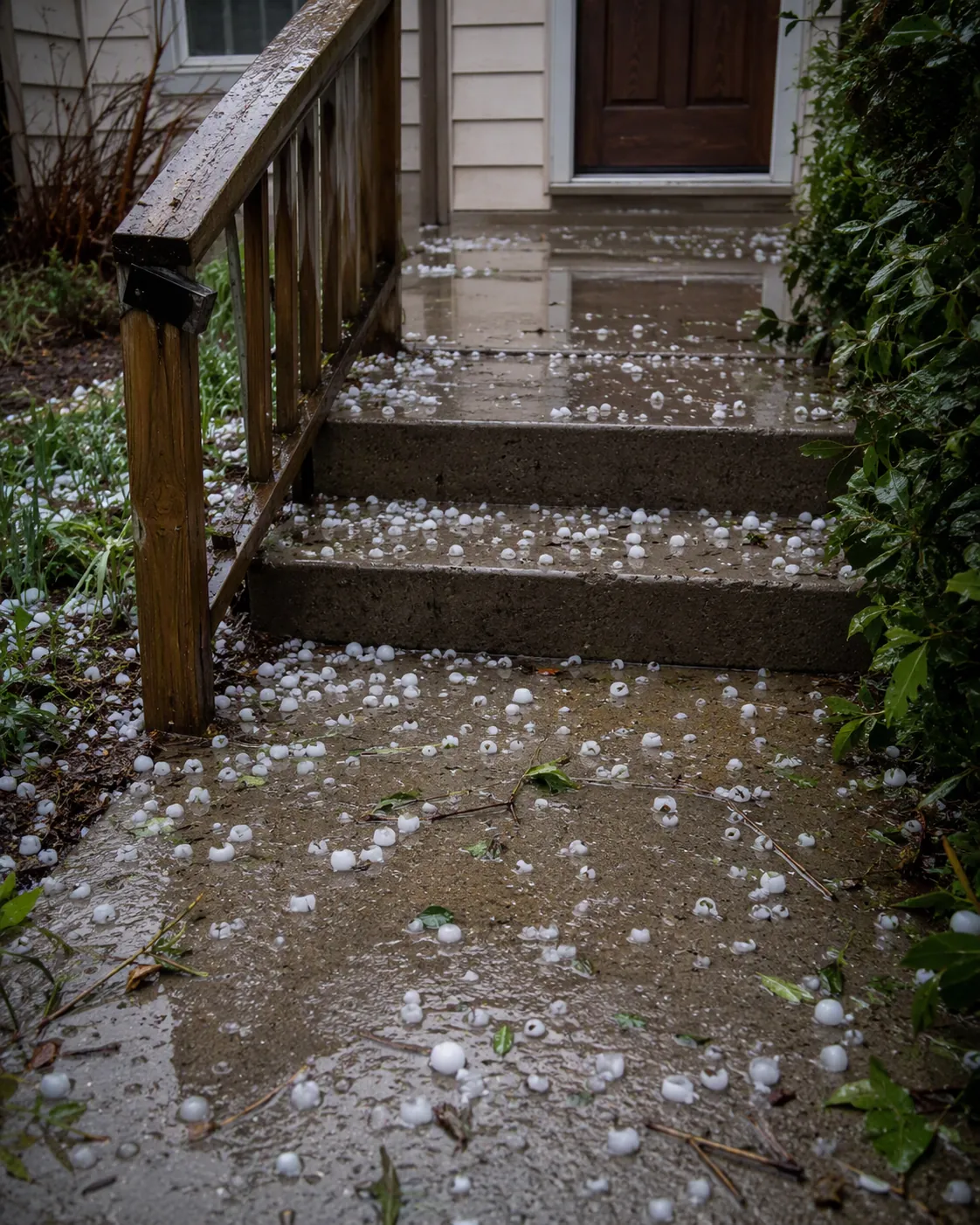
Start Where Feet Actually Go
Walk the route an older adult would use, not the route a contractor would inspect. Start at the driveway, sidewalk, garage, or porch. Then move to the entry, the first interior floor, the halls, the bathroom path, the bedroom path, and the rooms with windows or ceiling stains. The roof can wait for a professional inspection; the walking surfaces cannot.
| Where to look | Storm sign | Fall-prevention response |
|---|---|---|
| Driveway, sidewalk, porch, ramp | Hailstones, branches, shingle grit, leaves, or gutter debris | Clear a single dry walking path first; use a broom or shovel from stable footing; keep the older adult off the route until it is passable |
| Steps and thresholds | Puddles, hidden step edges, loose mats, hail packed against the door | Remove mats that slide, dry the threshold, mark the step edge with good lighting, and use another entrance if needed |
| Handrails and rail posts | Rail moves, brackets loosened, debris caught at the base | Do not rely on the rail until repaired; guide traffic to a safer entrance |
| Rooms below roof areas | Ceiling stains, drips, buckets, wet rugs | Block off the wet area, move cords and rugs, place a stable container only where it will not become a trip hazard |
| Rooms with damaged windows | Cracked glass, glass beads on the floor, rain blowing in | Close off the room; keep shoes on; clean glass carefully and more than once before reopening |
| Halls and bedrooms | Dim light from covered or broken windows, displaced furniture, extension cords | Turn on lights, restore normal walking paths, and remove temporary cords from routes |
Exterior approaches: clear one route, not the whole yard
The first pass outside should be narrow and practical. Choose the safest entrance and make that one route usable. A driveway covered with small hail, leaves, and roof granules can be more dangerous than it looks, especially if the older adult is carrying a bag, using a cane, or trying to hold a railing at the same time.
Look for hail gathered where someone naturally slows down: at the car door, mailbox, porch step, garage threshold, ramp landing, and back door. Clear debris from the center of the walking path first. If the path is wet, add lighting and slow the pace rather than rushing to finish all cleanup at once.
Steps, thresholds, and rails: test before trusting
A step that was safe yesterday may not be safe when hail has piled against the riser or when leaves and twigs hide the edge. Check the bottom step and the threshold first because that is where water and debris collect. If there is a doormat, lift it. Mats can trap water underneath or slide on wet concrete.
Then check the handrail from the ground. Do not yank hard enough to injure yourself; just notice whether the rail shifts, whether a post has pulled loose, or whether brackets have separated. A damaged rail is worse than no rail if an older adult leans on it expecting support. Until it is repaired, use a different entrance or have someone provide steady assistance without pulling the person off balance.
Roof clues belong in photos, not on a ladder
Roof damage matters because it can send water inside, not because a family member needs to climb up and diagnose shingles. The National Weather Service treats 1-inch hail as capable of damaging roofs, and severe thunderstorms with large hail cause nearly $1 billion in U.S. property and crop damage each year.[1] That is enough reason to arrange a professional roof inspection after quarter-size or larger hail, especially if you see missing shingles, dented vents, damaged gutters, ceiling stains, or granules washed near downspouts.
Use a phone camera from the ground. Photograph dents in gutters, siding, window screens, outdoor furniture, and visible roof edges only if they are safely visible. The inspection can happen later; the fall-risk controls inside the house should happen now.
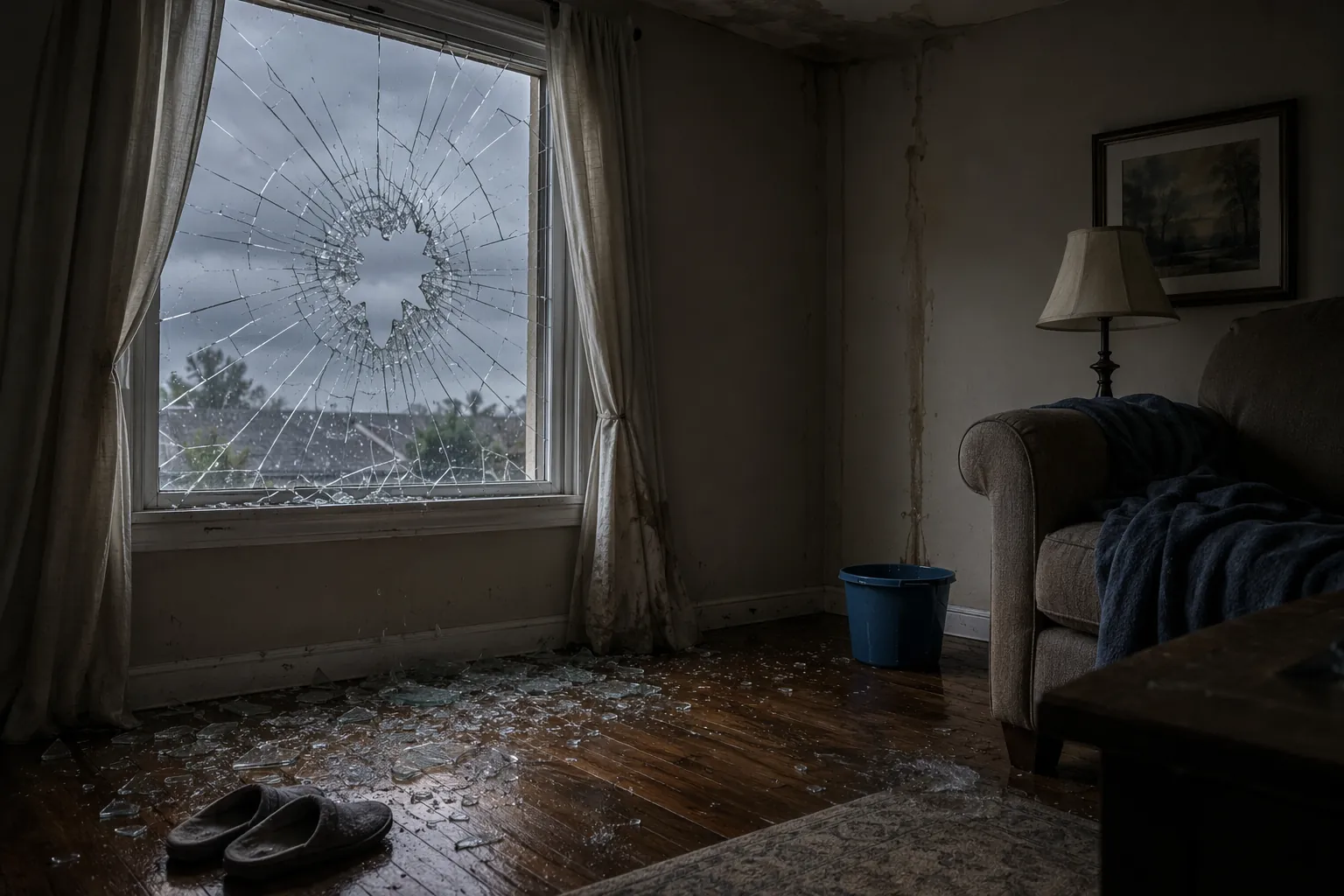
Inside the House, Treat Water and Glass as Walking Hazards
Once inside, resist the habit of walking room to room in the dark to “see how bad it is.” Turn on the lights first. If power is out, use a flashlight and move slowly. Poor lighting is a known home safety issue in fall prevention guidance, and after hail it can combine with wet floors, shifted furniture, and debris where the older adult expects a clear path.[2]
Broken windows need a closed door and shoes
Large hail can break windows, and the smaller glass pieces are often the ones people miss.[1] If a bedroom, living room, porch room, or kitchen has cracked or broken glass, close the door or block the entry. Ask the older adult not to enter for slippers, medication, a purse, or a phone charger until someone has made a safe path.
For cleanup, wear sturdy shoes and gloves. Sweep slowly, then vacuum if it is safe for the flooring and electrical conditions. Check under curtains, rugs, furniture legs, and chair cushions. Glass can travel farther than the obvious impact spot, and a room should not be reopened just because the first pile has been swept.
Leaks need boundaries, not scattered buckets
A towel over a wet spot is not a repair, and it is not a safe fall-prevention plan. It can hide the edge of the puddle, wrinkle underfoot, or become slick itself. If water is coming through a ceiling or around a window, move the walking route away from it. Put a container under the drip only if it can sit outside the normal path. If that is not possible, close off the area.
Watch the routes that get used at night: bedroom to bathroom, favorite chair to kitchen, back door to laundry, hallway to thermostat. A small leak in one of those paths deserves more urgency than a larger stain in a room no one needs to enter today.
Temporary fixes should not create new trip hazards
After a storm, families improvise. They tape plastic over a window, run an extension cord to a lamp, place a bucket under a drip, move furniture away from a wet wall, or lay towels by the door. Each temporary fix needs one more look from knee height: can a foot catch it, can a cane tip slide on it, will it be visible at 2 a.m.?
- Tape down only what must be taped, and keep tape edges out of walking routes.
- Move extension cords along walls instead of across halls.
- Use stable chairs and tables; do not leave lightweight furniture half-pulled into a path.
- Keep a clear route to the bathroom, bedroom, kitchen, and main exit.
- Put a working flashlight within reach if power or lighting is unreliable.
What to Fix Today and What to Hand Off
The useful dividing line is not “minor” versus “major.” It is whether the action can be done safely from stable ground and whether it immediately reduces the chance of a fall.
| Do today if safe | Call a professional or agency |
|---|---|
| Clear hail, leaves, and debris from one entrance route | Roof inspection after quarter-size or larger hail |
| Dry thresholds and block wet interior areas | Roof tarping, roof repair, skylight repair, or gutter repair |
| Close off rooms with broken glass | Window replacement or boarding if glass or frame is damaged |
| Photograph damage from the ground | Electrical concerns, ceiling sagging, active water near fixtures |
| Move cords, rugs, buckets, and furniture out of walking paths | Loose or damaged handrails, ramps, stairs, or structural supports |
This is also the point to be careful with pride and control. Many older adults do not want their house taken over by a committee. A practical compromise is to separate permission from safety: “I’m going to close this room until the glass is cleaned,” or “Let’s use the side door tonight because this rail is loose.” It does not need to become a debate about independence while the floor is wet.
Document Damage Without Turning It Into a Second Accident
Photos help with insurance, repair estimates, and assistance applications, but no photo is worth a fall. Take wide photos first: the damaged window in the room, the bucket under the stain, the debris on the step, the loose handrail at the entrance. Then take closer photos from the same safe position. If you cannot get the angle without climbing, skip it and leave that view for the inspector.
- Photograph the date-sensitive conditions before cleanup when it is safe: hail on steps, water on floors, broken glass, blocked drains, and fallen debris.
- Keep damaged materials if an insurer or repair professional asks for them, but do not leave sharp or wet items in walking paths.
- Write down which rooms or entrances are temporarily closed and why, so another family member does not reopen them by mistake.
- Save receipts for emergency supplies or temporary safety work, such as tarps, plywood, cleanup materials, or professional services.
Repair-Help Routes for Seniors After Hail
Financial help for hail repairs is not one system. Insurance, federal disaster assistance, USDA rural repair programs, state programs, local aging agencies, and nonprofits each use different rules. The safest way to think about them is as possible repair-help routes, not guaranteed emergency cleanup.
Insurance and professional inspection
If the home has homeowners insurance, report the damage according to the policy instructions and ask what documentation is needed before permanent repairs begin. If the hail was quarter-size or larger, or if there are leaks, broken windows, damaged gutters, or visible exterior dents, schedule a professional inspection rather than sending a senior, neighbor, or adult child onto the roof.[1]
USDA Section 504 for eligible rural senior homeowners
For some older homeowners in rural areas, the USDA Single Family Housing Repair Loans and Grants program, often called Section 504, may help remove health and safety hazards. USDA says the program offers loans up to $40,000 at 1% interest to very-low-income homeowners, and grants up to $10,000 for very-low-income homeowners age 62 or older who cannot repay a loan.[3] The National Council on Aging notes that grant limits may rise to $15,000 in presidentially declared disaster areas.[4]
The limits matter. Section 504 is not for every senior, and it is not a same-day cleanup crew. The home must be in an eligible rural area, the applicant must meet very-low-income rules, and grants are specifically tied to removing health and safety hazards.[3] A hail-damaged handrail, unsafe steps, broken window, or leak-related hazard may be the kind of repair to ask about, but eligibility has to be confirmed through USDA Rural Development.
FEMA after a declared disaster
FEMA home repair assistance is disaster-dependent. FEMA describes home repair assistance as help that may make a disaster-damaged home safe, sanitary, and functional, but it depends on an eligible disaster, inspection or verification of damage, and other requirements.[5] FEMA housing assistance is connected to presidentially declared disasters and may be affected by insurance coverage and whether the damaged home is the applicant’s primary residence.[6]
In plain terms: if the hail storm was part of a declared disaster, FEMA may be worth checking. If there is no applicable declaration, FEMA is unlikely to be the repair path. Even when FEMA is available, do not wait for an assistance decision before blocking a room with glass, drying a threshold, or arranging urgent safety repairs.
USAGov as the broader doorway
USAGov maintains a general guide to home repair and improvement programs, including information on federal, state, and local options.[7] This can be useful when a senior does not fit USDA rural rules, when FEMA does not apply, or when the needed work is a health-and-safety repair but not part of a declared disaster program.
Local Area Agencies on Aging, city or county housing departments, community action agencies, and nonprofit repair programs may also know what is active nearby. Availability varies, so the most efficient call is specific: “An older homeowner has hail damage that created fall hazards — broken glass, a leaking ceiling, or an unsafe rail. Are there emergency home repair or accessibility funds in this county?”
A Same-Day Call List
Once the walking routes are controlled, make calls in the order that matches the danger. A roof leak over a hallway, a broken bedroom window, or a loose entrance rail should not sit in the same mental pile as a dented mailbox.
- Emergency services or utility company if there are downed lines, electrical hazards, gas concerns, structural collapse, or immediate danger.
- Roofing, window, or general repair professional for damage that requires climbing, boarding, tarping, structural repair, or specialized tools.
- Insurance company if the home is insured, asking what photos, estimates, and temporary repairs are allowed or required.
- USDA Rural Development if the senior is 62 or older, owns the home, has very low income, and may live in an eligible rural area.
- FEMA only if the storm is connected to a presidentially declared disaster and the home may meet program requirements.
- Local aging, housing, or community agencies for repair programs, volunteer help, or referrals when federal programs do not fit.
The work of the first day is not to solve the whole house. It is to keep the older adult from being hurt by the damage while the repair process catches up. Clear one entrance. Light the paths. Close the glass room. Keep buckets out of footpaths. Photograph what can be photographed from the ground. Call the people who are supposed to climb, cut, tarp, inspect, or decide eligibility.
Hail recovery for seniors is property cleanup, but it is also temporary fall-risk management. Until the window is replaced, the roof is checked, the rail is tightened, and the wet floor is dry, the house has changed. Treat it that way.
References
- NWS Hail Safety Rules, National Weather Service.
- How to Prevent Falls With Home Safety Modifications, National Council on Aging.
- Single Family Housing Repair Loans & Grants, USDA Rural Development.
- What Is the USDA Single Family Housing Repair Loans and Grants Program?, National Council on Aging.
- What is Home Repair Assistance?, FEMA.
- Housing Assistance, FEMA.
- Home repair and improvement programs for special groups, USAGov.
Related reading
Noticed something outdated or inaccurate on this page? Flag a correction. We review every report against CDC, NIA, and AARP HomeFit guidance before updating a page.
Part of the Fall Prevention section.