
STEADI: intervene
How Seniors Can Prevent Falls Before a Severe Thunderstorm
This checklist helps seniors and caregivers eliminate thunderstorm fall risks before a storm hits — from lighting failures to wet floors — with a room-by-room home audit that takes one afternoon.
The best severe thunderstorm safety tips for seniors start before the sky changes. Walk the house on a quiet afternoon and ask one plain question: where will the older adult actually put their feet if the lights go out and a warning says to move to shelter?
That question matters because falls are already common and serious for older adults. The CDC says about 1 in 4 older adults falls each year, and falls are the leading cause of injury death for adults 65 and older.[1] A thunderstorm does not need to be proven as a special medical category of fall risk to deserve attention. It creates the old fall conditions in a hurry: dim rooms, wet entryways, loose rugs, scattered shoes, urgent movement, and sometimes a dead stair lift or dark bathroom.
This is a pre-season audit, not a storm lecture. You are not trying to make the house perfect. You are trying to make the likely walking routes boring, bright, dry, and clear before anyone is listening for thunder.
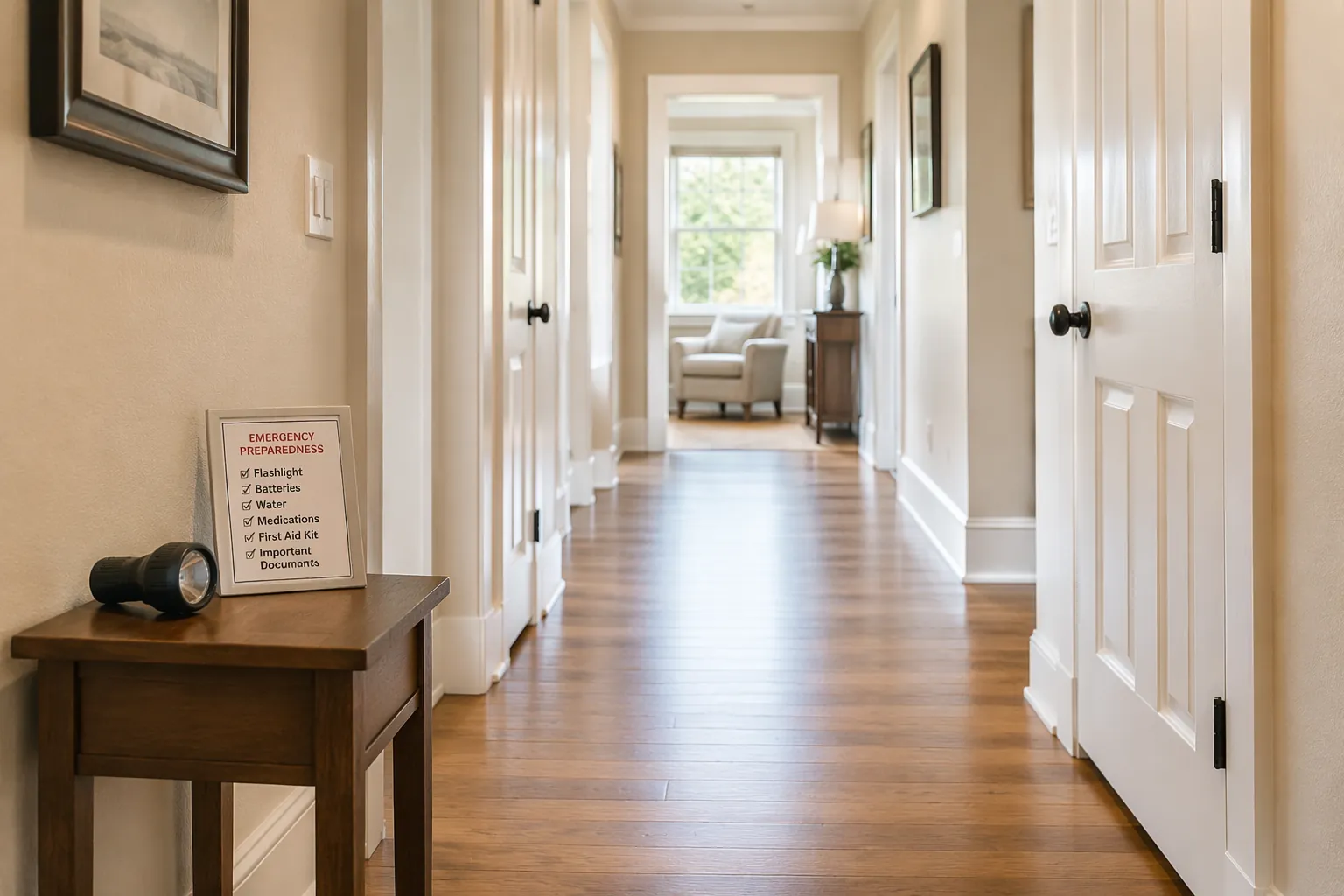
Start With The Actual Walking Route
Begin where the person spends time, not where the emergency supplies are stored. Stand at the recliner, bed, kitchen chair, or favorite sofa. From there, walk to the storm shelter location, the bathroom, the flashlight location, the phone charger, and any medical or mobility device that may be needed if power fails.
The CDC’s STEADI materials emphasize familiar fall-prevention fixes such as clearing pathways, improving lighting, and dealing with loose rugs.[2] A thunderstorm audit applies those same ideas to the moments when the house becomes harder to navigate.
| Route to test | What to check before storm season |
|---|---|
| Chair or bed to shelter area | No rugs that slide, no cords, no shoes, no low furniture, no storage boxes |
| Chair or bed to bathroom | Night lighting, dry flooring, grab bars where needed, no loose bath mats |
| Shelter area to flashlight | Flashlight reachable without crossing a dark room |
| Bed to phone or alert device | Device charged, reachable, and visible or vibrating if hearing is limited |
| Medical device to backup plan | Battery, outlet access, and caregiver contact handled before storms |
Do the walk at normal speed first. Then do it again slowly, as it might happen at night. If a cane, walker, rollator, oxygen tubing, or brace is normally used, include it. A path that looks clear to a standing caregiver may be too narrow for a walker or too cluttered for a person who needs both hands for balance.
Make The Shelter Path Safe Before It Is Urgent
The American Red Cross advises people to identify a sturdy building and plan to shelter in a basement or a small, interior, windowless room on the lowest level during severe thunderstorms.[3] For an older adult, that advice has a second layer: can the person get there without rushing through a bad obstacle course?
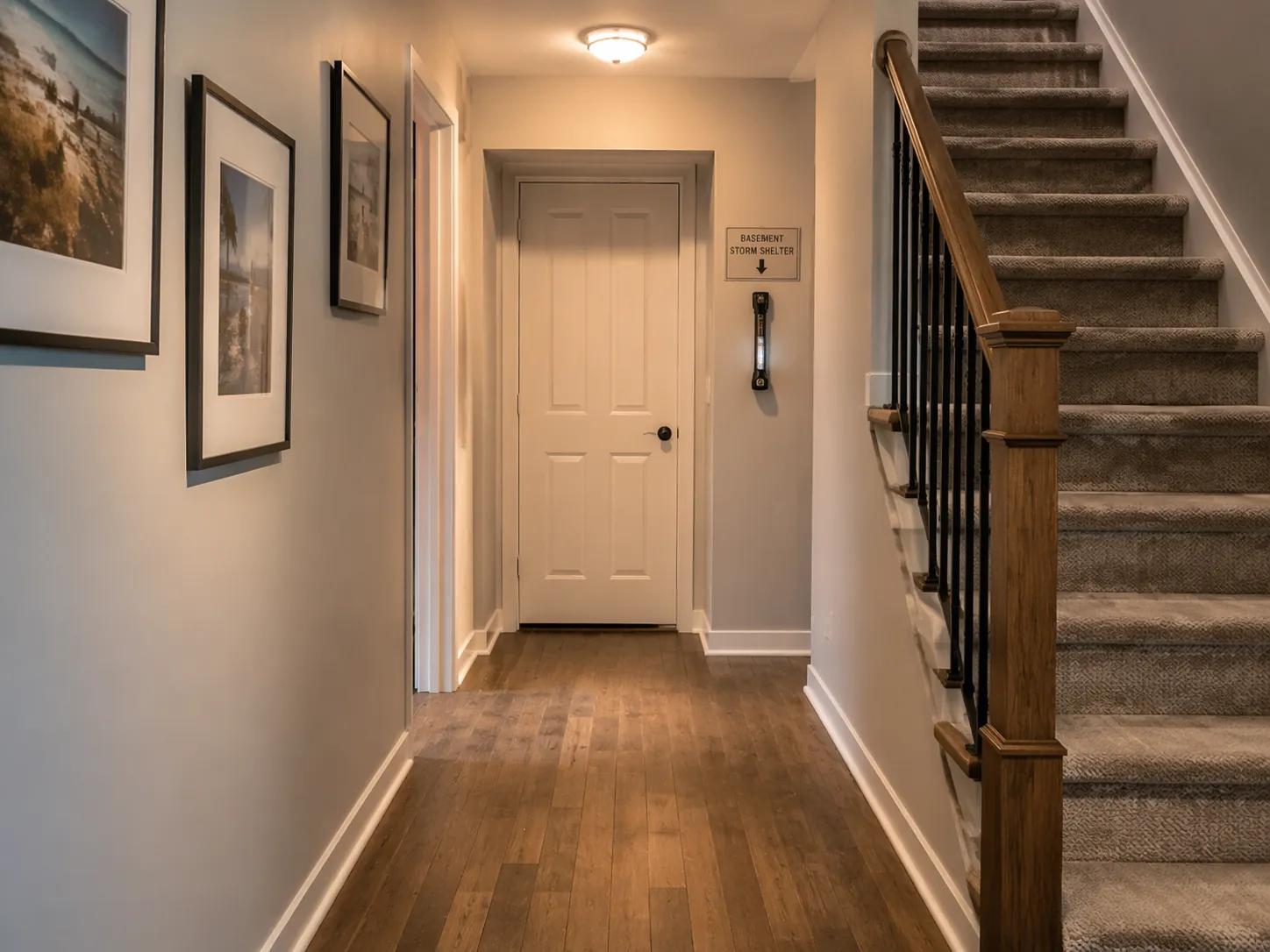
Clear the full route from the usual sitting or sleeping spot to the shelter area. Do not stop at the doorway. Look at the turn into the hall, the landing at the top of the basement stairs, the floor just inside the closet or interior room, and the space where the person will sit once inside.
- Move shoes, pet bowls, laundry baskets, umbrellas, and delivery boxes out of the route.
- Remove small furniture that forces a sideways step, especially in narrow halls.
- Tape down, replace, or remove any rug that bunches, curls, or slides.
- Keep canes, walkers, and glasses in the same reachable place every evening.
- Put a sturdy chair in or near the shelter area if standing for a warning period would be unsafe.
Area rugs deserve special suspicion. Keystone Health’s emergency preparedness guidance tells older adults to keep flashlights easy to reach for power outages and to tape down or remove area rugs that could cause trips in low light.[4] That is not decorative advice. In a dark hallway, the curled edge of a rug is no longer a small nuisance; it is the thing a foot finds before the hand finds the wall.
If the safest shelter is in the basement, test the stairs honestly. Are both handrails secure? Is there a light switch at the top and bottom? Can the person descend with a cane or walker, or does the plan depend on a movement they no longer do confidently? If the basement route is unsafe, the shelter plan needs a different interior room or a caregiver arrangement before storm season, not during a warning.
Put Light Where Hands Already Go
A flashlight in a kitchen drawer is useful only if the older adult can reach the kitchen drawer in the dark. Put light at the start of the route, along the route, and at the destination.
Use simple LED flashlights, plug-in rechargeable lights, or battery lanterns in places where hands naturally land: bedside table, recliner side table, bathroom counter, hallway shelf, basement-door hook, and shelter-room chair. Avoid making anyone open a closet, search a junk drawer, or cross a room to find the first light.
- Bedside: one flashlight reachable without standing.
- Favorite chair: one flashlight on the dominant-hand side.
- Hallway or stair entry: one wall-mounted or table-height light.
- Bathroom: one flashlight on the counter or a fixed night light with battery backup.
- Shelter area: one lantern that can light the room without being held.
Check batteries before the season starts and again when clocks change or smoke-alarm batteries are checked. If the person has arthritis, tremor, neuropathy, or low vision, test whether the switch is easy to operate. A tiny metal flashlight with a stiff button may look sensible in a drawer and fail the person who has to use it at 2 a.m.
Night lights help, but they are not a complete plan for outages unless they have battery backup. If the home uses smart bulbs, voice assistants, or motion lights, make sure there is still a plain battery-powered light within reach. Storm plans should not depend entirely on Wi-Fi, a mobile app, or a switch across the room.
Dry The Places That Get Slippery First
Wet floors are not limited to flooded homes. They show up at the back door where someone checked the sky, beside the dog’s leash, under a dripping umbrella, near a basement entry, and in the bathroom. During storm season, treat those spots as part of the fall-prevention route.

The bathroom needs particular attention because it combines urgency, water, hard surfaces, and often poor lighting. Install or check grab bars where the person actually reaches, not where they look neat. Replace loose bath mats with non-slip backing or remove them. Keep the floor clear of scales, laundry, cleaning bottles, and footstools.
Lightning adds one more reason to plan ahead. The Red Cross warns that lightning can travel through plumbing, so bathing, showering, and other plumbing contact should be avoided during a thunderstorm.[3] That does not mean a person will never need the bathroom while a storm is nearby. It means the route to the toilet should already be lit, dry, and supported so no one hurries through a dangerous space.
- Place an absorbent, non-skid mat inside storm-season entry doors.
- Store umbrellas and rain shoes away from the walking path, not beside the first step into the hall.
- Keep a towel near the most-used door so wet spots can be handled without a search.
- Check that bathroom mats grip the floor and do not wrinkle under a walker.
- Add a bathroom flashlight or battery night light before the first storm week.
Remove The Need To Rush
Rushing is often built into a household without anyone naming it. The phone is in one room, the weather alert is in another, the walker is parked by the bed, the shoes are by the door, and the shelter area is downstairs. When the warning arrives, the person is expected to assemble all of that while the room gets darker.
Fix that by moving decisions earlier. Choose the shelter room now. Decide which shoes or grippy slippers are worn indoors during storm watches. Put the walker or cane where it will be used, not where it is out of sight. Keep glasses, hearing aids, phone, and flashlight within the same small reach zone at night.
If a caregiver lives elsewhere, make the check-in plan specific. “Call when there is a warning” is less useful than “When a severe thunderstorm watch is issued, move to the main-floor interior room, turn on the lantern, keep the phone beside the chair, and call me from there.” The earlier call matters because it happens while movement is still calm.
When Hearing Alerts May Not Be Enough
Do not rely only on outdoor sirens or a loud television if the older adult has hearing loss, sleeps deeply, removes hearing aids at night, or keeps the bedroom door closed. Ready.gov advises older adults to plan for their specific needs and communication methods as part of emergency preparedness.[5]
- Turn on phone emergency alerts and test whether vibration or flash alerts are noticeable.
- Consider a weather radio with a visual alert or bed-shaker accessory if audio alerts are missed.
- Ask a neighbor or caregiver to make an early check-in during watches, not only warnings.
- Keep the alert device on the side of the bed or chair where it can be seen and reached.
Do A Five-Minute Drill Before The Season
After the house is cleared and lights are placed, run one short practice. Start in the usual chair or bed. Pick up the flashlight. Put on the usual indoor footwear. Walk to the shelter area with the cane, walker, or other normal aid. Sit down. Place the phone, flashlight, water, and any needed medication within reach.
The drill is not for speed. It is for finding the snag: a walker that catches on a rug edge, a hallway table that narrows the turn, a flashlight that rolls off the chair arm, a basement door that sticks, a bathroom mat that slides, or a phone cord that crosses the path.
If the person cannot complete the route without holding furniture, rushing, or leaving the mobility aid behind, the plan is not ready. Change the route, move the shelter location, add support, or arrange earlier caregiver help.
Know When This Checklist Is Not Enough
Some homes need more than a fall-prevention audit. If the older adult depends on an oxygen concentrator, CPAP or BiPAP machine, power wheelchair, stair lift, refrigerated medication, electric bed, or powered recliner needed for transfers, power loss is its own emergency planning problem.
Handle that with a separate 72-hour medical power outage plan. Backup batteries, charging schedules, utility medical baseline programs, caregiver coverage, and evacuation thresholds need more detail than a hallway checklist can carry.
Emergency kits are the same. Keep the kit, but do not let it become the whole plan. A 72-hour senior power outage safety kit helps after the power is out. Fall prevention starts with the floor between the person and the kit.
The One-Afternoon Pre-Storm Audit
Set aside one afternoon before thunderstorm season and work in this order. Stop whenever you find a hazard and fix it before moving on.
- Choose the shelter location and confirm the older adult can reach it safely.
- Walk from the usual chair and bed to the shelter, bathroom, phone, and flashlight locations.
- Remove clutter, cords, shoes, small furniture, and anything stored in the walking path.
- Tape down, replace, or remove loose rugs, especially in halls and near doors.
- Place LED flashlights or battery lights where hands naturally reach.
- Check bathroom footing, grab bars, bath mats, and lighting.
- Plan for visual, vibrating, or caregiver alerts if audio warnings may be missed.
- Run one slow practice route with the normal mobility aid.
- Move medical-device power planning into a full outage plan if electricity is medically important.
The dangerous part of a severe thunderstorm is not always the dramatic part outside the window. For many older adults, it is the familiar walk through a dark hallway, across a damp floor, toward a room they meant to clear last month. Most of that can be fixed before the first warning, with a few lights, fewer obstacles, and one careful walk through the house while everything is still calm.
References
- About Older Adult Fall Prevention, CDC
- STEADI Patient & Caregiver Resources, CDC
- Thunderstorm Safety, American Red Cross
- Emergency Preparedness for Seniors, Keystone Health
- Older Adults, Ready.gov
Related reading
Noticed something outdated or inaccurate on this page? Flag a correction. We review every report against CDC, NIA, and AARP HomeFit guidance before updating a page.
Part of the Fall Prevention section.