
STEADI: Intervene
A Senior's Guide to Flood Safety and Fall Prevention
Merges flood safety with fall prevention to help older adults with mobility challenges prepare for, survive, and recover from a flood without adding fall risks. Covers pre-flood modifications, movement limits during a flood, and post-flood hazard cleanup — all tailored for walker and wheelchair users.
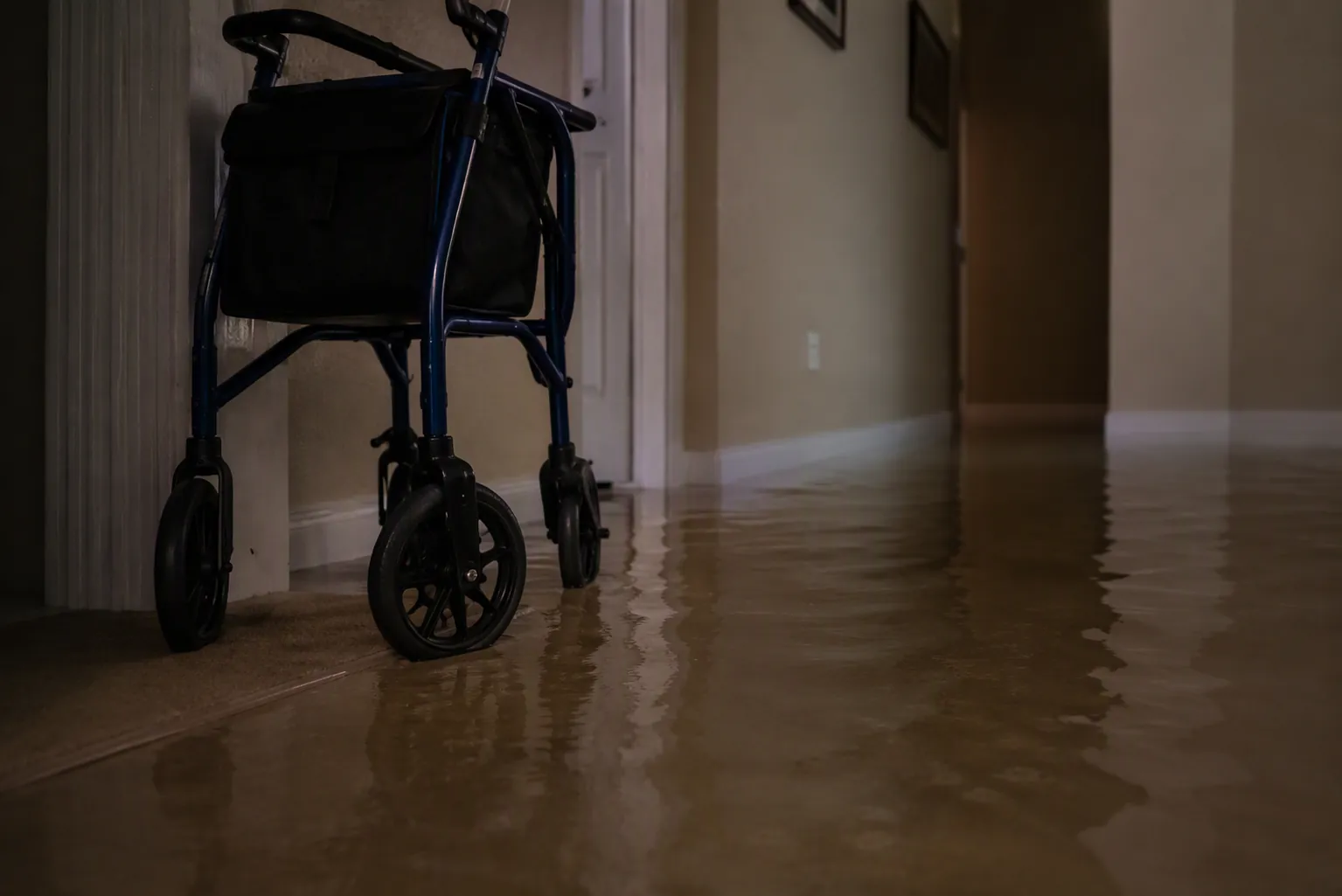
Six inches of fast-moving water can knock a person down; both the American Red Cross and the California Department of Aging use that as a plain flood-safety warning.[1][2] For an older adult using a walker, cane, or wheelchair, that warning arrives too late. The danger may start before the water reaches the familiar six-inch mark, because the problem is not only the height of the water. It is the way water moves a mobility aid sideways, hides a threshold, slicks a floor, and turns a familiar hallway into ground nobody has practiced crossing.
That is the missing piece in many flood safety tips for older adults. The usual advice assumes a person can step quickly, keep balance in poor light, climb into a vehicle, and recover from a stumble. Many older adults cannot safely improvise that way, and their caregivers should not be expected to solve it with one arm around Mom and one hand on a walker while water is already moving.
The Water-Depth Rule Changes With Mobility Aids
For someone walking without a mobility aid, six inches of fast-moving water is already enough to cause a fall.[1][2] A walker or cane does not make that safer. It gives moving water more to push against, and it asks the person to place the device on a surface they cannot see. A walker leg can catch on debris. A cane tip can slide. A rollator wheel can turn at the wrong moment. None of that has to look dramatic to be dangerous.
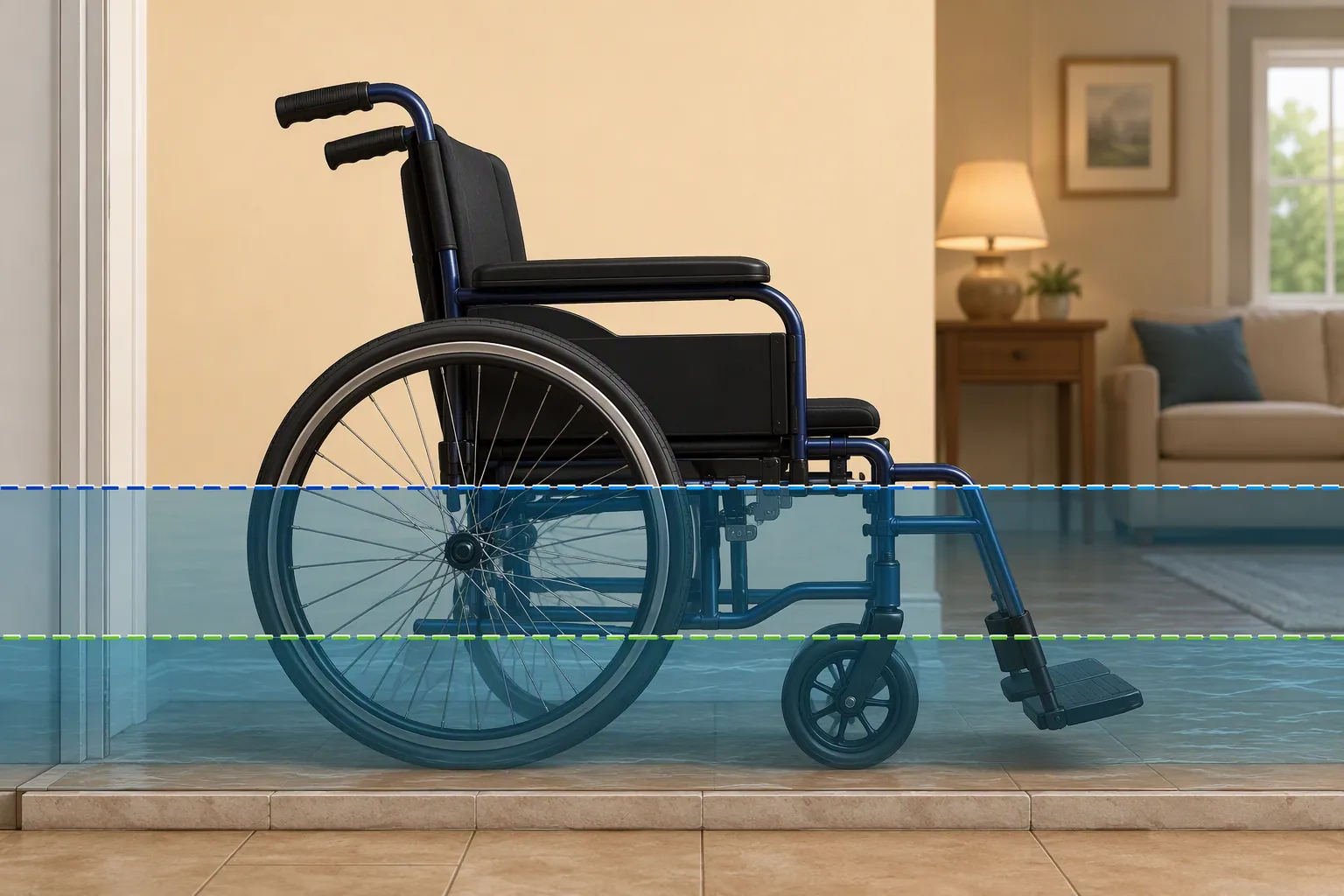
Wheelchair users need an even more conservative line. Vantage Mobility advises that a wheelchair user should not navigate moving floodwater deeper than 3 inches, and that 6 inches is the maximum when a caregiver is pushing the chair.[3] That 3-inch figure is not a government regulation; it comes from a 2017 Vantage Mobility preparedness article and should be treated as an advocacy guideline. Still, it is one of the few specific thresholds available for wheelchair users, and it gives families a useful stop sign before confidence gets ahead of physics.
| Situation | Conservative stopping point | What it means at home |
|---|---|---|
| Older adult walking without a mobility aid | Do not enter 6 inches of fast-moving water | The general flood warning already treats this as enough water to knock someone down. |
| Walker, cane, or rollator user | Treat shallower moving water as unsafe | The aid can shift, slide, or catch before the person has a chance to recover balance. |
| Wheelchair user self-propelling | Do not enter moving water deeper than 3 inches | The chair can lose traction or become difficult to control. |
| Caregiver pushing a wheelchair | Do not push through moving water deeper than 6 inches | The caregiver’s strength does not remove the chair’s stability problem. |
These limits matter because caregivers often picture flood evacuation as a short, manageable crossing: down the hall, over the porch threshold, across a wet driveway, into a car. That short distance is exactly where falls happen. The person is tired, the lights may be out, shoes may be wet, and the floor that was safe yesterday is now carrying mud, water, and loose objects.
Why Older Adults Need a Different Flood Plan
Older adults are not just another group on a general emergency checklist. AARP’s disaster resilience materials point to the disproportionate toll of major hurricanes on older people, including that adults age 75 and older made up 50% of Hurricane Katrina deaths while representing only 6% of the local population, and that Hurricane Ian showed a similar pattern of disproportionate mortality among older adults.[4] Those numbers do not mean every older person is frail. They mean the margin for delay, isolation, power loss, medication disruption, and unsafe movement is smaller.
A flood plan for an older adult with balance problems has to answer different questions. Can they get out of bed if the room is dark? Can the walker pass through the doorway without hitting boxes moved for storm prep? Can the wheelchair cross the front threshold if water is pooling at the door? Who carries the oxygen tubing, medication bag, phone, charger, and spare glasses if the caregiver’s hands are already on the chair?
Local evacuation orders, medical conditions, oxygen use, dialysis, memory loss, and transportation needs require a personal plan with local emergency officials, the healthcare team, and any home-care agency involved. This article cannot replace that plan. It can help make the house and the first decisions less dependent on luck.
Before Flood Season: Make the Daily Fall-Prevention Work Do Double Duty
The best flood preparation for a mobility-limited older adult often looks boring: fewer loose rugs, better lighting, steadier grab bars, clearer paths, lower thresholds. That is not a side project. Those are the same details that decide whether a person can leave safely when the floor is wet and the caregiver is rushed.
- Remove or secure area rugs, especially in halls, bedrooms, bathrooms, and near exterior doors. A rug that curls in dry weather becomes a trap when it is wet or pushed by muddy shoes.
- Check grab bars before storm season, not during it. A towel bar beside the toilet is not a grab bar, and a loose grab bar is a promise that may fail at the worst time.
- Add motion-sensor lights, nightlights, or battery-powered lighting along the bed-to-bathroom path and the exit path. Darkness makes every shifted chair and dropped object harder to judge.
- Measure thresholds at exterior doors and interior transitions used by walkers or wheelchairs. If a ramp, bevel, or repair is needed, do it before weather is on the radar.
- Keep the walker, cane, wheelchair, transfer board, hearing aids, glasses, shoes, and phone in predictable places. During a flood warning, searching becomes delay.
- Label and waterproof key medical information: medications, allergies, mobility limitations, emergency contacts, healthcare providers, and equipment needs.
If the home needs more than small fixes, use a priority order instead of trying to remodel under pressure. Start with the route from bed to bathroom, the route from bed to exit, the bathroom itself, and the main entry. A broader home modification priority guide can help sort grab bars, lighting, thresholds, and flooring by urgency. Larger changes such as ramps, bathroom modifications, and safer entries also belong in the same conversation as everyday independence and long-term cost, not only storm preparation; the aging-in-place modification cost guide is a useful place to compare those decisions.
Pack for Power Loss and Mobility, Not Just for Weather
Floods and power outages often travel together. A senior emergency kit should include the usual water, food, flashlight, batteries, radio, medication list, and documents, but a mobility-aware kit goes further: wheelchair charger access, backup batteries where appropriate, a manual wheelchair plan if power equipment cannot be used, spare cane or walker tips, non-slip shoes, gloves for pushing a wheelchair, and a waterproof pouch for hearing aids or glasses.
Medication cooling, medical-device backup, and communication plans deserve their own check. If electricity is unreliable in the area, build from a 72-hour senior power outage safety kit rather than a generic storm kit.
During a Flood: Do Not Test Moving Water With a Mobility Aid
The most dangerous caregiver sentence is often, “We can probably make it.” Maybe that is true on dry ground. In moving water, “probably” is not enough for someone who cannot regain balance quickly.
A walker is not a flood probe. A cane is not a depth gauge. A wheelchair is not stable just because the caregiver pushing it feels strong. If water is moving across the floor, sidewalk, driveway, or street, the mobility aid may react before the person does. The safer decision is to avoid entering moving water and to call for help early, while communication and access are still possible.
- If an evacuation order is given, follow local instructions early enough that the older adult is not forced to move through water.
- If water is already moving at the exit, do not “try it once” with a walker, rollator, cane, or wheelchair.
- If the person uses a wheelchair, treat 3 inches of moving water as the self-propelling limit and 6 inches as the caregiver-pushing limit based on Vantage Mobility’s guidance.[3]
- If the exit route includes a ramp, remember that water, mud, and algae-like slickness can make the ramp behave differently than a flat floor.
- If the caregiver must assist, keep both hands free for support. Bags, pets, and loose items should not compete with balance.
- If the route is dark, cluttered, or uncertain, slow down or stop. Urgency does not make a hidden threshold disappear.
The hard part is that evacuation decisions are rarely made in calm conditions. A parent may resist leaving. A caregiver may be balancing work, children, pets, and a storm track that changed overnight. Still, the movement rule has to be decided before the water arrives: once moving water reaches the route, the plan changes from self-evacuation to calling for appropriate emergency assistance.
Sheltering in Place Requires a Fall Plan Too
Sometimes sheltering in place is what local officials advise; sometimes it is what remains after a route becomes unsafe. Either way, do not treat the house as normal just because nobody is walking through water yet.
- Move the older adult to the safest accessible level before fatigue and darkness set in, following local emergency guidance.
- Clear a path from the resting place to the bathroom or commode, then keep it clear. Storm supplies stacked in the hallway become fall hazards.
- Put shoes, mobility aid, flashlight, phone, medications, water, and glasses within reach before resting.
- Use battery lighting instead of candles where possible. A fall into flame or broken glass adds another emergency.
- Avoid repeated unnecessary trips through the house. Fatigue changes balance, and flood nights are full of small trips that feel urgent.
If memory problems are involved, supervision matters even more. A person who usually moves safely around a familiar home may not understand why a hallway is blocked, why lights are out, or why the front door should not be opened.
After the Water Recedes, the Fall Risk Is Not Over
A flooded house does not become safe when the waterline drops. In some ways, it becomes trickier. The obvious danger is gone, so people relax. Then they step onto wet tile, catch a toe under a bunched rug, trip over a displaced lamp, or lean on furniture that shifted in the water.
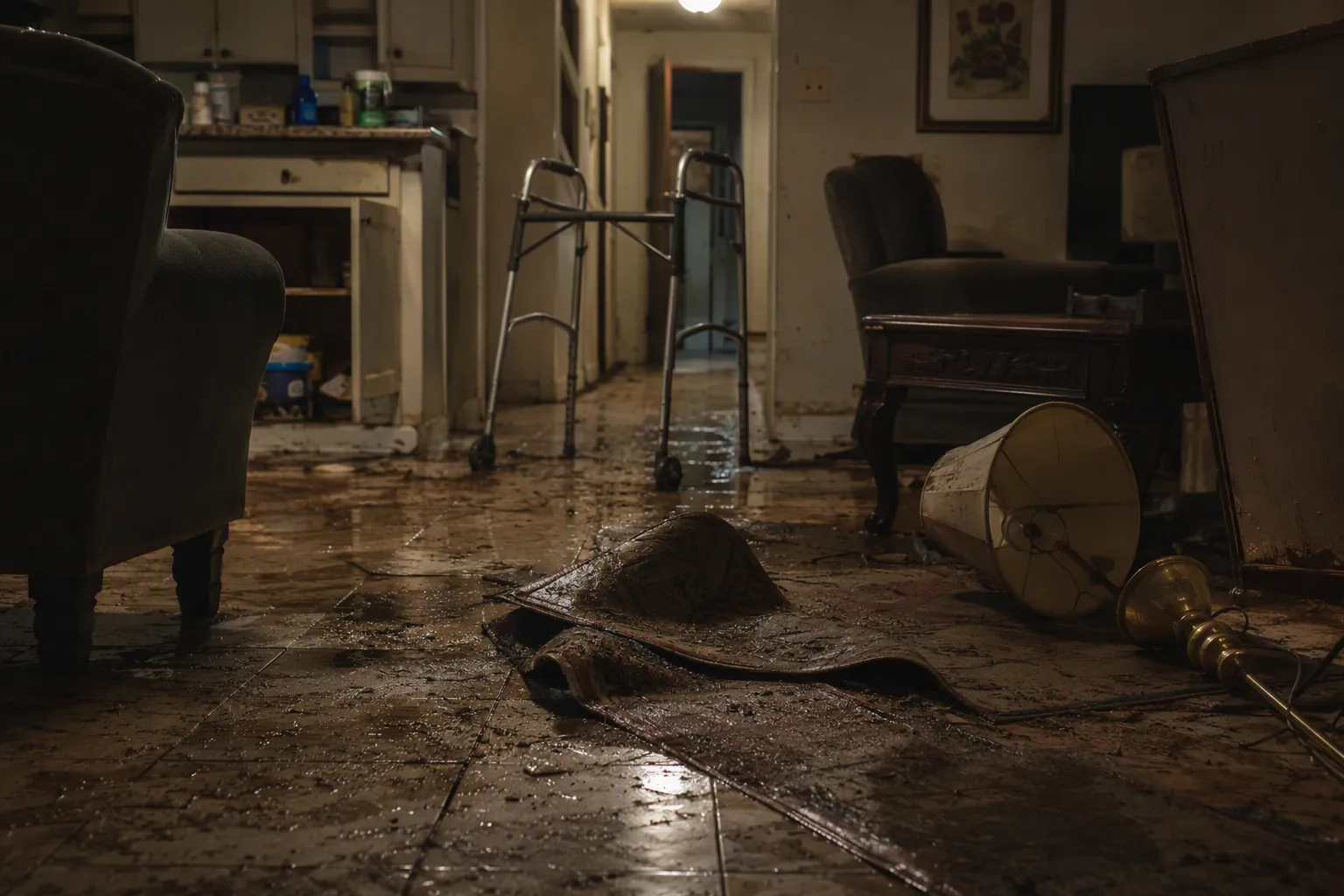
The CDC warns people to avoid floodwater contact when possible, protect themselves during cleanup, use appropriate respirators such as N95 respirators for mold cleanup, check tetanus protection, and prevent carbon monoxide poisoning by keeping generators outdoors and away from doors, windows, and vents.[5] For an older adult with balance problems, those health precautions intersect with fall prevention. A mask can fog glasses. Gloves can reduce grip. Fans, cords, hoses, buckets, and trash bags create obstacles. Cleanup fatigue can make a steady person unsteady by afternoon.
Walk the Route Before the Older Adult Does
If authorities say it is safe to return, one able-bodied adult should inspect the entry route before the older adult comes inside. This is not about tidiness. It is about finding the things a walker wheel will hit, a cane tip will miss, or a wheelchair caster will stop against.
- Check the driveway, ramp, porch, and threshold for mud, slick boards, loose mats, shifted gravel, and standing water.
- Open doors fully and make sure they stay open. A swollen or dragging door can catch a walker or block a wheelchair.
- Remove bunched rugs and soaked mats immediately from walking paths.
- Set up bright lighting before asking the older adult to move through the home.
- Move furniture back only after checking whether it is stable, dry enough to touch, and in its usual place.
- Keep extension cords, dehumidifier hoses, fans, and cleanup tools out of the walking path.
Do not ask an older adult to “just wait by the door” while cleanup begins. Doorways are crowded after floods: bags, tools, wet shoes, boxes, towels, fans. If the person needs to come inside, create one stable sitting place first and one clear path to a bathroom or commode.
Treat Wet Floors as Fall Hazards Before Cleanup Tasks
A wet floor is not just a floor waiting to be mopped. It is a surface that changes with every footstep. Mud dries in ridges. Tile stays slick. Wood can cup or lift. Vinyl can loosen at an edge. Carpet can hide debris and uneven flooring underneath.
The first pass through the home should create safe movement lanes, not restore the whole house. Use towels or appropriate drying materials where they will not slide. Remove loose rugs instead of flattening them back down. Mark or block unsafe rooms. If flooring has lifted or softened, keep mobility aids off it until it is inspected or repaired.
Caregivers also need to watch their own footing. A fall by the person doing the helping can leave the older adult stranded. Rotate cleanup tasks, sit down before exhaustion shows up as poor balance, and do not carry heavy wet items while also spotting someone with a walker.
Generators, Mold Cleanup, and Protective Gear Can Add Trip Risks
Generator safety is usually discussed as a carbon monoxide issue, and it is that. The CDC’s guidance is clear that generators belong outdoors and away from doors, windows, and vents.[5] Around an older adult, the generator setup also needs a path check: cords should not cross walking routes, doors should not be propped in awkward positions, and extension cords should not run under rugs where they become both electrical and tripping hazards.
Mold cleanup has the same double edge. Respiratory protection may be needed, especially during mold cleanup, but an N95 can make breathing feel harder for some people and can fog glasses if it fits poorly.[5] An older adult with shortness of breath, heart or lung disease, or balance trouble should not be handed protective gear and sent into a damaged room. That is a situation for medical judgment and safer division of labor.
A Practical Before-During-After Checklist
| Timing | What to do | Fall-prevention reason |
|---|---|---|
| Before a flood warning | Secure rugs, check grab bars, improve lighting, measure thresholds, and clear exit paths. | The home needs to be safer before water, darkness, and stress reduce balance. |
| When flood watches or warnings begin | Charge devices, place mobility aids and shoes nearby, confirm transportation, and move supplies out of walking paths. | Preparation should not create hallway clutter or last-minute searching. |
| When evacuation is advised | Leave early enough to avoid moving water, especially for walker and wheelchair users. | Mobility limits shrink the safe window. |
| If water reaches the route | Do not test moving water with a cane, walker, rollator, or wheelchair. | The aid can shift before the user can recover. |
| If sheltering in place | Set up a clear, lit, accessible area with phone, medications, water, shoes, and mobility aid within reach. | Most overnight falls happen during small necessary trips. |
| Before returning home | Wait for official clearance, then have an able-bodied adult inspect the entry and main path first. | Post-flood damage is often at floor level. |
| During cleanup | Remove loose rugs, manage cords and hoses, dry safe lanes first, and limit older-adult movement through work zones. | Cleanup equipment can become a second layer of hazards. |
This checklist is not a promise that flooding becomes manageable. Its job is to make the stopping points visible before anyone is standing in a doorway with moving water at their feet.
Flood Readiness Is Daily Fall Prevention
Flood readiness for an older adult with mobility challenges is not separate from daily fall prevention. The same loose rug, dim hallway, raised threshold, weak grab bar, and misplaced walker that are risky on an ordinary Tuesday become more dangerous when the floor is wet and everyone is tired.
The conservative rule is the useful one: leave before water reaches the route, do not test moving water with a mobility aid, and treat the return home as a fall-risk inspection before it becomes a cleanup project. A plan that depends on strength, speed, daylight, and good luck is not much of a plan for someone who needs stable ground.
References
- Disaster Preparedness Tip Sheets for Seniors — Flood, California Department of Aging
- Flood Safety, American Red Cross
- Flood Safety Tips for Wheelchair Users, Vantage Mobility, 2017
- Disaster Resilience Tool Kit, AARP
- Preparing for Floods + Respiratory Health During Cleanup, Centers for Disease Control and Prevention
Related reading
Noticed something outdated or inaccurate on this page? Flag a correction. We review every report against CDC, NIA, and AARP HomeFit guidance before updating a page.
Part of the Fall Prevention section.