
STEADI: intervene
What to Do When France Wildfires Threaten Your Elderly Parents
Use this France-specific, senior-tailored crisis checklist to help your elderly parents evacuate safely during the 2026 France wildfires — covering FR-Alert alerts, a go-bag with medications and Carte Vitale, mobility device transport, and shelter coordination with French emergency services.
If your elderly parents are in or near a French wildfire zone, do not start by asking them whether they feel safe. Start with four facts: whether they received an official alert, exactly where they are, whether they can leave without help, and whether their medicines and health documents can leave with them.
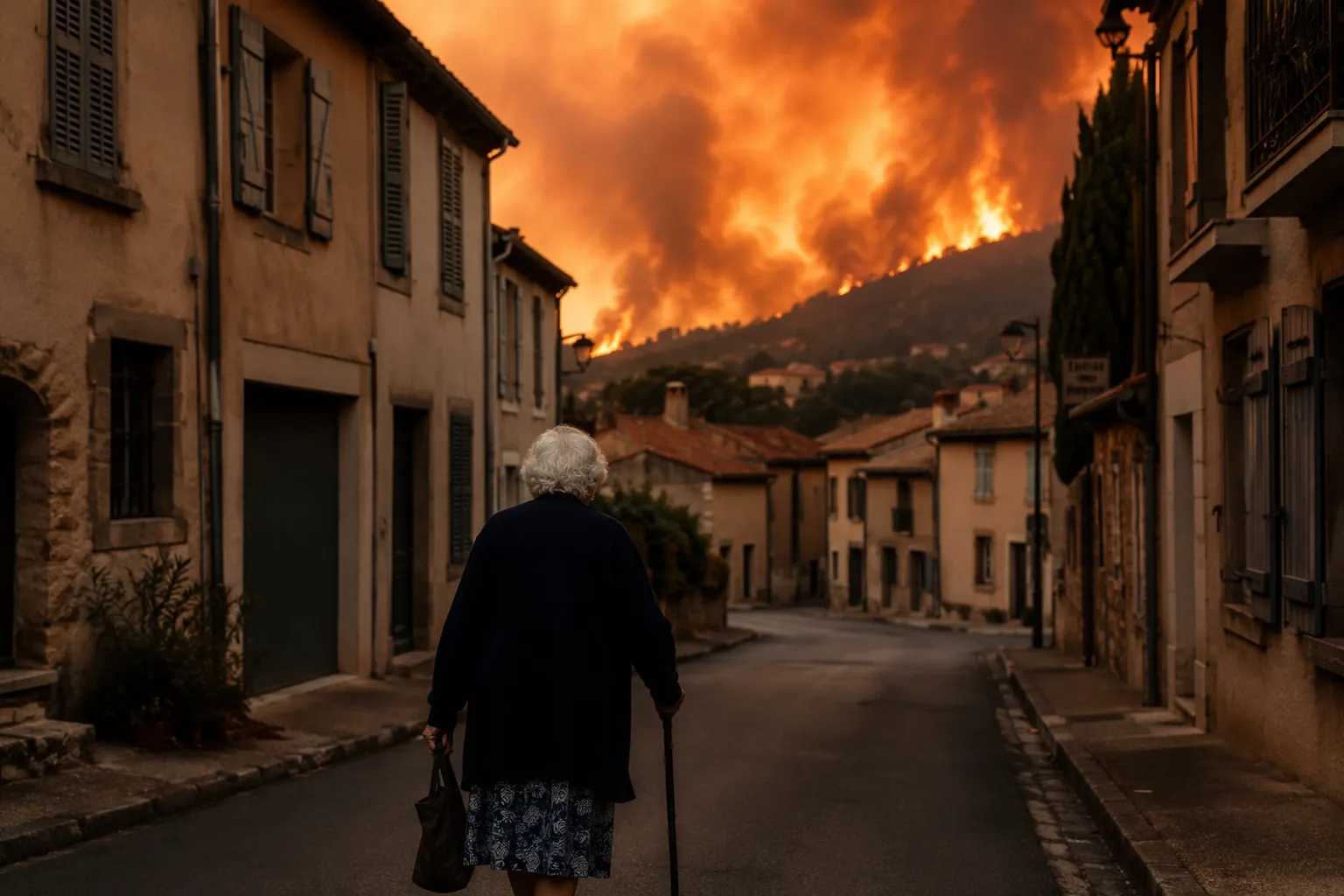
As of late July 2026, this is not a theoretical worry. Reuters reported that France had ordered a total evacuation of the Cap Ferret peninsula while wildfires were raging, with more than 250,000 people evacuated and the military mobilized to support the response.[1] France24 reported that the Bordeaux-Lac Exhibition Centre was being used to house hundreds of elderly evacuees from care homes as an unprecedented wildfire approached Bordeaux.[2] BBC and AP/WSLS reporting from July 26 described more mass evacuations in France and Spain, including nursing homes being displaced.[3][4]
Those numbers matter only if they change what you do next. For an older parent, the dangerous delay is often not dramatic. It is the phone on airplane mode, the walker that will not fit in the car, the oxygen concentrator still plugged in upstairs, the hearing aid charger left beside the bed, the Carte Vitale in the wrong handbag, or a parent with mild cognitive impairment deciding that “possible evacuation” means “wait until someone knocks.”
The First 10 Minutes
Work in this order. Do not wait to make the perfect call to the perfect office before you know whether your parent can physically get out.
- Confirm alert status: ask whether their phone showed an FR-Alert message, whether the phone is on, and whether airplane mode is off.
- Confirm location: get the exact address, commune, nearby road, campsite, care home, hotel, or holiday rental name.
- Check official risk and instructions: look at Météo des Forêts, the local prefecture, mairie, gendarmerie, or fire-service updates.
- Call the parent, then a neighbor, building manager, care-home desk, hotel reception, or local relative if the parent is slow to answer or hard to understand.
- Decide early whether they should leave now because of age, mobility, breathing problems, cognitive impairment, medication dependence, or lack of transport.
- Pack the non-negotiables: medicines, prescriptions, Carte Vitale, ID or passport, titre de séjour if relevant, phone, chargers, glasses, hearing aids, mobility aids, and oxygen or respiratory equipment if prescribed.
- Solve transport before shelter: a reception center is not useful if your father cannot climb into the neighbor’s car or your mother cannot fold her rollator.
- Escalate medical or access problems through French emergency channels: 112, 18, 114 by text for people who are deaf or hard of hearing, or SAMU/15 for urgent medical need.
Check the Alert, Then Check the Phone
FR-Alert is France’s public warning system. It uses cell broadcast, does not require an app, and can reach phones even when they are on silent mode. EPOS-France says the system had been tested more than 300 times and deployed more than 75 times as of June 2026.[5]
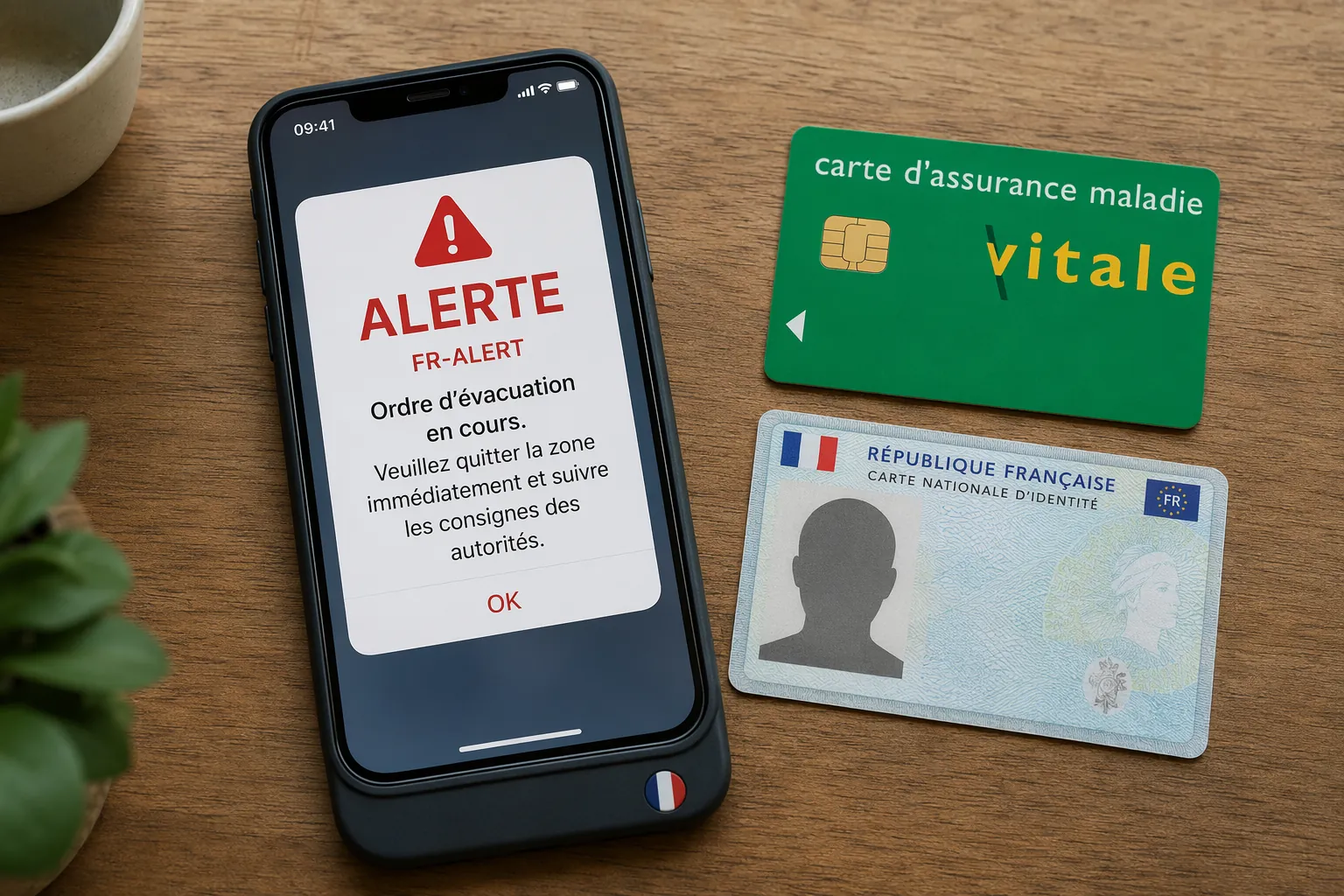
That does not mean your parent received it. FR-Alert will not help if the phone is switched off or in airplane mode. If your parent is visiting from abroad, also confirm that the device is connected to a French mobile network and supports cell broadcast. The practical question is not “Does France have alerts?” It is “Is the phone in your mother’s hand capable of receiving one right now?”
- Ask them to read the alert aloud or send a screenshot, not paraphrase it from memory.
- Ask whether the phone is charged above 50%, plugged into power, and out of airplane mode.
- If they use hearing aids, ask whether they heard the alert tone or only saw the screen.
- If they have vision problems, ask a neighbor, hotel desk, or caregiver to read the alert with them.
- If they received an evacuation order, stop debating the risk map and move to transport.
Météo des Forêts is the next check when there is no direct evacuation order or when you are trying to understand whether the situation is worsening. France’s Ministry of Ecological Transition describes it as a daily wildfire-risk map with four risk levels, updated at 17:00 from June through September.[6] Connexion France notes that the map is also available through the Géorisques platform, which can help locate risk by area.[7]
Use that map as a threshold tool, not a weather lesson. If the department or nearby area is at high risk, smoke is visible, roads are already closing, or the prefecture is telling people to prepare, an older adult who needs help leaving should not be treated like a healthy driver with a packed car.
Call in a Way That Gets Facts, Not Reassurance
Parents often answer the question they want to answer. “Are you okay?” gets you “I’m fine.” Ask operational questions instead.
| Ask this | Why it matters |
|---|---|
| What do you see or smell outside right now? | Smoke, ash, sirens, roadblocks, and visible flames change the urgency even before a parent admits fear. |
| Can you walk from the chair to the front door with your bag? | Evacuation fails at the transfer, not at the idea of leaving. |
| Which shoes are on your feet? | Slippers and sandals become a fall risk when someone is rushed outside. |
| Where are your medicines and prescriptions? | Missing medications can turn a shelter stay into a medical crisis. |
| Where is your Carte Vitale and identity document? | Health and identity documents help when seeking medical care, shelter registration, or pharmacy support. |
| Who can physically come to the door in the next 10 minutes? | A neighbor who can carry a bag or fold a walker may matter more than a distant adult child giving perfect instructions. |
If a parent has dementia or mild cognitive impairment, do not give a long explanation of wildfire behavior. Use one instruction at a time: “Put on your shoes.” “Put your medicines in the blue bag.” “Open the door for Madame Martin.” If pride is the obstacle, make leaving sound temporary and practical: “The mairie wants people out of the smoke tonight. Bring your papers and we will sort out the rest later.”
Leave Earlier for Age-Related Reasons
Older adults have less room for delay. The NFPA says older adults are twice as likely to die in fires.[8] That statistic is not specific to French wildfires, but it is enough to end the argument that an elderly parent should wait until the road, air, and phone lines are all clearly bad.
For a senior, “evacuate now” should move up the list if any of these are true:
- They cannot drive at night, in smoke, or under stress.
- They use a cane, walker, rollator, wheelchair, stair lift, hospital bed, or transfer board.
- They have COPD, asthma, heart disease, recent stroke, oxygen therapy, sleep apnea equipment, or shortness of breath.
- They depend on refrigerated medicine, daily wound care, dialysis, anticoagulants, insulin, Parkinson’s medication, or memory medication.
- They cannot reliably understand or act on instructions because of dementia, delirium risk, anxiety, hearing loss, or language barriers.
- They are in a campsite, isolated hamlet, holiday rental, care home, or area with few exit roads.
Smoke adds another reason not to wait. AARP’s 2026 health review summarizes evidence linking fine-particle wildfire smoke exposure to risks that matter especially for older adults, including cardiovascular and cognitive harms.[14] In a crisis call, that does not mean diagnosing anyone over the phone. It means treating breathlessness, confusion, chest pain, severe coughing, or blue lips as medical escalation, not as ordinary discomfort.
Pack the Bag That Actually Leaves the House
Emergency-preparedness guidance for older adults from Ready.gov, the American Red Cross, NCOA, and the National Institute on Aging all emphasizes advance planning, communication, medication continuity, assistive devices, and copies of important documents.[9][10][11][12] In France, translate that into the documents and systems your parent will actually use.
- Medicines: aim for at least 7 days if available, plus inhalers, insulin supplies, eye drops, patches, pain medication, anticoagulants, and a written medication list.
- Prescriptions and medical notes: current ordonnances, allergy list, diagnoses, implanted-device card, oxygen prescription, and the name of the médecin traitant.
- French health and identity documents: Carte Vitale, mutuelle card, passport or national ID, titre de séjour if relevant, European Health Insurance Card if visiting, and emergency contacts.
- Devices: phone, charger, power bank, hearing aids, hearing-aid charger or batteries, glasses, denture case, CPAP or oxygen accessories if prescribed.
- Mobility: cane, walker, rollator, wheelchair cushion, transfer belt if used, spare rubber tips, and any brace or orthotic they cannot walk safely without.
- Smoke and comfort: FFP2 masks if tolerated, water, snacks suitable for diabetes or swallowing issues, a light blanket, continence supplies, and a change of clothing.
- Information: a paper card with name, date of birth, address in France, language spoken, medical conditions, medications, allergies, family contacts, and whether they have cognitive impairment.
Do not let the perfect bag delay departure. If smoke is worsening or an evacuation order is active, the minimum is medicines, documents, phone, charger, shoes, glasses, hearing aids, and the mobility device. Everything else is a bonus.
Transport Comes Before Destination
A reception center, hotel, or relative’s house is only a plan if your parent can reach it. Before you tell them where to go, solve the leaving.
- If they drive: confirm route, fuel, glasses, phone mount or written directions, and whether they can drive safely in smoke or darkness.
- If a neighbor drives: ask whether the walker, rollator, wheelchair, oxygen, or luggage fits in the car before your parent reaches the curb.
- If they need transfer help: arrange a named person to enter the home, not just “someone nearby.”
- If they are in a care home: call the facility desk and ask where residents are being moved, whether medications and records are traveling with them, and how family updates will be sent.
- If they are in a hotel, campsite, or rental: contact reception, campsite management, or the host and ask what official instruction they have received from the prefecture or mairie.
- If no safe transport exists: call emergency services and state the exact access problem, such as “87-year-old, cannot walk to car, oxygen-dependent, evacuation zone.”
This is the point where vague family coordination becomes dangerous. One person should own the transport call. Another can monitor prefecture updates. A third can prepare destination options. If everyone is texting “Any news?” nobody is getting the walker into a car.
Use French Emergency Systems for Specific Problems
French systems are easier to use when you attach each one to a task.
| System | Use it when |
|---|---|
| FR-Alert | You need to know whether an official warning reached the phone in the danger area. |
| Météo des Forêts | You need a current wildfire-risk view for the area when no direct evacuation order has reached the parent. |
| Prefecture, mairie, gendarmerie, fire-service updates | You need local instructions on evacuation zones, road closures, reception centers, and return restrictions. |
| 112 | You need emergency help and are unsure which French service should respond. |
| 18 | You need the fire brigade, including rescue or evacuation help linked to fire danger. |
| 114 | The person needing help is deaf, hard of hearing, or cannot safely speak; 114 is the emergency number accessible by text or adapted communication. |
| SAMU / 15 | There is urgent medical need: chest pain, severe breathing trouble, confusion, collapse, oxygen failure, or a medically fragile person who cannot evacuate safely. |
| Red Cross or official reception center | The home is unsafe and the parent needs registration, shelter, basic support, or onward referral. |
When you call, lead with the facts that change dispatch: exact location, age, mobility limits, breathing or cardiac disease, cognitive impairment, oxygen or medical equipment, whether the person is alone, whether smoke or flames are visible, and whether there is transport. “My mother is frightened” is true, but “82, alone, uses a rollator, cannot descend stairs without help, evacuation alert received” is usable.
The Bordeaux-Lac Exhibition Centre example is worth keeping in mind because it makes shelter concrete. During the July 2026 fires, France24 described hundreds of elderly evacuees from care homes being housed there.[2] A shelter is not just a gym floor in the abstract; it can become the place where care-home residents, medication lists, mobility devices, worried families, and exhausted staff all have to be matched back together.
If Your Parent Refuses to Leave
Refusal is not always stubbornness. It may be fear of losing control, embarrassment about needing help, confusion, attachment to pets, or the belief that leaving means never coming home. Keep the conversation short and anchored to the next action.
- Use authority without arguing: “The prefecture has asked people in your area to leave.”
- Make it temporary: “Take your medicines and papers for tonight.”
- Give one visible task: “Put on closed shoes and sit by the front door.”
- Use a trusted local person: neighbor, pharmacist, GP office, mairie contact, building caretaker, care aide, priest, or shopkeeper.
- Do not promise they can return tomorrow unless officials have said so.
- If refusal creates immediate danger, call emergency services and describe the risk and impairment plainly.
Dementia-sensitive wildfire guidance from senior-care emergency frameworks emphasizes familiar objects, simple instructions, medication continuity, and avoiding overload during evacuation.[13] In practice, that may mean sending a neighbor to hold up the blue medication bag on a video call while you say, “That one. Take that one.”
Once They Are Out
After the front door closes, the job changes. Track where they are going, who is with them, what they have, and what medical needs must be visible to the next person in the chain.
- Get the destination name and address: reception center, relative’s home, hotel, care-home relocation site, hospital, or temporary municipal shelter.
- Ask for one photo if safe: parent, bag, mobility device, and car can confirm more than a long conversation.
- Send the medication list and emergency contacts to the person accompanying them.
- Tell shelter or care staff about dementia, fall risk, oxygen, hearing loss, diabetes, anticoagulants, allergies, or wandering risk.
- Do not let them return home until local authorities say it is permitted, even if the sky looks clearer on a video call.
If they left without enough medication, contact their usual pharmacy, médecin traitant, shelter medical staff, or SAMU if the need is urgent. Disaster refill procedures can vary by local instruction, so treat the local prefecture, pharmacy, and Assurance Maladie guidance as the practical authority rather than relying on memory or old paperwork.
What to Keep Open on Your Screen
During an active evacuation, your screen should not be full of general wildfire articles. Keep only the sources that help you decide or act.
- The local prefecture page or social channel for evacuation orders and road restrictions.
- Météo des Forêts or Géorisques for current wildfire-risk level.
- The commune or mairie page for reception-center information.
- A map app, used cautiously, because official road closures and emergency instructions override the fastest route.
- A family message thread with roles assigned: one person calls the parent, one calls local contacts, one monitors official updates.
There will be time later to think about fall prevention, smoke cleanup, home safety assessments, and whether the house is still suitable for aging in place. During the wildfire threat, the measure is narrower: your parent has received or been checked against official instructions, has a way out that fits their body and equipment, has medicines and documents with them, and is connected to shelter or medical help if home is unsafe.
References
- France orders total evacuation of Cap Ferret peninsula as wildfires rage, Reuters, 2026-07-24
- Macron mobilises French military as unprecedented wildfire approaches Bordeaux, France24, 2026-07-24
- More than 220,000 evacuated in France and Spain due to wildfires, BBC, 2026-07-26
- Wildfire forces another 55,000 people to evacuate in southwest France, WSLS/AP, 2026-07-26
- The French public alert system, FR-Alert, could save your life!, EPOS-France, 2026-06-09
- Be wildfire smart – act fast, act right!, French Ministry of Ecological Transition
- Understanding France's Daily Wildfire Risk Map: How to Stay Informed, Connexion France
- Safety tips for older adults, NFPA
- Older Adults, Ready.gov
- Emergency Preparedness for Older Adults, American Red Cross
- Emergency Preparedness 101, NCOA
- Disaster Preparedness and Recovery for Older Adults, National Institute on Aging
- Wildfire Preparedness Guide for Seniors & Caregivers, FireHelpCenter, 2026
- 8 Ways Wildfire Smoke Affects Your Health, AARP, 2026
Related reading
Noticed something outdated or inaccurate on this page? Flag a correction. We review every report against CDC, NIA, and AARP HomeFit guidance before updating a page.
Part of the Fall Prevention section.