
STEADI: intervene
How to Prepare an Elderly Parent for 108°F Heat in Montana
This guide explains why 108°F heat puts older adults at acute fall risk and gives caregivers a three-layer plan — addressing physiology, home environment, and medications — to prevent a fall before it happens.
When a Montana forecast starts showing 108°F, the danger for an older parent is not just that the house will feel miserable. National Weather Service forecasts in July 2026 included extreme heat watches for parts of Montana, Wyoming, and Utah, with forecast highs reaching 108°F, so this is not a desert-only problem or a made-up planning exercise.[1] For a 78-year-old in a house without central air, the first emergency may be a dizzy stand-up from the kitchen chair, a stumble in the hallway, or a fall beside the bed before anyone uses the words “heat stroke.”
That is the part worth planning around. At this temperature, “drink water and stay cool” is too thin to be useful. The working goal is narrower and more urgent: keep your parent from becoming overheated, lightheaded, and alone on the floor before help knows to come.
Why 108°F Turns Heat Into a Fall Risk
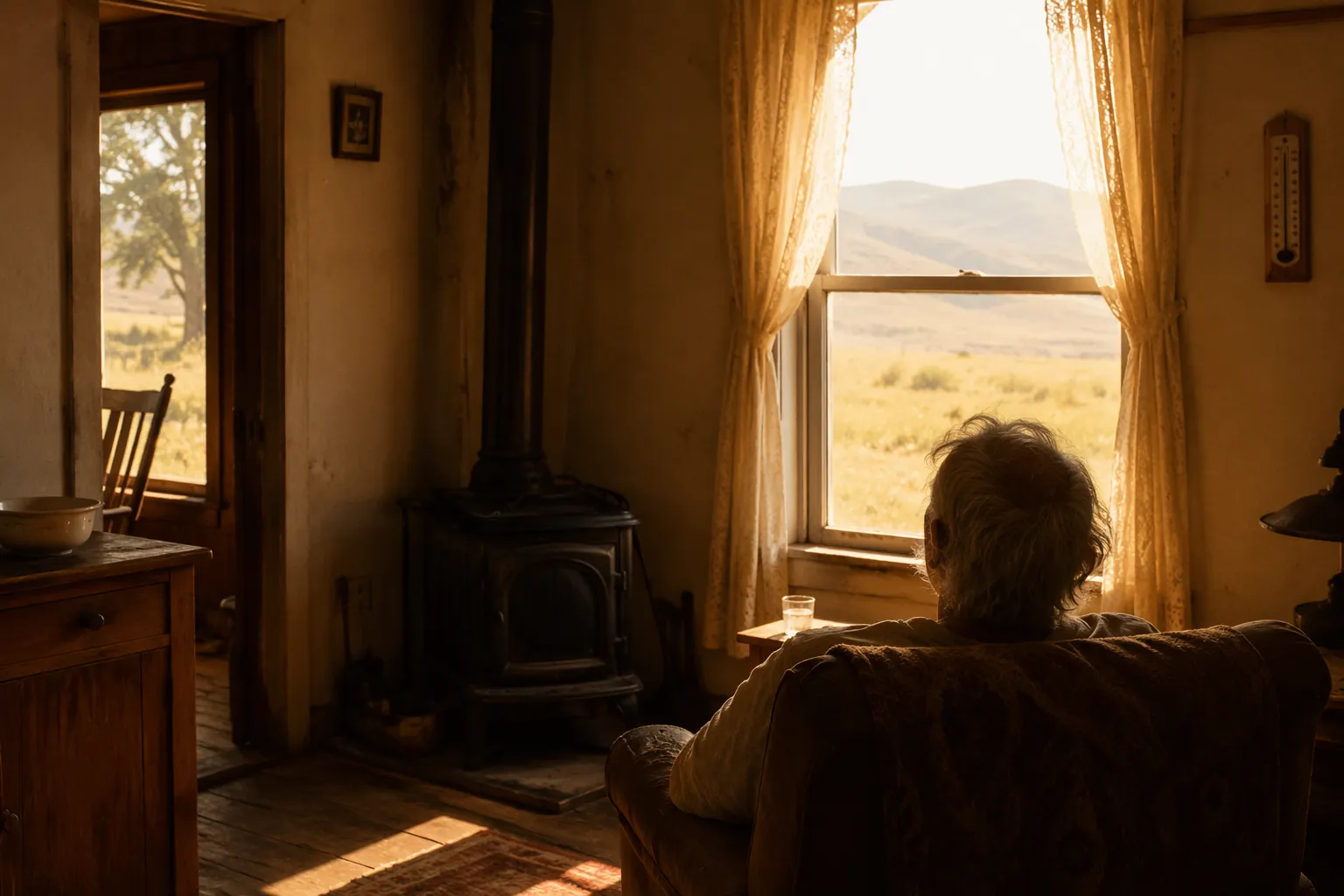
Heat changes how blood moves. Harvard Health explains that in hot weather, the body widens blood vessels near the skin so it can release heat. That vasodilation can lower blood pressure, and the drop can be worse when someone stands up. The practical result is dizziness, weakness, or unsteadiness at exactly the moment an older adult is moving from sitting to standing.[2]
Older bodies have less margin. The CDC says adults 65 and older produce less sweat, have a delayed thirst response, and do not adjust as well to sudden temperature changes.[3] So the parent who says the house has always been fine may be remembering summers from a body that handled heat differently. Pride and experience are real; so is physiology.
The fall risk can arrive before the obvious crisis signs. A person can be overheated enough to be lightheaded and unsafe on their feet without yet looking like a heat-stroke patient. That matters in a rural home where a missed phone call might not be noticed for hours and an ambulance may not be around the corner.
Montana emergency data gives this concern a local shape. A 2020–2024 study reported by NPR and KFF Health News found that for every 1°C increase in average daily temperature, 911 calls in Montana rose by 1%, and communities with more residents over 65 generated the most heat-wave calls.[4] That does not prove a specific percentage of falls are caused by heat. It does show that heat pushes older communities and rural emergency systems into heavier use.
The American Geriatrics Society advises older adults to start taking hot-weather precautions when temperatures rise above 80°F.[5] A 108°F day is far past that threshold. By then, preparation should be about controlling movement, room temperature, medications, and rescue timing together.
The 72-Hour Plan: Body, Room, Medication, Check-In
If the heat is coming in the next few days, do not start with a perfect home-cooling project. Start with the parts that reduce the chance of an unwitnessed fall fastest.
| When | What to do | Why it matters |
|---|---|---|
| Today | Call the parent, identify the coolest room, make a medication list, and set check-in times. | This turns vague concern into a schedule someone can verify. |
| Before the hottest day | Block sun, move the daytime chair, place water within reach, and remove standing-up hazards. | This lowers heat load and reduces the number of risky trips. |
| During peak heat | Keep the parent seated or lying down during the hottest hours, use slow position changes, and treat missed check-ins as actionable. | This targets dizziness and blood pressure drops before they become a fall. |
| If dizziness appears | Have them sit or lie down immediately, cool the body, and escalate if symptoms persist, worsen, or communication becomes unreliable. | The priority is to stop movement before the next step becomes the injury. |
Today: Change the Standing-Up Routine
The first rule for a very hot house is simple: no quick standing. That may sound too basic until you picture the actual moment—a parent gets up to answer the phone, fetch ice, close a blind, or check the porch thermometer. The room is hot, blood vessels are widened, blood pressure is lower, thirst may be delayed, and one fast movement can be enough.
Set a routine your parent can repeat without feeling managed. Before standing, sit upright for a minute. Put both feet flat on the floor. Stand with one hand on a stable surface. Pause before walking. If dizzy, sit back down immediately. The point is not to make them act helpless; it is to remove the one movement most likely to start the emergency.
- Move the main chair close to a solid table, not a rolling chair, footstool, or lightweight TV tray.
- Put water, phone, medication list, glasses, and a light snack within arm’s reach.
- Clear the path to the bathroom before the heat hits, including throw rugs and cords.
- Ask them to use a cane, walker, or handrail during the heat wave if they already own one, even if they normally “don’t need it in the house.”
- Agree that dizziness means sitting or lying down first, then calling—not trying to finish the task.
Hydration still matters, but it has to be tied to fall prevention. A glass across the kitchen does not help much if getting it requires standing in a 108°F heat event. Put fluids where the parent already sits. If a clinician has restricted fluids because of heart failure, kidney disease, or another condition, do not improvise a new intake target; call the clinician’s office or pharmacist and ask what is safe during extreme heat.
Before the Hottest Day: Make One Room Defensible
Many rural Montana homes were built around winter, shade habits, basements, and open windows at night—not around repeated triple-digit afternoons. If the house has no central air, pick one room to protect instead of pretending the whole house can be made comfortable.
Choose the coolest practical room: often a north-facing room, shaded room, basement room, or the room that stays coolest in late afternoon. Move the parent’s daytime routine there before the heat arrives. That means the chair, phone charger, medication list, water, thermometer, hearing aids, walker, and anything else that would otherwise send them back through the hot part of the house.
Montana Disaster and Emergency Services recommends blocking sun with window reflectors, such as cardboard covered with aluminum foil, placed to reflect heat back outside.[6] This is one of the few low-cost steps that can be done before next week and checked with your own eyes.
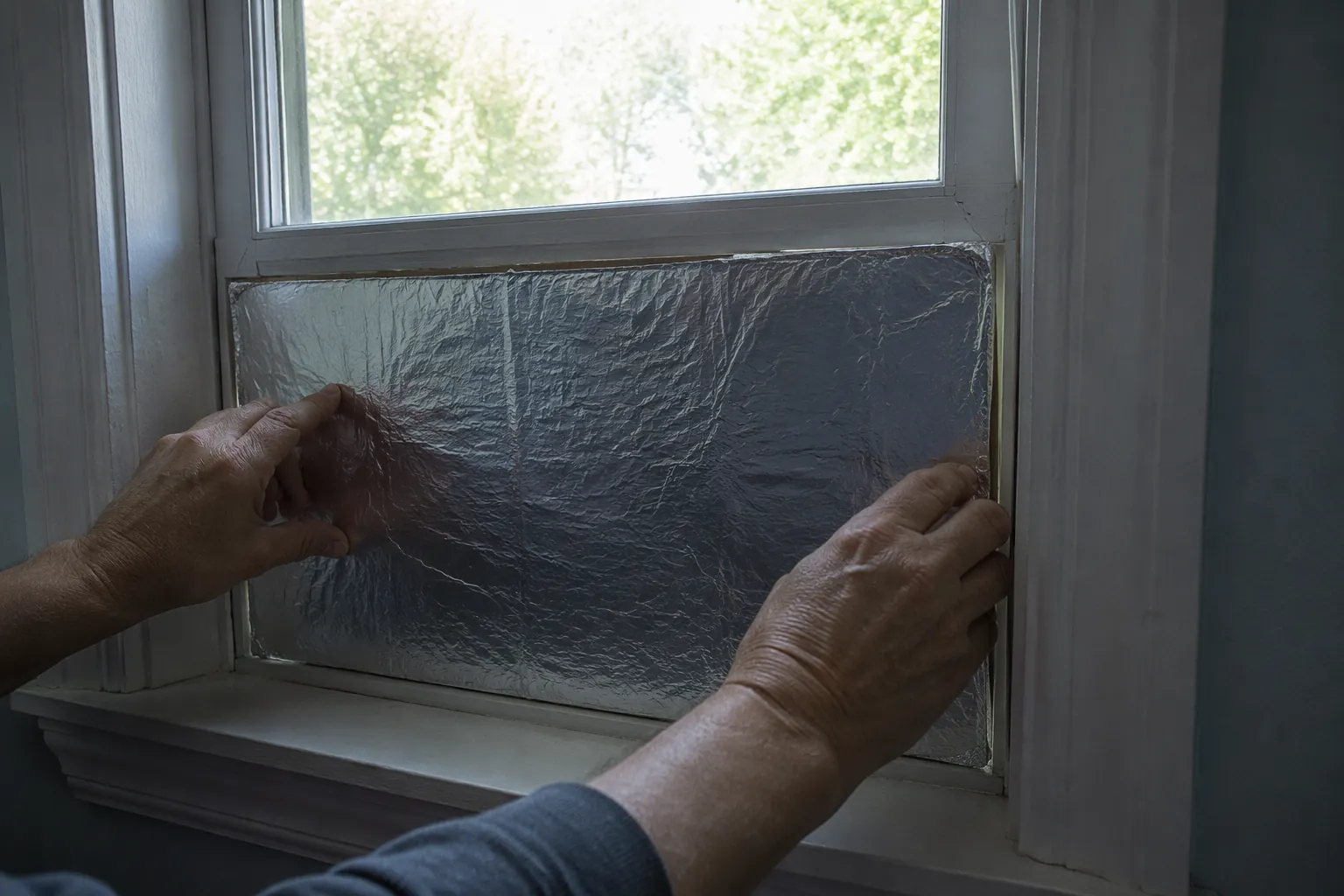
Do the unglamorous parts too: close blinds before the sun hits the glass, reduce oven and stove use, and move lamps or small appliances away from the sitting area if they add heat. If nights cool down enough to safely open windows, use that cooler air, then close the house back up before the morning heat builds. If smoke, security, or local conditions make open windows unsafe, do not count on night flushing as the plan.
Fans need special caution. Montana Disaster and Emergency Services warns that fans are not effective above 95°F and can create a false sense of cooling.[6] At 108°F, a fan blowing hot air across an older person is not the same as cooling the room. If a fan is used, it should support a broader plan—shade, cooler room choice, damp cloths, moving to an air-conditioned place if available—not replace it.
Air conditioning may still be the safest option if it can be arranged quickly: a working window unit, a neighbor’s cooled room, a church, a clinic lobby, a library, or a relative’s house. But in Montana, “just get AC” can be a dead-end instruction. Montana’s LIHEAP page describes the program as heating assistance for the October through April heating season, not routine summer cooling assistance.[7] Verify current-year eligibility locally, because programs can change, but do not build this week’s safety plan around a benefit that may not exist in time.
Make the Check-In Schedule Specific Enough to Trigger Action
“Call me if you need anything” is not a heat plan. A parent who is confused, embarrassed, dizzy, or on the floor may not call. Set fixed check-in times before the heat arrives and decide what happens if one is missed.
- Use at least three check-ins on the hottest day: morning, early afternoon, and evening.
- During each check-in, ask where they are sitting, when they last stood up, whether they feel dizzy, and what the room temperature feels like.
- Ask for a simple confirmation that requires attention, such as “Tell me what room you’re in now,” rather than accepting “I’m fine.”
- Name the backup caller or neighbor before the heat arrives.
- Decide the missed-call rule: for example, if there is no answer after two tries within a short window, the backup person checks in physically or you call for a welfare check.
The missed-call rule is where many families hesitate because nobody wants to offend an independent parent. Set it up as logistics, not surveillance. “If I cannot reach you, I need to know whether you are napping or whether you fell” is plain and fair.
Medication Review Is Part of Heat Preparation
Do not stop, skip, or change prescription medications on your own because the forecast is ugly. Do make a list and get a heat-specific review from a pharmacist, clinician, or prescribing office. The question is not “Which medicines are bad?” It is “Which medicines increase heat intolerance, dehydration, dizziness, or blood pressure drops for this person in this house this week?”
AARP identifies several medication types that can make heat harder to handle, including diuretics, beta blockers, antidepressants, antihistamines, antipsychotics, and anticholinergics.[8] CDC clinician guidance also describes how medications can interfere with thermoregulation, fluid balance, sweating, kidney function, and blood pressure responses during heat.[9]
| Medication type to flag | Heat-related concern to ask about |
|---|---|
| Diuretics | Fluid loss, dehydration risk, and orthostatic hypotension |
| Beta blockers | Reduced ability to respond to heat stress and blood pressure changes |
| Antihistamines | Reduced sweating, especially with anticholinergic effects |
| Antidepressants | Heat intolerance, sweating changes, dizziness, or blood pressure effects depending on the drug |
| Antipsychotics | Impaired thermoregulation and sedation or balance concerns |
| Anticholinergics | Reduced sweating, overheating risk, confusion, or dizziness |
The fastest useful action is a complete list: prescription drugs, over-the-counter sleep aids, allergy pills, bladder medicines, pain medicines, supplements, and anything taken only “once in a while.” Include dose timing if you know it. Then call the pharmacy and say the forecast is 108°F, the parent is older, the house has no central air, and you are trying to prevent dehydration, dizziness, and falls.
This is especially important with ordinary-looking over-the-counter medicines. An allergy pill or nighttime sleep aid may not feel like a serious medication to the family, but some antihistamines and anticholinergic drugs can reduce sweating or worsen confusion and dizziness in heat.[8][9] The safe move is not guessing; it is asking a professional who can see the whole list.
During the Peak Heat, Shrink the Day
On the 108°F day, the safest schedule may look smaller than your parent likes. Fewer chores. Fewer trips between rooms. No cooking over a hot stove. No stepping outside “just for a minute” during the worst heat. The goal is to reduce heat exposure and reduce the number of standing transitions.
If the parent must move, pair movement with a pause. Sit first. Stand slowly. Hold something stable. Wait before walking. If they feel lightheaded, sweaty, weak, newly confused, nauseated, or unsteady, the task stops. A load of laundry, a garden hose, or a ringing phone can wait.
Keep cooling concrete. Cool cloths on the neck or wrists, a tepid shower if they can do it safely, time in the coolest room, and a ride to an air-conditioned place can matter more than a general reminder to “stay cool.” If bathing or showering raises fall risk, do not send them into a slippery bathroom alone as the solution to heat.
Heat preparation and fall prevention are not separate projects. Injury Matters, an Australian injury-prevention organization, explicitly frames hot-weather support for older adults as part of staying on their feet and preventing falls.[10] That framing fits the Montana problem: the heat may be the trigger, but the injury happens when the body gets unstable and the room is not set up for that moment.
If Your Parent Reports Dizziness
Treat dizziness in extreme heat as a movement emergency. The first instruction is not “walk to the thermostat” or “go get some water.” It is: sit down or lie down now. If they are already standing, have them hold a stable surface and lower themselves to a chair or the floor if needed. Pride can be sorted out later.
- Stop movement: have them sit or lie down and stay there until help or a clear plan is in place.
- Cool the body: loosen excess clothing, use cool cloths, move shade over the person, and use safe cooling methods available in the room.
- Check communication: ask simple questions and listen for confusion, slurred speech, unusual sleepiness, or inability to follow instructions.
- Bring help to them: call the backup neighbor, family member, clinic line, or emergency services depending on severity and whether they can stay safely seated.
- Do not have them drive, shower alone, climb stairs, or walk across the house to prove they are okay.
Escalate quickly if dizziness does not improve with rest and cooling, if the parent is confused, fainting, vomiting, unable to drink safely, has chest pain, has trouble breathing, or cannot reliably answer the phone. In a rural setting, waiting to see whether things improve can mean waiting through the window when help could have been moving.
What to Have in Place Before the Forecast Peaks
The best plan is visible. You should be able to walk into the house before the hot day and see that it exists: the chair is in the coolest room, the sun is blocked, the walking path is clear, the phone is charged, the medication list is ready, and the parent knows the missed-call rule.
- A chosen cool room with the daytime chair already moved there
- Window coverings or foil-cardboard reflectors on the hardest-hit sunny windows
- Water and safe snacks placed where the parent sits, not across the kitchen
- A written medication list reviewed or ready for review by a pharmacist or clinician
- A slow-standing routine practiced before the parent is already overheated
- Named check-in times and a named person who acts if a call is missed
- A backup cooled location, if one is realistically reachable
That is enough to change the risk. It does not make a 108°F Montana heat event comfortable, and it does not solve the larger problem of older houses meeting hotter summers. It does put the main pieces in the right order: protect the body from overheating, protect the room from sun, review medications that can worsen dizziness or heat intolerance, and make sure a missed check-in turns into action before a fall becomes a long wait.
References
- Extreme Heat Watches issued for parts of Montana, Wyoming and Utah, The Watchers, July 8, 2026
- Extreme heat endangers older adults: What to know and do, Harvard Health, July 16, 2025
- Heat and Older Adults (Aged 65+), CDC
- Heat waves are making rural communities sick, NPR/KFF Health News, August 7, 2024
- Hot Weather Safety Tips for Older Adults, American Geriatrics Society
- Extreme Heat, Montana Disaster and Emergency Services
- Energy Assistance, Montana Department of Public Health and Human Services
- 8 Types of Medications That Can Make It Harder to Handle the Heat, AARP
- Heat and Medications: Guidance for Clinicians, CDC
- Beat the Heat This Summer, Injury Matters
Related reading
Noticed something outdated or inaccurate on this page? Flag a correction. We review every report against CDC, NIA, and AARP HomeFit guidance before updating a page.
Part of the Fall Prevention section.