
STEADI: intervene
How Seniors Can Stay Safe Through a Heat Dome
A heat dome's danger builds over days: trapped heat cancels the nightly cooldown, and the first heat wave of the season is the most dangerous window for older adults. Get a timed, forecast-guided safety plan — actions 48 hours before a warning, overnight care, and a 72-hour watch after the all-clear — plus the gradual warning signs of heat illness.
Heat dome safety for seniors needs a clock attached. If a heat dome warning or a high CDC HeatRisk level is showing for an older adult’s ZIP code, the safer plan starts before the hottest afternoon and keeps going after the forecast looks better. The danger is usually not one dramatic hour. It is the bedroom that does not cool down, the skipped meal, the diuretic or blood-pressure medicine that should not be changed without a clinician but may make dehydration or dizziness more consequential, and the adult daughter trying to decide from work whether “I’m fine” is enough information.
A heat dome forms when a high-pressure system traps hot air and humidity for days, cutting off the normal overnight recovery that lets bodies and buildings cool down; humid nights add stress because sweating does less work when the air is already loaded with moisture.[1] That loss of recovery is the part that matters inside an older adult’s home. A fan on the dresser and a glass of water on the counter are not a plan if the room stays hot night after night.

The Washington 2021 heat dome is the blunt reminder. The state confirmed 100 heat-related deaths from June 26 through July 2, and among all 157 confirmed deaths, 67% were people age 65 or older: 47% were ages 65–79 and 20% were age 80 or older.[2] In the same regional event, CDC reported that heat-related emergency department visits during the Northwestern heat wave reached 1,090 on June 28, compared with 9 on the same date in 2019; adults 75 and older had the highest visit rate, at 1,094 per 100,000 emergency department visits.[3] Those figures are dated and regional, not a forecast for every heat dome. They do show why older adults cannot be treated as an afterthought in a multi-day heat event.
Why the first heat wave deserves extra caution
Early-season heat is especially easy to underestimate. Air conditioners may not have been tested. Cooling centers may not be on the family’s mental map yet. People are still doing spring routines at summer temperatures: yard work, errands at noon, long walks to the bus stop, laundry in a warm room.
One Boston-area study gives a useful warning without pretending to speak for the whole country. Liss and colleagues, studying the Boston metropolitan statistical area from 1991 through 2006, estimated a relative risk of heat-related hospitalization of 13.3 during the season’s first heat wave, compared with 3.7 during later heat waves.[4] That is not a national rule. It is a good reason to be less casual when the first serious heat dome of the season arrives.
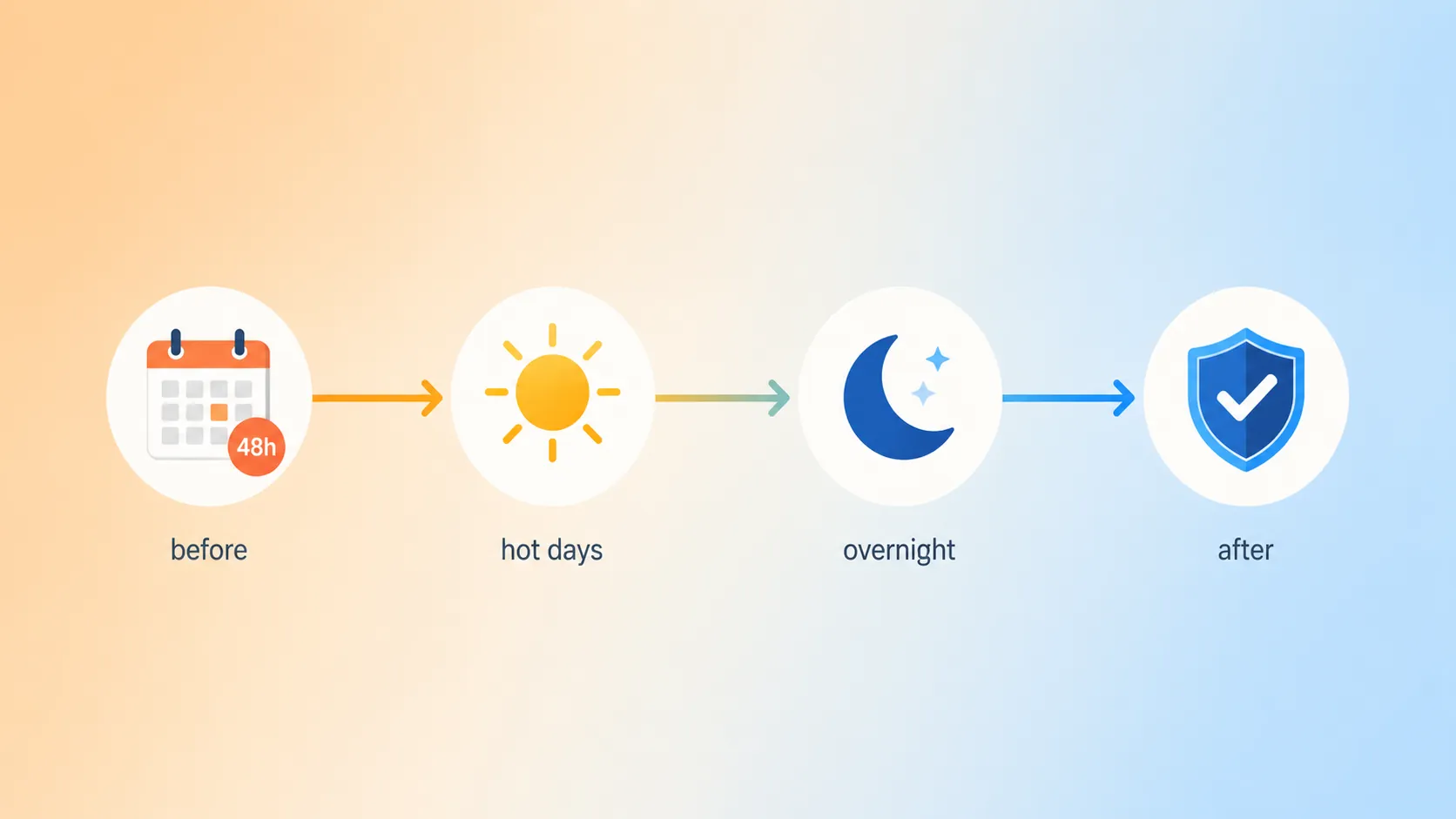
| When | What changes | What the caregiver checks |
|---|---|---|
| 48 hours before | Use the forecast to set the plan: cooling location, transportation, check-ins, indoor thermometer, and routine changes. | CDC HeatRisk level by ZIP code, whether the home can stay cool, who will call or visit, and where the older adult can go if the home stays hot. |
| Hot days | Move activity into the coolest hours and make cooling the default setting, not something to try after symptoms start. | Meals, fluids, air-conditioning access, canceled or moved errands, and signs of dizziness, weakness, confusion, or unusual fatigue. |
| Overnight | Treat the bedroom as a safety zone that must actually cool down. | Indoor temperature, sleep quality, morning alertness, safe walking to the bathroom, and whether a fan is being used in a room that is still too hot. |
| 72 hours after the all-clear | Keep extra check-ins while the body and home recover. | Eating and drinking, thinking clearly, moving normally, and any delayed decline after several hot days. |
48 hours before: make the backup plan real
Two days before the worst forecast heat is the time to stop relying on good intentions. CDC’s HeatRisk tool gives a five-level daily forecast, from green to magenta, by ZIP code, with level-specific actions.[5] Use the older adult’s ZIP code, not the caregiver’s office or the nearest big city, because the question is what will happen where that person sleeps.
- Check the CDC HeatRisk level for the next several days. Put the highest-risk days and nights on the family calendar, not just in a weather app.
- Find the coolest reliable room in the home. If there is central air or a window unit, test it before the heat arrives. If there is no air-conditioning, identify an air-conditioned fallback: a relative’s home, library, senior center, mall, faith community, or public cooling center.
- Arrange transportation before everyone is busy. A cooling center is not useful if the older adult cannot get there safely, will not drive in the heat, or has to wait outside for a ride.
- Set a check-in schedule with names attached. “Someone should call Mom” is not a schedule. Morning and evening calls or visits need an assigned person.
- Move heat-exposing routines: grocery trips, pharmacy pickups, gardening, laundry in a hot basement or garage, long church or clinic parking-lot walks, and appointments that can safely be rescheduled.
- Put water or preferred nonalcoholic drinks within reach, but do not make medication changes on your own. If a medicine affects urination, blood pressure, alertness, sweating, or balance, ask the clinician or pharmacist what to watch for during extreme heat.
The medication point is worth keeping narrow. Heat can turn ordinary dizziness or weakness into a fall risk, especially when someone stands up at night or walks to the bathroom half-awake. That does not mean stopping prescriptions. It means making the clinician part of the plan before the house is already hot.
During hot days, shrink the amount of heat the body has to handle
On the hot days themselves, the goal is not heroic endurance. The goal is fewer heat exposures, fewer decisions made while tired, and fewer chances for dizziness, confusion, or a fall to sneak in.
- Use air-conditioning early in the day instead of waiting until the home feels unbearable.
- Keep meals simple and available. Heat often blunts appetite, but an older adult who is eating very little may also drink less and become weaker.
- Offer fluids regularly and avoid alcohol; NIA also advises avoiding caffeine during hot weather safety planning for older adults.[8]
- Use cool showers, baths, or sponge baths when the person can do so safely, or with help if balance is poor.[8]
- Keep curtains or shades closed on sun-facing windows during the hottest hours if that helps the room stay cooler.
- Cancel nonessential outdoor chores. The yard can wait. The pharmacy pickup can be delivered or handled by someone else if that option exists.
CDC’s caretaker guidance for adults 65 and older says to visit or check in at least twice a day during extreme heat and watch for heat-stress signs.[7] A useful call is not just “Are you okay?” Ask what room they are in, whether the air is on, what they drank, what they ate, when they last urinated, whether they feel dizzy when standing, and whether they have walked safely to the bathroom.
For older adults without air-conditioning, community cooling options matter. NIA recommends spending time in air-conditioned places during hot weather, and California’s Department of Aging points older adults and caregivers toward cooling centers and local community resources during extreme heat.[8][9] The practical question is not whether a cooling center exists somewhere. It is whether the older adult can get there, stay there long enough to cool down, use the bathroom safely, and return home without sitting in a hot car or at a hot bus stop.
The fan rule: helpful in a warm room, risky in a dangerously hot one
A fan feels reassuring because it moves air and makes a room sound occupied. It is not the same as cooling the body in dangerous indoor heat. CDC says electric fans may help when indoor temperatures are below 90°F, but when indoor temperatures are above 90°F, fan use can increase body temperature.[6]
That number should change what a caregiver checks. Put an easy-to-read thermometer in the room where the older adult sits and another near the bed if possible. If the room is too hot, the answer is not a stronger fan. The answer is air-conditioning, a cooler location, a cool shower or sponge bath if safe, lighter clothing, and active follow-up.
Overnight is not the break
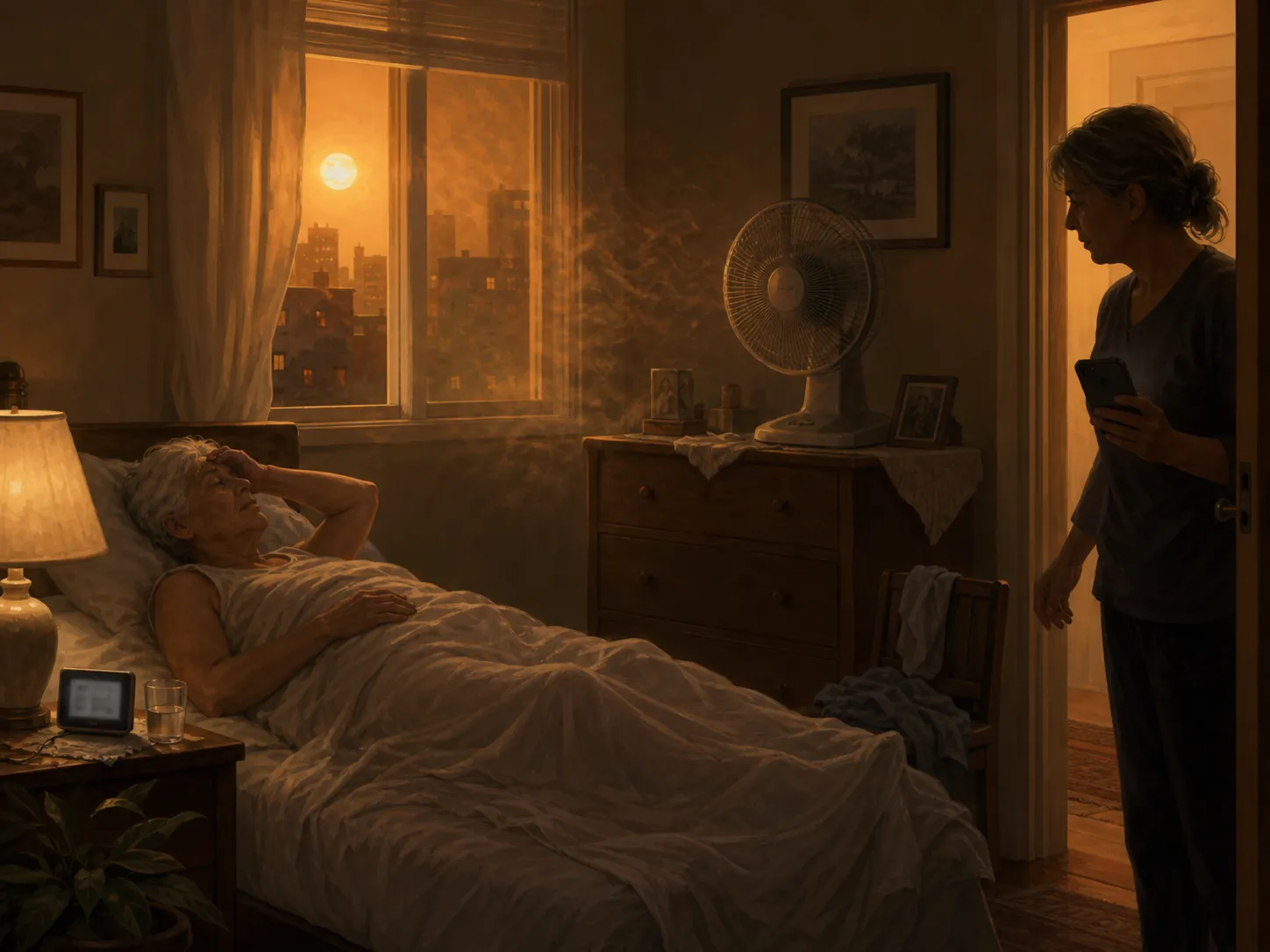
The overnight hours deserve their own plan because heat domes interfere with the body’s recovery window. If the home stays warm after sunset, sleep may be poorer, walking may be less steady, and morning may bring the first obvious sign that yesterday’s heat was not handled well.
Before bed, check the actual room temperature. If the bedroom is hotter than the living room, move sleep to the cooler room for the heat event. If the only cool room is downstairs and stairs are unsafe at night, solve that before bedtime: commode placement, lighting, walker location, phone within reach, and a clear path to the bathroom. Heat safety and fall prevention meet in the hallway at 2 a.m.
Do not wait for confusion or collapse before taking the night seriously. A senior who is “just more tired,” sleeping at odd times, getting up unsteadily, skipping dinner, seeming unusually quiet, or saying they feel weak or lightheaded may be giving the first useful warning. Those changes are especially important when they appear after several hot days or in a home that has not cooled down.
- Call in the evening before the older adult goes to bed, not only in the afternoon.
- Ask whether the bedroom feels cooler than it did at dinner. If the answer is vague, ask for the thermometer reading.
- Make sure the phone, water, glasses, walker or cane, and bathroom path are set before sleep.
- If the room remains hot and there is no air-conditioning, arrange a cooler sleeping location rather than treating the fan as the solution.
- Check again in the morning for alertness, steadiness, appetite, and whether the person got through the night without dizziness or a near fall.
Keep watching for 72 hours after the all-clear
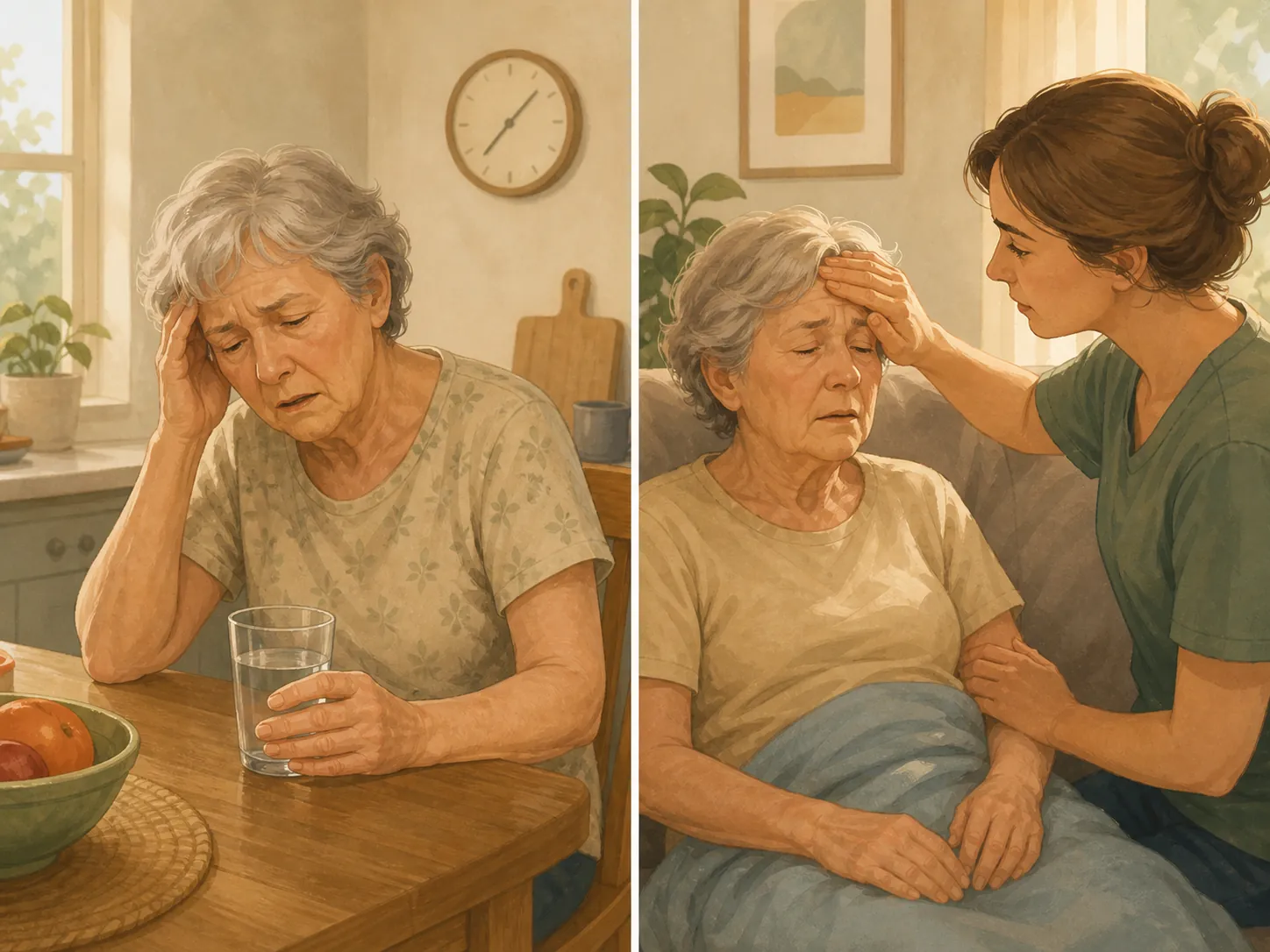
A forecast improvement is not the same thing as recovery. Walls, bedrooms, and apartment hallways may still hold heat. The older adult may have slept poorly for several nights, eaten less, moved less, or become mildly dehydrated. HealthInAging, from the American Geriatrics Society, notes that heat stroke in older adults may develop gradually over days of exposure.[10] That is why a practical home plan keeps extra attention in place for the next 72 hours, even though that 72-hour window is a caregiver structure rather than a single-source medical rule.
For those three days, keep the twice-daily rhythm if there were any concerns during the heat event: a hot bedroom, poor appetite, dizziness, unusual fatigue, confusion, missed medications, a near fall, or a day spent without real cooling. If everything is normal and the home is cool again, the check-ins can become brief. If anything is off, do not downgrade the plan just because the weather app changed color.
| What to confirm after the heat breaks | Why it matters |
|---|---|
| The home has cooled, especially the bedroom. | A cooler outdoor forecast does not guarantee a cool indoor sleeping space. |
| The older adult is eating and drinking near their usual pattern. | Poor intake after several hot days can leave a person weak and unsteady. |
| Thinking and conversation are normal for that person. | New confusion, unusual quietness, or poor alertness should not be brushed off as “just tired.” |
| Walking, standing, and bathroom trips look normal. | Dizziness and weakness are heat-safety problems and fall-prevention problems. |
| Medications are being taken as prescribed. | Missed doses or self-adjusted doses need clinician guidance, not guessing. |
When home monitoring is no longer enough
Do not get stuck arguing over an exact body-temperature threshold at the kitchen table. In older adults, the safer trigger is a change from baseline plus heat exposure: confusion, fainting, severe weakness, worsening dizziness, inability to stay awake normally, trouble walking safely, or symptoms that do not improve after moving to a cooler place and cooling the body.
- Continue routine monitoring when the home is cool again, the person is eating and drinking normally, conversation is normal, walking is steady, and there were no concerning symptoms during or after the heat.
- Contact a clinician promptly when there is new or worsening dizziness, unusual fatigue, poor intake, medication confusion, a near fall, or symptoms that are mild but not returning to baseline.
- Seek emergency help when there is new confusion, fainting, collapse, severe weakness, inability to awaken normally, unsafe walking that cannot be managed at home, or any rapid worsening during or after heat exposure.
A senior is not safe simply because the hottest forecast day has passed. Safe means the home has cooled down, the person is eating and drinking normally, thinking and moving normally, and someone has kept checking through the delayed-risk window.
References
- What’s a heat dome? Here’s why so much of the US is broiling this week, AP News
- Heat Wave 2021, Washington State Department of Health
- Heat-Related Emergency Department Visits During the Northwestern Heat Wave — United States, June 2021, CDC MMWR
- Heat-related hospitalizations in older adults: an amplified effect of the first seasonal heatwave, Scientific Reports, 2017
- How to Use the HeatRisk Tool and Air Quality Index, CDC
- About Heat and Your Health, CDC
- Heat and Older Adults (Aged 65+), CDC
- Hot Weather Safety for Older Adults, National Institute on Aging
- Extreme Heat Safety for Older Adults, California Department of Aging
- Tip Sheet: Hot Weather Safety Tips for Older Adults, HealthInAging.org
Related reading
Noticed something outdated or inaccurate on this page? Flag a correction. We review every report against CDC, NIA, and AARP HomeFit guidance before updating a page.
Part of the Fall Prevention section.