
STEADI: Intervene
What to Do for Seniors on a Red Alert Heat Day
On a red-alert heat day, the safe window to intervene is hours, not days. This playbook gives caregivers the exact order of steps — triage symptoms first, cool safely, call 911 for heat stroke — plus a 72-hour watch list that flags dizziness on standing, dark urine, confusion, and new unsteadiness as fall warnings.
Start with symptoms, not windows, fans, or a lecture about drinking water. If an older adult is confused, fainting or unconsciousness, has a very high body temperature, hot dry skin, or a rapid strong pulse, treat it as possible heat stroke and call 911 now. Move them to a cooler place if you can do that safely, begin cooling with wet cloths or a cool bath if available, and do not give anything to drink to someone with heat stroke signs or anyone who is unconscious.[1]
This is educational guidance, not a diagnosis. The point is to keep the emergency threshold where it belongs: at the front. A senior who says they are “fine” but sounds newly slow, mixed up, or unable to stand safely does not need another hour of reassurance.
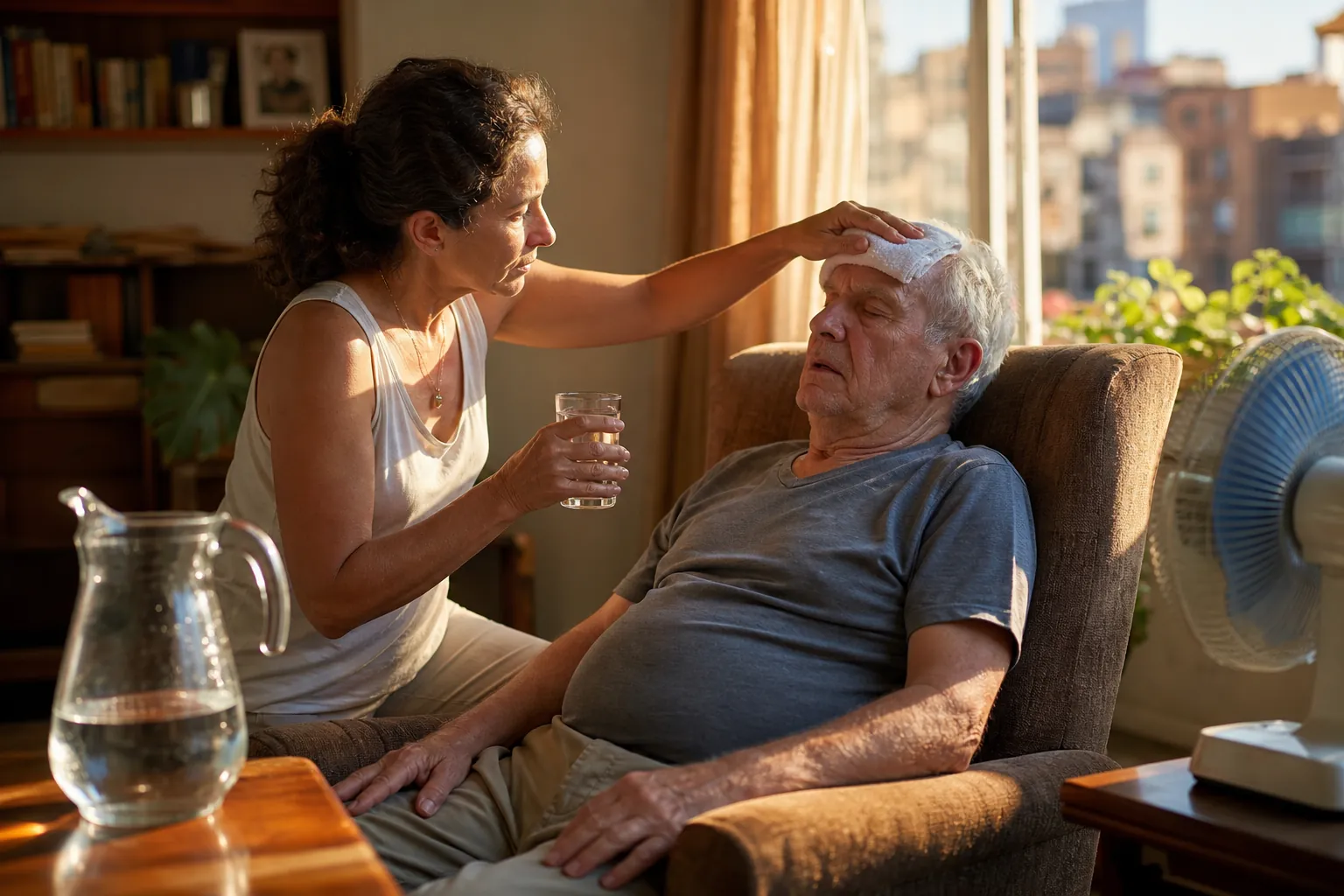
A quick note on the phrase “red alert”: in the United States, you are more likely to see a National Weather Service Extreme Heat Warning, or the CDC/NWS HeatRisk tool showing red for “major” risk or magenta for “extreme” risk.[2][3] You do not need to become a weather-system expert before acting. If the alert says dangerous heat is expected where your parent lives, move into the check-and-cool routine now.
The first five minutes: decide which heat illness you may be looking at
Do this before you start tidying, opening blinds, or arguing about whether the apartment “feels that bad.” Look at mental status, skin, pulse, ability to stand, vomiting, and how long symptoms have been going on.
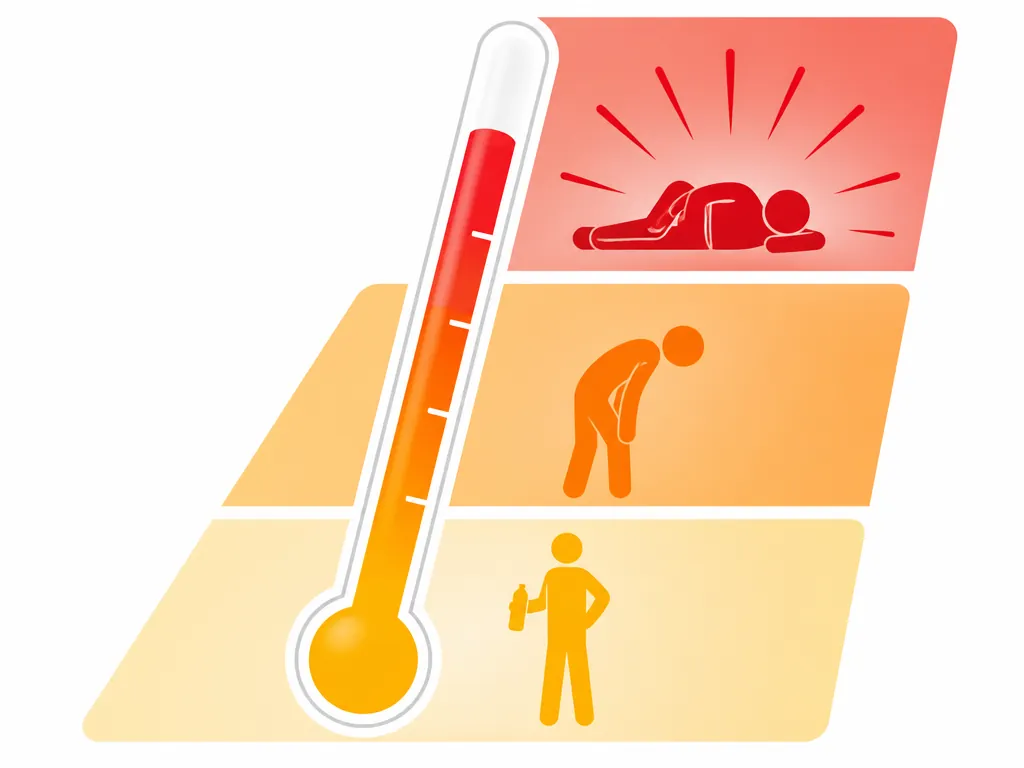
| What you see | Likely heat problem | What to do next |
|---|---|---|
| Painful muscle cramps or spasms, often after sweating or activity | Heat cramps | Stop activity. Move to a cooler place. Offer water only if the person is awake, not confused, and able to swallow safely. Keep watching for worse symptoms.[1] |
| Heavy sweating, cool or moist skin, weakness, dizziness, headache, nausea, or feeling faint | Heat exhaustion | Move them to a cooler place, loosen clothing, use cool wet cloths or a cool bath, and offer small sips of water if fully alert. Call 911 if symptoms worsen, vomiting occurs, or symptoms last longer than 1 hour.[1] |
| Confusion, loss of consciousness, very high body temperature such as 104°F or higher, hot dry skin, or a rapid strong pulse | Possible heat stroke | Call 911 immediately. Cool the person while waiting for help. Do not give anything to drink.[1] |
The messy cases are the dangerous ones. An older adult may not describe thirst clearly. They may call dizziness “just tired.” They may sit still and look quiet rather than dramatic. If you are checking by phone, listen for delayed answers, odd word choices, new irritability, or trouble following a simple question. Those are not weather complaints; they are part of the symptom check.
Cool the person, but do it in the right order
Once you have checked for the immediate 911 signs—or called 911 because they are present—cooling becomes the next job. The best practical question is simple: where is the coolest safe place this person can be in the next 10 minutes?
- Move them out of direct sun and away from the hottest room.
- Use air conditioning if it is working. Even a few hours in air conditioning can help lower heat-health risk for older adults.[4]
- Loosen extra clothing, shoes, or heavy layers.
- Apply cool wet cloths to the skin, especially the neck, armpits, and groin, or use a cool bath or shower if the person is steady enough and not confused.
- Offer water only when the person is awake, not confused, not vomiting, and able to swallow safely. Do not give fluids to someone with heat stroke signs or someone unconscious.[1]
Be careful with fans. A fan can help when the indoor temperature is below about 90°F, but the CDC warns not to rely on a fan as the main cooling method above that level.[4] If the apartment is hotter than that, the plan is not “turn the fan higher.” The plan is to get the person into air conditioning, a cooling center, a cooler neighbor’s apartment, a library, a mall, or a medical setting if symptoms require it.
Do not send a dizzy person into the shower alone. Do not ask someone who is newly unsteady to walk across a cluttered room to “cool off.” On a heat day, fall prevention is part of cooling. Bring the damp cloth, water if appropriate, and phone to them first; move them only as far as they can safely go.
The caregiver check-in: ask questions that cannot be waved away
“Are you okay?” is too easy to answer automatically. On a dangerous heat day, the CDC advises caretakers to check on older adults twice a day and ask whether they are drinking enough water, whether they have access to air conditioning, whether they know how to keep cool, and whether they show signs of heat stress.[4]
- “What have you had to drink since breakfast?”
- “Is the air conditioner on, and what room are you sitting in right now?”
- “If the room gets hotter, where will you go?”
- “Are you dizzy when you stand?”
- “Any headache, nausea, weakness, cramps, or confusion?”
- “When did you last urinate, and was it darker than usual?”
If you are there in person, check the room before you trust the answer. Is the AC actually running? Is the vent blocked? Is the person sitting in the hottest room because that is where the television is? Is the water glass full because they just refilled it, or because they have not touched it?
If you are checking by phone, make the next step concrete. “I want you to stand up” is not enough. Try: “Put one hand on the arm of the chair, stand slowly, and tell me if the room spins.” If they become dizzy, weak, confused, or short of breath, stop the test and escalate based on symptoms.
When to call 911 instead of continuing home care
Call 911 immediately for confusion, fainting or unconsciousness, a very high body temperature, hot dry skin, or a rapid strong pulse. Call if heat exhaustion symptoms worsen, vomiting occurs, or symptoms last longer than 1 hour despite cooling.[1]
Do not wait for every sign to appear. Heat stroke is an emergency, and older adults may not present neatly. If the person is newly confused, cannot stay awake, cannot safely drink, or cannot stand without nearly falling, the decision has already moved beyond ordinary heatwave advice.
The next 72 hours are a fall-risk watch
The room cooling down does not end the job. The American Geriatrics Society warns that heat stroke in older adults may develop gradually over several days of hot weather.[5] That matters because the warning signs families are tempted to dismiss—dizziness, weakness, dark urine, new unsteadiness, and slower thinking—are also the signs that can put someone on the floor.
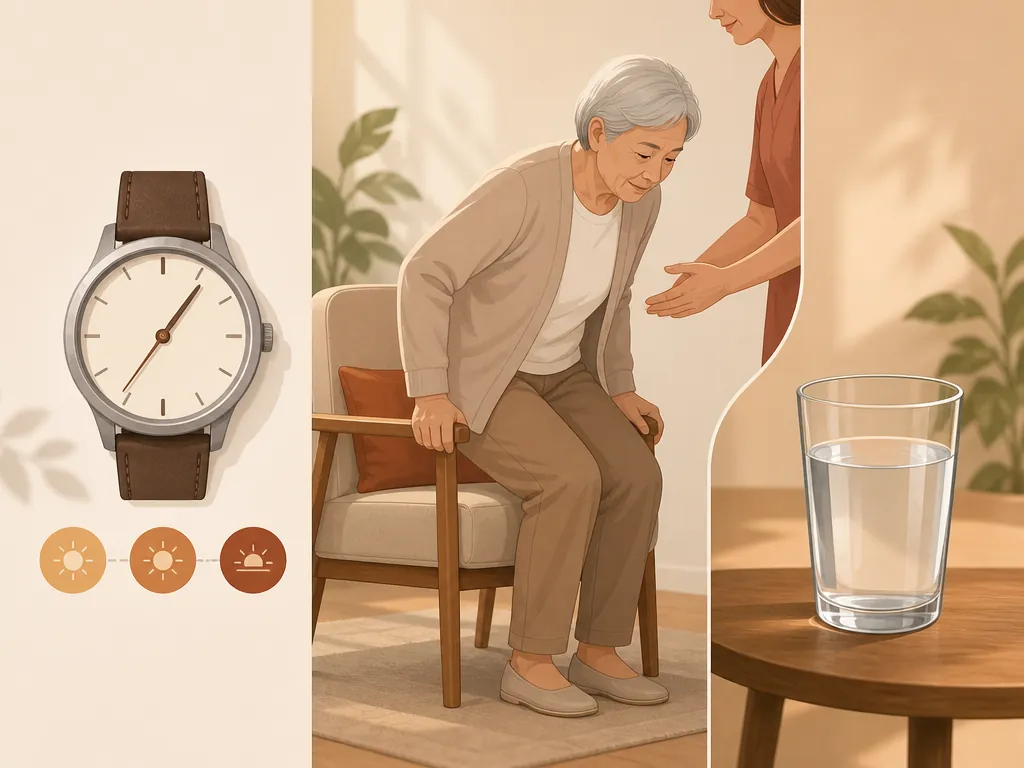
For the next three days, treat each check-in as both a heat check and a fall check. Ask whether they are dizzy when standing. Look for darker urine than usual. Notice whether they are reaching for furniture, shuffling, missing steps, or sitting back down suddenly. Ask a question that requires a real answer, not just yes or no.
| What changes after the heat exposure | Why it matters | What to do |
|---|---|---|
| Dizziness when standing | A standing dizzy spell can become a fall before anyone has time to negotiate. | Have them sit back down. Recheck heat symptoms. Get medical help urgently if it persists, worsens, or comes with confusion, fainting, chest pain, or severe weakness. |
| Dark urine or much less urination than usual | This can be a dehydration warning, and dehydration is linked with higher observed fall risk in older adults. | Encourage fluids only if they are alert and able to swallow safely. Contact a clinician for guidance if intake or urination remains concerning. |
| New confusion, unusual sleepiness, or trouble following conversation | Mental-status change is not a normal aftereffect to brush off. | Call 911 if heat-stroke signs are present or the person cannot stay awake, drink safely, or answer normally. |
| New unsteadiness, furniture-walking, or nearly falling | Balance change after heat exposure is a safety problem right now, not a reminder for later. | Keep walking to a minimum, clear the immediate path, assist only if you can do so safely, and seek urgent help if symptoms worsen. |
There is evidence behind taking dehydration seriously, but it should be used carefully. In a retrospective cohort study of 30,634 older adults in Wisconsin, dehydration was associated with higher odds of falls, with an odds ratio of 1.13 and P=.002.[6] That does not prove dehydration directly caused the falls. It does give caregivers a practical reason not to treat dark urine, poor intake, and new unsteadiness as separate little problems.
During this 72-hour window, do not let pride set the schedule. A parent who insists they are independent may still need twice-daily calls, an in-person check, or a ride to a cooler place. A spouse who is exhausted from caregiving may need someone else to take the next check-in. The person who bears the consequence of a missed warning sign is usually the older adult trying to stand up alone.
Keep checking. Treat new balance problems and new mental-status changes as serious. If symptoms worsen, last too long, include vomiting, or cross into heat-stroke signs, stop managing the heat day at home and get urgent help.
References
- Extreme Heat Safety, American Red Cross.
- Understanding Heat Alerts, National Weather Service.
- How to Use the HeatRisk Tool and Air Quality Index, CDC.
- Heat and Older Adults (Aged 65+), CDC.
- Tip Sheet: Hot Weather Safety Tips for Older Adults, Health in Aging / American Geriatrics Society.
- Association Between Dehydration and Falls, Mayo Clinic Proceedings, 2020.
Related reading
Noticed something outdated or inaccurate on this page? Flag a correction. We review every report against CDC, NIA, and AARP HomeFit guidance before updating a page.
Part of the Fall Prevention section.