
STEADI: intervene
Make Seniors' Nighttime Bathroom Trip Safer in a Heat Wave
Hot nights make the middle-of-the-night bathroom trip a sharper fall risk for seniors, and the fix starts tonight: cooler bedrooms, daytime fluids, a diuretic-timing check with the prescriber, and a cleared bed-to-bathroom path.
Last verified: July 31, 2026. Clinically reviewed by Maya Patel, RN, BSN, geriatric care reviewer. This article is educational and is not a substitute for medical advice, diagnosis, or treatment. Do not change, skip, or move a prescribed medication without the prescriber’s instructions.
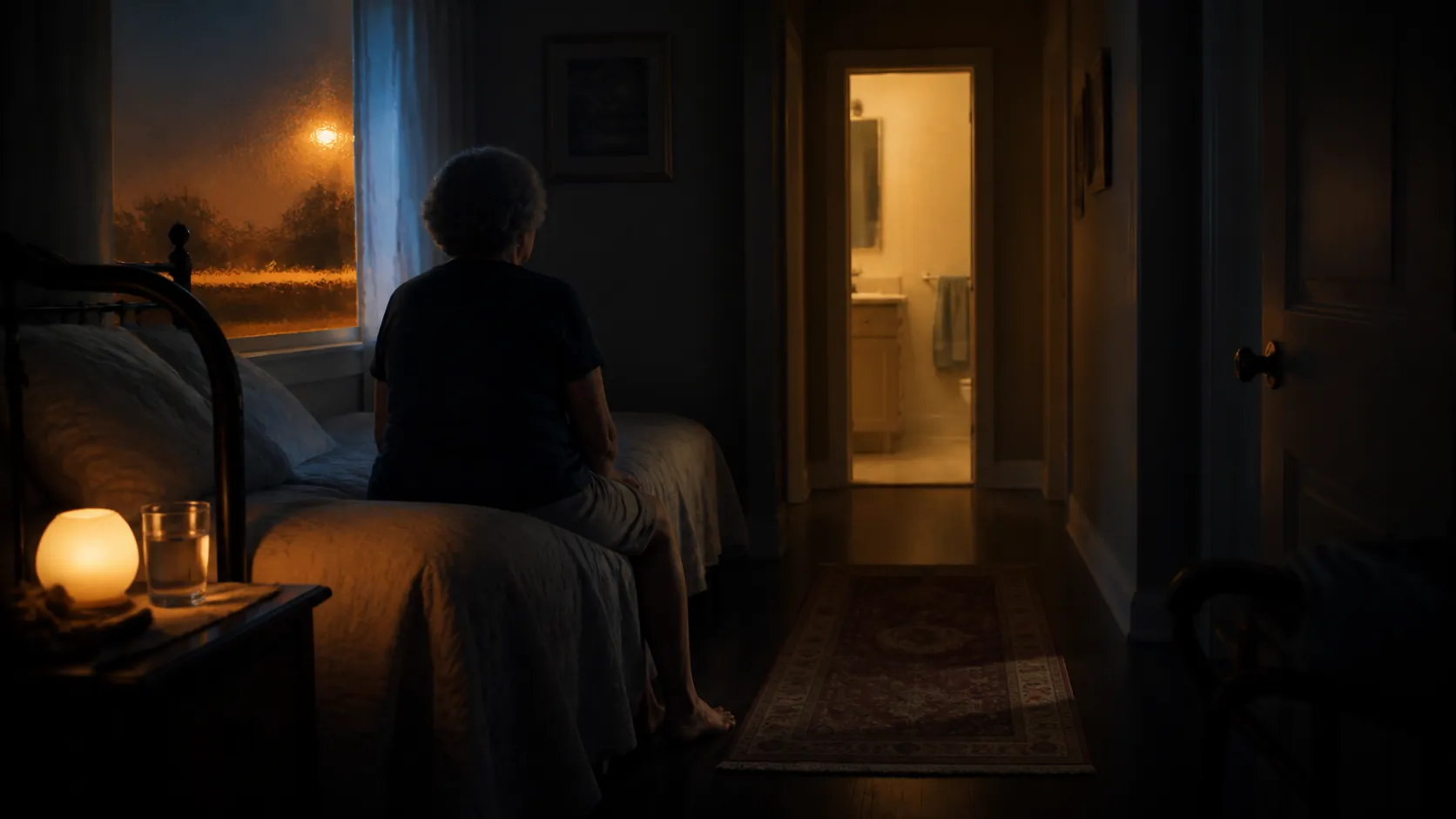
The risky part of a heat wave often starts after the house gets quiet: an older adult wakes from sticky, broken sleep, sits up too fast, waits for the room to stop shifting, and heads toward the bathroom in the dark. The glass of water on the nightstand, the throw rug outside the bathroom, the cane parked just out of reach, the water pill taken late in the day — none of these looks dramatic at 8 p.m. Together, at 3 a.m. in a hot bedroom, they can make an ordinary bathroom trip a fall window.
Most broad heat-wave safety advice for older adults focuses on cooling, hydration, and recognizing heat illness. Those matter. This guide is narrower: how to make the overnight bed-to-bathroom trip safer during a hot spell, especially for someone who wakes often to urinate, has swollen ankles by evening, takes a diuretic, or gets lightheaded when standing.
Why this bathroom trip deserves its own plan
Nighttime falls are not rare background noise. Northwestern Medicine notes that about 25% of all falls in older adults happen in the middle of the night, and some are driven by nocturia — waking at night to urinate [1]. A community-dwelling older-adult study of 988 participants found that nocturia three or more times per night was associated with a 28% increased risk of an incident fall within three years [2].
Those numbers do not mean every nighttime bathroom trip is dangerous. They do mean the trip is predictable enough to prepare for. In a heat wave, the preparation has to start before bedtime, because heat can disturb sleep, change fluid patterns, and make the stand-up moment less forgiving.
Heat makes the night less steady before anyone takes a step
A hot bedroom is not only uncomfortable. In a 2025 BMC Medicine study of 47 community-dwelling adults age 65 and older during one summer in subtropical Queensland, Australia, nocturnal bedroom temperatures above 24°C, or 75°F, were associated with greater odds of clinically relevant autonomic disruption and increased heart rate. At 28°C to 32°C, or 82°F to 90°F, the odds were 2.9 times higher [3].
That study should not be stretched into a universal estimate for every older adult in every U.S. climate. It was small, it followed one summer, and it measured a specific physiological signal. Its useful lesson for tonight is still plain: once the bedroom is above about 75°F, the body may be working harder during sleep. A person who wakes hot, under-rested, and with a higher heart rate may be less steady during the first few seconds after sitting up.
That first stand matters. Many falls do not happen halfway down the hall. They happen when someone rises, pauses too briefly, reaches for a walker that is not where it usually is, or turns toward the bathroom before the body has caught up.
The heat-to-bathroom chain
There is rarely one cause. In real homes, the risk usually stacks up in layers.
- A hot room fragments sleep. The person wakes more tired and less alert.
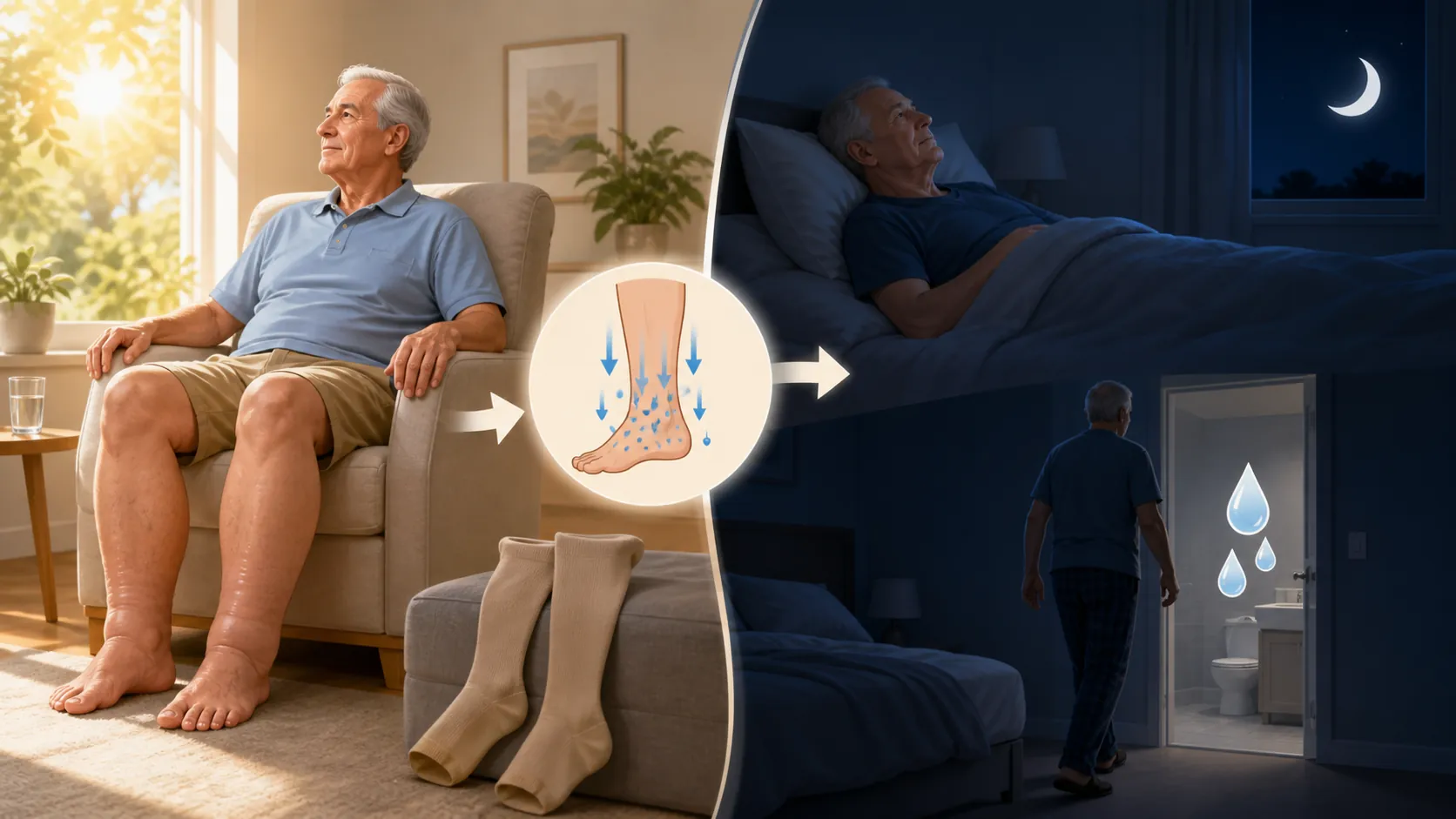
- Fluid that pooled in the legs during the day can shift back into circulation when the person lies down, increasing nighttime urine production.
- Diuretics and some blood-pressure effects can add urgency, lower volume, or lightheadedness at the stand-up moment.
- The path to the bathroom is often darker, warmer, and more cluttered than anyone remembers from daytime.
Leg swelling is one of the details caregivers often notice before anyone calls it a safety issue: sock marks by dinner, ankles that look fuller in the evening, shoes that feel tighter. Northwestern Medicine’s nocturia guidance includes urologist Peter Tsambarlis, MD, recommending knee-high compression socks during the day to reduce fluid pooling and nighttime urine production [1]. That is a care-team conversation, not a casual purchase for every older adult. People with heart failure, circulation problems, skin wounds, diabetes complications, or significant swelling need individualized guidance.
Medication adds another layer. CDC clinician guidance says diuretics, which are among the most common drugs used by older adults, can cause volume depletion, electrolyte imbalance, and increased risk of fainting and falls, with risk amplified when combined with heat-related dehydration [4]. This is exactly why the answer is not “drink less so you pee less.” During heat, dehydration itself is part of the danger, and CDC guidance for older adults tells people to ask a doctor how much fluid is appropriate for them [5].
The practical middle ground is to plan fluids earlier in the day when the prescriber says that is appropriate, watch for signs of dehydration or low blood pressure, and ask whether medication timing is contributing to repeated nighttime trips. No one should move a water pill from evening to morning, double up, skip it, or “try a different schedule for the heat” without the prescriber’s instructions.
What to do tonight, before the first wake-up
The best overnight fall prevention happens while the lights are still on. Do the work before the person is hot, hurried, and half awake.
| Before bed | Why it matters during a heat wave | What to avoid |
|---|---|---|
| Cool the bedroom to 75°F or below if possible. | The best available bedroom-temperature evidence links temperatures above 75°F with autonomic disruption in older adults. | Do not judge the room by how it felt at noon; check the actual sleeping temperature. |
| Move more fluids earlier in the day, if the clinician has not restricted fluids. | This avoids the unsafe choice between dehydration and late-night overdrinking. | Do not restrict fluids sharply during heat without medical guidance. |
| Write down a medication-timing question for the prescriber. | Diuretics and blood-pressure effects can intersect with heat, dehydration, urgency, and standing dizziness. | Do not change the dose or timing on your own. |
| Clear and light the route from bed to bathroom. | The trip happens when the person is least alert and the room may still be warm. | Do not leave throw rugs, cords, laundry, pet bowls, or furniture edges in the path. |
Make the bedroom the cooling priority
If the whole home cannot be cooled well, choose the bedroom first. Put a simple thermometer where it reflects the sleeping area, not directly in front of a vent or window. The goal is not a perfect house; it is a safer sleep zone at or below 75°F when possible.
For a fuller room-by-room cooling setup, use the heat-wave home cooling plan. For this overnight problem, keep the focus on the room where the person wakes and stands. A fan that is safe for the space, a window unit, a door left open to cooler air, lighter bedding, or moving temporarily to a cooler room may matter more than cooling rooms no one sleeps in.
Plan fluids earlier without treating dehydration as the fix
A caregiver may be tempted to say, “Just stop drinking after dinner.” That can backfire during heat, especially for someone already vulnerable to dehydration, dizziness, or kidney and heart concerns. A safer question is: can more of the day’s appropriate fluids happen earlier, and what evening amount is safe for this person?
For an older adult without a fluid restriction, that may mean steady daytime drinking instead of catching up late. For someone with heart failure, kidney disease, significant swelling, or a clinician-directed fluid limit, the care team’s instructions should decide. Keep notes for the clinician: how many times the person wakes, whether they feel urgent, whether ankles are swollen by evening, and whether they feel dizzy when standing.
Ask about swelling and daytime compression
If ankle swelling is part of the pattern, ask the clinician whether daytime knee-high compression socks are appropriate, how strong they should be, when to put them on, and when not to use them. The point is to reduce daytime pooling that may become nighttime urine after lying down, but compression is not harmless for everyone.
Also ask whether leg elevation earlier in the evening is reasonable for this person. Keep it simple: a chair, a calm half hour, and a note about whether nighttime trips decrease. Do not use swelling as a reason to restrict fluids or alter medication without medical guidance.
Prepare the stand-up moment
The few seconds after waking deserve as much attention as the hallway. Put the cane, walker, glasses, phone, and a water glass within easy reach, but not where they crowd the path. If the person uses a walker, it should be parked exactly where their hands expect it. A walker across the room is not a mobility aid at 3 a.m.; it is furniture.
Encourage a sit-pause-stand routine: sit at the edge of the bed, place both feet, pause, then stand and pause again before walking. If dizziness, faintness, chest discomfort, confusion, or unusual weakness shows up, that is no longer a hallway problem; it needs medical attention according to the person’s care plan or local emergency guidance.
Clear the path as if you were walking it half asleep
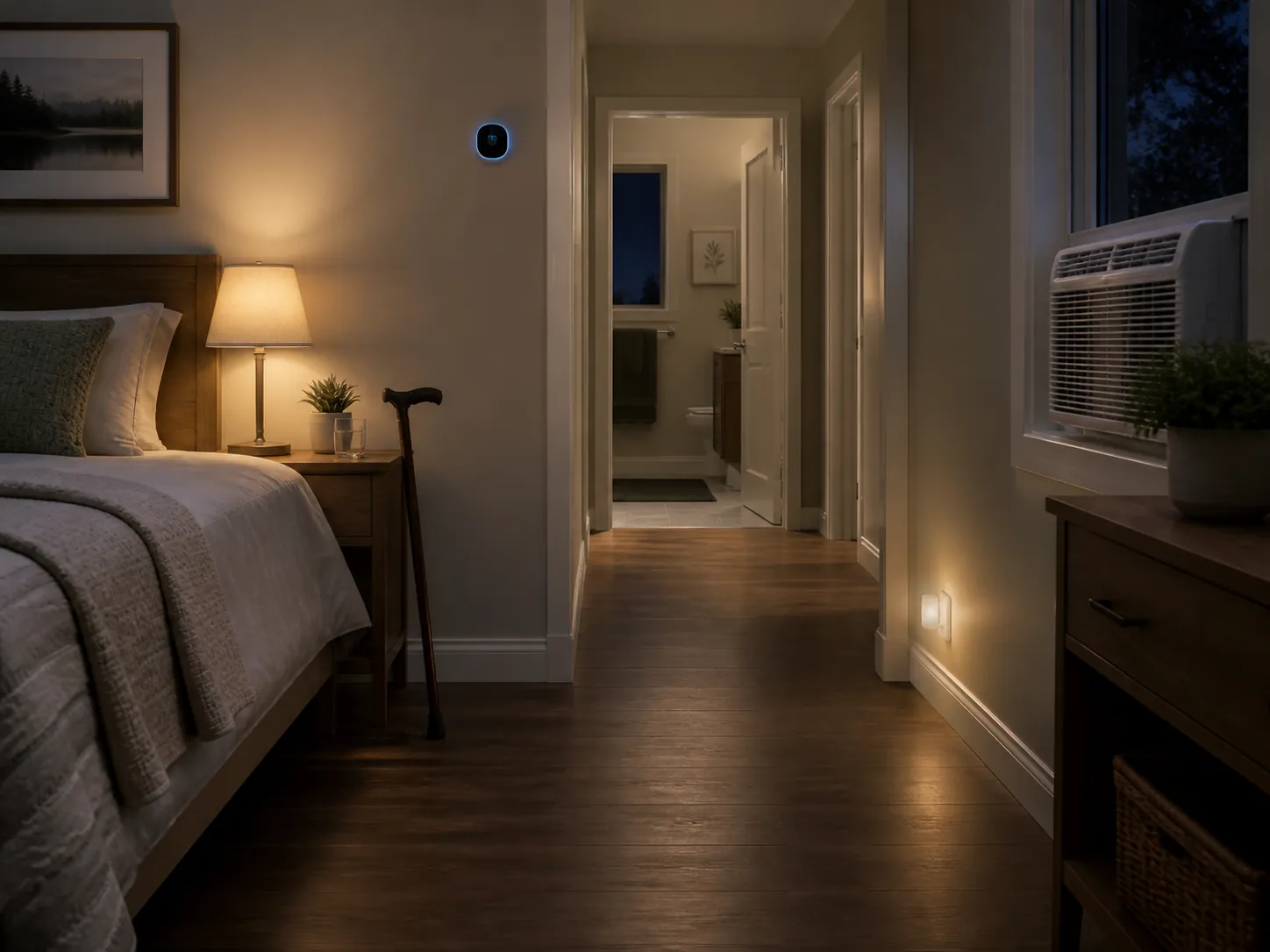
Stand at the bed and walk the route in the dimmest light the person will actually use. Remove throw rugs, loose mats, cords, laundry baskets, pet dishes, shoes, and low furniture. If there is a threshold, mark it with better lighting or remove the obstacle if possible. If the bathroom floor gets damp, fix that before the heat wave, not after the first slip.
Lighting should come on before the first step. A plug-in nightlight, motion light, or battery light along the baseboard is usually better than asking someone to cross a dark room to reach a wall switch. If storms or grid strain could affect power, use the power-outage fall-proofing guide for battery lighting and bed-to-bathroom route details.
If the bathroom is far away, the route has stairs, or the person is rushing because of urgency, ask whether a bedside commode or urinal is safer for the hot spell. That is not a failure of independence. It may be the shortest safe route until the heat breaks or the medical causes of nocturia are reviewed.
Medication questions to ask, not guess at
This is the part to keep boring and exact. Bring the medication list and the nighttime pattern to the prescriber or pharmacist. The useful questions are specific:
- Could the timing of the diuretic be contributing to nighttime urination?
- During a heat wave, what fluid amount is appropriate for this person, given their heart, kidney, blood-pressure, and swelling history?
- Are any medications increasing dizziness, fainting risk, dehydration risk, or orthostatic hypotension?
- What symptoms mean the family should call the office promptly or seek urgent care?
- Are compression socks, evening leg elevation, or another edema strategy appropriate?
If the answer is “take the water pill earlier,” it should come from the prescriber, with the exact timing and what to do if a dose is missed. Heat waves are not the time for home experiments with blood pressure, fluid balance, or electrolytes.
When this narrow plan is not enough
This article is not trying to replace a full heat plan. If the home is not cooling, if the person is confused, weak, not sweating as expected, unusually drowsy, or showing signs of heat illness, use a broader heat-safety guide and medical triage. For whole-home preparation, see the extreme heat safety checklist for older adults. For the general heat-to-fall cascade and the hot days plus the day-or-two-around-them watch window, use the heat-wave fall-risk guide.
If a parent insists the bedroom is “fine” because they have lived through hotter summers, check the nighttime room temperature anyway. Heat tolerance, medication lists, balance, vision, bladder patterns, and blood-pressure response can change quietly. The test is not whether the room used to be tolerable. The test is whether this person can wake, stand, find support, and reach the bathroom safely tonight.
During a heat wave, treat the nighttime bathroom trip as a predictable fall window. Cool the bedroom to 75°F or below when possible, shift appropriate fluids earlier rather than restricting them, ask the prescriber about diuretic timing and standing dizziness, and clear and light the path before bedtime.
References
- How to Stop Peeing in the Middle of the Night — Northwestern Medicine
- The Association of Nocturia with Incident Falls in an Elderly Community-Dwelling Population — PMC
- Effect of nighttime bedroom temperature on heart rate variability in older adults — BMC Medicine, 2025
- Heat and Medications – Guidance for Clinicians — CDC
- Heat and Older Adults (Aged 65+) — CDC
Related reading
Noticed something outdated or inaccurate on this page? Flag a correction. We review every report against CDC, NIA, and AARP HomeFit guidance before updating a page.
Part of the Fall Prevention section.