
STEADI: intervene
Extreme Heat Creates a Hidden Fall Risk for Older Adults
Learn how extreme heat triggers dehydration, blood pressure drops, and medication interactions that lead to falls in older adults, and discover specific prevention steps to keep them safe during a heat wave.
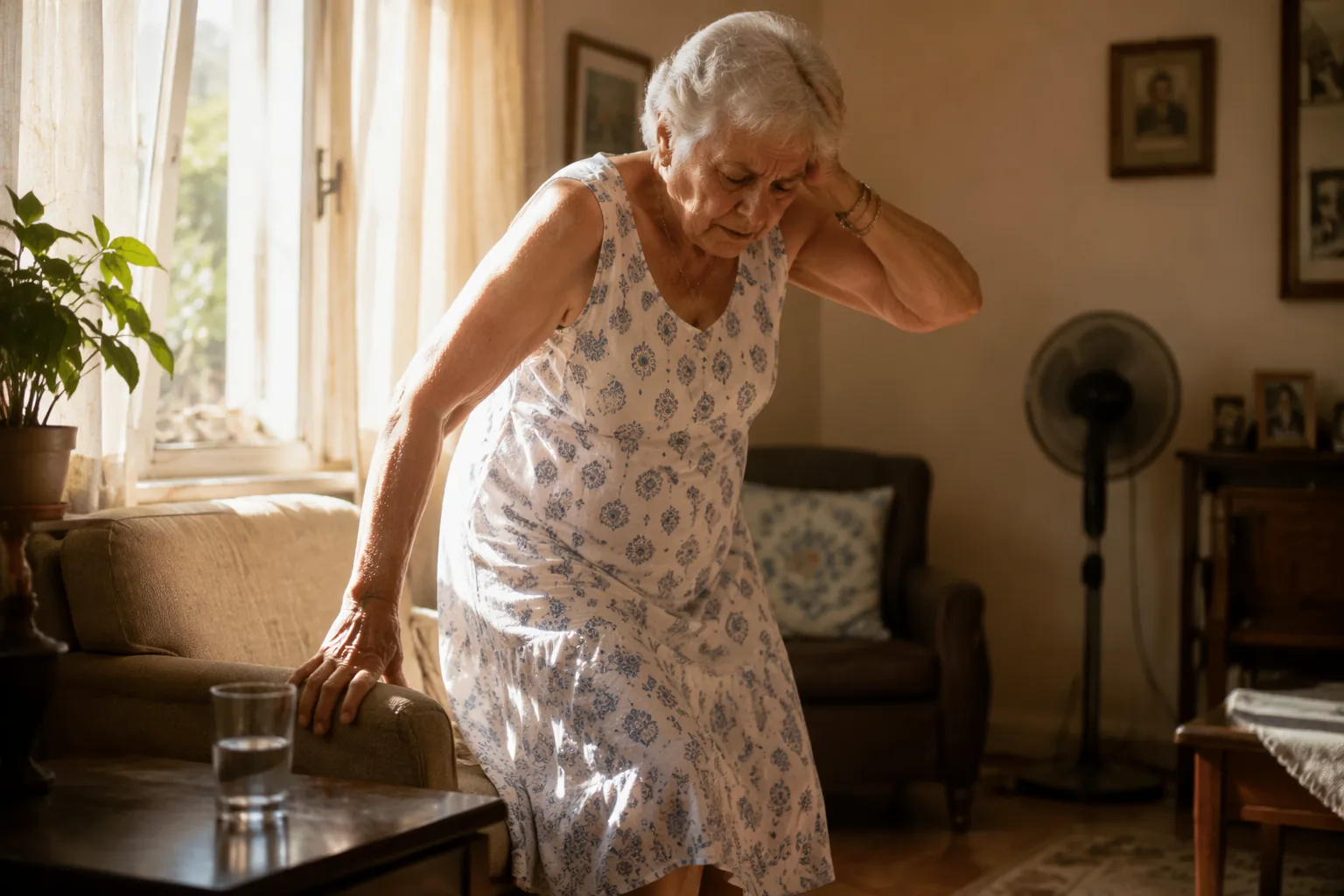
During a heat wave, the fall risk often starts before anyone says the word emergency. An older parent stands up from the recliner, pauses with one hand on the armrest, and says they are “just a little lightheaded.” Maybe they skipped lunch because cooking felt like too much. Maybe they took a morning diuretic and made three bathroom trips. Maybe the fan is running, but its cord now cuts across the hallway.
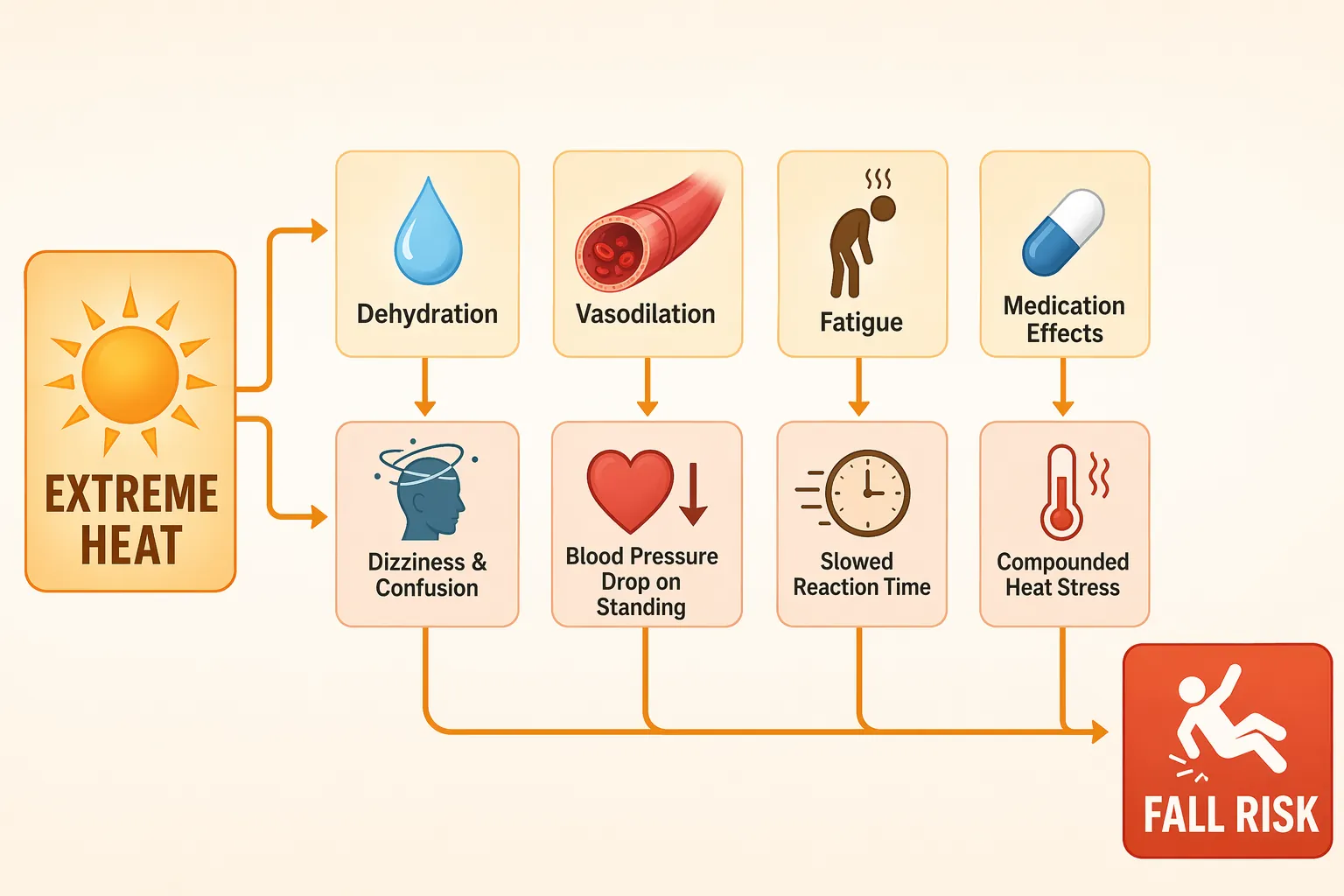
That is the part many heat-safety lists miss. Extreme heat is not only a heat-stroke concern for older adults. It can quietly set up a fall through dehydration, blood-pressure changes, fatigue, and medication effects—well before collapse, fever, or obvious confusion appears.
Why hot days make balance less reliable
Older bodies do not always give early, loud warnings in heat. The CDC notes that adults age 65 and older are more likely to have chronic medical conditions, take medicines that affect heat response, and have more difficulty adjusting to sudden temperature changes. CDC guidance also points to age-related changes in sweating and circulation that make heat harder to manage safely [1]. Harvard Medicine describes the problem in plain physiologic terms: older adults may sweat less efficiently, feel thirst later, and have less reserve in the cardiovascular system when heat stress rises [2].
For fall prevention, the delayed thirst signal matters. A parent may not feel thirsty at the point when fluid loss is already affecting steadiness. Waiting for them to ask for water is not a reliable plan during an extreme heat wave.
| Heat-related change | What it can look like at home | Fall-prevention response |
|---|---|---|
| Dehydration | Dry mouth may be absent; dizziness, weakness, or fogginess may show up first | Offer fluids on a schedule, not only when the person asks |
| Blood vessels widen in heat | Lightheadedness after standing, especially from a recliner, bed, or toilet | Build in a seated pause and ask specifically about dizziness on standing |
| Heat fatigue | Slower steps, poor foot clearance, reaching for furniture | Move bathing, errands, cooking, and exercise away from the hottest hours |
| Medication effects | More urination, weaker heat response, or reduced ability to compensate | Review high-risk medicines with a prescriber; do not stop them on your own |
Dehydration: the quiet first step toward dizziness
Hydration advice becomes useful only when it is tied to a job. In a heat wave, fluid helps maintain blood volume, supports sweating, and protects attention and balance. Even modest fluid loss in the 1% to 2% range can impair concentration and balance, which is enough to matter when someone is stepping over a threshold, turning in a bathroom, or rising from a low chair [1].
For many older adults, “drink more water” is too vague. A better caregiver prompt is: “Let’s have one cup now, and I’ll check again in an hour.” CDC heat guidance commonly uses one cup of water per hour during heat exposure, with a broader daily target of about 2 to 3 liters unless a clinician has placed the person on fluid restriction [1]. That last part is not fine print. Heart failure, kidney disease, and some other conditions may require individualized fluid limits.
The practical sign to watch is not only thirst. Ask about headache, unusual tiredness, dark urine, fewer bathroom trips, dizziness, or a “foggy” feeling. If an older parent says they are weak or woozy, treat it as a mobility warning. Bring water to them; do not ask them to walk across a hot kitchen to get it.
Make fluids easier than standing up
- Place water within reach of the main chair, bedside, and dining spot.
- Use small cups if a full bottle feels like a chore.
- Pair drinking with routine events: medication time, TV programs, meals, and phone calls.
- Offer fluids before the walk to the bathroom, not only after.
- Call the clinician if the person has a fluid restriction, worsening swelling, shortness of breath, vomiting, diarrhea, or new confusion.
Blood pressure can drop at the exact moment they stand
Heat makes blood vessels widen so the body can move heat toward the skin. That is useful for cooling, but it can also lower blood pressure. When an older adult stands, gravity pulls blood toward the legs. If circulation does not compensate quickly, the result can be orthostatic hypotension: dizziness, dim vision, weakness, or the need to grab furniture right after standing [3].
This is why the first few seconds after standing deserve more attention during a heat wave. A fall may happen between the chair and the first step, or after standing from the toilet, when privacy makes people less likely to call for help. Injury Matters, a falls-prevention organization, specifically connects hot weather, dehydration, dizziness, and standing-related balance risk in older adults [4].
The safer routine is slow enough to feel a little annoying: sit upright, place both feet on the floor, drink if needed, stand, hold the chair or walker, and wait before walking. During a heat wave, “stand and pause” should become as normal as locking the door.
The question to ask every day
Do not ask only, “Are you okay?” Most parents will answer yes if they can. Ask, “When you stand up, do you feel dizzy, lightheaded, weak, or like the room shifts?” If the answer is yes, reduce walking until they are cooler and hydrated, stay nearby for transfers, and contact a clinician if symptoms are new, severe, recurrent, or linked with fainting, chest pain, shortness of breath, or confusion.
Heat fatigue slows the recovery step
Falls are not only caused by dizziness. Sometimes the problem is that heat makes everything slower. The foot catches the rug and the correction comes half a beat late. The person reaches for the counter instead of the walker. A shower that is usually manageable becomes exhausting by the time they step onto the bathmat.
This is where scheduling becomes fall prevention. On dangerous heat days, put the most demanding tasks early or late: bathing, laundry, cooking, outdoor appointments, grocery trips, and exercise. If the home is already warm by late morning, do not save the shower for midafternoon. Warm bathroom air, standing, wet surfaces, and fatigue are a poor combination.
Cooling also needs to be done without creating a new hazard. A cool shower may help, but a slippery tub is not the place to improvise when someone is already heat-tired. A shower chair, grab bars, non-slip mat, handheld shower head, or seated sponge bath is safer than asking an unsteady person to stand on a wet floor. Age UK recommends cool baths or showers and keeping the home cool during heat waves; for a fall-prone older adult, those steps need seated options and dry walking paths [5].
Fans help only if the room and the walkway are safe
A fan can make a room feel more tolerable, but it should not turn the hallway into an obstacle course. Put the fan where the cord does not cross a walking route. Tape is not a great long-term fix if it leaves a raised edge. If the only outlet creates a trip line, move the chair or use a different cooling plan.
Be careful with fan-only cooling when indoor air is very hot. Public-health guidance does not use one perfectly uniform cutoff across all sources, but the concern is the same: when air temperatures are high enough, a fan alone may not lower body temperature safely and can contribute to heat stress if the person is not sweating effectively or drinking enough. PBS NewsHour’s heat-safety reporting emphasizes using air-conditioned spaces, cool showers or baths, shade, hydration, and community cooling options when home cooling is inadequate [6].
For a parent who is unsteady, the best cooling setup is boring: one cool room, a clear path to the bathroom, water within reach, a stable chair with arms, a phone or alert device nearby, and no extension cords across the floor.
Medication effects can turn a hot day into a balance problem
Medication review is one of the highest-value heat-wave steps, and it is also where caregivers must stay in their lane. Do not stop, skip, split, or change prescribed medication because the weather is hot unless the prescriber gives specific instructions. The right action is to identify risk and ask for a plan before the next heat wave.
CDC clinical guidance notes that several medication categories can affect heat tolerance, hydration, sweating, kidney function, electrolytes, blood pressure, or the body’s ability to compensate for heat stress [3]. AARP’s medication guidance also highlights commonly used drug classes that may raise heat-related risk, including diuretics, beta blockers, and some antidepressants [7].
| Medication category | Why it matters in heat | Caregiver action |
|---|---|---|
| Diuretics | Can increase fluid loss and contribute to volume depletion | Ask the prescriber what hydration, weight, blood pressure, and symptom changes should trigger a call |
| Beta blockers | Can blunt the heart-rate response the body uses to compensate under stress | Ask how to monitor dizziness, fatigue, pulse, and blood pressure during heat waves |
| Some antidepressants | Can affect sweating, temperature regulation, alertness, or blood pressure depending on the drug | Ask whether heat precautions or monitoring should change; do not stop abruptly |
| Other medicines with heat relevance | May affect sweating, electrolytes, sedation, urination, or kidney function | Bring the full medication list, including over-the-counter drugs and supplements, to a clinician or pharmacist |
The useful question is not, “Is this medication bad in summer?” It is, “If Mom gets dizzy, eats less, sweats more, or drinks less during a heat wave, which of these medicines makes that more dangerous, and what should we do?” That gives the prescriber something concrete to answer.
If you keep a medication list for fall prevention, mark the medicines that deserve a heat-wave plan. Include prescription drugs, sleep aids, allergy medicines, pain relievers, bladder medicines, blood-pressure medicines, heart medicines, antidepressants, and any supplement used regularly. The point is not to diagnose the interaction yourself. The point is to avoid discovering the problem after a dizzy walk to the bathroom.
A heat-wave check-in should sound different from a normal call
During extreme heat, a casual evening call is often too late and too vague. Atrium Health Wake Forest Baptist recommends checking on older adults at least twice a day during extreme heat and watching for home temperature, hydration, and heat illness warning signs [8]. For fall prevention, make those calls specific enough that a proud parent cannot brush past the risk with “I’m fine.”
- “What have you had to drink since breakfast?”
- “When you stand up, are you dizzy or weak?”
- “What does the thermostat say right now?”
- “Have you taken your water pill, blood-pressure medicine, heart medicine, antidepressant, sleep aid, or allergy medicine today?”
- “Is the path from your chair to the bathroom clear, including fan cords?”
Use the thermostat, not the feeling in the room. A common practical target is to keep the home below 80°F/26.7°C for older adults during extreme heat when possible [8]. If the home is hotter than that, the plan should shift from comfort to risk reduction: move to the coolest room, close blinds on sun-facing windows, reduce cooking heat, use air conditioning if available, or go to an air-conditioned public place or cooling center if staying home is unsafe.
When the answer means someone should go over
A visit is better than another reminder if the person is dizzy on standing, newly confused, unusually sleepy, not drinking, unable to cool the home, or walking less steadily than usual. Once there, look at the route they actually use: chair to bathroom, bed to bathroom, kitchen to chair. Pick up loose rugs, move cords, clear laundry baskets, place water within reach, and set a stable chair where they can sit before and after bathroom trips.
Seek urgent medical help for fainting, chest pain, shortness of breath, severe weakness, new confusion, seizure, inability to stay awake, very hot skin, or symptoms that do not improve with cooling and fluids. Heat illness and fall risk can overlap; treating the room as safer does not make the body safe.
Set up the next hot spell before it arrives
The best time to prevent a heat-related fall is before the forecast turns ugly. Put water where standing is not required. Decide which room will stay coolest. Move fans so cords do not cross walking paths. Make bathing a seated activity on high-heat days. Write down the prescriber’s instructions for diuretics, beta blockers, antidepressants, and other heat-sensitive medicines. Ask about dizziness on standing before someone has to admit they almost fell.
Keeping an older adult safe during an extreme heat wave is not a cheerful reminder to drink water and stay inside. It is a fall-prevention routine: fluids on schedule, slow standing, cooler timing for hard tasks, clear walking paths, safe seated cooling, and a medication plan made with the prescriber.
References
- Heat and Older Adults Aged 65+, CDC, link
- The Effects of Heat on Older Adults, Harvard Medicine Magazine, link
- Heat and Medications Guidance for Clinicians, CDC, link
- Beat the Heat This Summer, Injury Matters, link
- Staying Cool in a Heatwave, Age UK, link
- How to Stay Cool and Safe in a Heat Wave, Even Without Air Conditioning, PBS NewsHour, link
- 8 Types of Medications That Don't Mix With Heat, AARP, link
- Tips to Keep the Elderly Safe in Extreme Heat, Atrium Health Wake Forest Baptist, link
Related reading
Noticed something outdated or inaccurate on this page? Flag a correction. We review every report against CDC, NIA, and AARP HomeFit guidance before updating a page.
Part of the Fall Prevention section.