
STEADI: intervene
Hurricane Preparedness Checklist for Older Adults to Prevent Falls
A three-phase hurricane preparedness checklist that identifies the fall risks unique to each stage of a storm—pre-season clutter, power-outage darkness, and post-storm debris—and provides low-cost countermeasures caregivers can implement now, before a watch is issued.
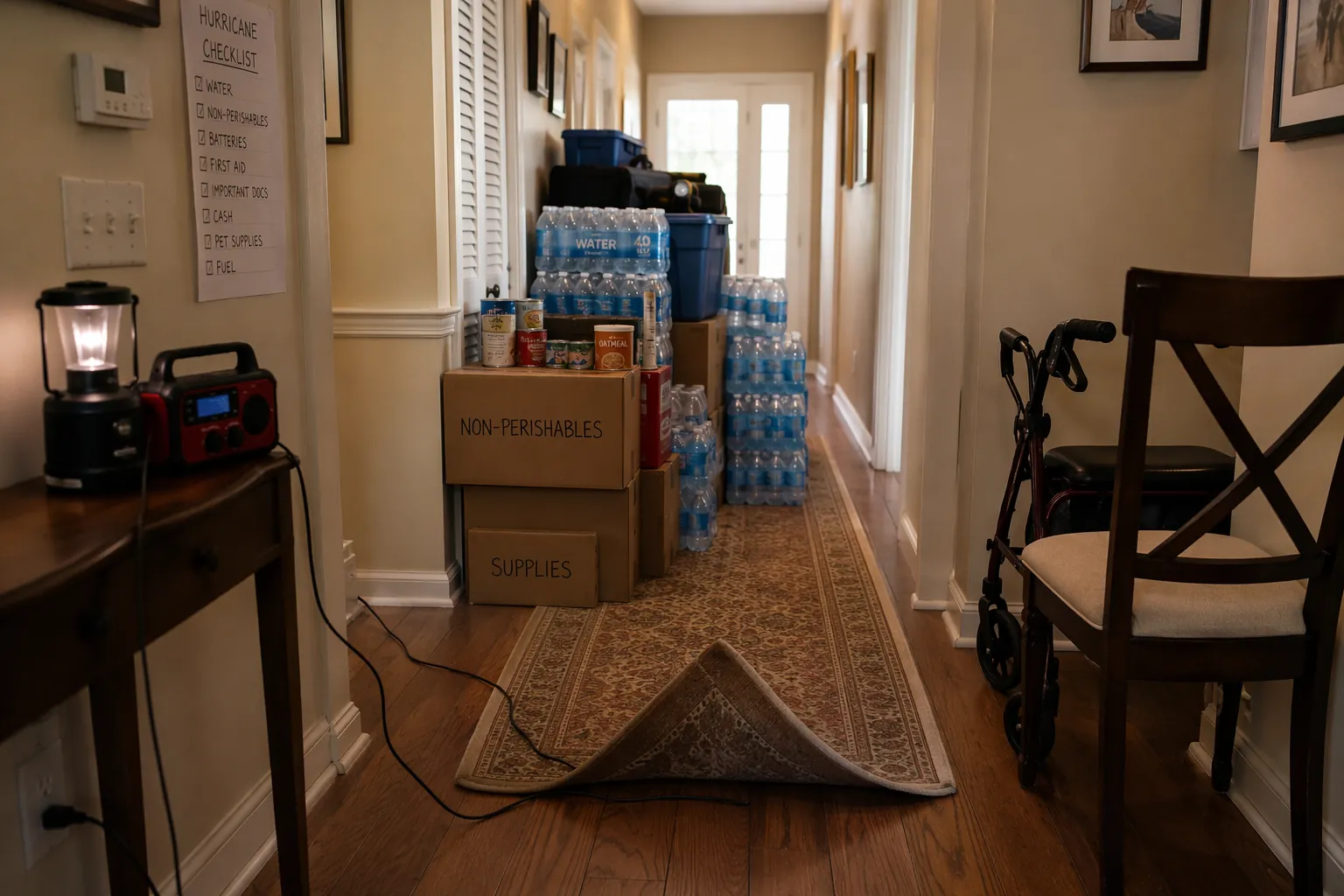
The first fall hazard can show up before the first rain band. Someone means well and brings in bottled water, batteries, canned food, a cooler, and a plastic bin of papers. Then the hallway narrows. A cord crosses the floor because a phone is charging near the only open outlet. The walker gets pushed behind a chair to make room for supplies. A loose rug that was only mildly annoying in June becomes the thing an older adult catches at 2 a.m. while trying to reach the bathroom.
That is why a hurricane preparedness checklist for elderly parents or older adults cannot be only a supply list. Hurricanes change the fall risk by phase: clutter before the storm, darkness during the storm, and debris or wet surfaces after it. The useful checklist is the one that changes with those phases.
The fall-prevention part is not a side issue. CDC data show that falls are the leading cause of injury for adults 65 and older; about one in four older adults, more than 14 million people, report falling each year. The age-adjusted fall death rate also rose 21% from 2018 to 2024, from 64.7 to 78.4 deaths per 100,000 older adults.[1] A hurricane does not create frailty out of nowhere. It adds darkness, water, urgency, blocked routes, stress, and missing routines to risks that are already there.
The Three-Phase Checklist
Use this as a walk-through, not as paperwork. Stand in the bedroom, bathroom, hallway, kitchen, and entry area, and ask what changes when the weather turns bad.
| Storm phase | Dominant fall hazard | Countermeasure to finish before a watch is issued |
|---|---|---|
| Before the storm | Clutter from rushed preparation | Clear walking paths first, then stage supplies outside those paths |
| During the storm | Power-outage darkness and urgent nighttime movement | Put light, footwear, and mobility aids within reach before bedtime |
| After the storm | Debris, water, shifted furniture, and failed lighting | Inspect room by room before the older adult resumes normal movement |
Red Cross guidance for older adults recommends planning for either staying home for at least two weeks or evacuating, and it recommends keeping at least 30 days of medication plus extra assistive items.[2] FEMA also emphasizes planning around personal needs, including medications, medical equipment, mobility, and communication support for older adults.[3] Those are the floor. The next question is whether the way those supplies are placed makes the house safer or more dangerous to walk through.
Before the Storm: Clear the Route Before You Bring In Supplies
The mistake is doing the right jobs in the wrong order. People buy water, fill containers, move patio items inside, gather documents, charge devices, and pull out flashlights. Then the older adult has to navigate around all of it. Before a storm watch is issued, the first job is not shopping. It is clearing the routes the person actually uses.
Start with the path from the bed to the bathroom. Then check the path from the bed to the safest interior room, from the favorite chair to the bathroom, and from the kitchen to the main seating area. If evacuation is possible, add the route from the bedroom to the door where the person would leave. These are not decorative pathways. They are the lanes that have to stay open when the lights are out, the house is noisy, and everyone is tired.
- Move bottled water, boxes, coolers, and pet supplies against a wall, not into the center of a hallway.
- Keep at least one full walker-width path open through the bedroom, hallway, bathroom entrance, and kitchen.
- Remove small tables, baskets, plant stands, footstools, and extra chairs from the walking route before adding hurricane supplies.
- Route charging cords behind furniture or along the wall. If a cord must cross open floor, change the outlet plan.
- Do not park a walker, cane, rollator, wheelchair, or bedside commode somewhere “out of the way.” For the person who uses it, that is the way.
Loose rugs deserve early attention because they get worse under storm conditions. A rug that curls in dry weather can slide when shoes are wet, when humidity rises, or when someone hurries across it with a flashlight in one hand. Use non-slip tape or a non-slip backing on rugs that truly need to stay. Remove the ones that do not. If an older adult uses a walker, test the rug with the walker wheels or legs, not just with your own feet.
Bathrooms need a separate check because hurricane preparation often sends people there to fill containers, store extra water, or manage medication routines. Check whether grab bars are firmly mounted. A towel bar is not a grab bar. If there is a shower chair, raised toilet seat, bedside commode, or transfer bench, make sure it is stable and already positioned where it will be used. The time to discover a loose grab bar is not when the power is out.
Put Emergency Items Where They Do Not Create a Second Emergency
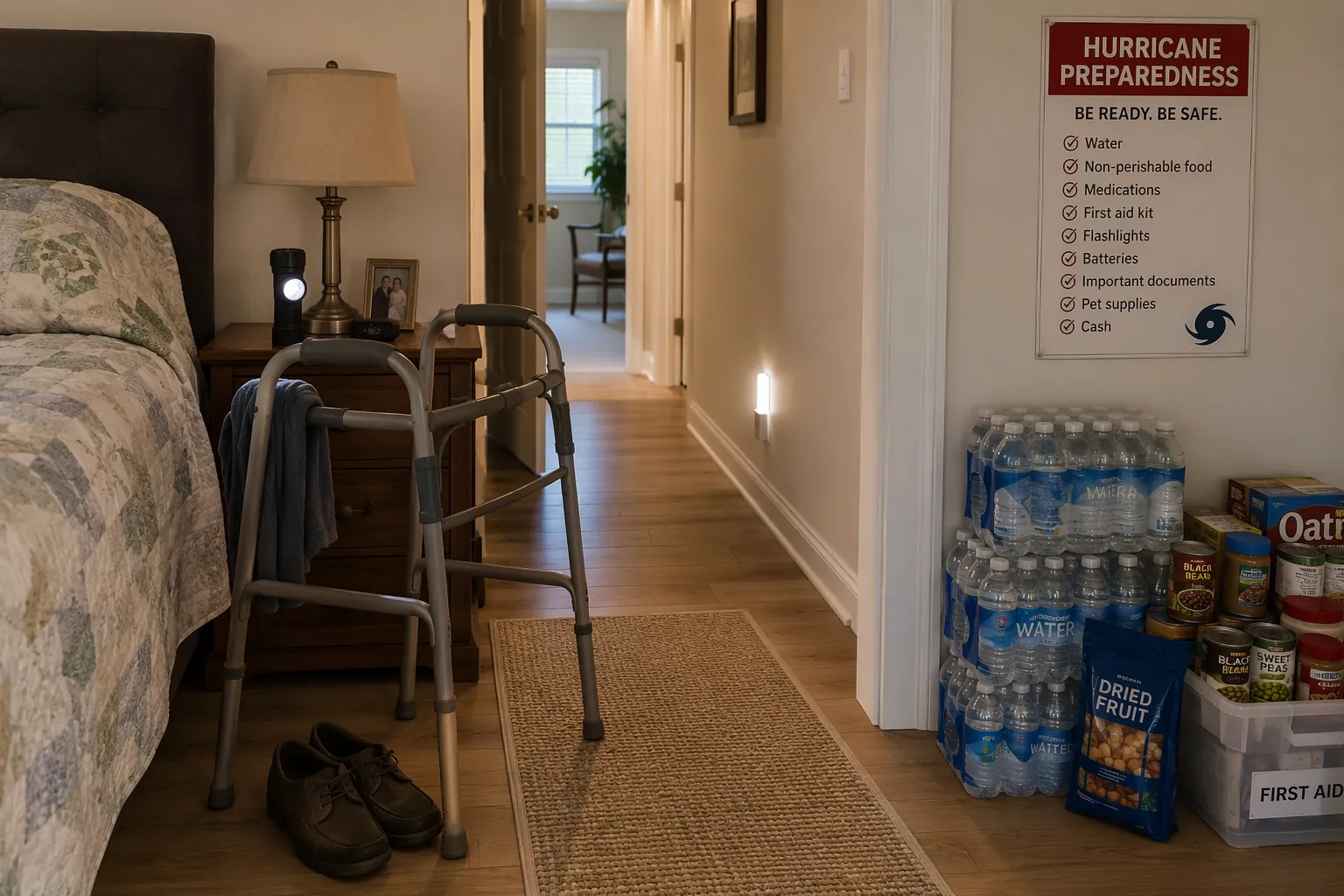
Medication, documents, and assistive supplies matter. They just should not take over the walking surface. Red Cross recommends keeping medications, important documents, and emergency information ready for older adults, including extra assistive items such as hearing aid batteries, glasses, contact lenses, syringes, or mobility device supplies when relevant.[2] A waterproof document bag is useful; a document bag sitting on the floor next to the bed is not.
- Place a waterproof document bag on a shelf, counter, or table near the exit route, not on the floor.
- Keep the medication list, pharmacy information, insurance cards, emergency contacts, and copies of key medical information together.
- Store the 30-day medication supply where it can be reached without bending into a low cabinet or stepping around boxes.
- Keep spare glasses, hearing aid batteries, denture supplies, and mobility-device accessories in a labeled container at waist height.
- If refrigerated medication is involved, ask the clinician or pharmacist ahead of time how to handle outages or evacuation.
This is also the time to decide what “staying put” actually means. Red Cross says older adults should plan for staying home for at least two weeks or evacuating.[2] That does not mean an older adult should ignore an evacuation order. It means the home setup and the go-bag both need to be ready before the choice becomes rushed. A rushed exit is when shoes are missing, walkers are folded in the trunk under supplies, and medications are still in three different places.
A Pre-Watch Walk-Through for Caregivers
If you can only get to the house once before peak weather, spend the visit on the things that are hardest to fix by phone. Tape the rug. Move the boxes. Test the flashlight from the bed, not from the kitchen. Watch the older adult stand up from the chair they actually use and walk to the bathroom. That short walk will tell you more than a perfect supply bin.
| Room or route | What to check | Fix before the watch |
|---|---|---|
| Bedroom to bathroom | Rugs, cords, furniture corners, poor lighting | Clear the path, secure rugs, place flashlight and footwear by the bed |
| Bathroom | Wet floor risk, unstable grab bars, low supplies | Tighten or replace supports, move essentials to reachable height |
| Hallway | Supply boxes, water cases, extension cords | Stage supplies along the wall and keep the walker route open |
| Kitchen | Coolers, pet bowls, loose mats, spoiled-food cleanup risk | Move floor items and keep cleaning supplies reachable |
| Entry door | Thresholds, outdoor debris, blocked exit | Keep evacuation route open and place go-bag off the floor |
During the Storm: Darkness Is the Main Fall Hazard
Once the storm is underway, the house is no longer the familiar house. It is the same bedroom and hallway, but without reliable light, with more noise, more anxiety, and possibly more urgent trips to the bathroom. During this phase, fall prevention is mostly about reducing unnecessary movement and making necessary movement predictable.
CDC hurricane safety guidance includes staying away from windows and glass doors and being careful after storms around hazards such as floodwater, downed power lines, and damaged buildings.[4] For an older adult inside the home, the safer room also has to be usable. An interior room away from windows is better only if the person can reach it without stepping over supplies, if the chair is stable, and if the walker or cane comes with them.
Set Up the Bedside Before the First Bad Night
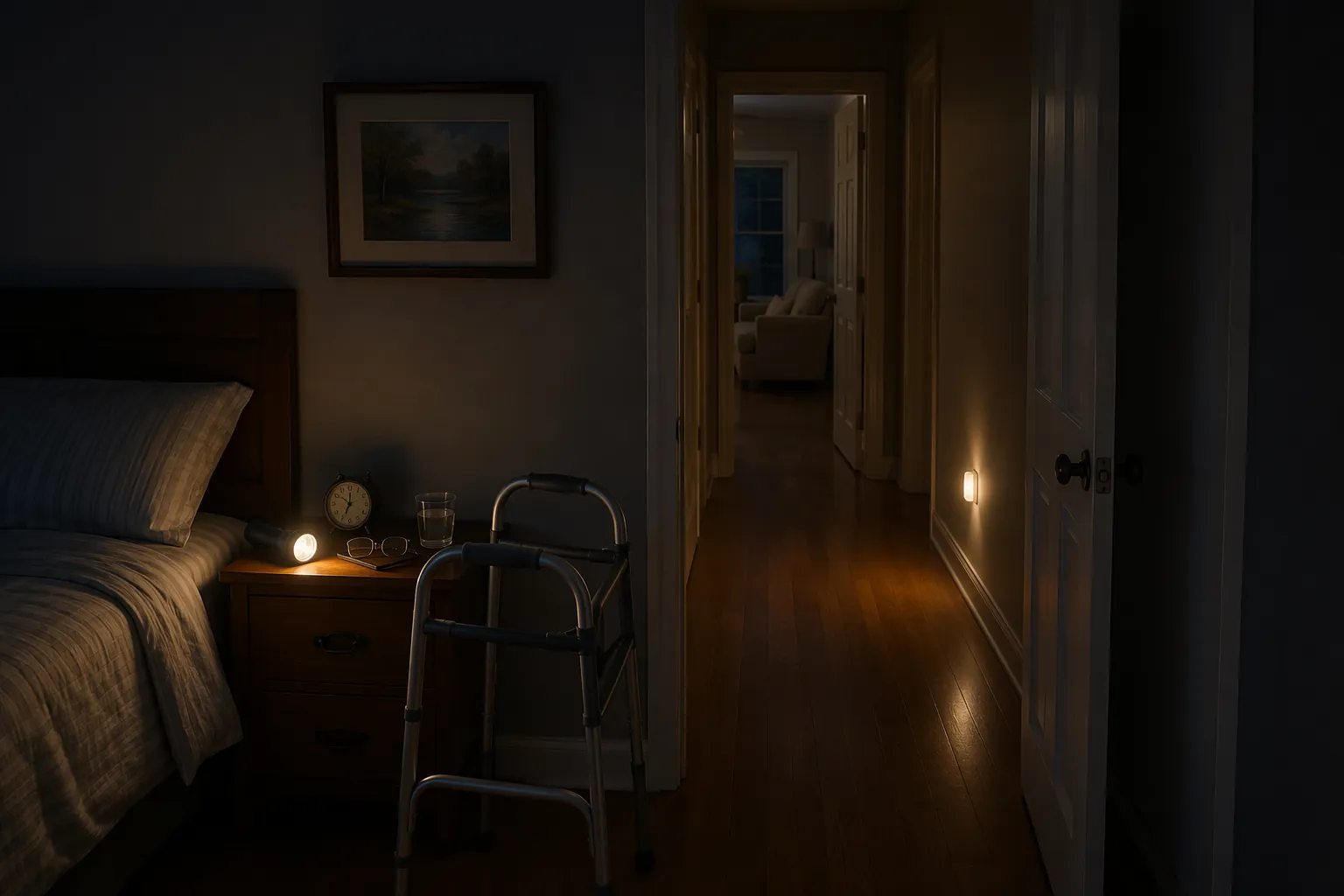
The bedside setup is small, but it carries a lot of risk. A flashlight in the kitchen junk drawer is not a nighttime safety plan. A cane leaning by the front door is not useful when the person wakes up in the dark. Set the nighttime items in place before wind and rain make everyone distracted.
- Put a working flashlight on the nightstand within reach from the lying-down position.
- Add a battery-operated motion light in the hallway and, if possible, one near the bathroom entrance.
- Place closed-toe, non-slip shoes beside the bed with the toes facing the direction the person will step.
- Keep the walker, cane, or rollator on the side of the bed where the person normally stands.
- Move the phone or medical alert device within reach without creating a charging cord across the floor.
Closed-toe shoes sound fussy until the floor has grit on it, a towel has slipped, or a small piece of debris has blown in near the door. Bare feet and floppy slippers ask an older person to do too much with too little traction. If swelling, neuropathy, or balance changes make shoes uncomfortable, sort that out before the storm instead of improvising in the dark.
Avoid candles. They create fire and burn risks, and they tempt people to carry an open flame while stepping around furniture. Battery-powered flashlights, lanterns, and motion lights are boring in the best possible way. They do not need to be dramatic; they need to be reachable, tested, and placed where the older adult actually moves.
Make the Interior Room Fall-Safe, Not Just Window-Safe
Choosing an interior room away from windows is sensible during severe weather, but the room still has to fit the person. A narrow closet full of storage bins may be technically interior and practically unsafe. If the older adult uses a walker, the room needs turning space. If they need to elevate their legs, use oxygen equipment, hear alerts, or reach a caregiver, those needs come into the choice.
- Use a sturdy chair with arms if the person may sit there for a while.
- Keep the mobility aid inside the room, not outside the door.
- Place a flashlight or lantern where it can be reached from the chair.
- Keep necessary medications, water, glasses, hearing aids, and phone access nearby without crowding the floor.
- Do not use a rolling office chair, low stool, storage trunk, or bed edge as the main storm seat if standing from it is difficult.
AARP advises caregivers to build emergency plans around the loved one’s specific needs, including how the person will communicate, evacuate, manage medications, and receive help if usual caregivers are not available.[5] In fall-prevention terms, that means assigning the unglamorous details: who checks the batteries, who confirms the walker is beside the bed, who calls before bedtime, and who knows whether the older adult can safely get to the bathroom if the power goes out.
After the Storm: Inspect Before Normal Movement Resumes
The quiet after a storm can be misleading. People want to check the yard, open the refrigerator, move coolers, look for leaks, and see what happened outside. For an older adult, the first post-storm task should be slower: inspect the places they will walk before they walk them.
Do not walk through floodwater. FEMA warns drivers not to enter floodwater and notes that 6 inches of water can stall a car; for someone on foot, floodwater can hide drop-offs, debris, unstable ground, and electrical hazards.[3] The same caution applies at the threshold, garage, driveway, and yard. If the route is wet or unclear, the older adult should wait somewhere stable while another adult checks it.
- Bedroom: check whether lamps work, rugs shifted, cords moved, or the walker path narrowed overnight.
- Bathroom: look for roof leaks, wet towels on the floor, slick tile, loose bath mats, and unstable grab bars.
- Hallway: remove leaves, grit, packaging, fallen objects, and supply boxes that were moved during the storm.
- Kitchen: clean spills from coolers, melted ice, spoiled food packaging, and pet bowls before the older adult walks through.
- Entry areas: check thresholds, porch steps, handrails, outdoor mats, and any standing water before opening the route.
Food and water safety can also become a fall issue because cleanup changes the floor. Red Cross guidance says to wait until authorities confirm tap water is safe before drinking it or using it for food preparation after an emergency.[2] While that warning is about illness prevention, the practical home consequence is familiar: coolers come out, refrigerator contents get sorted, trash bags fill, and water drips across the kitchen. Keep the older adult out of that work zone until the floor is dry and the trash is out of the walking route.
Carbon Monoxide Changes Where It Is Safe to Recover
Generator safety belongs in this checklist because it affects where people sit, sleep, and recover after the storm. CDC states that more than 400 Americans die each year from unintentional carbon monoxide poisoning not linked to fires, and people with chronic heart disease, anemia, or breathing problems are more likely to get sick from carbon monoxide.[6] A generator should never run inside the home, garage, basement, crawlspace, or near windows or doors.[6]
This is not only a mechanical warning. If a generator is placed badly, the “safe” recovery room may not be safe. If extension cords create a path across the floor, the lighting solution becomes a tripping hazard. If doors and windows are opened in the wrong places to manage fumes or heat, the older adult may be moved repeatedly through wet or dark areas. Set the generator location and cord route so they do not send an older person through a new obstacle course.
What to Do Now, Before the Next Watch
A good checklist should leave the house easier to move through, not harder. If the storm is still only a possibility, use that time for the fixes that will not happen cleanly once alerts begin.
- Clear the bed-to-bathroom route before staging any water, food, or document bins.
- Secure or remove loose rugs in the bedroom, hallway, bathroom, kitchen, and entry.
- Install battery-operated motion lights where nighttime walking actually happens.
- Put a flashlight, closed-toe shoes, phone, and mobility aid within reach of the bed.
- Gather medications, documents, and assistive-device supplies without putting bags or boxes on the floor.
- Choose an interior storm room that the older adult can enter, sit in, stand from, and leave safely.
- Plan a post-storm room-by-room inspection before the older adult resumes normal routines.
This does not replace evacuation orders, emergency services, or medical advice. It does make the ordinary rooms less treacherous when a hurricane changes how those rooms work. The safest hurricane checklist for an older adult is not just more supplies. It is fewer blocked paths before the storm, reliable light during it, and a slow inspection after it.
References
- Older Adult Falls Data, CDC, https://www.cdc.gov/falls/data-research/index.html
- Older Adults Emergency Preparedness, American Red Cross, https://www.redcross.org/get-help/how-to-prepare-for-emergencies/older-adults.html
- Older Adults, Ready.gov (FEMA), https://www.ready.gov/older-adults
- Preparing for Hurricanes or Other Tropical Storms, CDC, https://www.cdc.gov/hurricanes/safety/index.html
- How Caregivers Can Build Emergency Plans for Loved Ones, AARP, https://www.aarp.org/caregiving/basics/preparing-for-emergency/
- Carbon Monoxide Poisoning Basics, CDC, https://www.cdc.gov/carbon-monoxide/about/index.html
Related reading
Noticed something outdated or inaccurate on this page? Flag a correction. We review every report against CDC, NIA, and AARP HomeFit guidance before updating a page.
Part of the Fall Prevention section.